




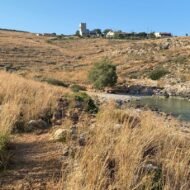

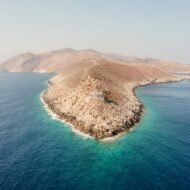
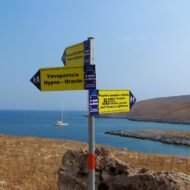
TL;DR: Cape Matapan (Cape Tainaron) is mainland Greece’s southernmost point, featuring ancient ruins, stunning lighthouse views, hidden beaches, and mythological significance. Perfect for adventurous travelers seeking off-the-beaten-path experiences. Best visited April-October with your own transport.
- Why Cape Matapan Should Be Your Next Greek Adventure
- Getting There: The Journey is Half the Adventure
- What Makes Cape Matapan Special
- Best Things to Do at Cape Matapan
- 1. Hike to the Lighthouse
- 2. Explore the Ancient Temple Ruins
- 3. Cave of Hades Adventure
- 4. Sunset Watching
- 5. Swimming in Hidden Coves
- When to Visit Cape Matapan
- Where to Stay Nearby
- Essential Packing List
- Local Eats Worth the Detour
- Photography Tips for Cape Matapan
- Safety Considerations
- Budget Breakdown
- Beyond Cape Matapan: Exploring the Mani Peninsula
- Final Tips for Your Cape Matapan Adventure
Why Cape Matapan Should Be Your Next Greek Adventure
Forget the crowded beaches of Mykonos – Cape Matapan is where real Greek magic happens. This wild, windswept peninsula jutting into the Mediterranean feels like the edge of the world, and honestly? It pretty much is. As mainland Greece’s southernmost point, this dramatic cape offers something most Greek destinations can’t: complete solitude, ancient mysteries, and views that’ll make your Instagram followers seriously jealous.
Located in the rugged Mani Peninsula of Peloponnese, Cape Matapan (locals call it Cape Tainaron) isn’t your typical Greek getaway. There are no beach bars serving overpriced cocktails or tour buses clogging narrow roads. Instead, you’ll find ancient temples, a historic lighthouse, and some of the most pristine waters in the Mediterranean.
Getting There: The Journey is Half the Adventure
Coordinates: 36°23′06″N 22°28′58″E
By Car (Highly Recommended) Your best bet is renting a car in Athens or Kalamata. The drive from Athens takes about 4 hours through some seriously spectacular mountain scenery. From Kalamata, it’s roughly 90 minutes of winding coastal roads that’ll have you pulling over every few kilometers for photos.
Public Transport (For the Patient) KTEL buses run from Athens to Gythio, then you’ll need local transport to Vathia village. From there, it’s a 30-minute walk to the cape. Doable? Yes. Convenient? Not really.
Pro Tips for Getting There:
- Fill up your gas tank in Areopoli – it’s your last reliable fuel stop
- Download offline maps; cell service gets spotty
- Pack snacks and water; there are zero facilities at the cape
What Makes Cape Matapan Special
Ancient Mysteries and Mythology
This isn’t just a pretty viewpoint – Cape Matapan is steeped in ancient Greek mythology. The ancients believed this was one of the entrances to Hades, the underworld. Hercules supposedly dragged Cerberus (the three-headed dog) up from the underworld right here. Whether you believe in ancient myths or not, there’s something undeniably otherworldly about this place.
The ruins of an ancient temple dedicated to Poseidon still stand here, dating back to the 2nd century BC. Walking among these weathered stones while waves crash below is genuinely spine-tingling.
The Iconic Lighthouse
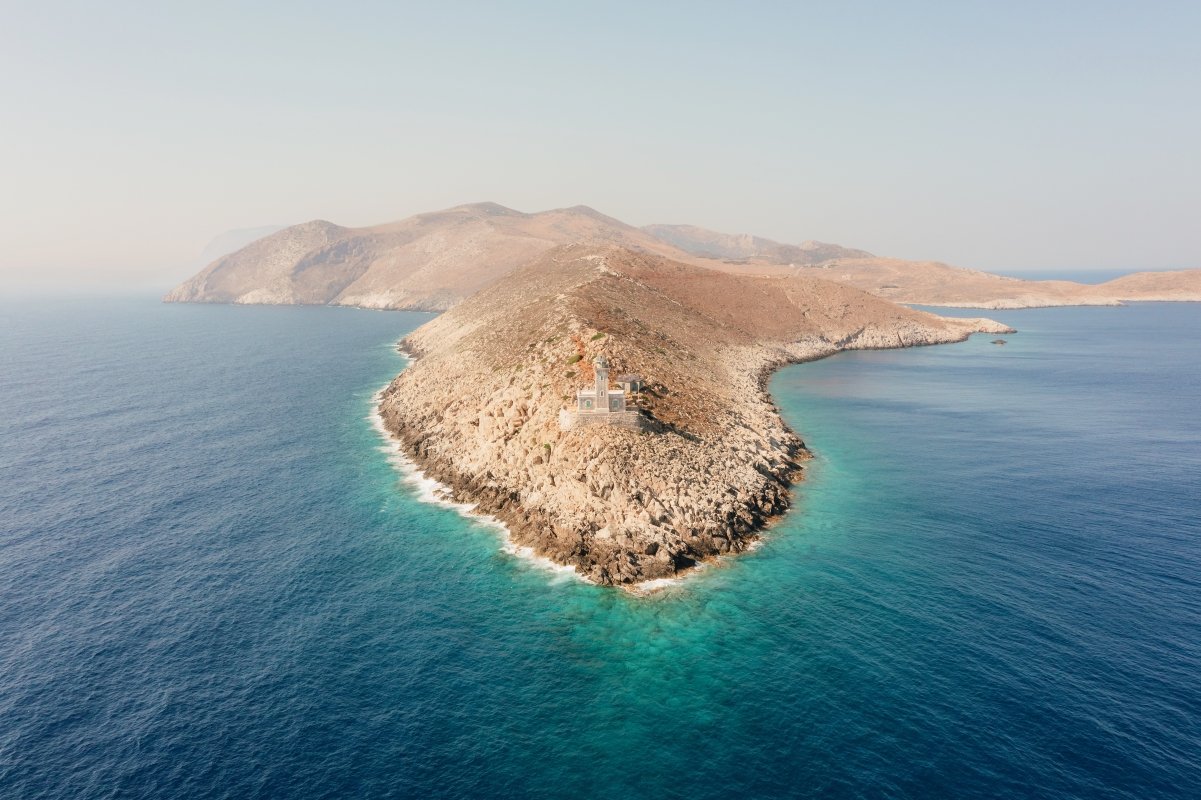
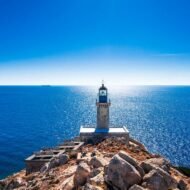
The 19th-century lighthouse perched on the rocky outcrop isn’t just photogenic – it’s been guiding ships safely through these treacherous waters for over 150 years. The lighthouse isn’t operational anymore, but it’s become the unofficial symbol of the cape. Golden hour shots here are absolutely unbeatable.
Hidden Beaches and Crystal Waters
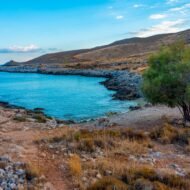
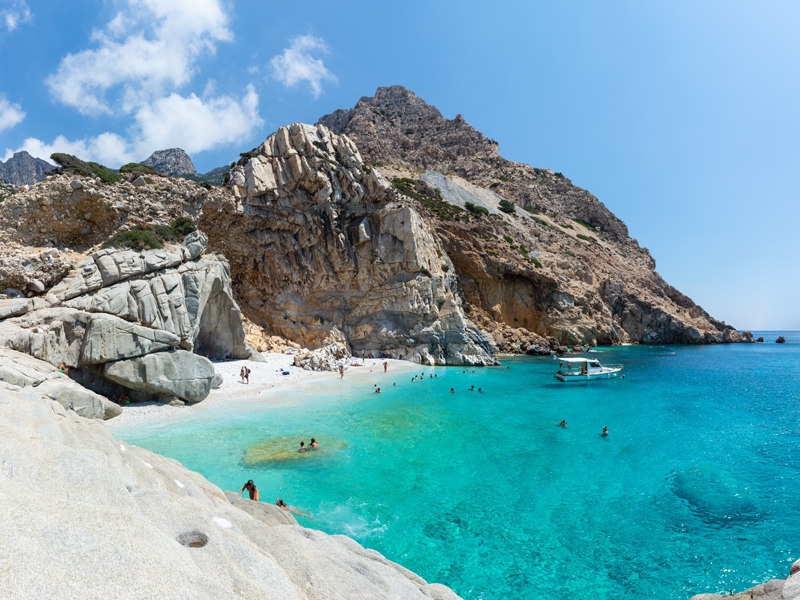
While you can’t exactly sunbathe at the cape itself (it’s all rocky cliffs), there are some incredible hidden coves nearby. The water here is that impossible shade of blue-green that makes you question if photo filters are even necessary.
Best Things to Do at Cape Matapan
1. Hike to the Lighthouse
The walk from the parking area to the lighthouse takes about 15-20 minutes across rocky terrain. Wear proper shoes – flip-flops won’t cut it. The path isn’t difficult, but it’s uneven and can be slippery when wet.
2. Explore the Ancient Temple Ruins
Take time to wander through the remains of the Temple of Poseidon. There’s no entrance fee, no crowds, just you and 2,000 years of history. Bring a good camera – the ruins against the dramatic coastline create incredible photo opportunities.
3. Cave of Hades Adventure
About 2km north of the cape, you’ll find a cave that ancient Greeks believed led to the underworld. While you probably won’t encounter Cerberus, the cave system is fascinating for amateur spelunkers. Bring a flashlight and watch your step.
4. Sunset Watching
This is hands-down one of the best sunset spots in Greece. The sun seems to melt directly into the Mediterranean, painting the sky in colors that’ll ruin every other sunset for you. Arrive at least an hour before sunset to claim your spot and soak in the atmosphere.
5. Swimming in Hidden Coves
Look for small paths leading down to tiny beaches tucked between the rocks. The water is incredibly clear, and you might have an entire cove to yourself. Just remember – no lifeguards, no facilities, swim at your own risk.
When to Visit Cape Matapan
Best Months: April to June, September to October Perfect weather, fewer crowds, and wildflowers blooming across the landscape in spring.
Summer (July-August) Expect intense heat and stronger winds. Come early morning or late afternoon to avoid the worst of it.
Winter (November-March) Rough seas and unpredictable weather, but dramatically moody if you’re into that vibe. Just check conditions before making the trip.
Where to Stay Nearby
Since there’s literally nothing at Cape Matapan itself, you’ll need to base yourself in nearby villages:
Vathia Village
This traditional tower-house village is closest to the cape and feels frozen in time. Several restored tower houses now operate as guesthouses. Perfect for those wanting authentic Mani architecture and atmosphere.
Gerolimenas
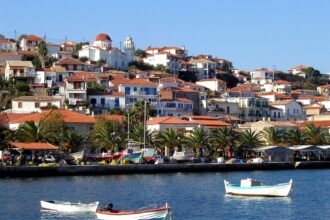
A charming fishing village about 20 minutes from the cape, offering tavernas, small hotels, and a lovely harbor. Great compromise between convenience and authenticity.
Areopoli
The largest nearby town with more accommodation options, restaurants, and services. About 45 minutes from the cape but offers the most amenities.
Essential Packing List
- Sturdy hiking shoes (rocky terrain is no joke)
- Sun protection (shade is minimal)
- Plenty of water (no facilities means no water fountains)
- Snacks (you’ll work up an appetite)
- Camera with extra batteries (you’ll take way more photos than planned)
- Light jacket (winds can be strong, even in summer)
- Cash (nearby tavernas often don’t accept cards)
Local Eats Worth the Detour
Traditional Mani Cuisine
The Mani Peninsula has its own distinct culinary traditions. Look for:
- Pastitsada – spiced meat with pasta
- Syglino – cured pork with orange peel
- Local olive oil – some of Greece’s finest comes from this region
- Wild herbs – collected from the hillsides and used in everything
Recommended Tavernas
- Akrotiri Restaurant in Gerolimenas for fresh seafood with harbor views
- Kyrimai Hotel Restaurant for upscale dining with local ingredients
- Barba Petros in Areopoli for authentic home-style cooking
Photography Tips for Cape Matapan
Best Shooting Times
- Golden hour (hour before sunset): Warm light on the lighthouse
- Blue hour (just after sunset): Dramatic sky colors
- Early morning: Soft light and potential for misty atmospheric shots
Must-Have Shots
- Lighthouse silhouetted against sunset
- Ancient temple ruins with sea backdrop
- Wide shots showing the cape’s dramatic isolation
- Detail shots of weathered stone and wild vegetation
Pro Photography Tips
- Bring a tripod for sunset/long exposure shots
- Use a polarizing filter to enhance water colors
- Shoot in RAW format – these dramatic skies need editing flexibility
- Don’t forget vertical shots for social media
Safety Considerations
Ocean Safety
- Strong currents and waves make swimming risky
- No lifeguards anywhere in the area
- Rocky shores can be slippery when wet
Terrain Challenges
- Uneven, rocky paths throughout
- Limited shade – heat exhaustion is a real risk in summer
- Strong winds can affect balance near cliff edges
Emergency Preparedness
- Download offline maps (cell service is unreliable)
- Let someone know your plans
- Carry a first aid kit for minor scrapes
- Bring more water than you think you need
Budget Breakdown
Daily Costs (Per Person)
- Budget traveler: €30-50 (camping/basic guesthouse, self-catering)
- Mid-range: €60-100 (nice hotel, taverna meals)
- Luxury: €150+ (boutique accommodation, fine dining)
Transportation
- Car rental: €25-40/day (essential for exploring)
- Fuel: €20-30 for the round trip from Athens
- Bus transport: €15-25 (much less convenient)
Beyond Cape Matapan: Exploring the Mani Peninsula
While you’re in the area, the entire Mani Peninsula deserves exploration:
Diros Caves
Underground boat tours through spectacular limestone formations. Book ahead in summer.
Mani Tower Houses
Unique stone towers scattered throughout the landscape, each with its own story of family feuds and local history.
Traditional Villages
Explore atmospheric stone villages like Vathia, Kita, and Flomochori, where time seems to have stopped centuries ago.
Kardamyli
Beautiful coastal town that was British author Patrick Leigh Fermor’s adopted home, offering great beaches and hiking trails.
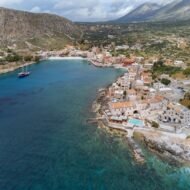
A small coastal village at the southern end of the Mani Peninsula, in Laconia, Peloponnese, Greece.
Final Tips for Your Cape Matapan Adventure
Respect the Environment: This pristine area stays beautiful because visitors treat it well. Pack out all trash and don’t disturb the ancient ruins.
Embrace the Isolation: Part of Cape Matapan’s magic is its remoteness. Don’t expect modern conveniences – that’s the whole point.
Allow Plenty of Time: Don’t rush this experience. Plan at least half a day to fully appreciate the area’s natural beauty and historical significance.
Weather Check: Conditions can change quickly at this exposed location. Check forecasts before heading out.
Bring Cash: Many local businesses operate cash-only, so hit an ATM in Areopoli before venturing further south.
Cape Matapan isn’t for everyone – it requires effort, planning, and a spirit of adventure. But for travelers seeking authentic experiences away from the tourist masses, this dramatic cape offers something truly special. Standing at mainland Greece’s southernmost point, surrounded by ancient mysteries and endless blue horizons, you’ll understand why this place has captured imaginations for thousands of years.
Whether you come for the history, the hiking, the photography, or simply to experience one of Europe’s most remote and beautiful locations, Cape Matapan delivers an unforgettable adventure that’ll have you planning your return visit before you’ve even left.








 is mainland Greece's southernmost point, featuring ancient ruins, stunning lighthouse views)