





















TL;DR: Christmas in Bavaria 2025 , Bavaria transforms into a living Christmas card from late November through December. Think medieval markets glowing with candlelight, Alpine skiing under snow-dusted peaks, gingerbread scents wafting through cobblestone streets, and enough mulled wine to keep you cozy all winter long. Whether you’re market-hopping in Munich, conquering ski slopes in Garmisch-Partenkirchen, or experiencing quirky Bavarian traditions, this is where Christmas magic is real – and we’ve got all the insider details you need.
- Why Bavaria Owns Christmas (And You Need to Experience It)
- The Legendary Christmas Markets: Where the Magic Happens
- Munich’s Christkindlmarkt at Marienplatz
- Nuremberg’s Christkindlesmarkt
- Regensburg’s Castle Christmas Market
- Rothenburg ob der Tauber’s Reiterlesmarkt
- Hidden Gems Worth the Detour
- What to Eat & Drink: A Culinary Crash Course
- The Holy Trinity of Bavarian Christmas Foods
- Deep Cuts for Food Adventurers
- Christmas Dinner Traditions
- Beyond the Markets: Epic Winter Activities
- Bavarian Christmas Traditions You Need to Know
- Advent Wreaths & The Build-Up
- St. Nicholas Day (December 6)
- Christmas Eve (Heiligabend)
- The 25th & 26th
- Practical Information: Making It Happen
- Sample Itineraries
- The Stuff No One Tells You (But Should)
- Final Thoughts: Why Bavaria at Christmas Isn’t Optional
Why Bavaria Owns Christmas (And You Need to Experience It)
Let’s be honest: Bavaria didn’t just perfect Christmas – they basically invented the modern version of it. The Christkindlmarkt tradition in Munich dates back to 1310, giving them over 700 years of practice at creating the ultimate holiday experience. While other places are still figuring out how to string lights properly, Bavaria’s been perfecting the art of gemütlichkeit (that untranslatable German word for cozy warmth) for centuries.
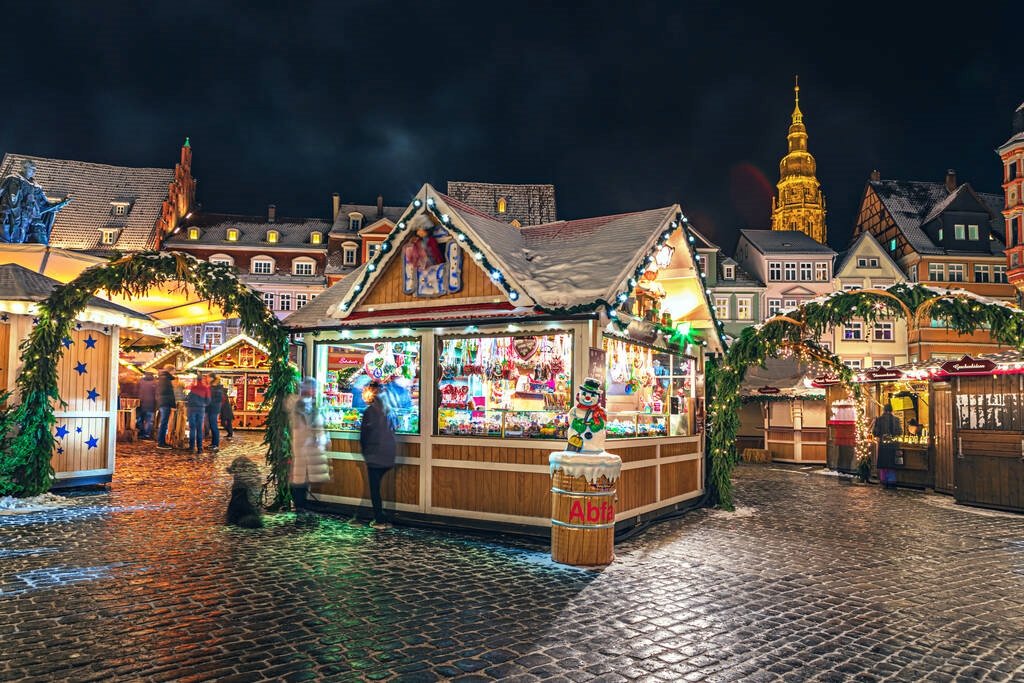
Picture this: Snow falling gently on medieval town squares, the golden glow of thousands of lights reflecting off centuries-old architecture, vendors in traditional Bavarian dress serving treats from wooden chalets, and the air thick with cinnamon, roasted almonds, and that intoxicating spice of glühwein. Add in dramatic Alpine backdrops, castles straight out of fairy tales, and locals who genuinely love this season – and you’ll understand why Bavaria sets the global standard for Christmas celebrations.
The Legendary Christmas Markets: Where the Magic Happens
Munich’s Christkindlmarkt at Marienplatz
Dates: November 24 – December 24, 2025
Hours: Mon-Sat 10am-9pm, Sun 10am-8pm, Christmas Eve 10am-2pm
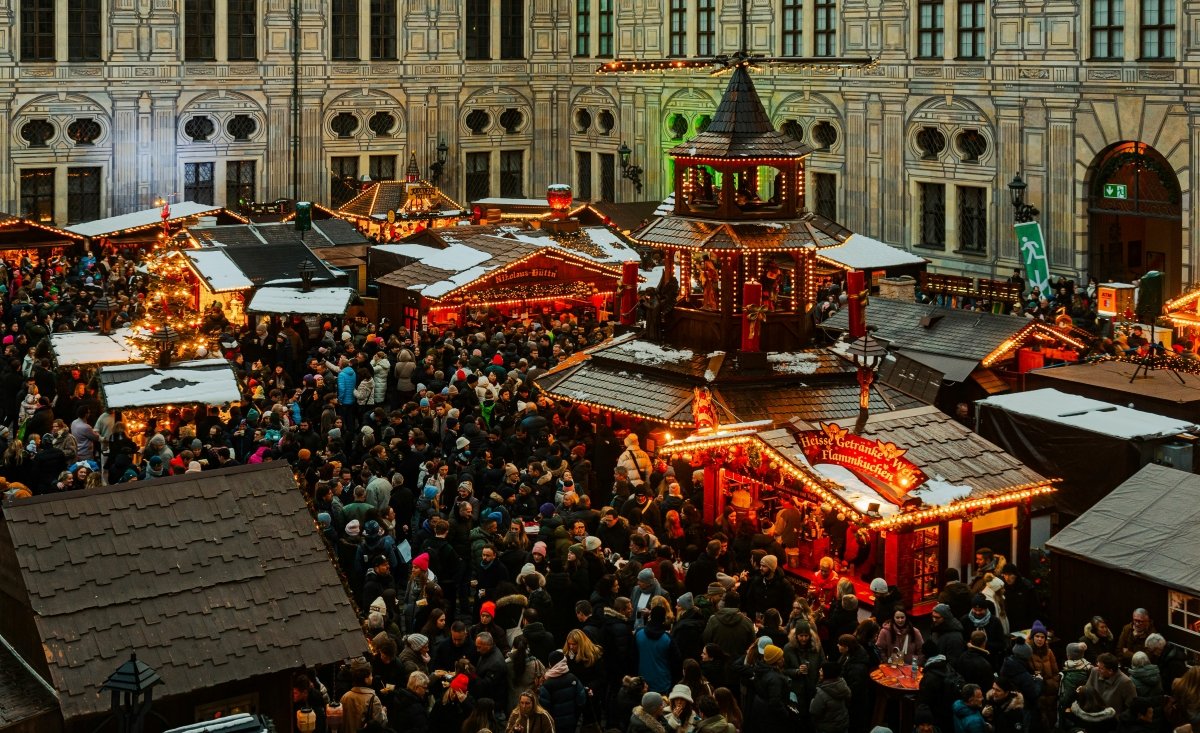
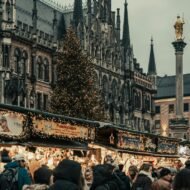
Munich’s main market is considered the original, with roots dating back to the 14th century, set against the romantic backdrop of the neo-Gothic town hall. This isn’t just a market – it’s a sensory experience that assaults you in the best way possible.
What makes it unmissable: The largest Nativity scene market in Germany, where you can find everything needed for a real Nativity scene, plus the Himmelswerkstatt workshop where kids aged 6-12 can craft for free.
Pro tip: The market closes Christmas Eve at 2pm because Germans celebrate privately with family. Plan accordingly!
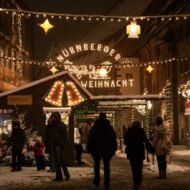
Nuremberg’s Christkindlesmarkt
Dates: November 28 – December 24, 2025
Opening Ceremony: November 28 at 5:30pm
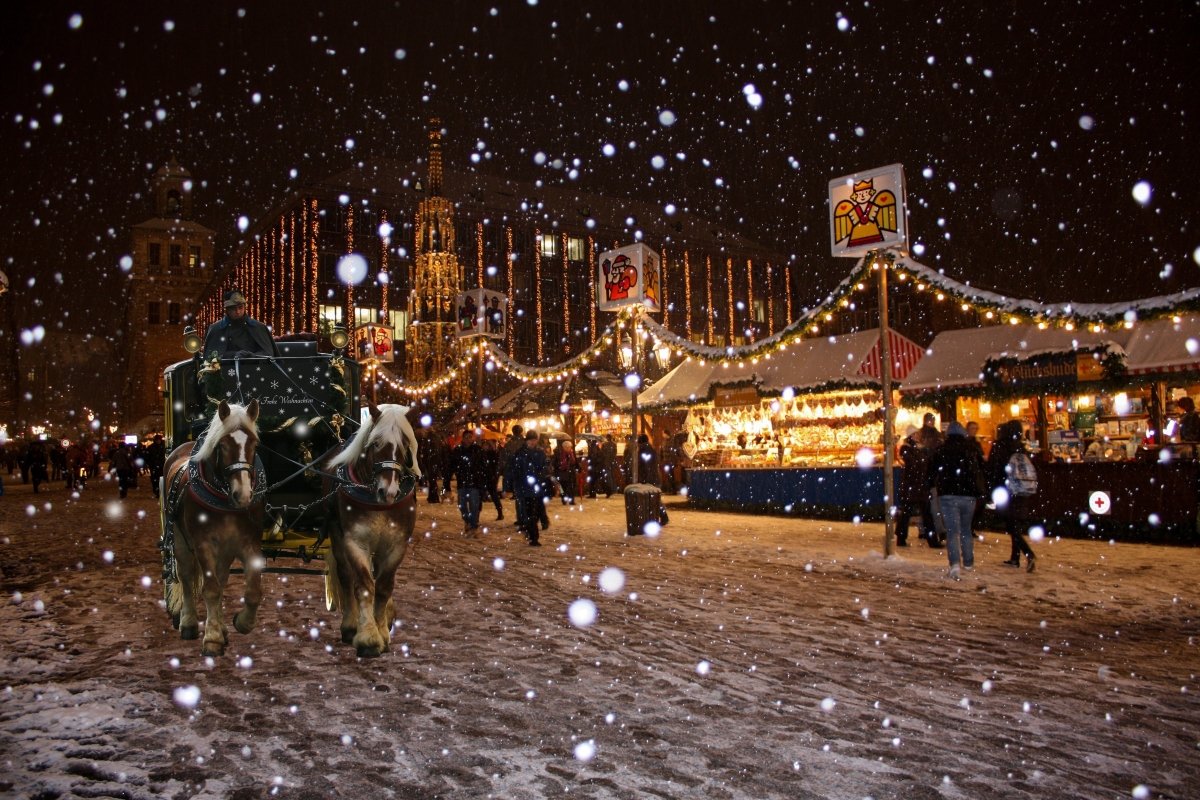
Probably Germany’s most famous and authentic market, with timber-built stalls and a requirement that all goods be locally produced and handmade. No plastic allowed, nothing from outside Bavaria – this is the real deal.
Don’t miss: The Zwetschgenmännle (quirky prune people dressed in traditional clothing) and the famous Nuremberg lebkuchen. The opening ceremony with the Christkind (a golden-haired angel figure) is genuinely moving – locals take it seriously.
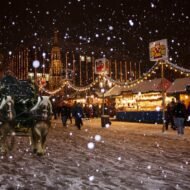
Insider secret: Horse-and-carriage rides let you see the Old Town and the Beautiful Fountain in the market’s center – touristy but magical, especially at night.
Regensburg’s Castle Christmas Market
Dates: Various weekend dates throughout Advent
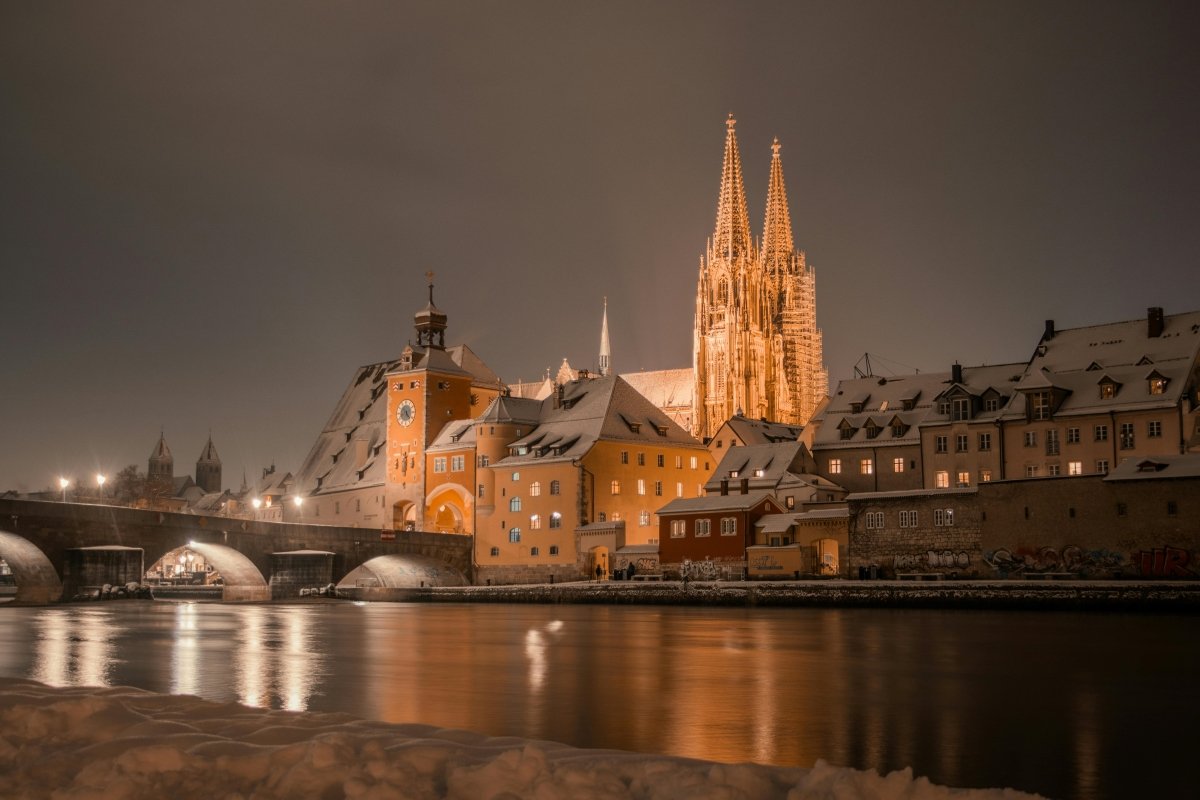
The Christmas market in the courtyard of Schloss St. Emmeram exudes glamour, with festively lit wooden stalls, Bavarian specialties, nostalgic rides, and even an alpaca enclosure. The former monastery owned by the princely Thurn und Taxis family opens its normally inaccessible castle garden during the market.
This one’s for romantics who want their Christmas with a side of royal elegance and possibly some alpaca selfies.
Rothenburg ob der Tauber’s Reiterlesmarkt
Dates: November 21 – December 23, 2025
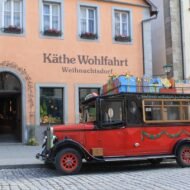
Festively decorated medieval alleys make this market an experience, with culinary delights, white mulled wine, and performances of the mythical “Rothenburger Reiterle” figure from pre-Christian times. The Käthe Wohlfahrt Christmas Museum here provides deep dives into Advent traditions.
This town looks like it was designed by Disney but predates it by centuries – possibly the most photogenic Christmas market location in Bavaria.
Hidden Gems Worth the Detour
Fraueninsel Christmas Market (Chiemsee): This romantic market is set on an island in Lake Chiemsee, only reachable by boat, offering a tranquil, magical atmosphere by the water. November 27 – December 7, 2025. Ferry costs €8.50 for adults.
Waldwipfelweg Market (Sankt Englmar): At about 900 meters altitude, stalls line the festively lit forest canopy walkway leading to an observation tower with views over the Bavarian Forest. For nature lovers who want their Christmas markets with hiking.
What to Eat & Drink: A Culinary Crash Course
The Holy Trinity of Bavarian Christmas Foods
Glühwein (Mulled Wine): The fuel that powers every Christmas market visit. Hot red wine spiced with cinnamon, cloves, and citrus. Each market offers its own unique recipe, and many have elaborate Feuerzangenbowle – a punch with a flaming rum-soaked sugarloaf.
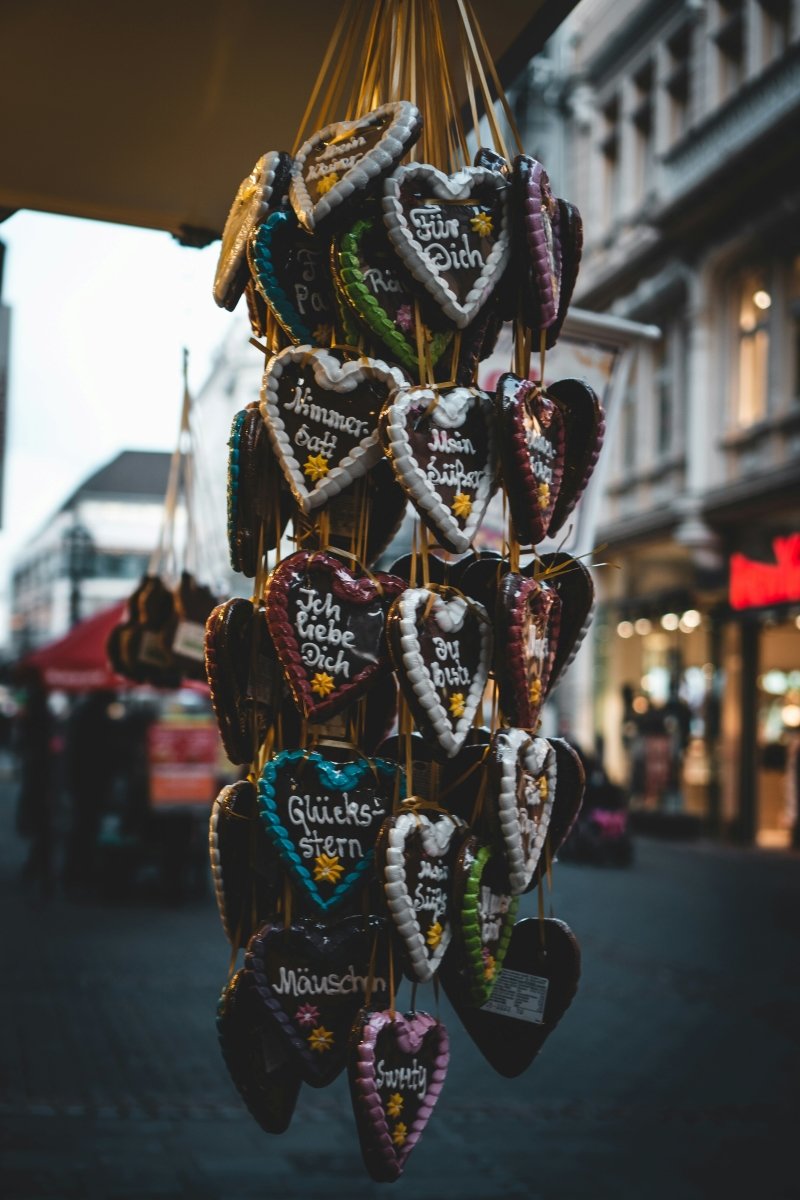
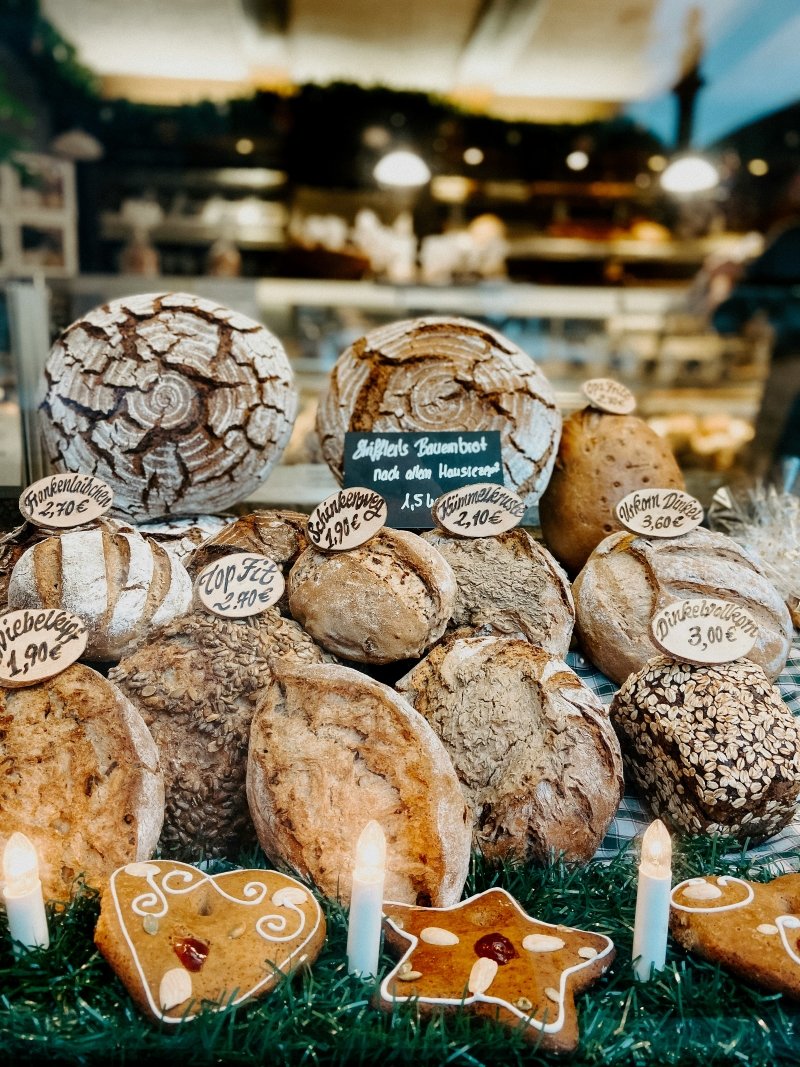
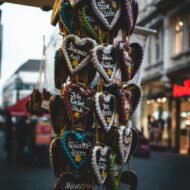
Lebkuchen: These gingerbread-like treats have been a Bavarian tradition for centuries, with Nuremberg’s version being particularly famous. Not quite cookies, not quite cake – perfectly spiced and dangerously addictive.
Bratwurst: Coburg’s Christmas market is famous for its bratwurst grilled on dried pine cones, adding a unique smoky flavor. Every region has its variation, and yes, you should try them all.
Deep Cuts for Food Adventurers
Springerle are aniseed-egg batter pastries made with hand-carved wooden stamps, with patterns handed down through generations. They “jump up” to twice their height when baked properly.
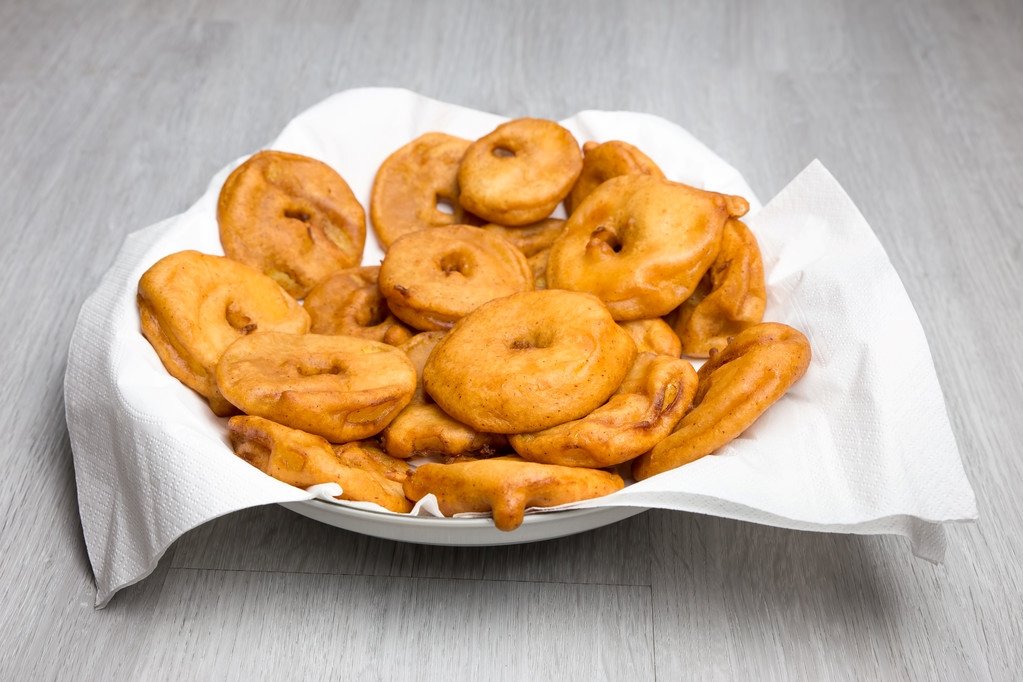
Don’t miss Apfelkücherl (fried battered apple slices dusted with sugar), Quarkbällchen (quark cheese donut holes), and Dampfnudeln (steamed yeast rolls) – these regional specialties won’t be found at your local German restaurant back home.
For the brave: Versoffenen Jungfern (“drunken maidens”) in the Allgäu are a sweet delicacy made from leftover white bread.
Christmas Dinner Traditions
In many Bavarian families, Christmas Eve features Mettenwurst (blood and liver sausages) with potato salad – a tradition from when the pre-Christmas fast ended after midnight mass. Christmas Day often brings roast goose stuffed with apples and chestnuts, served with red cabbage and dumplings.
Beyond the Markets: Epic Winter Activities
Skiing the Bavarian Alps
Garmisch-Partenkirchen (Garmisch Classic)
Combining the ski mountains Hausberg, Kreuzeck and Alpspitze, this resort offers 40 kilometers of slopes and four snow-covered valley runs. Perfect for all skill levels, from first-timers to experts.
Zugspitze – Germany’s Highest Peak
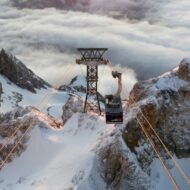
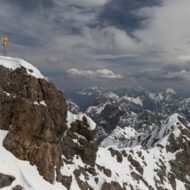
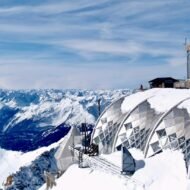
At nearly 10,000 feet, Germany’s highest peak is a popular ski area during winter and a challenging hiking trail the rest of the year. The views from the top are legitimately breathtaking – you can see into four countries on clear days.
Budget-Friendly Options:
Bavaria is surprisingly cheap compared to UK prices – local pubs in the countryside often serve beer for around one euro. Ski pass prices are also more reasonable than Swiss or Austrian mega-resorts.
Winter Activities That Aren’t Skiing
Snowshoe Hiking: The Schliersee region offers perfect conditions for snowshoe tours followed by Zipflbob (bobsled) descents. Multiple tour operators offer full-moon snowshoe experiences.
Ice Skating: Munich’s Ice Magic rink at Karlsplatz/Stachus runs November 20, 2025 – January 10, 2026. Hours: 10:30am-10pm daily.
Biathlon Experience: Take a biathlon course combining shooting and skiing – available year-round at various ski stadiums.
Krampus Run: December 14, 3-5pm at Munich’s Marienplatz features horned demons and Saint Nicholas in this wild tradition. The annual run attracts up to 50,000 onlookers during the Christkindlmarkt.
Bavarian Christmas Traditions You Need to Know
Advent Wreaths & The Build-Up
Advent starts the fourth Sunday before Christmas, with families decorating tables with Adventskranz (wreaths) featuring four candles – one lit each Sunday leading to Christmas.
St. Nicholas Day (December 6)
On December 5, children leave boots outside their doors for St. Nicholas; good kids find chocolates in the morning, naughty ones get twigs. In many Bavarian towns, young men dress as Krampus (hairy devils) on December 5, running around with bells and chains scaring children.
This might sound terrifying, but it’s actually a beloved tradition – think of it as Bavaria’s version of Halloween, but more metal.
Christmas Eve (Heiligabend)
Many families attend church on Christmas Eve, either in the afternoon before dinner or for midnight service. In Bavaria, children believe the Christkind (baby Jesus) brings gifts, while northern Germany credits the Weihnachtsmann (Father Christmas).
The 25th & 26th
Both days are celebrated with extended family and friends, with businesses largely closed. This is family time – respect it if you’re visiting.
Practical Information: Making It Happen
Getting There & Around
Major Airports:
- Munich Airport (MUC) – main international hub
- Nuremberg Airport (NUE) – smaller but convenient for northern Bavaria
Train Travel: Germany’s Deutsche Bahn connects all major cities efficiently. Munich to Nuremberg takes about 1 hour. Consider the Bayern-Ticket for unlimited regional train travel (around €25-35 for groups).
Driving: Renting a car gives you flexibility to hit smaller markets and Alpine ski towns. Roads are excellent, and winter tires are mandatory November-April.
Where to Stay
Munich: Book early – seriously, like NOW. Hotels fill up fast. Look for accommodations near Marienplatz for market access, or in Haidhausen for a quieter, local vibe.
Nuremberg: The Karl August hotel is literally one minute from Hauptmarkt and gets rave reviews.
Ski Towns: Garmisch-Partenkirchen offers everything from budget hostels to luxury spa hotels. Book ski-in/ski-out properties if skiing is your priority.
Budget Hack: Look for accommodations in smaller surrounding towns and use regional trains to access major markets.
Weather & Packing
December temperatures average 0-5°C (32-41°F). Snow is common in the Alps, less guaranteed in cities.
Essential packing:
- Warm, waterproof coat
- Layers (thermal base layers are your friend)
- Comfortable, waterproof boots with good traction
- Gloves, scarf, warm hat
- Small daypack for market purchases
- Reusable mug (many markets offer discounts if you bring your own)
Money Matters
Germany uses the euro (€). Credit cards are widely accepted but cash is still king at market stalls. Budget €50-100 per day for market food/drinks, plus activities and accommodations.
Market costs:
- Glühwein: €3-5 per mug (plus €3-5 deposit on the mug itself)
- Bratwurst: €3-6
- Lebkuchen: €5-15 per box
- Ski day passes: €35-60 depending on resort
Sustainability Tips
- Choose eco-friendly hotels using renewable energy
- Use public transit whenever possible
- Order thoughtfully to reduce food waste
- Buy quality, lasting gifts rather than plastic junk
- Support vendors selling regional products – Munich’s Tollwood Winter Festival emphasizes ethical consumption and eco-friendly products
Sample Itineraries
Weekend Christmas Market Blitz (3 days)
Day 1 – Munich:
- Morning: Arrive, drop bags, hit Christkindlmarkt at Marienplatz
- Afternoon: Explore medieval market at Wittelsbacherplatz
- Evening: Tollwood Winter Festival for alternative market vibes
- Dinner: Traditional Bavarian at Hofbräuhaus
Day 2 – Day Trip to Nuremberg:
- Train to Nuremberg (1 hour)
- Morning: Christkindlesmarkt shopping and lebkuchen tasting
- Afternoon: Old Town exploration, horse-carriage ride
- Evening: Return to Munich or stay overnight in Nuremberg
Day 3 – Munich & Alpine Day Trip:
- Morning: Quick market revisit for last-minute gifts
- Midday: Train to Garmisch-Partenkirchen (1.5 hours)
- Afternoon: Cable car to Zugspitze for views
- Evening: Return to Munich for departure
Week-Long Bavaria Christmas Deep Dive (7 days)
Days 1-2: Munich – Hit multiple markets, explore beer halls, take in city sights
Day 3: Rothenburg ob der Tauber – Medieval market magic, Käthe Wohlfahrt museum
Day 4: Nuremberg – Full day at Christkindlesmarkt, Old Town Christmas
Days 5-6: Garmisch-Partenkirchen – Ski Garmisch Classic, visit Zugspitze, winter hiking
Day 7: Regensburg or Lake Chiemsee – Castle market or island market, then departure
The Stuff No One Tells You (But Should)
Market Timing: Arrive at markets by 5pm to see them in full evening glow with lights. Weekends are packed; Tuesday-Thursday afternoons are quieter.
Glühwein Strategy: The Grünwalder Turmbläser traditionally play at the end of Munich’s market on December 24 at 12 noon – catch this if you’re there Christmas Eve.
Language: English widely spoken in tourist areas, but learning basic German phrases earns you genuine smiles. “Ein glühwein, bitte” (one mulled wine, please) will serve you well.
Christmas Day Closures: December 25-26, basically everything shuts down. Stock up on food/snacks beforehand if you’re staying in Bavaria.
The Mug Thing: When you buy glühwein, you pay a deposit (Pfand) for the decorative ceramic mug. Return it for your money back, or keep it as a souvenir. Each market has unique designs.
Bathroom Situation: Public toilets at markets usually cost €0.50-1. Always carry small change.
Final Thoughts: Why Bavaria at Christmas Isn’t Optional
Look, you could spend Christmas at home doing the same things you do every year. Or you could stand in a centuries-old square, snow falling around you, sipping mulled wine from a hand-painted ceramic mug while accordion music drifts through the air and the smell of roasted almonds makes your mouth water.
You could ski down Alpine slopes in the morning and wander through candlelit market stalls in the evening. You could eat gingerbread made from recipes older than your country. You could watch horned demons chase children through medieval streets (in a fun way, we promise). You could experience Christmas the way it was meant to be experienced – with history, tradition, genuine warmth, and just the right amount of organized chaos.
Bavaria doesn’t do Christmas – Bavaria IS Christmas. And 2025 is your year to experience it.
Prost, and Frohe Weihnachten!
Pro tip: Found this guide helpful? Screenshot your favorite sections before you go – German wifi can be spotty in Alpine areas, and you’ll want these recommendations handy while market-hopping.