
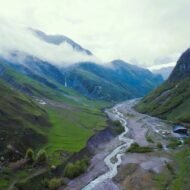
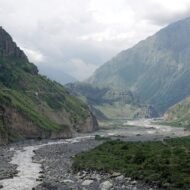
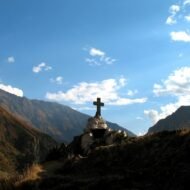
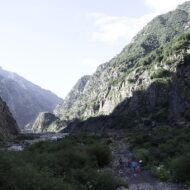
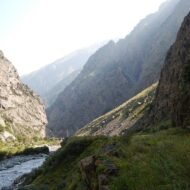

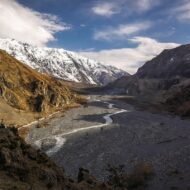
The Darial Gorge is a jaw-dropping natural wonder on Georgia’s northern border where 2,000-meter cliffs squeeze the roaring Tergi River into a narrow passage. Located along the famous Georgian Military Highway between Tbilisi and the Russian border, this ancient Silk Road gateway offers stunning views, Soviet monuments, mineral springs, and some of the most dramatic mountain scenery you’ll ever witness. Best visited May-October, it’s a 2-3 hour drive from Tbilisi and combines perfectly with visits to Kazbegi/Stepantsminda.
- What Exactly Is the Darial Gorge?
- Why Visit? (Besides the Obvious Jaw-Dropping Views)
- Getting There: Your Route Options
- What You’ll Actually See
- The Gorge Itself
- Russia-Georgia Friendship Monument
- Mineral Springs and Wellness Spots
- Church of Archangels at Sioni
- The Border Checkpoint
- Best Time to Visit
- Practical Tips for Your Visit
- Where to Stay
- Food and Facilities
- Historical Context: Why This Gorge Matters
- Ancient Silk Road Gateway
- Strategic Military Importance
- The Georgian Military Highway
- Soviet Era and Beyond
- Common Questions Answered
- Photography Tips
- Environmental Considerations
- Why the Georgian Side Is Where You Want to Be
- Final Thoughts: Is It Worth It?
- Recap: Your Darial Gorge Quick Reference
Look, I’m not one for hyperbole, but the first time you drive through the Darial Gorge, your brain might actually short-circuit trying to process what you’re seeing. Imagine cliffs so tall and steep that they block out the sun for hours at a time, a river so wild it sounds like permanent thunder, and a road carved into the mountainside that makes you wonder what kind of absolute madman designed this route.
Welcome to one of the Caucasus Mountains’ most spectacular natural formations.
What Exactly Is the Darial Gorge?
The Darial Gorge (დარიალის ხეობა in Georgian) is a roughly 11-kilometer river canyon carved by the Tergi River (known as Terek in Russian) through the Greater Caucasus Mountains. The gorge marks the border between Georgia and Russia, with the Georgian side offering the accessible, travel-friendly experience.
The name “Darial” comes from the Persian “Dar-e Alān,” meaning “Gate of the Alans,” referring to the ancient Alanian people who once controlled this strategic chokepoint. For millennia, this narrow passage was one of the few viable routes through the Caucasus, making it a prize fought over by Persians, Romans, Georgians, Russians, and countless others who understood that controlling the Darial meant controlling trade and military movements between the Caucasus and the plains beyond.
Why Visit? (Besides the Obvious Jaw-Dropping Views)
It’s on the Georgian Military Highway – one of the world’s most scenic road trips, connecting Tbilisi to Russia through some of the most spectacular mountain terrain you’ll ever experience.
The sheer scale is mind-bending – we’re talking vertical rock walls rising 1,000 to 2,000 meters (3,280 to 6,560 feet) straight up from the valley floor. Photos don’t do it justice.
Historical significance – this isn’t just pretty scenery. You’re driving through what was essentially the Caucasus’s main security checkpoint for 2,000+ years.
Easy access – unlike many mountain gorges, this one comes with a paved road, making it accessible even if you’re not an extreme adventurer.
It pairs perfectly with Kazbegi – most travelers hit the Darial Gorge on their way to or from Stepantsminda (formerly Kazbegi), creating one epic mountain day trip.
Getting There: Your Route Options
From Tbilisi (The Most Common Route)
The Darial Gorge sits about 145 kilometers north of Tbilisi along the famous Georgian Military Highway (E117). Here’s what you need to know:
By Private Car or Rental – This is hands-down the best option if you can swing it. The drive takes 2.5-3 hours depending on how many photo stops you make (spoiler: you’ll make many). The road is paved and well-maintained, though it gets narrow and winding in sections.
Marshrutka (Shared Minibus) – Catch one from Didube Bus Station in Tbilisi heading to Stepantsminda. Cost is around 10-15 GEL ($3.50-5.50). The driver will blast through the gorge at speeds that might make you question your life choices, but you’ll get there. The catch? Limited photo stops and you’re on the marshrutka’s schedule.
Private Taxi/Tour – Expect to pay 150-250 GEL ($55-90) for a day trip from Tbilisi that includes stops at the gorge and other highlights along the Georgian Military Highway. Many drivers will wait while you explore and take photos.
Organized Tour – Numerous companies in Tbilisi run day tours along the Georgian Military Highway, typically including Ananuri Fortress, Gudauri, Kazbegi, and the Darial Gorge. Prices range from 80-150 GEL ($30-55) per person.
From Stepantsminda/Kazbegi
If you’re based in Stepantsminda, the gorge is only about 15 kilometers north. You can:
- Hire a taxi for a quick trip (30-50 GEL/$11-18 round trip)
- Rent a car and drive yourself
- Join a border-viewing tour from town
- Even hike it if you’re feeling ambitious (though the narrow road makes this less pleasant than it sounds)
What You’ll Actually See
The Gorge Itself
The Darial Gorge proper begins just north of the village of Dariali and extends to the border checkpoint. As you drive north:
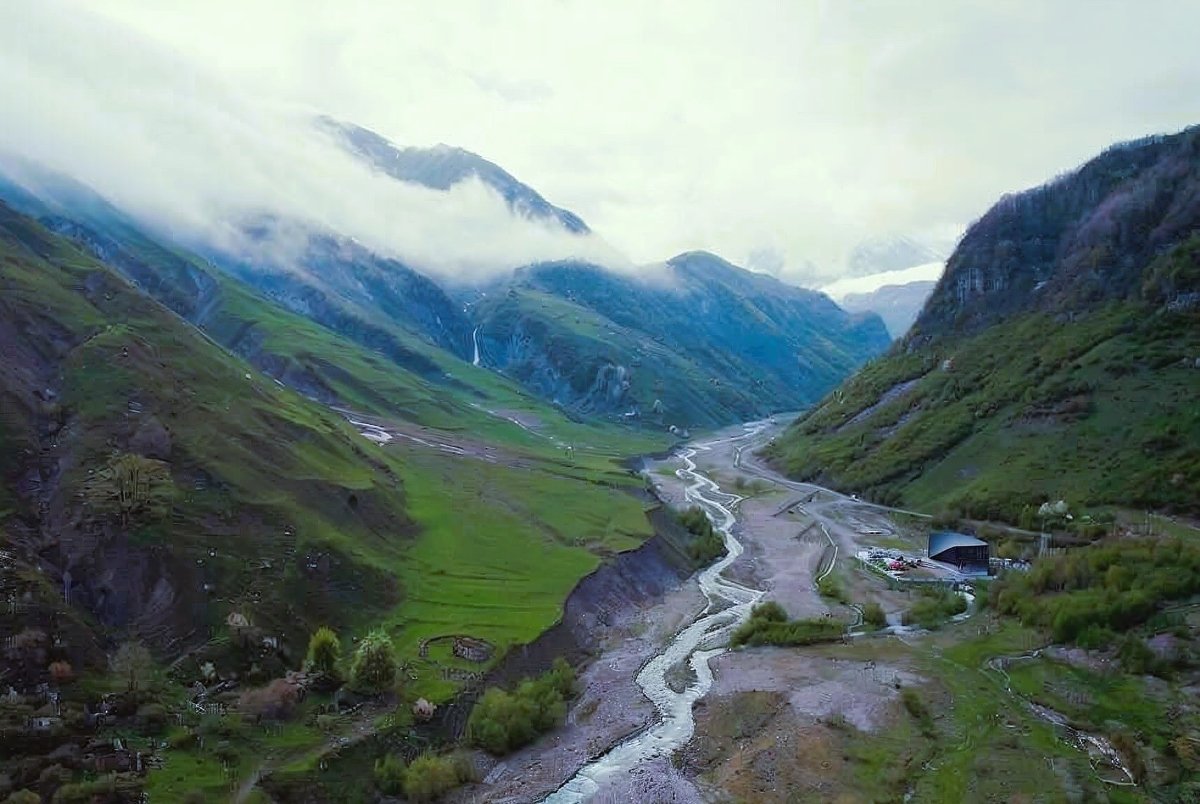
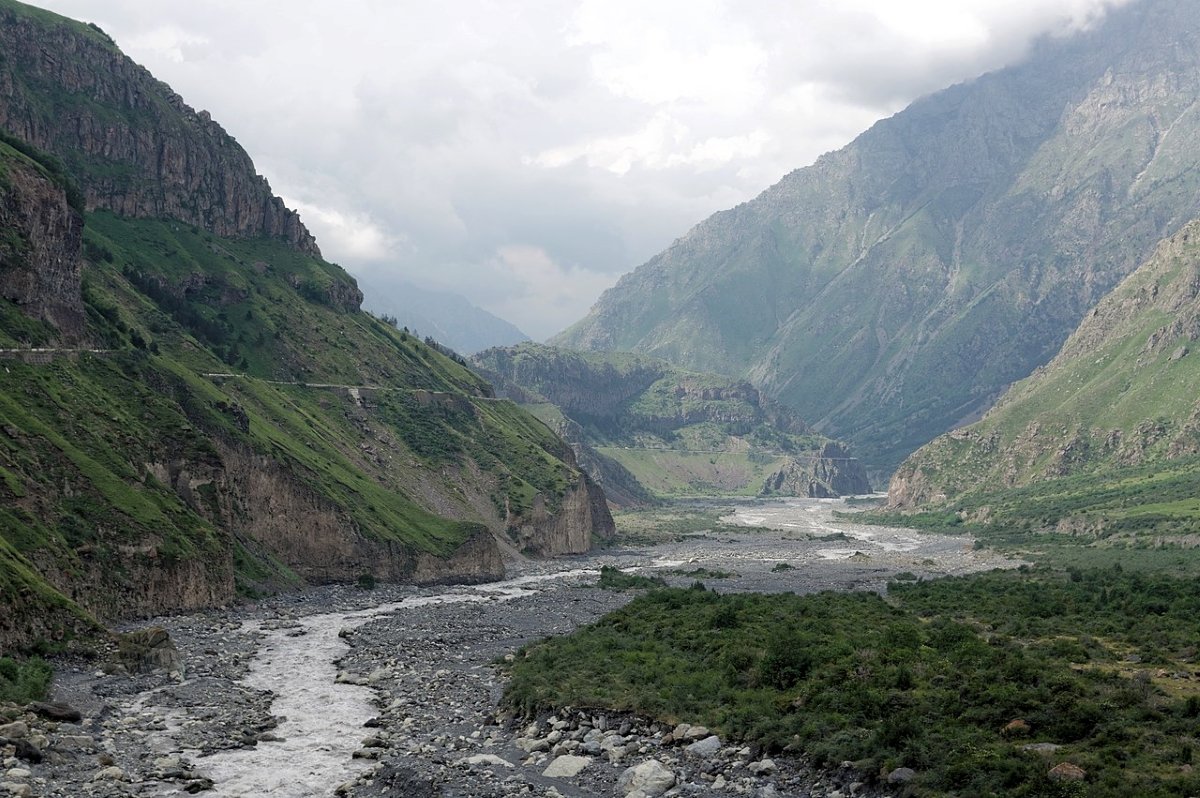
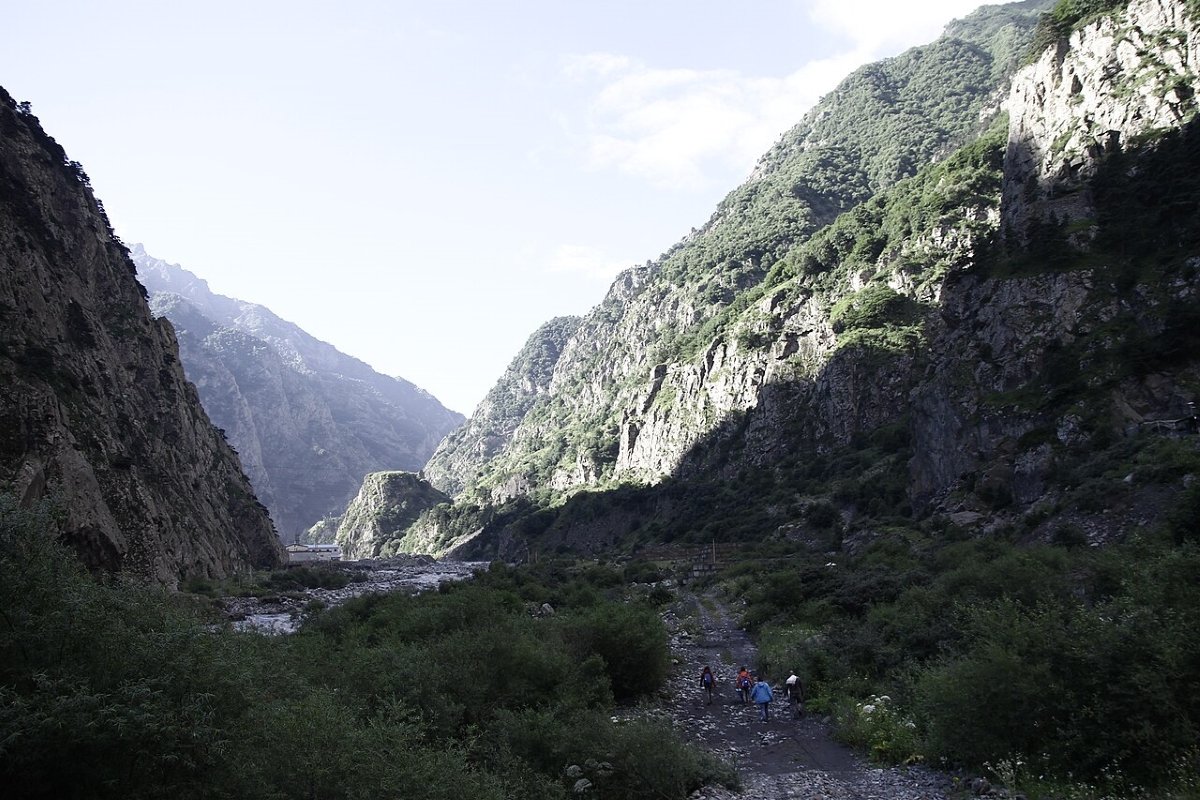
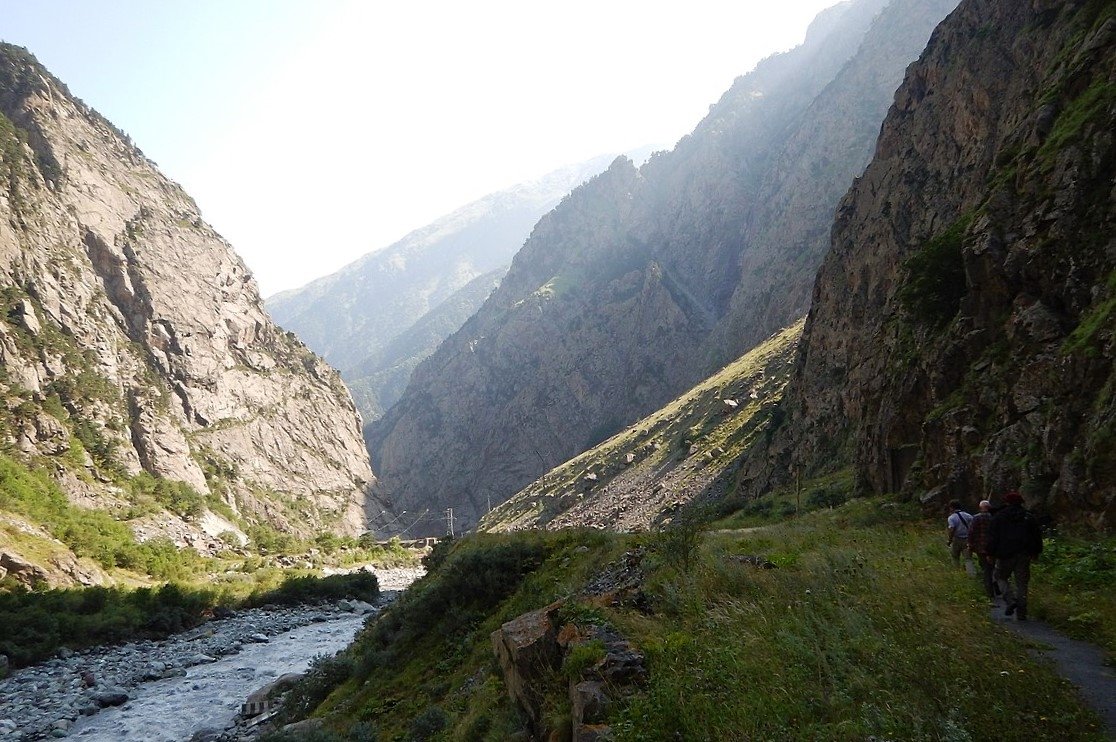
The walls close in – dramatically. At its narrowest points, the gorge is only about 150 meters wide with cliffs soaring straight up on both sides. The effect is like driving through a crack in the earth’s crust.
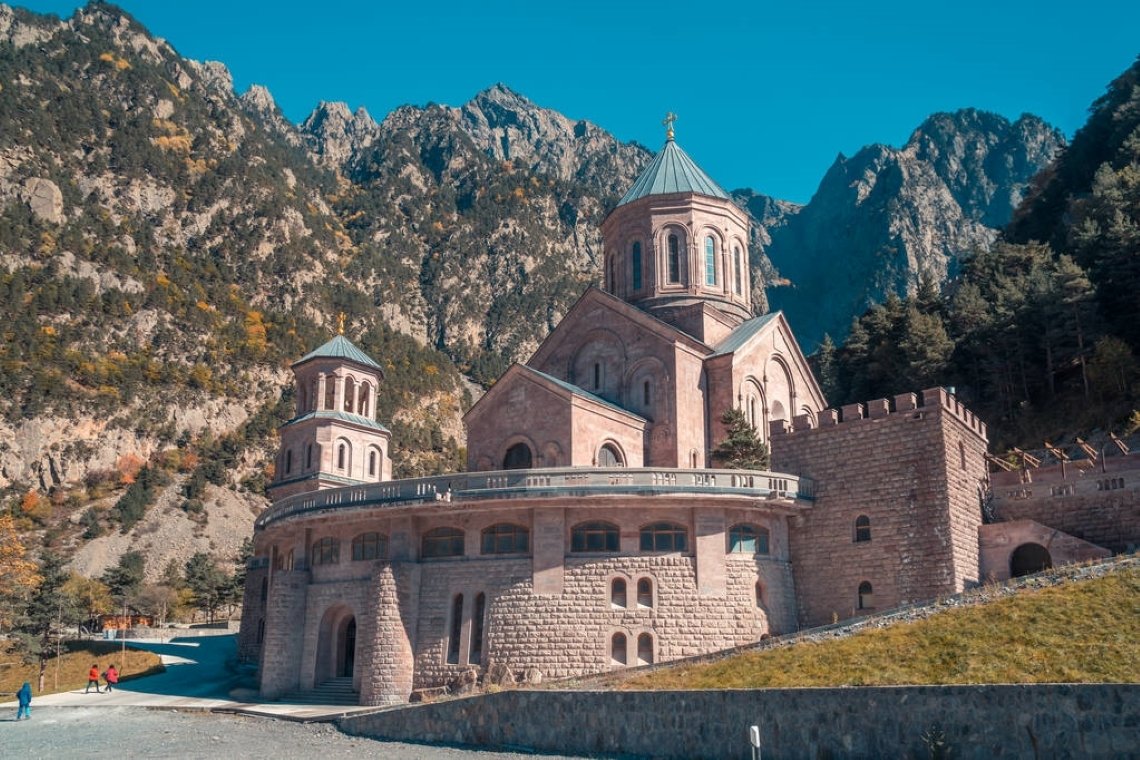
Dariali Gorge Monastery Complex : Situated dramatically at the “Gate of the Caucasus,” this spiritual sanctuary offers breathtaking mountain views and a taste of Georgia’s newest monastic traditions.
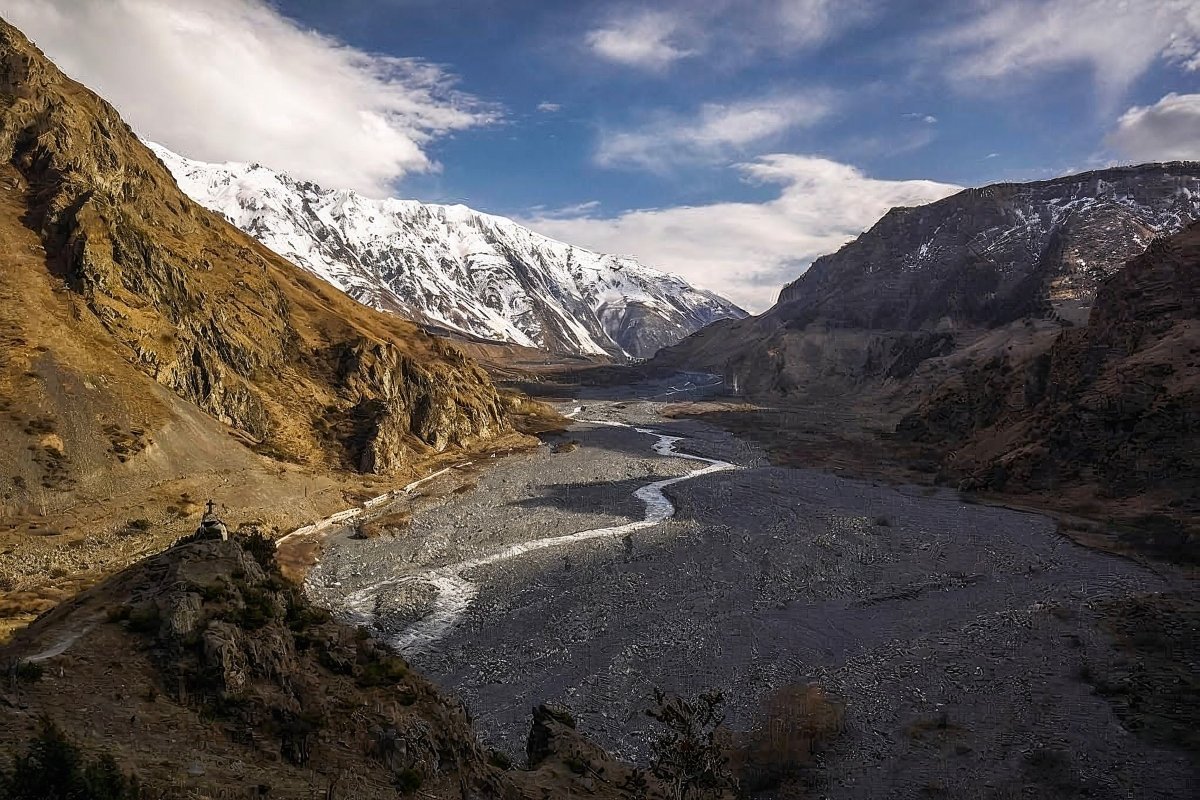
The Tergi River rages below – depending on the season, this glacial-fed river can be a roaring torrent of milky-blue water or a more subdued (but still impressive) flow. In spring and early summer when snowmelt is at its peak, the sound is absolutely thunderous.
The road hugs the cliff – in many sections, the highway is literally carved into the rock face with sheer drops on one side and vertical walls on the other. It’s exhilarating and slightly terrifying in equal measure.
Russia-Georgia Friendship Monument
About 4 kilometers before you reach the gorge proper, you’ll pass this Soviet-era monument that looks like something from a science fiction film. Built in 1983, this circular structure with its colorful interior mosaics commemorates the 1783 Treaty of Georgievsk between Georgia and Russia. The monument sits at 2,384 meters elevation with panoramic views of the surrounding peaks.
Is it worth stopping? Absolutely. The exterior is striking against the mountain backdrop, and if the interior is open (not always guaranteed), the Soviet mosaics are fascinating historical artifacts. Plus, the viewpoint here gives you a preview of the dramatic landscape ahead. MORE READ..
Mineral Springs and Wellness Spots
The Dariali area is known for its mineral springs. Near the village of Dariali, you’ll find several spots where naturally carbonated mineral water bubbles up from the ground. Locals swear by its health properties, and honestly, after trying it, you’ll understand why Georgians are so enthusiastic about their mineral waters. It’s cold, fizzy, and has a distinctive mineral tang.
Church of Archangels at Sioni
Just before entering the gorge, this small church sits perched on a rocky outcrop overlooking the valley. It’s not ancient by Georgian standards (rebuilt in the 19th century), but the location is spectacular. If you’ve got 15 minutes, the short walk to the church offers excellent photo opportunities and a moment of quiet before the gorge’s intensity.
The Border Checkpoint
The road ends at the Dariali border crossing with Russia. You can drive right up to the checkpoint area (but obviously not cross unless you have the proper documents and permissions). The checkpoint itself isn’t particularly scenic, but the context is significant. Beyond this point, the gorge continues north into Russia’s North Ossetia region.
Important: Don’t photograph the actual border facilities or military installations. Georgian border guards are generally professional, but photographing border infrastructure anywhere in the world is a bad idea.
Best Time to Visit
May to October: Prime Time
This is when the Georgian Military Highway is reliably open and weather conditions are most favorable. Here’s the breakdown:
May-June (Spring): The snowmelt makes the Tergi River absolutely spectacular, with maximum water flow and that stunning milky-blue color from glacial sediment. Temperatures are cool but pleasant. Wildflowers start appearing on the mountainsides. Potential downside: rain is more common.
July-August (Summer): Peak tourist season with the warmest weather and most reliable conditions. The gorge can get crowded, especially on weekends, and accommodations in Stepantsminda book up fast. The river flow decreases a bit but remains impressive.
September-October (Autumn): My personal favorite. Fewer crowds, gorgeous autumn colors on the lower slopes, and still-decent weather. Early October can be absolutely stunning, though by late October, winter weather becomes a real possibility.
November to April: Winter Considerations
The gorge doesn’t close per se, but winter travel comes with serious caveats. Heavy snow can close the Georgian Military Highway for days or weeks at a time. Avalanche risk is real. If the road is open, you’ll need winter tires or chains, and ideally a 4WD vehicle.
That said, if you’re experienced with winter mountain driving and the road is confirmed open, the gorge in winter is hauntingly beautiful with frozen waterfalls and snow-capped cliffs. Just be prepared to turn back if conditions deteriorate.
Practical Tips for Your Visit
Safety Considerations
Watch for rock falls – the cliffs are constantly eroding, and small rocks frequently tumble onto the road. Keep moving and don’t linger directly under cliff faces.
Respect the river – the Tergi is cold, fast, and dangerous. People drown in Caucasus rivers every year. Look but don’t wade.
Drive defensively – the road through the gorge is narrow with many blind corners. Georgian drivers can be… enthusiastic. Stay alert.
Border awareness – you’re in a border region. Don’t wander off marked paths, and absolutely don’t attempt to cross into Russia except through the official checkpoint.
Weather changes fast – mountain weather is unpredictable. Bring layers even in summer, and if fog rolls in, be prepared to slow down significantly.
Where to Stop for Photos
The thing about the Darial Gorge is that every 50 meters looks like it deserves a photo. That said, here are the spots most worth pulling over:
Just after the Sioni Church area – as the gorge begins to narrow, there are a few pullouts with excellent views north into the canyon.
About 3 kilometers before the border – there’s a wider section with safe parking and spectacular views of the narrowest part of the gorge.
The border checkpoint area itself – if you want that “end of the road” shot with mountains in the background.
Any of the turnouts on the return trip – seriously, the view changes completely when you’re driving south, so don’t think you’ve seen it all on the way up.
Combining with Other Attractions
Most travelers experience the Darial Gorge as part of a larger Georgian Military Highway adventure. Smart combinations include:
Ananuri Fortress – stunning 16th-century fortress overlooking the Zhinvali Reservoir, about 70 km north of Tbilisi.
Stepantsminda and Gergeti Trinity Church – the iconic church perched at 2,170 meters with Mount Kazbek as a backdrop. This is the headline attraction for most people doing the Georgian Military Highway.
Juta Valley – if you’re into hiking, this hidden valley offers some of the best trekking in the region.
A standard day trip from Tbilisi hits Ananuri, drives through Gudauri, reaches the Darial Gorge, then heads to Stepantsminda for the Gergeti Church before returning to Tbilisi. It’s a full day (12-14 hours) but absolutely worth it.
Where to Stay
There’s no accommodation actually in the gorge itself (it’s just too narrow and steep), but you have options nearby:
Stepantsminda/Kazbegi (15 km south)
This is the logical base for exploring the area. Options range from budget guesthouses (30-50 GEL/$11-18 per night) to boutique hotels with mountain views (150-300 GEL/$55-110 per night). Book ahead in summer.
Budget picks: Numerous family-run guesthouses line the main road. Look for signs saying “Rooms” or ask at the tourism information office.
Mid-range: Hotel Porta Caucasia and Kazbegi Rooms offer solid comfort with great views.
Splurge: Rooms Hotel Kazbegi is the design hotel that put Stepantsminda on the luxury travel map, with floor-to-ceiling windows facing Mount Kazbek.
Dariali Village (At the gorge entrance)
A handful of guesthouses cater to travelers who want to be right at the gorge’s doorstep. It’s quieter than Stepantsminda but with fewer dining options. Expect to pay 40-70 GEL ($15-25) per night.
Gudauri (40 km south)
If you’re visiting in winter or want resort amenities, Gudauri offers ski-in/ski-out accommodation and more of a resort vibe.
Food and Facilities
Let’s be real: this is a mountain gorge, not a resort town. Facilities are limited.
In the gorge itself: Zero. There’s nowhere to buy food, water, or use a bathroom between Stepantsminda and the border. Plan accordingly.
Dariali village: A couple of small shops and maybe a restaurant or two, but don’t count on much.
Your best bet: Pack snacks and water before leaving Stepantsminda or Tbilisi. If you’re doing a day trip, many travelers pack a picnic lunch to enjoy at one of the viewpoints.
Mineral water: As mentioned, there are natural springs near Dariali where you can fill up bottles with fresh, carbonated mineral water for free. Locals do it all the time.
Historical Context: Why This Gorge Matters
Understanding a bit of history makes the Darial Gorge infinitely more interesting than just “wow, big cliffs.”
Ancient Silk Road Gateway
For millennia, the Darial was one of the only practical routes for moving goods and armies between the Caucasus and the steppes beyond. Caravans carrying silk, spices, and other valuable commodities paid tolls to pass through here. Controlling the Darial meant controlling trade.
Strategic Military Importance
Pretty much every empire that operated in this region fought over the Darial. The Romans built fortifications here. The Persians garrisoned troops to guard the passage. Medieval Georgian kingdoms built fortresses (most now ruined) to control the route. The Russian Empire made control of the Darial a strategic priority.
The Georgian Military Highway
The current road through the gorge follows the Georgian Military Highway, built by the Russian Empire between 1799 and 1814 to connect the Russian plains with newly acquired Georgian territories. For its time, this was an engineering marvel, and portions of the original stone-paved road can still be seen in places.
Soviet Era and Beyond
During Soviet times, the gorge was part of a major north-south transportation route. The Friendship Monument reflects the Soviet narrative of Georgian-Russian unity (a narrative that’s… complicated in modern times).
Since Georgian independence in 1991 and especially after the 2008 Russo-Georgian War, the border has been much more significant, with the Darial crossing being one of the few official crossings between the two countries.
Common Questions Answered
Can I cross into Russia?
Only if you have the proper visas and permissions. Georgian and Russian citizens can cross here, as can third-country nationals with appropriate visas for both countries. However, be aware that if you enter Russia from Georgia, some countries (including Georgia itself) may consider this an illegal entry into occupied territory if you later enter South Ossetia or Abkhazia from Russia.
Is the road safe?
Generally yes, though it requires attention and respect. The road is paved and maintained, but it’s narrow with significant drop-offs in places. Drive carefully, especially in poor weather.
Do I need a 4WD vehicle?
In summer, no. A regular car is fine. In winter or questionable weather, yes, you absolutely want 4WD or at least a vehicle with good winter tires.
How long should I spend in the gorge?
Most people drive through in about 30-45 minutes with a few photo stops. If you want to really explore, take short walks, and soak in the atmosphere, budget 1.5-2 hours.
Are there hiking trails?
Not official marked trails through the gorge itself. The terrain is too steep and unstable. However, the surrounding mountains have numerous hiking options, particularly around Stepantsminda and Juta.
What about mobile phone service?
Georgian mobile networks (Magti, Geocell, Beeline) all have coverage through most of the gorge, though it can be spotty in the deepest sections. As you approach the border, signals may get confused with Russian towers.
Photography Tips
The Darial Gorge is genuinely one of the most photogenic places in Georgia, but it presents some challenges:
Timing matters – the gorge runs roughly north-south, so the angle of sunlight changes dramatically through the day. Morning light (9-11am) often provides the best conditions, with the sun high enough to illuminate the gorge walls.
Narrow angles work best – the gorge is so deep and narrow that wide-angle shots often fail to capture the sense of scale. Try tighter compositions focusing on specific cliff formations or the contrast between walls and sky.
Include a sense of scale – cars on the road, people at viewpoints, or buildings can help convey just how massive these cliffs are.
Watch your exposures – the contrast between shadowed gorge floor and bright sky can fool your camera’s meter. Consider bracketing your shots or using graduated filters.
Polarizing filter – helps cut through haze and enhances the colors of both the rock and the milky-blue river.
Safety first – don’t stand in the road for photos, no matter how good the shot looks. Georgian drivers come around corners fast.
Environmental Considerations
The Darial Gorge is a natural wonder that deserves respect. As tourism increases along the Georgian Military Highway, please:
Pack out all trash – there are no bins in the gorge itself. Take everything with you.
Stay on established paths – the cliff sides are unstable, and erosion is a real problem.
Don’t add to the rock cairns – while well-intentioned, these human-made rock piles can destabilize slopes and detract from the natural beauty.
Respect mineral springs – don’t contaminate them with soap or waste.
Drive responsibly – slow down for local residents and give way on narrow sections.
Why the Georgian Side Is Where You Want to Be
While the gorge technically straddles the border, the Georgian side offers several advantages for travelers:
Accessibility – Georgia has positioned itself as a tourist-friendly destination with minimal visa requirements for most nationalities, straightforward logistics, and excellent hospitality infrastructure.
Context and connections – the Georgian side connects naturally with other major attractions (Kazbegi, Ananuri, Tbilisi) making it easy to incorporate into broader Georgia travels.
No political complications – visiting the Georgian side doesn’t involve any complex geopolitical considerations or potential visa issues that might arise from visiting certain Russian border regions.
Better developed for tourism – accommodations, guides, and tourism services are all better established on the Georgian side.
Final Thoughts: Is It Worth It?
Here’s my honest take: if you’re in Georgia and you skip the Darial Gorge, you’re missing one of the country’s most spectacular natural wonders. Is it the only reason to visit Georgia? No. But is it an absolutely essential component of any trip that includes the Georgian Military Highway or the Kazbegi region? One hundred percent yes.
The combination of raw natural beauty, historical significance, and the sheer drama of the landscape makes this one of those places that stays with you long after you’ve left. Plus, the fact that you can experience it without serious hiking or technical climbing means it’s accessible to almost anyone willing to make the drive.
Just don’t blame me when you pull over every five minutes because you can’t believe what you’re seeing.
Recap: Your Darial Gorge Quick Reference
- Location: Northern Georgia, on the Georgian Military Highway, 145 km north of Tbilisi, 15 km north of Stepantsminda
- Best time: May-October, with September-early October being ideal for fewer crowds
- How long: 30-45 minutes drive-through, or 1.5-2 hours with photo stops
- Cost: Free to drive through; budget 10-15 GEL for marshrutka from Tbilisi, 150-250 GEL for private taxi/tour
- Essentials to bring: Water, snacks, camera, layers (weather changes fast), respectful attitude
- Combine with: Stepantsminda/Gergeti Church, Ananuri Fortress, Gudauri, Russia-Georgia Friendship Monument
- Base yourself in: Stepantsminda (best option) or Dariali village (quieter, fewer amenities)