







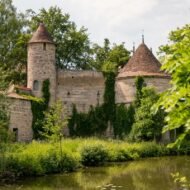
TL;DR: Dinkelsbühl is hands-down one of Europe’s most stunning medieval towns – think Rothenburg’s quieter, more authentic sibling. With perfectly preserved walls, half-timbered houses that look straight out of a fairy tale, and the best Franconian cuisine outside of Würzburg, this Bavarian beauty deserves a spot on every traveler’s bucket list.
- Why Dinkelsbühl Will Steal Your Heart (And Your Camera Roll)
- Getting There: Your Medieval Adventure Starts Here
- Where to Rest Your Weary Traveler’s Head
- What to See: Medieval Magic Awaits
- The Altstadt (Old Town) – Your Instagram’s New Best Friend
- St. George’s Church – More Than Just Pretty Architecture
- The Medieval Walls – Walk Like a Knight
- Bäuerlinsturm Tower – The Instagram Shot
- Museums
- Feast Like a Medieval Lord
- The Kinderzeche Festival – Pure Medieval Magic
- Money-Saving Tips for Savvy Travelers
- Beyond Dinkelsbühl: Day Trip Ideas
- Planning Your Perfect Dinkelsbühl Adventure
- Why Dinkelsbühl Beats the Tourist Traps
Why Dinkelsbühl Will Steal Your Heart (And Your Camera Roll)
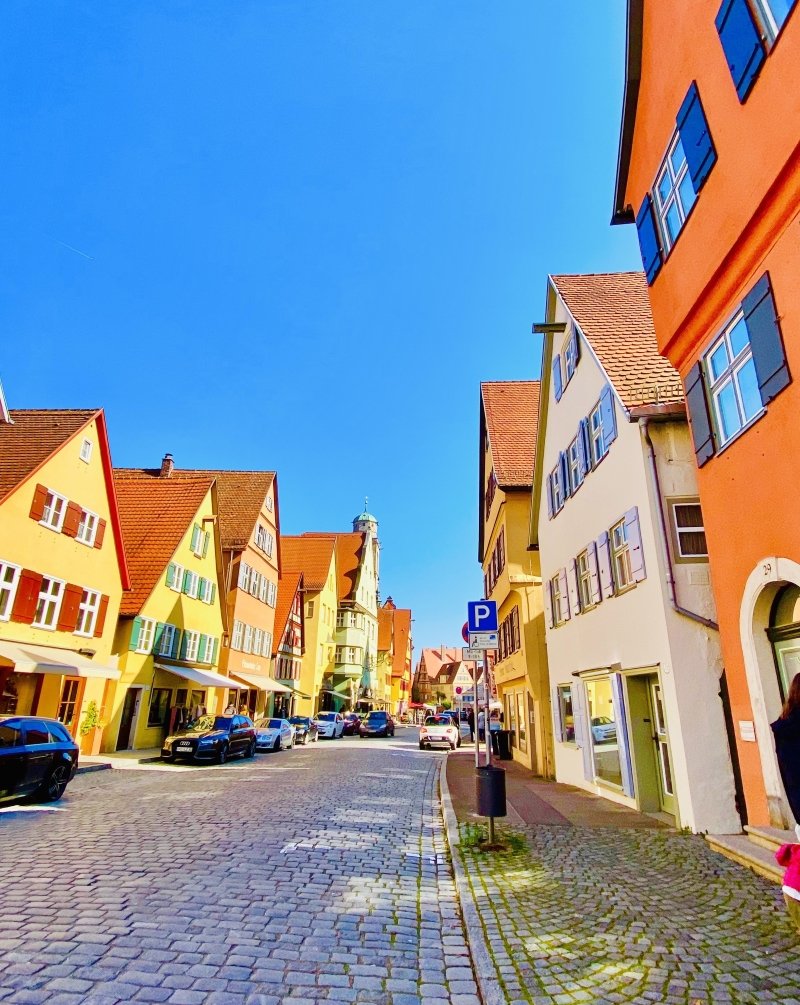
Picture this: cobblestone streets that haven’t changed in 600 years, colorful half-timbered houses with flower-filled balconies, and not a single chain restaurant in sight. Dinkelsbühl has captured hearts as supposedly “the most beautiful old town in Germany” according to Focus Magazine, and honestly? After walking these medieval streets, it’s hard to argue.
Unlike its famous neighbor Rothenburg ob der Tauber, Dinkelsbühl feels refreshingly authentic – less touristy, more genuine. You know that feeling when you stumble upon a place that feels like a well-kept secret? That’s Dinkelsbühl in a nutshell.
Getting There: Your Medieval Adventure Starts Here
By Car (Easiest Option) Dinkelsbühl is just a 2-hour drive from both Munich and Frankfurt, with plenty of parking available. The town sits perfectly along Germany’s famous Romantic Road, making it an ideal stop for a road trip through Bavaria.
By Train No direct train to Dinkelsbühl, but don’t let that stop you! You can reach the town via a combination of trains and buses through Ansbach and Feuchtwangen. Once you arrive at Dinkelsbühl station, it’s just a 10-minute walk to the town center.
Flying In Your closest airports are:
- Nuremberg Airport: 108km (best option for connections)
- Stuttgart Airport: 140km
- Munich Airport: 184km
Where to Rest Your Weary Traveler’s Head
Splurge-Worthy Stays
Hotel Deutsches Haus – Built in 1440, this former patrician house is now a refuge of good taste while preserving the character and charm of this traditional property. Think knight’s armor in the hallways, wood-paneled rooms, and a Michelin-recommended restaurant downstairs. Medieval luxury at its finest!
Meiser Design Hotel – This 4-star hotel features air-conditioned rooms, a fitness center, and excellent German breakfast. Perfect if you want modern amenities without sacrificing the historic location.
Boutique Charm
Luis & Hezelhof – A beautifully restored 17th-century residence with traditional flower-filled wooden balconies outside and minimalist white-on-white furnishings inside. Plus, they’ve got an amazing rooftop pool with cathedral views!
Budget-Friendly Options
Gasthaus Dollinger – Clean accommodations with wonderful communication, great breakfast, and they even welcome your furry travel companion. Located close to the Autobahn, so perfect for road trippers.
Pro Tip: Book parking in advance! There’s limited parking in Dinkelsbühl’s city center, so hotels with parking spots are gold.
What to See: Medieval Magic Awaits
The Altstadt (Old Town) – Your Instagram’s New Best Friend
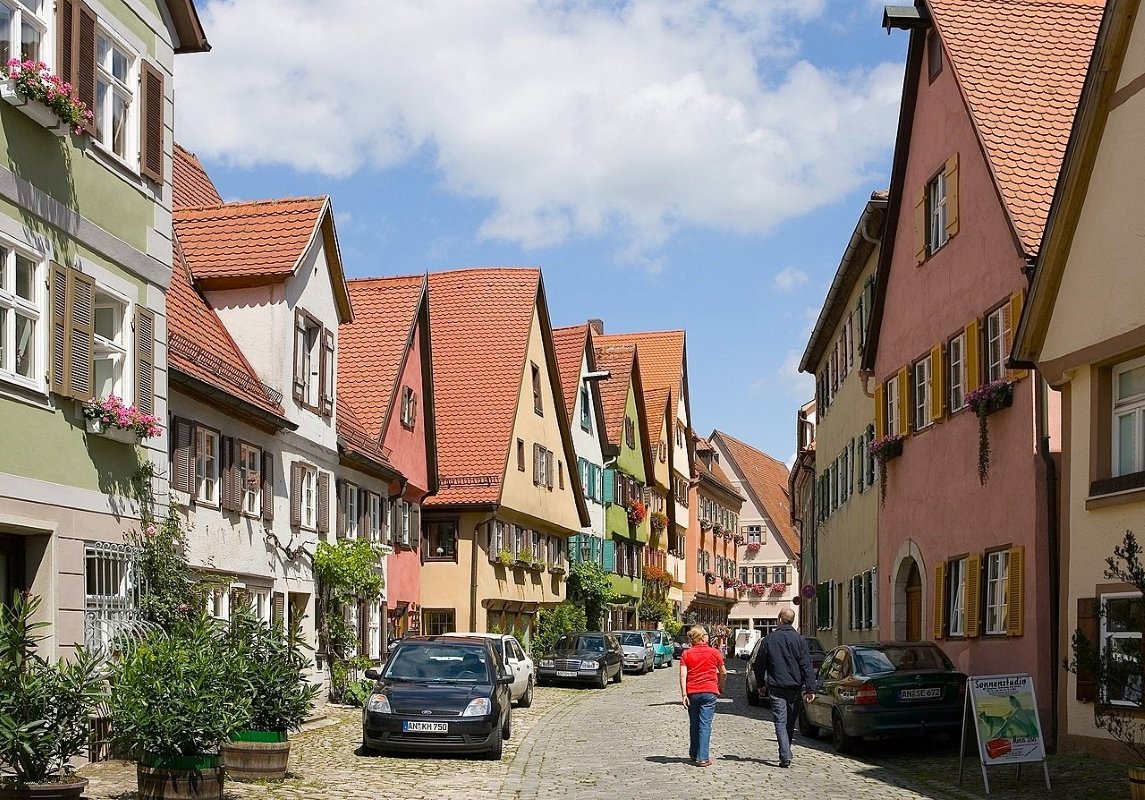
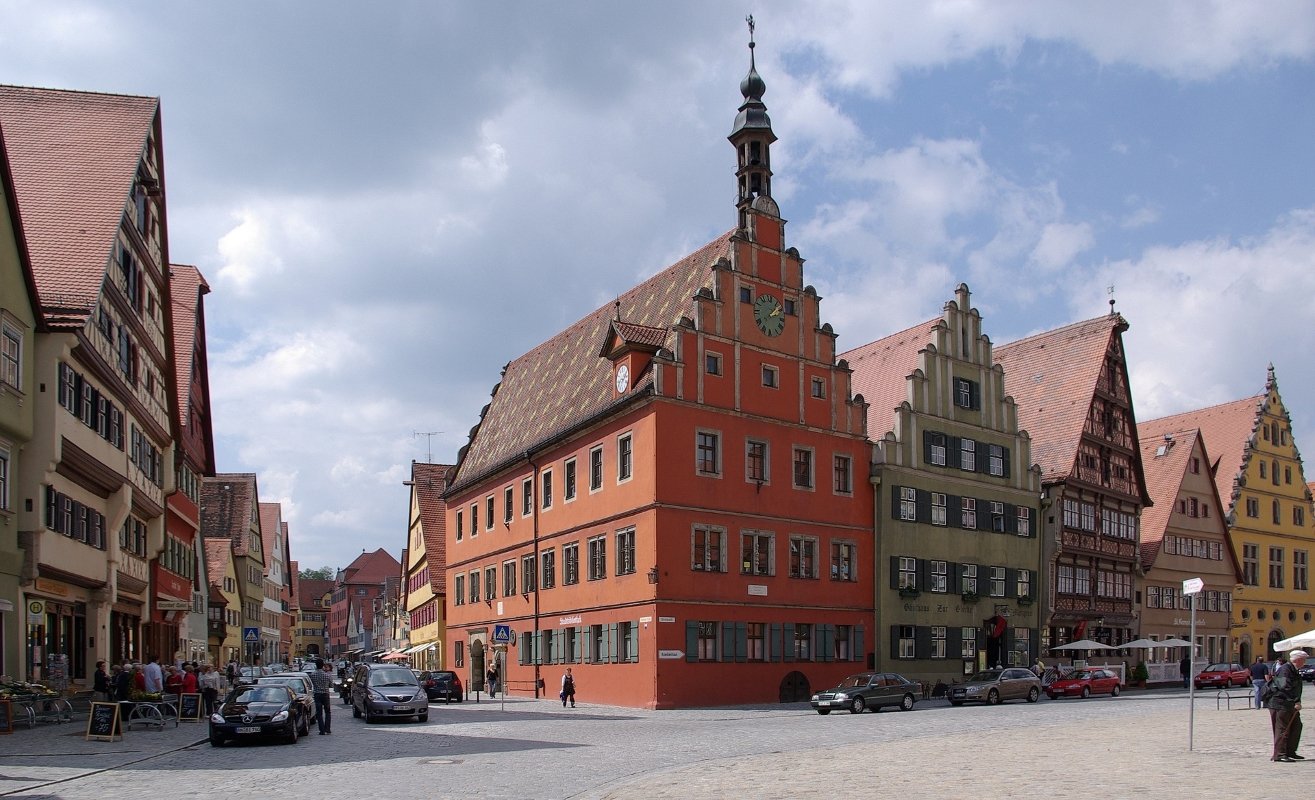
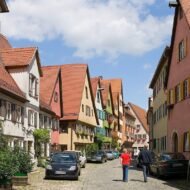
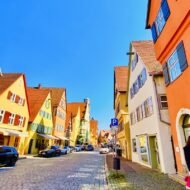
Dinkelsbühl is one of the most well-preserved medieval towns in Europe, filled with half-timbered and ornate 15th and 16th-century houses. The secret to its pristine condition? As industries declined, people didn’t have money for new construction, so the walled city stayed preserved for us to enjoy today.
Start your exploration at Weinmarkt (Wine Market) – showcasing medieval homes, flower-box windows, cobbled alleys, and restaurants, with magnificent houses dating from the early 1600s. This isn’t just a square; it’s a time machine.
St. George’s Church – More Than Just Pretty Architecture
This late-gothic church on the Marktplatz features the famous “pretzel window” donated by the Baker’s Guild. Climb the Romanesque tower for incredible views of the entire town – trust us, the leg workout is worth it.
The Medieval Walls – Walk Like a Knight
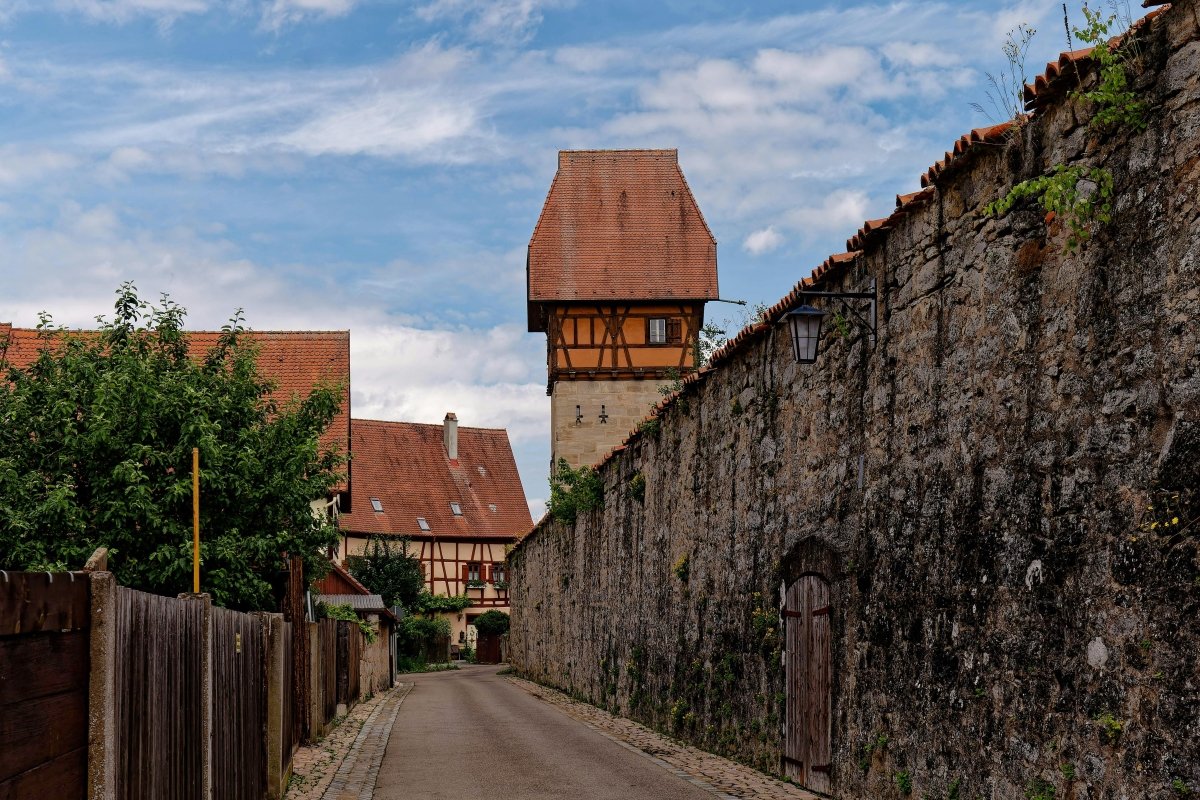
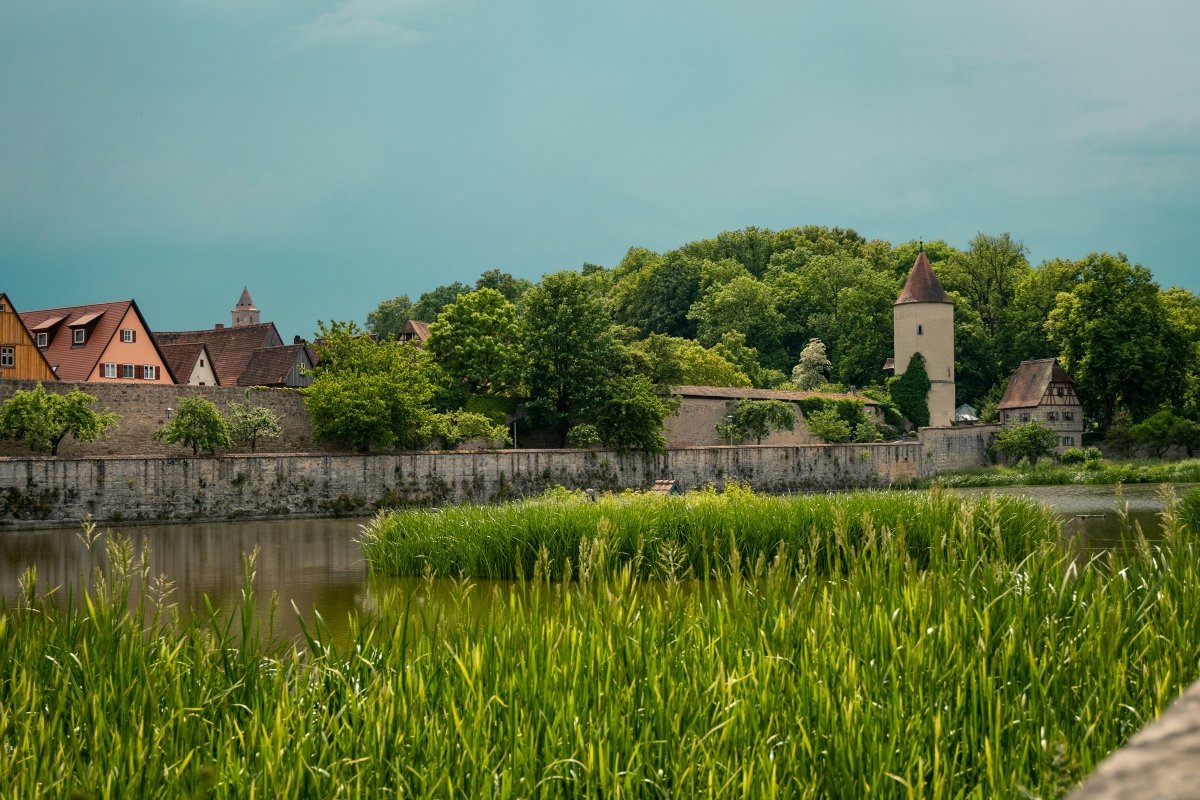
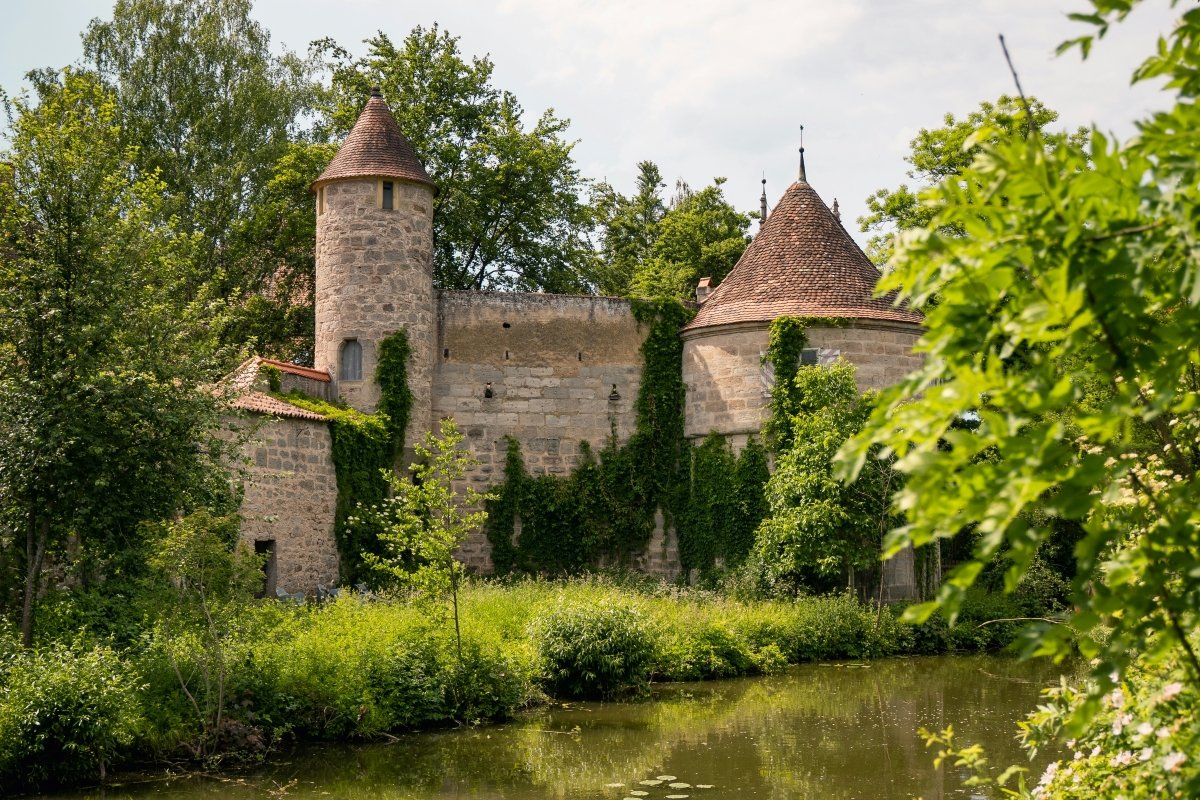
Dinkelsbühl is one of only three German towns to still have intact medieval defense walls (the others being Nördlingen and Rothenburg). You can walk around the city on its historic defense wall or on the outside via the Alte Promenade trail.
Bäuerlinsturm Tower – The Instagram Shot
Situated on the shores of the Wörnitz River, this 16th-century tower with its distinct half-timbered structure and sharply hipped saddle roof stands as an iconic symbol of Dinkelsbühl. This is THE postcard shot everyone’s after.
Museums
Haus der Geschichte (House of History)
This famous and impressive museum features an elaborate, yet modernly designed exhibition about Dinkelsbühl’s past. If you’re going to do one museum, make it this one.
Museum of the 3rd Dimension
Located in the Stadtmühle, featuring hands-on displays with fascinating three-dimensional effects. Primarily recommended for families with children, but let’s be honest – who doesn’t love a good optical illusion?
Kinderzech’-Zeughaus
Probably the most bizarre museum you’ll visit, housing costumes and accessories for the town’s famous Kinderzeche festival. The massive half-timbered building was erected at the beginning of the 16th century as a municipal granary and now serves as a museum for the Kinderzech collection.
Feast Like a Medieval Lord
Traditional Bavarian Fare
Hotel Deutsches Haus Restaurant – The interior restaurant on the ground floor is pleasingly harmonious, which the Michelin guide has given a “bib”. Medieval ambiance with modern culinary standards.
Mare e Monti – Highly recommended by locals, but suggest booking ahead to avoid missing out.
What to Order
Traditional taverns serve hearty dishes like Schäufele (pork shoulder) and Käsespätzle, paired with regional brews or a glass of local Silvaner. When in Bavaria, do as the Bavarians do!
Café Culture
Start your day wandering the pedestrianized streets where artisan shops, bakeries, and cozy cafés line the cobbles. Stop for a freshly baked Brötchen and strong German coffee at a pavement table overlooking the Weinmarkt.
The Kinderzeche Festival – Pure Medieval Magic
When: Annually around the third Monday in July
What’s the Deal: A traditional children’s and local festival with roots in the 17th century, where over 1,100 participants including all schoolchildren from years 1 to 8 bring the town’s history to life. The festival commemorates the rescue of the city during the Thirty Years War, when local legend says Dinkelsbühl children saved the town from the Swedes.
Why It’s Special: The Kinderzeche has been part of Germany’s intangible cultural heritage since 2016. This isn’t just a tourist show – it’s living history with genuine community involvement.
Pro Tip: Book accommodations well in advance for this period. The entire town transforms into a medieval wonderland!
Money-Saving Tips for Savvy Travelers
- Free Activities: St. George Church is a top spot for anyone planning to experience the city without reaching for their wallet. Walking the medieval walls costs nothing but gives you million-dollar views.
- Best Value Season: If you’re budget-conscious, consider traveling between September and November when hotel prices are generally lowest.
- Parking: Look for Parking P3 Alte Promenade – it’s mentioned frequently by travelers as a good option.
Beyond Dinkelsbühl: Day Trip Ideas
The Romantic Road Continues: Dinkelsbühl is perfectly positioned for exploring other Bavarian towns – Feuchtwangen, Ellwangen, and Crailsheim are all worth a visit.
Active Adventures: Dinkelsbühl is home to numerous riding stables where you can even rent your own horse for the day. Because what could be more medieval than exploring on horseback?
Planning Your Perfect Dinkelsbühl Adventure
Ideal Trip Length: 2-3 days lets you soak in the atmosphere without rushing. One day for the main sights, one for museums and relaxation, and an extra day for nearby excursions or festival activities.
Best Photo Spots:
- The Rothenburger Weiher (large pond) with the Rothenburger Tor (Gate) in the background
- Bäuerlinsturm Tower at golden hour
- Weinmarkt’s colorful houses
- St. George’s Church from the tower
Accessibility: There are parking restrictions in the heart of the city center; you can drive into the old town to unload suitcases, but may need to park outside the gates if your hotel doesn’t have parking.
Why Dinkelsbühl Beats the Tourist Traps
Let’s be real – Germany has plenty of “medieval” towns that feel more like theme parks than actual places where people live and work. Dinkelsbühl seems to be where time has stopped: Signs and business names are written in Old German script, and advertising space or building constructions don’t exactly exist here.
This isn’t about perfectly manicured tourist attractions. It’s about stumbling upon a baker who’s been using the same family recipe for generations, finding a tiny tavern where locals gather for their evening beer, and walking streets that have witnessed 800 years of history.
Bottom Line: Dinkelsbühl isn’t just another stop on the Romantic Road – it’s the stop that’ll make you question why you’ve been settling for crowded tourist magnets when gems like this exist. Pack comfortable walking shoes, bring your camera (and a backup battery), and prepare to fall head-over-heels for Bavaria’s best-kept secret.
Ready to time-travel to the Middle Ages? Dinkelsbühl is waiting to welcome you with open, historically accurate arms!