














Europe’s volcanic fields offer some of the continent’s most jaw-dropping landscapes that too many travelers overlook. These geological wonders aren’t just piles of rocks and steam vents; they’re living, breathing testimonies to Earth’s raw power lurking just beneath our feet. From Italy’s infamous Mount Vesuvius to Iceland’s otherworldly lava fields, European volcanoes deliver experiences you simply can’t find anywhere else.
- A Fiery History: Europe’s Volcanic Past
- Where Can Europe’s Volcanoes Be Found?
- Volcanic Fun Facts That Will Blow Your Mind
- Why Volcanic Tourism Should Be on Your Bucket List
- Europe’s Most Popular Volcanic Destinations
- Other Notable Volcanic Areas Worth Exploring
- Things To Do in Europe’s Volcanic Regions
- Volcanic Events Not to Miss
- Hiking and Cycling Volcanic Landscapes
- Travel Tips and Practical Information
- Sustainable Volcanic Tourism: Geoparks and Protected Areas
- Final Thoughts
Whether you’re a thrill-seeker wanting to peer into an active crater, a history buff fascinated by how volcanic eruptions shaped civilizations, or just someone who appreciates nature’s most dramatic scenery, volcanic tourism offers something that’ll blow your mind (pun absolutely intended). The best part? You don’t need to be a hardcore geologist or mountaineer to enjoy these spots – many volcanic areas in Europe are surprisingly accessible, with well-developed tourism infrastructure that makes visiting them a breeze.
In this guide, we’ll explore Europe’s most visitable volcanic wonders, from household names to hidden gems, with insider tips to make your volcanic adventure unforgettable. So pack your hiking boots (and maybe a heat-resistant camera) – we’re about to embark on a journey through Europe’s most explosive attractions!
A Fiery History: Europe’s Volcanic Past
Europe’s relationship with its volcanoes reads like a dramatic love story spanning thousands of years – full of fascination, fear, destruction, and rebirth. Ancient Greeks and Romans weren’t just aware of volcanoes; they wove them into their mythology, believing Mount Etna was the workshop of Hephaestus (or Vulcan), the god of fire and metalworking. The very word “volcano” comes from Vulcano, a small volcanic island off Sicily named after this fiery deity.
But it was the catastrophic eruption of Mount Vesuvius in 79 CE that permanently etched volcanoes into European consciousness. The cities of Pompeii and Herculaneum, frozen in time beneath ash and pumice, remain the most haunting testament to volcanic power in European history. When explorers rediscovered these perfectly preserved Roman towns in the 18th century, it sparked a volcano obsession across Europe that has never really died down.
Throughout the Middle Ages, volcanic eruptions were often interpreted as divine punishment, but by the Enlightenment, scientists began studying these phenomena more systematically. When Iceland’s Laki erupted in 1783, the resulting “dry fog” that spread across Europe helped pioneer the field of volcanology as scientists scrambled to understand what was happening.
The 20th century brought monitoring technologies that revolutionized our understanding of volcanoes, but also devastating reminders of their danger, like Mount Vesuvius’s 1944 eruption that destroyed multiple villages during World War II. More recently, the 2010 eruption of Iceland’s Eyjafjallajökull became infamous for grounding European air travel for weeks, introducing a new generation to the far-reaching impacts volcanic activity can have on modern life.
Despite their destructive capacity, communities across Europe have always rebuilt around these volcanoes, creating a uniquely resilient culture in volcanic regions that continues to this day.
Where Can Europe’s Volcanoes Be Found?
Europe’s volcanic hotspots cluster mainly in four distinct regions, each offering its own unique volcanic experience:
The Mediterranean Ring of Fire: The most volcano-dense area of Europe centers around Italy and its islands. Here you’ll find Mount Vesuvius looming over Naples, Mount Etna dominating eastern Sicily, and the Aeolian Islands with their continually smoking Stromboli – nicknamed the “Lighthouse of the Mediterranean” for its regular explosive displays. Nearby, mainland Greece and the stunning Santorini caldera demonstrate how volcanic forces have shaped Mediterranean civilization. The Methana volcanic peninsula in the Peloponnese and Catalonia’s La Garrotxa Volcanic Zone in northeastern Spain also belong to this fascinating region.
Iceland – The Land of Fire and Ice: Sitting directly on the Mid-Atlantic Ridge where two tectonic plates pull apart, nearly all of Iceland is a volcanic wonderland. From the famous Geysir that gave its name to all geysers worldwide to the massive lava fields of Reykjanes Peninsula, Iceland offers Europe’s most concentrated and accessible volcanic tourism.
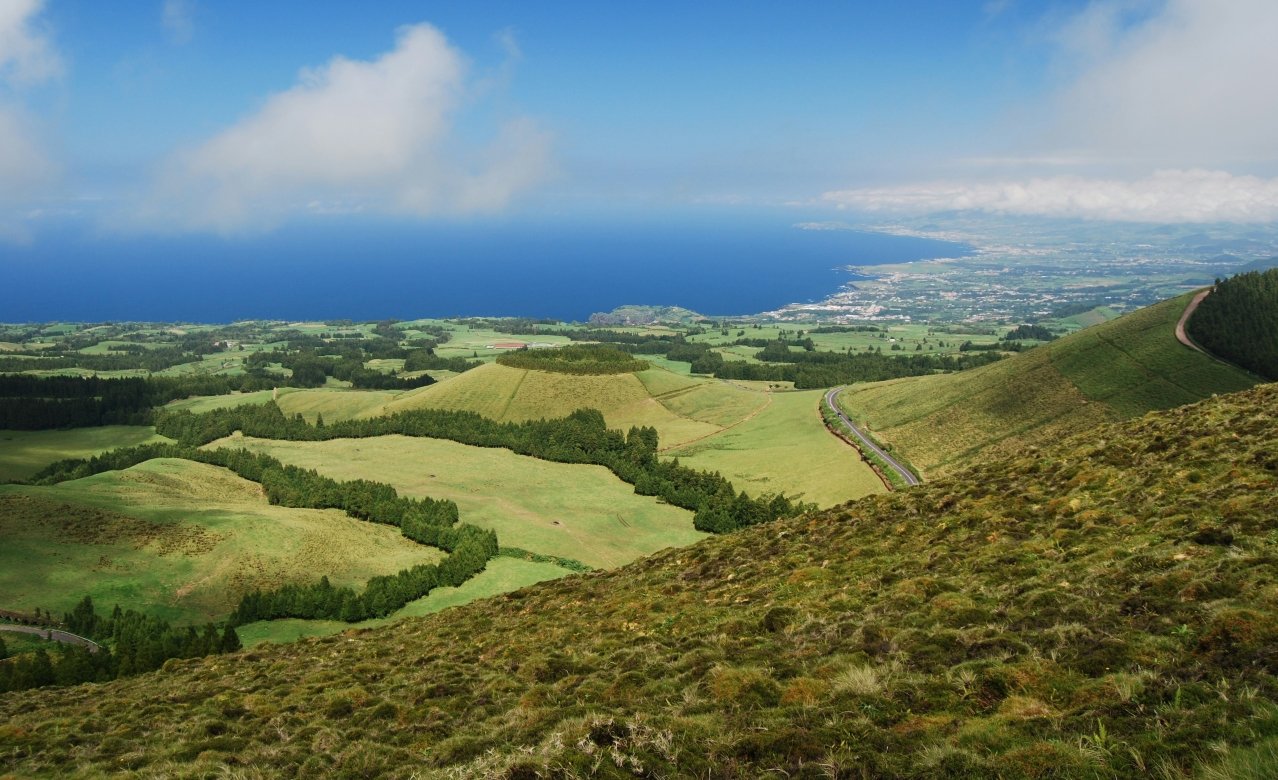
The Azores Archipelago: This Portuguese island chain in the mid-Atlantic features over 1,700 volcanoes, with 26 active systems. Each of the nine islands presents distinct volcanic features, from the perfect cone of Pico Mountain to the hydrothermal wonders of São Miguel’s Valley of the Furnas.
Central European Volcanic Belt: Less famous but equally fascinating are the extinct volcanic regions stretching from France’s Auvergne region through Germany’s Eifel volcanic field and into Czechia’s Bohemian Uplands. Though dormant for thousands of years, these areas feature perfectly preserved volcanic cones, crater lakes, and mineral springs that tell the tale of Europe’s fiery past.
The Canary Islands off Africa’s northwest coast (but politically part of Spain) also deserve mention for their impressive volcanic landscapes, particularly Tenerife’s Mount Teide and the recently active Cumbre Vieja on La Palma.
Volcanic Fun Facts That Will Blow Your Mind
- Mount Etna in Sicily isn’t just Europe’s tallest active volcano at 3,329 meters (10,922 feet) – it’s also the continent’s most active, having erupted over 200 times since record-keeping began in 1500 BCE. Local Sicilians affectionately call it “Mongibello” – the beautiful mountain.
- The Greek island of Santorini is actually what remains of one of history’s most massive volcanic explosions. Around 1600 BCE, the Minoan eruption blew away most of the original island, potentially inspiring the legend of the lost city of Atlantis.
- Iceland adds new real estate to Europe every few years! The island of Surtsey dramatically emerged from the sea during an underwater eruption in 1963, and scientists still study it as one of Earth’s newest landmasses.
- The Romans believed that Vulcano Island off Sicily was the chimney of the god Vulcan’s forge. When the volcano “smoked,” they thought he was hard at work making weapons for the gods.
- Europe’s youngest volcano might be Hungary’s Ság Hill, which last erupted around 5 million years ago – practically yesterday in geological terms!
- Locals near Italy’s Vesuvius grow incredible wines from grapes that thrive in volcanic soil. The varietals have names like “Lacryma Christi” (Tears of Christ), referencing old legends about the divine origins of the volcano.
- The Campi Flegrei (Phlegraean Fields) near Naples is Europe’s largest volcanic complex and sits atop a supervolcano that could make Vesuvius look like a firecracker if it fully erupted.
- The bubbling mud pots at Hverir in Iceland smell overwhelmingly of rotten eggs due to high sulfur content – visitors often hold their noses while watching the mesmerizing geothermal activity.
Why Volcanic Tourism Should Be on Your Bucket List
There’s something primally thrilling about standing on ground that could, theoretically, explode (though don’t worry – monitored sites are perfectly safe for tourists!). Beyond the adrenaline rush, here’s why volcanic tourism deserves a spot on your European itinerary:
Otherworldly Landscapes: Where else can you see steaming fumaroles, vibrantly colored crater lakes, bizarre rock formations, and moon-like terrain all in one day? Volcanic areas offer Earth’s most alien-looking environments without leaving the planet.
Therapeutic Natural Spas: Many volcanic regions feature natural hot springs and mineral-rich waters with healing properties. The Blue Lagoon in Iceland and Saturnia in Italy offer luxurious bathing experiences powered entirely by geothermal energy.
Photography Gold: From billowing steam plumes to the electric blues of sulfur lakes and the stark contrast of black lava against verdant recovery vegetation – these landscapes were practically designed for Instagram.
Living Science Lessons: No textbook can compare to seeing plate tectonics and geological forces in action. For families with children or anyone fascinated by natural sciences, volcanic tourism offers unforgettable educational experiences.
Uncrowded Natural Beauty: While Europe’s major cities groan under overtourism, many volcanic sites remain relatively uncrowded, especially if you venture beyond the most famous names.
Culinary Delights: Volcanic soil is incredibly fertile, producing exceptional wines, fruits, and vegetables. Many volcanic regions have developed unique culinary traditions using this agricultural bounty – from Sicily’s pistachio-everything to Iceland’s volcano-baked bread.
Cultural Insights: Volcanic communities have developed unique cultural adaptations to life beside these powerful neighbors, resulting in fascinating local traditions, festivals, and architecture you won’t find elsewhere.
Europe’s Most Popular Volcanic Destinations
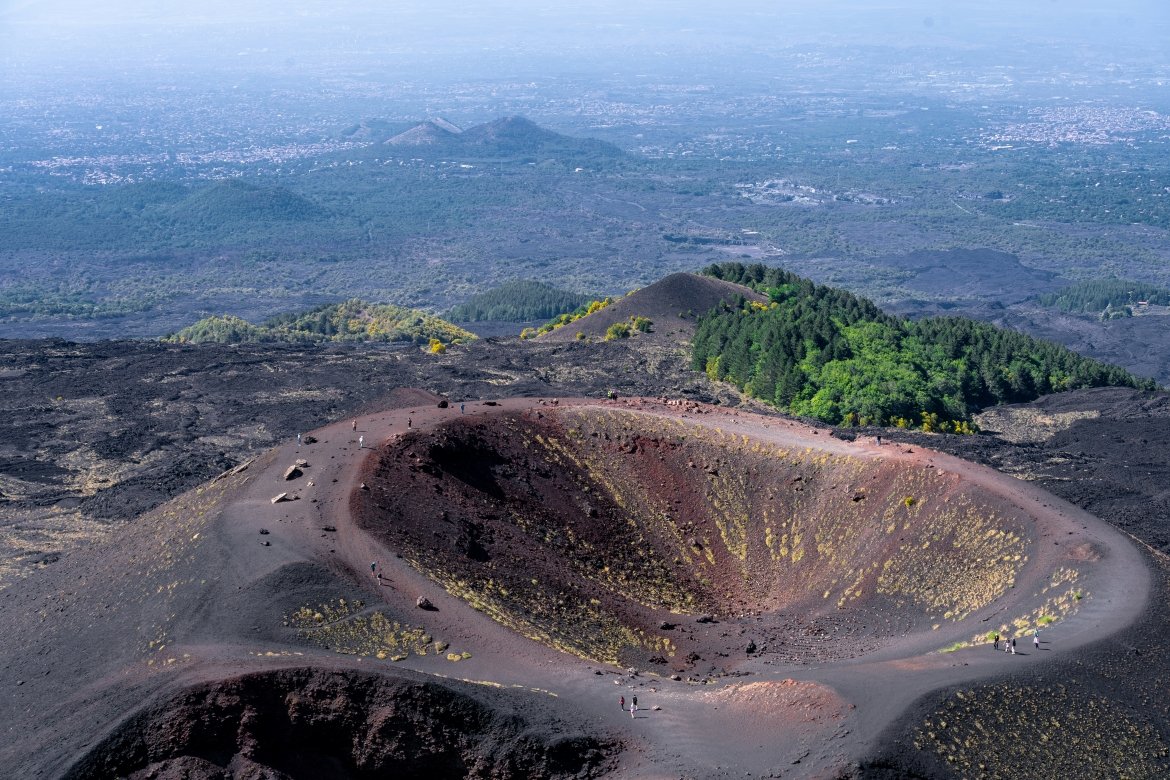
Mount Etna, Sicily, Italy: Europe’s tallest and most active volcano offers year-round appeal. In winter, you can even ski down its slopes in the morning and swim in the Mediterranean the same afternoon. The established Etna cable car and tour system makes experiencing this giant accessible to almost any fitness level.
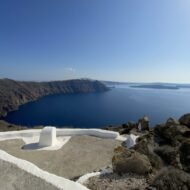
Santorini, Greece: The picture-perfect white buildings clinging to multicolored volcanic cliffs make this island instantly recognizable. Beyond the postcard views, visitors can hike to the active volcanic center of the caldera on Nea Kameni island or soak in therapeutic hot springs.
Mount Vesuvius & Pompeii, Italy: History and geology collide at Europe’s most famous volcanic pairing. Hike to Vesuvius’s crater in the morning, then spend the afternoon wandering Pompeii’s perfectly preserved streets for an unforgettable time-travel experience.
Reykjanes Peninsula, Iceland: Just outside Reykjavík, this accessible volcanic area includes the famous Blue Lagoon, the Bridge Between Continents where you can literally straddle the North American and Eurasian tectonic plates, and the site of Iceland’s most recent eruption at Fagradalsfjall.
Stromboli, Aeolian Islands, Italy: For pure volcanic spectacle, nothing beats evening boat tours around this island to witness its regular “Strombolian” eruptions lighting up the night sky – nature’s most reliable fireworks display.
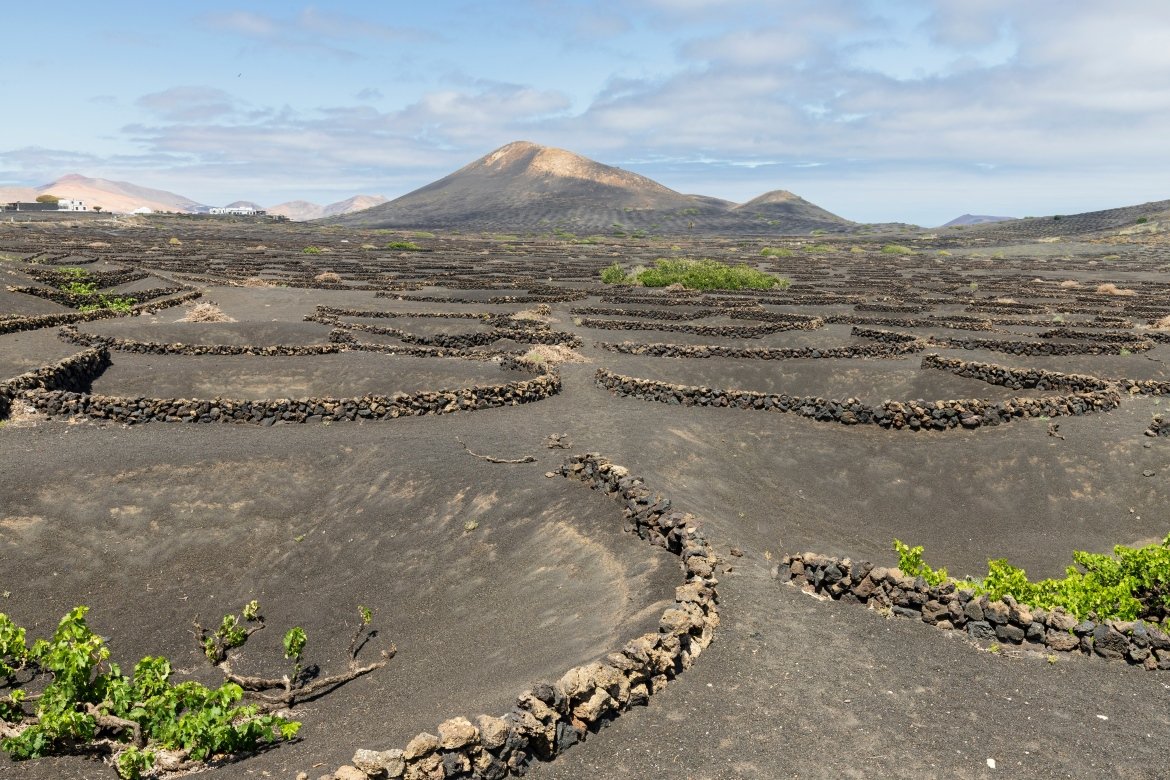
Timanfaya National Park, Lanzarote, Spain: The Canary Island’s “Fire Mountains” feature otherworldly landscapes created by massive eruptions in the 1730s. Demonstrations of the extreme underground heat include geysers activated by water poured into the ground and restaurants cooking food using volcanic heat.
Campi Flegrei, Italy: This massive caldera west of Naples features bubbling mudpots, Roman ruins, and the eerie phenomenon of bradyseism that causes the ground to regularly rise and fall by several meters.
Other Notable Volcanic Areas Worth Exploring
Vulcano Island, Italy: The namesake of all volcanoes worldwide features therapeutic mud baths, black sand beaches, and a moderately challenging hike to a crater viewpoint that rewards with panoramic views of the entire Aeolian archipelago.
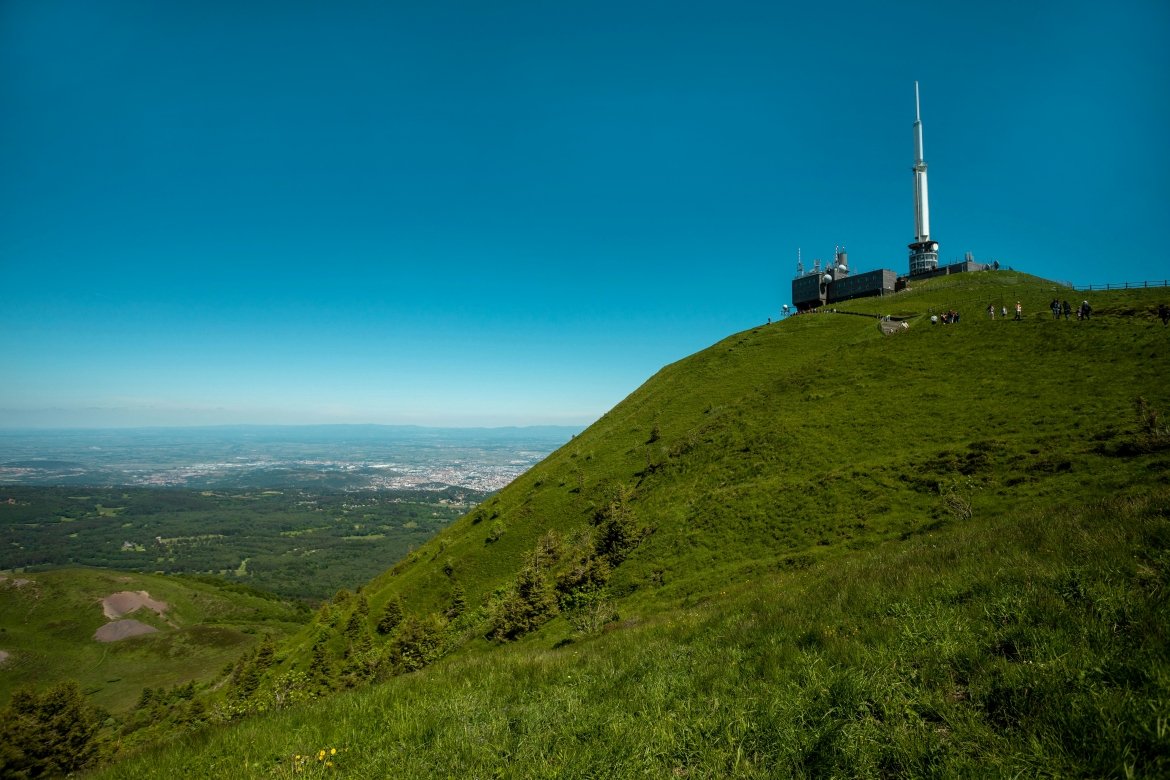
Puy de Dôme, France: The most prominent of about 80 dormant volcanoes in central France’s Chaîne des Puys offers a railway to the summit and sweeping views of perfectly formed volcanic cones dotting the landscape.
Mount Teide, Tenerife, Spain: Spain’s highest peak rises dramatically from the center of this Canary Island, with a cable car ascending to just below the summit. The surrounding national park features Mars-like landscapes that have served as filming locations for numerous science fiction movies.
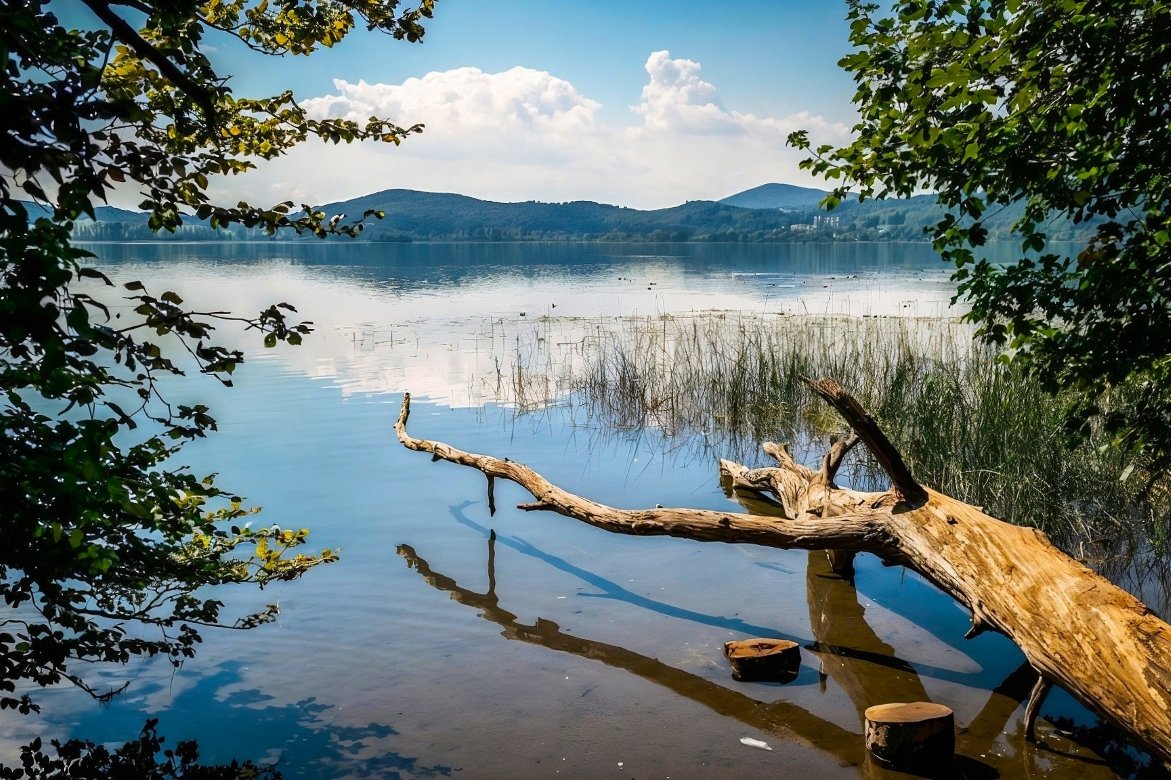
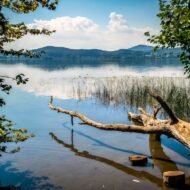
Laacher See, Germany: This picture-perfect crater lake in the Eifel volcanic field formed after a massive eruption about 13,000 years ago. Today it’s a peaceful spot for swimming and hiking, with a medieval abbey on its shore.
Furnas Valley, São Miguel, Azores: This lush valley features dozens of hot springs, fumaroles, and mudpots, plus the unique tradition of cooking cozido, a meat and vegetable stew, underground using natural volcanic heat.
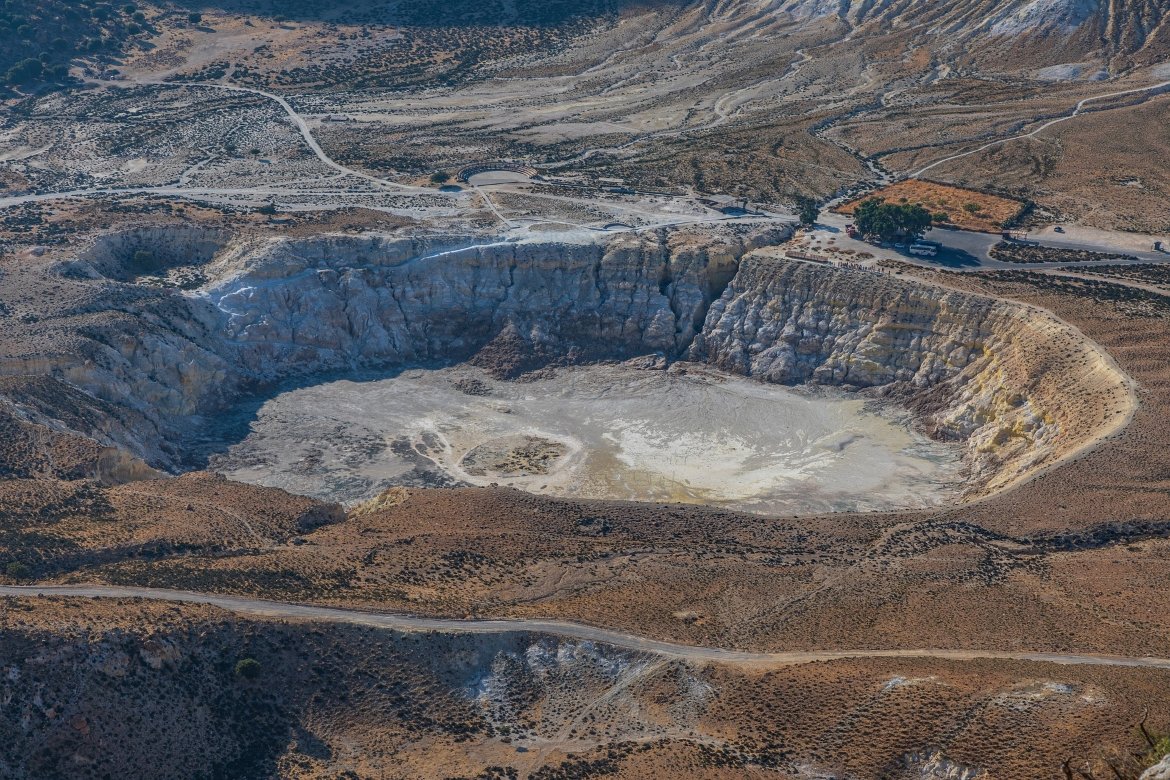
Nisyros, Greece: This little-known gem in the Dodecanese islands features one of the most accessible and impressive volcanic craters in Europe, where visitors can walk directly on the crater floor amid bubbling sulfur vents.
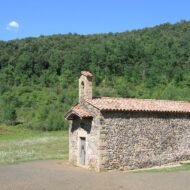
Santa Margarida Volcano, Catalonia, Spain: Located in the Garrotxa Volcanic Zone Natural Park, this dormant volcano features a perfect circular crater with a 12th-century Romanesque chapel built right in its center. The hike through lush oak forest to reach this unique site offers a magical combination of natural and cultural heritage unlike anywhere else in Europe.
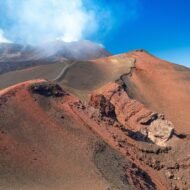
Methana Volcano, Greece: This volcanic peninsula in the Peloponnese region is less touristy than Santorini but offers authentic Greek charm alongside its volcanic attractions. Over 30 volcanic domes dot the landscape, with hiking trails leading to impressive craters, while the coastal hot springs provide therapeutic bathing opportunities. The most recent eruption occurred in 230 BCE and was documented by the ancient writer Pausanias, adding fascinating historical context to your visit.
Things To Do in Europe’s Volcanic Regions
Crater Hikes: Nothing compares to standing on the rim of a volcanic crater, whether it’s the steaming caldera of Nisyros or the perfect cone of Vesuvius. Most popular volcanic sites offer guided crater hikes suitable for moderate fitness levels.
Hot Spring Bathing: Volcanic areas are paradise for hot spring enthusiasts. Beyond famous spots like Iceland’s Blue Lagoon, try Hungary’s Lake Hévíz (Europe’s largest thermal lake), the free riverside hot springs at Saturnia in Italy, or the coastal thermal baths of Methana in Greece where you can soak in volcanic waters while gazing at the Saronic Gulf.
Lava Cave Exploration: Discover the fascinating underground world created by flowing lava. Iceland’s Raufarhólshellir tunnel and the extensive cave systems beneath Lanzarote offer guided tours through these natural wonders.
Volcanic Wine Tasting: Wines grown in volcanic soil have distinctive mineral characteristics wine enthusiasts rave about. Try structured tastings on the slopes of Mount Etna, in Hungary’s Somló region, or on Santorini island.
Geothermal Cooking Experiences: Learn how locals harness volcanic heat for cooking, from Iceland’s traditional rye bread baked in hot ground to the Azores’ cozido stews prepared in underground volcanic chambers.
Volcano Museums: For deeper understanding, visit dedicated volcano museums like the excellent Pompei Exhibition Center, the Lanzarote Volcano House, or Iceland’s LAVA Centre, which uses cutting-edge technology to explain volcanic systems.
Therapeutic Mud Treatments: The mineral-rich volcanic mud found in many regions offers natural spa treatments. The mud baths on Vulcano Island and the facial clay treatments at São Miguel’s Terra Nostra thermal pool are local favorites.
Photography Tours: Join specialized photography excursions designed to capture volcanic landscapes in perfect light, particularly spectacular for sunset crater views or night photography of eruptions.
Volcanic Events Not to Miss
Feast of St. Agatha, Catania, Sicily (February): This massive festival honors the patron saint who allegedly saved the city from Mount Etna’s lava flows. The celebration includes an enormous procession, traditional foods, and spectacular fireworks.
Fire Festival, Nejapa, Azores (July): Celebrating an epic volcanic battle from the 16th century when two islands’ volcanoes “fought” with simultaneous eruptions, throwing fire at each other across the sea.
New Volcanic Land Day, Iceland (November 14): Commemorating the birth of Surtsey island in 1963, with special museum exhibits and scientific lectures about volcanic island formation.
Notte di San Giovanni, Stromboli (June 24): This midsummer celebration combines Catholic traditions with ancient volcano worship, as locals make midnight processions up parts of the volcano with torches.
European Geoparks Week (May-June): Many volcanic regions participate in this continent-wide celebration of geological heritage, offering special tours, children’s activities, and expert lectures.
Mount Etna Wine Harvest Festivals (October): Various celebrations across Etna’s wine-growing villages, with opportunities to participate in traditional grape harvesting activities on volcanic slopes.
Grape Feast, Santorini (August): Celebrating the island’s unique volcanic wines with tastings, traditional pressing demonstrations, and local cuisine perfectly paired with the minerally Assyrtiko wines.
Hiking and Cycling Volcanic Landscapes
Exploring volcanic terrain on foot or bicycle offers immersive experiences you can’t get from tour buses. Here are some top routes:
Mount Etna Circuit, Sicily: Multi-day hiking routes encircle Europe’s largest volcano, passing through diverse landscapes from barren lava fields to lush forests, with options for various difficulty levels.
Santorini Caldera Trail: This spectacular 10km path from Fira to Oia hugs the rim of the volcanic caldera, offering continuously breathtaking views over the flooded crater and iconic white buildings.
Iceland’s Laugavegur Trail: This famous 55km trek passes through an incredible variety of volcanic landscapes, from rhyolite mountains in rainbow colors to black obsidian fields and steaming valleys.
Bohemian Uplands Cycling Route, Czechia: This leisurely bicycling route connects dozens of extinct volcanic cones across northern Czechia’s picturesque countryside, with frequent stops for local food and beer.
La Garrotxa Volcanic Route, Catalonia, Spain: This network of well-marked trails links 40 volcanic cones and more than 20 lava flows in a lush, forested landscape. The 15km main route passes the Santa Margarida volcano with its chapel-in-crater highlight, and can be done in sections or as a full-day adventure.
Vulcano Island Summit Circuit, Italy: A moderately challenging 3-4 hour hike circles the rim of Gran Cratere, offering views into the steaming crater on one side and the entire Aeolian archipelago on the other.
Teide’s Roques de García Trail, Tenerife: This accessible 3.5km loop winds among bizarre rock formations created by differential erosion of volcanic materials, with the massive Mount Teide as backdrop.
The Vikos-Aoos Geopark Trails, Greece: Lesser-known volcanic landscapes in northwestern Greece offer uncrowded hiking through dramatic gorges and unique geological formations.
Azores Trail Run: For the athletically inclined, this annual event offers marked running routes across volcanic terrain on São Miguel island, with distances ranging from 10km fun runs to ultra-marathons.
Travel Tips and Practical Information
Best Seasons to Visit: Spring (April-June) and fall (September-October) typically offer ideal conditions for volcanic tourism in Southern Europe, with pleasant temperatures and fewer crowds. Iceland’s volcanic sites are most accessible from June through September.
Safety First: Always check current volcanic alert levels before visiting active volcanoes. Websites like the European Volcanological Society provide up-to-date information. Never venture into restricted areas, even if they look safe!
Guided vs. Independent Exploration: While many volcanic sites can be explored independently, hiring local guides often provides invaluable context and access to areas you might otherwise miss. This is particularly true for active volcanoes, where guides monitor current conditions.
What to Pack:
- Sturdy hiking boots with good ankle support and grip
- Layered clothing (temperatures can vary dramatically at different elevations)
- Sun protection (volcanic areas often lack shade)
- Respiratory mask for sensitive individuals (some sites have sulfur emissions)
- Walking poles for stability on loose volcanic terrain
- More water than you think you’ll need (volcanic terrain can be deceptively dehydrating)
Transportation: While major sites like Vesuvius and Etna have public transportation options, many volcanic areas require rental cars or organized tours to access efficiently. In Iceland, specialized “super jeep” tours can reach volcanic highlands inaccessible to regular vehicles.
Accommodation Tips: Consider staying in volcanic thermal spa towns like Ischia (Italy), Furnas (Azores), or Hveragerði (Iceland), where your hotel might offer its own volcanic hot springs. In popular areas like Santorini, booking well in advance is essential.
Respecting Volcanic Environments: These fragile ecosystems recover slowly from damage. Always stay on marked paths, never remove volcanic rocks or minerals as souvenirs, and pack out all trash.
Photography Considerations: Volcanic steam and gas can damage camera equipment. Bring protective covers and silica gel packets to prevent moisture damage. UV filters help cut through haze for clearer crater shots.
Sustainable Volcanic Tourism: Geoparks and Protected Areas
Europe leads the world in recognizing and protecting its volcanic heritage through official designations that promote sustainable tourism. Visiting these recognized areas not only guarantees spectacular volcanic experiences but also supports conservation efforts:
UNESCO Global Geoparks: These areas receive international recognition for their geological significance while promoting sustainable economic development:
- Katla UNESCO Global Geopark, Iceland: Covers 9,542 km² of spectacular volcanic landscapes including the powerful Katla volcano beneath the Mýrdalsjökull ice cap.
- El Hierro UNESCO Global Geopark, Canary Islands: The entire island is a geopark featuring over 500 open volcanic craters and recent underwater volcanic activity.
- Bakony-Balaton UNESCO Global Geopark, Hungary: Includes the volcanic field of the Tapolca Basin with its unique cave system created by hydrothermal activity.
- Azores UNESCO Global Geopark, Portugal: Encompasses all nine islands of the archipelago and their volcanic features.
- Vulkaneifel UNESCO Global Geopark, Germany: Features 350 maars (explosion craters) and other volcanic phenomena in a landscape shaped by 400 million years of volcanic activity.
National Parks
- Timanfaya National Park, Lanzarote: Strictly protects the volcanic landscapes created during the 1730-1736 eruptions, with limited access only through official tours.
- Teide National Park, Tenerife: Spain’s most visited national park requires permits for summit access to manage visitor impact.
- Snæfellsjökull National Park, Iceland: Protects the famous volcano featured in Jules Verne’s “Journey to the Center of the Earth.”
- La Garrotxa Volcanic Zone Natural Park, Catalonia: Preserves 40 volcanic cones and 20 lava flows in a surprisingly lush, forested environment.
Regional Nature Parks and Reserves:
- Auvergne Volcanoes Regional Nature Park, France: Europe’s largest regional park protects the Chaîne des Puys volcanic range.
- Methana Volcano Geosites, Greece: A network of protected geological sites across the volcanic peninsula.
- Eifel Volcano Park, Germany: Combines conservation with education across dozens of volcanic features.
Sustainable Volcanic Tourism Practices:
- Look for tour operators with European Charter for Sustainable Tourism certification
- Stay in accommodations that use geothermal energy responsibly
- Visit during shoulder seasons to reduce peak tourism pressure
- Support local communities by purchasing local volcanic products (wines, thermal spa products, etc.)
- Participate in volunteer programs that help maintain volcanic trail systems
- Choose guided tours that emphasize geological education and conservation
By visiting these officially recognized volcanic areas, you’re not just witnessing amazing geological phenomena – you’re supporting a sustainable model of tourism that ensures these landscapes remain protected for future generations. Many geoparks and protected volcanic areas reinvest tourism revenue into conservation, research, and educational programs that help local communities understand and preserve their volcanic heritage.
Final Thoughts
Europe’s volcanic landscapes offer some of the continent’s most extraordinary travel experiences, yet they remain underappreciated compared to traditional destinations. From the adrenaline rush of peering into an active crater to the simple pleasure of soaking in geothermal waters while sipping local volcano-grown wine, these fiery destinations create memories that last a lifetime.
What makes volcanic tourism particularly special is how it connects so many aspects of European heritage – ancient mythology, scientific discovery, agricultural traditions, and architectural adaptations have all been shaped by these sleeping giants. By visiting these sites, you’re not just witnessing geology in action, you’re experiencing the profound relationship between humans and volcanoes that has defined European civilization for millennia.
Whether you’re drawn to the Mediterranean’s ancient volcanic sites, Iceland’s raw geothermal power, or the peaceful extinct cones of Central Europe, volcanic destinations offer something truly unique: a glimpse into Earth’s inner workings and a reminder of how small we are compared to planetary forces. Yet they also demonstrate human resilience and ingenuity – our ability to not just survive but thrive alongside these powerful neighbors.
So pack your bags, respect the safety guidelines, and prepare for a European adventure that truly rises above the ordinary. The continent’s volcanic playgrounds are waiting to blow your mind.
Photo credit : Santa Margarida / Agios Nikolaos, Methana / Geopark Laacher See