





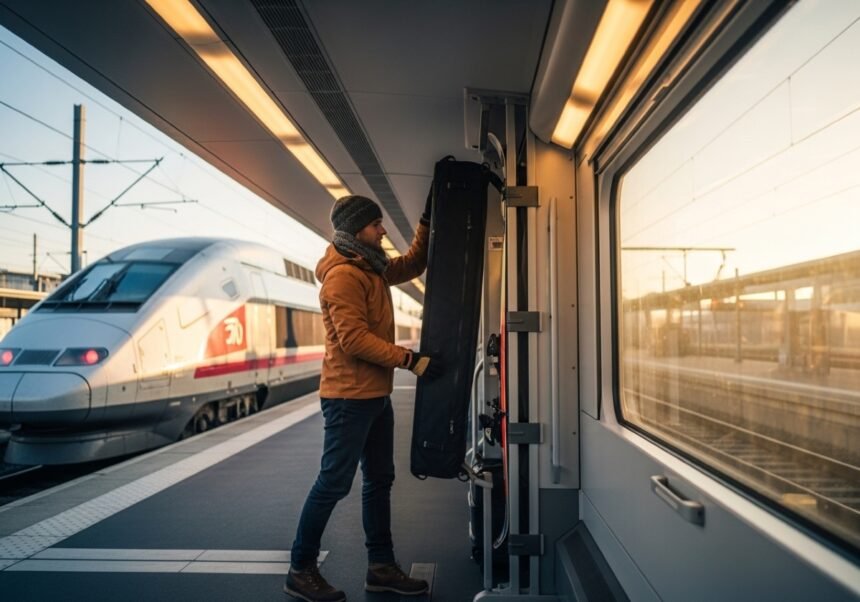
How to Board a Train With Skis (And Still Hold Your Coffee) : Your complete guide to gliding smoothly from platform to powder
- Why Train Travel Beats Driving (Most of the Time)
- The Great Ski Bag Debate: Hard Case vs. Soft Bag vs. “Just Strap Them Together”
- Packing Like a Pro: The Tetris Game Nobody Asked For
- Train Company Rules: The Fine Print That Actually Matters
- Getting Through Stations Without a Hernia
- Ski Resorts with the Best Train Connections
- What to Wear on the Train (Because This Matters More Than You Think)
- Booking Hacks That’ll Save You Serious Money
- Emergency Backup Plans (Because Trains Get Canceled)
- The Return Journey: Lessons Nobody Tells You
- Real Talk: Is Train Travel with Skis Worth It?
- Final Pro Tips from Someone Who’s Made All the Mistakes
Look, we’ve all been there. You’re standing at the train station, wrestling with a ski bag that’s approximately the length of a small car, your boots digging into your shoulder, and wondering why you didn’t just drive. But here’s the thing: train travel to ski resorts is actually brilliant once you know the tricks. No icy mountain roads, no white-knuckle driving, and you can crack open a beer while someone else handles the hairpin turns.
The catch? Getting your gear on board without looking like you’re moving house. Let me walk you through everything you need to know.
Why Train Travel Beats Driving (Most of the Time)
Before we dive into the packing drama, let’s talk about why you’re doing this in the first place.
The Environmental Win: Trains produce about 80% less CO2 than driving the same route. If guilt-free skiing is your thing, this matters.
The Stress Factor: Ever driven through an Alpine pass in a snowstorm? Yeah, me neither by choice. Trains have this magical ability to just… go. Snow, ice, whatever. They’ve got it handled.
The Scenic Route: You’re not staring at the bumper in front of you. You’re watching mountains slide past while you’re demolishing a sandwich and planning your first run.
Cost Analysis: Here’s where it gets interesting. A tank of gas plus parking fees at most ski resorts can run you €100-200 for a weekend. Compare that to advance train tickets, which can be €40-80 return if you book smart.
The Great Ski Bag Debate: Hard Case vs. Soft Bag vs. “Just Strap Them Together”
This is where people get religious. Everyone’s got an opinion, and most of them are wrong for your specific situation.
Soft Ski Bags: The budget-friendly classic. They’re like $50-100, they squish into corners, and they work perfectly fine for most train journeys. The downside? Zero protection if someone drops your €800 skis. Best for shorter trips on less crowded routes.
Hard Shell Cases: The tanks of ski storage. You can literally sit on these things. They run €200-400, but if you’re traveling with high-end gear or taking connecting trains through busy stations, the peace of mind is worth every cent. Plus they double as emergency seats when platforms are packed.
The Minimalist Approach: Some people just use ski straps and call it a day. This works on certain routes (hello, Swiss trains with dedicated ski racks), but try this on a busy commuter connection and you’ll make instant enemies.
My Take: Get a padded soft bag for regular trips, and if you’re doing international connections or your skis cost more than your laptop, spring for the hard case.
Packing Like a Pro: The Tetris Game Nobody Asked For
Here’s where most people screw up. They think packing skis is just… putting skis in a bag. Oh, sweet summer child.
The Base Layer Strategy: Skis go in base-to-base (the bottom surfaces facing each other). This protects your edges and prevents that horrifying grinding sound when they shift around.
The Pole Situation: Break down your poles if they’re adjustable. If not, tape them to the outside of your skis with the baskets positioned to protect the tips. I use electrical tape because I’m classy like that.
Boots: The Wild Card: This is controversial, but hear me out. Put your boots IN the ski bag if there’s room. Wear your bulkiest jacket and use the boot bag for smaller items. Trains have limited overhead space, and one long bag beats one long bag plus two boot-shaped monsters.
The Clothing Hack: Stuff soft clothes (fleeces, base layers, socks) around your skis inside the bag. Free padding, and you’ve just solved your clothing storage problem. You’re welcome.
Weight Distribution: Heavy items (boots if they’re in there, extra layers) go in the middle. This makes the bag easier to carry and less likely to tip over when you set it down.
Train Company Rules: The Fine Print That Actually Matters
Every train operator has different rules, and ignorance is not bliss when you’re being charged €80 for excess baggage.
European Routes – The Good News: Most major ski train routes (Austria, Switzerland, France, Italy) are ski-friendly. Many have dedicated ski storage areas. Some are even free.
The Size Rules: Generally, ski bags under 200cm total length are fine. Over that, you might pay extra. My trick? Measure before you leave home.
Reservation Systems: Some trains require you to reserve space for ski equipment in advance. This is especially true on popular Friday evening routes to the Alps. Book this when you book your ticket, not three minutes before departure.
Real Talk About Costs:
- Swiss trains: Often free with your ticket
- Austrian ÖBB: Usually free, sometimes €10 reservation
- French SNCF: Can be €10-20 depending on the route
- Eurostar (if you’re connecting): Plan for €40-60 for sports equipment
The Sneaky Budget Option: On some regional trains, ski bags count as regular luggage if they fit the dimensions. Know your route’s specific rules.
Getting Through Stations Without a Hernia
Train stations are designed by people who apparently never travel with anything larger than a briefcase. Here’s how to survive.
Elevator Strategy: Always find the elevator before you need it. Carrying a ski bag up three flights of stairs is how people end up on YouTube for the wrong reasons.
Platform Positioning: When your train arrives, be near the doors. Sounds obvious, but with ski gear, you can’t just jog down the platform. Know your carriage number in advance.
The Boarding Dance: Let people off first (obviously), then angle your bag in feet-first while holding one end. Don’t try to shoulder-carry it through a train door. Physics is not your friend here.
Storage Once Aboard: Priority order – dedicated ski racks (score!), the area near the doors between carriages, overhead racks for shorter bags, under the seat if you’ve got a compact setup.
The Social Contract: If you take up space with your gear, be cool about it. Help others load their stuff, offer to rearrange if needed. Karma is real on trains.
Ski Resorts with the Best Train Connections
Not all ski destinations are created equal when it comes to train access. These are the ones that actually make sense.
Zermatt, Switzerland: Train pulls into town. No cars allowed anyway. It’s like they designed the place for train travelers. Chef’s kiss.
St. Anton, Austria: Direct trains from major cities. The station is a 5-minute walk from the lifts. This is what we call “getting it right.”
Chamonix, France: The train from Geneva is scenic as hell and drops you right in town. Bonus: you can take the Mont Blanc Express and feel very James Bond about it.
Innsbruck, Austria: Major transport hub plus amazing skiing. You can train in from Munich, Zurich, or Vienna with minimal hassle.
The Underrated Hero – Verbier: Okay, you need a bus connection from Le Châble, but the train to there is smooth, and the shuttle is coordinated with arrivals.
American Note: Train-to-ski isn’t really a thing in North America outside of a few exceptions. The Winter Park Ski Train from Denver is basically your only proper option, and it’s glorious but limited.
What to Wear on the Train (Because This Matters More Than You Think)
The rookie move is showing up in full ski gear. Don’t be that person sweating through their thermal base layer in an overheated train carriage.
The Layers Approach:
- Regular comfortable pants (save your ski pants)
- T-shirt plus warm layer you can remove
- The jacket you’ll actually ski in (because it needs to go somewhere)
- Regular shoes or trainers (save your boots for the mountain)
The Compression Sock Trick: Long train journeys mean sitting. Compression socks help with circulation and make you feel less like a zombie when you arrive.
What to Keep Accessible: Phone charger, water bottle, snacks (train food is highway robbery), any medications, and entertainment. That book you’ve been meaning to read? Now’s the time.
Booking Hacks That’ll Save You Serious Money
The difference between smart booking and just clicking “buy now” can be €100+ on popular routes.
The Tuesday Secret: Most European train companies release tickets 90 days in advance. Book on a Tuesday morning for the best selection and prices. Weekend bookings cost more.
Split Ticketing: Sometimes booking segments separately is cheaper than one through ticket. Check Rome2Rio or Trainline for comparisons.
Ski Train Packages: Many resorts offer train+lift pass+accommodation bundles. They’re not always cheaper, but they eliminate stress.
The Group Play: Four or more people? Group discounts are real. Plus you can share equipment space strategically.
Off-Peak Magic: Mid-week skiing means cheaper trains, cheaper accommodation, and no lift queues. If you can swing it, this is the way.
Emergency Backup Plans (Because Trains Get Canceled)
Snow. Strikes. Signal failures. Equipment malfunctions. Here’s what to do when it all goes sideways.
The App Situation: Download your train company’s app and turn on notifications. You’ll know about delays before you get to the station.
Alternative Routes: When booking, check if there’s a different way to get there. This information becomes gold when your direct train is canceled.
Insurance That Actually Works: Standard travel insurance often covers train delays over 2 hours. Keep all receipts and documentation.
The Bus Backup: Most ski regions have bus services that run when trains don’t. They’re slower and less comfortable, but they get you there.
Hotel Holds: If you’re seriously delayed, your accommodation might hold your room. Call ahead, be honest about the situation, most places are understanding during ski season chaos.
The Return Journey: Lessons Nobody Tells You
Getting to the resort is one thing. Getting home after a week of skiing requires different energy.
Start the Day Before: Don’t pack your ski bag five minutes before checkout. Do it the night before when you’re not exhausted and hungover.
Wet Gear Management: Your stuff will be damp. Either dry it thoroughly the night before, or pack it in plastic bags so it doesn’t soak everything else.
The Boot Situation Revisited: If your boots are wet, stuff them with newspaper overnight. It actually works, and beats arriving home with moldy footwear.
Timing Your Departure: Sunday afternoon trains from ski resorts are packed and expensive. Consider leaving Monday morning or Saturday evening instead.
Final Lift Run: Factor in time to get back to your accommodation, shower, pack, and get to the station with buffer room. Missing your train home because you couldn’t resist one more run is expensive and sad.
Real Talk: Is Train Travel with Skis Worth It?
After all this, you might be wondering if the hassle is justified. Here’s my honest take.
It’s worth it if: You’re going to well-connected resorts, you hate mountain driving, you value environmental impact, you want to relax en route, or you’re traveling solo/as a couple without kids.
It’s not worth it if: You’re going somewhere remote, you’ve got small children (the logistics multiply exponentially), you need maximum flexibility with timing, or you’ve got a massive group with tons of gear.
The Middle Ground: Consider training one way and renting a car for the return. Or rent skis at the resort and only bring boots. Or do a hybrid where someone drives the gear and others take the train.
Final Pro Tips from Someone Who’s Made All the Mistakes
Tip 1: Pack a small day bag within your ski bag. When you arrive, pull it out for essentials and leave the ski bag in storage at your accommodation.
Tip 2: Label everything with your contact info. Bags get separated from people. Make reunion easier.
Tip 3: Bring snacks. Lots of snacks. Train food is a scam, and mountain village prices are worse.
Tip 4: Download offline maps before you leave. Hotel WiFi might suck, and data roaming charges are still a thing in some places.
Tip 5: Make friends with other ski travelers on the platform. Someone will always have forgotten something important, and collective problem-solving is beautiful.
Tip 6: Take a photo of your bag before checking it or storing it. If it goes missing, this speeds up the recovery process dramatically.
Tip 7: The ski pants with the weird stains from last season? Leave them home. Buy cheap fresh ones if needed. Your fellow passengers will thank you.
Look, traveling with skis on trains isn’t rocket science, but it’s not quite as simple as throwing stuff in a bag and hoping for the best either. The people who have smooth journeys are the ones who plan ahead, pack smart, know the rules, and stay flexible when things go wrong.
Is it more hassle than driving? Sometimes. Is it more civilized than driving? Absolutely. Will you arrive at the resort more relaxed and ready to ski? Guaranteed.
Pack smart, book ahead, and remember that everyone else on that train with ski gear was once a confused first-timer too. You’ve got this.
Now get out there and enjoy those slopes. Just maybe double-check your ski bag actually made it onto the train before you settle in with that beer.
Safe travels and fresh powder to you all.
MORE READ…How to Ski Europe By Train: Your Complete Guide to Car-Free Alpine Adventures (2026)










)