

TL;DR: Miravet is a picturesque village in Spain that’s famous for its long-standing tradition of pottery. Experience the only remaining traditional cable ferry in Spain that crosses the Ebro River using just water current and ancient engineering—no motors required. For just €3, you’ll step back in time while enjoying stunning views of a medieval Templar castle.
Picture this: you’re standing on a wooden platform floating on Spain’s longest river, with nothing but the current beneath you and centuries-old cable technology guiding your journey. No engine noise, no fuel fumes—just the gentle power of flowing water carrying you across the mighty Ebro. Welcome to the Pas de Barca de Miravet, where medieval engineering meets modern adventure.
What Makes This Ferry So Special?
The Pas de Barca de Miravet is the last river ferry that crosses the Ebro River using only the help of water current—completely without a motor. While dozens of similar crossings once dotted the Ebro, only two remain today in Miravet and Flix, making this a truly rare experience.
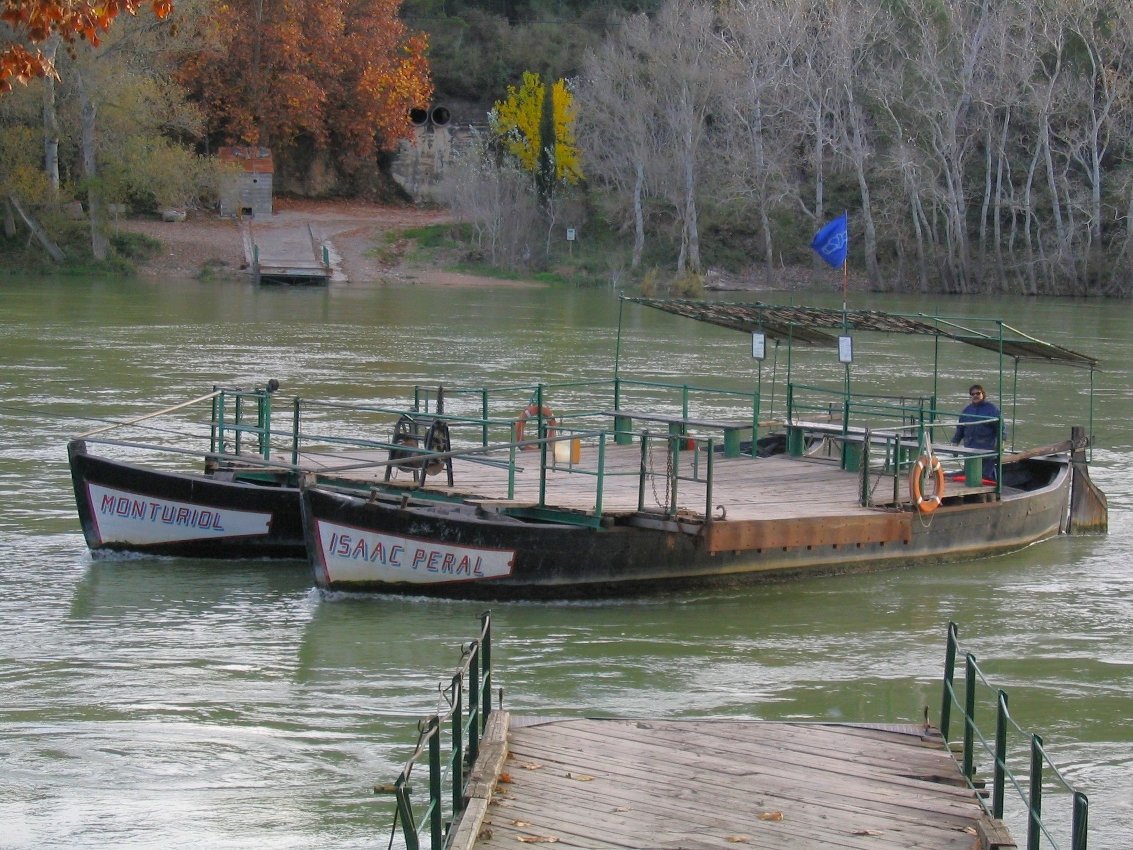
It’s formed by two llaguts (traditional boats) on which rests a wooden platform, attached to a metal cable called ramalet, which connects to the gumena—a thicker cable that crosses the river at a certain height above the water. Think of it as a horizontal zip line for boats, powered entirely by physics and the ferryman’s expertise.
A Journey Through Time
This isn’t some tourist gimmick—it’s living history. The origins of these passenger boats can be traced back to time immemorial, with Miravet’s ferry referenced in a conflict between the Templars and the Entença over collection of transit rights. It has been documented by the Templars since the twelfth century.
Originally, there was a single boat placed under the castle, but in 1946 the location changed and a new ferry was built with two boats named Isaac Peral and Monturiol. These names honor Spanish naval pioneers, adding another layer of maritime heritage to your crossing.
The Engineering Marvel
Don’t let its simplicity fool you—this ferry represents sophisticated engineering. The boat is propelled by the current of the river and the skillful hand of the boatman, who dominates the rudder and makes it maneuver with mastery. The ferryman angles the platform to catch the current just right, using the Ebro’s own force to glide smoothly across to the opposite bank.
The entrance and exit of the platform is done through a mobile jetty that raises or lowers depending on the river flow. It’s a brilliant example of adaptive design that has worked for centuries.
Your Experience: What to Expect
Cost and Capacity: The crossing costs just €3 and can hold up to 3 cars, though you can absolutely cross on foot. Bring cash—this is old-school in the best possible way.
Operating Hours: It operates year-round from 9 AM to 7 PM in summer and 9 AM to 6 PM in winter. It closes at 1:00 PM for lunch, because even ferry operators deserve their siesta.
The Journey: The crossing itself is blissfully peaceful. You can watch flights of cormorant while taking in the beautiful views. The crystal-clear water often reveals fish swimming below, and the medieval Templar castle of Miravet provides a dramatic backdrop that belongs on every Instagram feed.
Beyond the Ferry: Why Visit Miravet
While the ferry is reason enough to visit, Miravet offers so much more. The village itself feels frozen in time, with narrow cobbled streets and stone houses that tell stories of centuries gone by. The imposing Templar castle dominates the skyline—one of the most notable examples of Templar military architecture in Europe.
For the culturally curious, Miravet is famous for its traditional pottery. Eight active craftsmen and studios continue this ancient tradition, with some open to the public for demonstrations and workshops. You can watch artisans create everything from traditional storage jars to contemporary pieces.
Perfect for Everyone
This experience works beautifully for all types of travelers:
- Families: Children will experience this as an unforgettable adventure. There’s something magical about crossing a river the same way knights and merchants did centuries ago.
- Photography enthusiasts: The combination of medieval architecture, flowing water, and traditional engineering creates countless photo opportunities.
- History buffs: You’re literally traveling the same route used by traders between towns on both banks, transhumance herds searching for new pastures, and farmers working land across the river.
- Eco-conscious travelers: An ecological, sustainable and modern system prepared for the future—this ferry has been carbon-neutral for 800+ years.
Practical Tips for Your Visit
Getting There: The ferry operates from Miravet’s riverside, easily accessible whether you’re driving from Barcelona (2 hours), Valencia (2.5 hours), or exploring the local Terres de l’Ebre region.
Timing: On festive days you might have to wait a bit to load your vehicle as sometimes there’s a queue, but the wait becomes part of the charm. Use the time to explore the ferry landing area and chat with locals.
What to Bring: Cash for the crossing, a camera for the views, and perhaps a picnic to enjoy by the riverside. The peaceful setting is perfect for slowing down and savoring the moment.
The Bottom Line
In our age of high-speed everything, the Pas de Barca de Miravet offers something increasingly rare: the chance to travel at the pace of centuries past while surrounded by stunning natural beauty and living history. For the price of a coffee, you can experience authentic medieval transportation technology that still works perfectly today.
Whether you’re seeking a unique photo opportunity, a peaceful moment away from modern life, or simply the most charming way to cross a river, this traditional ferry delivers an experience you’ll remember long after returning home. It’s a lovely, gentle way to cross the Ebro, in a beautiful spot—and proof that sometimes the old ways really are the best ways.