









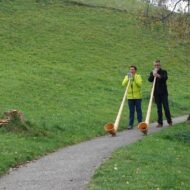
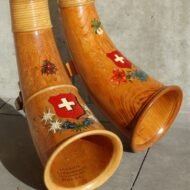

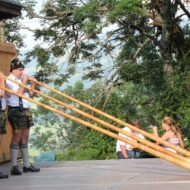

The Alphorn is a towering wooden horn that instantly conjures Swiss mountains and alpine sunsets. Imagine the haunting, mellow call of a 3.5-meter-long wooden horn echoing across misty valleys – it’s a sound that defines the Alps. In fact, this humble shepherd’s horn has become the symbol of Switzerland: as one travel writer put it, it “has served as the national symbol of Switzerland since the 19th century”. Its warm, rich tone – part brass, part woodwind – can carry for miles. Legend has it you can hear an alphorn’s note five to ten kilometers away on a still morning! No wonder travelers are spellbound. In this guide, we’ll dive into the charm and history of the Alphorn, show you where to catch its sound, and give tips to make the most of your Swiss Alpine adventure.
History at a Glance
The Alphorn’s roots stretch deep into mountain history. It’s believed to have evolved from ancient Roman-era horns (called lituus), even appearing in a 2nd-century mosaic of a shepherd in what is now Switzerland. The first written mention of the word “Alphorn” dates to 1527 in Swiss records, and naturalist Conrad Gessner gave one of the earliest detailed descriptions in 1555. For centuries it wasn’t just an instrument but a tool: alpine herdsmen used it to signal and call cows on high summer pastures. By the 1800s, as village dairies replaced mountain farms, the Alphorn nearly faded away. Fortunately, 19th-century folklorists and musicians revived it as a performing instrument, and it “became a tourist attraction and a symbol of Switzerland”. Today’s Alphorn music grew from those roots – a living link to rural Swiss culture and a reminder of mountain life.
Cultural Significance
Today the Alphorn is more than an odd curiosity – it’s woven into Swiss cultural life. Local folklore groups and yodeling clubs proudly include Alphorn players: the Swiss Yodeling Association alone counts about 1,800 Alphorn blowers worldwide. You’ll hear alphorn music at national celebrations and traditional parades. For example, it “makes a grand appearance at the Swiss Yodeling Festival [and] in parades held by the Swiss Association for Traditional Costume”. Even in modern music it pops up – Beethoven and Mahler famously wrote Alphorn parts into orchestral works, and contemporary jazz and world-music ensembles sometimes feature it, giving this ancient horn a funky new groove. As one Swiss tour site enthuses, the Alphorn is “one of the most iconic symbols of Swiss culture” and its “hauntingly beautiful melodies” draw crowds at mountain festivals. In short, the Alphorn isn’t an old relic collecting dust – it’s a living tradition that keeps Swiss heritage sounding alive.
Where to Hear the Alphorn?
There’s no single “Alphorn capital,” but your best bet is high in the Alps. Think panoramic mountain overlooks and charming Alpine villages. In Switzerland the Bernese Oberland is famous for it: look for players around Männlichen (Grindelwald) or Schynige Platte (near Interlaken) on sunny summer days. Over in the canton of Valais, the resort of Nendaz is legendary for its Alphorn events. Even small places like Habkern (just outside Interlaken) have Alphorn workshops – visit Bernatone Alphornbau to see traditional makers in action. In Lucerne, mountain summits like Pilatus and Rigi often feature impromptu Alphorn performances in summer. Essentially, any major Alpine viewpoint or folk museum can turn into an outdoor concert: travelers often note that on a summer hike or cable-car ride you might step off and hear an Alphorn player tuning up!
Fun Facts
- Eight Notes Only: The Alphorn has no valves or keys, so it can only play the natural harmonic series of its pitch (about eight notes). That limitation gives it a distinctly “pure” sound.
- Gigantic Horns: The world’s largest Alphorn measures 10.51 meters (over 34 feet) – and it’s so huge it requires three people to play it!
- Lightweight Lumber: Traditional Alphorns are carved from a single tree (usually slow-grown Swiss pine or spruce) that is hollowed out and reassembled. Despite being solid wood, a typical 3–4m Alphorn weighs only about 4–5 pounds (as one amazed kid exclaimed, “It weighs as much as one of our chickens!”).
- Long-Distance Sound: Thanks to its simple design, an Alphorn’s note travels far. On a clear day you can hear it 5–10 km away in the mountains. (That was actually a feature – shepherds used the horn as a giant signal horn across valleys.)
- Modern Twists: These days Alphorns aren’t just wood. Crazy as it sounds, you can find carbon-fiber Alphorns that are lighter and more portable – perfect for mountain bikers who want to jam!
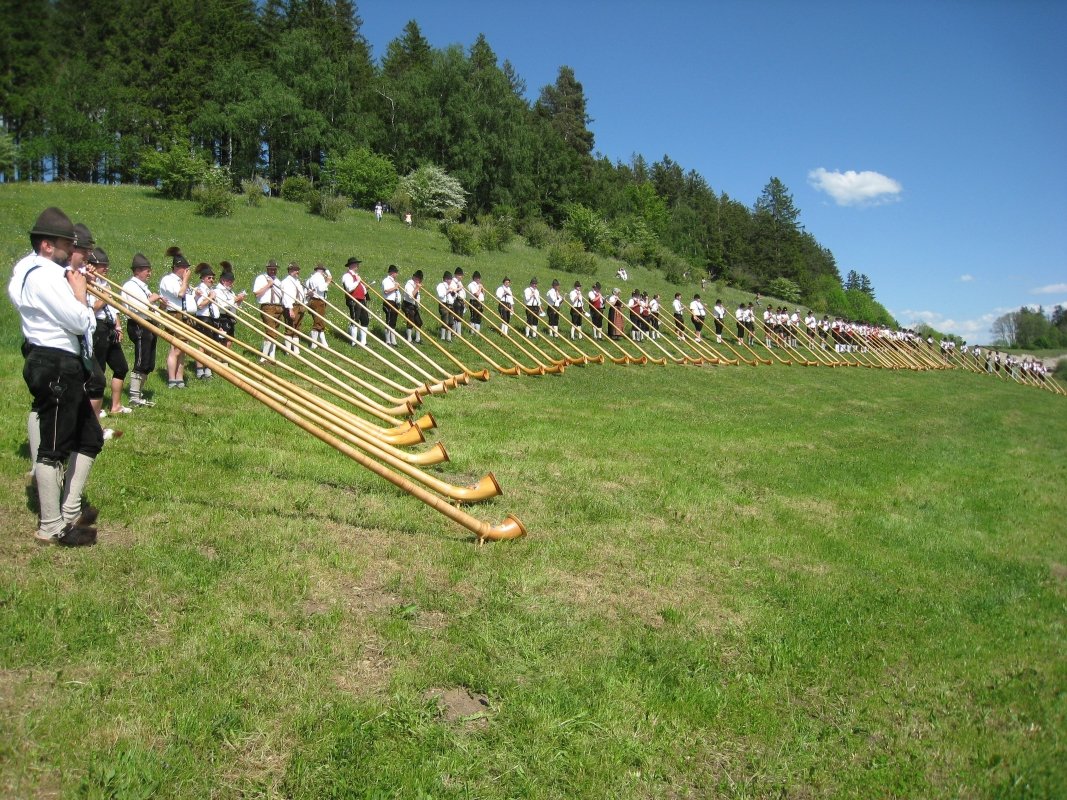
- National Ensemble: Alphorn fans can see 50–100 players at once at big gatherings. In fact, the International Alphorn Festival in Nendaz brings together about 100 players for an ensemble showdown – imagine a hundred wooden horns blowing together high in the Alps!
When & How: Plan Your Alphorn Adventure
Summer is prime Alphorn season. Late June through mid-August is when the mountains are open and the festivals are in full swing. For example, the famous International Alphorn Festival in Nendaz (Valais) is held each July. You can also time your trip with Swiss National Day (August 1) – fireworks, parades and folk music (often including Alphorns) light up Rütli meadow and other sites. If you’re a real enthusiast, seek out the Big Alphorn Meeting on Männlichen (Bernese Oberland) – a rare once-a-decade summit concert of dozens of Alphorn players and flag-wavers.
Even off-season, you can encounter Alphorns. Many ski resorts host desalpe (cow-descent) festivals in September where Alphorns welcome the cows home. And check local tourism boards: Luzern offers public Alphorn trial courses where beginners can actually try blowing one! In short, whenever the weather is good, hop on a mountain train or cable car, and you’ll likely fall into an Alphorn moment. To plan the logistics, consider a Swiss Travel Pass (often called the Tell-Pass) – it offers unlimited train, bus, boat and mountain-rail travel across central Switzerland. That way you can reach remote Alpine peaks (and back) with ease and focus on the music and scenery.
Events Not to Miss
Switzerland packs the summer calendar with Alphorn flair. Here are a few can’t-miss events:
- International Alphorn Festival (Nendaz, Valais): Late July each year, ~100 players gather for competitions and ensemble pieces. A spectacular folk-showdown under the alpine sky!
- National Costume & Alphorn Festival (Männlichen, Bernese Oberland): Around late July a parade of traditional outfits and Alphorn solos atop Männlichen gives you full Swiss-chalet vibes.
- Swiss National Day (Rütli Meadow & nationwide): August 1 brings parades, fireworks, yodeling and often Alphorn fanfares across Switzerland.
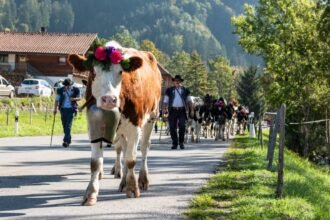
- Alpine Descent Festivals (Appenzell, Valais, etc.): In late September, the Alpabfahrt (Almabtrieb) cow-calling festivals feature Alphorns and yodeling as decorated cows parade through villages.
- Folk Music Fest: Keep an eye on local calendars like the Lucerne or Gstaad cultural guide – Alphorn performances often crop up at mountain top folk-music fests (e.g. Ländlerfest, Jodlerfest).
No matter where you go, look for “Cor des Alpes” or “Chörli” (French for Alphorn) on event listings. Even if you miss a big festival, many ski lifts and tourist spots have Alphorn demonstrations during summer weekends. And of course, booking an Alphorn workshop (e.g. at the Bernatone studio in Habkern) often comes with a live sample!
Travel Tips & Practical Info
Getting there: Fly into Zurich or Geneva; Swiss trains from there are punctual and scenic. The Swiss Travel Pass (Tell-Pass) mentioned above is a great deal – it covers pretty much every train, bus, boat and mountain cable car for a set number of days.
Packing: Mountain weather can change fast. Bring layers: a warm fleece or light down jacket, hat and gloves even in summer, plus good hiking boots. (High-altitude sun is intense too, so sunscreen and sunglasses are a must.) You’ll likely be at 2,000+ meters at some point, so prepare for cooler nights.
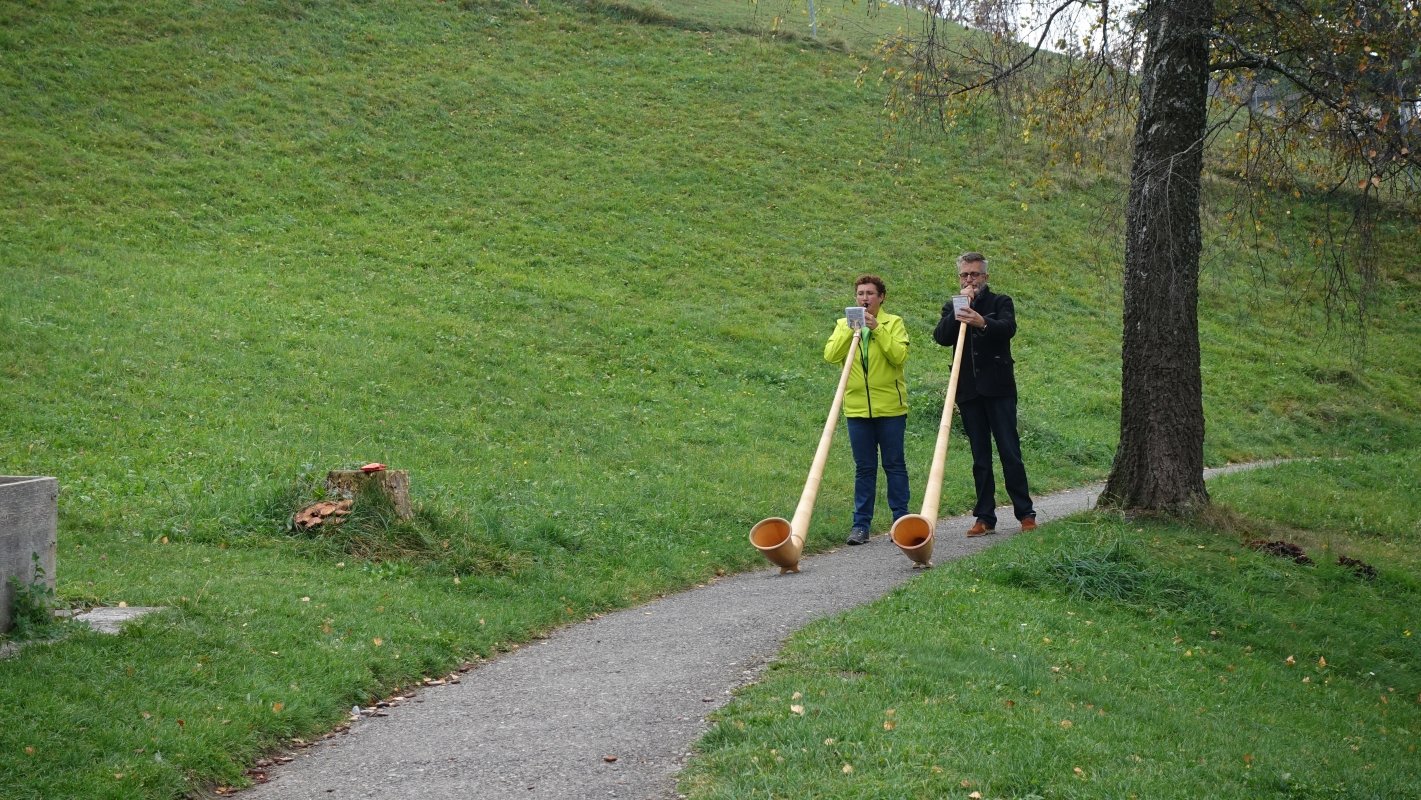
Participating: If you want hands-on fun, sign up for an Alphorn “blow-in” class. For example, Nendaz offers short courses where you learn basic notes and history. In Lucerne you can join a trial course in Brunnen. Or simply watch and chat – Alphorn players are usually friendly folk happy to explain their craft. (TIP: Many will also ask if you want your photo holding the horn – a hilarious souvenir!)
Local etiquette: These are often folk or religious gatherings, so cheer and smile. If an Alphorn performance is in a public space, applause is always welcome. And when the cows come down in autumn (Alpabzug), be respectful of farmers and animals (also have your camera ready for the spectacle of cows with floral wreaths and Alphorn serenades).
Final Thoughts: Embrace the Echo
There’s nothing quite like standing among Swiss peaks and hearing the warm, resonant call of an Alphorn roll across the valleys. It’s a sound that centuries of shepherds and mountaineers have cherished. As you travel through the Alps, let the Alphorn be your guide – blending rugged scenery with culture and music in one blissful experience. Whether you’re swaying to an Alphorn ensemble at a summer festival or trying your first note in a cozy cabin, the spirit of Switzerland will surround you. So pack your sense of adventure (and some warm socks!), and get ready to follow the Alphorn’s echo. Your Alpine adventure – and a true taste of Swiss tradition – awaits!