




TL;DR: Bastelica is a stunning mountain village in southern Corsica, perched at 850m, famous for exceptional charcuterie, skiing at Val d’Ese, spectacular hiking to I Pozzi wetlands, and serving as gateway to Monte Renoso (2,352m). Just 40km from Ajaccio—close enough for ski-and-beach days. Perfect for outdoor lovers, foodies, and travelers seeking authentic Corsica away from coastal crowds.
- Why Bastelica Should Be on Your Radar
- Getting There (It’s Easier Than You Think)
- When to Visit
- What Makes Bastelica Special
- 1. The Charcuterie (Seriously, It’s That Good)
- 3. Hiking Heaven: I Pozzi & Monte Renoso
- 4. History & Heritage
- Where to Stay
- Food & Dining
- Practical Tips
- Beyond Bastelica: Day Trip Ideas
- Sample Itineraries
- Who Will Love Bastelica
- Final Thoughts
Why Bastelica Should Be on Your Radar
Look, if you’re heading to Corsica and only hitting the beaches, you’re missing half the story. This island is basically a mountain rising from the Mediterranean, and Bastelica sits right in the sweet spot—high enough to be dramatic (850 meters above sea level), close enough to the coast to make it practical (about an hour from Ajaccio), and authentic enough to feel like you’ve discovered something special.
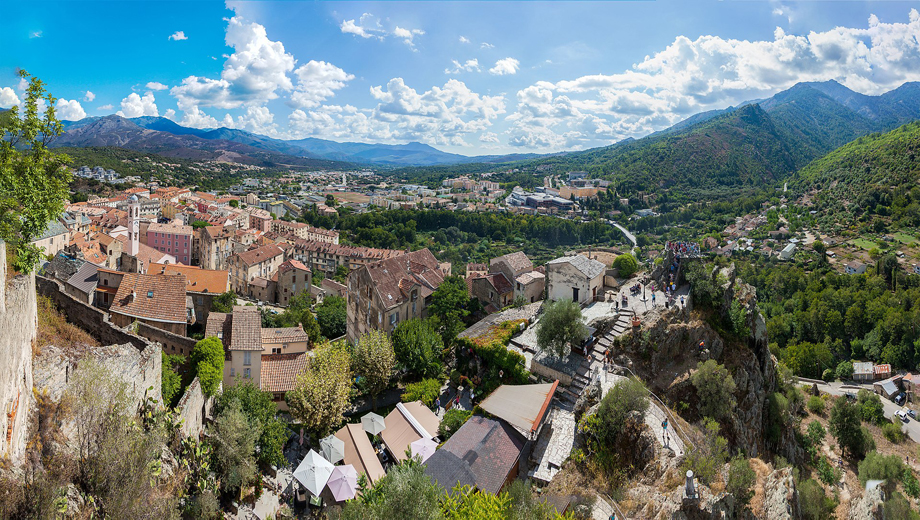
Bastelica lies in the high valley of the Prunelli, southwest of the Monte Renoso massif, making it the highest village in the valley. The vibe here is refreshingly different from the resort towns. People actually live here year-round (about 533 residents), farming happens, traditions matter, and visitors are welcomed warmly rather than just processed.
Getting There (It’s Easier Than You Think)
By Air
Your gateway is Ajaccio’s Napoleon Bonaparte Airport, just 35km away. Bastia Poretta Airport also works if you’re coming from that direction. Both handle international traffic without the chaos of major hubs.
By Ferry
Coming from mainland France or Italy? Ajaccio connects by ferry to Nice, Marseilles, and Toulon (6-12 hours depending on departure point). You can even hop over to Sardinia’s Porto Torres in about 4 hours if you’re island-hopping.
The Drive
From Ajaccio, take the D27 road that passes through Bastelica heading northeast. Budget an hour, maybe a bit more if you’re stopping for photos (which you will). For winter skiing trips, snow tires or chains are strongly recommended and may be compulsory during snowy periods.
Pro tip: Rent a car. Public transport won’t cut it here, and you’ll want the freedom to explore mountain roads at your own pace.
When to Visit
Spring (April-May): Ortala Waterfall is spectacular when snowmelt makes the torrent roar. Wildflowers blanket the meadows, hiking trails open up, and you’ll avoid summer crowds.
Summer (June-September): Peak hiking season with the best weather for exploring Monte Renoso and the pozzi wetlands. Temperatures are pleasantly warm at altitude while coastal Corsica bakes. Perfect for combining mountain mornings with beach afternoons.
Fall (October-November): Chestnut harvest time! Food fairs celebrate local bounty, colors explode across the forests, and you’ll catch honey fairs in September and November.
Winter (December-March): Skiing season at Val d’Ese. The resort operates when snow cover permits, typically December through late March or early April. Winter also brings the famous figatellu sausage season.
Budget travelers: Hotel prices are generally lowest December through February, though you’ll trade crowds for potentially chilly weather.
What Makes Bastelica Special
1. The Charcuterie (Seriously, It’s That Good)
Bastelica is renowned for its pork meats, and this isn’t marketing hype. The village sits at the heart of Corsica’s AOC charcuterie region, where Corsican pigs live partly in the wild, are crossbred with wild boar, and feed mainly on chestnuts and chestnut flour.
What to try: Coppa (smoked pork shoulder), lonzu (cured loin), prisuttu (dry-cured ham aged 15-36 months), and figatellu (liver sausage, winter specialty). L’Aziana charcuterie producer at the village entrance offers tours of their drying room—absolutely worth stopping.
The chestnut-fed pigs create meat with a distinctive nutty sweetness you won’t find elsewhere. Local shops and markets sell direct from producers, and prices are reasonable compared to what you’d pay at coastal tourist spots.2. Val d’Ese: Ski in the Morning, Beach by Sunset
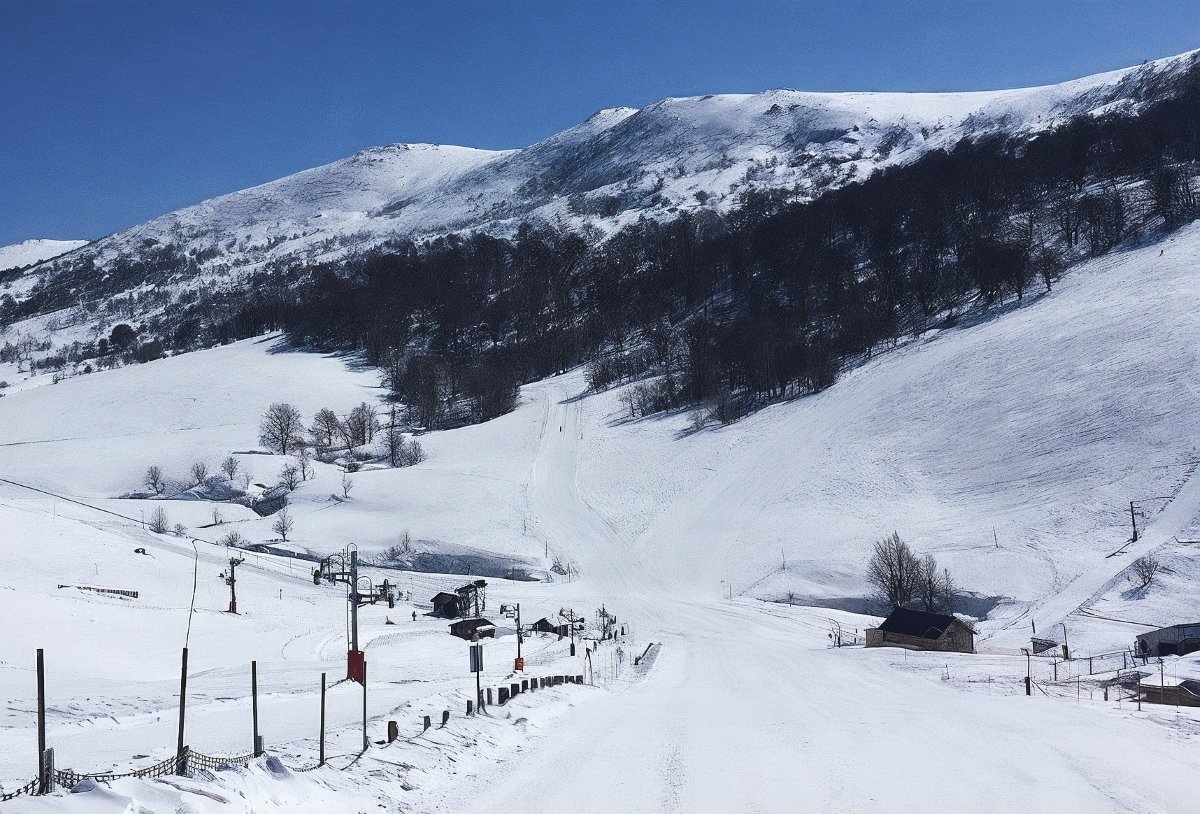
One of Corsica’s three ski resorts, Val d’Ese spans just over 20 hectares between 1,620m and 1,825m altitude. It’s small, family-friendly, and wonderfully unpretentious.
The basics: Four drag lifts, one children’s lift, about 6.2km of marked slopes (green, blue, and red runs), plus nearby off-piste opportunities for experienced backcountry skiers. No snow cannons means opening depends entirely on natural snow cover.
Why it’s awesome: Ski in the morning and surf on the Mediterranean in the afternoon—this is actually doable here. The resort sits just 51km (just over an hour) from Ajaccio. Imagine ripping turns with views stretching to the coast, then grabbing sunset drinks on a beach terrace.
Equipment rental, ski school (ESF with three instructors), and a chalet with basic amenities are available. Hours are 9am-4:30pm daily when operating. This isn’t Val Thorens—it’s intimate, often quiet, and feels refreshingly local.
3. Hiking Heaven: I Pozzi & Monte Renoso
The real magic happens on the trails. Bastelica serves as the jumping-off point for some of Corsica’s most unique alpine landscapes.
I Pozzi (The Pozzines)
These aren’t your average meadows. Pozzi are acidic peaty grasslands crossed by streams, remnants of ancient glacial lakes—essentially mountain wetlands dotted with deep pools. Think Scotland’s highlands transplanted to the Mediterranean.
The hike: 12km loop, moderate difficulty, 5.5 hours, starting from Val d’Ese resort at 1,618m. The trail climbs to around 1,953m. Reviewers rave about stunning 360° panoramas over the Incudine massif and Gulf of Ajaccio.
You’ll likely encounter wild horses, cows, and sheep grazing in this unique landscape. Spring brings emerald-green meadows; summer offers crystal-clear pools perfect for a refreshing dip. The scenery is genuinely unexpected—more Norway than Mediterranean island.
Monte Renoso Summit
At 2,352 meters, Monte Renoso is the massif’s highest peak, shared with neighboring Bocognano and Ghisoni communes. After Monte Cinto and Monte Rotondo, it’s Corsica’s third-highest mountain range.
Why climb it: Monte Renoso is considered the most easily accessible 2,000m+ peak in Corsica. The route from Val d’Ese via I Pozzi and Lac de Bastani offers a 360° panorama including six high-altitude lakes and views of Monte Cinto.
Expect rocky terrain, some hand-scrambling sections, and modest trail markings—watch for stone cairns dotting the route. Best attempted June-October; winter requires guide and proper gear.
Essential gear: Good hiking boots (the terrain is rocky), 2+ liters of water, windbreaker (it gets breezy up there), snacks, and downloaded trail maps since network coverage is often absent.
Other Notable Trails
- Ortala Waterfall: Easier walk following an old water canal through chestnut and oak forests. Spectacular in spring when snowmelt swells the torrent.
- Scalella Pass, Bracca Lake, Vitelaca Lake: Multiple trails radiate from Bastelica into the Regional Natural Park, each offering different perspectives on this dramatic landscape.
4. History & Heritage
Bastelica was the birthplace of Sampiero Corso, a 16th-century military leader who fought to liberate Corsica from Genoese rule. His bronze statue, created by sculptor Vital Gabriel Dubray in the late 1800s, stands 3.50 meters high at a village crossroads.
Other historical gems include the Genoese Zipitoli Bridge (16th century), now disused but classified as a historic monument, and several traditional fountains: Boccialacce, Verga, Dominicacci, and Tricolacci.
The village architecture maintains that granite-and-chestnut aesthetic typical of mountain Corsica—sturdy stone houses with small windows, narrow lanes, and a church square that serves as the social hub.
Where to Stay
Hotels
- Hotel Artemisia: Built in 2010, this hotel mixes hip design with mountain simplicity. Rooms feature large windows framing mountain views, with beds positioned directly in front so you wake up to majestic scenery. Swimming pool, modern amenities.
- U Fiordalisu: Features garden, terrace, restaurant, and bar. About 37km from Ajaccio’s Port de Plaisance.
Guesthouses & Vacation Rentals
Several B&Bs and rental homes offer more intimate experiences. A Bella Scusa gets mentions for serving local charcuterie and cheese from village producers.
Ajaccio option: If Bastelica feels too remote, base yourself in Ajaccio and day-trip up. Beach hotels there start around €443/night with amenities like full-service spas.
Food & Dining
Must-Try Dishes
Beyond charcuterie, embrace the local specialties:
- Brocciu cheese: The only Corsican cheese with AOC designation. Soft, ricotta-like, made from sheep or goat milk.
- Wild boar stew: Corsica’s emblematic dish, served widely in mountain restaurants.
- Chestnut everything: Flour, polenta, cakes. Bastelica has been producing chestnuts since Genoese times, when a 1548 decree required planting chestnut trees.
- Fiadone: Corsican cheesecake made with brocciu and lemon zest.
Where to Eat
Reviewers recommend Chez Paul for Corsican specialties and convivial welcome. Most village restaurants source ingredients locally—the ham on your plate probably came from pigs grazing nearby hills.
Don’t skip the markets. Ajaccio’s central market near Tino Rossi marina offers outstanding charcuterie and cheese stalls if you want to stock up.
Practical Tips
Language: French is official, but many locals speak Corsu (Corsican), a dialect with Italian roots. English isn’t universal, especially in mountain villages. Learn basic French phrases or use translation apps.
Money: Euros. Cards accepted most places, but carry cash for small producers and market stalls.
Cell service: Spotty in the mountains. Download maps and trail guides before heading out.
Driving: Mountain roads are winding. If you drive safely, expect average speeds around 40km/hour due to hairpin bends. Don’t rush—stopping for views is half the point.
Seasons & facilities: Many tourism facilities close mid-October to mid-April. Verify opening dates if visiting shoulder season.
Beyond Bastelica: Day Trip Ideas
Ajaccio (40km): Napoleon’s birthplace. Visit Palais Fesch art museum, Bonaparte family home, and statues. Great restaurants, lively harbor, city vibes.
Col de Bavella (25km): Dramatic mountain scenery, one of southern Corsica’s scenic highlights.
Porticcio (26km): Beach resort south of Ajaccio for coastal contrast.
Gorges de Spelunca & Evisa (35km northwest): Lovely river valley through traditional granite villages.
Corte (35km northeast): Heart of central Corsica, well-positioned for hiking.
Sample Itineraries
Weekend Mountain Escape
Day 1: Arrive Ajaccio, drive to Bastelica (settle in), afternoon hike to Ortola Waterfall, dinner at village restaurant featuring local charcuterie.
Day 2: Full-day hike to I Pozzi from Val d’Ese (pack picnic lunch), evening relaxation with wine and mountain views.
Day 3: Morning drive to Ajaccio, explore old town and markets, afternoon beach time at Porticcio, return home.
Winter Ski & Culture
Day 1: Fly into Ajaccio, drive to Bastelica, visit L’Aziana charcuterie for tour and tasting, check Val d’Ese snow conditions.
Day 2-3: Skiing at Val d’Ese, evening fondue with local cheese and charcuterie.
Day 4: Drive to coast, explore Ajaccio’s Napoleon sites, farewell seafood dinner, depart next day.
Active Summer Week
Combine Bastelica with coastal Corsica for variety: Split time between mountain hiking (Bastelica base, 3-4 days) and beach/water sports (Porto-Vecchio or Calvi, 3-4 days). The famous GR20 long-distance trail (112 miles, traditionally takes 16 days) passes through this region if you’re hardcore.
Who Will Love Bastelica
Hikers & outdoor enthusiasts: World-class trails without massive crowds, unique alpine wetlands, and that rare combo of mountains meeting Mediterranean.
Foodies: The charcuterie alone justifies the trip. Add in artisanal cheeses, honey, chestnuts, and farm-to-table dining, and you’ve got paradise.
Skiers seeking something different: Small resort, great scenery, and the novelty of skiing with sea views beats generic mega-resorts.
Culture seekers: Authentic village life, living traditions, and the chance to connect with locals who actually want to share their heritage.
Anyone tired of tourist traps: Bastelica remains refreshingly under-the-radar. While most tourists stick to coastal areas, mountain villages like this reveal the true Corsican soul.
Final Thoughts
Bastelica won’t be for everyone. If you want pristine resorts, 24/7 English menus, or party scenes, stick to the coast. But if you’re after authentic experiences, dramatic landscapes, exceptional food, and the kind of place where shepherds still herd 200 sheep down mountain passes, this village delivers.
The beauty here feels earned rather than packaged. You’ll drive winding roads, hike challenging trails, and probably fumble through French conversations. But you’ll also watch sunset light play across mountain ridges, taste charcuterie unlike anything back home, and maybe—just maybe—understand why Corsicans are so fiercely proud of their island.
Pack good shoes, bring your appetite, and leave time to wander. Bastelica rewards the curious.
Getting More Info:
- Official tourism: Visit-Corsica.com and Ajaccio-Tourisme.com
- Trail maps: IGN 4252 OT (Monte Renoso-Bastelica)
- Weather: Check mountain forecasts, especially for hiking
- Bastelica village site: Bastelica.fr (mainly French)
Bon voyage, and don’t forget to try the figatellu!