






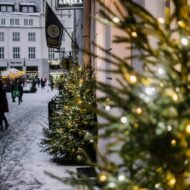
European December events 2025 , Picture this: cobblestone streets glittering with fairy lights, the aroma of mulled wine floating through medieval squares, and the sound of carolers echoing off centuries-old cathedral walls. December in Europe isn’t just a month—it’s an experience that transforms the entire continent into a winter wonderland. Whether you’re hunting for unique gifts at Christmas markets, craving authentic holiday traditions, or simply want to soak up the festive atmosphere, Europe delivers like nowhere else on Earth.
- Germany: The Christmas Market Capital
- France: Lights, Wine, and Je Ne Sais Quoi
- Austria: Imperial Elegance Meets Alpine Charm
- Italy: La Dolce Vita Goes Festive
- Spain: Fiesta Spirit All December Long
- Netherlands: Lights and Water
- Switzerland & More: Quick Hits
- Planning Your Perfect December Trip
- Beyond the Markets: December Events
- Food & Drink You Can’t Miss
- Making it Accessible for Everyone
- Final Thoughts
This isn’t your typical “top 10 markets” list. We’re taking you country by country through the continent’s most incredible December events, from legendary Christmas markets to quirky local traditions you’ve probably never heard of. Ready to plan the ultimate European winter escape? Let’s dive in.
Germany: The Christmas Market Capital
Let’s be honest—when most people think European Christmas markets, they think Germany. And for good reason. This is where the tradition was born, and nobody does it quite like the Germans.
The Big Players
Most German Christmas markets kick off around November 24-28, 2025, and run through December 22-23—so you’ve got nearly a month of festive fun.
Nuremberg’s Christkindlesmarkt is the OG of Christmas markets. Dating back to at least 1530, this market attracts over 2 million visitors each December. Expect wooden stalls overflowing with handcrafted ornaments, the famous Nuremberg bratwurst (three per roll, thank you very much), and that incredible lebkuchen gingerbread.
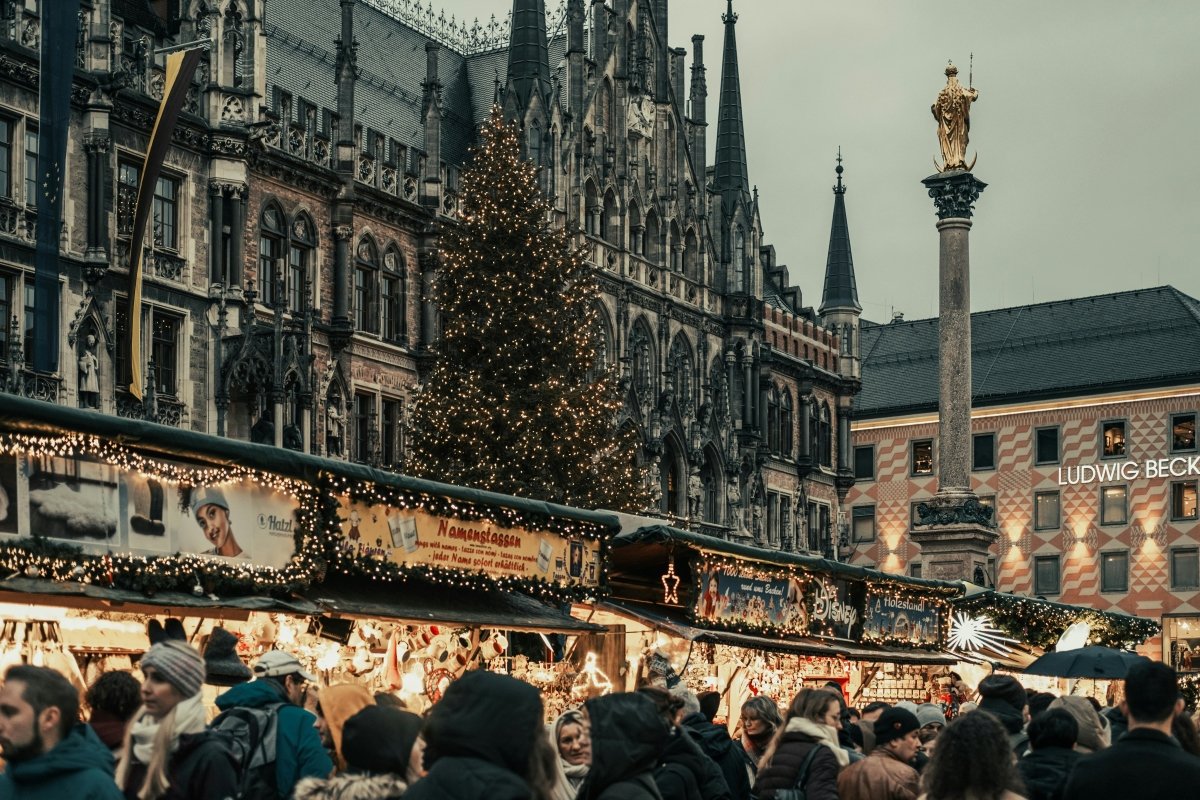
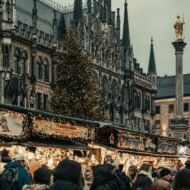
Munich goes absolutely wild for Christmas. The Christkindlmarkt at Marienplatz runs from November 24 to December 24, 2025, featuring Germany’s largest nativity scene market. But here’s the insider tip: The Tollwood Winter Festival on Theresienwiese (yes, the Oktoberfest grounds!) offers an alternative vibe with organic food, world music, and arts and crafts.
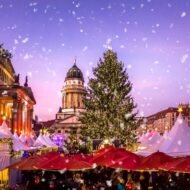
Berlin isn’t holding back either. The city hosts over 80 Christmas markets scattered across different neighborhoods, each with its own personality. From the historic Gendarmenmarkt to hipster markets in Kreuzberg, you’ll find everything from traditional wooden toys to cutting-edge design pieces.
Hidden Gems Worth the Trip
Rothenburg ob der Tauber transforms into a fairy-tale village, running from November 21 to December 23, 2025. This medieval town is the stuff of storybooks, and the Christmas markets feel like stepping back in time. Bonus: it’s packed with year-round Christmas shops (yes, really).
Frankfurt’s market is where locals go to party. Running from November 24 to December 22, 2025, it’s known for its lively atmosphere with music, dancing on the main square, and rivers of mulled wine.
The Wild Card: Krampus Runs
Want something completely different? Krampusnacht (Krampus Night) falls on December 5, with runs happening in Salzburg (December 5-6) and Munich (December 14, 2025). This pre-Christian tradition features half-demon, half-goat creatures chasing people through the streets. It’s terrifying, it’s exhilarating, and it’s uniquely Alpine.
France: Lights, Wine, and Je Ne Sais Quoi
The French take Christmas seriously, but they do it with that unmistakable French flair. Think less commercialization, more artisan craftsmanship and incredible food.
Lyon’s Fête des Lumières
This spectacular light festival runs December 5-8, 2025, turning the entire city into an outdoor art installation. World-renowned designers create original light projections that illuminate Lyon’s unique heritage. It’s free, it’s breathtaking, and it draws crowds from across Europe.
Strasbourg: The Christmas Capital of France
Strasbourg hosts one of the oldest Christmas markets in the world, and wandering its medieval streets during the holidays feels like walking through a Christmas card. The Alsatian capital goes all-in with decorations, local crafts, and that signature blend of French and German traditions.
Paris Sparkles
The City of Light becomes even more luminous in December. The Paris Autumn Festival continues through January 26, 2025, featuring around 50 avant-garde arts events attracting 150,000 attendees. Christmas markets pop up throughout the city, ice skating rinks appear, and the Champs-Élysées lights up in spectacular fashion.
Don’t miss Les Trans Musicales Festival in Rennes (December 3-7, 2025), which has been discovering innovative international music since 1979.
Austria: Imperial Elegance Meets Alpine Charm
Austria perfects the balance between grand city markets and cozy mountain-village vibes.
Vienna’s Imperial Markets
Vienna’s Christmas markets begin as early as November 6, 2025, with most major markets opening by November 14. The city boasts over 17 official markets, each offering something different.
The Rathausplatz market (November 14-December 26, 2025) is the main attraction, featuring a two-story carousel, multiple ice skating rinks connected by winding paths, and a heart that floats above the market every 30 minutes after sunset. It’s pure magic.
For something more intimate, the Spittelberg market (November 14-December 23) winds through narrow alleys in a historic neighborhood, offering a completely different vibe from the grand squares.
Pro tip: Visit late afternoon or early evening for the best atmosphere—you’ll catch the dusk ambience while avoiding peak crowds.
Innsbruck: Mountains Meet Markets
Innsbruck’s old town market (November 15-December 23, 2025) nestles between medieval buildings beneath the Golden Roof, with the snow-capped Nordkette peaks as backdrop. After shopping, hit the slopes—you’re in the Alps, after all.
Salzburg: Sound of Music Meets Christmas
Salzburg’s markets run from November 20-December 31, 2025, with the main attraction at Residenzplatz featuring choir performances and “Turmblasen” (wind instruments) every Saturday.
Italy: La Dolce Vita Goes Festive
Italy brings its signature warmth and culinary excellence to the Christmas season. Markets here are less about the cold-weather cozy factor and more about showcasing Italian craftsmanship and, of course, incredible food.
Northern Alpine Magic
Bolzano hosts the largest and most famous Christmas market in Italy (November 28, 2025-January 6, 2026), set against the backdrop of the Dolomites. Over 100 wooden stalls offer traditional Zelten fruitcake, craft workshops, and collectible Christmas mugs.
Merano, just 30 km from Bolzano, runs its market along the riverfront (November 28, 2025-January 6, 2026), with the added bonus of thermal spas perfect for après-market relaxation.
Renaissance Cities Go Festive
Florence’s Weihnachtsmarkt in Piazza Santa Croce (November 15-December 21, 2025) features German-style wooden stalls alongside Tuscan specialties. It’s a fascinating cultural mashup that somehow works perfectly.
Venice’s Christmas Village at Campo Santo Stefano (November 23-December 24, 2025) showcases Murano glass ornaments and carnival masks, with gondola rides under twinkling lights adding that signature Venetian romance.
Rome: Ancient Meets Festive
Piazza Navona’s Christmas market runs throughout December, offering local crafts and traditional Italian holiday treats. Don’t miss the nativity scene at St. Peter’s Square and midnight mass at St. Peter’s Basilica on Christmas Eve.
Sweet Traditions
December in Italy is a dessert lover’s paradise, with traditional treats like panettone and pandoro available at every bakery and Christmas market. In Turin, the CioccolaTò chocolate festival celebrates Italian chocolate craftsmanship.
Spain: Fiesta Spirit All December Long
Spain celebrates Christmas differently—and that’s exactly what makes it special. The festivities stretch well into January, with unique traditions you won’t find anywhere else.
Barcelona’s Catalan Christmas
The Fira de Santa Llúcia (November 28-December 23, 2025) has been running since 1786, making it one of Spain’s oldest markets. Located in front of Barcelona’s Gothic Cathedral, it’s the place to discover uniquely Catalan traditions.
Here’s where it gets weird (in the best way): Caga Tió is a beloved Catalan tradition involving a log that children “feed” throughout December, then beat with sticks on Christmas to make it “poop” presents. Yes, really. The Catalans also have Caganers—nativity scene figures of people doing their business. It’s cheeky, irreverent, and totally Barcelona.
Madrid: Grand and Traditional
Madrid’s Plaza Mayor market opens mid-November, running through early January, filled with stalls selling toys, nativity figures, and traditional Spanish Christmas treats. The city’s Christmas lights switch on November 22, 2025, illuminating the Gran Vía in spectacular fashion.
Unique Spanish December Traditions
December 28 is Día de los Santos Inocentes—Spain’s version of April Fools’ Day, when practical jokes are traditionally allowed.
New Year’s Eve has everyone eating 12 grapes—one for each chime at midnight—for good luck. The best place to do this? Puerta del Sol in Madrid, where thousands gather for this uniquely Spanish tradition.
The Song of the Sibyl, a UNESCO Intangible Cultural Heritage performance, takes place on Christmas Eve in every church in Mallorca. It’s a medieval chant performed by a soloist in a white robe carrying a sword.
Netherlands: Lights and Water
The Amsterdam Light Festival illuminates the city’s canals and streets from late November through January with captivating installations from global artists. Take a canal cruise to see the light art reflected in the water—it’s an experience you won’t forget.
Switzerland & More: Quick Hits
Geneva’s Escalade Festival (early December) commemorates the city’s 1602 victory with torchlit parades and chocolate cauldrons—you literally smash chocolate pots filled with marzipan vegetables as part of the tradition.
Sweden’s St. Lucia Day (December 13) brings candlelit processions and saffron pastries, offering warmth and light during the darkest days of the Nordic winter.
Planning Your Perfect December Trip
Timing is Everything
Early December (1-15): Markets are fresh, crowds lighter, perfect for budget travelers. All major markets are open and the festive atmosphere is building.
Mid-December (16-22): Peak season. Maximum atmosphere, maximum crowds, maximum selection. Book accommodation well in advance. This is when locals do their Christmas shopping, so expect authentic energy.
December 23-26: Many markets close by December 23. However, some Austrian and German markets remain open through December 26 or even into January.
December 27-January 6: Several markets transform into New Year markets. Crowds thin out, prices can be better, and you’ll catch both Christmas and New Year celebrations.
What to Pack
Layers are your friend. December temperatures vary wildly across Europe:
- Northern/Alpine regions: 0-8°C (32-46°F)
- Central regions: 5-12°C (41-54°F)
- Southern Europe: 10-16°C (50-61°F)
Essential items:
- Warm waterproof coat
- Scarf, gloves, hat
- Comfortable waterproof boots (you’ll be walking on cobblestones)
- Thermal layers
- Reusable mug for mulled wine (many markets offer discounts)
- Cash (smaller markets and stalls often don’t take cards)
Pro Travel Tips
- Book Early: December is peak season. Hotels, trains, and special events sell out fast.
- Combine Destinations: Many Christmas markets are along convenient train routes. A Frankfurt-Heidelberg-Strasbourg-Basel route hits multiple countries and markets.
- Try Regional Specialties: Don’t just drink glühwein everywhere. Try vin chaud in France, glögg in Sweden, vin brulé in Italy.
- Attend Special Events: Dresden’s Stollenfest on the Saturday before second Advent features a parade with a massive fruitcake through medieval streets.
- Visit Off-Peak Hours: Weekday afternoons (2-5 PM) are quieter than evenings and weekends.
- Bring a Reusable Bag: You’ll be buying gifts, ornaments, and treats. Come prepared.
Budget Reality Check
- Mulled wine: €3-5 per mug
- Food stalls: €5-12 for substantial snacks
- Christmas market mugs (souvenir): €3-5 deposit, keep the mug
- Handcrafted ornaments: €5-30
- Market entry: Almost always FREE
- Accommodation: Book 2-3 months ahead; expect €80-200/night in major cities
Beyond the Markets: December Events
Sports & Spectacles
Barcelona’s Copa Nadal swimming race has been held every year since 1907, with participants diving into the Mediterranean near the Christopher Columbus statue.
Paris hosts ice hockey games at the Accor Arena and winter horse racing at Hippodrome de Vincennes.
Cultural Highlights
The European Festival of Performing Arts in Timișoara, Romania (December 1-5), and the Khachaturian International Festival in Armenia (December 9-19) showcase diverse performing arts.
The Tallinn Black Nights Film Festival is Northern Europe’s premier cinematic event, drawing delegates and journalists from around the world.
Food & Drink You Can’t Miss
Every country has its December specialties:
Germany: Lebkuchen (gingerbread), roasted almonds, Feuerzangenbowle (flaming rum punch)
France: Vin chaud (mulled wine), crêpes, foie gras
Austria: Kaiserschmarrn (emperor’s pancake), Glühwein, Sachertorte
Italy: Panettone, pandoro, torrone (nougat), cioccolata calda (hot chocolate)
Spain: Turrón (almond nougat), polvorones (crumbly cookies), churros con chocolate
Netherlands: Oliebollen (fried dough balls), stroopwafels
Making it Accessible for Everyone
Most major Christmas markets are fully accessible, with:
- Wheelchair-accessible pathways
- Accessible toilets
- Service animal friendly spaces
- Sensory-friendly hours (check individual market websites)
Many cities offer discounted or free entry to museums on specific December dates, and numerous Christmas concerts and events are free to attend.
Final Thoughts
December in Europe isn’t just about Christmas markets—it’s about experiencing centuries-old traditions, tasting regional specialties, and seeing historic cities at their most magical. From demon runs in the Alps to light festivals in Lyon, from swimming races in Barcelona to midnight masses in Rome, the continent offers endless ways to celebrate the season.
The key? Don’t try to do it all. Pick a region, dig deep, and let yourself get lost in the festive atmosphere. Whether you’re sipping glühwein in a 700-year-old German square, watching light projections dance across Renaissance buildings in Florence, or smashing chocolate pots in Geneva, you’re creating memories that’ll last far beyond the holiday season.
So what are you waiting for? Start planning your European December adventure now. The markets are calling, the mulled wine is warm, and the magic is waiting.
Ready to book? Start looking at flights and accommodations at least 8-10 weeks before your trip for the best deals. Most Christmas markets are free to enter, but special events, concerts, and experiences should be booked in advance.
Have you experienced a European Christmas market? Which country’s December traditions intrigue you most? Drop a comment and let’s chat about the ultimate festive European getaway!
Last Updated: November 2025