

July in Europe: The Events Worth Traveling For
The ones everyone knows, the ones nobody talks about, and the moments that only happen once a year.
- The Famous Ones — Understood Properly
- San Fermín, Pamplona — 6–14 July
- Tomorrowland, Boom, Belgium — 17–19 and 24–26 July
- Ghent Festivities — 17–26 July
- Roskilde Festival, Denmark — Ends 6 July
- The Ones Nobody Talks About
- Fašinada, Perast, Montenegro — 22 July
- Ghent Festivities — Underground Programme
- Ljubljana Festival, Slovenia — Running through July
- Lucca Summer Festival, Italy — 4 July and ongoing
- Bregenz Festival, Austria — July through August
- Phillgood Festival, Plovdiv, Bulgaria — 17–19 July
- Festival of European Folk Craft, Kežmarok, Slovakia — 10–12 July
- Sea Festival, Klaipėda, Lithuania — 24–26 July
- Cretan Diet Festival, Rethymno, Greece — 1–7 July
- A Note on July
July in Europe is not a quiet month. It is the month when the continent performs its most ancient rituals, fills its oldest squares, and opens its most extraordinary stages. The summer has arrived and with it, something older than tourism: the instinct to gather, to celebrate, to mark the turning of the year with fire and music and processions that predate the nation states they happen inside.
Most travel guides cover the obvious ones. This is not that list.
What follows is July’s full range — the famous events worth understanding properly, and the lesser-known ones worth knowing at all.
The Famous Ones — Understood Properly
San Fermín, Pamplona — 6–14 July
Every year, hundreds of thousands of visitors gather in Pamplona dressed in traditional white clothing with red scarves and sashes that have become synonymous with San Fermín. Most of them have come for the Running of the Bulls. Very few of them understand what they are actually attending.
The festival of San Fermín is a week-long celebration held annually in Pamplona, Navarre. The celebrations start at noon on 6 July and continue until midnight on 14 July. The encierro — the bull run itself — lasts between two and four minutes each morning. The rest of the festival runs twenty-four hours a day for nine days.
It is a unique blend of religious tradition, folklore, music, gastronomy, community spirit, and continuous street celebrations. The religious heart of it is a solemn procession on July 7th, when a solemn procession carries the statue of Saint Fermín through the historic center of Pamplona. Local authorities, clergy, musicians, dancers, and thousands of residents participate in this ceremony.
The red scarf carries more meaning than most visitors know. According to the parish priest of the San Lorenzo church, the red color derives from the liturgical practice of dressing in red for the feast day of a martyr — Saint Fermín was martyred for his faith. The scarf worn around the neck mirrors the vestments priests wear during religious ceremonies in honor of martyred saints.
The festival ends as it deserves to. Large crowds gather at Plaza Consistorial, lit candles in hand, to mourn the end of the San Fermín Festival while chanting the sad notes of “Pobre de Mi” — Poor Me. The atmosphere is both mournful and uplifting as the music changes tempo and people get excited about next year’s fiesta.
The Wanders take: Go for the procession, the brass bands and the street life. The bull run is extraordinary but the nine days surrounding it are the real story. Arrive before July 6th — the city changes the moment the first rocket fires.
Tomorrowland, Boom, Belgium — 17–19 and 24–26 July
Tomorrowland has been the go-to festival for techno music fans since 2005. It’s no surprise that it’s also one of the hardest events to get tickets, with most of them selling out within less than an hour. Based in Boom, just 10 miles from Antwerp in Belgium, Tomorrowland is famous for its over-the-top stages and visual performances. The 2026 theme is “Consciencia” with artists like Calvin Harris, David Guetta, and The Chainsmokers hitting the main stage.
Two weekends, one temporary city built in a Belgian field. Tomorrowland is not subtle and it is not trying to be. For a certain kind of traveler, there is nothing else in Europe that comes close to it.
The Wanders take: Not The Wanders’ natural territory — but worth acknowledging honestly. If electronic music is your reason to travel, this is the pilgrimage. The town of Boom is otherwise entirely unremarkable, which is part of the point.
Ghent Festivities — 17–26 July
This one deserves more attention than it gets outside Belgium.
The Ghent Festival takes place from Friday 17 to Sunday 26 July 2026 and promises to be an unforgettable experience once again. Streets and squares are transformed into stages where both emerging and established artists perform. The Ghent Festivities are among the largest cultural city festivals in Europe and boast an impressive history dating back to 1843. What started as a local folk celebration has grown into an international phenomenon with a huge variety of performances and activities.
Ten days. Most performances are free. The city of Ghent — already one of the most beautiful medieval cities in Europe, consistently overlooked in favour of Bruges twenty kilometres to the west — becomes a completely different place. The canals, the guild houses, the Graslei waterfront, the Sint-Baafskathedraal — all of it becomes stage and backdrop simultaneously.
The Wanders take: If you are within reach of Belgium in the last ten days of July and have never been to Ghent, this is your reason. The festival is genuinely free, genuinely local and genuinely extraordinary. Combine with a night in the city before or after and you have one of the best value July experiences in Western Europe.
Roskilde Festival, Denmark — Ends 6 July
Roskilde ends in early July, making it one of the first major summer festivals to land. Held since 1971 on a field south of Copenhagen, it is one of Europe’s oldest and most beloved music festivals — non-profit, volunteer-run, all proceeds to humanitarian causes. The lineup spans every genre; the atmosphere is distinctly Nordic in its organisation and generosity.
The Wanders take: Worth the Copenhagen flight even without the festival. With it — one of the most complete summer experiences in northern Europe.
The Ones Nobody Talks About
This is where July becomes interesting.
Fašinada, Perast, Montenegro — 22 July
The single most extraordinary event in July that almost no international traveler knows exists.
Every year on July 22, a convoy of boats decorated with apple branches and filled with stones is tied together before setting sail. Religious officials and the male heirs of famous sailors and respectable Perastans sit on the boats, while women greet them from the shore. The boats set off at sunset while a woman sings a traditional Bokelian song. They sail towards an island to fulfil their ancestors’ legacy and throw stones around it.
The island they are sailing to is Our Lady of the Rocks — the only man-made island in the Adriatic. For 572 years, sailors returning safely to the Bay of Kotor have dropped a rock at the same submerged reef, and over centuries those rocks became an island.
This custom has been continuously observed for over 500 years, enduring through wars, natural disasters like earthquakes, and even the recent global pandemic. In 2013, the tradition of Fašinada was officially declared a part of Montenegro’s intangible cultural heritage.
The ritual is silent except for a brass band on the church terrace. The ceremony is free to attend from the Perast waterfront. The town itself — baroque stone houses, a single main street along the bay, the two islands visible from every window — is one of the most beautiful small towns in the entire Mediterranean.
The Wanders take: If you are anywhere near the Bay of Kotor on July 22nd, change your plans. This is the kind of event that travel exists for — ancient, unperformed, genuinely alive. Book accommodation in Perast directly rather than Kotor; the town empties of its visitors by evening and the ceremony belongs to the community that has been doing it for half a millennium.
Ghent Festivities — Underground Programme
Beyond the headline acts, the Ghent Festival offers whether you love live music, cabaret, street theater, or just want to experience the unique atmosphere. The festival’s street theatre and cabaret programmes run simultaneously with the main stages — smaller, stranger, and often more memorable than the headliners. The Patershol neighbourhood, a maze of medieval streets north of the Gravensteen castle, becomes a particular focus of the smaller events. Worth seeking out deliberately rather than stumbling on accidentally.
Ljubljana Festival, Slovenia — Running through July
27 June to 26 July 2026 · Ljubljana, Slovenia · The most important festival in Slovenia and the wider region. Classical music, opera and theatre in the extraordinary Ljubljana Castle, the Congress Square and the open-air stages of a city that consistently ranks among Europe’s most liveable and least visited capitals. The Ljubljana Jazz Festival runs concurrently in early July — 1–4 July, described as the largest European jazz festival.
Ljubljana in July is the argument for going to Slovenia before everyone else discovers it. The festival season, the outdoor cafés along the Ljubljanica river, the market under the Dragon Bridge — it is a city operating at its most confident and most generous.
The Wanders take: Slovenia’s capital does not need a festival to justify a visit, but the festival gives you a reason to time your arrival precisely. Combine with Lake Bled (40 minutes) and the Soča Valley (90 minutes) for one of the most complete week’s travel in Central Europe.
Lucca Summer Festival, Italy — 4 July and ongoing
Set within Lucca’s historic city walls, the Lucca Summer Festival brings international artists to one of Italy’s most atmospheric stages. This year’s programme features Ludovico Einaudi, Jamiroquai and the Orchestra Giovanile Luigi Cherubini, performing at the open-air venues of Piazza Napoleone and the Mura Storiche. With Pisa and Florence within reach, the festival lends itself naturally to a wider Tuscan summer.
Lucca itself is one of Tuscany’s most extraordinary and undervisited cities — a completely intact Renaissance city wall still circling the old town, bicycle culture instead of tourist buses, a mediaeval street grid and an extraordinary food scene. The festival happens inside those walls, in the piazza that was once the Roman forum. The combination of setting and programme is difficult to beat.
The Wanders take: The festival is the excuse; Lucca is the reason. Stay inside the walls rather than in a hotel outside — the city after the crowds leave is a different and better place.
Bregenz Festival, Austria — July through August
If you’re seeking cinematic spectacle this summer, the Bregenz Festival in Vorarlberg, Austria is one of Europe’s most striking cultural settings. Held on the shores of Lake Constance, it is renowned for large-scale productions on the world’s largest floating stage. The programme includes opera, orchestral and classical works throughout the summer season.
The floating stage at Bregenz — where full-scale opera productions play to an audience of 7,000 sitting on the lakeside — is one of the genuine wonders of European cultural infrastructure. The productions change every two years; the lake and the mountains behind do not. Bregenz itself, the capital of Vorarlberg, is one of Austria’s least known cities — architecturally extraordinary, culturally sophisticated, entirely off the international travel circuit.
The Wanders take: Worth the journey specifically. Bregenz is not on the way to anywhere, which is precisely why it has remained what it is.
Phillgood Festival, Plovdiv, Bulgaria — 17–19 July
This one is new in 2026 and worth noting.
Bulgaria has been comparatively slow to get into on the international festival circuit. This year, however, the stunning city of Plovdiv gets in on the action with new festival Phillgood. Staged on the scenic banks of the Rowing Canal, it’s got a relatively compact but diverse lineup that includes some heavyweight touring acts making their Bulgarian debuts. The lineup includes The Cure, Wolf Alice, Moby, Gorillaz, Just Mustard, The Subways, Daniel Avery.
Plovdiv — one of Europe’s oldest continuously inhabited cities, European Capital of Culture in 2019, with an Ottoman old town that rivals anything in the Balkans — has been waiting for a flagship summer event. This may be it.
The Wanders take: Plovdiv needs no festival to justify a visit, but this is an opportunity to combine one of Europe’s most underrated cities with a genuinely strong music programme. The Rowing Canal setting, on the edge of the city, keeps the festival separate from the Old Town — arrive a day early and give yourself time in the Kapana neighbourhood and the Roman amphitheatre before the music begins.
Festival of European Folk Craft, Kežmarok, Slovakia — 10–12 July
Kežmarok, Slovakia — Experience folk crafts and history in Kežmarok. One of Central Europe’s most complete folk culture festivals, held in a Slovak town at the foot of the High Tatras that almost no Western European visitor has ever heard of. Traditional dress, crafts, music and food from across the entire Central European folk tradition — Czech, Slovak, Hungarian, Ruthenian, Roma. The setting is Kežmarok’s extraordinary Renaissance castle courtyard.
The Wanders take: This is what The Wanders means when it says cultural immersion. Not a reconstruction, not a tourist performance — a living folk tradition in a town that still practices it. Two hours from Kraków, three from Vienna.
Sea Festival, Klaipėda, Lithuania — 24–26 July
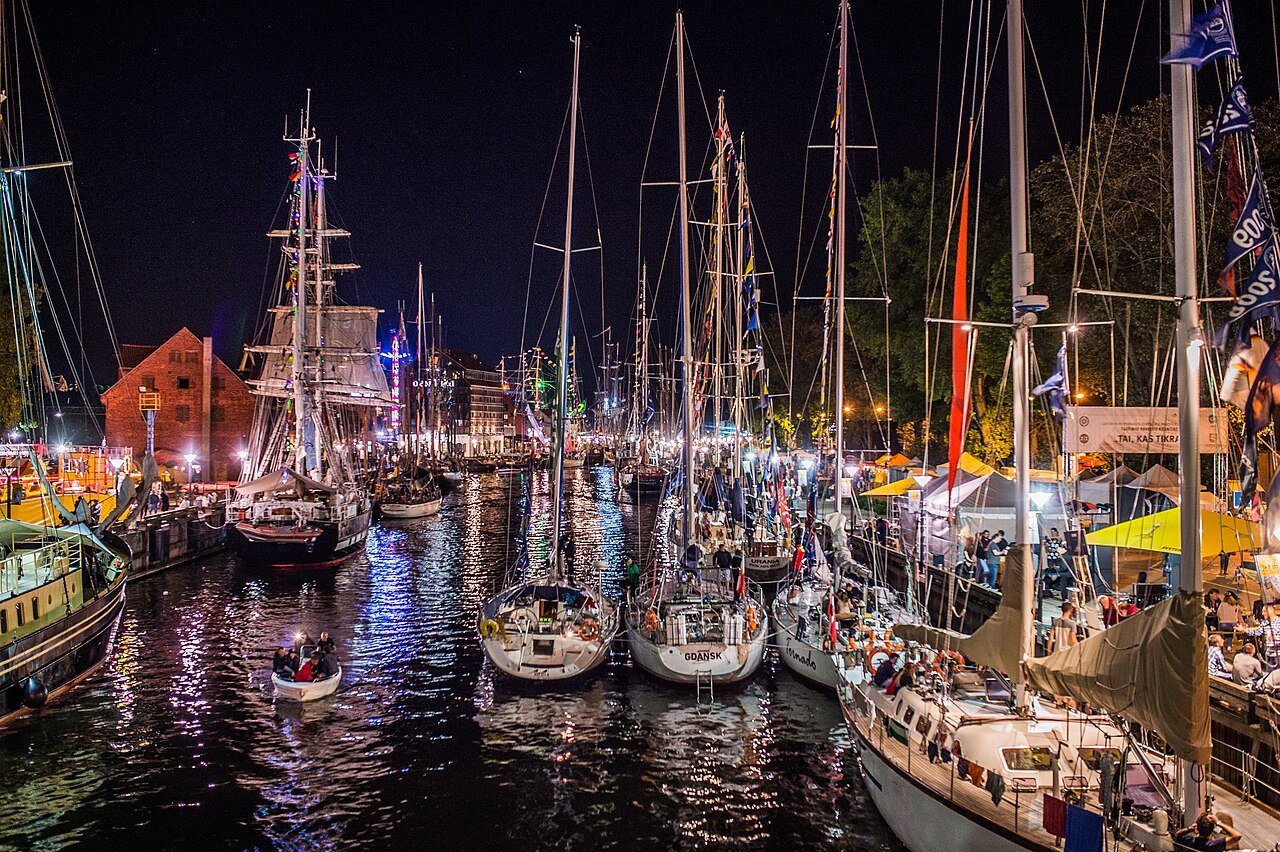
Klaipėda, Lithuania — a vibrant celebration of maritime culture. Lithuania’s only seaport, at the entrance to the Curonian Lagoon (UNESCO World Heritage Site), celebrates its maritime identity with a three-day festival of boats, sea music, traditional fishing culture and the extraordinary landscapes of the Curonian Spit visible across the water. One of the Baltic region’s most distinctive events, attended almost exclusively by Lithuanian, Latvian and German visitors.
The Wanders take: Klaipėda is the gateway to the Curonian Spit — the sand dune peninsula that separates the Curonian Lagoon from the Baltic Sea, one of Europe’s most extraordinary natural landscapes. The Sea Festival is the reason to time your arrival precisely; the Spit is the reason to stay a week.
Cretan Diet Festival, Rethymno, Greece — 1–7 July
Rethymno, Crete, Greece — Taste the flavors of Cretan tradition. A week-long celebration of Cretan food culture — olive oil, herbs, wine, the Mediterranean diet as a living tradition rather than a nutritional concept. In Rethymno, a Venetian harbour town with one of the best-preserved old towns in the Aegean, the festival uses the city’s historic spaces as its stages.
The Wanders take: Cretan food culture is among the most distinctive in the Mediterranean — not Italian, not Greek in the mainland sense, something entirely its own. The festival is the editorial hook; Rethymno’s Venetian lighthouse, the Fortezza and the old town are the reason to build a week around it.
A Note on July
July in Europe is not the time to look for quiet. The continent’s population is on the move, its squares are full and its hotels are expensive. The events in this guide are worth planning around precisely because they give purpose to the movement — you are not simply going to a place, you are going at the right moment.
The lesser-known events in this list share one characteristic: they are not performing for visitors. Fašinada happens whether you are there or not. The Kežmarok folk festival happens whether anyone books a flight for it or not. The Ljubljana Festival plays to an audience that is mostly Slovenian. That is exactly why they are worth going to.
Plan your July around one of the events nobody knows and use the rest of the month to explore at your own pace. The crowds will be at San Fermín and Tomorrowland. The interesting things will be happening in Perast, in Kežmarok, in Rethymno, in Ghent’s side streets.
That is the Europe July saves for itself.