


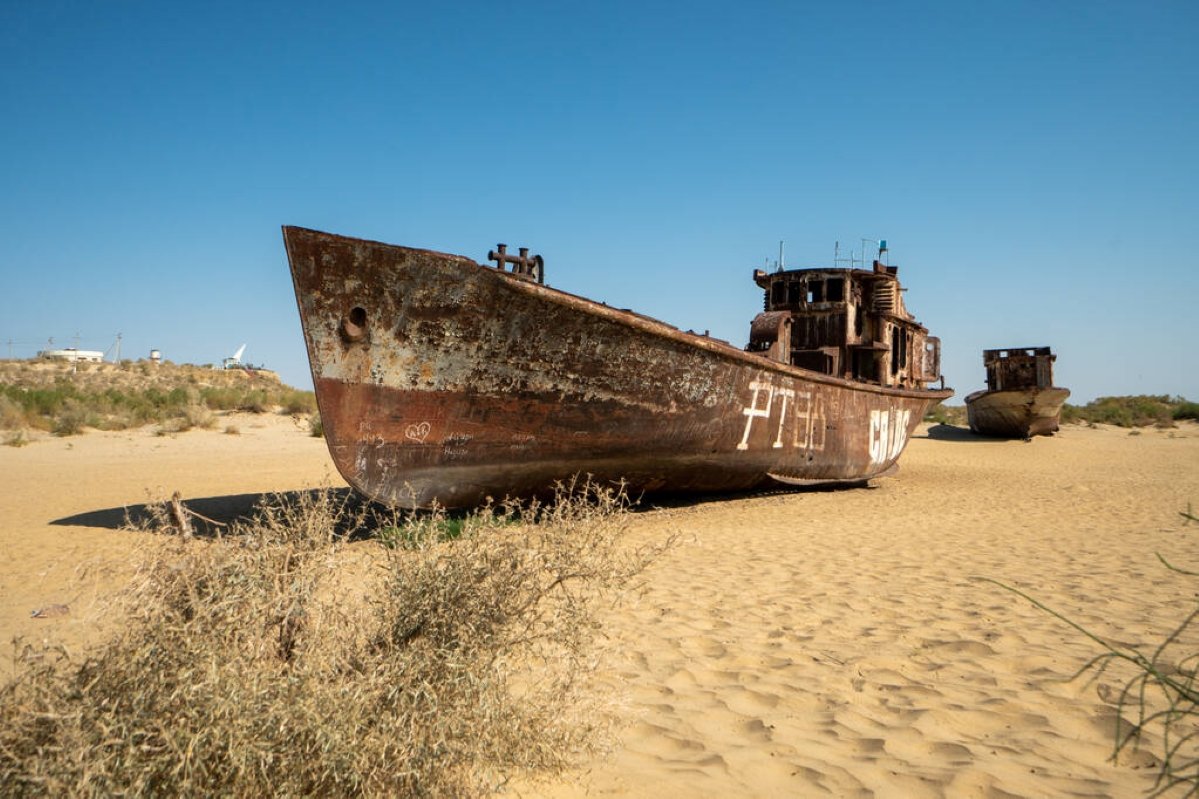
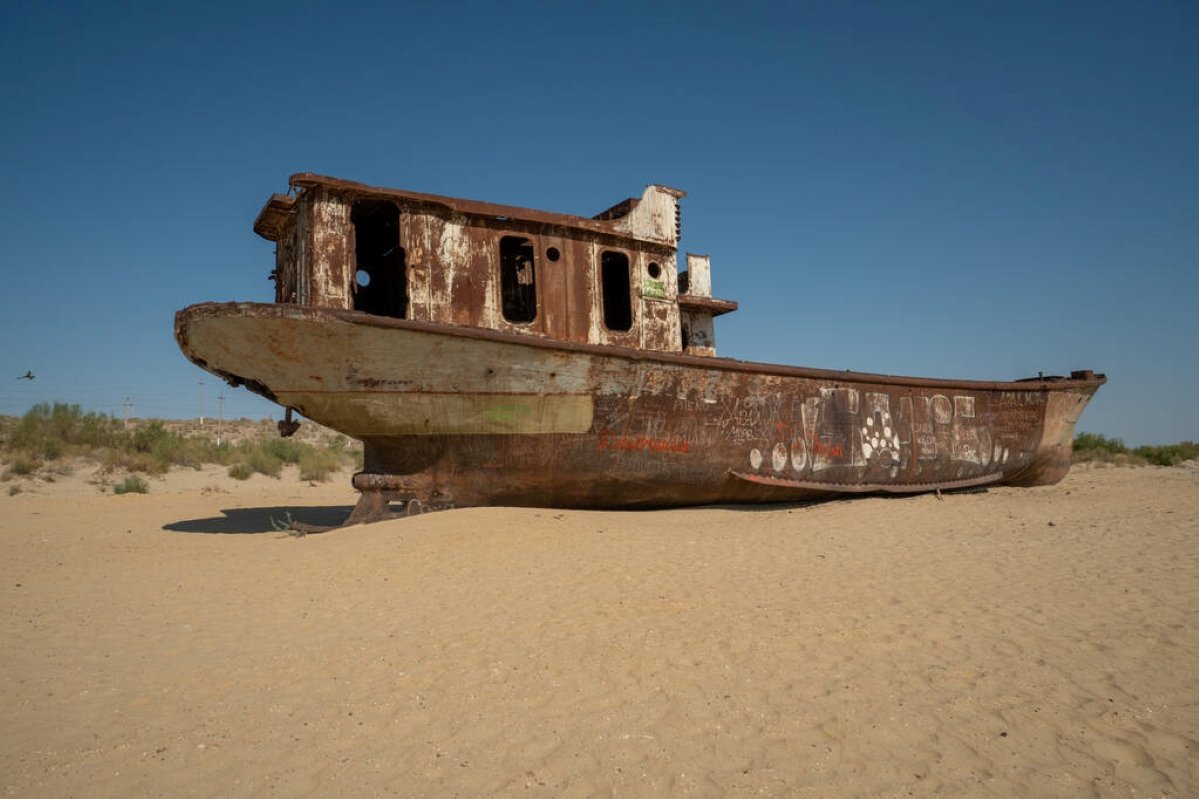
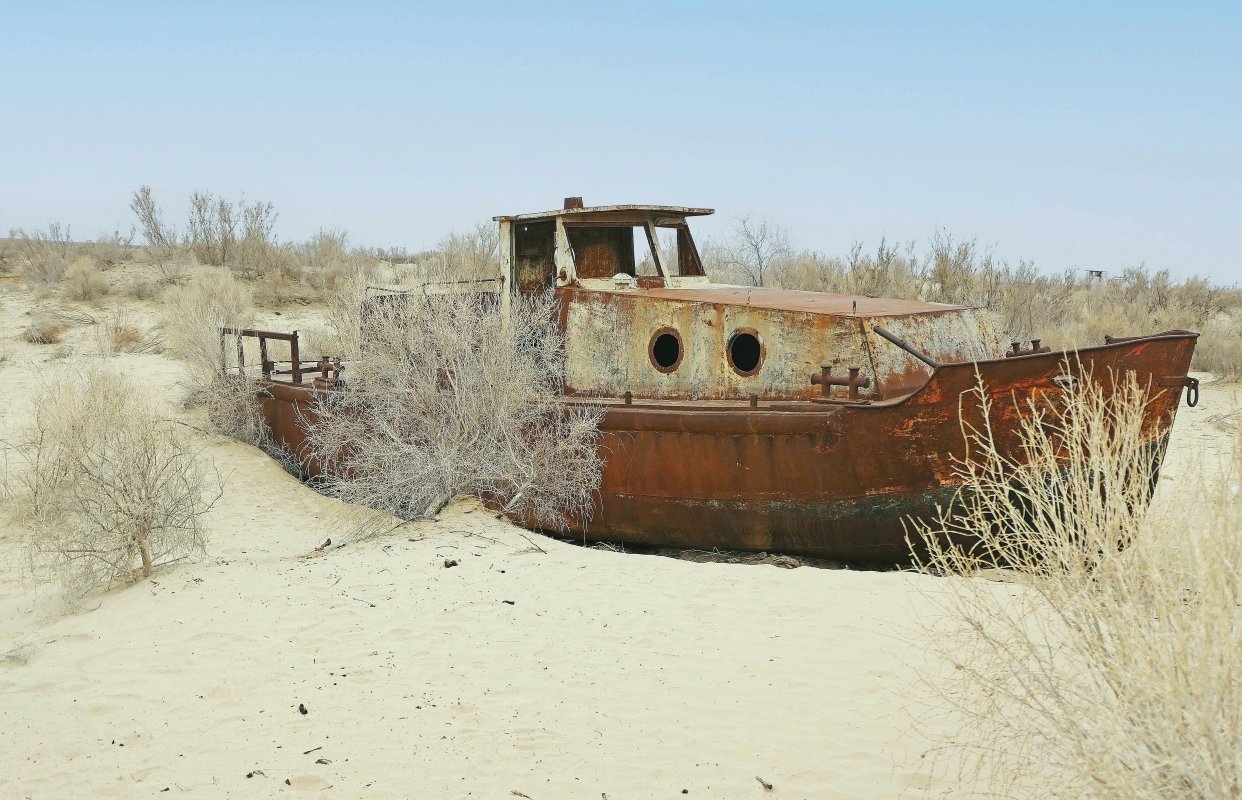



Picture this: rusty fishing boats scattered across endless desert sands, their hulks slowly disappearing into the earth where a massive sea once thrived. Welcome to one of the world’s most haunting destinations – the Aral Sea Ship Graveyard in Moynaq, Uzbekistan.
This isn’t your typical Instagram-worthy travel spot. It’s a place that’ll make you think, feel, and maybe even shed a tear. But trust me, it’s absolutely worth the bumpy ride to get there.
What the Hell Happened Here?
Let’s rewind to the 1960s. The Aral Sea was massive – we’re talking about the world’s fourth-largest inland body of water, stretching across 67,000 square kilometers. The Aral Sea was once the fourth largest body of inland water in the world, covering a staggering 67,000 square kilometres. Moynaq was a bustling fishing port with fancy beachside restaurants, and the rich biodiversity of the region provided livelihood of almost 40,000 fishermen.
Then the Soviets had a “brilliant” idea: let’s grow cotton in the desert! They diverted the two main rivers feeding the Aral Sea (the Amu Darya and Syr Darya) to irrigate massive cotton fields. What could go wrong, right?
Everything, as it turns out.
Over the coming decades, the Aral Sea would shrink a tenth of its original size. Today, only about 10% of the original sea remains. The fishing boats that once caught fish for 22 million cans of fish products annually now sit abandoned in what looks like a post-apocalyptic movie set.
Why Visit This “Worst Place in the World”?
AA Gill once called Moynaq “the worst place in the world” – and honestly, that’s a bit harsh. Sure, it’s not exactly a tropical paradise, but there’s something incredibly powerful about standing among these ghost ships.
It’s fascinating and tragic in equal parts, but at the same time it has a haunting beauty. And it’s absolutely silent. For the first time ever I experienced the true deafening power of silence. You can literally hear your own heartbeat.
Walking through the ship graveyard feels like stepping into a real-life lesson about environmental consequences. You can still find seashells in the sand – a surreal reminder that you’re standing on what used to be a seabed.
What You’ll Actually See
The Ship Graveyard: About 10-12 rusted fishing vessels scattered across the desert. You can climb inside them (there’s no one stopping you), and they’re covered in graffiti from visitors over the years. Moynaq’s ship graveyard is located next to the Regional History and Aral Sea Museum.
The Aral Sea Memorial: A monument overlooking the graveyard with a spike pointing to where the sea’s waves once reached. There’s also a direction marker pointing to cities around the world – a reminder of just how remote this place is.
Regional History Museum: A small, modest museum with Soviet artifacts, old photos, and a documentary about the disaster. For 25,000 Som (about USD 2), I watch the sad-but-emphatic story of Aral Sea and Moynaq. Honestly? It’s skippable if you’re short on time.
The Town of Moynaq: From being a wealthy town, today, Moynaq is a semi-ghost town that has the saddest bazaar I have ever seen in Central Asia, consisting of a couple of stalls with just rotten fruit. It’s depressing but oddly fascinating.
How to Get There (The Not-So-Fun Part)
Let’s be real – getting to Moynaq is a bit of a pain in the ass, but that’s part of what makes it special.
From Nukus (The Easier Option)
From Nukus to Moynaq is a 3-3½ hour journey. Your options:
Public Bus: There are daily marshrutkas (minivans) to Moynaq from Nukus bus station. The bus leaves at 9am. The cost of a one-way bus trip is 25,000 sum per person (2 dollars, April 2024). The return bus leaves at 3pm, making it doable as a day trip.
Shared Taxi: More expensive but more flexible. I was told that one seat in a shared taxi would cost 40,000 sum (3 dollars).
Private Tour: A day trip from Nukus can be arranged through your hotel and should cost anywhere between 60-100$.
From Khiva (The Adventurous Option)
We hired a private driver for our one day trip return from Khiva. It cost $100USD split between 4 people in the car which seemed pretty reasonable considering the 6 hour drive each way. This is a LONG day – we’re talking 12+ hours total, but some crazy travelers swear by it.
Multi-Day Tours
Most of the Aral Sea tours are for 2 days and 1 night that covers Moynaq, the ship graveyard, Kurganch Kala, the Great Ustyurt Plateau and canyons, South Aral Sea, Sudochie Lake. From Khiva, the 2-day tour is offered by hotels and tour companies for 450$-550$.
Getting to Nukus First
From Tashkent: Two daily flights on Uzbekistan Airways fly from Tashkent to Nukus and cost about 70-80$. A far cheaper alternative is to travel by train. An overnight train from Tashkent to Nukus costs 175000 UZS / 15.3$ for Platzkartniy and takes 17 hours.
From Khiva: Take a shared taxi to Urgench, then catch the 9am bus to Nukus (3 hours), or hire a private car for around $60.
Where to Stay
In Moynaq
Jipek Joli Hotel: The only decent option in town. It’s basic but clean, and they can help arrange tours.
Yurt Camping: Furthermore, right next to the ship graveyard, there are a few yurts which cost 12USD per person per night, although you may bring the price down to 10USD. Some crazy travelers even camp among the ships themselves!
In Nukus
Nukus has better accommodation options and is the logical base for day trips.
What It Really Costs
Here’s the breakdown for budget travelers:
- Bus from Nukus: $2 each way
- Museum entry: $2
- Basic meal in Moynaq: $3-5
- Total day trip from Nukus: $15-20 per person
For organized tours:
- Day tour from Nukus: $60-100 (can be split among group)
- 2-day tour from Khiva: $450-550 total
- Private driver from Khiva: $100 (split 4 ways = $25 each)
When to Go
These tours usually take place from April to October. Summer is brutally hot (think desert-level heat), while winter can be freezing. Spring and fall are your best bets for decent weather.
The Unexpected Twist: Stihia Festival
Here’s something cool – Moynaq has established itself as Central Asia’s biggest location for an electronic music festival called Stihia. Since its inception in 2018, this music festival happens right in the ship graveyard! Talk about an unusual venue for a rave.
Is It Worth the Hassle?
Look, I’m not gonna sugarcoat it – this isn’t for everyone. Apart from the rusting abandoned ships covered in graffiti and the endless desert, there is not a lot to see. You’re not coming here for luxury or comfort.
But if you’re the type of traveler who appreciates heavy, thought-provoking experiences, this place will stick with you forever. I definitely feel like it deepened my understanding of Uzbekistan and the catastrophic man-made disaster that has shaped this region.
It’s disaster tourism at its most raw and real. You’ll leave understanding that our actions have consequences, and sometimes those consequences are massive, irreversible, and heartbreaking.
Pro Tips for Your Visit
- Bring water: It’s hot, dry, and there’s not much infrastructure.
- Wear sunscreen: The desert sun is no joke.
- Bring snacks: Food options in Moynaq are limited.
- Don’t expect English: Most locals don’t speak English, though they’re generally friendly.
- Take it slow: This isn’t a place to rush through. Sit with the ships for a while and let it sink in.
- Respect the site: These ships are both historical artifacts and graves of a lost way of life.
The Bottom Line
The Aral Sea Ship Graveyard isn’t your typical bucket-list destination. It’s haunting, sobering, and genuinely moving. This disaster has had devasting impacts on local communities and climate in the region, and seeing it firsthand drives that message home in a way no documentary ever could.
If you’re traveling through Uzbekistan and have the time, make the journey. It’s a reminder of what we can lose when we don’t respect our planet – and that’s a lesson worth traveling for.
Plus, you’ll have one hell of a unique story to tell when you get home.
Disclaimer: Travel conditions and costs can change rapidly, especially in remote areas like Moynaq. Prices and transportation schedules mentioned in this article were accurate as of 2024 but should be verified before your trip. Always check current safety conditions and travel advisories for Uzbekistan before visiting. The author is not responsible for any changes in circumstances, costs, or availability of services mentioned in this guide. When visiting the ship graveyard, please be respectful of the site’s historical significance and environmental sensitivity.