



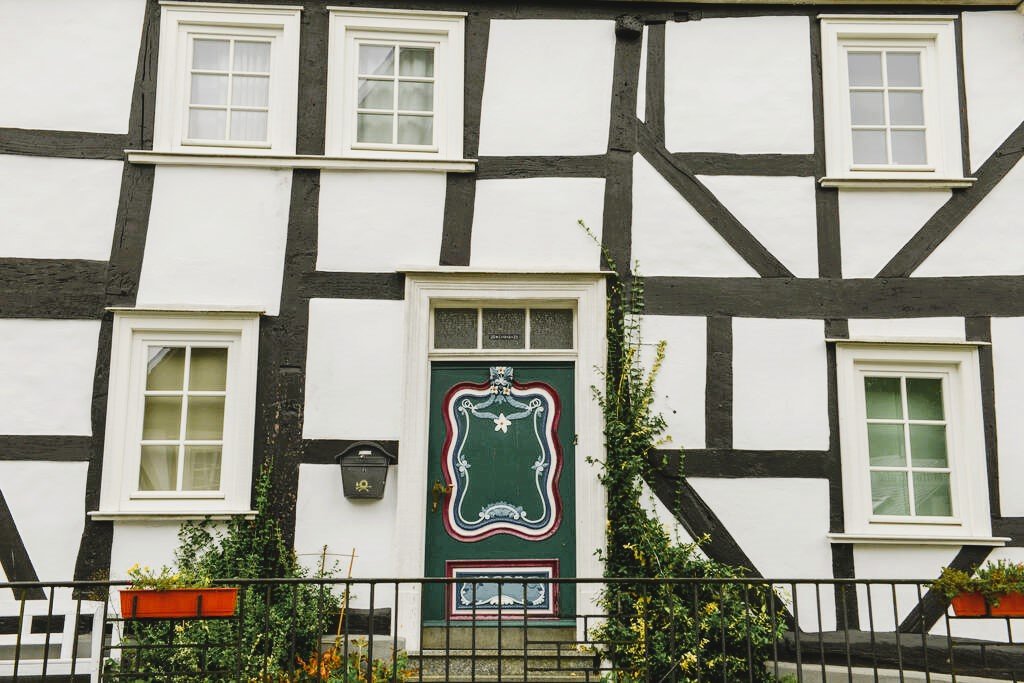


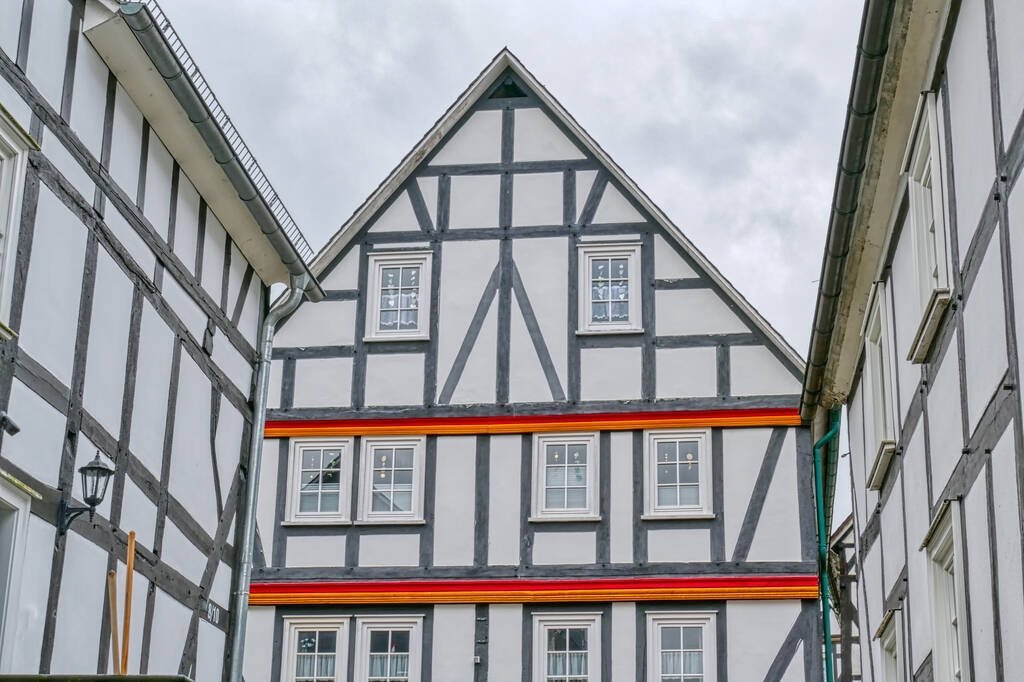





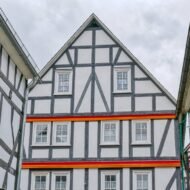

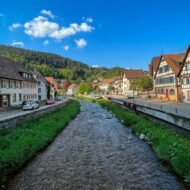
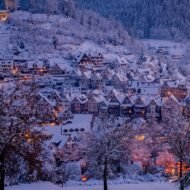
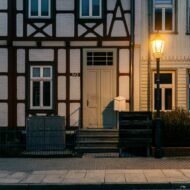
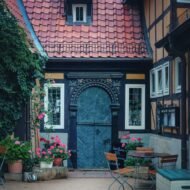

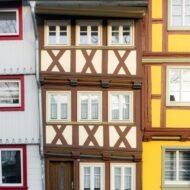
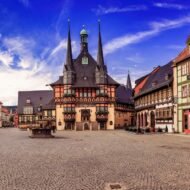

TL;DR: Germany’s half-timbered (Fachwerk) towns are like stepping into a medieval storybook. From Quedlinburg’s UNESCO-listed streets to Freudenberg’s cascading white houses, these five villages offer unbeatable photo ops, authentic German culture, and that storybook charm you’ve been scrolling past on Instagram. Best part? They’re way less crowded than Rothenburg and genuinely affordable to visit.
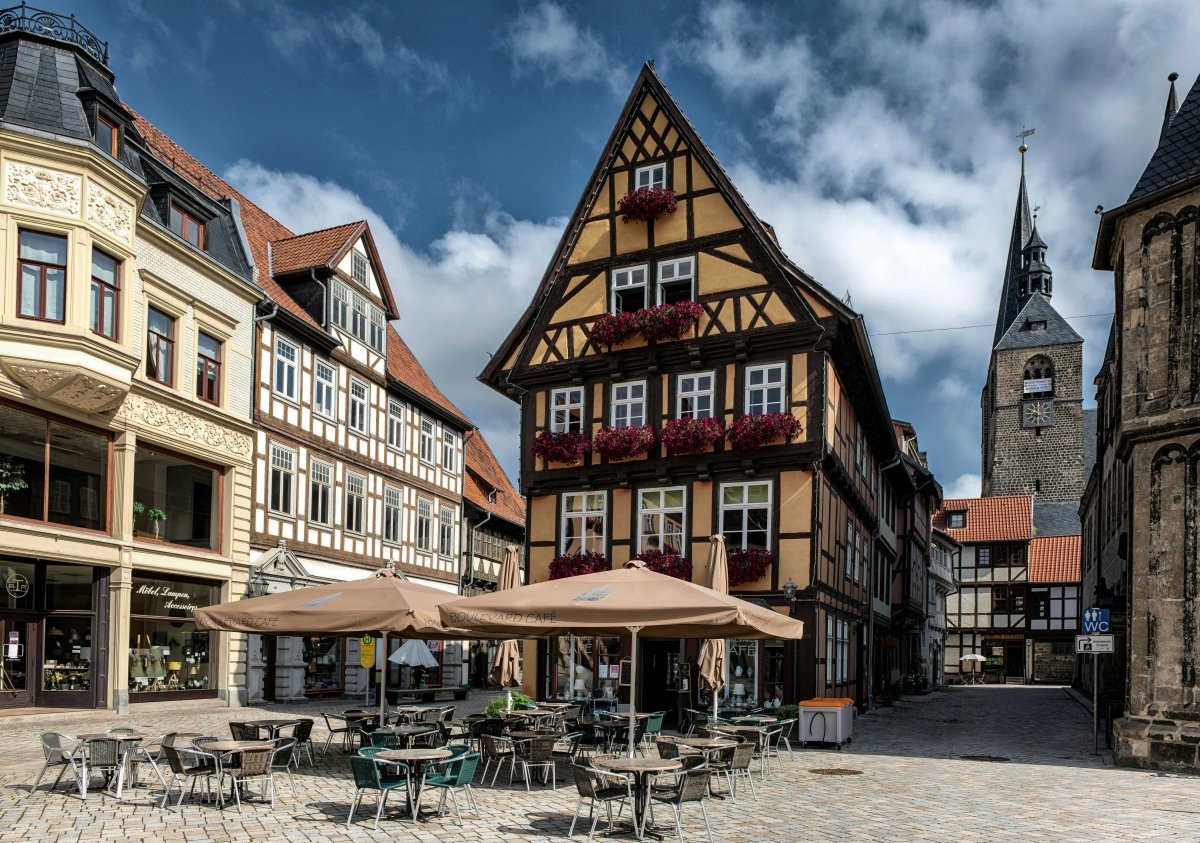
- 1. Quedlinburg, Saxony-Anhalt: The UNESCO Heavyweight Champion
- 2. Wernigerode, Saxony-Anhalt: The Colorful Castle Town
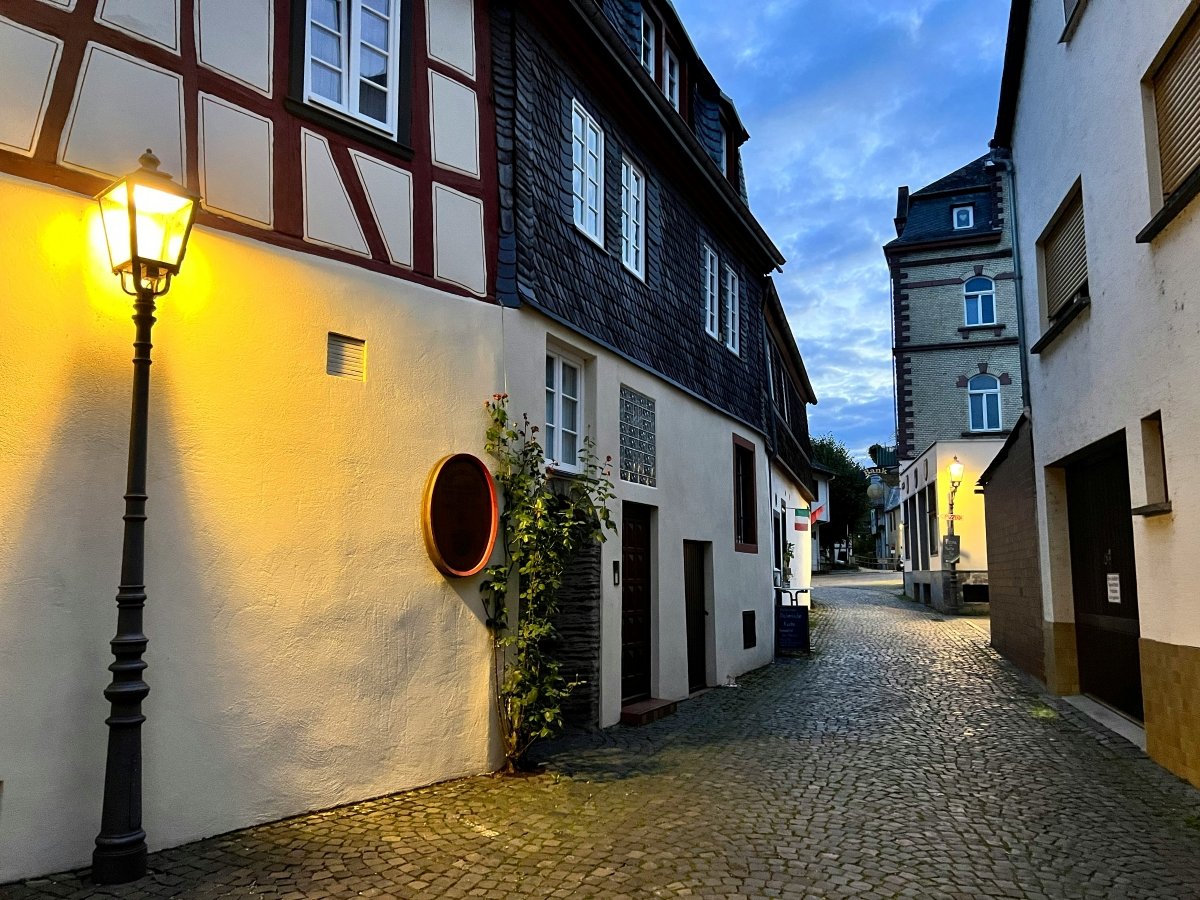
- 3. Bacharach, Rhineland-Palatinate: Where Wine Country Meets Medieval Architecture
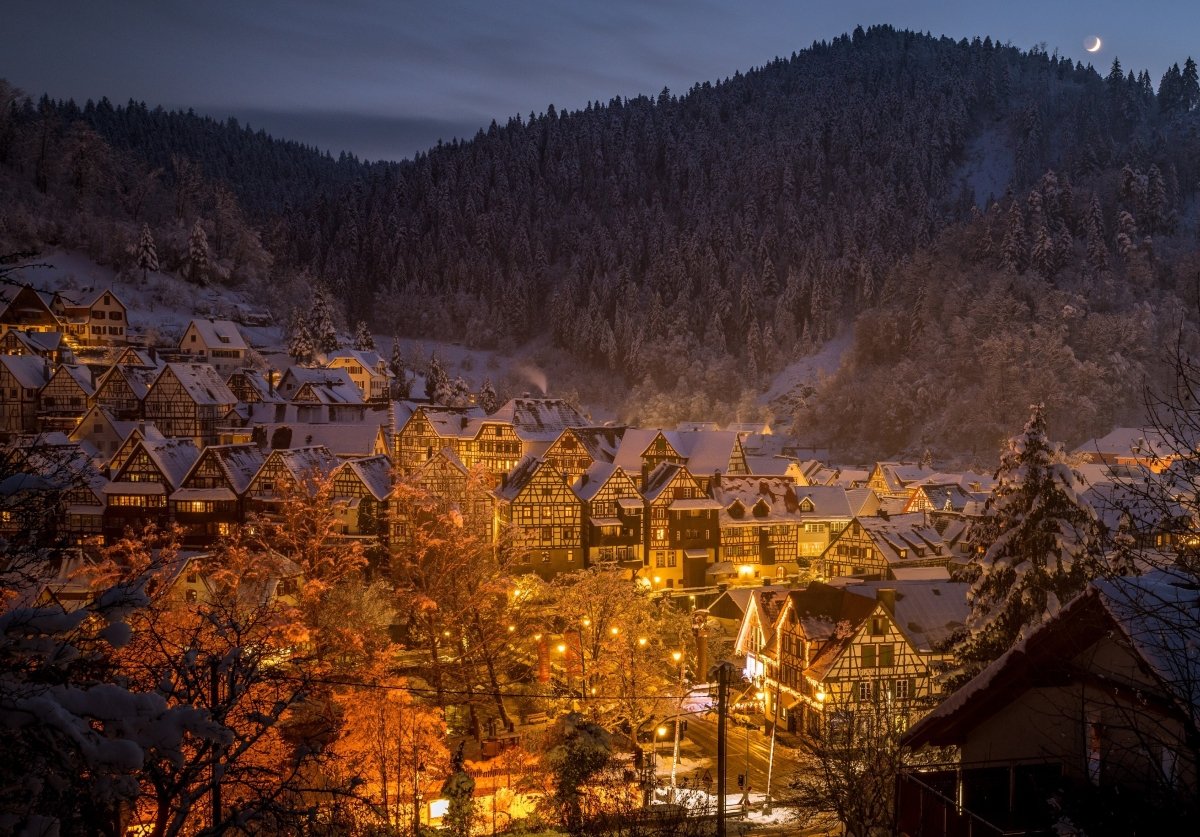
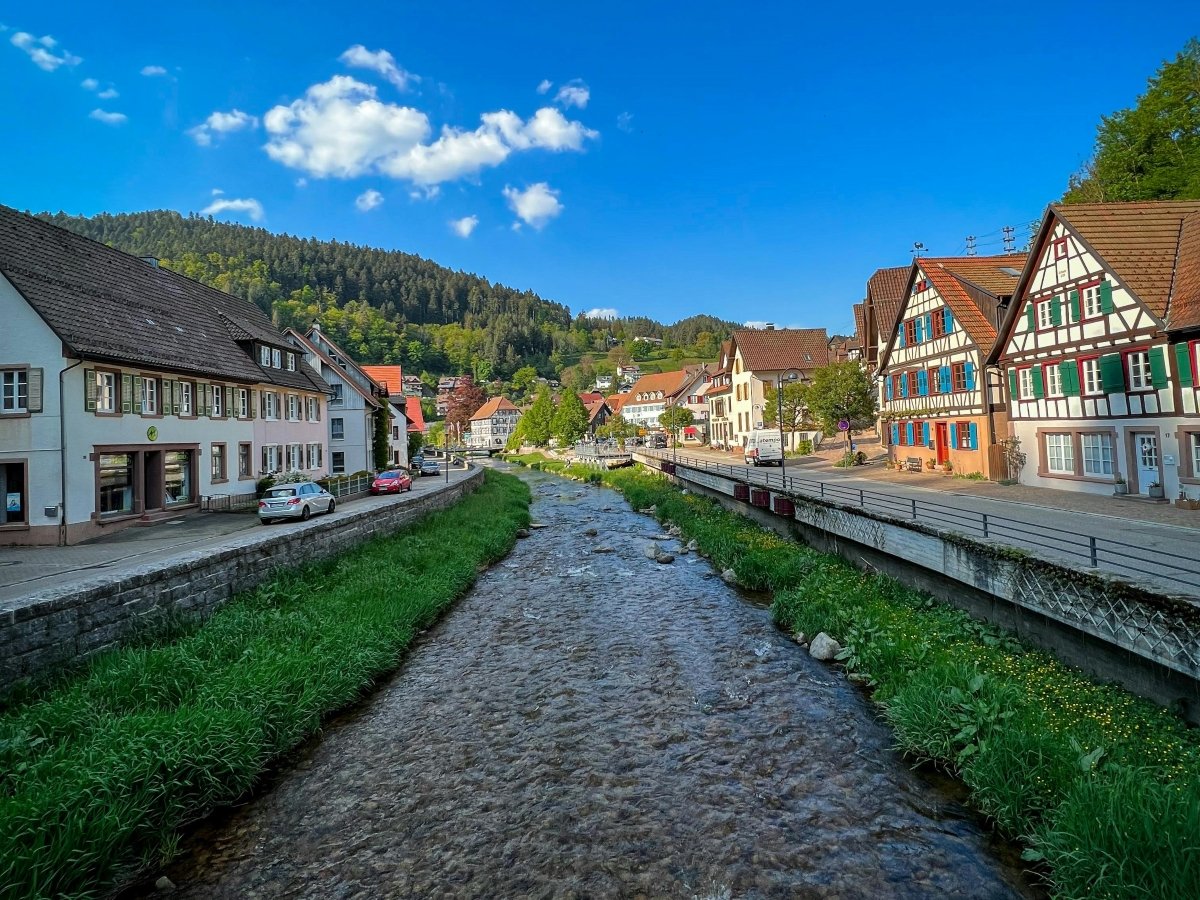
- 4. Schiltach, Baden-Württemberg: The Black Forest’s Best-Kept Secret
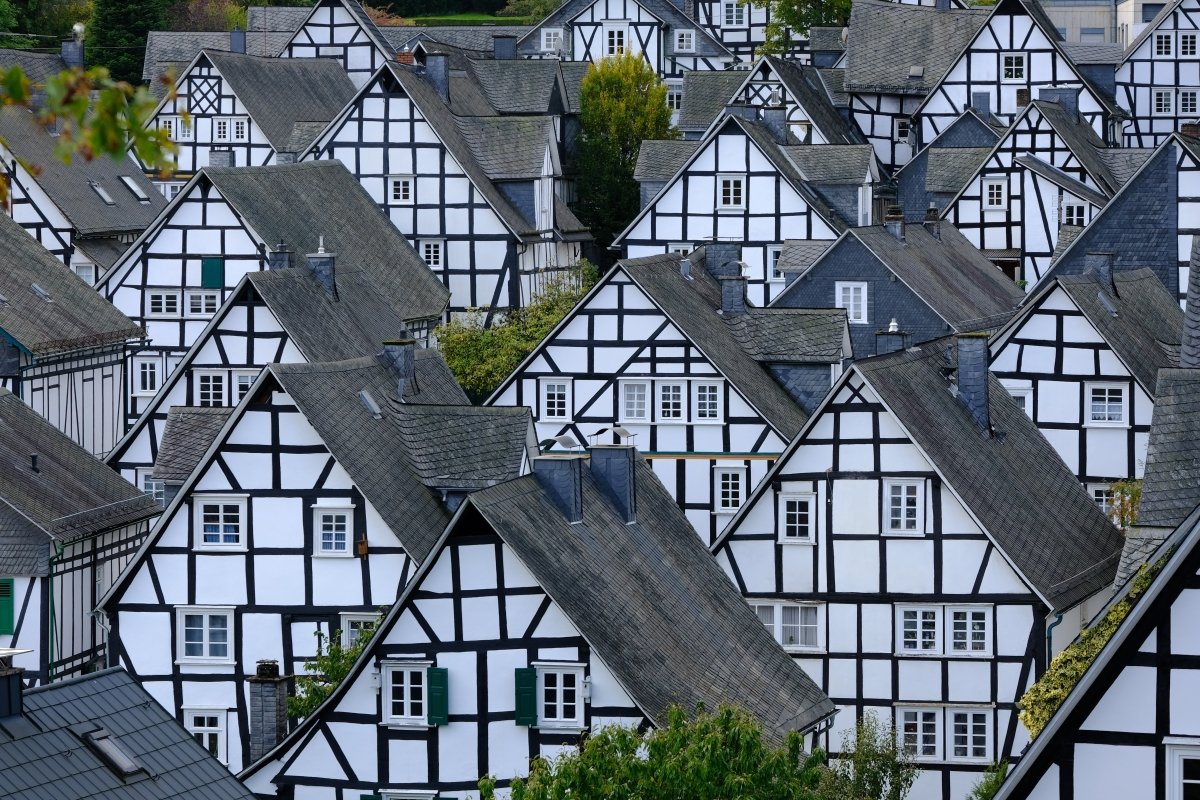
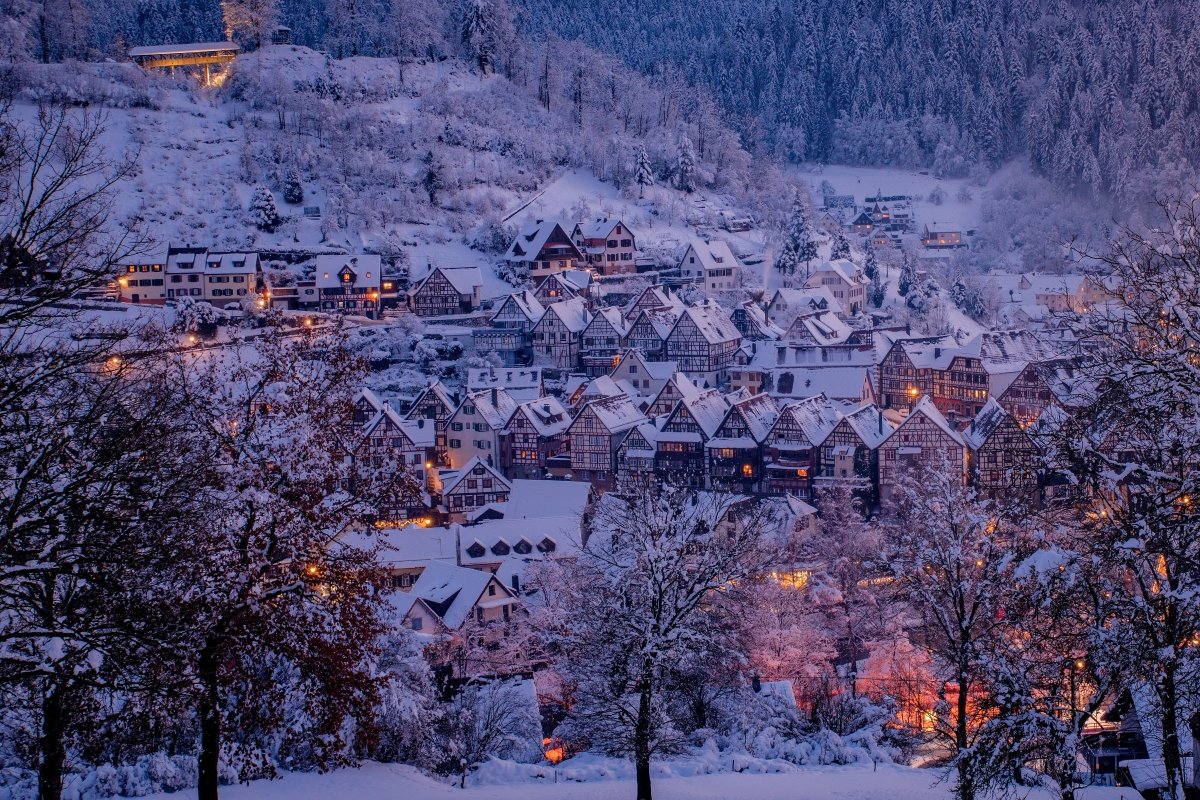
- 5. Freudenberg, North Rhine-Westphalia: The Monochrome Marvel
- Recap: Your Half-Timbered Town Strategy
- Disclaimer
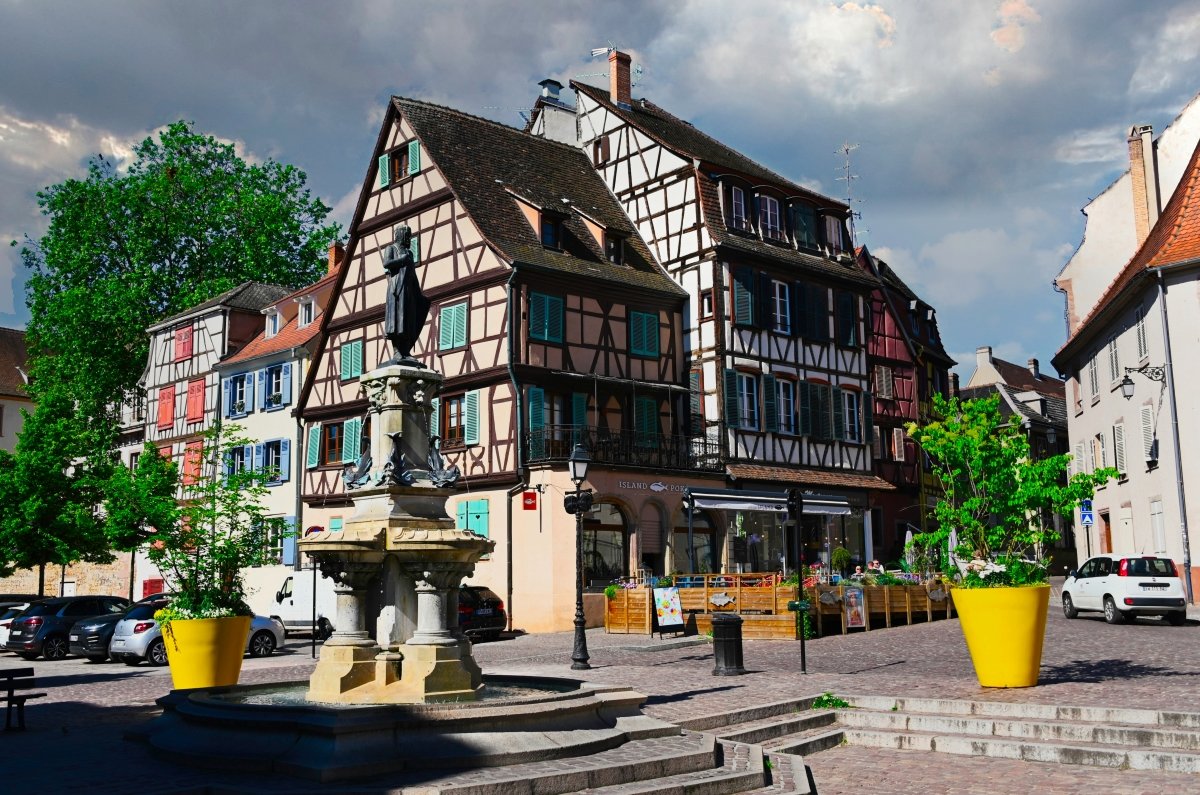
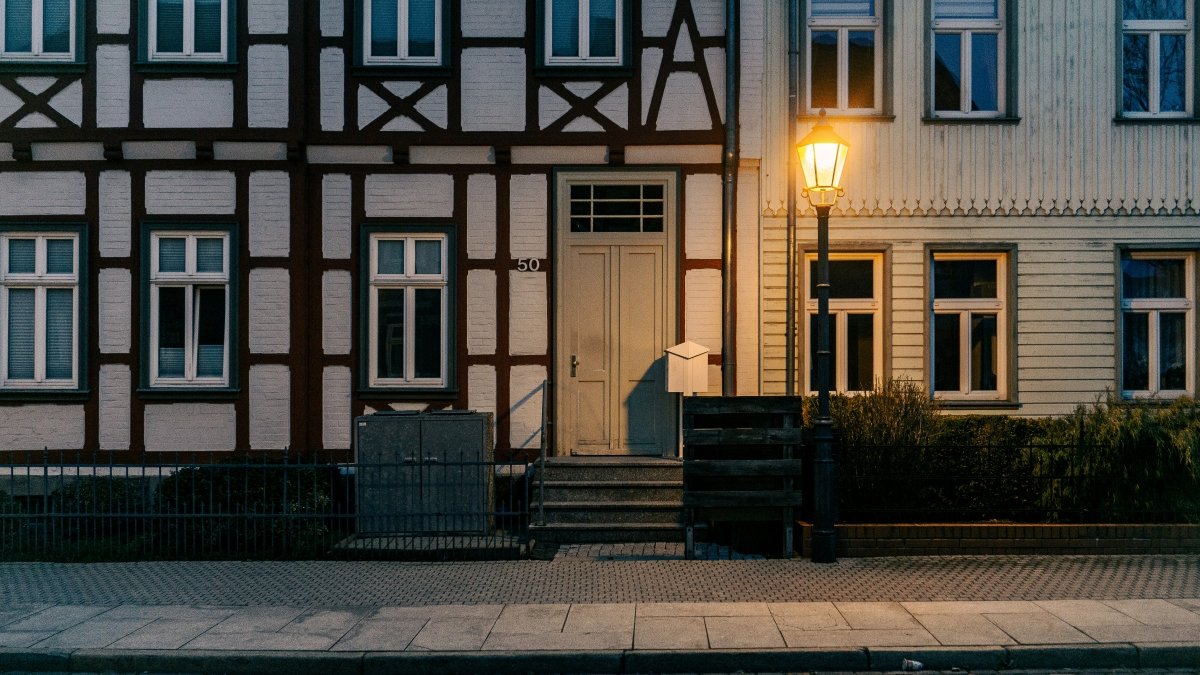
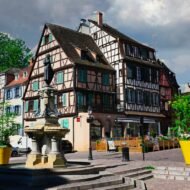
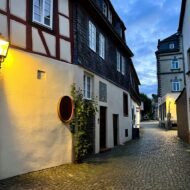
Look, I’m just going to say it: Germany’s half-timbered towns are ridiculously photogenic. We’re talking crooked medieval houses, flower boxes overflowing with geraniums, and cobblestone streets that look like they were designed specifically for your Instagram feed. But here’s the thing—these aren’t just pretty facades. These towns have soul.
Whether you’re planning a romantic getaway, a photography expedition, or just want to experience Germany beyond Berlin and Munich, these five half-timbered gems deliver that fairytale experience without the Disneyland crowds. Let’s dive in.
1. Quedlinburg, Saxony-Anhalt: The UNESCO Heavyweight Champion
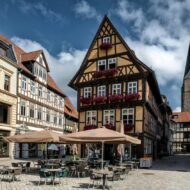
If Quedlinburg isn’t on your Germany itinerary yet, fix that immediately. This UNESCO World Heritage Site has over 2,100 half-timbered houses spanning eight centuries—basically the largest concentration of Fachwerk buildings in Germany. No big deal.
What Makes It Special
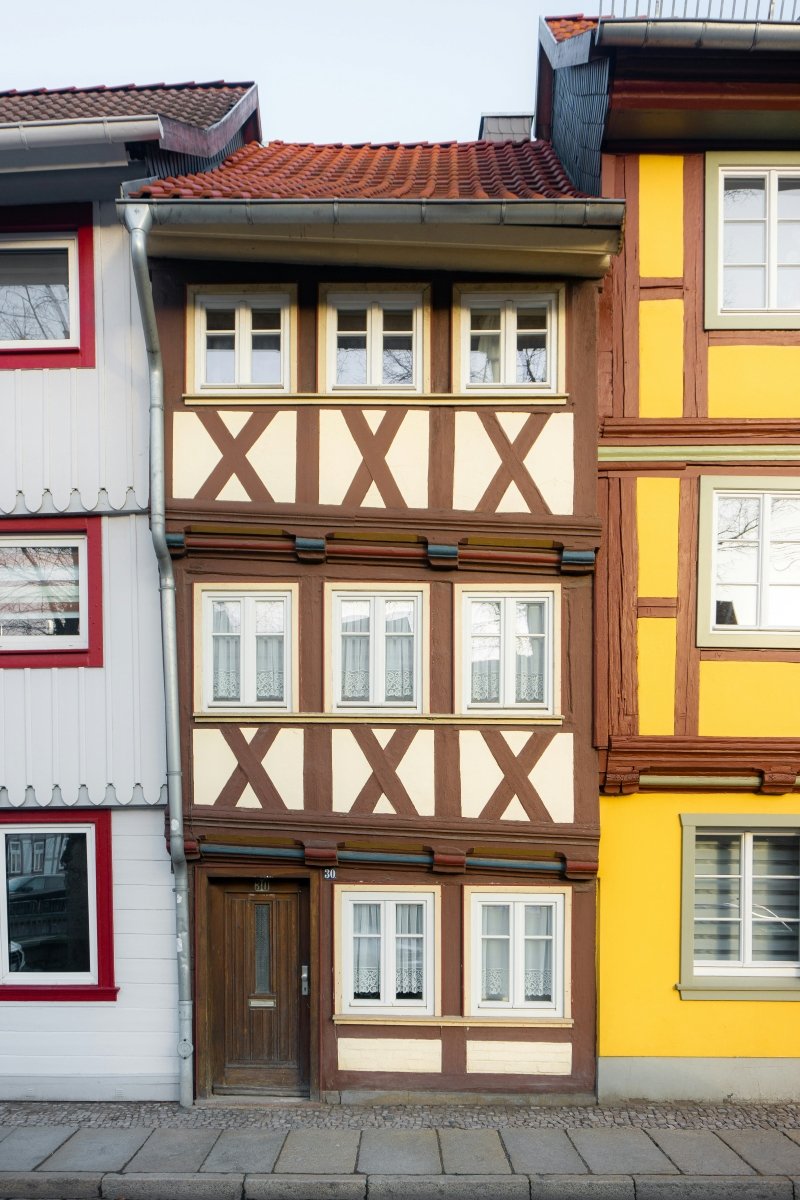
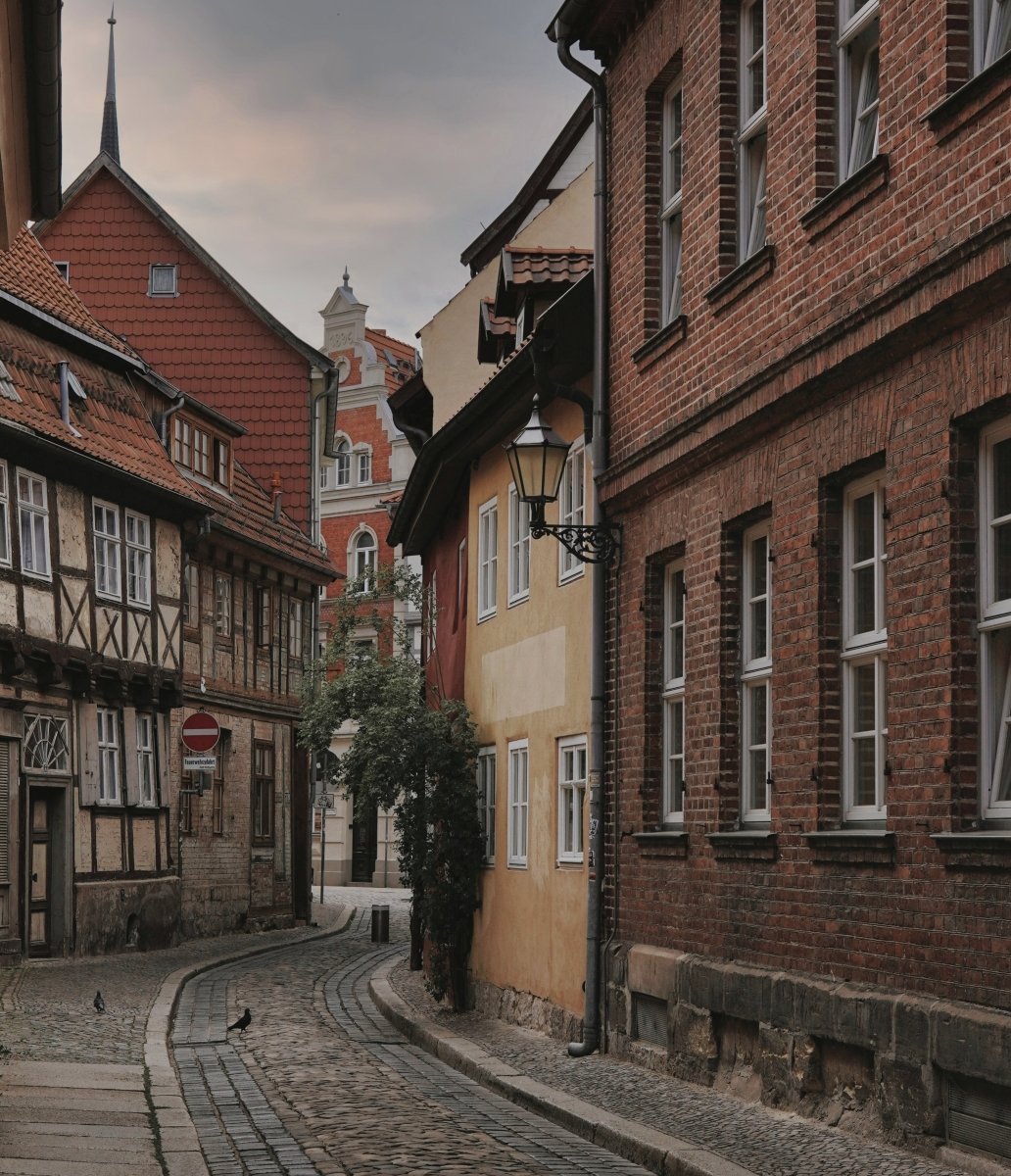
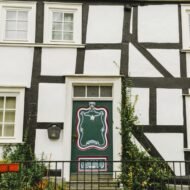
The entire old town is a living museum. You’ll find houses dating back to the 1300s, some leaning at angles that’ll make you question physics. The Market Square (Marktplatz) is anchored by a stunning Renaissance town hall, and the whole place feels frozen in time—in the best way possible.
Don’t miss Quedlinburg Castle perched above the town. The views alone are worth the climb, plus there’s a fascinating treasury in the castle church with medieval artifacts that’ll blow your mind.
Practical Tips
- Best time to visit: May-September for weather, or December for Christmas markets that’ll ruin you for all other Christmas markets
- Getting there: Direct trains from Berlin (2.5 hours) or combine with a Harz Mountains trip
- Where to stay: Book a guesthouse inside a half-timbered house for the full experience
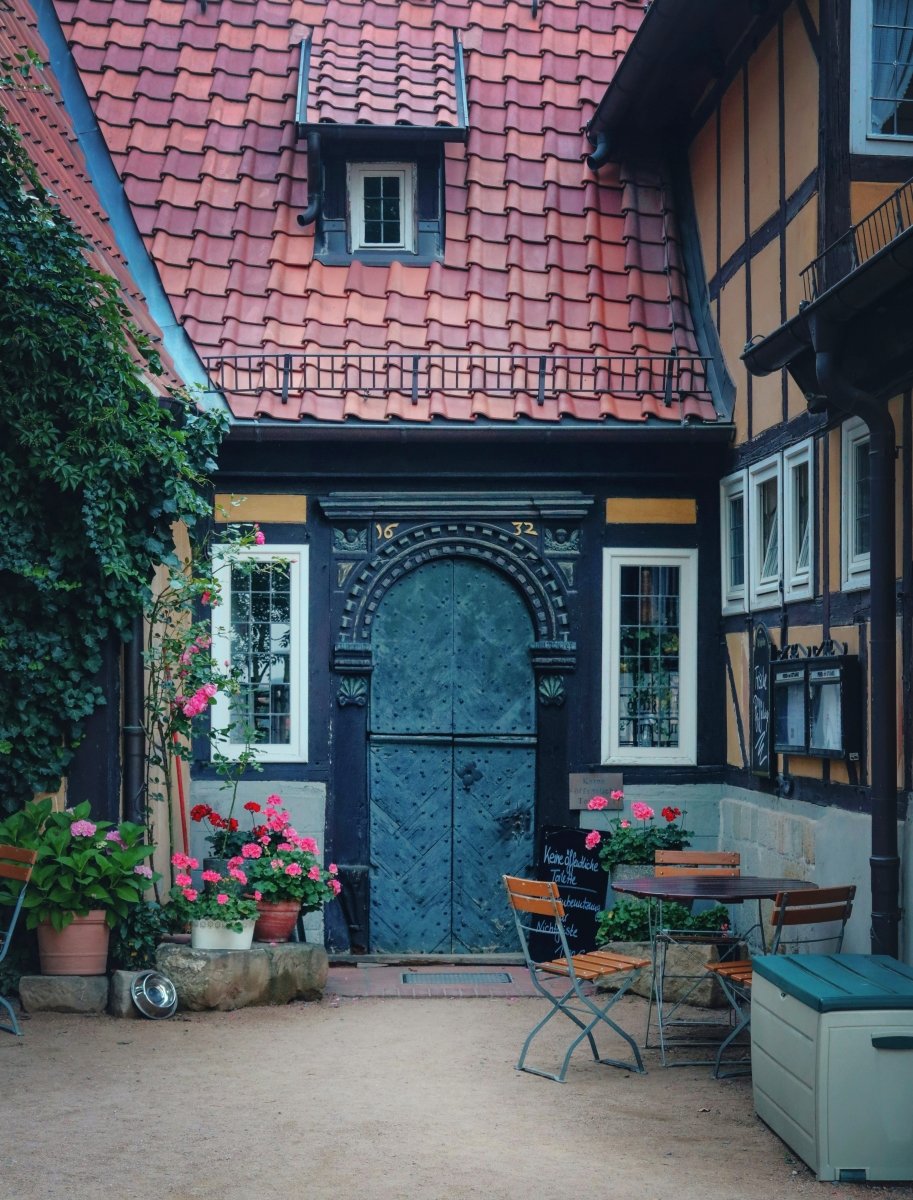
- Pro tip: Grab breakfast at Café & Pension am Finkenherd—their courtyard is ridiculously charming
The vibe here is authentic small-town Germany. Locals actually live in these historic houses, so you’re not just walking through a tourist attraction—you’re experiencing real community life.
2. Wernigerode, Saxony-Anhalt: The Colorful Castle Town
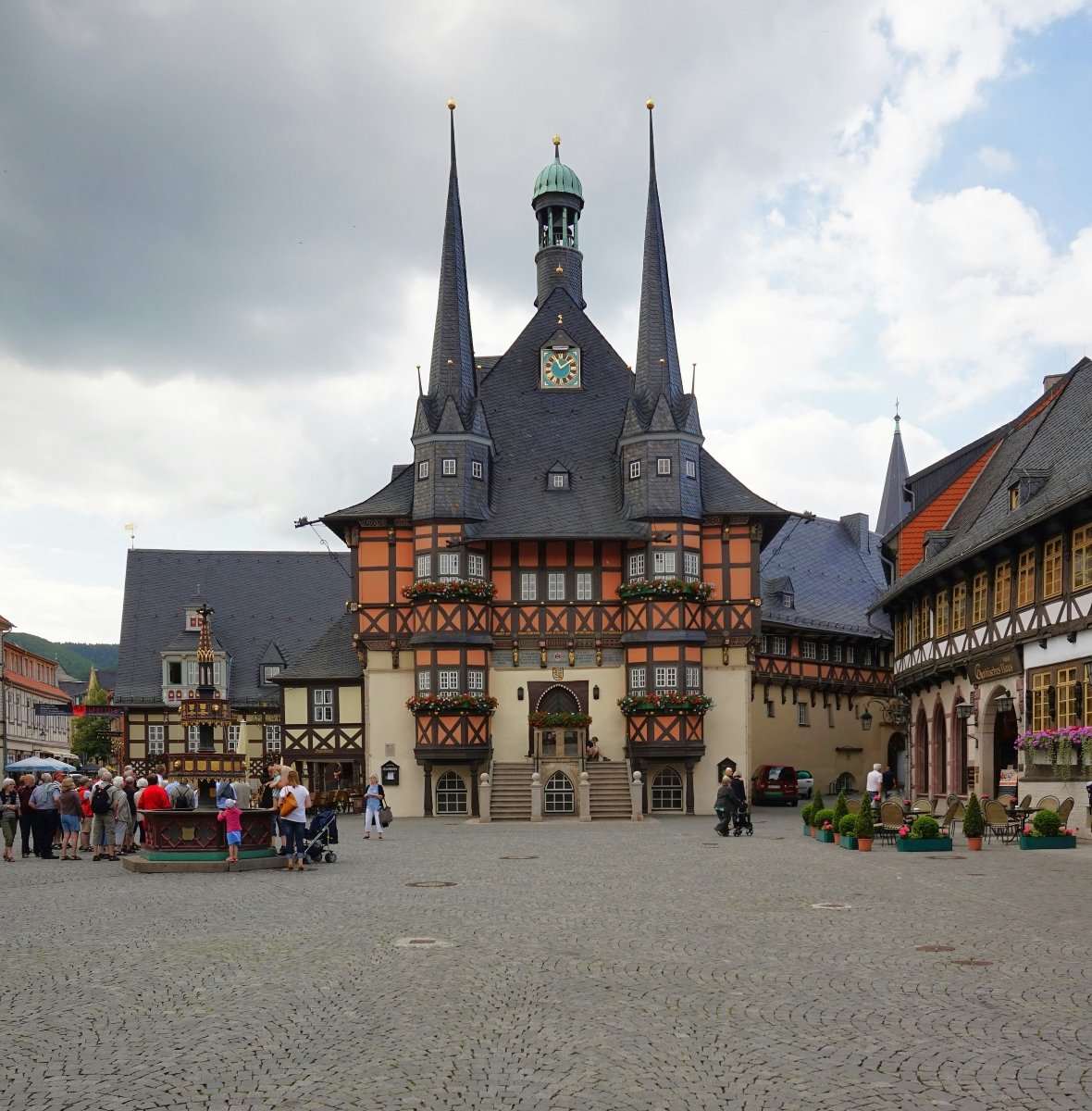
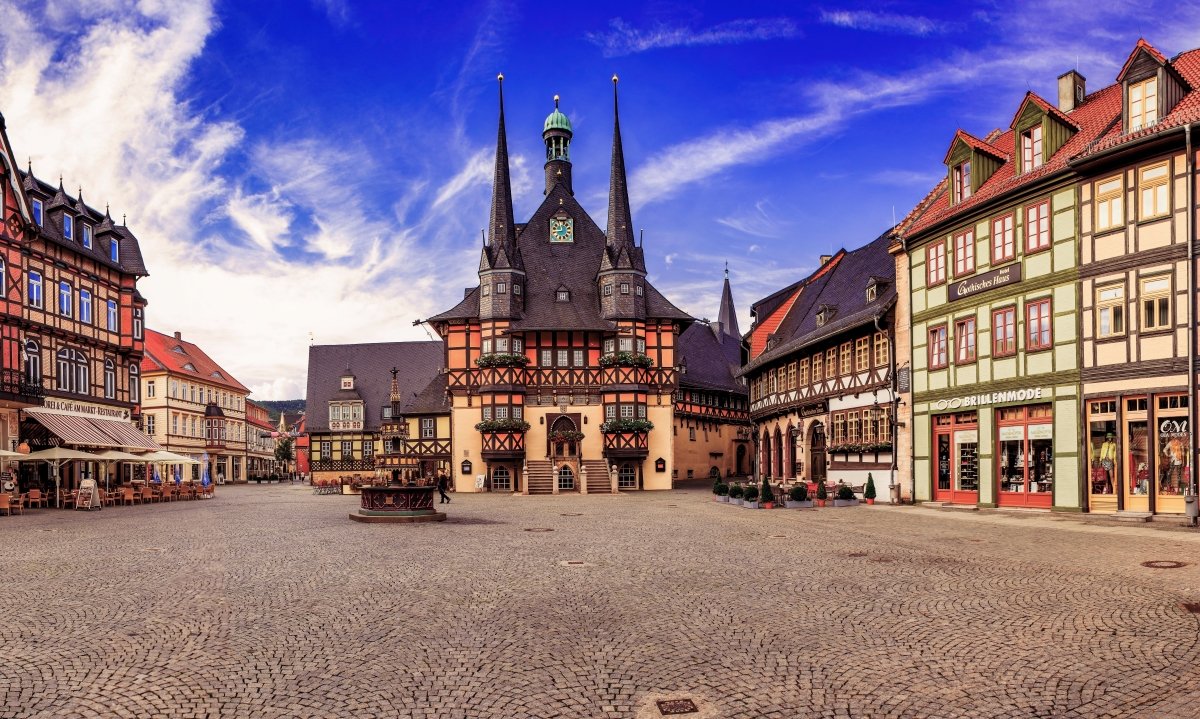
Just 30 minutes from Quedlinburg, Wernigerode is what happens when someone takes a medieval town and cranks the color saturation to maximum. The half-timbered houses here are painted in every shade imaginable—bright yellows, deep reds, forest greens. It’s almost absurdly picturesque.
Why Visit
The Wernigerode Castle sitting dramatically above town looks like it escaped from a Brothers Grimm tale. Unlike some castles that are just empty shells, this one’s fully furnished and gives you a proper peek into 19th-century aristocratic life.
Down in the old town, Breite Strasse (the main street) is lined with elaborately carved half-timbered houses. The Leaning House (Schiefes Haus) from 1680 is now a museum, and yes, it actually leans. Significantly.
Practical Tips
- Getting there: Easy train connections from Quedlinburg or Goslar; you can do both towns in one day if you’re efficient
- Steam train alert: The historic narrow-gauge railway to Brocken Mountain departs from here—absolutely worth it for train enthusiasts
- Where to eat: Brauhaus Wernigerode for traditional German food in a 16th-century brewery setting
- Insider hack: Visit on weekdays to avoid tour bus crowds; weekends can get packed
The Christmas market here rivals Quedlinburg’s, with the illuminated castle providing a spectacular backdrop. Just saying.
3. Bacharach, Rhineland-Palatinate: Where Wine Country Meets Medieval Architecture
Bacharach sits along the Rhine River in the heart of Germany’s most dramatic wine region, surrounded by vineyard-covered hillsides and actual medieval towers. If you want half-timbered houses plus river views plus excellent Riesling, this is your spot.
The Experience
The town is compact—you can walk the entire old town in 30 minutes—but it packs a serious punch. The Old House (Altes Haus) from 1368 is one of Germany’s oldest half-timbered buildings still standing, and it’s now a wine bar. History you can drink? Sign me up.
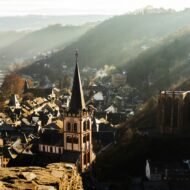
Climb up to the Stahleck Castle (now a youth hostel—genius idea) for panoramic Rhine Valley views that’ll make you understand why this is a UNESCO World Heritage landscape. The ruins of Werner Chapel on the hill are hauntingly beautiful, especially at sunset.
Practical Tips
- Best time: September-October for wine harvest season and fall colors
- Rhine River cruises: Bacharach is a popular stop; you can arrive or depart by boat
- Wine tasting: Literally every other building offers it; go to Weingut Fritz Bastian for family-run authenticity
- Photography: The view from the Stahleck Castle at golden hour is chef’s kiss
- Stay over: Evening and early morning are magical when day-trippers leave
The surrounding Rhine Gorge is dotted with castles and vineyards, so Bacharach makes an excellent base for exploring the region. The KD Rhine cruise lines stop here if you want to approach dramatically by boat.
4. Schiltach, Baden-Württemberg: The Black Forest’s Best-Kept Secret
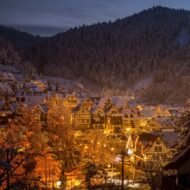
Tucked in the Black Forest where two rivers meet, Schiltach is what happens when half-timbered architecture gets a Black Forest upgrade. The buildings here feature the region’s distinctive style—darker wood frames, intricate carvings, and that cozy Gemütlichkeit the Black Forest is famous for.
What to Expect
The Market Square is genuinely one of Germany’s prettiest, surrounded by colorful half-timbered houses that cascade down to the river. The whole town feels like it was designed for a postcard. The old tannery buildings along the Schiltach River are particularly atmospheric.
This is serious hiking territory. You’re in the Black Forest, so trails leading to viewpoints, waterfalls, and traditional farmhouses are everywhere. The Outdoor Museum Vogtsbauernhof is nearby—an open-air museum showing traditional Black Forest life with original historic farmhouses.
Practical Tips
- Getting there: Easiest by car; public transport involves regional trains to Schiltach station
- Combine with: Triberg Falls, Freiburg, or the scenic Schwarzwaldbahn railway
- Where to stay: Traditional Gasthof (inns) offer the authentic Black Forest experience
- Food alert: Try Black Forest ham, Kirschtorte (Black Forest cake in its homeland!), and local trout
- Hiking: Pick up maps at the tourist office; trails range from easy riverside walks to challenging mountain routes
Schiltach moves at Black Forest pace—slow, peaceful, restorative. If you’re burned out from city hopping, this is your reset button.
5. Freudenberg, North Rhine-Westphalia: The Monochrome Marvel
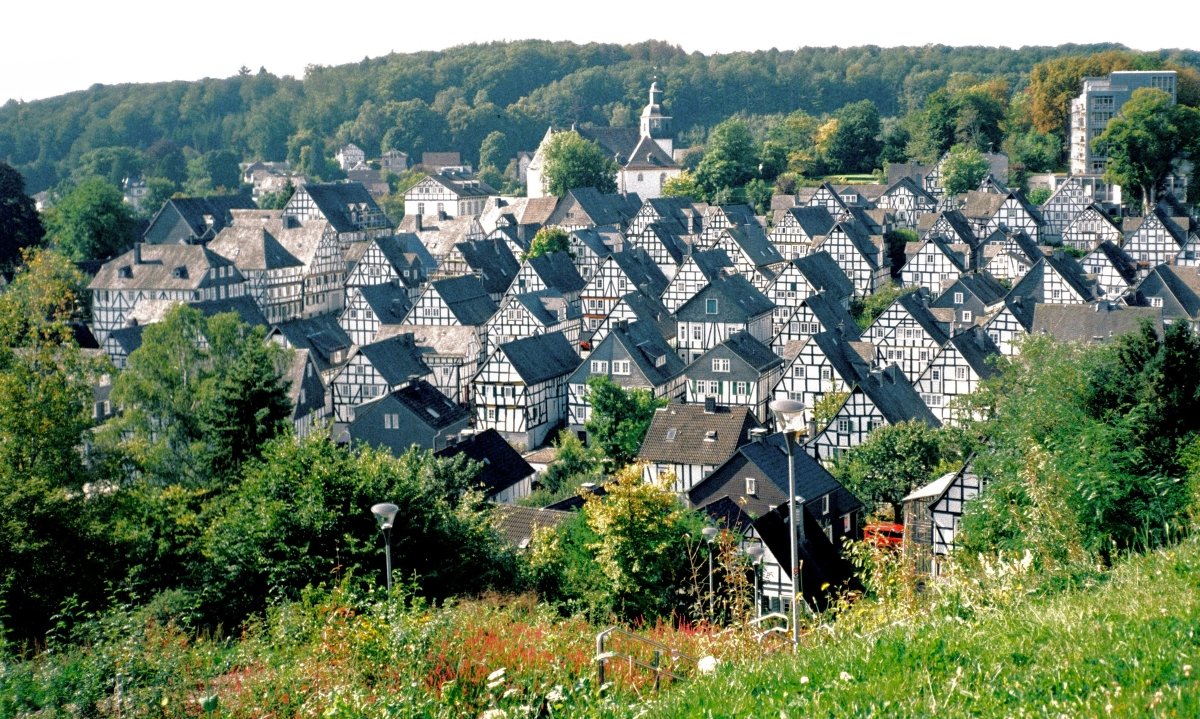
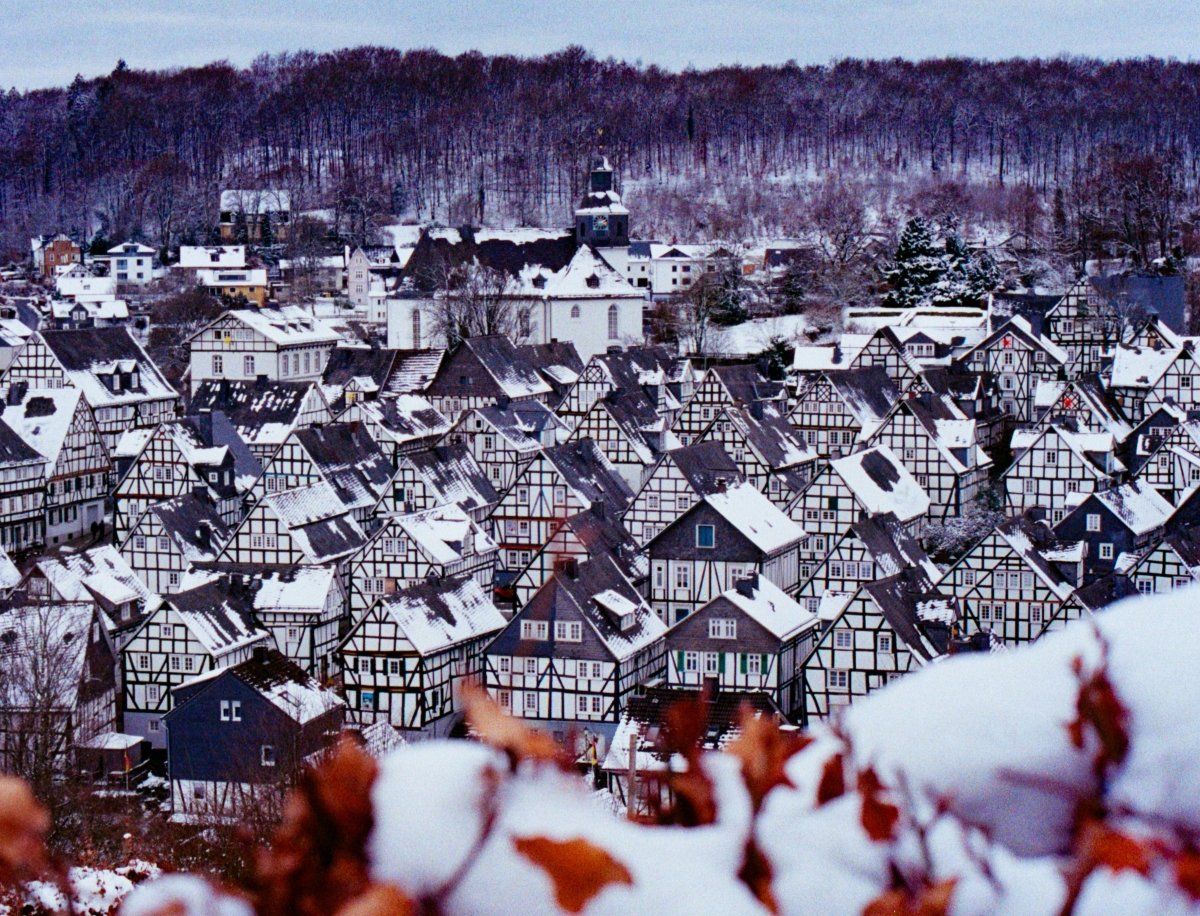
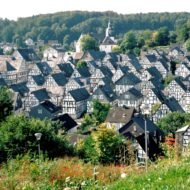
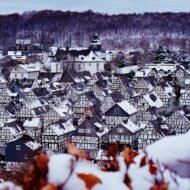
Freudenberg breaks the half-timbered town mold completely. Instead of multicolored houses, you get an entire hillside of white-and-black half-timbered buildings cascading down like a staircase. The effect is striking, unusual, and massively photogenic.
The Unique Appeal
The Old Town (Alter Flecken) is the star here—a perfectly preserved ensemble of identically colored houses that create this mesmerizing pattern. After a devastating fire in 1666, the town was rebuilt with strict architectural guidelines, resulting in this extraordinary uniformity.
It’s smaller than the other towns on this list, which means you can explore it thoroughly in a few hours. But those few hours will fill your camera roll fast. The viewpoint from the opposite hill gives you that famous panoramic shot everyone shares.
Practical Tips
- Best for: Day trips; it’s compact and close to other destinations
- Photography: The classic view is from the southern hillside across the valley
- Getting there: Train to Siegen, then bus to Freudenberg (about 20 minutes)
- Combine with: Cologne is about 90 minutes away; makes a good day trip from there
- Less touristy: Compared to Rothenburg, this place is blissfully quiet
The monochrome aesthetic gives Freudenberg a unique personality. It’s almost minimalist in a way that makes the traditional half-timbered architecture feel contemporary.
Recap: Your Half-Timbered Town Strategy
Here’s how to actually make this happen:
For history buffs: Start with Quedlinburg (UNESCO site, most houses, deepest history)
For photographers: Freudenberg for that unique monochrome shot, Wernigerode for colorful variety
For wine lovers: Bacharach, no question—combine architecture with Rhine wine tasting
For nature seekers: Schiltach puts you in Black Forest hiking territory
For maximum efficiency: Quedlinburg and Wernigerode are 30 minutes apart—do both in 2-3 days
Budget tip: These towns are significantly cheaper than major German cities. Accommodation, food, and activities cost 30-40% less than Munich or Frankfurt.
Transportation: Germany’s regional trains make town-hopping easy. A Germany Ticket (€49/month) gives unlimited regional transport and pays for itself fast.
Seasonal play: Summer brings long days and festivals, but spring (April-May) and fall (September-October) offer better light for photography, fewer crowds, and comfortable temperatures. Winter Christmas markets are spectacular but cold.
How long: Budget 1-2 days minimum per town to really soak it in. These places reward slow travel—morning coffee at a sidewalk café, afternoon wandering, evening beers at the local Brauhaus.
Disclaimer
This travel guide reflects conditions and recommendations current as of early 2025. Travel information including transportation schedules, attraction hours, accommodation availability, and local regulations can change. Always verify current details with official tourism boards or recent visitor reviews before finalizing your plans.
Prices mentioned are approximate and subject to change. Some attractions may require advance booking, especially during peak season. While these towns are generally safe and accessible, always exercise normal travel precautions and check current travel advisories for Germany.
Individual experiences may vary based on season, weather, personal mobility, and local conditions. What’s considered “budget-friendly” or “easily accessible” depends on your starting point and personal circumstances.
Germany’s half-timbered towns aren’t museum pieces—they’re living, breathing communities where people actually want to live. That authenticity is what makes them special. You’re not just seeing preserved buildings; you’re experiencing centuries-old German Gemütlichkeit that’s somehow survived intact.
So skip Neuschwanstein for once (it’s crowded anyway) and point yourself toward these fairytale villages instead. Your photos—and your travel stories—will thank you.
Gute Reise!