

Brijuni Islands National Park , Fourteen car-free islands off the Istrian coast, reachable by a 15-minute ferry from Fažana. Think Roman ruins, a genuine safari park, dinosaur footprints, centuries-old olive trees, crystal-clear diving waters — and the summer playground of a Cold War-era president who once hosted Elizabeth Taylor and Richard Burton here. Day trip or overnight stay, Brijuni is genuinely unlike anywhere else in the Mediterranean.
- 🗺️ Know Before You Go
- So What Even Is Brijuni?
- The Wild History (Short Version)
- The Vibe Check
- Things to Do — The Good Stuff
- Hop on the Land Train (Don’t Skip This)
- Find the Dinosaur Footprints
- The Safari Park
- Dive, Snorkel & Kayak
- The Archaeological Trail
- Tito’s Museum & Photos
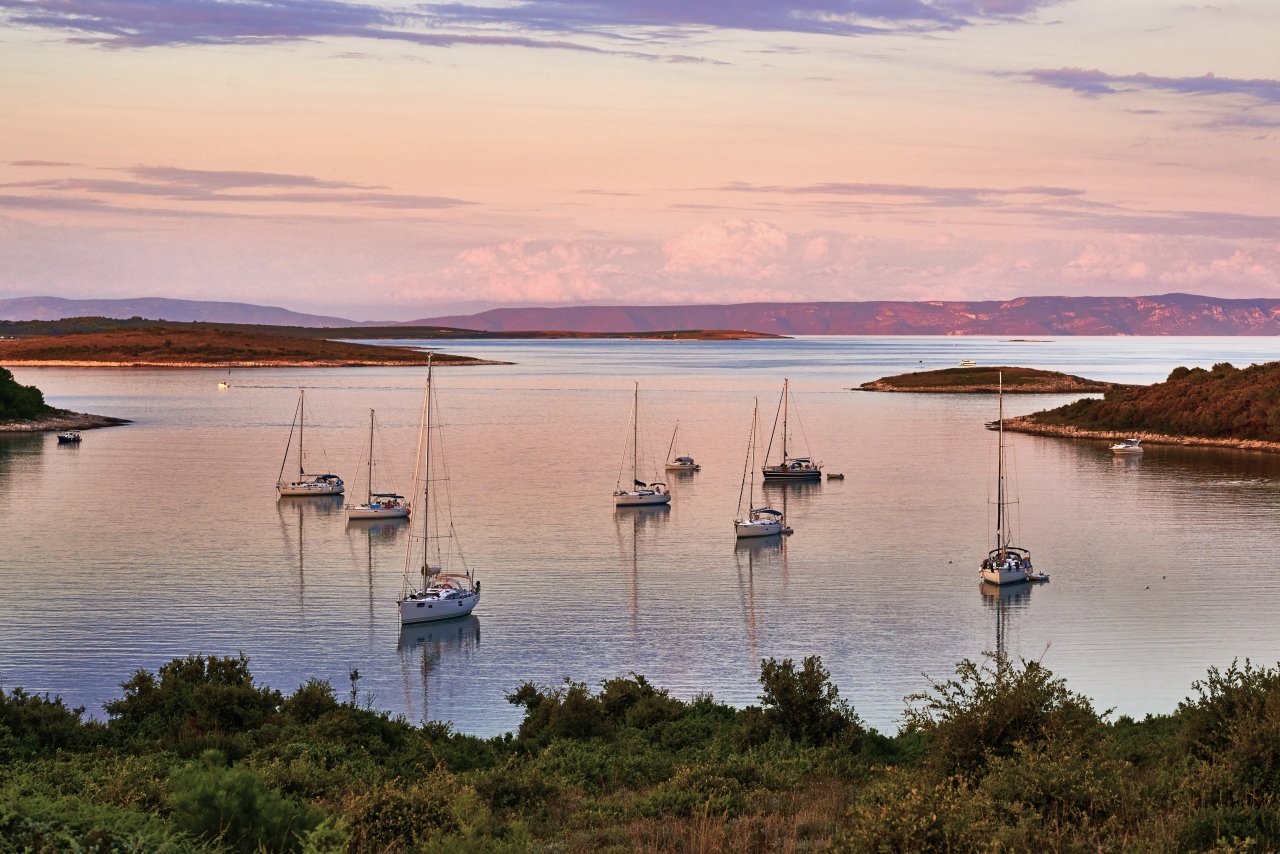
- Sailing & Sunset Tours
- Electric Buggies & Bikes
- Food & Signature Dishes — Eat Like an Istrian
- Family Friendly? 100% Yes.
- Where to Stay
- Wildlife Tips & Photo Opportunities
- Budget Considerations
- Entrance Fees, Rules & What to Know Before You Step Off the Boat
- Quick-Fire Interesting Facts
- The Recap
🗺️ Know Before You Go
| Essential Info | Details |
|---|---|
| Location | Off the SW coast of Istria, northern Adriatic Sea, Croatia |
| Gateway town | Fažana (~15 min drive from Pula) |
| Ferry crossing | ~15–20 min from Fažana to Veliki Brijun |
| Getting to Fažana | Bus 21 from Pula, taxi, or car (park in Fažana — islands are car-free) |
| Nearest airport | Pula Airport (PUY) — ~8 miles / 13 km |
| Best time to visit | May–June & September (fewer crowds, great weather) |
| Peak season | July–August (book everything in advance) |
| Day trip cost | ~€30 ferry + entrance / ~€35 with guided tour |
| Guided tour languages | Croatian, Italian, German, English |
| Currency | Euro (€) |
| Islands you can visit | Mainly Veliki Brijun; Mali Brijun with special excursion |
| Car-free? | Yes — explore by foot, bike, electric buggy, or land train |
| Family friendly? | Absolutely |
| Wi-Fi on island? | Yes, included with hotel stays |
So What Even Is Brijuni?
Honest first impression: you step off the ferry and immediately wonder why nobody told you about this place sooner.
Brijuni (also spelled Brioni) is an archipelago of 14 small islands and islets sitting just 3 kilometres off the western tip of the Istrian peninsula, separated from the mainland by the narrow Fažana Channel. The whole protected area covers around 3,395 hectares — but here’s the kicker: a full 78% of that is sea. You’re essentially visiting a national park that is mostly water, which immediately sets the vibe.
The two main islands are Veliki Brijun, approximately 30 km², and Mali Brijun, much smaller at around 9 km². Visitors can freely roam Veliki Brijun, Mali Brijun requires a special excursion booking.
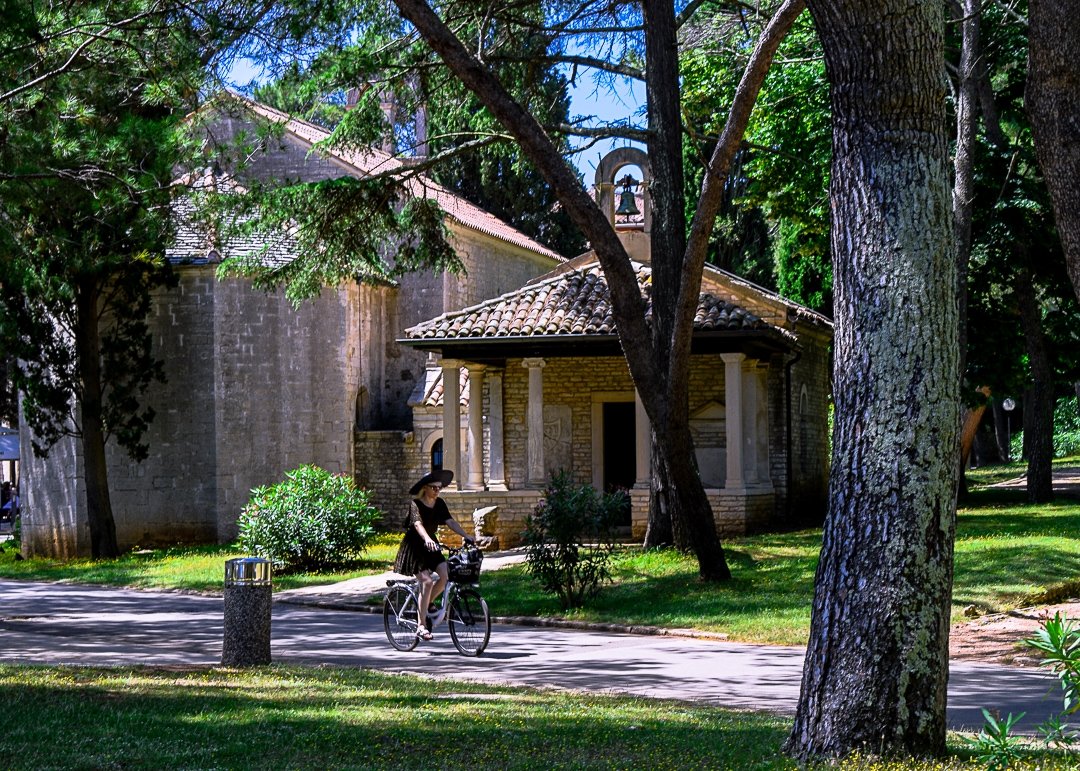
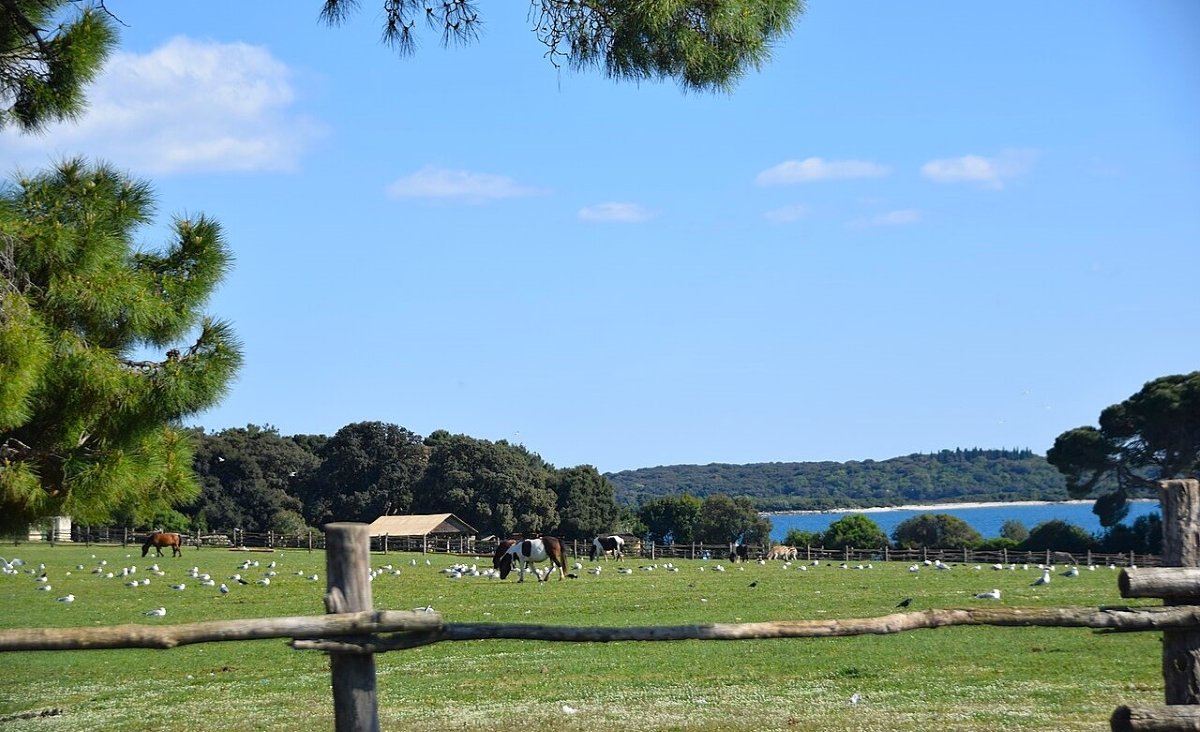
The whole place is meticulously manicured — not in a clinical resort way, but in the way of somewhere that’s been deeply cared for over a long time. Ancient pines cast shade over Roman ruins. Peacocks strut past Gothic churches. A zebra might just amble past while you’re eating lunch. This is not a normal island.
The Wild History (Short Version)
Pull up a chair, because the backstory here is genuinely cinematic.
Human presence on Brijuni goes back to prehistory, with Neolithic settlements and Bronze Age hillforts like Gradina. Then the Romans arrived, built magnificent villas with floor mosaics, and used the islands’ stone quarries. The islands fell under Roman rule in 177AD. Upon the collapse of the Roman Empire, the islands were ruled by the Ostrogoths and then came within the Byzantine Empire until 776AD. The Franks and the Aquilean patriarchs were the next rulers, and in 1331 fell under the rule of the Venetian Empire.
Fast forward to 1893: industrialist Paul Kupelwieser transformed Brijuni into an elegant resort with hotels, parks, golf, and vineyards, even inviting acclaimed scientists like Robert Koch to eradicate malaria — successfully.
Then came the chapter that defines the island’s personality today. Post-World War II, the archipelago became President Josip Broz Tito’s summer residence, hosting world leaders and celebrities. The island has been visited by some very famous people, including Elizabeth Taylor, Sophia Loren, and Richard Burton. Many of those celebrity guests brought exotic animals as gifts — which is exactly how the safari park happened. In 1983, Brijuni was officially declared a National Park.
The Vibe Check
Brijuni is peaceful in a way that feels almost conspiratorial. No cars, no scooters buzzing past, no construction noise. Just birdsong, the faint clang of a boat, and the crunch of gravel under your shoes.
It’s got this layered, slightly surreal energy: you’re walking through what feels like a luxury botanical garden, then you round a corner and there’s a 2,000-year-old Roman villa. Then a zebra. The Tito-era architecture gives certain areas a retro Cold War holiday camp feel — think mid-century Yugoslav modernism meeting a Mediterranean nature reserve.
It’s equally suited to history nerds, wildlife lovers, families with kids who need space to run, couples who want somewhere genuinely off-the-beaten-path, and solo travellers who just want to sit on a pristine beach without another tourist in sight.
Things to Do — The Good Stuff
Hop on the Land Train (Don’t Skip This)
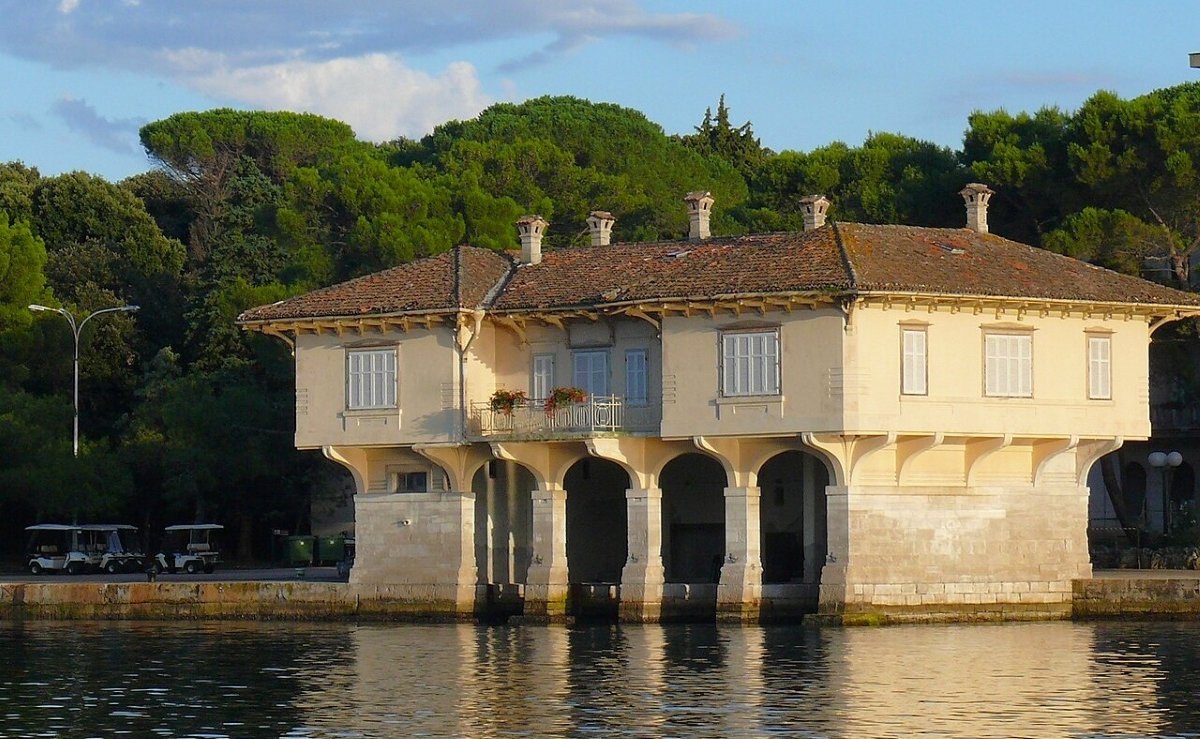
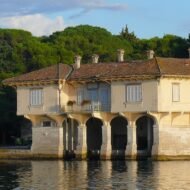
The guided tour by mini land-train is the classic way in — roughly an hour, hitting the safari park, the Tito museum, a church, and the boathouse. It’s worth the extra €5 just for the land train. Tours run in Croatian, Italian, German or English. You can leave the tour at any point after the train tour and however long you stay, you can wander the island freely afterwards. After the train, the island is yours.
Find the Dinosaur Footprints
Yes, actual dinosaur tracks. Day trips can include searching for dinosaur footprints on Veliki Brijun island. The tracks were left by large herbivorous dinosaurs on the rocky coastline millions of years ago. Kids absolutely lose their minds. Adults do too, quietly.
The Safari Park
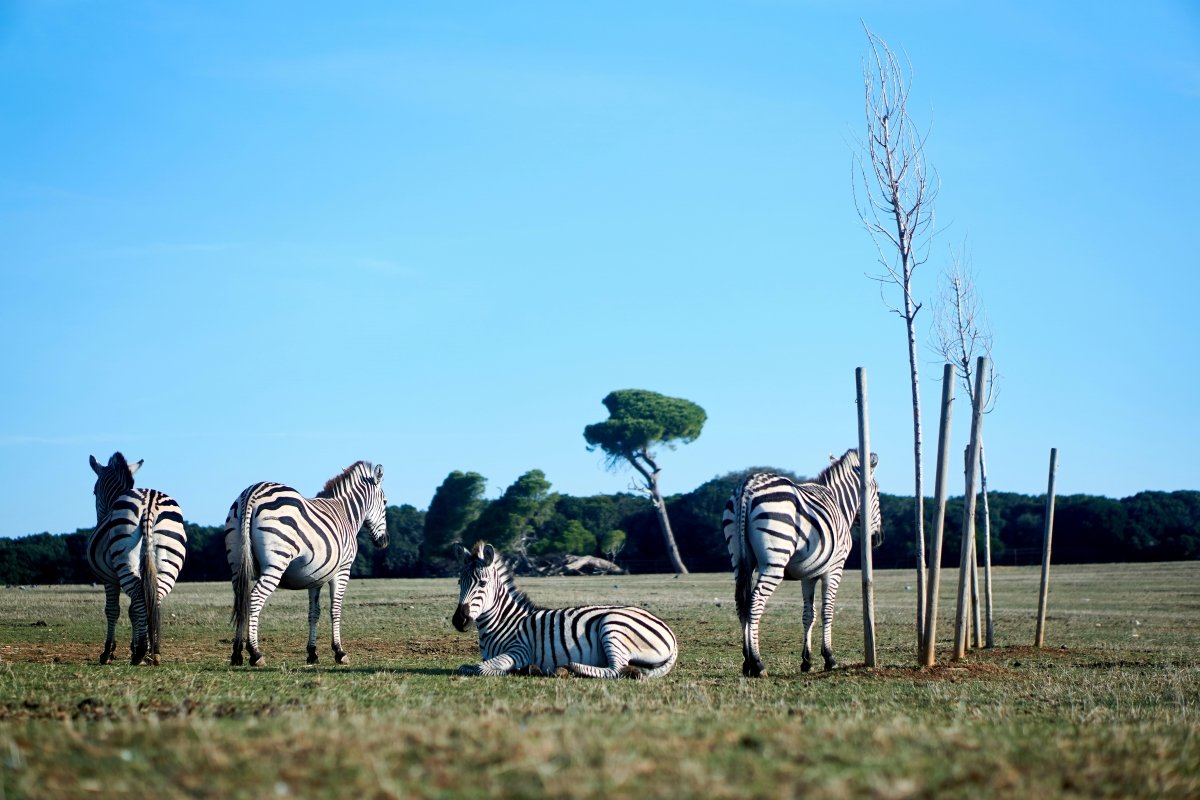
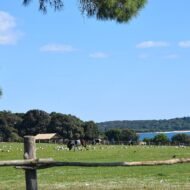
Many indigenous Istrian and exotic Asian, African, and South American animals freely run throughout Veliki Brijun’s gorgeous safari park. Take a walk or a ride with zebras, llamas, ostriches, peacocks, and sacred cows, and see an Indian elephant. The elephant — Lanka — is arguably the most famous resident. Note: entrance to the Safari Park is not included in the general entrance fee to Brijuni National Park.
Dive, Snorkel & Kayak
The islands offer diving at three prime spots — Sveti Jerolim, Peneda, and Grunj — with marine life, corals, and beautiful underwater landscapes. The water clarity here will ruin you for other destinations. The park also runs guided kayaking tours along the protected coastal area of Brijuni National Park — one of the best ways to see the smaller islets and hidden coves.
The Archaeological Trail
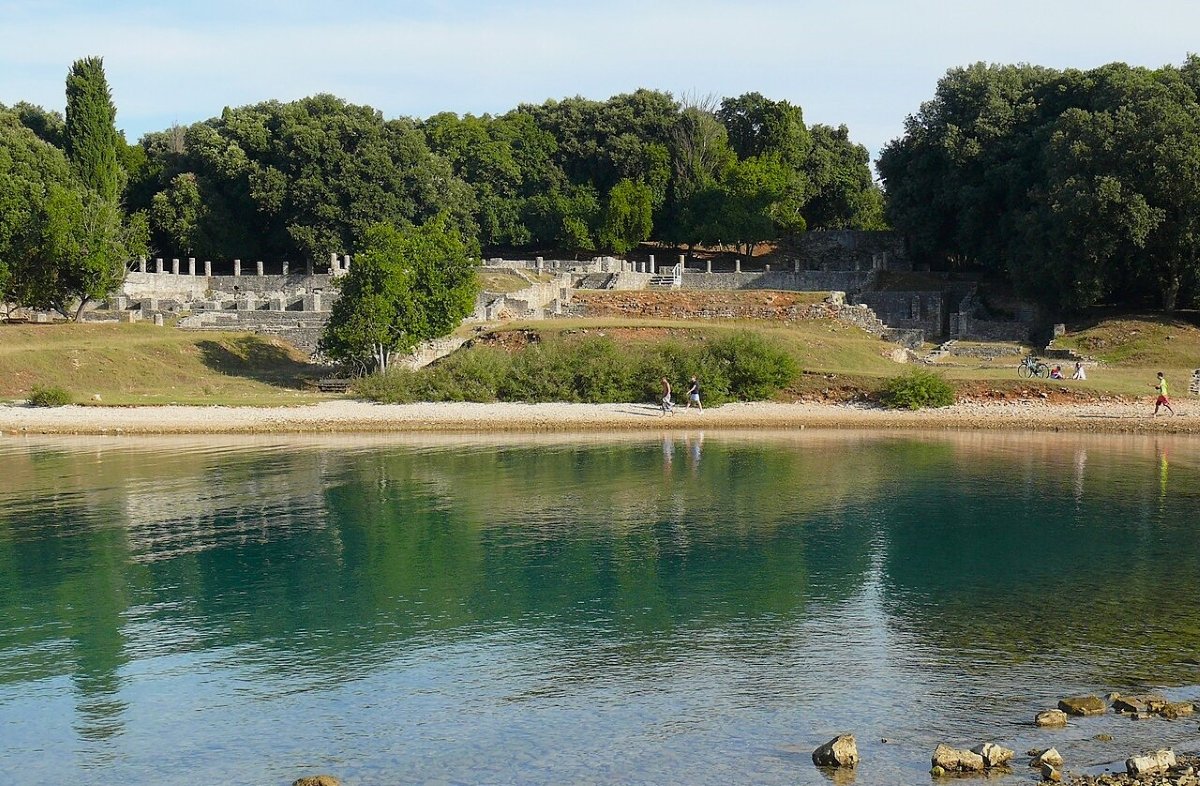
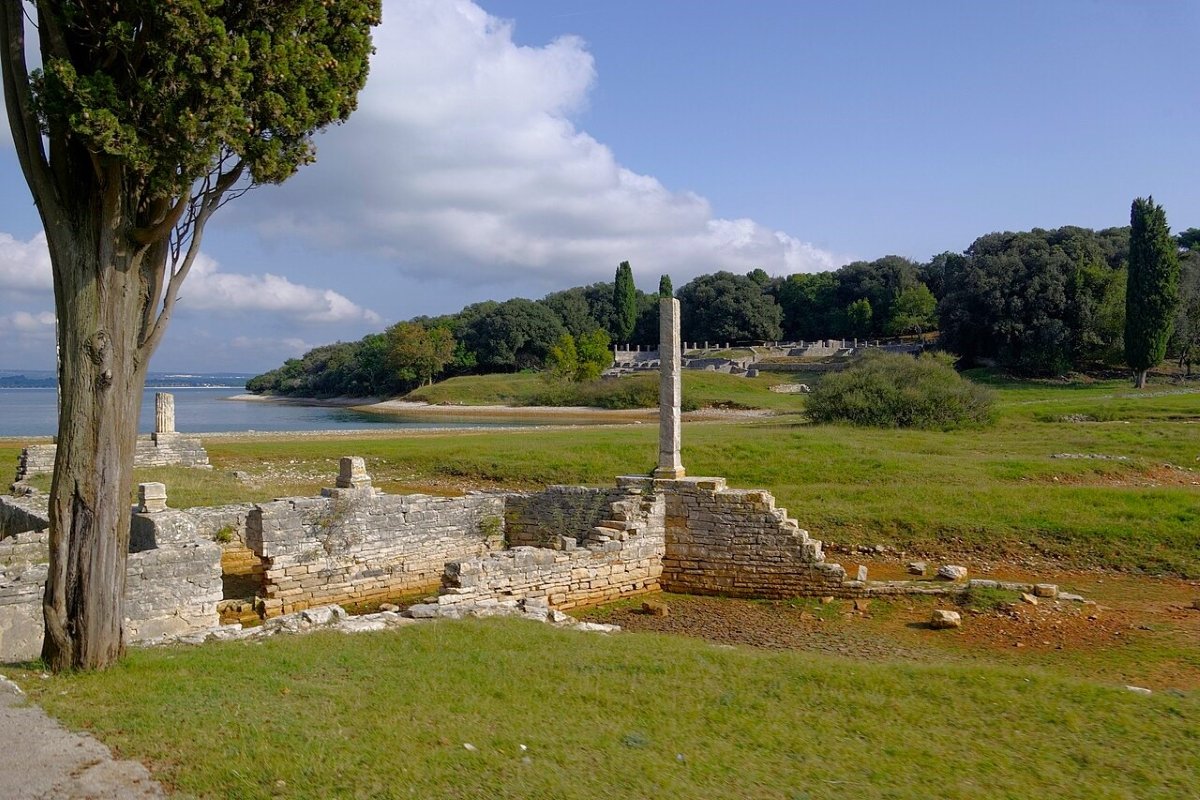
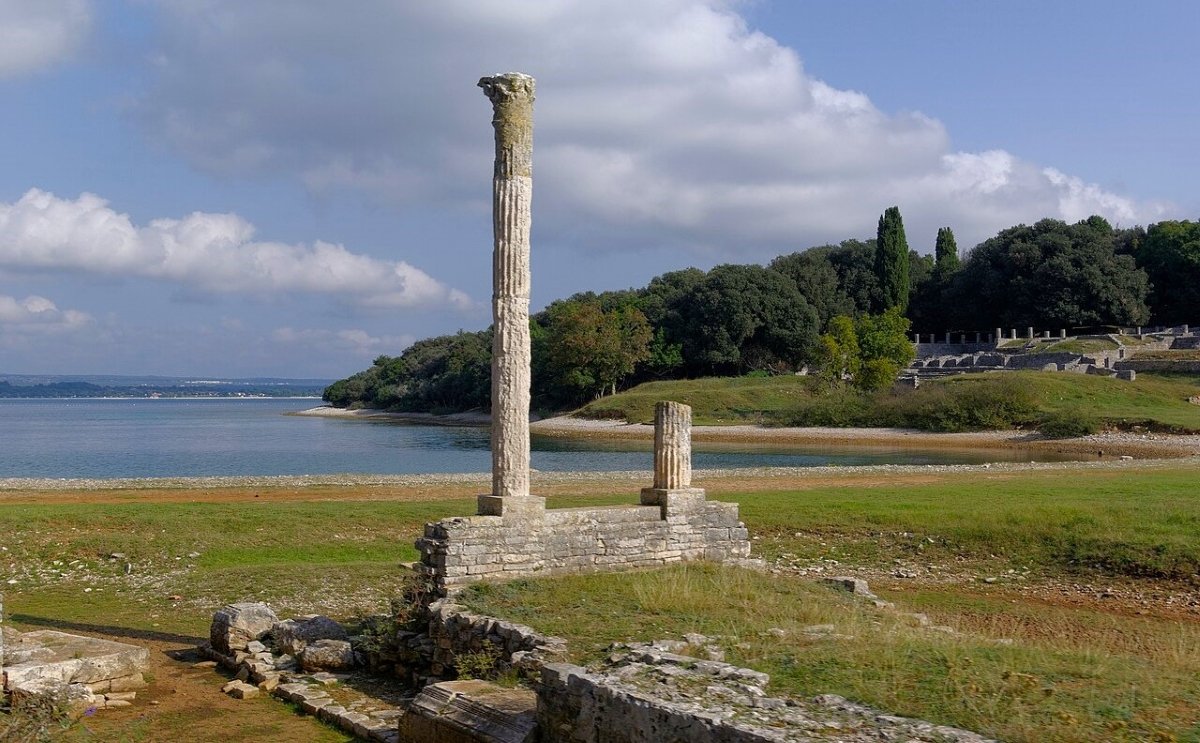
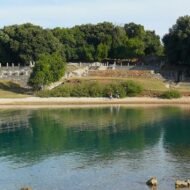
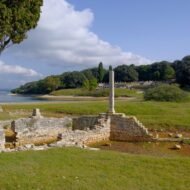
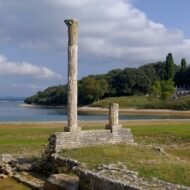
A tour of the most important Brijuni archaeological sites from prehistory, through classical antiquity, late antiquity and Byzantine period to the Venetian era. The Roman villa at Verige Bay is the standout — it dates from the 1st century, consisted of several buildings used for various purposes, and the parts of the villa were used until the 6th century.
Tito’s Museum & Photos
Love him or have complicated feelings about him, the Tito chapter of Brijuni’s story is fascinating. The Josip Broz Tito na Brionima photography exhibit showcases the activities of the Yugoslavian president on the island from his arrival on 20 June 1947 to his last visit on 29 August 1979. There are over 200 photographs on display grouped into 5 categories, covering his private and professional life on the island.
Sailing & Sunset Tours
The 4-hour Discovery Sail Tour transports you around the breathtakingly beautiful islands of Brijuni National Park — you can relax on the boat and snorkel in secret nooks. There are also dedicated sunset tours for those after something more romantic.
Electric Buggies & Bikes
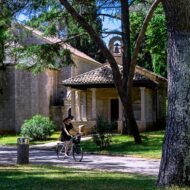
You can hire electric golf buggies (bring your driving licence) or bikes. Cycling the island at your own pace, stopping wherever you like, is genuinely one of the best ways to spend a few hours here.
Food & Signature Dishes — Eat Like an Istrian
Brijuni sits at the heart of Istria, which is arguably Croatia’s finest food region — and that reputation filters through to what you’ll eat on the islands.
The Istrian Table: Expect olive oil that will make you reconsider every other olive oil you’ve ever had, truffles used with refreshing generosity, and seafood so fresh it practically introduces itself. The cuisine draws from Italian and Austro-Hungarian influences, producing something that’s distinctly its own.
Must-Try Dishes:
- Fuži — hand-rolled egg pasta, often served with truffle or goulash sauce. This is the local pasta shape and it’s everywhere for good reason.
- Fritaja — Istrian-style scrambled eggs with wild asparagus or truffles. Simple, seasonal, brilliant.
- Peka — meat or seafood slow-cooked under an iron bell covered in embers. Lamb or octopus peka is a life event.
- Brodet — a rich Adriatic fish stew served with polenta. Order it if you see it.
- Istrian prosciutto (pršut) — air-dried and cured differently from its Italian cousin, with a distinctly local flavour.
- Malvazija wine — the indigenous white grape of Istria, crisp and aromatic. Pairs with everything, especially lunch by the sea.
At Neptun Restaurant on the island, specially crafted menus combine tradition with seasonal ingredients. For a broader spread of options, Fažana on the mainland has excellent konobas (traditional taverns) worth a meal before or after your island visit.
Family Friendly? 100% Yes.
Brijuni might be one of the best family travel decisions you’ll make in Croatia. Here’s why:
The car-free environment means kids can roam freely without anyone worrying about traffic. The safari park is an immediate win. The dinosaur tracks are genuinely magical for younger visitors. The land train tour means little legs don’t need to cover huge distances to see the highlights.
Hotel Neptun offers Superior Family Rooms with Park View and Balcony designed for 2+1, featuring Austro-Hungarian charm at top comfort level. The pace of Brijuni — slow, natural, exploratory — suits families looking for a holiday that isn’t just sitting on a beach (though there’s that too).
For the budget side: children under 12 do not pay the tourist tax; children aged 12 to 18 receive a 50% discount on the tourist tax. Guided tour pricing is reduced for children as well.
Where to Stay
On the Island (The Dream Option)
If you stay in a hotel on Veliki Brijun, you have the run of the island. This means sunrise walks when the day-trippers haven’t arrived yet, evening strolls in total peace, and the genuinely eerie privilege of having a national park almost to yourself.
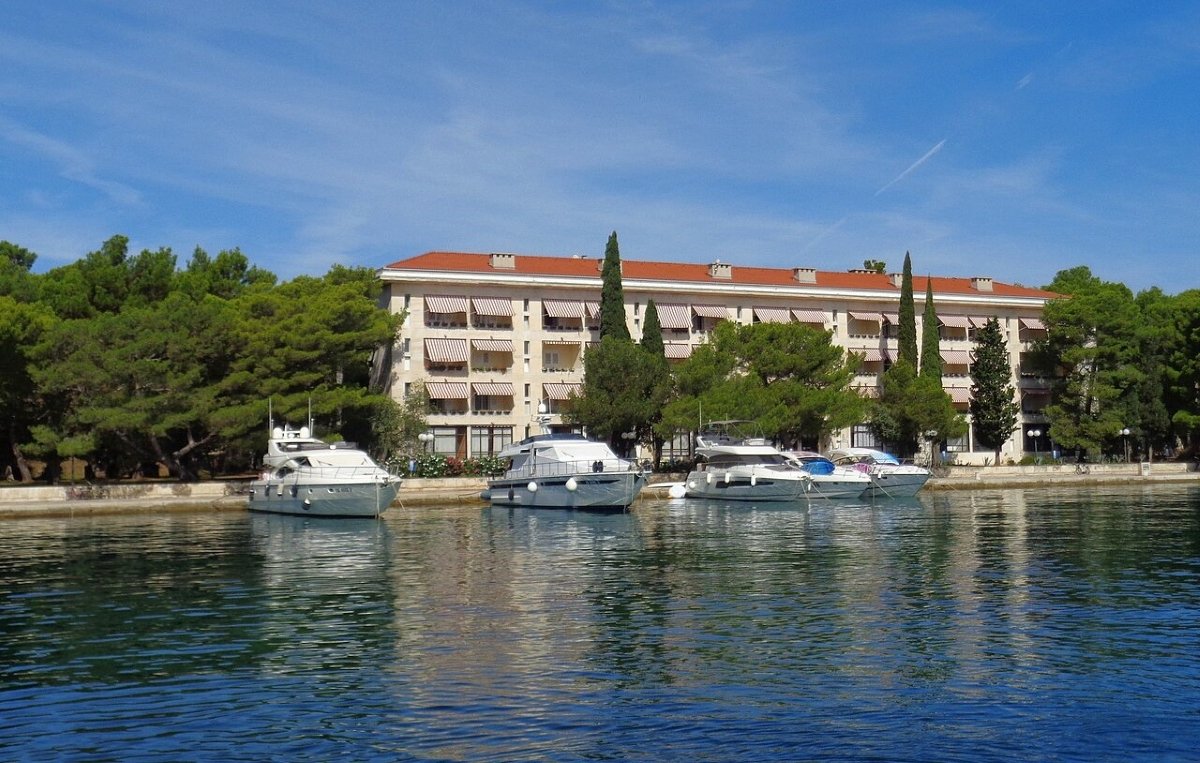
- Hotel Neptun — The classic choice. Set in National Park Brijuni, Hotel Neptun offers comfortable rooms and a variety of eating venues, all surrounded by nature and the sea. Austro-Hungarian atmosphere, excellent restaurant, park views.
- Hotel Istra — Located right by the sea on Veliki Brijun Island, surrounded by century-old pine trees, with unforgettable views of the unique Brijuni landscape. Room rates start from around €91/night in autumn, with summer deals available including up to 25% off.
- Brijuni Rooms Karmen — Features comfortable rooms with a park or sea view, a smaller and more intimate option.
In Fažana (Great Value Base)
Staying in Fažana and day-tripping is a smart budget move. The town is charming in its own right — a proper Istrian fishing village with good restaurants and a relaxed vibe.
- Hotel Marina — Set in an over 300-year-old house on the waterfront of Fažana, overlooking the Adriatic Sea. Renovated in 2025, all rooms are air-conditioned with free Wi-Fi.
- Villetta Phasiana — Beautifully situated in the heart of the old fishermen’s village, refurbished with rustic yet luxurious Italian style.
- Various apartments and B&Bs are available from around €56/night.
Near Pula (Best for Facilities)
If you want resort amenities and are happy to make the short trip to Fažana each morning, Pula offers a wide range of hotels from budget to 4-star. Park Plaza Histria Pula is a 4-star hotel 7 miles from Brijuni Islands featuring direct beach access and a wide range of recreational activities.
Wildlife Tips & Photo Opportunities
Brijuni is genuinely excellent for wildlife photography — here’s how to make the most of it:
Best shots you can get:
- Peacocks — they’re everywhere and completely unafraid of cameras. Golden hour light near the old church is unreal.
- Fallow and axis deer grazing in meadows in the early morning or late afternoon.
- The safari park animals — zebras, llamas, and exotic birds in natural-feeling enclosures.
- Lanka the elephant — getting a clean shot requires patience, but absolutely worth it.
- Underwater — bring or hire a waterproof camera/housing for the dive sites. The visibility and marine life are exceptional.
- Roman ruins at Verige Bay with the sea as backdrop — especially beautiful in the late afternoon when the light turns amber.
- The Byzantine castrum walls at golden hour.
- Dinosaur tracks from above (there are raised viewing areas) — best in early morning light with low shadows to highlight the relief.
Pro tip: Stay overnight and you’ll have the island to yourself in the early morning hours. The quality of light and the absence of crowds makes for very different (and better) photography than peak daytime visits.
Budget Considerations
Brijuni can be done affordably as a day trip or splurged on as a special stay. Here’s a realistic breakdown:
Day Trip (Budget)
- Ferry + park entrance (no guided tour): ~€30/person
- With guided train tour: ~€35/person
- Bike rental for independent exploration: ~€5–10/hour
- Lunch at island restaurant: ~€15–25/person
- Safari Park surcharge: extra fee applies
- Realistic day trip total (one person): €50–70
Overnight Stay (Mid-Range)
- Hotel Istra or Neptun: from ~€91–150/night (room rates include park access, ferry transfers, museum entry, and Wi-Fi)
- Half-board dinner: ~€25/person
- Note: staying overnight gives better value as the ferry and park entry costs are bundled in
Getting There
- Fažana is easily reached by bus from Pula (~30 min, cheap)
- Pula airport has good European connections
- Car parking in Fażana is available but plan ahead in peak season
Saving Money:
- Visit in May–June or September for lower prices and quieter islands
- Watch for Open Days deals in October — accommodation starts from €58/night during special Open Days offers.
- Book ferry + guided tour as a package for the best rate
Entrance Fees, Rules & What to Know Before You Step Off the Boat
Tickets & Fees The base ferry + park entrance costs around €30/person, rising to ~€35 if you add the guided land-train tour — and honestly, that extra €5 is worth it for a first visit. The Safari Park charges a separate entrance fee on top of the general park ticket, so budget for that if you’re planning to visit it (and you should). During special periods like the October Open Days, guided tour tickets drop to €17 for adults and €12 for children aged 7–18. Children under 7 generally enter free. There’s also a tourist tax of €1.60 per person per day for overnight stays; children under 12 are exempt, and ages 12–18 get a 50% reduction. Tickets can be booked online via the official park shop at shop.np-brijuni.hr — strongly recommended in summer.
The Rules (They’re Reasonable) Brijuni is a protected national park and the code of conduct reflects that. No private vehicles are permitted anywhere on the islands — that’s the whole point, and it’s wonderful. Camping is not allowed. Picking plants, disturbing wildlife, or removing any natural or archaeological material is strictly prohibited. Fires are forbidden outside designated areas. If you’re diving or snorkelling, stay clear of protected underwater archaeological zones and don’t touch corals or marine life. Drones require prior authorisation from the park — don’t assume you can just fly one. Dogs are welcome but must be kept on a leash at all times. Noise levels are expected to stay low, especially near wildlife areas. The park asks that all visitors take their litter with them, and given how pristine the place is, that’s an easy ask to honour.
Good to Know Ferries don’t transport cars — leave yours in Fažana and embrace the island’s pace. It’s also worth booking guided excursions at least a day in advance, especially in peak season. Refunds on pre-booked tickets are not available except when the park cancels due to bad weather. The official park website (np-brijuni.hr) is the most reliable source for up-to-date schedules, seasonal programmes, and any rule changes.
Quick-Fire Interesting Facts
- The islands contain over 680 species of plants, including a 17,000 m² Mediterranean garden
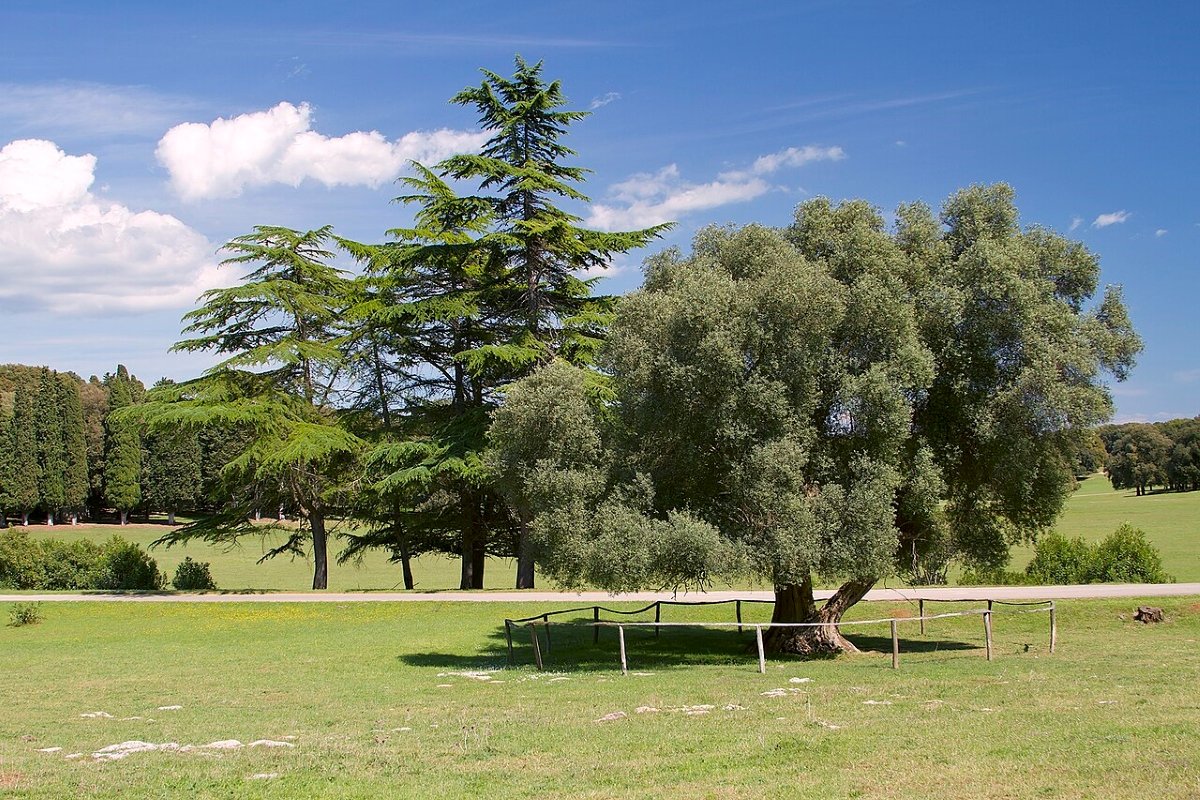
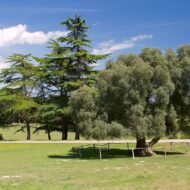
- Some of the olive trees on the island are over 1,600 years old — still producing fruit
- The Venetian Republic used Brijuni’s stone quarries to build Venice’s palaces and bridges
- Tito hosted over 50 world leaders on the island, including Nehru, Nasser, and Indira Gandhi
- The original zebra herd was donated to the archipelago in the 1960s by Guinea’s Sékou Touré; the Zebu cattle were gifted by India’s Nehru in 1959
- A 13th-century church was built on the island by the Knights Templar
- The entire Adriatic coastline of the national park contains mapped dinosaur footprints from the Cretaceous period
- Robert Koch, the bacteriologist who discovered the tuberculosis bacillus, spent time here helping eradicate the island’s malaria problem in the late 1800s
The Recap
Brijuni is the kind of place that doesn’t need to shout. It just quietly goes about being extraordinary — Roman mosaics here, a sacred elephant there, a sunset over the Adriatic that will genuinely alter your understanding of what a nice evening feels like.
It works as a day trip if your schedule is tight. It works even better as an overnight stay if you want to properly inhabit it. It works for families, couples, solo adventurers, history obsessives, wildlife photographers, and anyone who’s slightly tired of the usual Croatia itinerary (Dubrovnik is beautiful, we know, but so is this).
The islands have a rich past going back to ancient Rome — medieval churches, a former summer retreat of Yugoslav leader Josip Broz Tito, and ancient Roman ruins all coexist with a nature reserve that’s as serene as it gets. Fourteen islands, one National Park, zero cars, infinite reasons to go.
Go. Seriously.
📍 Getting There: Fly into Pula Airport (PUY), head to Fažana by bus or taxi, catch the ferry to Veliki Brijun. Done.
🔗 Official site: np-brijuni.hr | Book ferry tickets and tours in advance in summer.