



TL;DR
Island Hopping Through Ancient Greece: Temples, Myths, and Sea Views , Can’t scroll through all 3,000+ words? Here’s your express ticket:
- TL;DR
- Why Island Hopping Beats a Single-Island Sabbatical
- 1. Delos — Mythic Heart of the Cyclades
- 2. Naxos — Ancient Temples & Authentic Island Vibes
- The Portara: Greece’s Most Dramatic Doorway
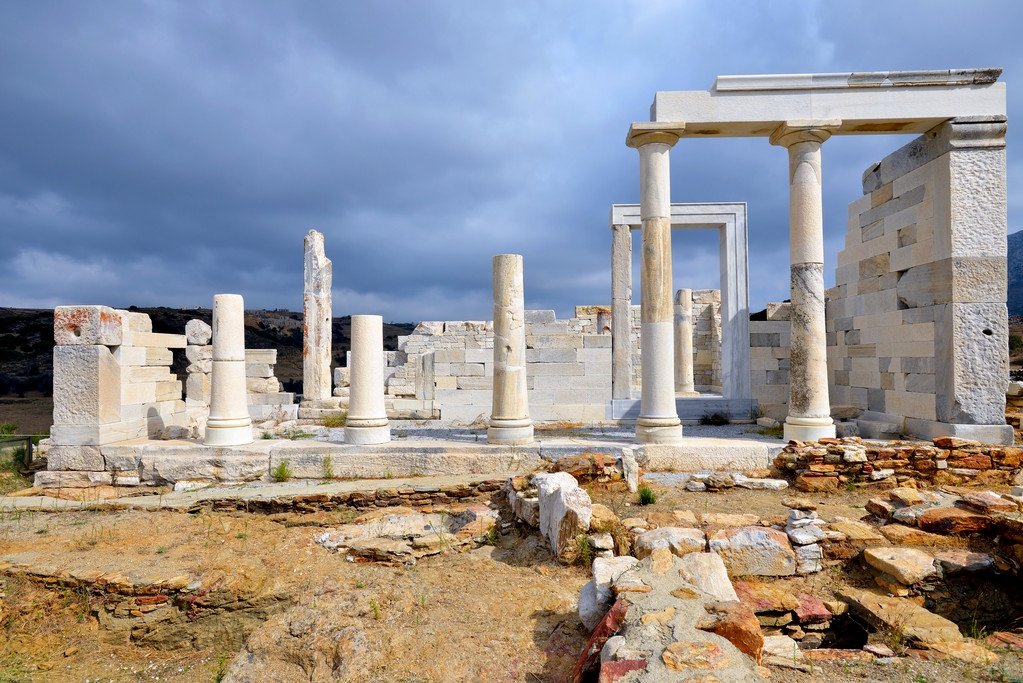
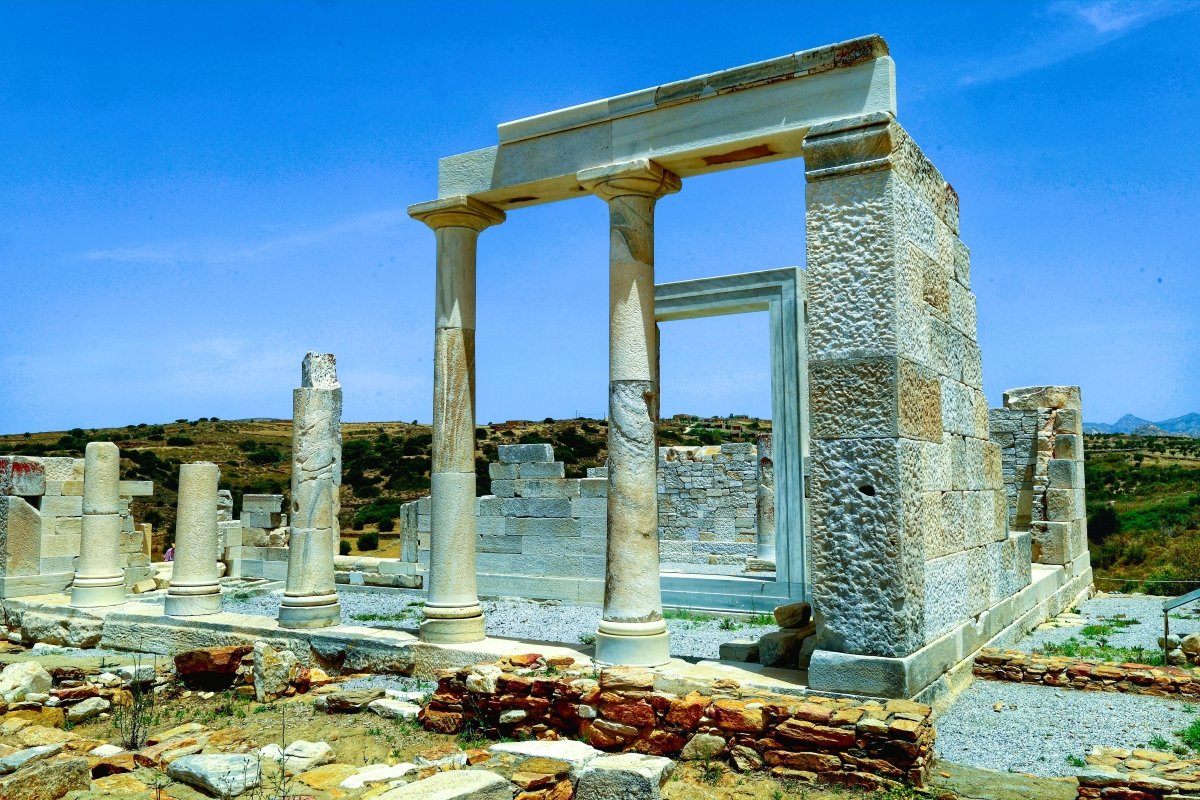
- Temple of Demeter: The Underrated Masterpiece
- Beyond the Ruins
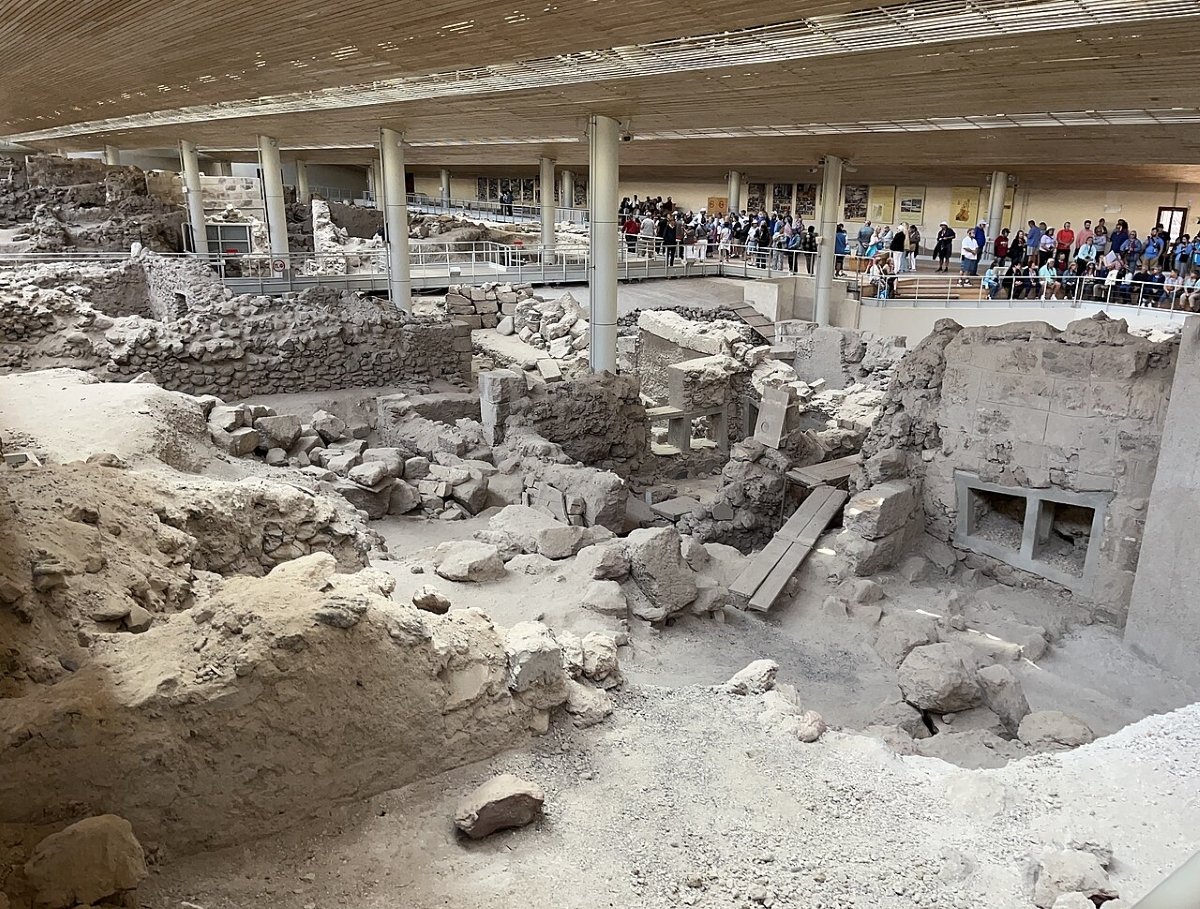
- 3. Santorini — Akrotiri & the Volcano’s Ancient City
- 4. Kos — Classics, Castles, and Hippocrates
- 5. Hidden & Offbeat Stops (For the Curated Traveller)
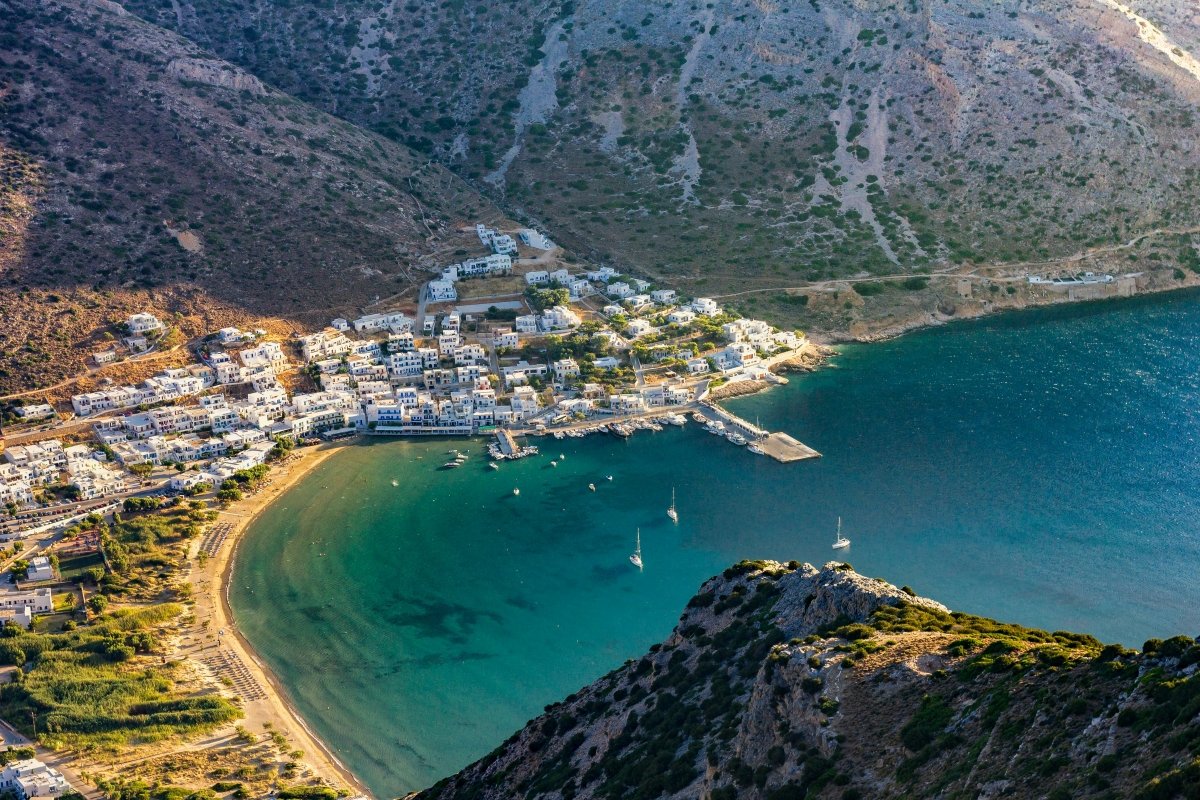
- Sifnos: Pottery, Footpaths, and Foodie Paradise
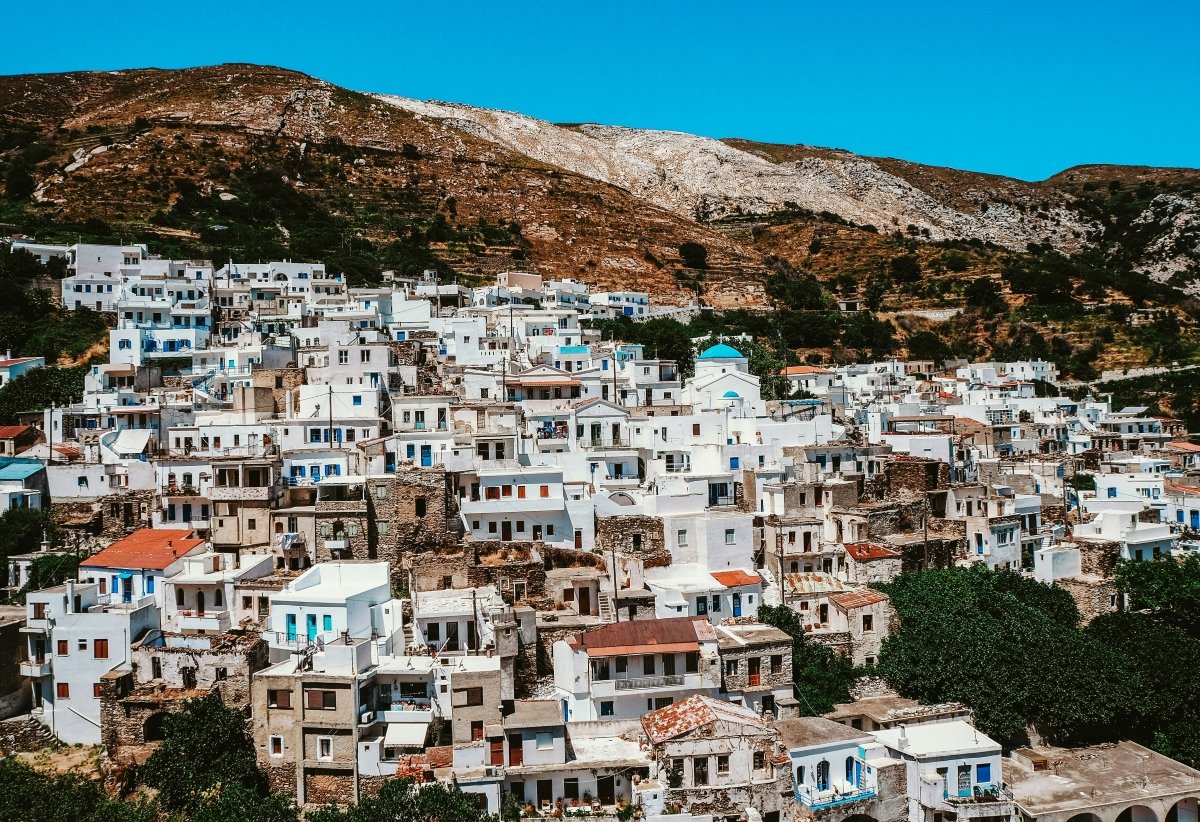
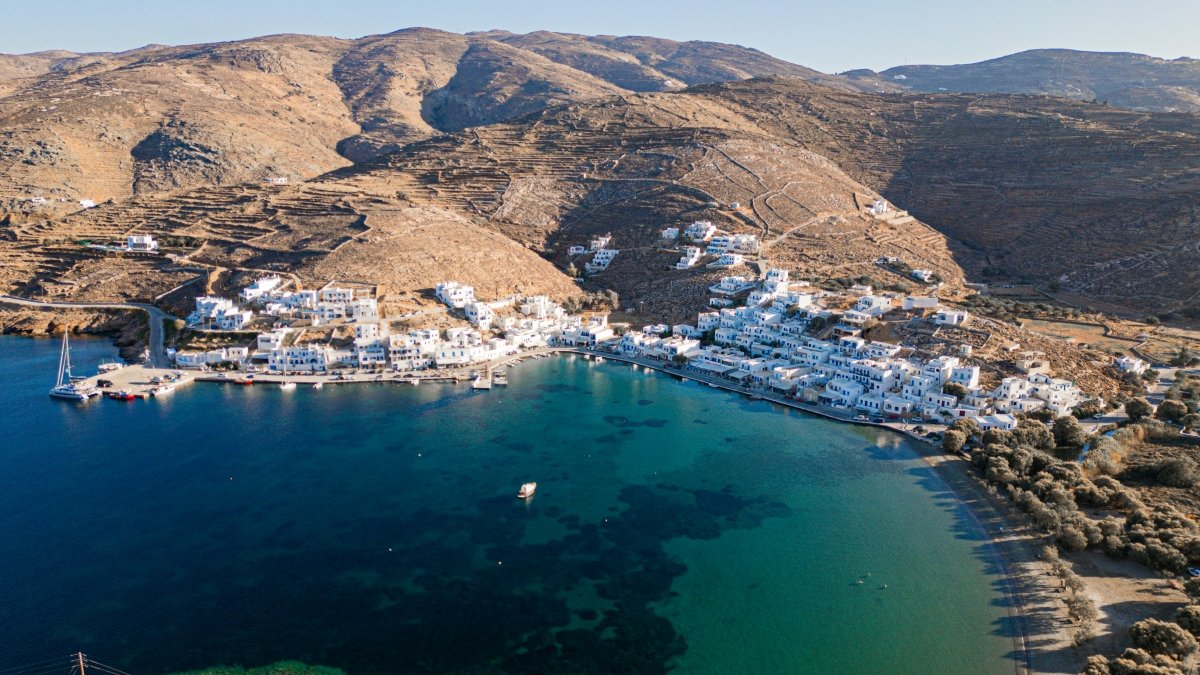
- Tinos: Pilgrimage Island with Marble Villages
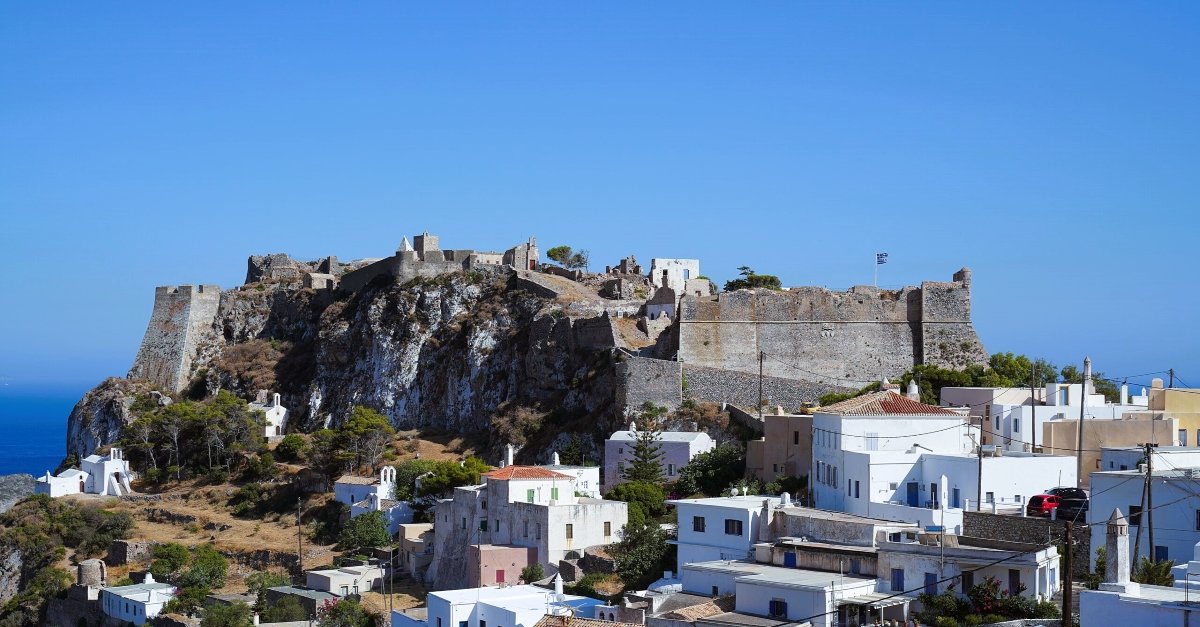
- Kythira: Where Aphrodite Was Born (Allegedly)
- Making Your Island-Hopping Itinerary Actually Work
- Ferry Real Talk
- Sample 10-Day Itinerary
- Budget Breakdown (Per Person, Moderate Comfort)
- Packing Essentials
- Recap: Your Greece Mythology Trip, Summarized
- Disclaimer
- Delos = Apollo’s birthplace + crazy-good archaeological ruins (no hotels though—day trip only)
- Naxos = Massive marble doorway to nowhere + authentic Greek life without the influencer crowds
- Santorini = Yes, that Santorini, but we’re skipping the sunset selfies for ancient Akrotiri’s Minoan treasures
- Kos = Where Hippocrates invented medicine + castle views + unexpectedly chill vibes
- Bonus islands (Sifnos, Tinos, Kythira) = For travelers who actually read guidebooks instead of just looking at pictures
Best time to go: May-June or September-October (fewer crowds, ideal weather, shoulder-season prices)
Budget estimate: €100-200/day including accommodation, island hopping ferries, taverna hopping, and archaeological site tickets
Why Island Hopping Beats a Single-Island Sabbatical
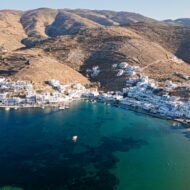
Look, we love a good beach-resort vacation as much as the next person. But Greece’s islands weren’t meant to be experienced one at a time in all-inclusive isolation. These islands have been connected by sea routes for literally thousands of years—ancient traders, invading armies, lovestruck gods, and regular folks have been hopping between them since before anyone thought to Instagram their gyros.
Each island has its own personality, its own myths, its own specific shade of blue sea. Staying on just one is like going to a Greek restaurant and only ordering bread. Sure, the bread is great, but you’re missing out on the moussaka, the grilled octopus, the honey-drenched baklava…
Plus, modern ferries make island hopping shockingly easy. You can literally have breakfast on one island, explore ancient ruins by lunch, and watch the sunset from a completely different island by evening. The ancient Greeks would be simultaneously jealous and slightly horrified by how fast we move.
1. Delos — Mythic Heart of the Cyclades
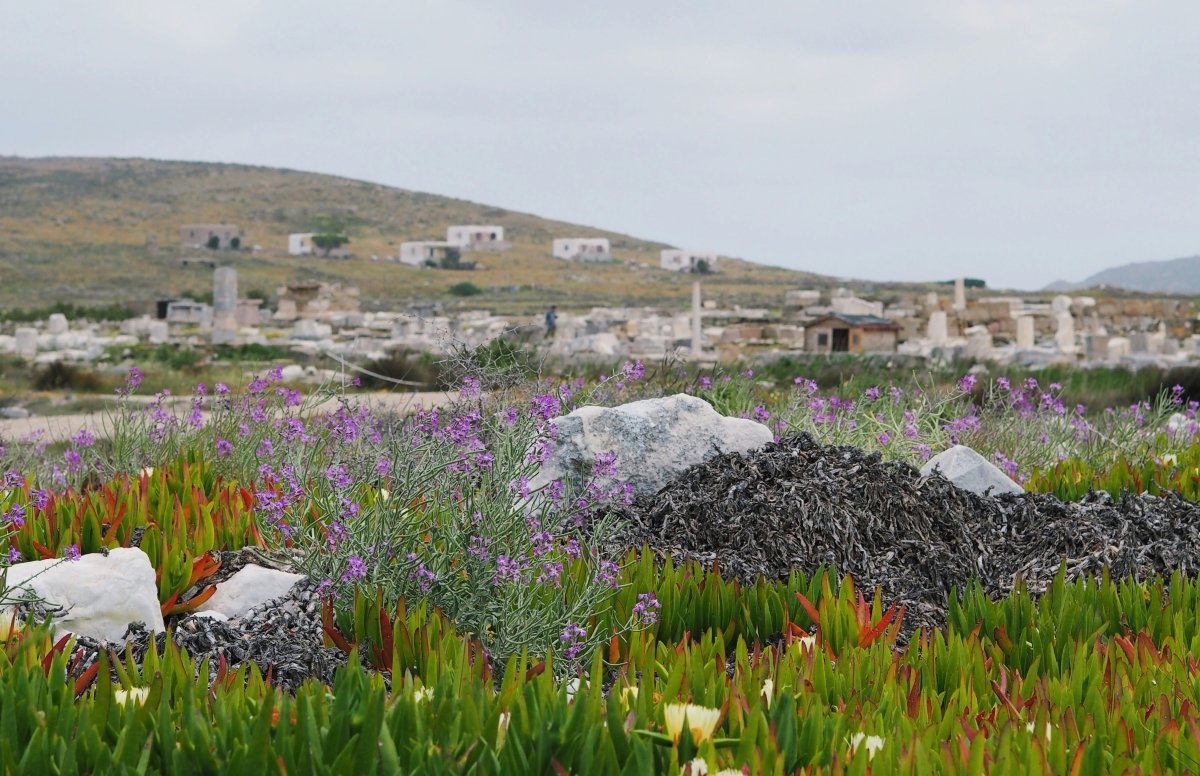
The headline: Uninhabited island. Zero hotels. Zero restaurants. Possibly the most important archaeological site in the Greek islands.
The Mythology (The Sparknotes Version)
According to legend, when the Titaness Leto was pregnant with twins by Zeus (classic Zeus), jealous Hera basically banned every piece of land from letting Leto give birth. The floating island of Delos—which wasn’t technically attached to the sea floor—said “loophole!” and offered Leto refuge. She gave birth to Apollo (god of sun, music, prophecy, and being insufferably attractive) and Artemis (goddess of the hunt and not taking anyone’s nonsense).
As thanks, Delos was anchored permanently to the ocean floor with four diamond pillars. Whether you believe that or not, Delos definitely became the religious center of the ancient Greek world.
What You’ll Actually See
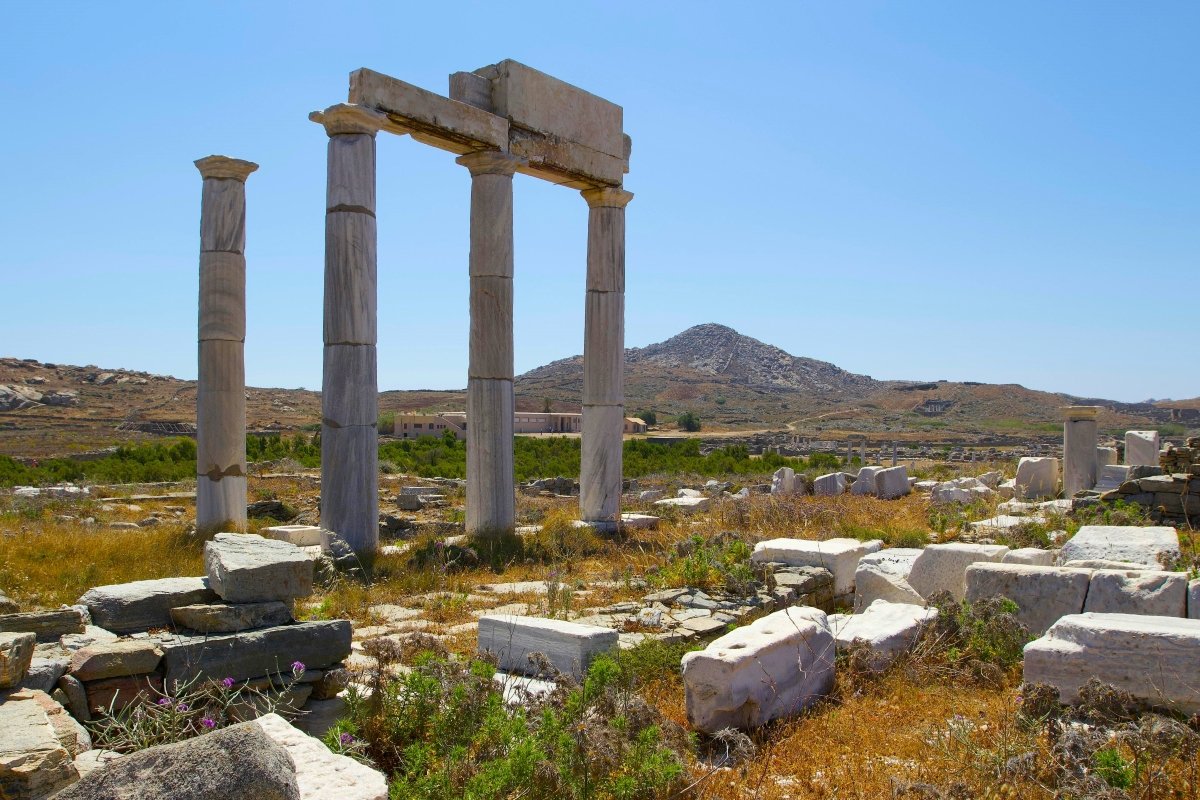
- The Terrace of the Lions: Five (originally nine or more) marble lions that have been guarding the Sacred Lake since around 600 BCE. They look slightly concerned, which is relatable.
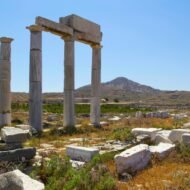
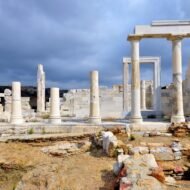
- The Temple of Apollo: Not much left standing, but the foundations show just how massive this sanctuary was
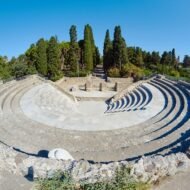
- Ancient Theater: Still has most of its seating—capacity around 5,500 people
- Mosaics in the House of Dionysus: Floor mosaics featuring Dionysus riding a panther because ancient Greeks understood interior design
- Mount Kynthos: Climb 113 meters for 360-degree Cycladic views that’ll make your calves burn and your camera roll explode
Practical Stuff
Getting there: Short boat ride from Mykonos (20-30 minutes). Multiple departures daily in season, usually €20-25 round trip. You’ll need to return the same day—no one’s allowed to stay overnight except archaeologists.
Timing: Give yourself 3-4 hours minimum. There’s zero shade, so bring sun protection unless you want to cosplay as a lobster. Also bring water and snacks—nothing’s for sale on the island.
Admission: Around €12, includes the excellent archaeological museum
Pro tip: Go on the first boat out (usually 9 or 10 AM). You’ll have the ruins mostly to yourself before the cruise ship day-trippers arrive. MORE READ..
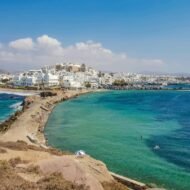
2. Naxos — Ancient Temples & Authentic Island Vibes
If Santorini is the Instagram model of the Cyclades, Naxos is the genuine, unpretentious friend who’s actually more interesting once you get to know them.
The Portara: Greece’s Most Dramatic Doorway
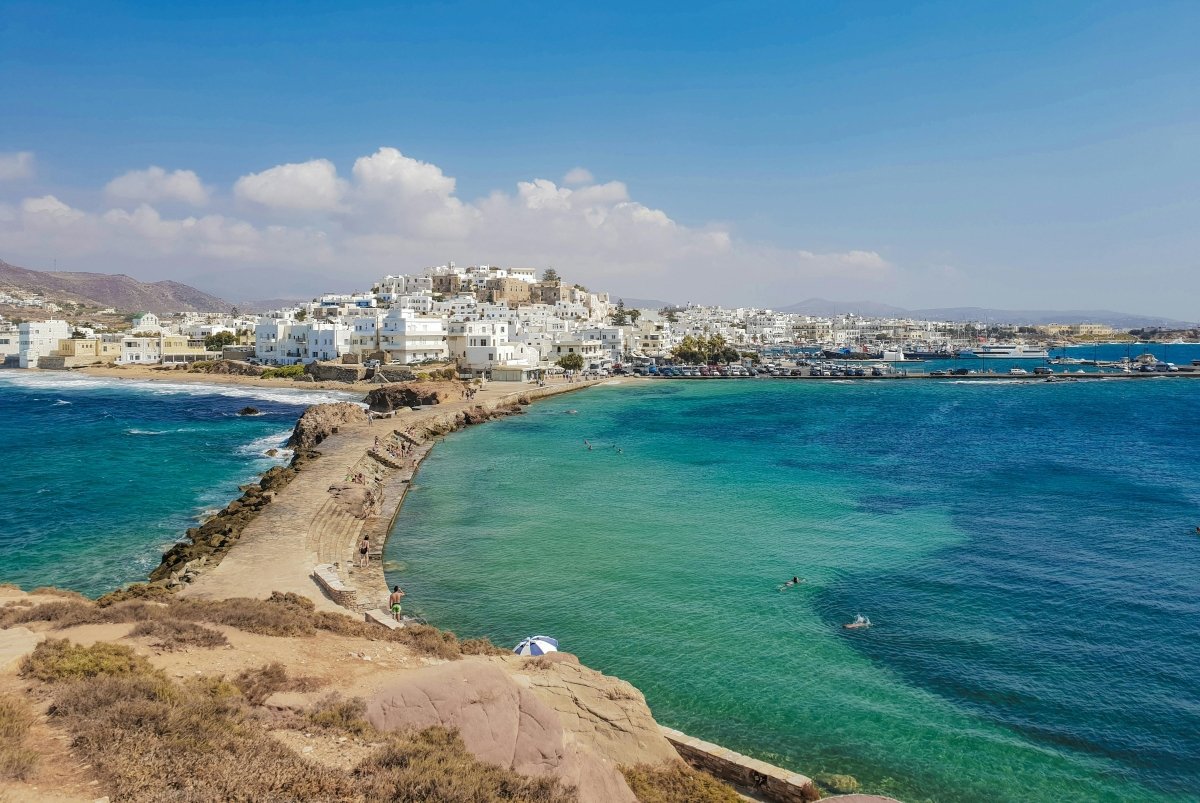
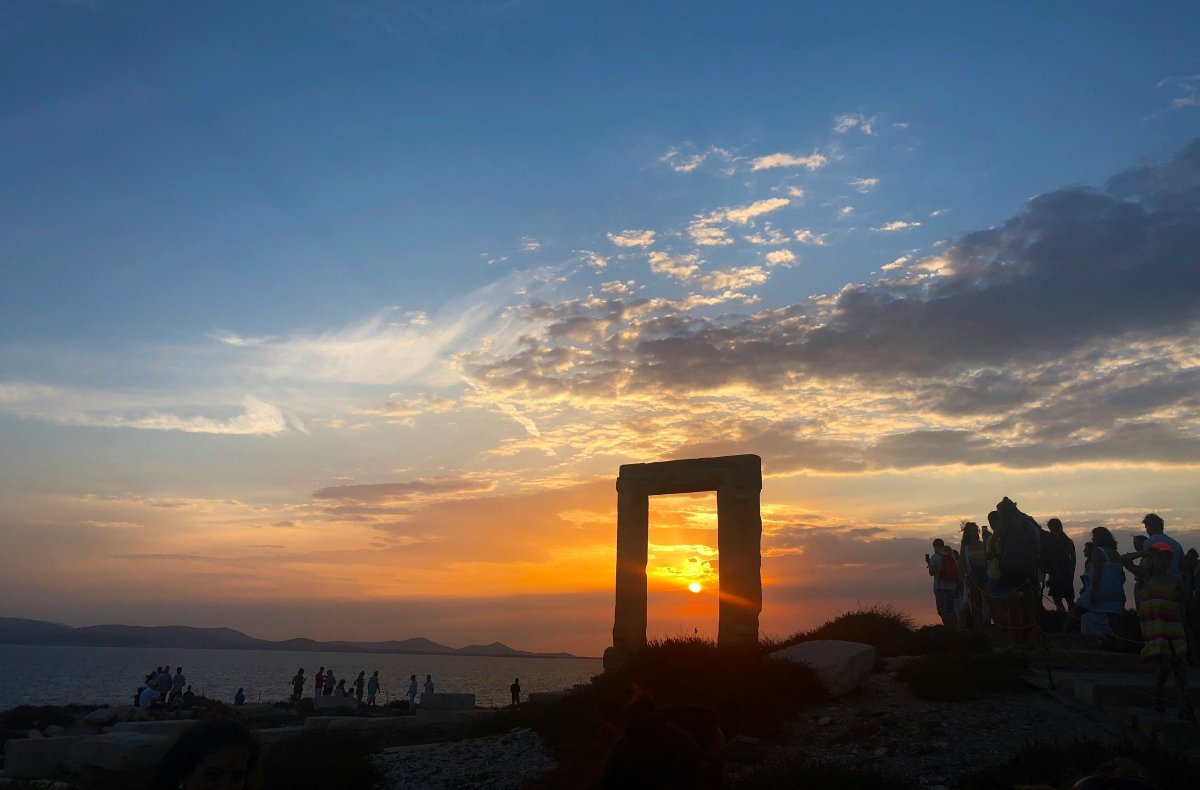
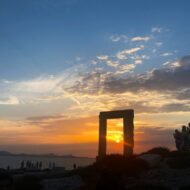
The moment you pull into Naxos harbor, you’ll see it: a massive marble doorway standing alone on a little peninsula, framing the sunset like it was specifically commissioned by the Greek tourism board.
This is the Portara, the unfinished entrance to a Temple of Apollo that was started around 530 BCE. The temple was never completed (ancient political drama—the tyrant who commissioned it got overthrown), so what remains is just this monumental doorway made of four marble blocks weighing about 20 tons each.
It’s best at sunset (yes, we said it). But unlike certain other Greek islands, you won’t be fighting through selfie sticks to see it.
Temple of Demeter: The Underrated Masterpiece
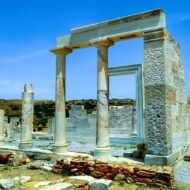
About 20 minutes drive from Naxos Town, in the middle of gorgeous agricultural landscape, sits one of the best-preserved temples you’ve probably never heard of.
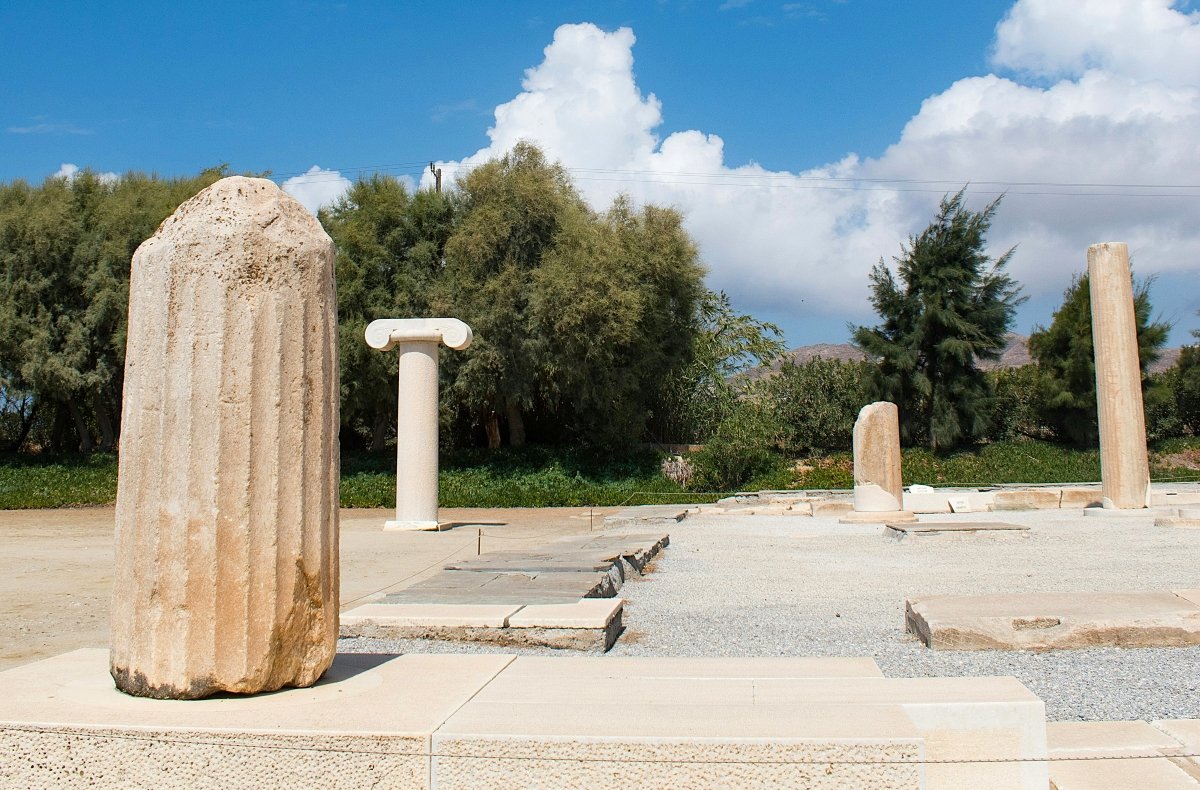
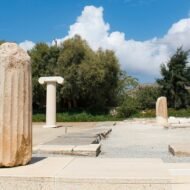
The Temple of Demeter (goddess of harvest—appropriate given all the surrounding fields) dates to around 530 BCE and has been partially reconstructed. Unlike many ancient sites that are just foundations and “use your imagination,” here you can actually see how the building looked with columns and roof sections.
There’s a tiny excellent museum on-site explaining the reconstruction process. Admission is usually around €4, which is basically free compared to mainland sites.
Beyond the Ruins
Naxos is big—the largest Cycladic island—and still authentically Greek. You’ll find:
- Mountain villages where old men still play backgammon in kafeneions
- Beaches that aren’t shoulder-to-shoulder resort chairs
- Local cheese (graviera) that’ll ruin supermarket cheese for you forever
- Kiteboarding conditions that are apparently world-class (if that’s your thing)
Where to stay: Naxos Town for convenience and nightlife, or Halki village for mountain charm and excellent restaurants
How long: 3-4 days gives you time to explore ruins, beaches, and mountain villages without rushing
3. Santorini — Akrotiri & the Volcano’s Ancient City
Yes, we’re including Santorini. No, we’re not going to tell you about Oia sunsets or infinity pools (you’ve already seen 10,000 of those photos).
Akrotiri: The Pompeii You Haven’t Visited Yet
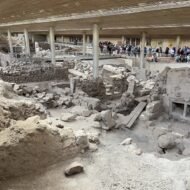
Most Santorini visitors stick to the caldera-view villages and completely miss Akrotiri, which is basically tragic because this is one of the Mediterranean’s most significant Bronze Age sites.
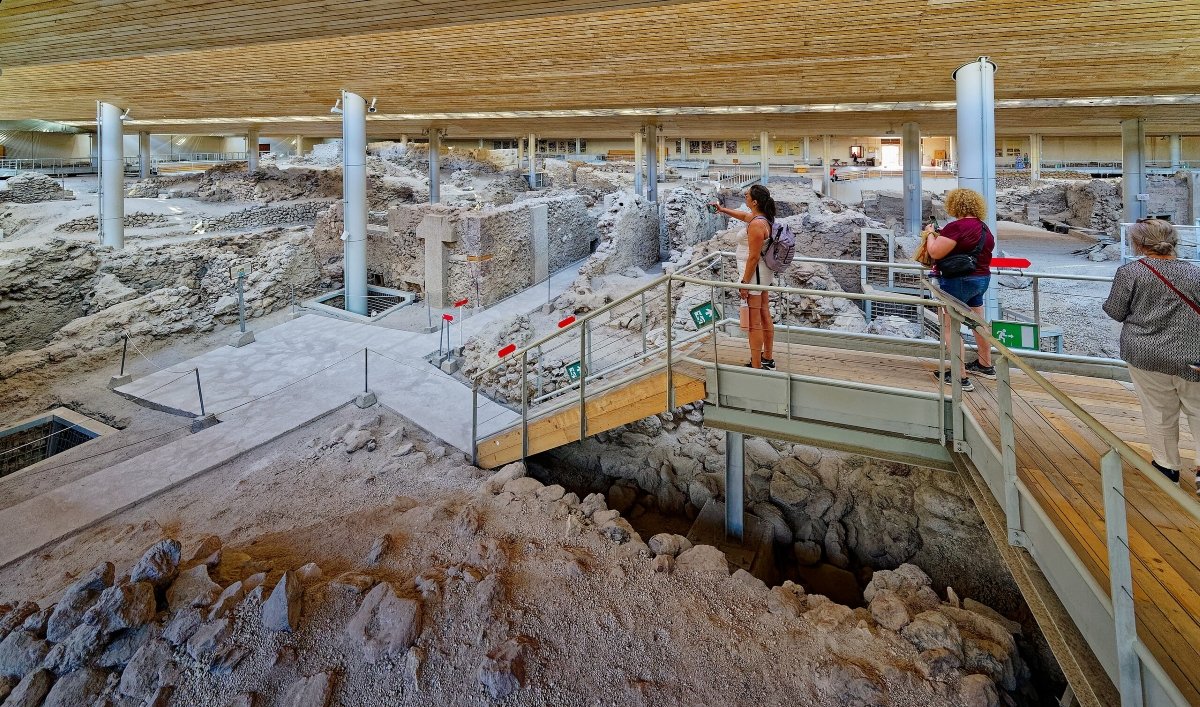
Around 1600 BCE, the volcano that created Santorini’s dramatic caldera erupted in one of the largest volcanic events in recorded history. The Minoan city on the island was buried under volcanic ash—but unlike Pompeii, the inhabitants apparently saw it coming and evacuated (no bodies have been found, though plenty of pottery, furniture, and stunning frescoes remained).
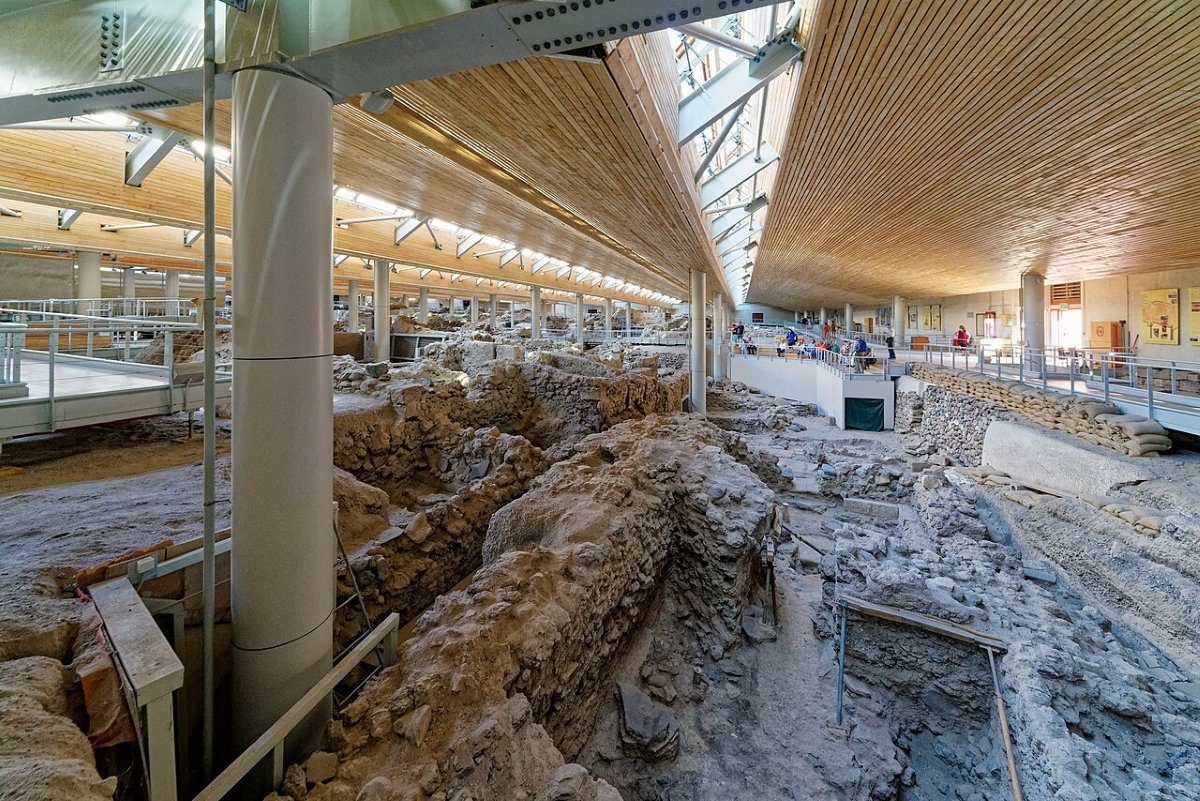
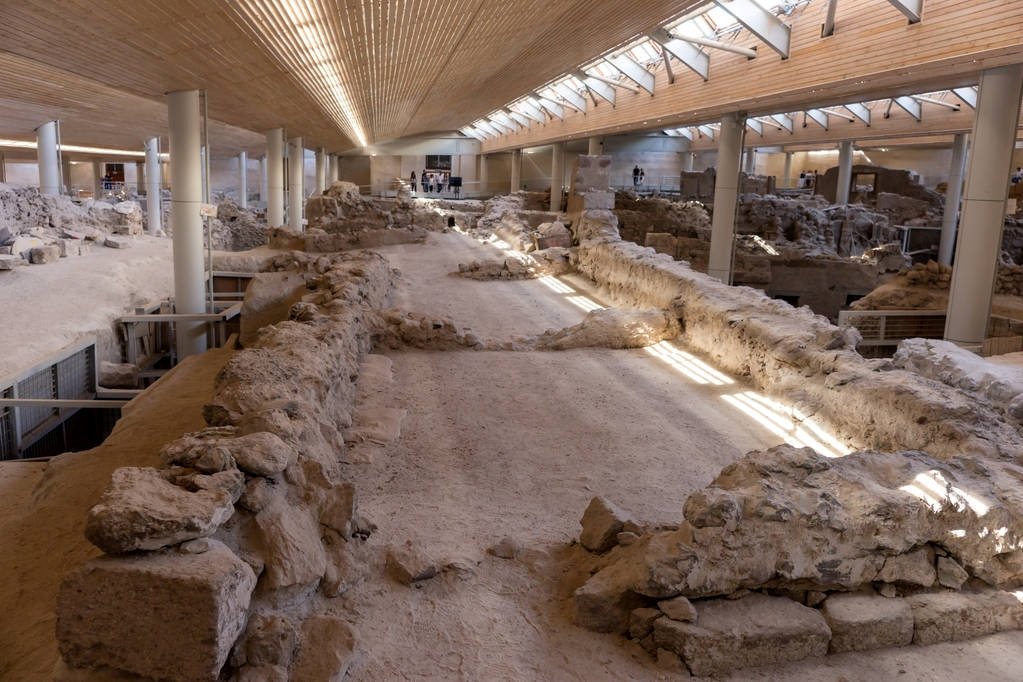
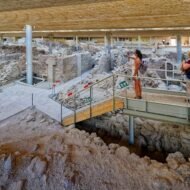
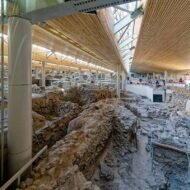
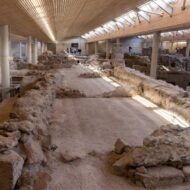
The site is now covered by a modern bioclimatic shelter that protects the ruins while letting you walk through this 3,600-year-old city. You’ll see:
- Multi-story buildings with intact staircases
- Advanced drainage systems
- Storage rooms still containing pottery
- Frescoes (reproductions—originals are in Athens) showing boxing children, blue monkeys, and spring landscapes
Why it matters: Akrotiri gives us a snapshot of Bronze Age life at the exact moment before disaster. It’s like someone hit pause on an entire civilization.
Practical info: About €12 admission, open 8 AM-8 PM in summer. Get there early or late to avoid tour groups. The site is covered, so it’s actually a decent option even in midday heat.
The Archaeological Museum (Fira)
If you’re already on Santorini, don’t skip the Archaeological Museum in Fira. It’s small but packed with finds from Akrotiri and ancient Thera, including gorgeous pottery and those famous frescoes we mentioned.
4. Kos — Classics, Castles, and Hippocrates
Kos flies under the radar compared to its more famous neighbors, which is exactly why you should go.
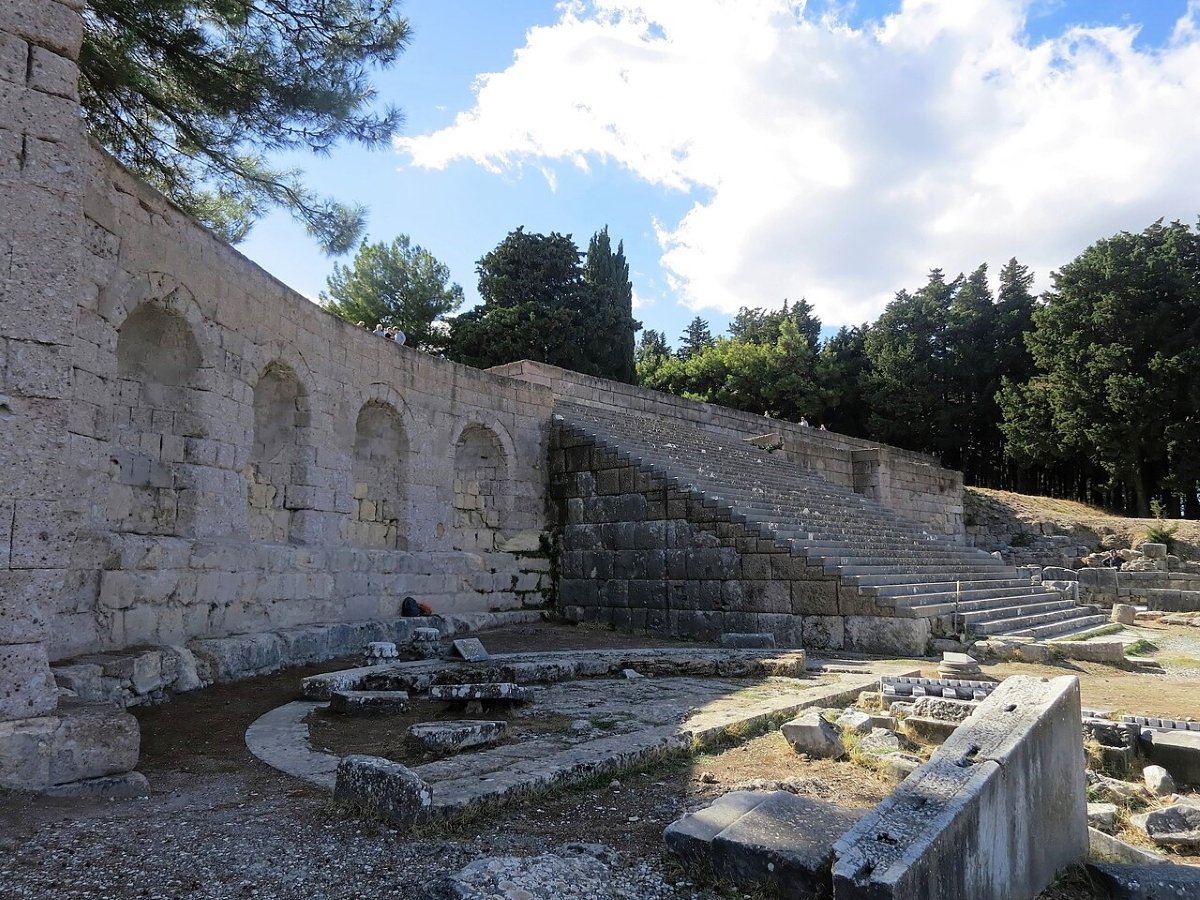
The Asklepion: Ancient Medicine Meets Hilltop Views
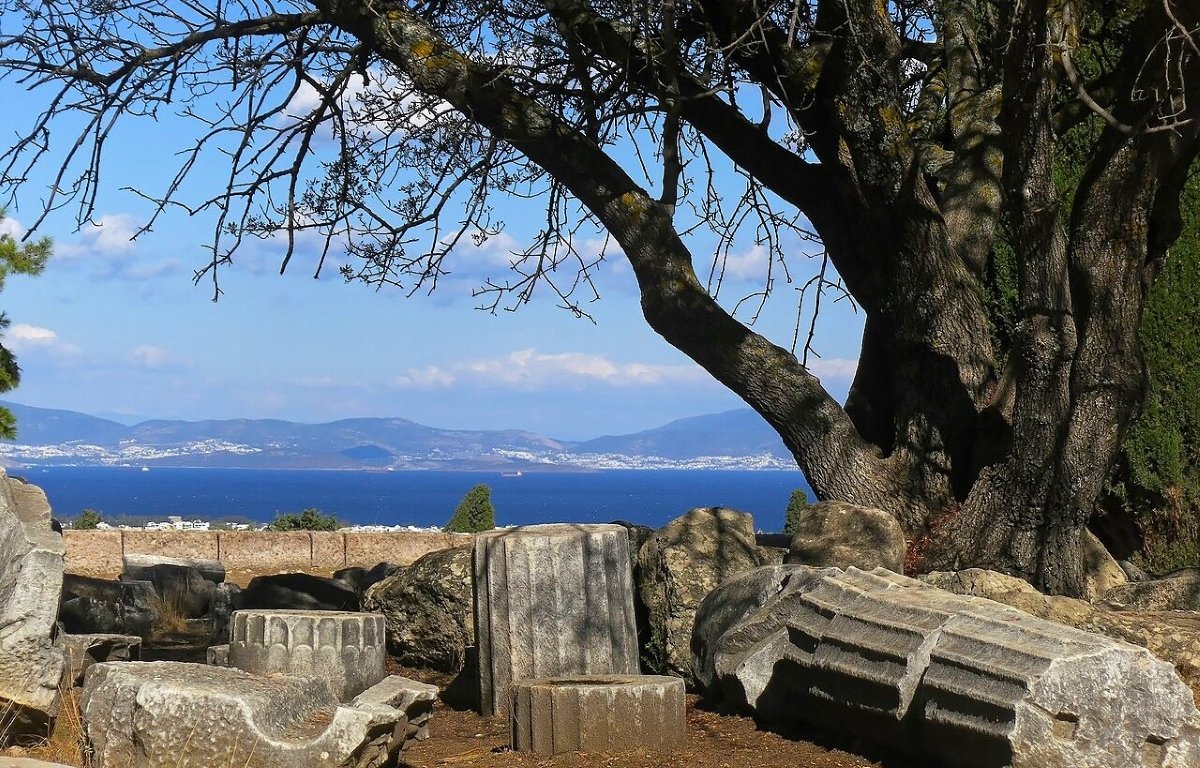
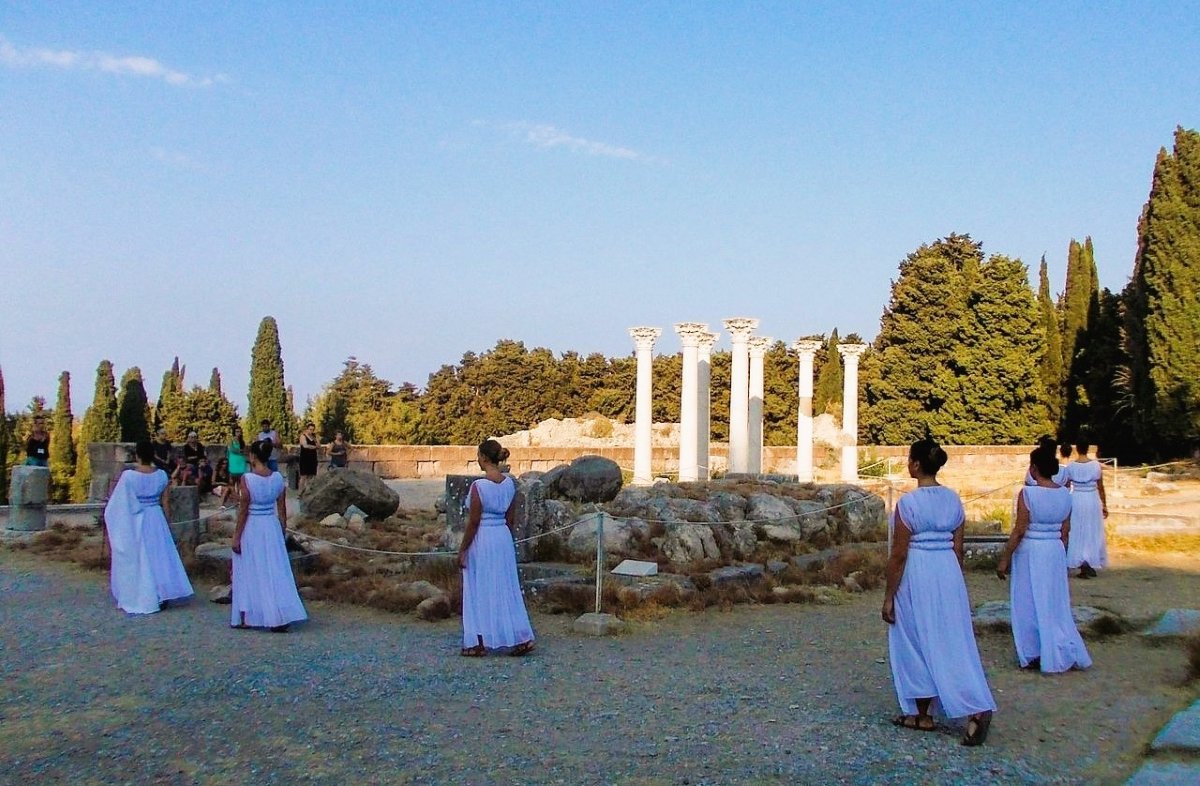
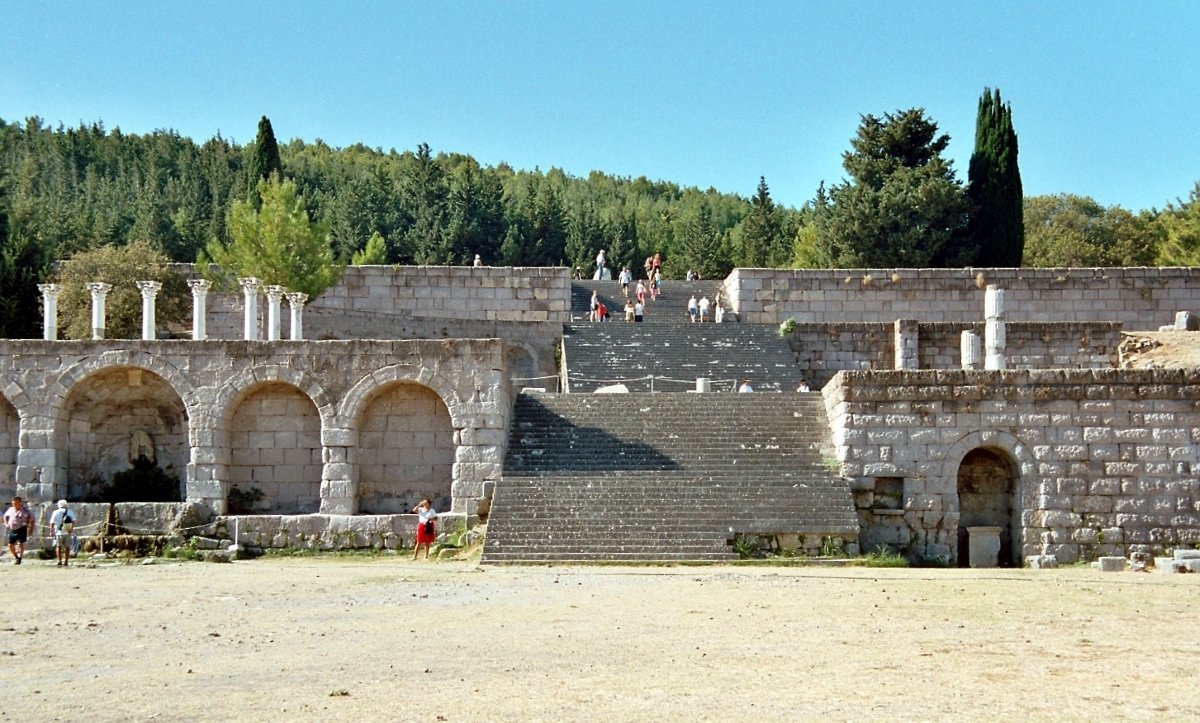
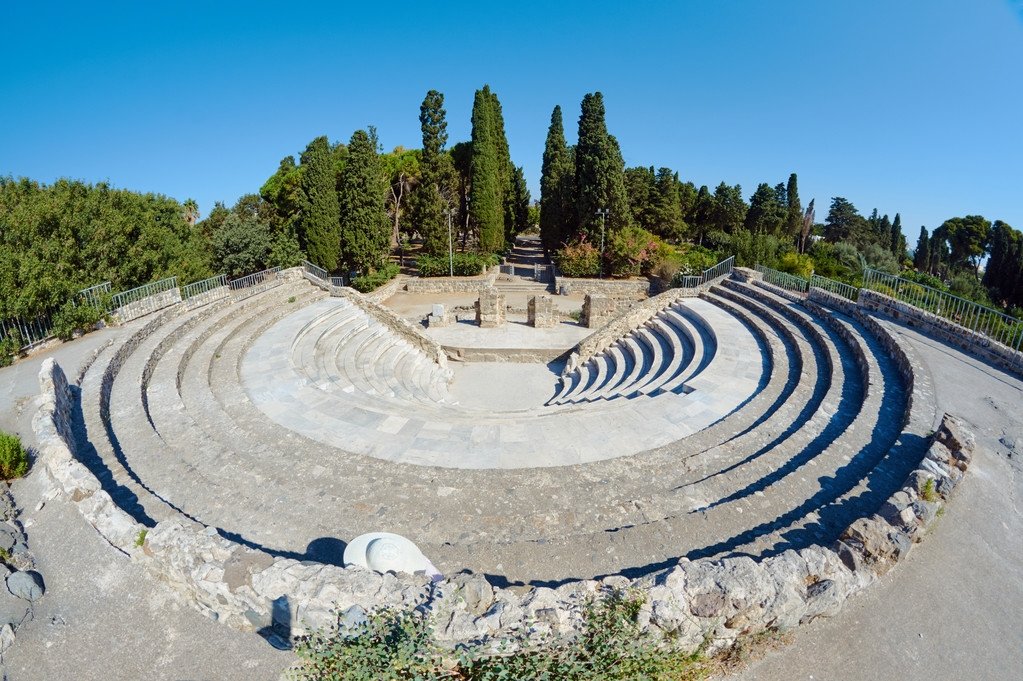
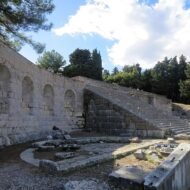
Four kilometers from Kos Town, on a hillside with absurd views over the Aegean toward Turkey, sits the Asklepion—one of the most important healing temples of the ancient world.
This is where Hippocrates (yes, the “Hippocratic Oath” guy) taught medicine around 400 BCE, basically inventing the concept of clinical observation and moving medicine away from “probably angry gods” toward “let’s actually observe symptoms.”
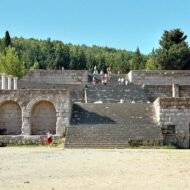
The sanctuary is built on three terraces:
- Lower level: Where patients received initial treatment and made offerings
- Middle level: Temples and treatment rooms
- Upper level: Main Temple of Asklepios (god of healing)
The ruins aren’t as complete as some other sites, but the setting is spectacular. Bring water and walk up through the terraces—ancient patients believed the climb itself was therapeutic.
Entry: Around €8, opens 8 AM
Ancient Agora & More
Kos Town itself is stuffed with ruins—the ancient agora, Roman odeon, Casa Romana villa with gorgeous mosaics. You can literally stumble over ancient columns while looking for a lunch spot.
The Tree of Hippocrates in the town square is a massive plane tree supposedly 2,400 years old (it’s not—probably more like 500 years—but it’s descended from the original tree where Hippocrates taught, so close enough).
The Castle of the Knights overlooking the harbor is medieval rather than ancient, but worth the climb for views and because crusader castles are objectively cool.
Why Kos Works
Kos combines ancient sites with genuinely pleasant modern tourism infrastructure. Good beaches, excellent food scene, bikeable town center, and ferry connections to the Dodecanese islands and Turkish coast.
Length of stay: 2-3 days hits the sweet spot
5. Hidden & Offbeat Stops (For the Curated Traveller)
If you’ve got extra time or you’re the type who deliberately avoids anywhere described as “popular,” these three islands deliver authentic experiences without the crowds.
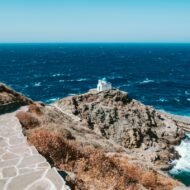
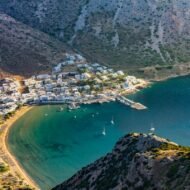
Sifnos: Pottery, Footpaths, and Foodie Paradise
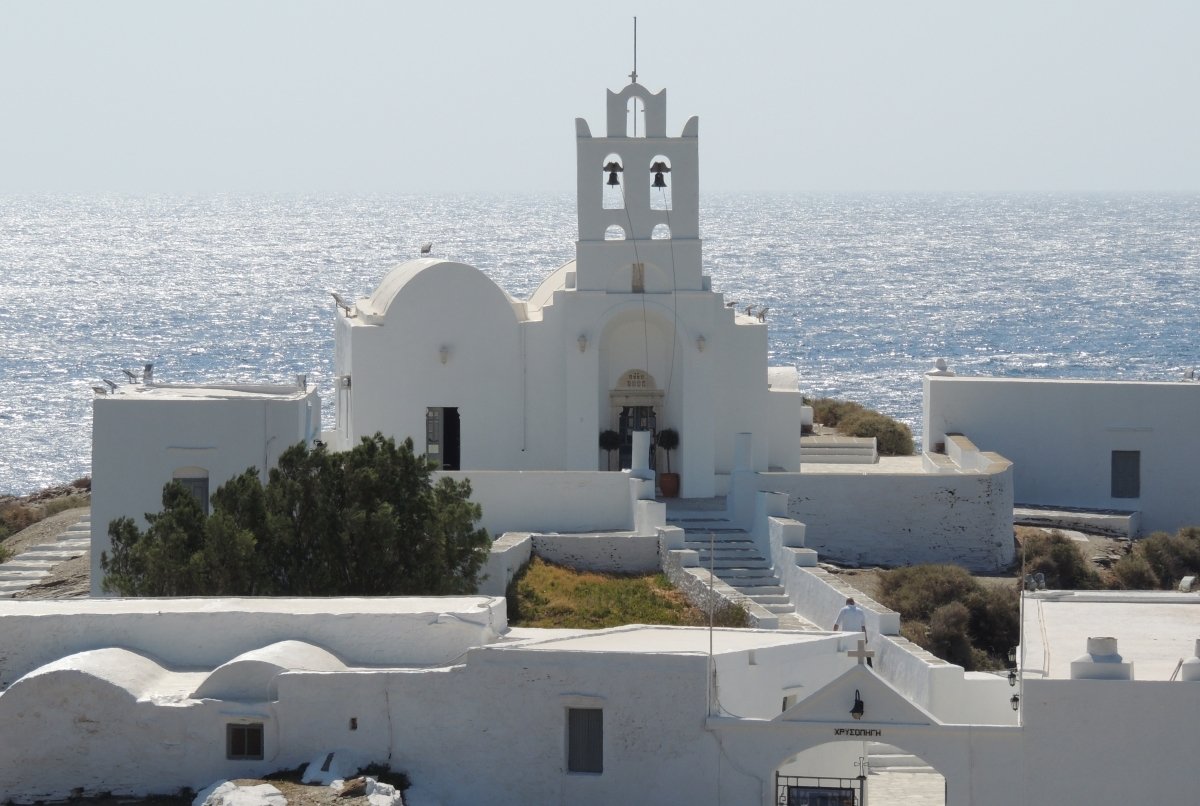
Sifnos has been famous for pottery since ancient times—Sifnian ceramics were exported across the Mediterranean. The tradition continues today with working pottery studios you can visit.
Ancient highlights:
- Ancient towers scattered across the island—Mycenaean-era watchtowers from the 2nd millennium BCE
- Ancient quarries where marble was extracted
- Archaeological Museum in Kastro village with finds from the Archaic period
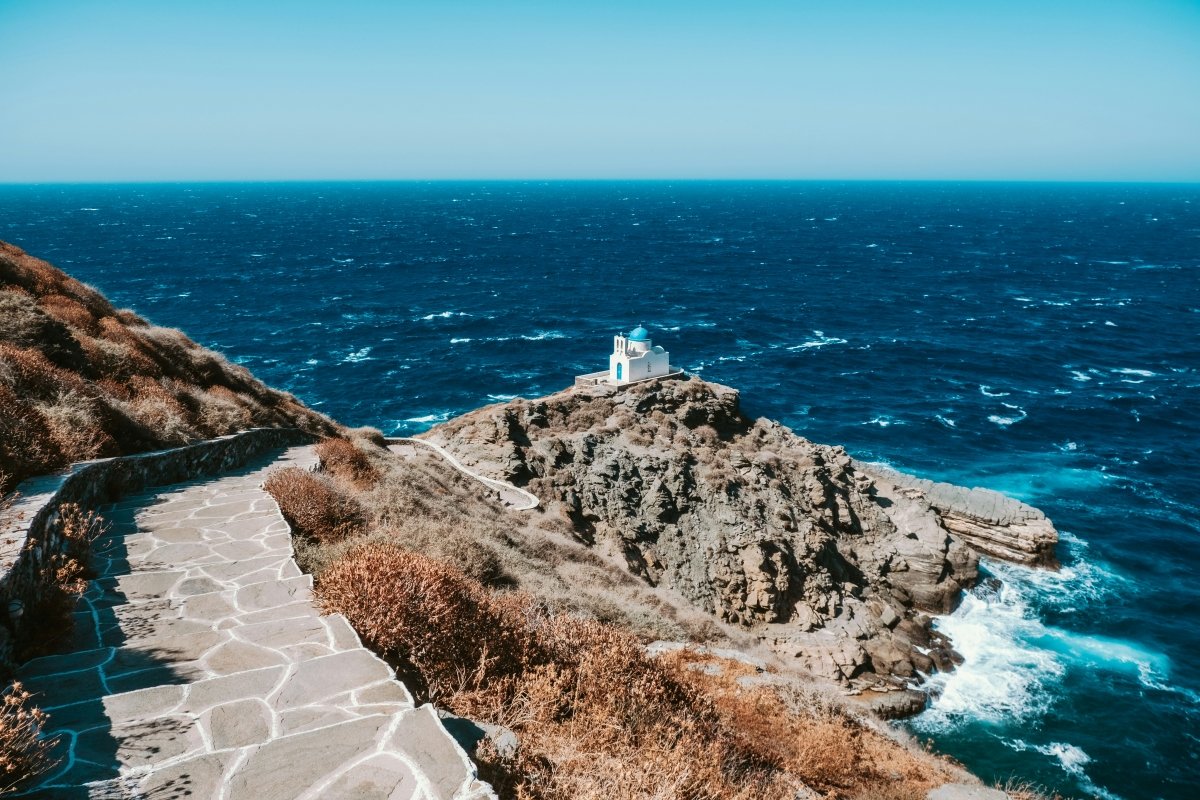
But honestly: People come to Sifnos for the hiking trails (125+ km of maintained paths), the food scene (some of Greece’s best restaurants), and the low-key sophistication. It’s an island where Greek Athenians vacation, which tells you something.
Getting there: Ferry from Piraeus (Athens) or connections from Santorini/Paros. No airport.
Tinos: Pilgrimage Island with Marble Villages
Tinos is Greece’s most important pilgrimage site (the Church of Panagia Evangelistria), so it has a completely different energy from beach-party islands.
Ancient/historical stuff:
- Sanctuary of Poseidon and Amphitrite at Kionia—seaside ruins from the 4th century BCE with column bases still visible
- Marble crafts tradition—Tinos marble was used in construction across ancient Greece
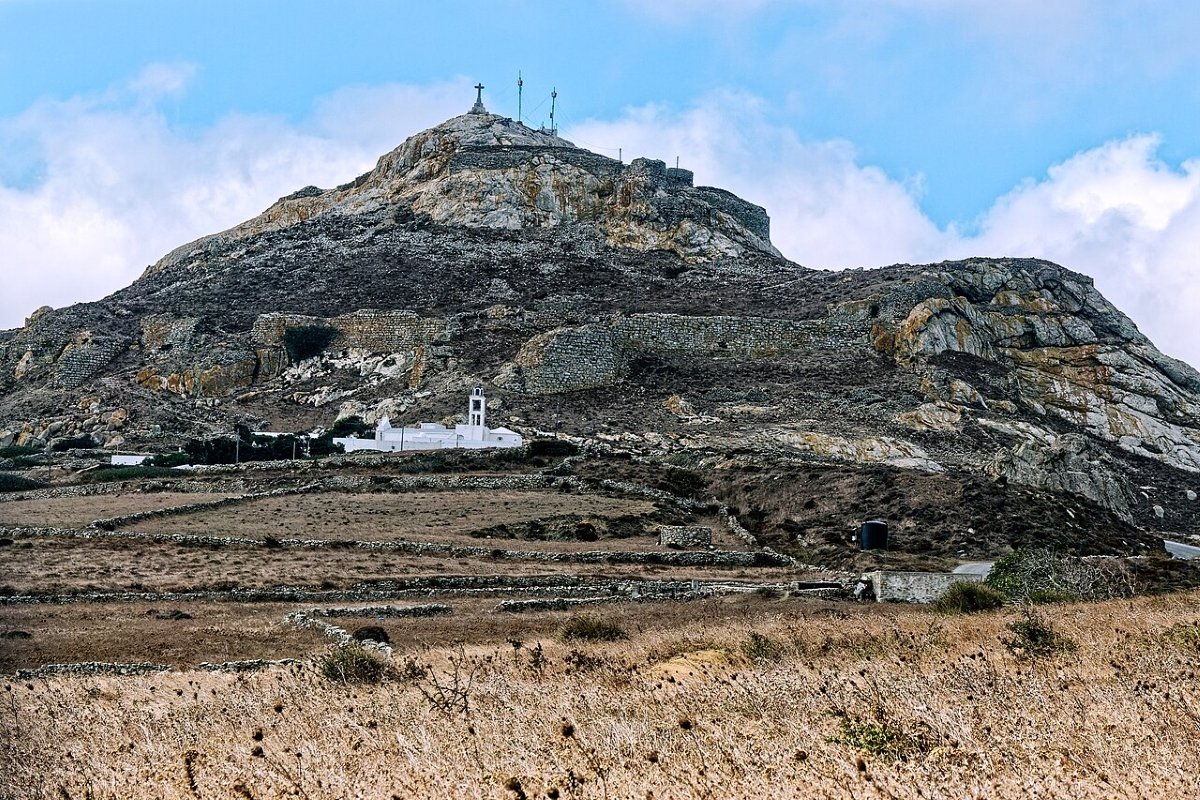
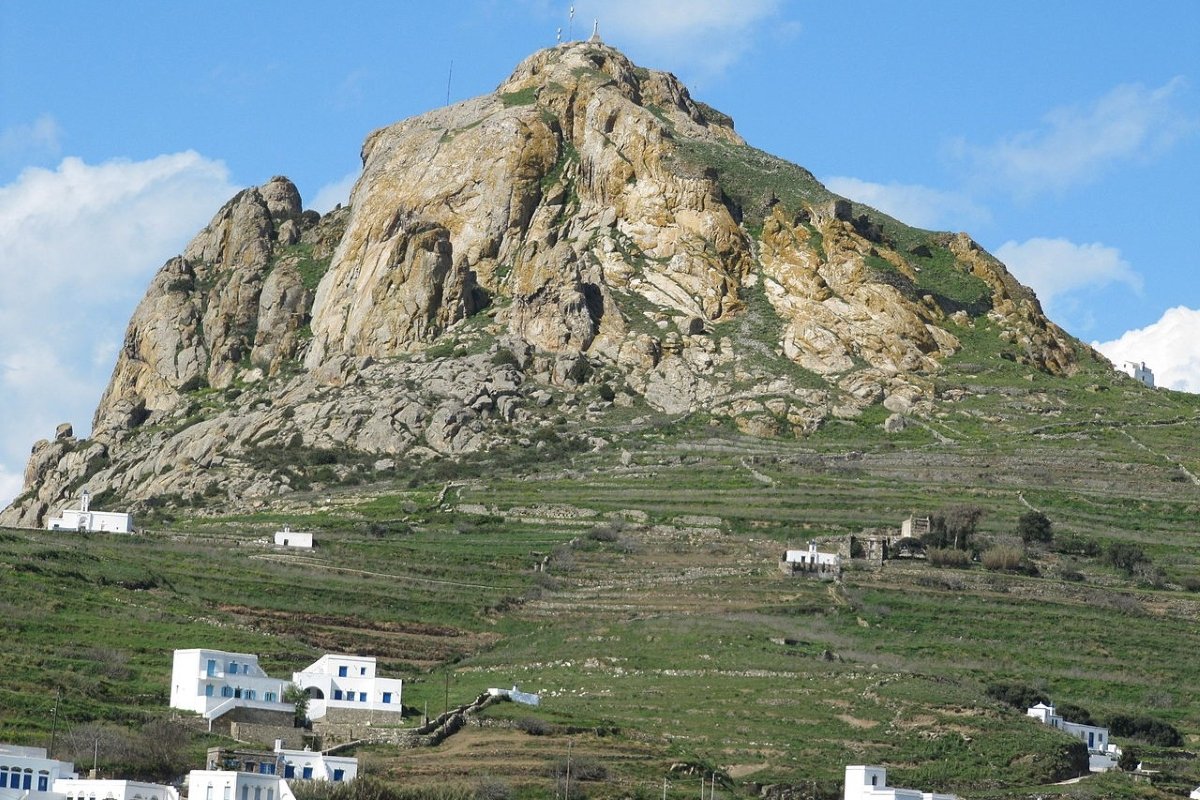
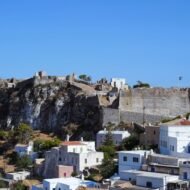
- Exomvourgo ancient citadel with Venetian fortress ruins and 360-degree views
The vibe: More spiritual than hedonistic. Excellent local products (artichokes, capers, cheese), famous dovecotes dotting the landscape, and marble-crafting villages in the interior.
Accessibility: Daily ferries from Athens, Mykonos, and other Cyclades islands
Kythira: Where Aphrodite Was Born (Allegedly)
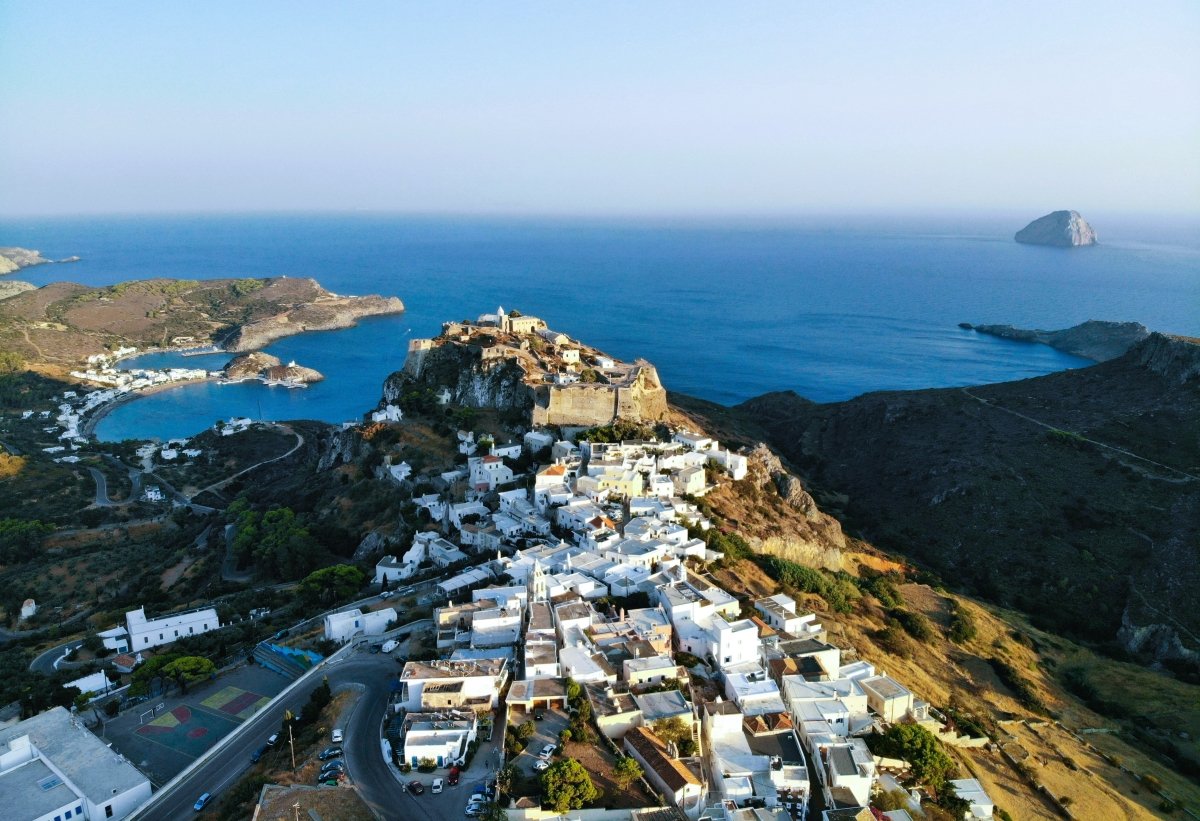
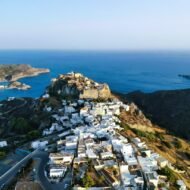
Kythira hangs out between the Peloponnese and Crete, feeling like it belongs to neither—which gives it a wonderfully untouched atmosphere.
The mythology: Hesiod wrote that Aphrodite (goddess of love/beauty/problematic relationship advice) was born from sea foam near Kythira after… let’s just say “Uranus had a bad day” and leave the details alone.
What to see:
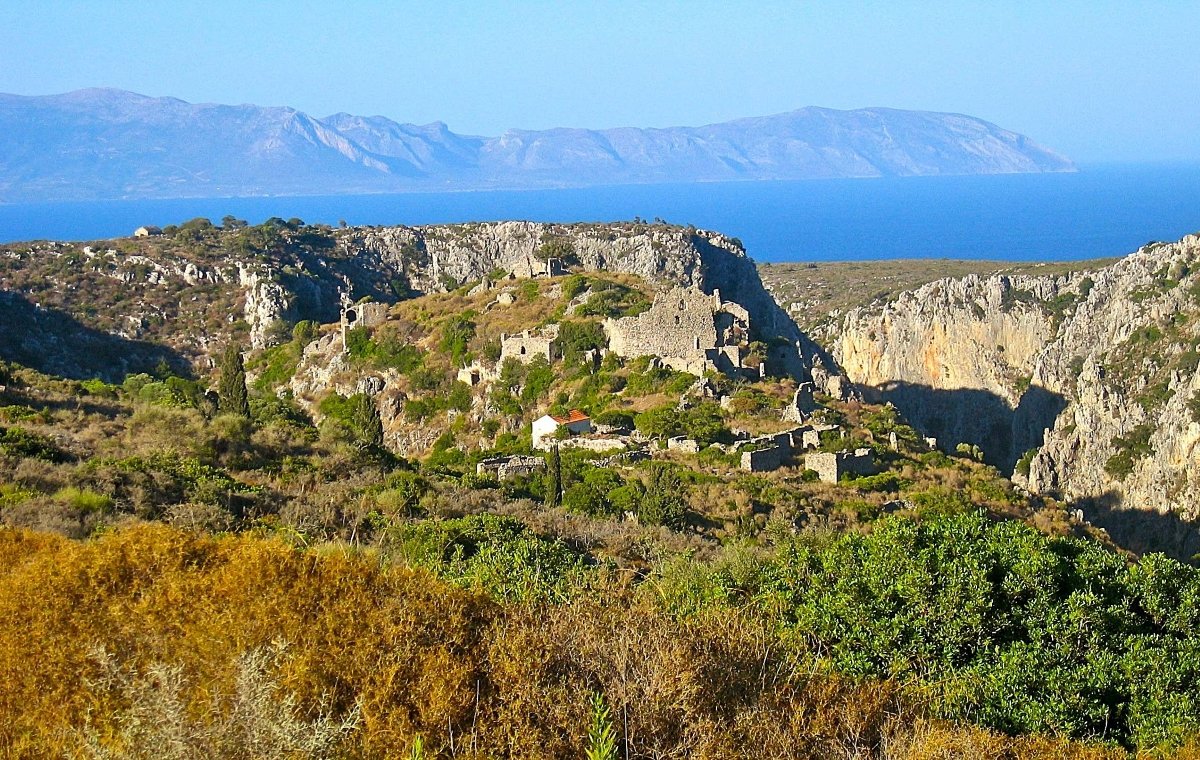
- Paleochora: Haunting Byzantine ghost town destroyed by pirates in 1537—churches and ruins scattered across a remote hillside
- Cave of Agia Sophia: Natural cave with Byzantine church inside, plus stalactites and ancient feel
- Archaeological Museum in Chora with finds from Minoan through Byzantine periods
- Avlemonas: Beautiful fishing village with tiny fortress
The catch: Kythira is harder to reach (small airport from Athens, or ferry from Peloponnese). But that’s exactly why it’s still peaceful.
Who it’s for: Travelers who want to properly disconnect and don’t need daily ferry connections
Making Your Island-Hopping Itinerary Actually Work
Ferry Real Talk
Greek ferries are generally reliable, but:
- Book ahead in July-August—high season fills up
- Download ferry apps (FerryHopper, Let’s Ferry) for schedules and booking
- Check weather—routes sometimes cancel in rough seas (rare in summer, more common shoulder season)
- High-speed vs. regular ferries: High-speed costs more but cuts travel time significantly. On a short trip, worth it.
Sample 10-Day Itinerary
Day 1-2: Fly into Athens, catch afternoon/evening ferry to Naxos Day 3-4: Explore Naxos (Portara, Temple of Demeter, beaches, mountain villages) Day 5: Ferry to Mykonos, afternoon/evening in Mykonos Town Day 6: Morning boat to Delos, return to Mykonos, evening ferry to Santorini Day 7-8: Santorini (Akrotiri, museums, maybe one caldera sunset) Day 9: Ferry to Kos Day 10: Asklepion and Kos Town, evening flight out
Budget Breakdown (Per Person, Moderate Comfort)
- Accommodation: €60-100/night (mix of hotels and nice rooms)
- Ferries: €15-50 per route depending on distance/speed
- Food: €30-50/day (breakfast, lunch, nice dinner, drinks)
- Archaeological sites: €5-12 per site
- Activities/extras: €20-30/day
Total: Roughly €140-200 per day, all-in
Packing Essentials
- Sun protection: Hat, high-SPF sunscreen, sunglasses (UV is no joke on shadeless ancient sites)
- Comfortable walking shoes: Ancient ruins + marble cobblestones = not flip-flop territory
- Day pack: For water, snacks, camera at archaeological sites
- Light layers: Evenings cool down, even in summer
- Modest clothing: Some churches/monasteries require covered shoulders and knees
Recap: Your Greece Mythology Trip, Summarized
You’re not just seeing pretty islands (though yes, they’re absurdly pretty). You’re walking through the birthplace of Apollo, standing in doorways built 2,500 years ago, seeing where Hippocrates invented medicine, and exploring a Bronze Age city frozen in volcanic ash.
Each island offers something different: Delos brings raw archaeological power. Naxos balances ruins with authentic island life. Santorini gives you that Bronze Age “wow” moment. Kos surprises with its medical history and castle views. And the offbeat islands reward curiosity with uncrowded authenticity.
The Aegean has been connecting these islands—and the people, gods, and stories on them—for millennia. Modern ferries just let you experience that interconnected world in a fraction of the time it took ancient sailors.
The real takeaway? Greece’s islands aren’t just beautiful backdrops for vacation photos. They’re living museums where mythology, history, and contemporary life exist in the same sun-drenched space. And island hopping lets you experience that blend on your own terms, at your own pace, with genuinely excellent food and swimming breaks between temples.
Disclaimer
Travel information including prices, ferry schedules, opening hours, and site accessibility can change. Always verify current details before your trip through official sources, ferry company websites, and local tourism offices. Archaeological site hours often vary by season. Some smaller islands have limited services outside peak season (May-September). This guide reflects general information and personal travel insights—your experience may vary. Always respect archaeological sites, follow posted rules, and leave historical treasures undisturbed for future travelers.
Ferry services can be affected by weather, strikes, or mechanical issues. Build flexibility into your itinerary and consider travel insurance. Opinions expressed about specific islands and sites are subjective. Budget estimates are approximate and based on mid-range travel; costs vary significantly based on season, accommodation choices, and personal spending habits.