









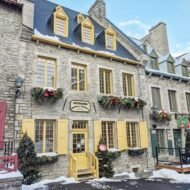


TL;DR: Old Quebec (Vieux-Québec) is a UNESCO World Heritage Site and the only walled city north of Mexico. Expect cobblestone streets, 17th-century architecture, world-class restaurants, and serious European vibes without leaving North America. Budget 2-3 days minimum, bring comfortable shoes, and visit year-round for completely different experiences.
- Why Old Quebec Deserves Your Travel Bucket List
- Getting There and Around
- When to Visit: Seasonal Breakdown
- Must-See Landmarks and Attractions
- Château Frontenac
- The Fortifications of Quebec
- Petit-Champlain District
- Place Royale
- Terrasse Dufferin
- Parliament Building
- Food and Dining: Where to Eat
- Shopping and Souvenirs
- Practical Tips and Money-Saving Hacks
- Where to Stay
- Day Trip Itineraries
- Special Experiences Worth Booking
- Accessibility and Inclusive Travel
- Safety and Practical Concerns
- Beyond Old Quebec: Nearby Neighborhoods
- Final Thoughts
Why Old Quebec Deserves Your Travel Bucket List
Let’s cut to the chase: Old Quebec feels like you’ve teleported to a French medieval town, except everyone accepts your credit cards and you don’t need a passport if you’re coming from elsewhere in Canada or the US. This 400-year-old neighborhood is split into Upper Town (Haute-Ville) and Lower Town (Basse-Ville), each offering distinct experiences that’ll fill your camera roll faster than you can say “poutine.”
The entire district earned UNESCO World Heritage status in 1985, making it one of the most historically significant sites in North America. But here’s the thing: it’s not a stuffy museum. People actually live here, work here, and yes, party here.
Getting There and Around
Flying In: Jean Lesage International Airport (YQB) is 16 km from Old Quebec. Grab a taxi (around $35 CAD), rideshare, or the RTC bus #80 ($3.50 CAD) directly to downtown.
Driving: If you’re road-tripping, heads up: parking inside the old walls is limited and pricey ($3-4 CAD per hour). Your best bet? Park at one of the peripheral lots like the Hôtel de Ville parking garage and explore on foot.
Walking: This is THE way to see Old Quebec. The entire historic district covers roughly 135 hectares, totally manageable on foot. Wear shoes with good grip because those cobblestones get slippery, especially after rain or during winter.
Funiculaire: The Old Quebec Funicular connects Upper and Lower Town in 90 seconds ($4 CAD). It’s a convenient shortcut and a mini-attraction itself, operating since 1879.
When to Visit: Seasonal Breakdown
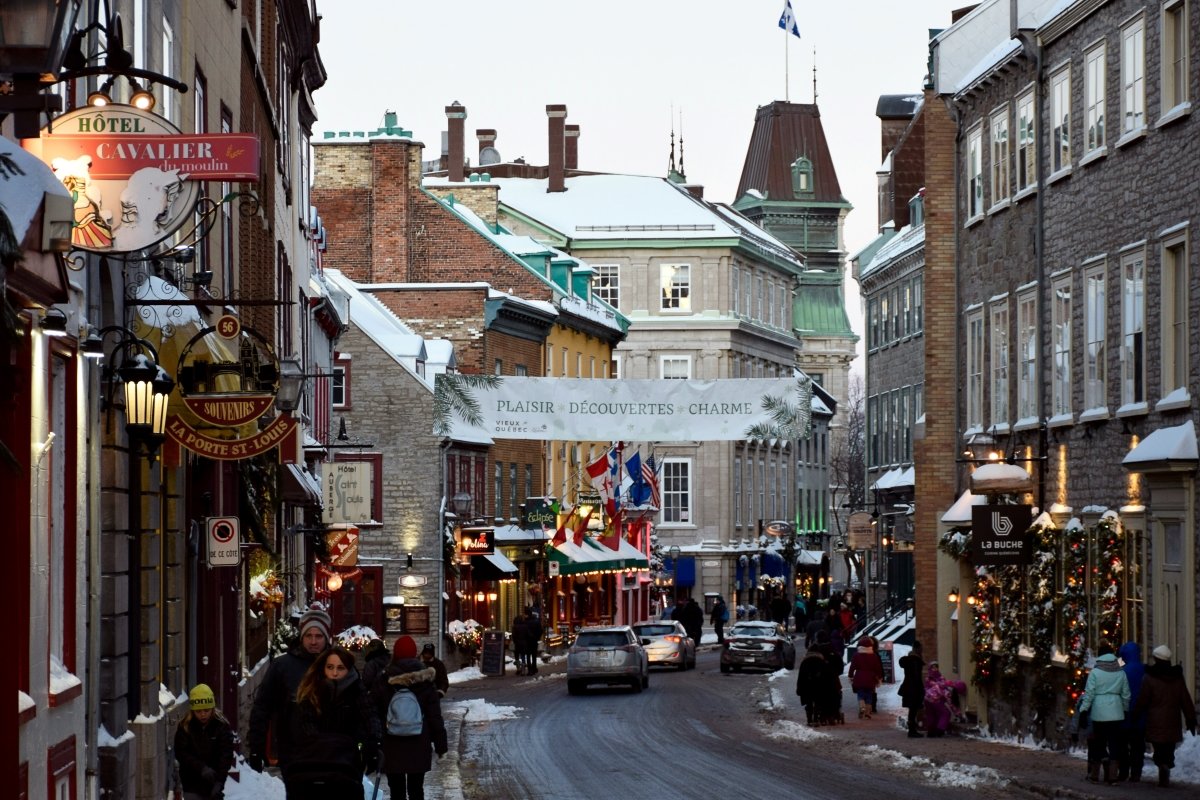
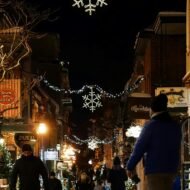
Winter (December-March): Peak magic happens here. The German Christmas Market (late November through December) transforms the area into a winter wonderland. January brings Winter Carnival, one of the world’s largest winter festivals. Temperatures drop to -10°C to -20°C, so pack serious layers. Budget accommodations: $80-150 CAD/night. Pros: Fewer crowds post-holidays, gorgeous snow-covered scenery. Cons: It’s legitimately cold.
Spring (April-May): Shoulder season sweetness. Prices drop, weather warms up (5-15°C), and you’ll beat summer crowds. Some attractions have reduced hours. Budget accommodations: $100-180 CAD/night.
Summer (June-August): Peak season energy. Terrace dining, street performers, New France Festival in August. It’s buzzing but crowded. Temperatures sit comfortably at 20-25°C. Budget accommodations: $150-300+ CAD/night. Book months ahead.
Fall (September-November): Honestly? Chef’s kiss. Foliage season brings stunning colors, comfortable temperatures (10-20°C), and post-summer pricing. Budget accommodations: $110-200 CAD/night. September is sweet spot perfection.
Must-See Landmarks and Attractions
Château Frontenac
This isn’t just a hotel; it’s THE icon of Quebec City’s skyline. Built in 1893, this fairy-tale castle has hosted everyone from Churchill to Hitchcock. You don’t need to stay here (though rooms start around $300 CAD if you’re splurging), but definitely grab a drink at the bar or book the guided tour ($15 CAD) to see the historic interiors.
The Fortifications of Quebec
Walk the 4.6 km circuit along the old city walls for panoramic views. Artillery Park and the Citadelle of Quebec (still an active military installation!) offer deeper dives into military history. Citadelle tours run $16 CAD for adults. Pro tip: The changing of the guard ceremony happens daily at 10 AM in summer.
Petit-Champlain District
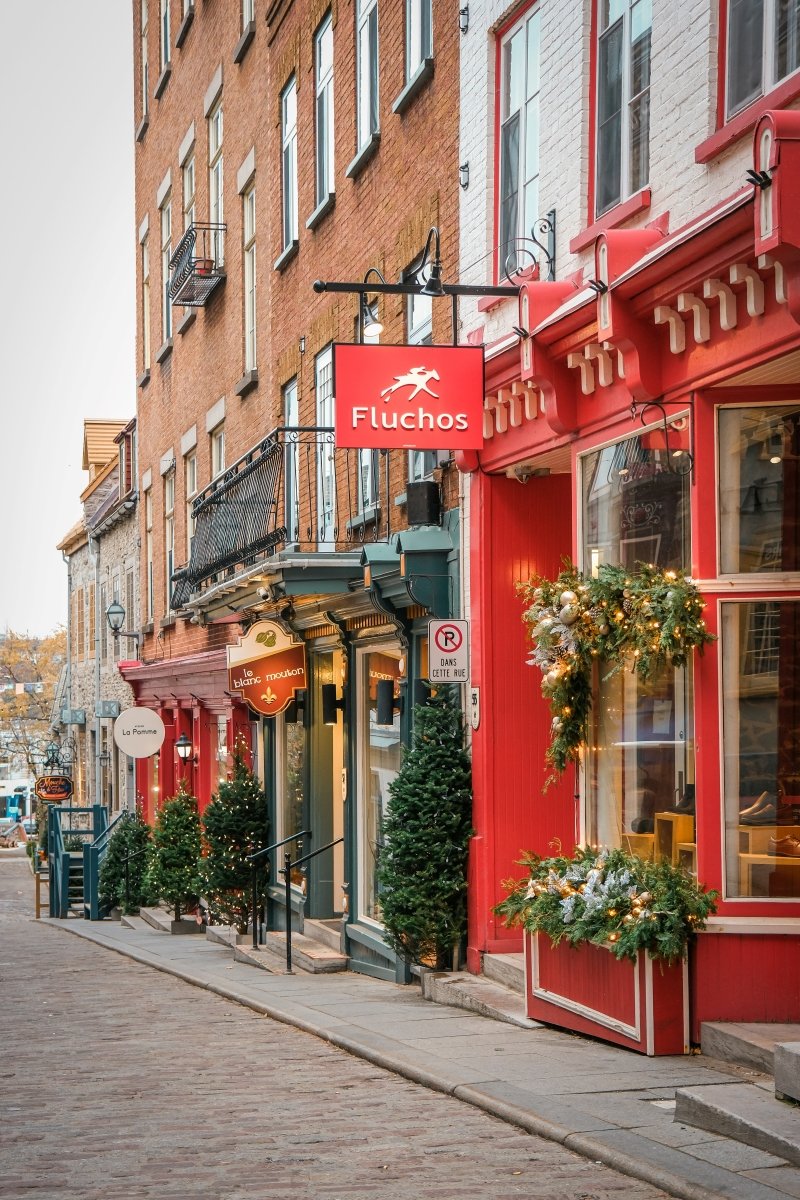
Lower Town’s pedestrian quarter is ridiculously photogenic. This narrow street claims to be North America’s oldest commercial district and packs in boutiques, galleries, and cafés. The Breakneck Stairs (Escalier Casse-Cou) connecting Upper and Lower Town have been breaking necks since 1635. Visit early morning before tour groups arrive.
Place Royale
Where Samuel de Champlain established New France in 1608. The square centers around Notre-Dame-des-Victoires church (1688), and the surrounding buildings showcase French colonial architecture. Entry to the church is free, and the square hosts seasonal events throughout the year.
Terrasse Dufferin
This 425-meter boardwalk wraps around Château Frontenac, offering killer views of the St. Lawrence River. Street performers, artists, and people-watching opportunities abound. In winter, it transforms into a historic toboggan run (Les Glissades de la Terrasse) operating since 1884. Three rides for $4 CAD.
Parliament Building
Quebec’s National Assembly sits just outside the old walls. Free guided tours showcase impressive architecture and Quebec’s political history. English and French tours available; book ahead online.
Food and Dining: Where to Eat
Quebec City takes food seriously. Here’s where locals and savvy travelers eat:
Budget-Friendly ($10-20 CAD per person):
- Chez Ashton: The poutine chain locals defend. Multiple locations, open late.
- Boulangerie Paillard: Grab sandwiches, pastries, and coffee without the tourist markup.
- Le Chic Shack: Elevated fast food—gourmet burgers and duck poutine.
Mid-Range ($25-50 CAD per person):
- Le Lapin Sauté: Cozy bistro specializing in (you guessed it) rabbit dishes.
- Café du Monde: French brasserie vibes right on the water. Go for breakfast crêpes.
- Légende: Contemporary cuisine using local Quebec ingredients. Reservations essential.
Splurge ($75+ CAD per person):
- Aux Anciens Canadiens: Traditional Québécois cuisine in the oldest house in Quebec City (1675).
- Restaurant Toast: Inventive tasting menus in an intimate setting.
- Le Saint-Amour: Fine dining institution with a romantic courtyard.
Don’t Miss: Maple syrup everything, tourtière (meat pie), cretons (pork spread), and authentic French croissants. Hit Jean-Talon Market if you’re there on a weekend for local produce and artisan products.
Shopping and Souvenirs
Skip the generic souvenir shops and head to:
- Rue Saint-Jean: Local boutiques, bookstores, and vintage shops outside the main tourist zone
- Les Promenades du Vieux-Québec: Indoor mall when weather turns nasty
- Simons: Quebec-based department store for fashion
- La Petite Cabane à Sucre: Authentic maple products (syrup, butter, candy)
- Zone: Canadian-designed home goods and quirky gifts
Practical Tips and Money-Saving Hacks
Language: Primary language is French, but most people in the tourist district speak English. That said, learning basic French phrases earns you goodwill and sometimes better service. “Bonjour,” “merci,” and “s’il vous plaît” go a long way.
Money: Credit cards widely accepted. ATMs available throughout. Expect to tip 15-20% at restaurants.
Free Attractions: Walking the fortifications, exploring Place Royale, visiting Notre-Dame Cathedral (free entry, $6 CAD for basilica access), wandering Petit-Champlain, and people-watching on Terrasse Dufferin cost absolutely nothing.
Save Money: Visit during shoulder seasons, book accommodations outside old walls and walk in, pack snacks, hit happy hours (5-7 PM typically), and use the RTC bus system ($3.50 CAD per ride, $9.25 CAD day pass).
Museum Pass: Consider the Quebec City Multi-Attractions Pass if you’re visiting several paid sites. It covers admission to multiple attractions at a discount.
Where to Stay
Budget ($80-150 CAD/night):
- Auberge Internationale de Québec: Hostel with private rooms available
- Hôtel Acadia: Simple, clean, walkable to Old Quebec
Mid-Range ($150-250 CAD/night):
- Hôtel Manoir Victoria: Boutique hotel inside old walls
- Auberge Place d’Armes: Charming heritage building, great location
- Hôtel Champlain Vieux Québec: Modern comfort, rooftop terrace
Luxury ($300+ CAD/night):
- Fairmont Le Château Frontenac: The iconic castle (obviously)
- Auberge Saint-Antoine: Waterfront luxury with archaeological exhibits
- Hôtel Le Germain: Contemporary luxury in Old Port
Pro Tip: Staying just outside the walls in Saint-Jean-Baptiste or Saint-Roch neighborhoods saves money while keeping you a 10-minute walk from the action.
Day Trip Itineraries
Classic One-Day Blitz:
- Morning: Coffee and croissant, walk Terrasse Dufferin, explore Château Frontenac area
- Late morning: Descend to Lower Town via funicular, wander Petit-Champlain
- Lunch: Casual spot in Lower Town
- Afternoon: Place Royale, walk the fortifications, Parliament Building if interested
- Evening: Dinner on Grande Allée, drinks in Upper Town
Two-Day Deep Dive:
- Day 1: Follow one-day itinerary above
- Day 2: Citadelle tour, Notre-Dame Basilica, Rue Saint-Jean shopping, Artillery Park, evening ghost tour
Three Days with Excursions:
- Days 1-2: As above
- Day 3: Montmorency Falls (15 minutes away, $18 CAD parking or free shuttle from downtown), or Île d’Orléans wine and farm tour, or winter: Ice Hotel experience
Special Experiences Worth Booking
Ghost Tours: Old Quebec’s 400-year history includes plenty of ghost stories. Tours run $25-30 CAD, offered in English and French, lasting about 90 minutes.
Food Tours: Multiple companies offer 3-hour walking food tours combining history with tastings. Expect $80-100 CAD per person.
Winter Carnival: If visiting in late January/early February, this 17-day festival features ice sculptures, night parades, snow baths (yes, really), and the famous ice palace.
New France Festival: August brings this 5-day celebration of 17th-century culture with period costumes, music, theater, and crafts.
Accessibility and Inclusive Travel
Old Quebec’s historic nature creates accessibility challenges. Cobblestone streets, steep stairs between Upper and Lower Town, and older buildings without elevators can be difficult for wheelchair users and people with mobility challenges.
That said, the funicular provides accessible transport between levels, many restaurants and museums offer accessibility accommodations, and Terrasse Dufferin is fully accessible. Contact individual attractions ahead to confirm specific accessibility features.
The tourism office (Québec City Tourism) provides detailed accessibility information on their website and offers adapted tour options.
All travelers—regardless of age, ability, background, or identity—can find welcoming spaces throughout Old Quebec. The city’s tourism industry has increasingly prioritized inclusive experiences.
Safety and Practical Concerns
Old Quebec ranks as one of Canada’s safest tourist destinations. Standard precautions apply: watch belongings in crowded areas, be aware after dark (though streets remain busy and well-lit), and watch your step on those cobblestones.
Winter brings legitimate cold and ice hazards. Seriously invest in winter boots with good traction, dress in layers, and know the signs of frostbite.
Emergency services: 911 works throughout Quebec. Tourist information offices can provide assistance in multiple languages.
Beyond Old Quebec: Nearby Neighborhoods
Saint-Roch: Quebec City’s hipster district with breweries, street art, indie shops, and younger crowds. Ten-minute walk from Old Quebec.
Saint-Jean-Baptiste: Residential neighborhood just outside the walls with local restaurants, bars, and authentic vibe. Rue Saint-Jean continues here beyond the gates.
Old Port: Maritime history, waterfront walks, and the Marché du Vieux-Port farmers market (May-October).
Montcalm: Upscale residential area with Grande Allée’s restaurant row and nightlife.
Final Thoughts
Old Quebec delivers that rare combination of authentic history and modern livability. You’re not visiting a preserved historic site where everything closes at 5 PM—you’re experiencing a living, breathing neighborhood where people actually exist outside the tourism economy.
Whether you’re into history, food, architecture, winter sports, or just wandering gorgeous streets, Old Quebec punches above its weight class. And unlike European destinations, you’re not fighting language barriers or draining your bank account on international flights.
Pack comfortable shoes, bring your camera, practice your “bonjour,” and prepare for one of North America’s most underrated travel experiences.
Bottom Line: Old Quebec costs less than Paris, feels more authentic than Disney’s Epcot France pavilion, and delivers European charm without the jet lag. Book it.
Last updated: December 2025. Prices and hours subject to change. Confirm details directly with attractions before visiting.