




TL;DR
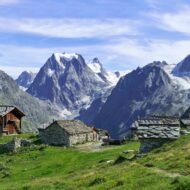
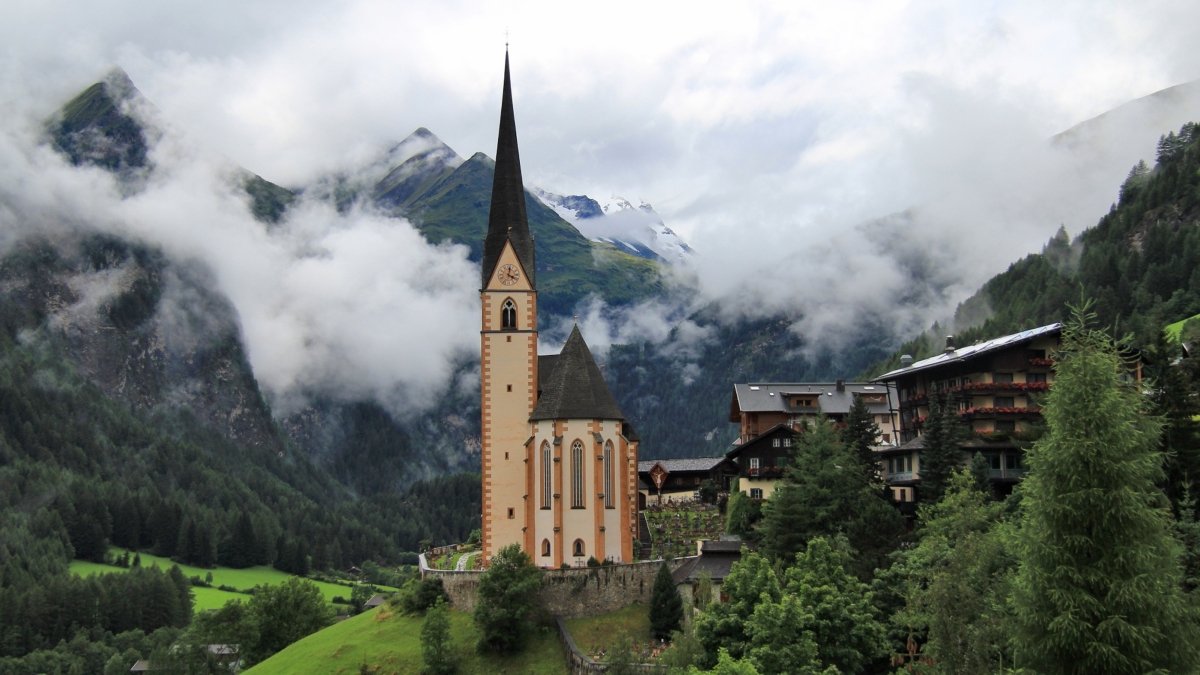
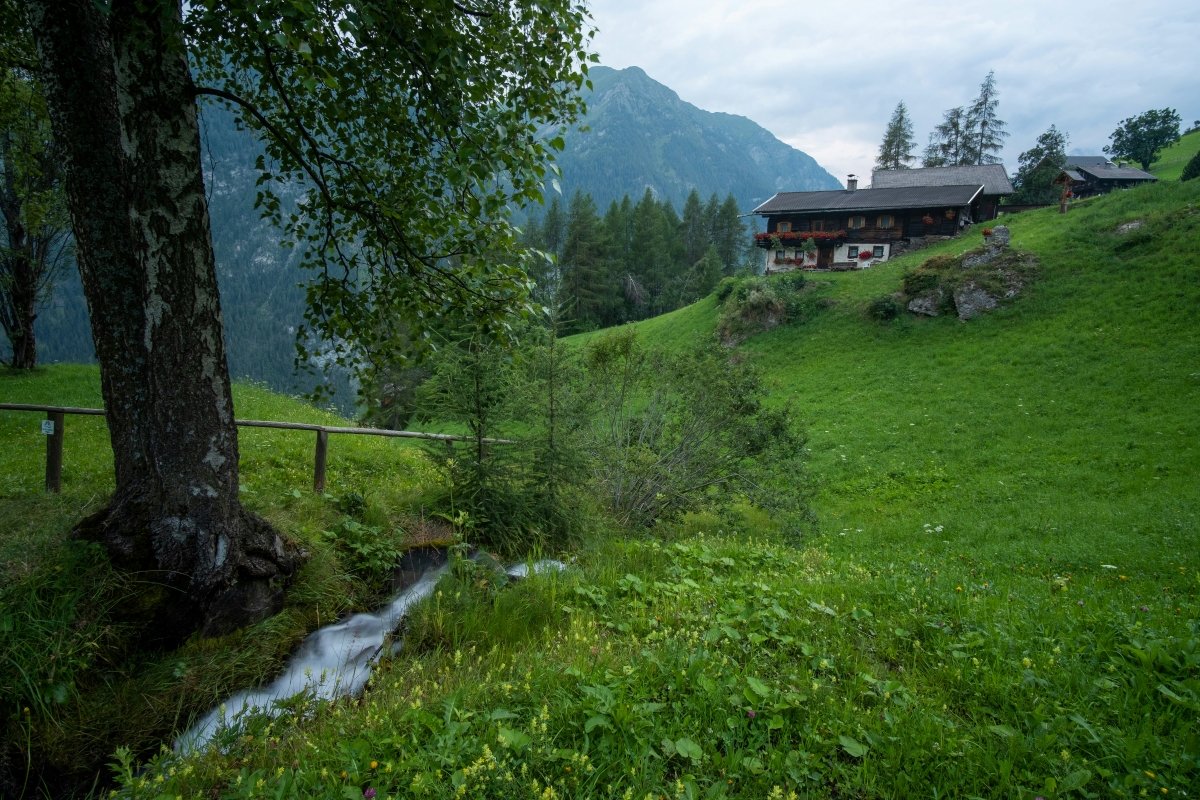
Heiligenblut is one of Austria’s most photogenic alpine villages, sitting at the foot of Grossglockner, the country’s highest mountain. Expect jaw-dropping mountain views, epic scenic drives, glacier hikes, cozy alpine hotels, and year-round outdoor adventures. It’s perfect for road trips, nature lovers, hikers, photographers, and anyone chasing postcard-level scenery without big-city chaos.
- TL;DR
- Where Is Heiligenblut?
- What Makes Heiligenblut Actually Special?
- Winter Wonderland: When Snow Makes Everything Better
- Summer Season: When the Mountains Really Show Off
- Where to Sleep: From Budget to Bougie
- Food: What You’re Actually Here to Eat
- Shopping: Don’t Expect Fifth Avenue
- Cultural Deep Dive
- Events Worth Planning Around
- Budget Real Talk
- Getting There & Around
- Sustainable & Ethical Travel
- Sample Itineraries
- Safety & Practical Info
- The Honest Recap
- Disclaimer
Where Is Heiligenblut?
Heiligenblut am Großglockner is a small mountain village in Carinthia (Kärnten), located in the district of Spittal an der Drau in southern Austria. It lies right at the entrance to Hohe Tauern National Park, one of Europe’s largest protected alpine areas.
This is not a place you stumble upon by accident—you come here intentionally, usually for the views… and then stay longer than planned.
What Makes Heiligenblut Actually Special?
Let’s be real: Austria has no shortage of mountain villages. But Heiligenblut hits different. The name literally means “Holy Blood” (we’ll get to that wild backstory), and this 900-year-old village of roughly 1,000 residents sits at 1,288 meters in the Hohe Tauern National Park—Austria’s largest nature reserve.
Here’s the thing: Most tourists zoom past on the Grossglockner High Alpine Road without stopping. Their loss, your gain.
Interesting Facts That’ll Impress Your Travel Buddies
- The Legend: A Danish knight allegedly carried Christ’s blood here in the 10th century. His body was found frozen with the relic clutched in his hands—hence the name and the pilgrimage church that followed.
- Altitude Reality Check: You’re higher here than many ski resorts start. Pack layers.
- Film Fame: The Grossglockner High Alpine Road (which ends here) has starred in more car commercials than you’ve had hot dinners.
- National Park Flex: 80% of the municipality is within Hohe Tauern National Park—Austria’s answer to Yellowstone.
Winter Wonderland: When Snow Makes Everything Better
Skiing & Snowboarding (December – April)
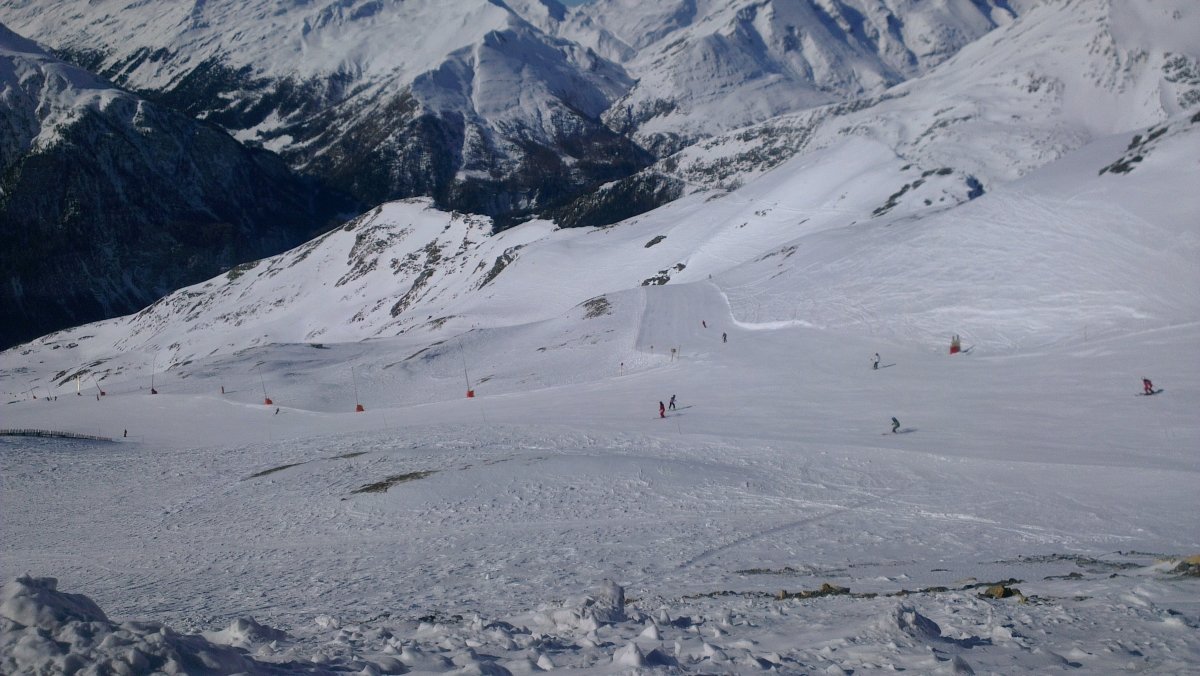
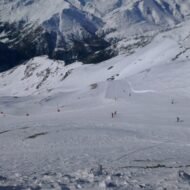
The Grossglockner Resort Heiligenblut-Schareck delivers 55km of slopes (up to 2,902m) with significantly fewer crowds than Kitzbühel or St. Anton. User reviews consistently praise:
- Powder quality: North-facing slopes hold snow beautifully
- Beginner-friendly: Wide, gentle runs near Schöneck
- Expert terrain: The Schwerteck area gets spicy with black runs and off-piste opportunities
- Budget win: Day passes around €50-55 (vs. €70+ at mega-resorts)
Insider tip: The Schareck cable car gets you to 2,604m—bring sunglasses. The glare is real.
Beyond the Slopes
- Cross-country skiing: 15km of groomed trails through fairy-tale forests
- Snowshoeing: Ranger-led tours in the national park (book ahead!)
- Ice climbing: The Gößnitztal valley has frozen waterfalls for experienced climbers
- Winter hiking: The trail to Franz-Josefs-Höhe is maintained year-round—bring crampons
Summer Season: When the Mountains Really Show Off
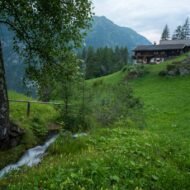
Hiking for Every Fitness Level
Easy Wins:
- Gossnitzwasserfall: 1-hour round trip to a thundering waterfall (families love this)
- Bricciuskapelle Chapel: 30-minute stroll with Instagram-worthy church views
Moderate Challenges:
- Schwerteck Summit: 4-5 hours, 800m elevation gain, panoramic payoff
- Margaritzen Reservoir: Alpine lake hike, 3 hours, absolutely stunning
Serious Stuff:
- Grossglockner Base Camp Trek: Multi-day expedition (book guides through Heiligenblut Alpine School)
- Via Ferrata Routes: Protected climbing routes—Hüttenweg and Böseckwand are local favorites
Mountain Biking
The Alpe-Adria Trail passes through here, but locals rave about:
- The Mölltal Glacier route (challenging, experienced riders only)
- E-bike rentals available—no shame in electric assistance at this altitude
Paragliding
Launch from Schareck, land in the village. Several operators offer tandem flights (€120-180). Users say it’s life-changing. We believe them.
Where to Sleep: From Budget to Bougie
Budget Options (€50-90/night)
- Pension Appartements Taurer: Family-run, great breakfast, balconies with Grossglockner views
- Jugendgästehaus Heiligenblut: Youth hostel vibes, clean, communal kitchen
Mid-Range Sweet Spot (€90-180/night)
- Haus Senger: Apartments with kitchens, perfect for longer stays
- Hotel Kärntnerhof: Traditional Austrian charm, sauna, hearty dinners
- Gradiva Apartments: Modern, centrally located, excellent value per reviews
Splurge-Worthy (€200+/night)
- Nationalpark Lodge Grossglockner: Spa, gourmet restaurant, floor-to-ceiling mountain views
- Glocknerhof: Historic hotel dating to 1870, recently renovated, romantic AF
Pro tip: Book apartments for 4+ nights to unlock better rates. Many owners offer discounts for direct bookings (call rather than using booking sites).
Food: What You’re Actually Here to Eat
Signature Dishes You Can’t Skip
Kärntner Kasnudeln: Pasta pockets stuffed with potato, mint, and cheese—like Austrian ravioli but better. Try them at Kirchenwirt (the oldest restaurant in town).
Pressknödel: Dense bread dumplings with cheese. Sounds basic, tastes incredible. Glocknerhaus does them right.
Reindling: Sweet yeast bread with cinnamon, nuts, and raisins. Get it fresh from Bäckerei Daberer for breakfast.
Speckbrettljause: The ultimate mountain snack platter—cured meats, cheese, fresh bread, pickles. Every mountain hut serves it, but Rojacher Hütte (requires a hike) has the best view to go with it.
Where to Eat
- Budget: Grab supplies at Spar supermarket, cook in your apartment
- Mid-range: Gasthof Schober (€12-20 mains, locals outnumber tourists—always a good sign)
- Treat yourself: Restaurant im Nationalpark Lodge (€25-40 mains, inventive takes on regional classics)
Shopping: Don’t Expect Fifth Avenue
This is a mountain village, not Vienna. Shopping means:
- Sport shops: Ski/hiking gear rental and sales (Sport Zloebl is well-stocked)
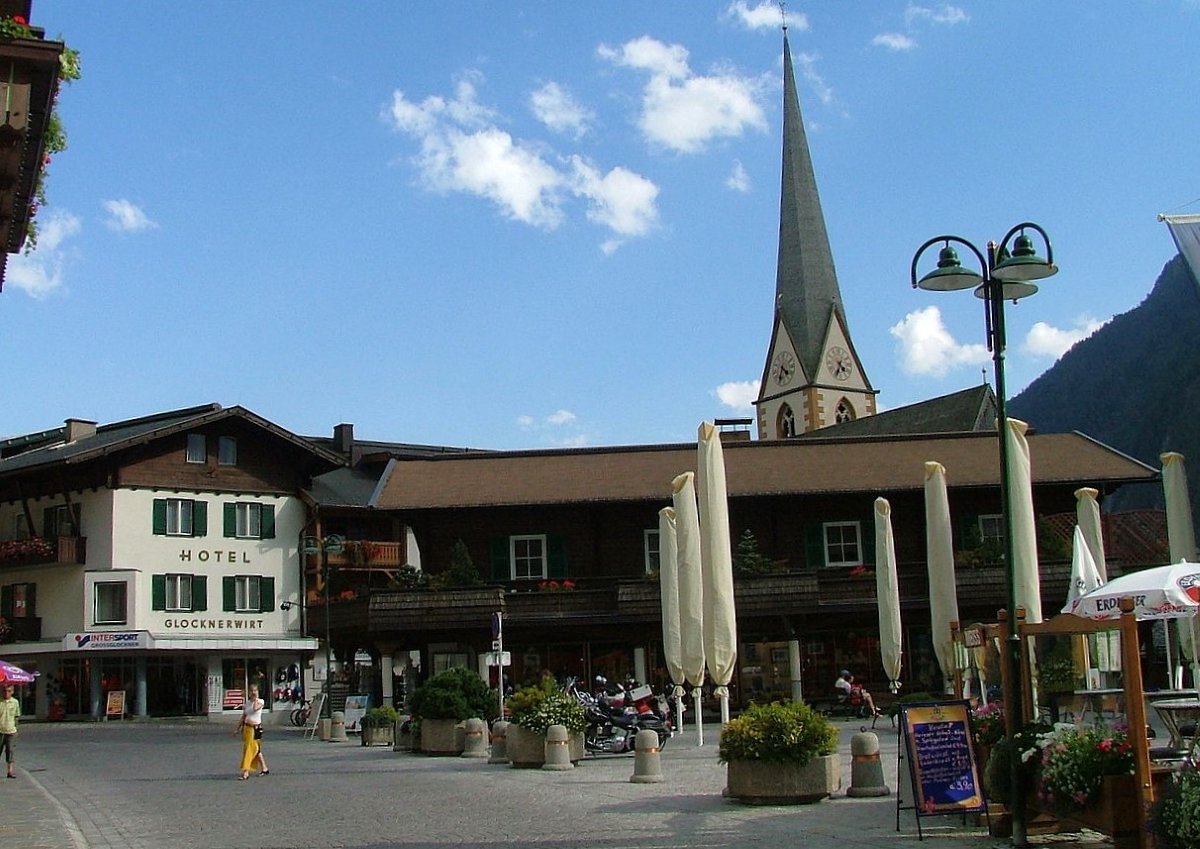
- Local products: Honey, schnapps, cheese at the small shops near the church
- Souvenirs: Typical Austrian stuff—dirndls, cowbells, you know the drill
For serious shopping, you’d head to Lienz (45 minutes) or Klagenfurt (90 minutes).
Cultural Deep Dive
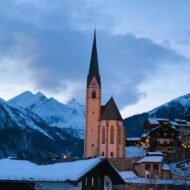
The Church of St. Vincent
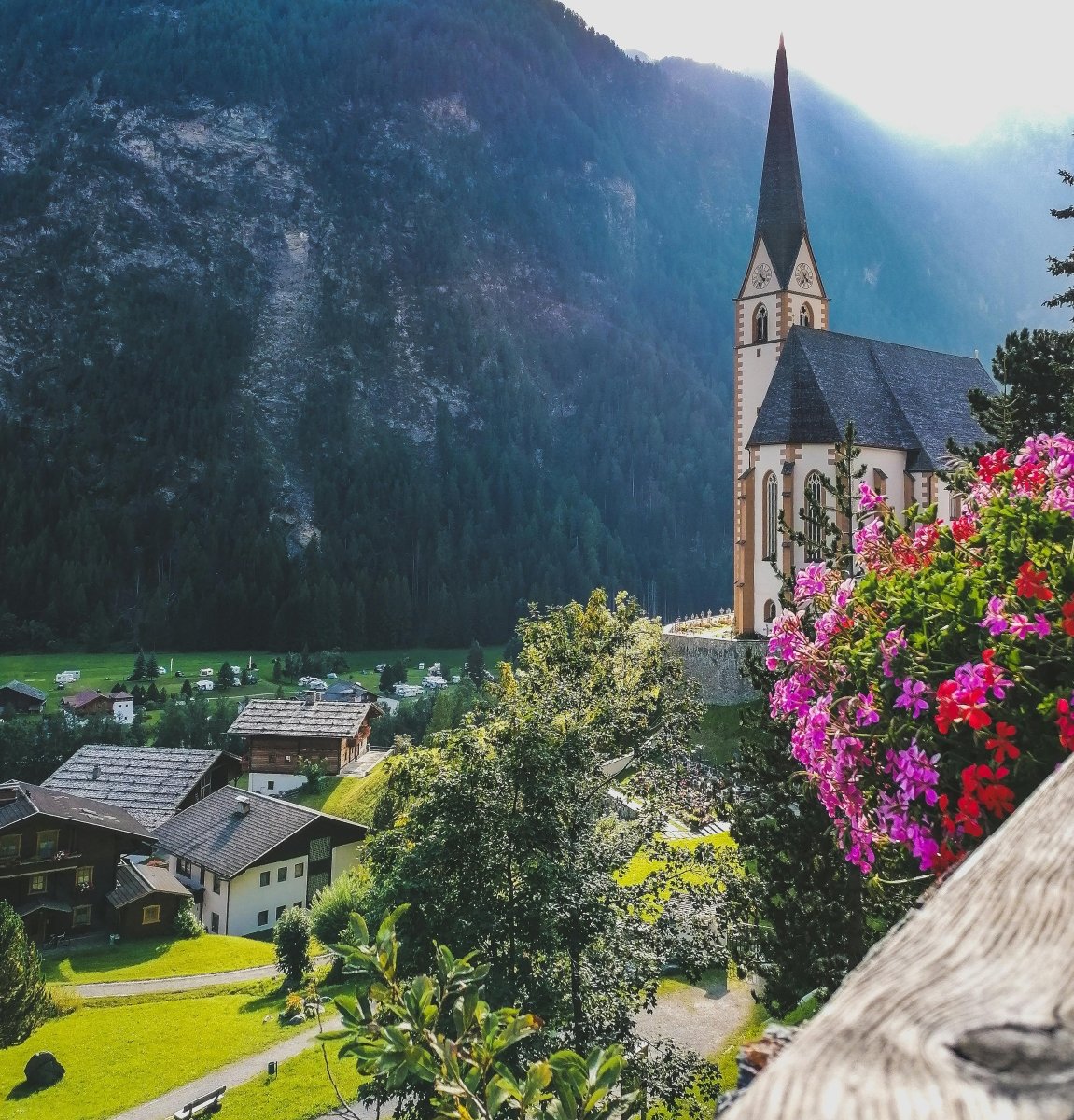
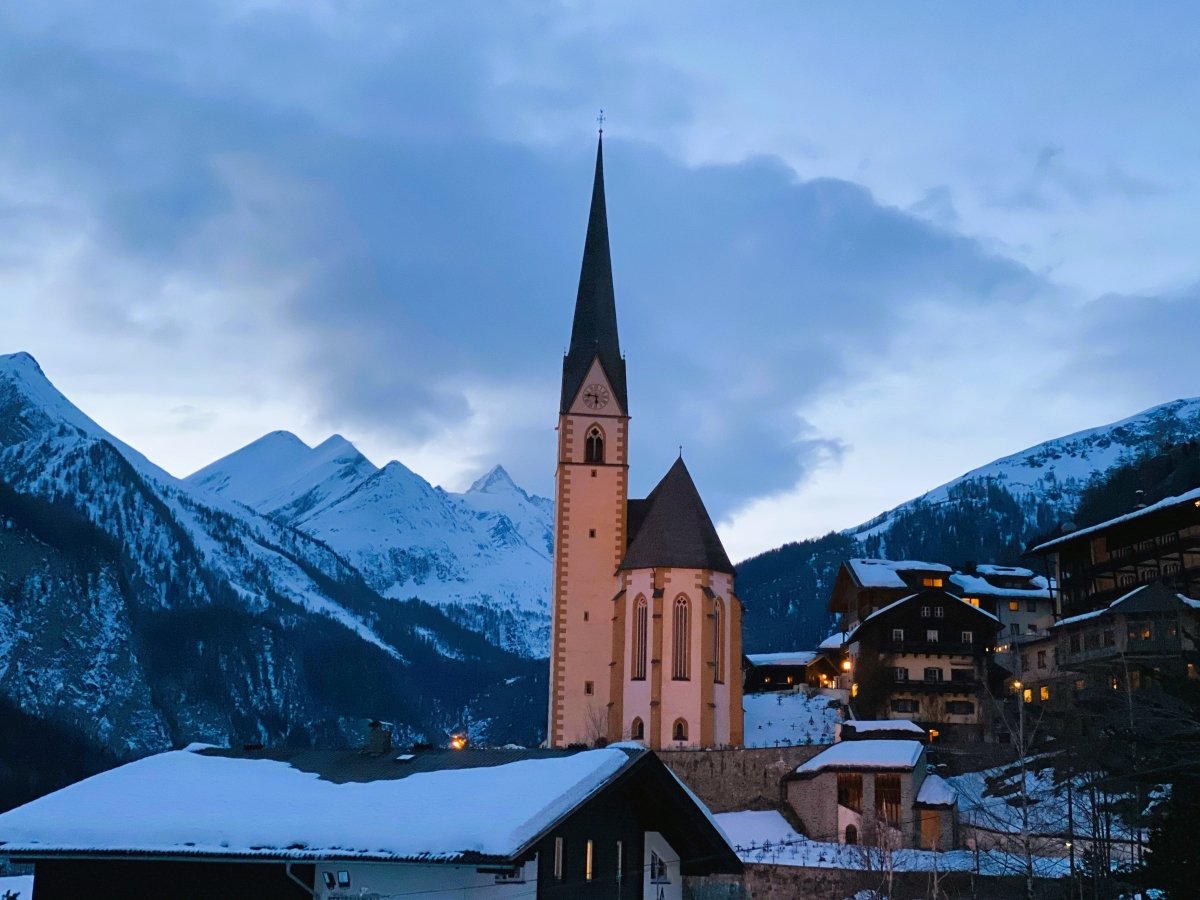
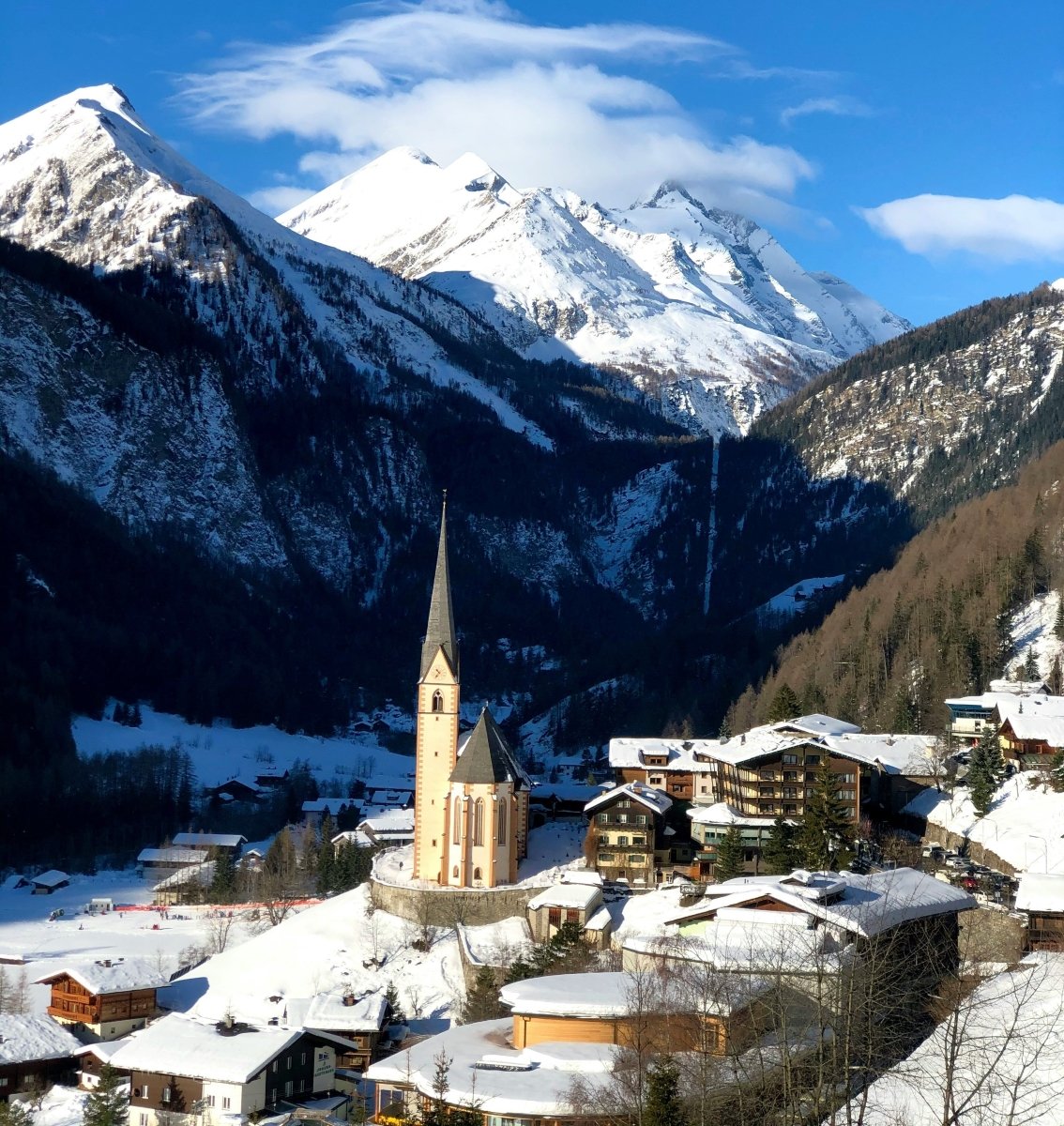
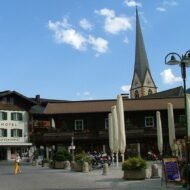
This 15th-century Gothic masterpiece is THE postcard shot of Heiligenblut. The spire reaches 62 meters, and inside you’ll find:
- The relic of Holy Blood (hence the name)
- A stunning winged altar by Wolfgang Kölber
- Free entry (donations appreciated)
Best photo time: Early morning or late afternoon when the light hits the spire against Grossglockner.
Local Traditions
- Corpus Christi Procession (June): The whole village turns out in traditional dress
- Almauftrieb (June) & Almabtrieb (September): Cows decorated with flowers and bells parade to/from alpine pastures—it’s as charming as it sounds
- Krampuslauf (early December): Demonic creatures chase people through the streets. Austria’s answer to Halloween, but weirder.
Events Worth Planning Around
- Grossglockner Mountain Run (July): Europe’s toughest mountain half-marathon
- Classic Car Rally (August): Vintage vehicles cruise the Alpine Road
- Heiligenblut Alpine Days (Summer): Guided hikes, ranger talks, cultural programs
- Christmas Market (December weekends): Small but atmospheric, with glühwein and local crafts
Budget Real Talk
Daily Costs (Per Person)
Shoestring: €60-80
- Hostel or budget pension
- Self-catered meals + 1 restaurant meal
- Free hiking, limited paid activities
Comfortable: €120-180
- 3-star hotel/apartment
- Mix of restaurants and self-catering
- Lift pass or activities
- Occasional beer/wine
Luxury: €250+
- Premium accommodation
- Dining out for all meals
- Guided tours, spa treatments
- Rental car convenience
Money-Saving Hacks
- Summer Carinthia Card: Free cable cars, museums, discounts at many attractions
- Multi-day ski passes: Better per-day rate than singles
- Eat lunch at mountain huts: Larger portions, lower prices than village restaurants
- Shop in Winklern: Larger supermarket 15 minutes away, better prices
Getting There & Around
Nearest Major Airport
Klagenfurt Airport (KLU): 142km, 90 minutes by car
- Small airport, limited connections
- Best for European budget airlines
Salzburg Airport (SZG): 175km, 2.5 hours
- More international flights
- Better rental car options
Innsbruck Airport (INN): 185km, 2.5+ hours
- Scenic route via Grossglockner High Alpine Road (seasonal, toll required)
Connectivity
By Car: Essential unless you’re staying put. The #350 bus runs from Lienz, but it’s infrequent (especially off-season).
By Train: Nearest station is Winklern-Heiligenblut (8km away). Taxi or pre-arranged shuttle from there.
Road Tolls: Grossglockner High Alpine Road costs €38 per car (€28 in shoulder seasons). Worth every cent for the views.
Parking: Free in the village, limited spots near the church.
Sustainable & Ethical Travel
Do Better
- Skip the rental car for day trips: Join group excursions instead (check tourist office)
- Support family businesses: They’re the backbone of this community
- Respect alpine nature: Stick to marked trails, pack out all trash
- Visit off-season: Late May/early June or September have great weather, fewer crowds, lower prices
National Park Ethics
- Don’t pick flowers: Many alpine plants are protected
- Keep noise down: Wildlife is sensitive, especially during breeding season
- Hire local guides: They know the terrain and the ecosystem
Sample Itineraries
3-Day Winter Weekend
Day 1: Arrive, settle in, explore village, dinner at Kirchenwirt Day 2: Full ski day at Schareck, après at Glocknerhaus Day 3: Morning ski/snowshoe, afternoon Grossglockner High Alpine Road drive (if open), depart
5-Day Summer Adventure
Day 1: Arrive, village walk, acclimatize with easy hike to Bricciuskapelle Day 2: Grossglockner High Alpine Road to Franz-Josefs-Höhe, afternoon relaxation Day 3: Full-day hike to Schwerteck Summit Day 4: Paragliding morning, afternoon in Heiligenblut village, cultural sites Day 5: Lazy breakfast, waterfall hike, depart
Weekend Combo Trips
Heiligenblut + Lienz: Historic Tyrolean town 45 minutes away, great for a day trip Heiligenblut + Mölltal Glacier: Year-round skiing, 30 minutes north Heiligenblut + Lake Millstatt: Summer swimming/boating, 1 hour northwest
Safety & Practical Info
Weather Reality
Mountain weather is unpredictable. Always check:
- zamg.ac.at (Austrian weather service)
- Local tourist office for avalanche conditions (winter)
Summer afternoons often bring thunderstorms. Start hikes early.
Emergency Numbers
- Emergency: 112
- Mountain rescue: 140
- Police: 133
Medical Care
Small medical practice in village. Nearest hospital: Lienz (45 min).
Language
German is primary. English works in hotels/restaurants, less so elsewhere. Learn basic phrases—locals appreciate the effort.
Mobile Coverage
Generally good in the village, spotty on hiking trails. Download offline maps.
The Honest Recap
Come to Heiligenblut if you want:
- Spectacular alpine scenery without Instagrammer crowds
- Authentic Austrian mountain culture
- World-class outdoor activities (summer and winter)
- Value compared to famous ski resorts
- A village where people actually live, not a resort Disneyland
Skip it if you need:
- Nightlife beyond a few cozy bars
- Shopping and urban amenities
- Guaranteed English everywhere
- Flat, easy terrain
This place rewards visitors who embrace the mountain lifestyle—early starts, hearty food, physical activity, and genuine connection with nature. It’s not trying to be St. Moritz. That’s exactly why it’s brilliant.
Disclaimer
Travel information accurate as of January 2025. Prices, opening hours, and services can change—especially in mountain regions where seasonal variations are significant. Road closures (particularly Grossglockner High Alpine Road, typically November-April) impact access. Always verify:
- Accommodation availability and rates directly with providers
- Weather and road conditions before mountain activities
- Lift operations and ski conditions with resort websites
- National park regulations at visitor centers
This guide provides general information and personal observations. Always use your judgment regarding safety, physical fitness requirements, and weather conditions for outdoor activities. Consider travel insurance that covers mountain sports.
The author has no commercial relationships with mentioned businesses. Recommendations are based on user reviews, local insights, and travel research.
Stay flexible, respect the mountains, and have an incredible time.