




TL;DR: This free-to-view architectural masterpiece in Vienna’s Landstraße district features wavy floors, tree tenants, and a technicolor facade that looks like it escaped from a fever dream. The building itself is residential (no inside tours), but you can explore the adjacent Hundertwasser Village with shops and a museum, plus grab spectacular photos from the street. Budget 1-2 hours, skip if you’re mobility-challenged due to cobblestones and crowds.
- What Makes This Place So Special?
- What You’ll Actually See
- Planning Your Visit: The Practical Stuff
- Money Talk: What’ll This Cost You?
- Accessibility & Who Should Visit
- Insider Tips from Someone Who’s Been There
- The Real Talk: Is It Worth Your Time?
- Beyond the Basics: Understanding Hundertwasser’s Vision
- Nearby Attractions to Combine
- Final Thoughts
What Makes This Place So Special?
Picture this: You’re walking through Vienna’s orderly streets, surrounded by elegant but predictable architecture, when suddenly—BAM—you round a corner and face a building that looks like it was designed by someone who said “straight lines are against human nature” and actually meant it.
That’s Hundertwasserhaus, and it’s exactly what visionary artist Friedensreich Hundertwasser intended when he convinced the Vienna City Council to let him redesign social housing in the 1980s. This isn’t just quirky for quirky’s sake—every wonky window, every tree growing from an apartment, every undulating floor represents a philosophy about humans reconnecting with nature and individuality.
The result? Fifty-two apartments where actual people live (lucky them) in what’s arguably Vienna’s most photographed building after Schönbrunn Palace.
What You’ll Actually See
The Main Attraction: Hundertwasserhaus
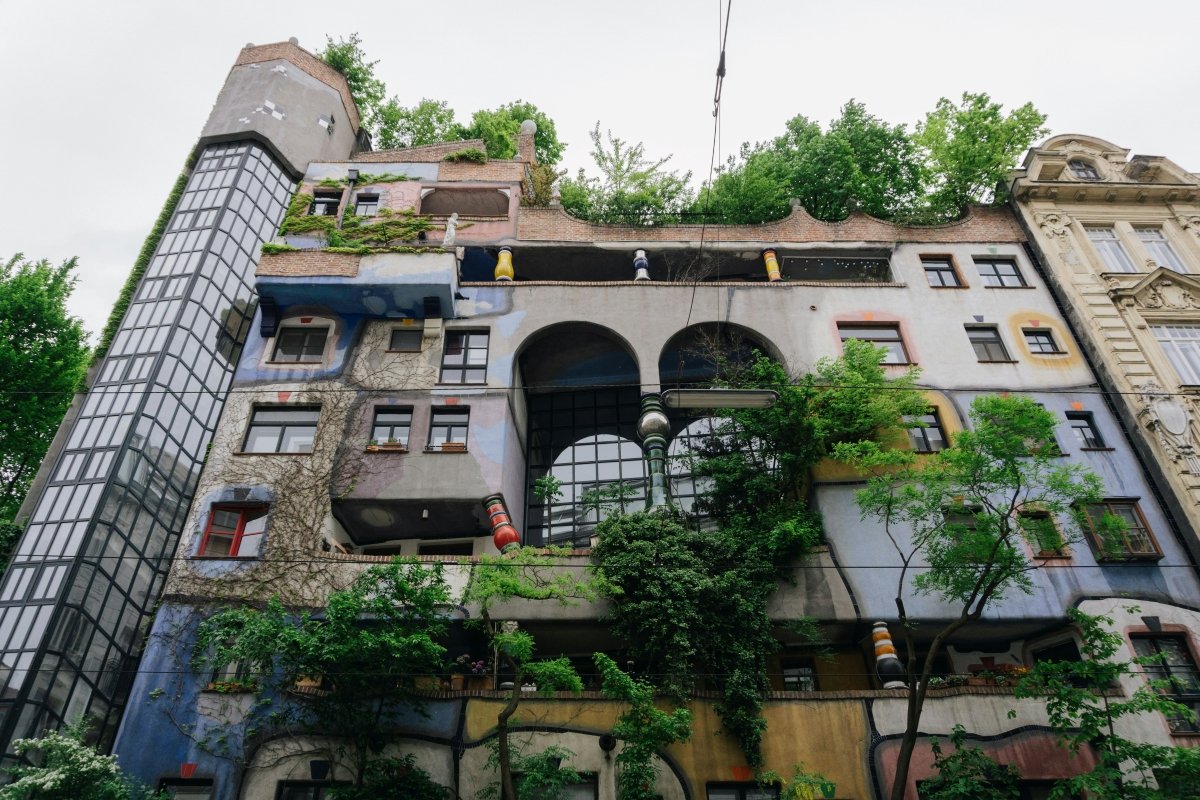
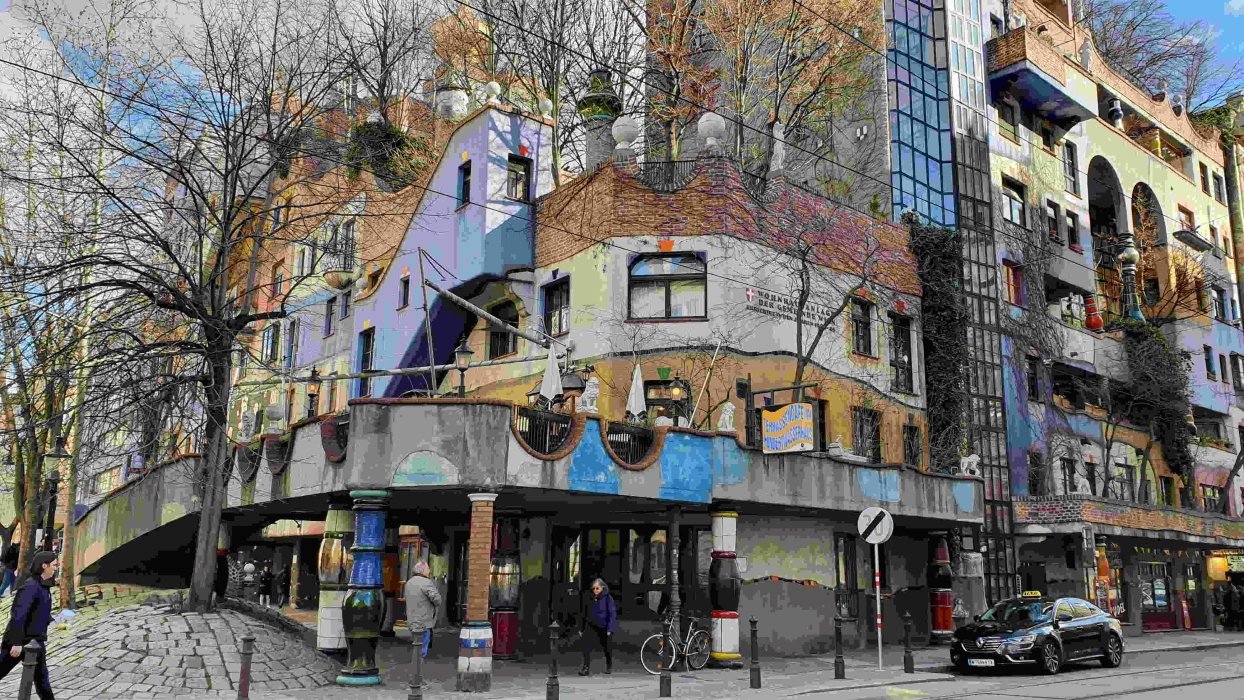
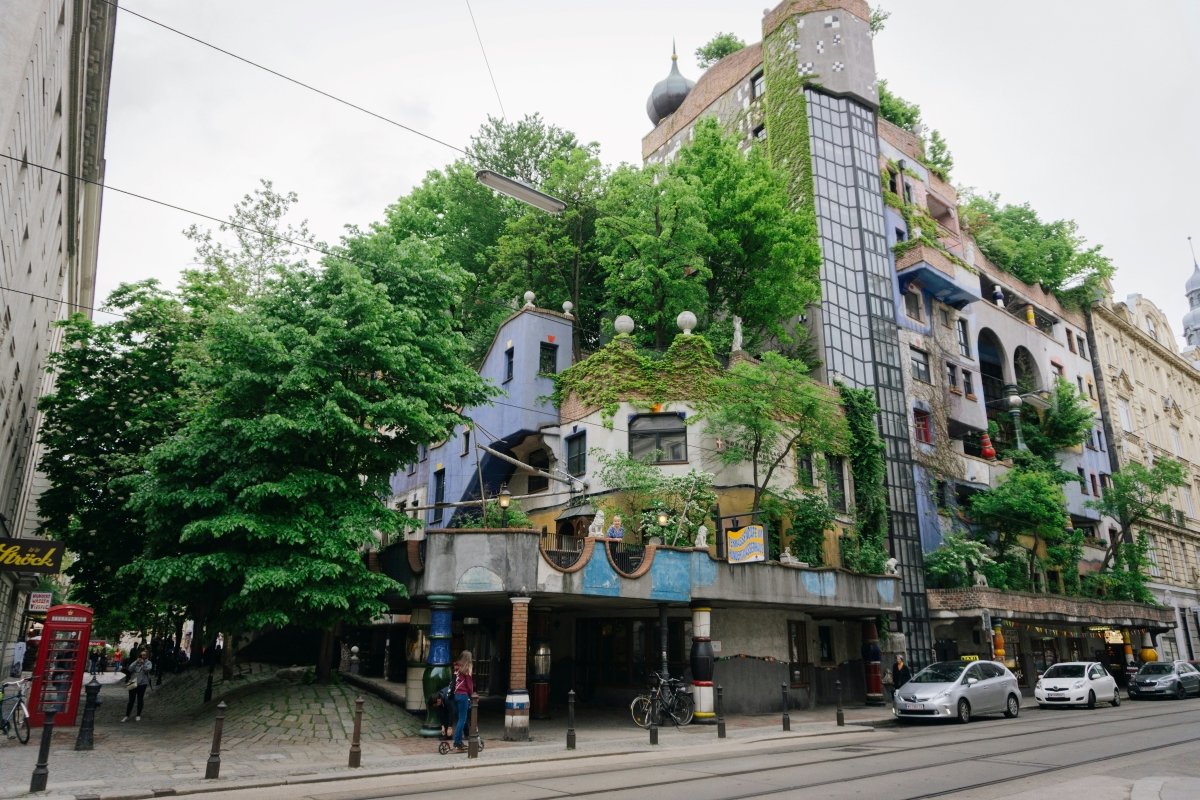
The apartment building features:
- Uneven floors (Hundertwasser believed flat floors were “an abomination”)
- 250+ trees and shrubs growing FROM the building (not just around it—these are “tree tenants” with rights)
- No straight lines anywhere (seriously, the architect banned them)
- Wildly colorful facades mixing yellows, blues, reds, and greens
- Mismatched windows (each one is different because uniformity is boring)
- Onion-shaped domes and towers adding to the fairytale vibe
You’ll view everything from outside since residents understandably don’t want tourists tramping through their living rooms. But honestly? The exterior is the show.
Hundertwasser Village (Kunst Haus Wien)
Right across the street, you’ll find a shopping village designed in the same style:
- Souvenir shops selling Hundertwasser prints, calendars, and tchotchkes
- A cafe with decent coffee and outdoor seating
- Small galleries and artisan shops
- The Hundertwasser Museum (separate admission required)
The Museum Experience
If you’re vibing with the aesthetic, the museum dives deeper with:
- Original Hundertwasser paintings and graphic works
- Architectural models explaining his philosophy
- Rotating contemporary art exhibitions
- A documentary about his life and work
Museum admission: Around €13 for adults, discounts available for students, seniors, and families. Check their website for current special exhibitions.
Planning Your Visit: The Practical Stuff
Getting There
Address: Kegelgasse 34-38, 1030 Vienna (Landstraße district)
Best transport options:
- Tram: Line 1 to “Hetzgasse” (2-minute walk)
- Metro: U3 or U4 to “Landstraße” station (10-minute walk)
- Bus: 80A to “Hetzgasse”
Pro tip: Vienna’s public transport is excellent and affordable. A 24-hour ticket costs around €8 and covers unlimited rides—definitely worth it if you’re hitting multiple attractions.
When to Visit
The building is viewable 24/7 from the street (it’s just… there), but here’s the strategy:
- Best time: Weekday mornings (8-10 AM) before tour buses arrive
- Worst time: Weekend afternoons (prepare for selfie-stick gridlock)
- Golden hour magic: Late afternoon when the sun hits the colorful tiles just right
- Winter bonus: Fewer crowds, and the building looks incredible dusted with snow
The Hundertwasser Village and museum have standard hours (typically 10 AM-6 PM, but verify current times online).
How Long You’ll Need
- Quick photo stop: 15-30 minutes
- Leisurely exploration with village browsing: 1-2 hours
- Including the museum: Add 60-90 minutes
- With a coffee break: Half a day if you’re into it
Money Talk: What’ll This Cost You?
Here’s the beautiful part: viewing the main building is completely FREE. You can admire, photograph, and marvel without spending a cent.
Optional expenses:
- Hundertwasser Museum: €13 (adults)
- Coffee at the village cafe: €4-6
- Souvenirs: €5-50+ (those art books add up)
- Combination tickets: Sometimes available with other Vienna attractions
Budget-friendly tip: Skip the museum if you’re pressed for cash—the real magic is the architecture itself, which costs nothing to enjoy.
Accessibility & Who Should Visit
Great For:
- Architecture enthusiasts (obviously)
- Photography lovers (Instagram gold)
- Families with kids (it’s like a real-life coloring book)
- Art students and creatives
- Anyone tired of Vienna’s more formal attractions
Challenging For:
- Wheelchair users and those with mobility issues (cobblestone streets, crowds, no interior access)
- People expecting an interactive experience (it’s view-only)
- Architecture purists who hate postmodernism (you’ll probably hate it)
Accessibility Notes:
The street viewing area has uneven cobblestones. The Hundertwasser Village and museum have better accessibility with ramps and elevators, but always call ahead to confirm current facilities.
Insider Tips from Someone Who’s Been There
Photography tips:
- The best angle is from across Löwengasse street—you’ll get the whole facade
- Early morning light hits the south side beautifully
- Use the zebra crossing for ground-level shots (carefully—there’s traffic)
- The building looks completely different from various angles, so walk around
Skip the tourist traps: The village shops are pricey. If you want Hundertwasser merch, the museum shop has better quality items at similar prices.
Combine it with: The attraction is in the 3rd district, making it easy to combine with Belvedere Palace (15-minute tram ride) or the trendy Rochusmarkt for lunch.
Bathroom situation: Use the facilities at the Hundertwasser Village cafe—there aren’t many public restrooms in the immediate area.
Weather considerations: There’s zero shelter here. If it’s raining, you’ll get wet. If it’s blazing hot, there’s minimal shade. Plan accordingly.
The Real Talk: Is It Worth Your Time?
You should definitely go if: You appreciate unconventional architecture, enjoy colorful aesthetics, or want to see something completely different from Vienna’s baroque grandeur. It’s free, it’s unique, and it’s unlike anything else you’ll see in the city.
You can skip it if: You’re on an extremely tight schedule and would rather spend time at Vienna’s major museums or palaces. While iconic, it’s ultimately a 20-minute photo opportunity unless you’re deeply into Hundertwasser’s philosophy.
The verdict: For most visitors, this deserves at least a quick visit. It’s accessible, free, and genuinely distinctive. Pair it with a nearby attraction to make the journey worthwhile, and you’ve got a solid morning or afternoon activity.
Beyond the Basics: Understanding Hundertwasser’s Vision
Friedensreich Hundertwasser (born Friedrich Stowasser—yes, he invented that wild name) wasn’t just making weird buildings for attention. His philosophy challenged how we think about living spaces:
- Window rights: He believed everyone should be able to personalize the facade around their windows
- Tree tenants: Plants weren’t decoration but equal residents with rights
- Organic architecture: Buildings should follow natural forms, not rigid geometry
- Social housing beauty: Affordable housing doesn’t have to be ugly
This building proved you could create social housing that was both functional and joyful—revolutionary for its time.
Nearby Attractions to Combine
Within walking distance:
- Kunst Haus Wien (the museum, if you skip it initially)
- Rochusmarkt (local market, great for lunch)
- Vienna’s diplomatic quarter (interesting architecture spotting)
Easy public transport connections:
- Belvedere Palace (20 minutes)
- Prater and the Giant Ferris Wheel (20 minutes)
- St. Stephen’s Cathedral (15 minutes to city center)
Final Thoughts
Hundertwasserhaus proves that functional architecture doesn’t have to be boring, social housing doesn’t have to be depressing, and sometimes breaking all the rules creates something magical. Whether you spend 15 minutes or two hours here, you’ll leave with unique photos and probably a slightly different perspective on what buildings could be.
It’s not going to change your life, but in a city full of imperial palaces and grand museums, this joyful, rebellious burst of color feels refreshingly human. And isn’t that the point?
Bottom line: See it. Photograph it. Maybe grab a coffee at the village. Then continue exploring Vienna with slightly higher expectations for how fun architecture can be.
Have you visited Hundertwasserhaus? What did you think of Vienna’s most colorful rebellion? Share your experience in the comments below!