


Ever wondered what secrets lie buried beneath the Swedish countryside? Meet the King’s Grave (Kiviksgraven) – a 3,500-year-old archaeological marvel that’ll blow your mind and transport you straight back to the Bronze Age. This isn’t just another pile of old stones; it’s Sweden’s answer to Stonehenge, and trust me, you absolutely need to see it.
What Makes This Place So Special?
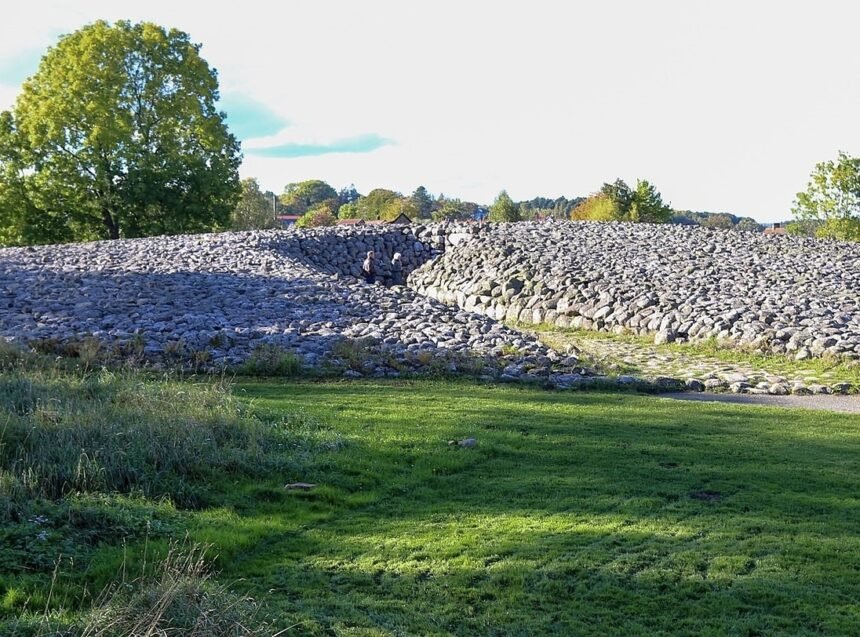
Picture this: a massive circular mound stretching 75 meters across (that’s bigger than a football field!), hiding one of Europe’s most elaborate Bronze Age burial chambers. Located just 320 meters from the stunning Baltic coast near Kivik in Scania, this ancient wonder has been captivating visitors since two farmers accidentally stumbled upon it in 1748 while quarrying for stones.
But here’s where it gets really wild – inside this seemingly simple mound lies a stone chamber decorated with Sweden’s oldest known petroglyphs. We’re talking about intricate carvings showing horses pulling chariots, mysterious figures in procession, musicians playing ancient horns, and symbols that still puzzle archaeologists today. It’s like discovering an ancient comic book carved in stone!
The Mystery That Still Baffles Experts
Despite its grand name, recent archaeological discoveries have thrown a curveball that makes this site even more intriguing. Originally believed to be the final resting place of a Bronze Age king (hence the name), modern research suggests it actually held the remains of five teenage boys, aged 12 to 25. Plot twist, right?
Nobody knows exactly how these young men died or why they received such an elaborate burial. Were they royalty? Sacrificial victims? Heroes who died in battle? The mystery only deepens when you consider the sophistication of the tomb – this wasn’t built for just anyone. Someone clearly thought these boys deserved a burial fit for kings.
Inside the Ancient Chamber
Today, you can actually walk into this 3,500-year-old tomb through a modern concrete entrance built in the 1930s. Inside, you’ll find yourself surrounded by eight surviving stone slabs (two were lost over the centuries), each one telling a story through its mysterious carvings.
The artwork is absolutely mind-blowing for something so ancient. You’ll see:
- Horse-drawn chariots with four-spoked wheels
- Processions of robed figures that might be priests or dancers
- Musicians playing bronze horns called lurs
- Ships that hint at the maritime culture of Bronze Age Scandinavia
- Sun symbols and other religious imagery
The main burial chamber measures 3.25 meters long by 1 meter wide, while a smaller “Prince’s Chamber” sits nearby – because apparently even in the Bronze Age, size mattered when it came to eternal resting places.
Planning Your Visit
Getting There: Kivik is about 90 minutes from Malmö by car, making it perfect for a day trip. The grave site is just outside the charming coastal village, clearly signposted and easy to find.
Best Time to Visit: While the site is accessible year-round, spring through early fall offers the best experience. September is particularly magical when you can combine your visit with Kivik’s famous Apple Market – Sweden’s largest, running since 1622!
Entry Details: Admission costs just 30 SEK for adults (youth enter free), and tickets are available at the delightful Café Sågmöllan right by the site. The café itself is worth a visit, housed in an old sawmill beside a babbling brook – perfect for coffee and reflection after your journey through time.
What to Expect: The visit takes about 30-45 minutes, but plan extra time to explore the surrounding area and really soak in the atmosphere. The site includes informational displays, though be prepared – some visitors note that while impressive, the explanations could be more detailed.
Make It a Weekend Adventure
Don’t just hit the grave and run! Kivik and the surrounding Österlen region offer tons of experiences that’ll make your trip unforgettable:
Kiviks Musteri: Sweden’s oldest apple orchard and cidery, where you can taste award-winning ciders and learn about the region’s fruit-growing heritage dating back to 1888.
Stenshuvud National Park: Just south of Kivik, this coastal paradise offers hiking trails, pristine beaches, and panoramic views over the Baltic Sea. The white sandy beaches here have been voted among Sweden’s best.
The English Garden: A romantic, flower-filled paradise that feels like something out of a fairy tale.
Coastal Villages: Take a scenic walk along the coast to Vitemölla, passing gorgeous old houses and experiencing authentic Swedish coastal charm.
Pro Tips for Your Visit
Photography: The lighting inside the tomb can be challenging, so bring a good camera or smartphone with night mode for the best shots of the petroglyphs.
Combined Tickets: Ask about combo deals that include nearby attractions like the Ängakåsen burial site, which contains over 130 graves and is just 300 meters away.
Timing: Visit early morning or late afternoon for fewer crowds and better lighting. The site can get busy during peak tourist season.
Weather Prep: Even though you’ll be going underground, dress warmly – the stone chamber stays cool year-round.
The Bigger Picture
The King’s Grave isn’t just a cool tourist attraction; it’s a window into a sophisticated Bronze Age society that was far more connected and advanced than many people realize. The artistic style of the petroglyphs shows clear connections to similar rock art found across Northern Europe, suggesting these ancient Scandinavians were part of a broader cultural network spanning Denmark, northern Germany, and beyond.
The very existence of such an elaborate tomb speaks to a society with complex social hierarchies, advanced craftsmanship, and resources to spare for honoring their dead. Whether these were kings, princes, or sacrificial victims, they were clearly important enough to warrant one of the most impressive Bronze Age monuments in all of Scandinavia.
Worth the Journey?
Absolutely. The King’s Grave offers something you won’t find anywhere else – the chance to literally walk inside a 3,500-year-old tomb and come face-to-face with some of Sweden’s oldest art. Sure, it’s been reconstructed and restored, but standing in that ancient chamber surrounded by mysterious carvings is genuinely spine-tingling.
Combine it with Kivik’s other attractions, the stunning coastal scenery, and the region’s famous culinary scene, and you’ve got the makings of a perfect Swedish adventure. Whether you’re a history buff, archaeology enthusiast, or just someone who loves discovering hidden gems off the beaten path, the King’s Grave delivers an experience you’ll be talking about for years.
Plus, where else can you say you’ve been inside a Bronze Age royal tomb, sampled award-winning Swedish cider, and relaxed on pristine Baltic beaches all in the same day? That’s the kind of travel story that makes for legendary dinner party conversation.
Pack your sense of wonder and prepare to be amazed – the King’s Grave is waiting to reveal its ancient secrets to you.