

The Best Hidden Beaches in Greece That Don’t Appear on Any Top-Ten List
Every summer, the same beaches appear on the same lists.
Navagio. Elafonisi. Balos. They are beautiful — genuinely, undeniably beautiful — and they are also, by July, so thoroughly discovered that the experience of visiting them has become something else entirely: a queue, a crowd, a photograph taken from the exact same angle as ten thousand photographs before it.
Greece deserves better than that. And so do you.
The Greek coastline stretches for over 15,000 kilometres. The islands number somewhere above 6,000. What the top-ten lists have found amounts to a fraction of a fraction of what is actually out there — and the rest of it, the overwhelming majority of it, remains quiet, uncrowded, and waiting.
These are those beaches. Not islands — beaches. Specific coves, particular stretches of shore, exact places with directions for getting there. Some require a car. Some require a boat. Some require a forty-minute walk down an unmarked path in the September heat. All of them are worth it.
The Peloponnese and mainland: the coast nobody talks about
There is a version of Greece that has nothing to do with ferries or island-hopping. It lies on the mainland, in the long southern peninsula that most international visitors cross only on the way to somewhere else. The Peloponnese has more coastline than many of the famous islands combined, and almost none of it appears in a guidebook written for foreign tourists.
This is not an accident. It is an oversight — and a considerable one.
Voidokilia, Messinia
If you drew the perfect beach from memory — a horseshoe of pale sand, a lagoon of clear water, hills rising behind it on three sides — it would look approximately like Voidokilia.
The beach sits in the south-western corner of the Peloponnese, near the town of Pylos. To reach it, park near the Nestor’s Cave trailhead and walk down a path that takes roughly fifteen minutes. There are no sun loungers. There is no beach bar. There is, in the early morning or late afternoon, almost no one else.
The water is shallow and clear enough to see the bottom at depth. The sand is fine and pale. The hills behind it are covered in low scrub that turns gold in September. It is, by most reasonable measures, one of the most geometrically perfect beaches in Europe — and it appears on almost no list targeted at international visitors.
Go before ten in the morning or after five in the afternoon. The brief window of midday visitors — mostly Greek families from Kalamata — will have passed.
Kalogria, Mani
Ten minutes south of Stoupa — a small coastal town in the outer Mani that has become a low-key destination for those who already know the Peloponnese — there is a second beach that most visitors to Stoupa never find.
Kalogria is accessible via a footpath that begins at the southern end of Stoupa beach. It is a mix of pebble and coarse sand, flanked on both sides by low cliffs. A taverna sits on the hillside above it, reachable by a separate path, and serves grilled fish at the kind of prices that have long since disappeared from the more visited parts of Greece.
The Mani rewards travelers willing to leave the main road. This is true of its villages, its tower houses, its particular quality of light in the late afternoon. It is especially true of its coast.
Selinitsa, near Gythio
Further south, past Gythio and down a dirt track that requires either a hire car with reasonable clearance or a willingness to park and walk, Selinitsa is a small beach used almost exclusively by local Greek families in high summer and by no one at all in September.
The water is deep and clear. The track is unpaved for the last two kilometres. There are no facilities. These are not problems — they are the point.
The Cyclades: go specific, not general
Every article about hidden beaches in Greece will eventually mention Folegandros, Koufonisia, or Astypalaia. The islands themselves are well-chosen — genuinely quieter, genuinely more beautiful than their famous neighbours. But naming the island is not enough. The useful information is which beach on the island, reached how, at what time.
Agkali, Folegandros
Folegandros is the Cycladic island that those who have been to Santorini and Mykonos tend to discover next, quietly grateful that it still exists. The island’s population of permanent residents is small enough that the village of Chora can feel, outside of peak weeks in August, like a place going about its own business regardless of whether tourists are present.
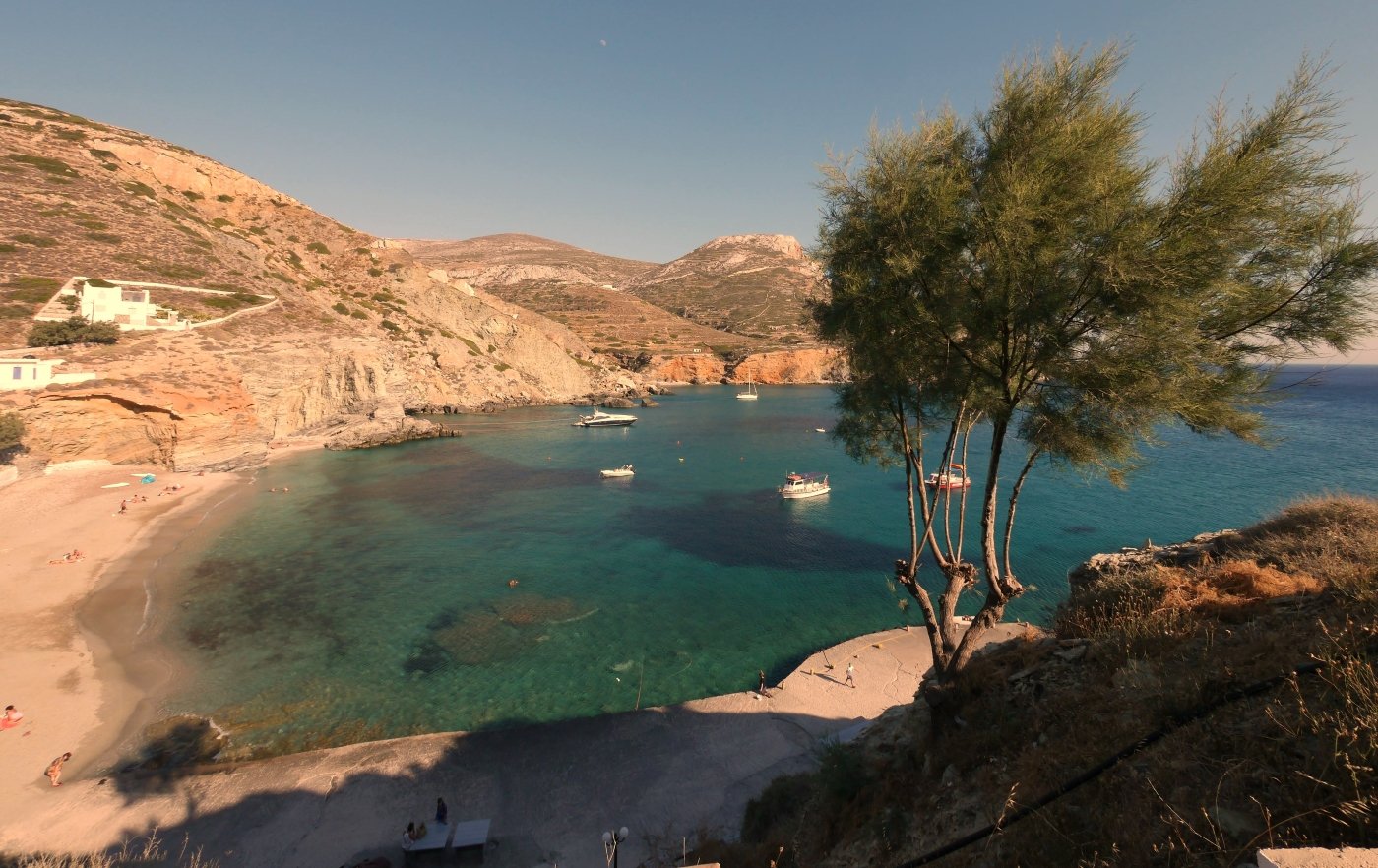
Agkali is the beach on the island’s southern coast, accessible only on foot via a path from Chora — roughly forty-five minutes each way — or by small boat from the port. There are no sun loungers and no infrastructure beyond a single seasonal taverna that may or may not be open depending on the day and the owner’s mood. The water is the clear deep blue of the southern Aegean, and the walk back up in the evening, with the light turning behind you, is worth the effort entirely independent of the swim.
Go in late May or the first two weeks of June. The path is shaded in the morning. By September the island has mostly emptied again, and the taverna may be closed, but the beach remains.
Livadi, Astypalaia
Astypalaia is shaped like a butterfly and sits at the western edge of the Dodecanese, far enough from the main ferry routes that reaching it requires either a direct flight from Athens or a long ferry journey. Both facts contribute substantially to its charm.
The main settlement, Chora, sits on a hill topped by a Venetian castle with views that make the effort of getting there feel immediately justified. Livadi is the beach twenty minutes’ walk below it — sandy, wide, and backed by low tamarisk trees that provide shade in the afternoon. Outside of August, it is rarely busy. Outside of July and August, it is sometimes empty.
Rent a scooter from the port and spend a day exploring the island’s northern peninsula. The beaches up there have no names on any map.
Fikiada, Koufonisia
The Koufonisia are two tiny islands in the central Cyclades connected by a short path that can be walked at low tide. The larger island, Ano Koufonisi, has become known in recent years to a particular kind of Greek traveler — young, Athenian, looking for the combination of crystal water and genuine remoteness that the more famous islands can no longer offer.
Fikiada is the cove on the eastern coast of Ano Koufonisi that the day-trippers, who tend to cluster near the port and the main beach of Pori, rarely reach. It requires a forty-minute walk along the island’s coastal path, through low scrub and over flat limestone rocks. The water is shallow and so clear it reads almost white in the midday light.
Go in the afternoon. Bring water. The walk back is prettier than the walk there.
The Ionian: the overlooked west coast
While the Aegean collects the majority of Greece’s visitors, the Ionian Islands sit off the western coast in quieter waters, with a character — greener, more Venetian in architecture, softer in light — entirely different from the islands most people picture when they picture Greece.
Porto Limnionas, Zakynthos
Zakynthos is not, in general, a quiet island. Navagio Beach — the famous shipwreck cove — draws boats full of day-trippers from dawn to dusk throughout the summer. The resort towns on the eastern coast are loud and well-lit in a way that has nothing to do with the Greece described in this article.
Porto Limnionas is the exception. On the island’s western coast, well away from the resort infrastructure, a series of narrow inlets carved into pale limestone cliffs descend to water of an almost implausible blue-green. There is no sand — the swimming is from flat rocks and small wooden platforms — and the road ends in a small car park from which a short path leads down to the water.
Go on a weekday morning and you may have it almost to yourself. Go on a weekend in August and accept that you will have company, though considerably less than anywhere else on the island.
Voutoumi, Antipaxos
Paxos and its smaller sibling Antipaxos sit just south of Corfu, small enough that most visitors encounter them only as day-trip destinations from the larger island. Antipaxos in particular — reachable by a twenty-minute boat from Gaios on Paxos — has a reputation for the bluest water in the Ionian, which is itself a considerable claim.
Voutoumi is the smaller of Antipaxos’s two main beaches, around a headland from the larger Vrika. It is sandy, curved, and backed by low vineyards that produce a sweet white wine sold in unlabelled bottles at the single taverna above the beach. The water is shallow for a long way out and genuinely the colour — a pale, luminous turquoise — that photographs tend to make look implausible.
The key is timing. Day-trip boats from Corfu arrive mid-morning and leave by mid-afternoon. Be on the beach before ten or after four, and the experience is entirely different.
Megali Ammos, Meganisi
Meganisi is a small island near Lefkada, reachable by a short ferry from Nidri, that functions primarily as a destination for sailing boats using it as a quiet anchorage. The island has three villages, a handful of tavernas, and very little in the way of tourist infrastructure — which is precisely its appeal.
Megali Ammos is on the island’s southern coast, reachable via a walking path from the village of Spartochori that takes roughly forty minutes each way. The beach is a stretch of pale pebble and coarse sand at the base of low cliffs, with water that is clear and deep even close to the shore.
It is rarely visited. The walk is the reason — which means the walk is also the point.
Northern Greece: the most overlooked coast in the country
Of all the places in Greece that remain genuinely undiscovered by international visitors, the northern coastline — Halkidiki in particular, with its three peninsulas jutting into the Aegean — is the most surprising. This is where Greeks from Thessaloniki and further north have summered for generations, in small towns and family-run campsites that have never needed to market themselves to anyone outside the country.
It is, as a consequence, one of the most authentic and least expensive coastlines in Greece.
Kavourotripes, Sithonia
Halkidiki’s three peninsulas — Kassandra, Sithonia, and the monastic Athos — offer very different experiences. Kassandra is the most developed and the most visited. Sithonia, the middle finger, is quieter, more wooded, and contains the stretch of coast around Kavourotripes that is unlike anything else in Greece.
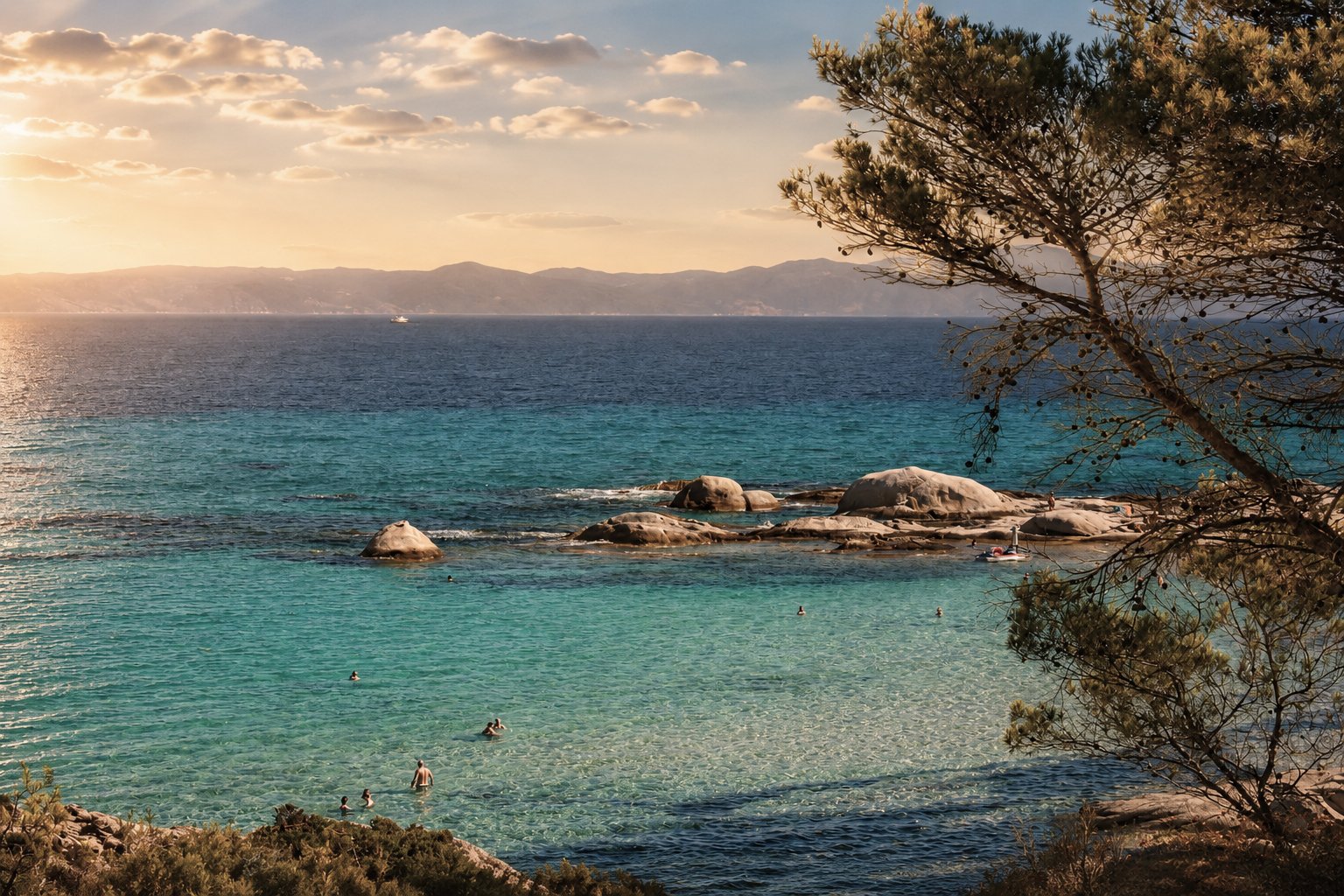
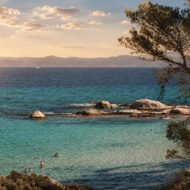
Kavourotripes — the name translates roughly as “crab holes” — is a series of small coves carved into granite rock, connected by a coastal footpath through pine forest. The pines grow down almost to the water’s edge. The sea between the rocks is shallow and clear. There are no facilities and no road access — the car park is a ten-minute walk away — which means the coves remain, even in high summer, less crowded than almost any beach of comparable beauty in the country.
Go in early morning before the Thessaloniki families arrive, or in late afternoon when they have left for dinner. In September the forest smells of pine resin in the heat and the water is at its warmest.
Ammouliani Island
Near the base of the Athos peninsula, a five-minute ferry from the village of Tripiti, Ammouliani is the only inhabited island in the Northern Aegean that most international visitors have never heard of. The ferry runs frequently. The island is small enough to explore on foot or by bicycle. The beaches closest to the port attract the day-trip crowd; the beaches on the island’s eastern and northern coast, reached by a thirty-minute walk along a dirt track, are quieter.
The island has a beach entry fee of a few euros for the main organised beaches. The ones further out are free, unorganised, and almost entirely empty outside the Greek school holiday period.
A few practical notes
Most of these beaches share certain characteristics: they require effort to reach, they have little or no infrastructure, and they are at their best outside the peak weeks of July and August.
The single most useful piece of advice for visiting Greece off the main routes is timing. Late May and early June offer warm water, long days, and a country that has not yet shifted into high-season mode. September and October offer the same warmth — the sea retains its heat well into autumn — with the crowds largely gone and the light at its most beautiful.
A hire car is essential for most mainland and Peloponnese beaches. For the islands, a scooter or small motorbike covers most of what a car would, with the additional advantage of navigating tracks that a hire car company would prefer you avoid.
Bring water, shade, and food to any beach described here as having “no facilities.” This is not a complaint — it is the reason the beach is worth visiting.
And one honest caveat: writing about quiet places is not a neutral act. The beaches in this article are quiet because they are not widely written about. Visit them accordingly — leave them as you found them, and consider whether you need to share their exact location with several thousand followers.
The Greek coastline has over 15,000 kilometres of shore. The crowds only found about ten of them.
Where to stay near these beaches
- Peloponnese: Kalamata or Stoupa as base for mainland beaches — search accommodation →
- Folegandros: Limited options, book early — search accommodation →
- Astypalaia: Small hotels in Chora — search accommodation →
- Zakynthos: Stay west coast, avoid the resort strip — search accommodation →
- Halkidiki: Sithonia has good mid-range options — search accommodation →
You might also like
- Limeni, Mani — a seaside village the Peloponnese keeps to itself
- Where to go in Europe in September: the best destinations after the crowds leave
- Hidden beaches in Croatia: 15 coves the tour operators haven’t found yet
- Schengen Calculator — know your days before you travel
All recommendations in this article are editorially independent. The Wanders does not accept payment for destination coverage. Accommodation links marked above are affiliate links — if you book through them, we receive a small commission at no additional cost to you.