

Salina Turda is a remarkable salt mine located in the Durgău-Valea Sărată area of northwest Transylvania, Romania. This extraordinary underground attraction combines fascinating history with surreal landscapes, making it one of Romania’s most unique destinations. Here’s your comprehensive guide to visiting this subterranean wonder.
Historical Background
Dating back to antiquity, salt extraction in the Turda area began during Roman times, though the first official documentation dates to the 11th century. The mine reached its peak production during the 17th-19th centuries before ceasing operations in 1932. After serving briefly as a cheese storage facility and even as a bomb shelter during World War II, Salina Turda reopened in 1992 as a museum and tourist attraction. A major renovation in 2008-2010 transformed it into the spectacular site visitors experience today.
Getting to Salina Turda
Location
The salt mine is located in Turda, a small city in Cluj County, Romania, approximately 30 km (19 miles) southeast of Cluj-Napoca, the largest city in Transylvania.
By Air
The nearest major airport is Cluj-Napoca International Airport, which offers connections to many European cities. From the airport, you can:
- Rent a car (30-40 minute drive to Turda)
- Take a taxi (approximately 100-150 RON / €20-30)
- Use public transportation (bus to Cluj-Napoca center, then bus or train to Turda)
By Public Transport
- From Cluj-Napoca: Regular buses depart from Cluj-Napoca to Turda (approximately 45 minutes)
- By train: Limited train service connects Cluj-Napoca to Turda
By Car
- From Cluj-Napoca: Take the E81/DN1 highway south toward Turda (approximately 30-40 minutes)
- From Bucharest: Take the A3 highway (about 5-6 hours)
- Parking is available at the mine entrance for a small fee (approximately 5-10 RON)
What to See Inside
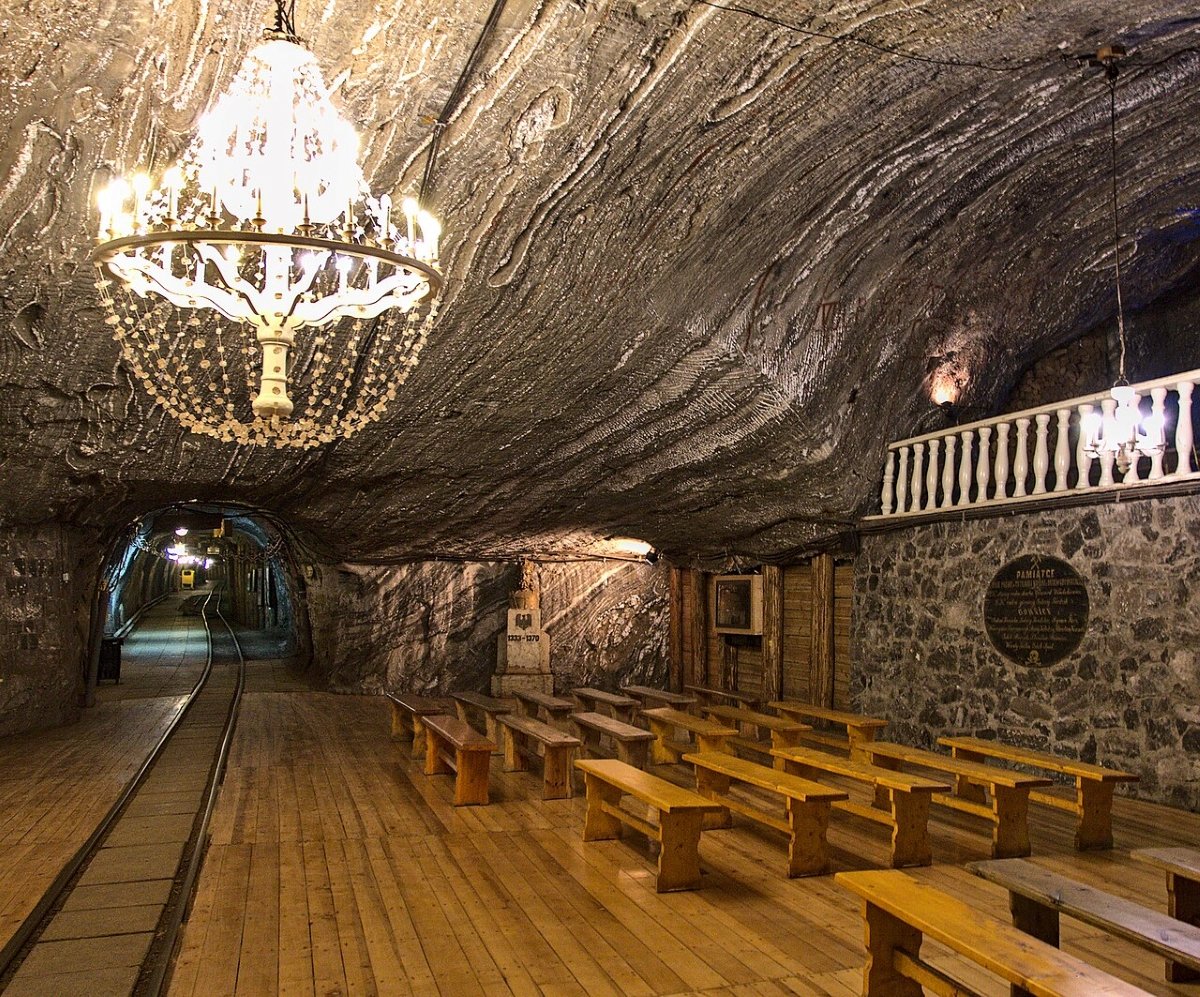
Salina Turda spans several enormous chambers connected by tunnels and descends more than 100 meters underground. The main attractions include:
Rudolf Mine
This bell-shaped extraction chamber features a spectacular echo and impressive ceiling stalactites made of salt. The panoramic view from the upper balcony is breathtaking.
Terezia Mine
The largest extraction chamber and the main attraction, reaching 120 meters in depth with a diameter of 87 meters. This chamber houses:
- A spectacular underground lake with boat rentals
- An otherworldly amphitheater
- Mini-golf course
- Table tennis facilities
- An amusement park with a Ferris wheel
- Bowling lanes
Crivac Room
Home to a medieval wooden device called the “crivac” or “horse-powered whim,” used to lift salt blocks from the depths. This centuries-old machine demonstrates the ingenuity of historical mining techniques.
Transport Gallery
The 1.4-kilometer tunnel once used to transport salt out of the mine, now featuring historical mining equipment displays.
Salt Museum
Located at the entrance, featuring exhibits on mining history, tools, and salt extraction techniques.
Practical Information
Opening Hours
- Tuesday to Sunday: 9:00 AM – 5:00 PM (last entry at 4:00 PM)
- Monday: 11:00 AM – 5:00 PM (last entry at 4:00 PM)
- Hours may extend during summer months and holidays
Entrance Fees (approximate)
- Adults: 50-60 RON (€10-12)
- Students/Seniors: 30-40 RON (€6-8)
- Children (under 4): Free
- Additional fees for activities like boat rides (15-20 RON), mini-golf, or bowling
Guided Tours
- Available in Romanian and English (occasionally other languages)
- Can be arranged at the entrance or pre-booked
- Duration: approximately 1.5 hours
- Private guides can be hired for around 100-150 RON
Essential Tips
- Dress warmly: The temperature inside remains constant at 10-12°C (50-54°F) year-round
- Wear comfortable, non-slip shoes as some surfaces can be slippery
- Bring a camera with good low-light capability
- Plan to spend at least 2-3 hours exploring
- The mine has Wi-Fi in certain areas
- Restrooms are available inside the mine
- There is an elevator for accessibility, but not all areas are wheelchair-accessible
Health Benefits
The microclimate of Salina Turda is believed to have therapeutic properties, particularly for respiratory conditions. The air contains:
- High levels of negative ions
- Sodium chloride aerosols
- Low allergen and bacteria content
- High humidity (80%)
Many visitors with asthma, allergies, or bronchitis report improvement after spending time in the salt mine. Some areas are specifically designated for halotherapy (salt therapy) sessions.
Where to Stay
In Turda
- Hotel Potaissa: Mid-range hotel close to the salt mine
- Hotel Sarea-n Bucate: Boutique hotel with traditional Romanian architecture
- Pensiunea La Salina: Budget-friendly guesthouse within walking distance of the mine
In Cluj-Napoca (better accommodation options)
- Grand Hotel Italia: Luxury option with excellent amenities
- Hotel Beyfin: Mid-range hotel in the city center
- Transylvania Hostel: Budget-friendly option with private and dormitory rooms
Dining Options
Near the Mine
- Salina Restaurant: Located at the mine entrance, serving traditional Romanian cuisine
- Sarea-n Bucate: Restaurant specializing in regional dishes
In Turda
- Restaurant Transilvania: Traditional Romanian cuisine with local specialties
- La Cuptor: Pizza and international dishes
- Crama Cotnari: Wine cellar restaurant with Romanian cuisine
Local Specialties to Try
- Sarmale (cabbage rolls)
- Mămăligă cu brânză (polenta with cheese)
- Ciorbă de burtă (tripe soup)
- Papanasi (cheese doughnuts with jam and cream)
Combining Your Visit
Nearby Attractions
- Turda Gorge (Cheile Turzii): Impressive limestone canyon ideal for hiking, located 10 km from Salina Turda
- Turda city center: Historic main square with baroque architecture
- Potaissa Roman Castrum: Ancient Roman camp ruins
- Cluj-Napoca: Cultural capital of Transylvania with museums, gardens, and vibrant nightlife
Recommended Itineraries
- One day: Salina Turda in the morning, Turda Gorge in the afternoon
- Two days: Day 1 in Salina Turda and Turda, Day 2 exploring Cluj-Napoca
- Three days: Add Alba Iulia (historic fortress city) or the medieval town of Sighișoara
Best Time to Visit
- Spring (April-June): Mild weather, fewer tourists, ideal for combining with outdoor activities
- Summer (July-August): Peak tourist season, possibly crowded but longer opening hours
- Fall (September-October): Pleasant temperatures, beautiful autumn colors in the surrounding countryside
- Winter (November-March): Less crowded, and the constant underground temperature provides a welcome escape from the cold
Avoid Romanian national holidays if possible, as the mine can become extremely crowded.
Photography Tips
- Tripods are permitted but can be cumbersome on stairs
- The lighting creates dramatic effects but challenges for photography
- Wide-angle lenses help capture the enormous chambers
- Consider using night mode or longer exposures for better results
- The colorful lighting in Terezia Mine creates stunning photo opportunities
Cultural Context
The importance of salt in Romanian history cannot be overstated. “Sare” (salt) was so valuable it was used as currency, and the word “salarium” (salary) comes from the Roman practice of paying soldiers in salt. The salt trade shaped the region’s economy for centuries, and many Romanian idioms and traditions reference salt’s cultural significance.
Sustainability and Conservation
The mine operates with conservation principles in mind. Visitors are asked to:
- Stay on designated paths
- Not touch salt formations
- Avoid littering
- Report any damage to staff
The site carefully balances tourism with preservation efforts to maintain this unique heritage for future generations.
Final Tips
- Book tickets online during peak season to avoid queues
- Allow plenty of time to explore at a leisurely pace
- The dramatic temperature difference between outside and inside can be jarring in summer
- Consider visiting during weekdays to avoid crowds
- Mobile phone reception is limited inside the mine
- The unique acoustics make it an unforgettable sensory experience
Salina Turda represents a perfect blend of industrial heritage, natural wonder, and recreational facility. Its otherworldly atmosphere and historical significance make it one of Romania’s most distinctive attractions and an essential stop on any Transylvanian itinerary.