

Ready for a spine-tingling adventure that’ll give you serious Instagram cred? Pack your camera and courage – we’re heading to one of Lithuania’s most mysteriously captivating abandoned manors.
- What Makes Šūkliai Manor So Special?
- The Ghostly Legends That’ll Give You Chills
- Why Šūkliai Manor is a Must-Visit Cultural Site
- Getting There: Your Vilkaviškis Adventure Guide
- Planning Your Lithuanian Manor Adventure
- Why This Hidden Gem Deserves Your Travel Bucket List
- The Bigger Picture: Lithuania’s Manor Heritage
- Final Thoughts: More Than Just a Pretty Ruin
- Important Disclaimer ⚠️
What Makes Šūkliai Manor So Special?
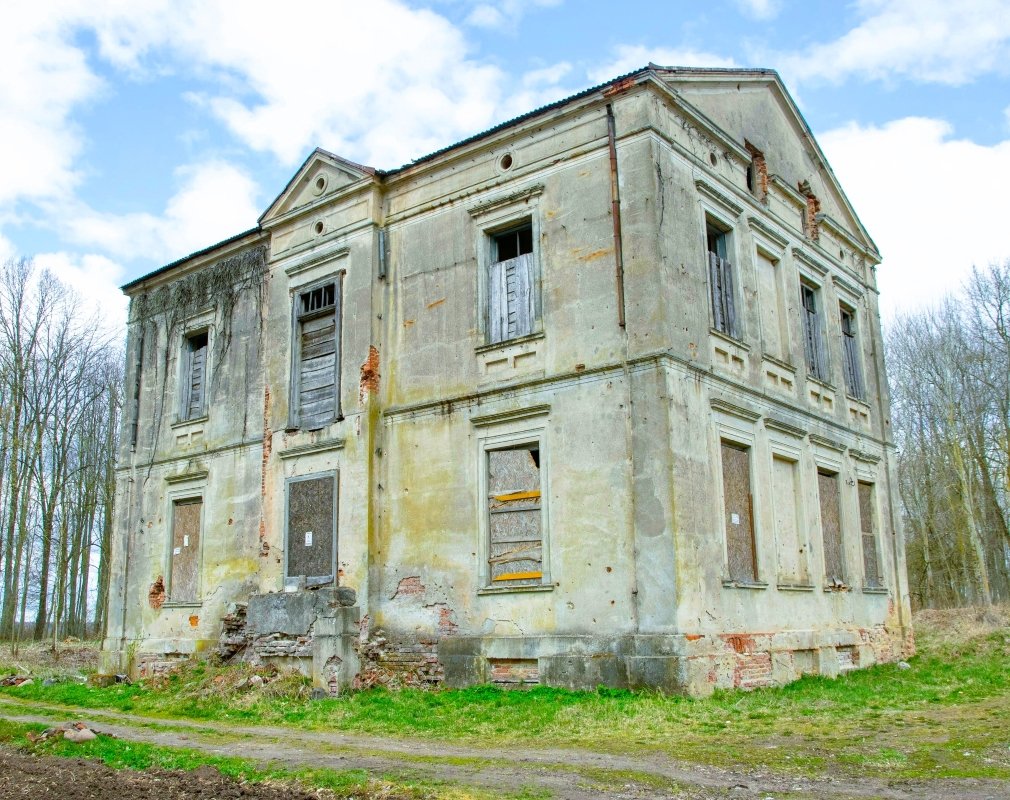
Picture this: you’re wandering through the quiet countryside of Vilkaviškis district when suddenly, through a veil of ancient trees, you spot it. The Former Šūkliai Manor emerges like something straight out of a gothic novel – boarded windows that seem to watch your every move, weathered walls that whisper centuries-old secrets, and an atmosphere so thick with history you can practically taste it.
Peaceful, quiet and surrounded by trees, today, Šūkliai manor with boarded-up windows welcomes only one visitor — the wind that breaks in through the open gaps. But don’t let that fool you – this place is far from empty when it comes to stories and significance.
The Ghostly Legends That’ll Give You Chills
Here’s where things get seriously spooky. It is said that the more observant visitors outside the mansion can see shimmering shadows and hear strange sounds reminiscent of knocking on the door or the voices of children.
Why children’s voices, you ask? Well, that’s where the manor’s recent history gets both heartwarming and haunting. Historical sources state that permission was once obtained to establish children’s shelter-kindergarten in this building. Also, a secretive Lithuanian school operated here. Imagine – this crumbling building once echoed with the laughter and lessons of Lithuanian children, secretly preserving their language and culture during times when such things were dangerous.
Pro tip: Visit during the golden hour (sunset) for the most atmospheric photos, but maybe bring a friend. The shadows really do seem to move differently here.
Why Šūkliai Manor is a Must-Visit Cultural Site
A Secret Symbol of Lithuanian Identity
This isn’t just any old abandoned building – Šūkliai manor — a ghost and the secret symbol of Lithuanianness represents something much deeper. During periods of cultural suppression, places like this became sanctuaries where Lithuanian identity could survive and flourish in secret.
The clandestine school that operated here wasn’t just about education – it was about resistance, hope, and the unbreakable spirit of a people determined to preserve their heritage. Every creaking floorboard and weathered wall tells a story of courage.
Perfect Instagram Potential
Let’s be real – this place is a photographer’s dream. The contrast between nature slowly reclaiming the structure and the stubborn dignity of the architecture creates shots that’ll make your followers stop scrolling. Think:
- Dramatic exterior shots framed by ancient trees
- Atmospheric detail photography of weathered architectural elements
- Moody forest approaches leading to the manor
- Vintage gothic vibes that scream “mysterious European adventure”
Getting There: Your Vilkaviškis Adventure Guide
Location & Access
The manor sits quietly in the Vilkaviškis district, which is located 25 km (16 mi) northwest from Marijampolė, at the confluence of Šeimena and Vilkauja rivers.
Getting there:
- By car: About 2.5 hours from Vilnius (perfect for a day trip!)
- Public transport: Take a bus to Vilkaviškis town, then arrange local transport to the manor site
- Best time to visit: Late afternoon for dramatic lighting, or early morning to avoid any crowds
What Else to See in Vilkaviškis
Since you’re making the trip, why not explore more of this historically rich area?
Paežeriai Manor
The foundations of Paezeriai manor house must date back to the establishment times of the oldest manors in Suduva region – the 16th- 17th c. Currently, it has constant expositions of nature, prehistory, regional and emigration history, as well as the ones of more famous public figures.
Vilkaviškis Manor
In 1812 on 19–24 June, Napoleon’s army passed along Vilkaviškis. In the notes of cleric (later prelate) Butkevičius, it is recorded that on 21 June Napoleon himself arrived and settled in the Vilkaviškis manor. Yes, that Napoleon!
Planning Your Lithuanian Manor Adventure
Essential Packing List
- Sturdy shoes (the approach can be uneven)
- Camera with good low-light capabilities
- Respect for the site (this is a cultural monument)
- Weather-appropriate clothing (Baltic weather is unpredictable)
- Flashlight if visiting near dusk
Cultural Context to Know
Understanding Lithuania’s complex history makes visiting Šūkliai Manor infinitely more meaningful. Until 1941, the city had a large Jewish community, which was killed by the German military and their local collaborators. The region has survived multiple occupations, cultural suppressions, and efforts to erase Lithuanian identity – making places like this manor incredibly significant as symbols of survival and resistance.
Why This Hidden Gem Deserves Your Travel Bucket List
Unique Photo Opportunities
Unlike crowded tourist castles, Šūkliai Manor offers you the chance to capture something truly unique. The interplay of decay and dignity, nature and architecture, creates compositions you simply can’t find at more “polished” heritage sites.
Cultural Immersion
This isn’t just sightseeing – it’s cultural archaeology. You’re literally walking through layers of Lithuanian history, from the manor’s original purpose through its transformation into a secret school and its current state as a monument to resilience.
Off-the-Beaten-Path Adventure
While everyone else is posting the same shots of Trakai Castle (gorgeous, but everywhere on Instagram), you’ll have something completely different. Šūkliai Manor represents the kind of authentic, slightly edgy travel experience that creates lasting memories.
The Bigger Picture: Lithuania’s Manor Heritage
There are about 3500 historical manor homesteads in the territory of Lithuania, and currently about 800 manors still standing. Each tells a different story, but few carry the emotional weight and cultural significance of Šūkliai Manor.
These manor houses represent an expression of the taste and ambition of some nobleman or castle/manor owner, the result of the architect’s creative work, self-expression, artistic impulses, and the quest to reveal aesthetics of the prevailing architectural style. But Šūkliai transcends mere architectural appreciation – it’s a testament to cultural survival.
Final Thoughts: More Than Just a Pretty Ruin
As you stand before Šūkliai Manor, camera in hand and history swirling around you, remember that you’re not just visiting a photogenic ruin. You’re paying respects to a place where Lithuanian identity was secretly nurtured and preserved during some of its darkest hours.
The children’s voices that some visitors claim to hear? Maybe they’re just the wind through broken windows. Or maybe they’re the echoes of young Lithuanians learning their forbidden language, their culture, their identity in defiance of forces that sought to erase them.
Either way, Šūkliai Manor offers something rare in our Instagram-saturated world: a place where beauty, mystery, and profound cultural significance converge. It’s not just worth the trip to Vilkaviškis – it’s worth remembering long after you’ve left.
Ready to explore Lithuania’s hidden cultural gems? Šūkliai Manor is waiting to share its secrets with those brave enough to listen. Just remember – you’re not just a tourist here. You’re a witness to the unbreakable spirit of a people who refused to let their story end.
Planning more Baltic adventures? Lithuania’s manor houses offer dozens of similar gems waiting to be discovered. Each one tells a different chapter of this fascinating country’s resilient story.
Important Disclaimer ⚠️
Please visit responsibly: Šūkliai Manor is an abandoned historical site that may pose safety risks. Visitors should:
- Respect private property and local laws – verify access permissions before visiting
- Exercise extreme caution – old buildings can have unstable structures, hidden hazards, and unsafe conditions
- Never enter the building – view only from the exterior for your safety
- Travel with others and inform someone of your plans
- Respect the cultural significance of the site – this is a place of historical importance, not just a photo opportunity
- Leave no trace – take only pictures, leave only footprints
- Check current conditions – weather, local regulations, and site status can change
The author and publisher are not responsible for any injuries, legal issues, or other problems that may occur during your visit. Ghost sightings and paranormal experiences are matters of personal belief and cannot be guaranteed! 👻
Always prioritize safety over the perfect shot.