

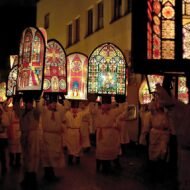
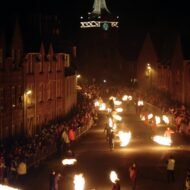
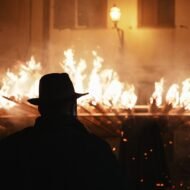
Giant lanterns and a thousand cowbells in a Swiss lakeside town. A river of fire through an Italian mountain village. Men in bear skins dancing in the streets of Romania. Fireballs swung through a Scottish harbour at midnight. December is Europe’s darkest month, and its oldest festivals answer the dark with light, noise and fire.
- 1. Klausjagen, Küssnacht am Rigi (Switzerland)
- 2. Fête des Lumières, Lyon (France)
- 3. ‘Ndocciata, Agnone (Italy)
- 4. Santa Lucia (Sweden)
- 5. Wren Day, Dingle (Ireland)
- 6. Fiesta Mayor de Verdiales, Málaga (Spain)
- 7. Bear Dance, Comănești (Romania)
- 8. Silvesterchlausen, Urnäsch (Switzerland)
- 9. Fireballs, Stonehaven (Scotland)
- Beyond the map
December has two faces in Europe. One is the Christmas market: mulled wine, wooden huts, lights. The other is much older. In villages from Ireland to Romania, people still put on masks and skins, carry fire through the streets, ring bells and sing from door to door, as they have done for centuries to see off the old year and bring in the new one.
This is the first article in our monthly festival series. Here are nine December festivals across Europe, most of them lesser known and a few famous, in date order, with their 2026 dates.
| Date (2026) | Festival | Place | What it is |
|---|---|---|---|
| 5 Dec | Klausjagen | Küssnacht am Rigi, Switzerland | St Nicholas night procession with giant lanterns and cowbells |
| 5–8 Dec | Fête des Lumières | Lyon, France | The city’s festival of light (well known) |
| Mid-Dec & 24 Dec | ‘Ndocciata | Agnone, Italy | A procession of giant fan-shaped fire torches |
| 13 Dec | Santa Lucia | Sweden | Candlelit processions of song (well known) |
| 26 Dec | Wren Day | Dingle, Ireland | Costumed “wren boys” parade through the town |
| 28 Dec | Fiesta Mayor de Verdiales | Málaga, Spain | A day of Andalusia’s oldest folk music |
| 30 Dec | Bear Dance | Comănești, Romania | Dancers in real bear skins see off the old year |
| 31 Dec | Silvesterchlausen | Urnäsch, Switzerland | Masked New Year mummers with bells, twice a year |
| 31 Dec | Fireballs | Stonehaven, Scotland | Fireballs swung through the streets at midnight |
1. Klausjagen, Küssnacht am Rigi (Switzerland)
5 December · 47.08° N, 8.44° E · Lake Lucerne, canton of Schwyz
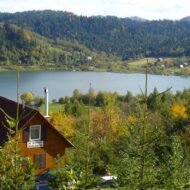
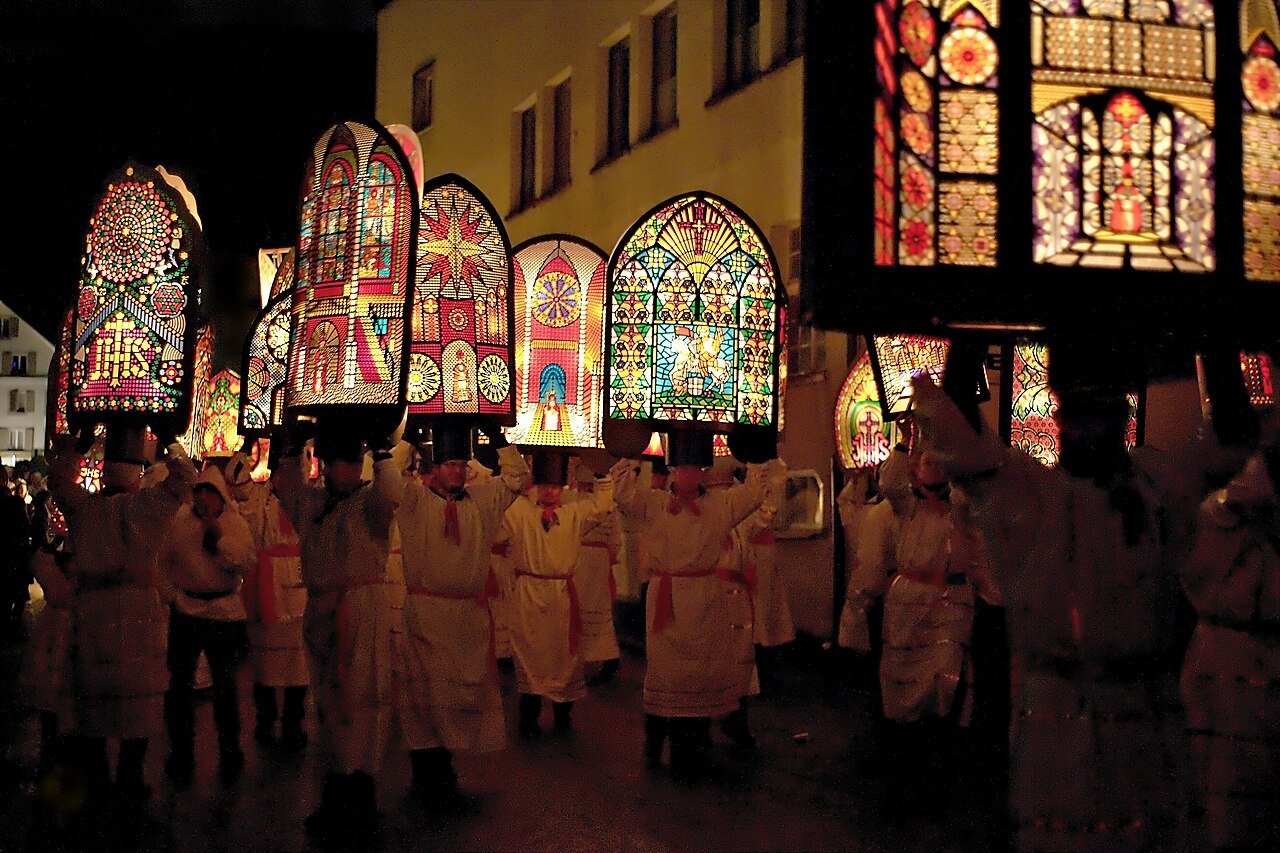
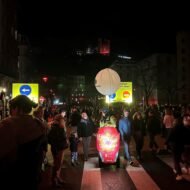
On the eve of St Nicholas’ Day, the small lakeside town of Küssnacht am Rigi turns its street lights off. At 20:15, a loud bang starts the Klausjagen, the “chase of St Nicholas”, one of the largest St Nicholas processions in Europe.
First come the whip-crackers. Then the Iffelen, more than 200 giant mitre-shaped lanterns, some over 2.5 metres tall, cut with patterns and lit from inside like stained glass. Then St Nicholas himself, with his dark companions and torchbearers, and finally about a thousand Trichler, men swinging huge cowbells, with horns playing a repeated, eerie three-note call. Over 1,500 people take part, and up to 30,000 watch. There is also a children’s procession in the afternoon.
Weather in Küssnacht: cold and damp beside the lake, usually just above freezing in the evening. Dress warmly, you will stand for a long time.
Getting there: about 20 minutes by train from Lucerne; the route is a short walk from Küssnacht station.
2. Fête des Lumières, Lyon (France)
5–8 December · 45.76° N, 4.83° E · Auvergne-Rhône-Alpes
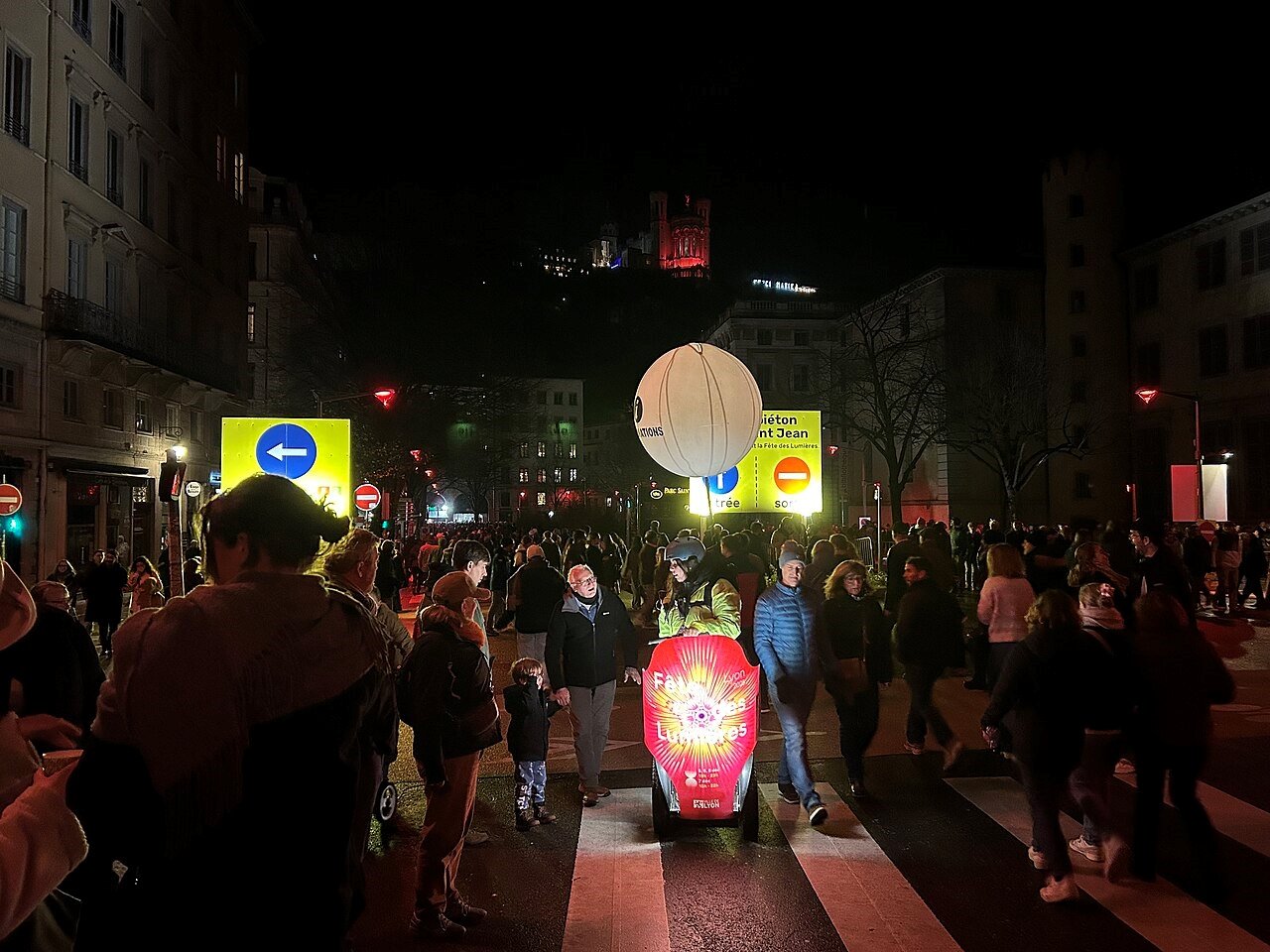
The famous one, and worth it. The festival goes back to 1643, when Lyon prayed to the Virgin Mary to spare it from the plague. Every 8 December, the people of Lyon still put small candles, lumignons, in their windows. Since 1999, artists have added light installations and projections across the city’s squares, bridges and façades: Place des Terreaux, Place Bellecour, Saint-Jean Cathedral, Fourvière and Parc de la Tête d’Or.
It is free and open to all, over four evenings. It is also very crowded, so go on a weekday evening if you can, and walk the old town once the main shows have finished.
Weather in Lyon: cool and often grey in December, with evenings a few degrees above freezing and occasional fog over the rivers.
Getting there: about two hours from Paris by TGV regional trains run extra services during the festival.
3. ‘Ndocciata, Agnone (Italy)
Mid-December and 24 December · 41.81° N, 14.38° E · Alto Molise
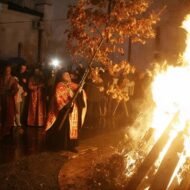
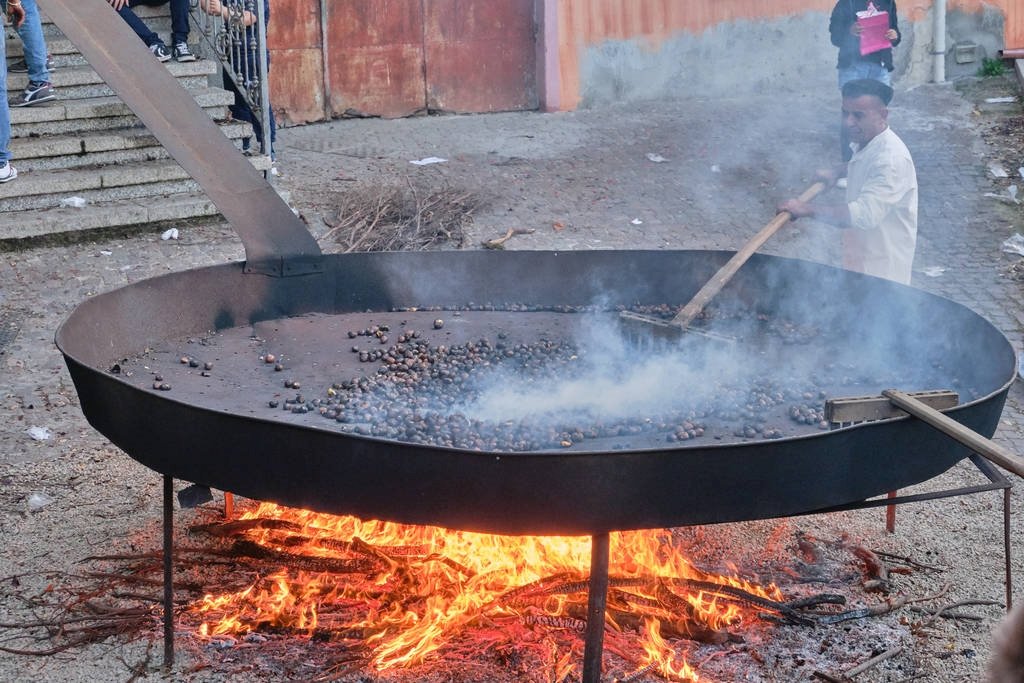
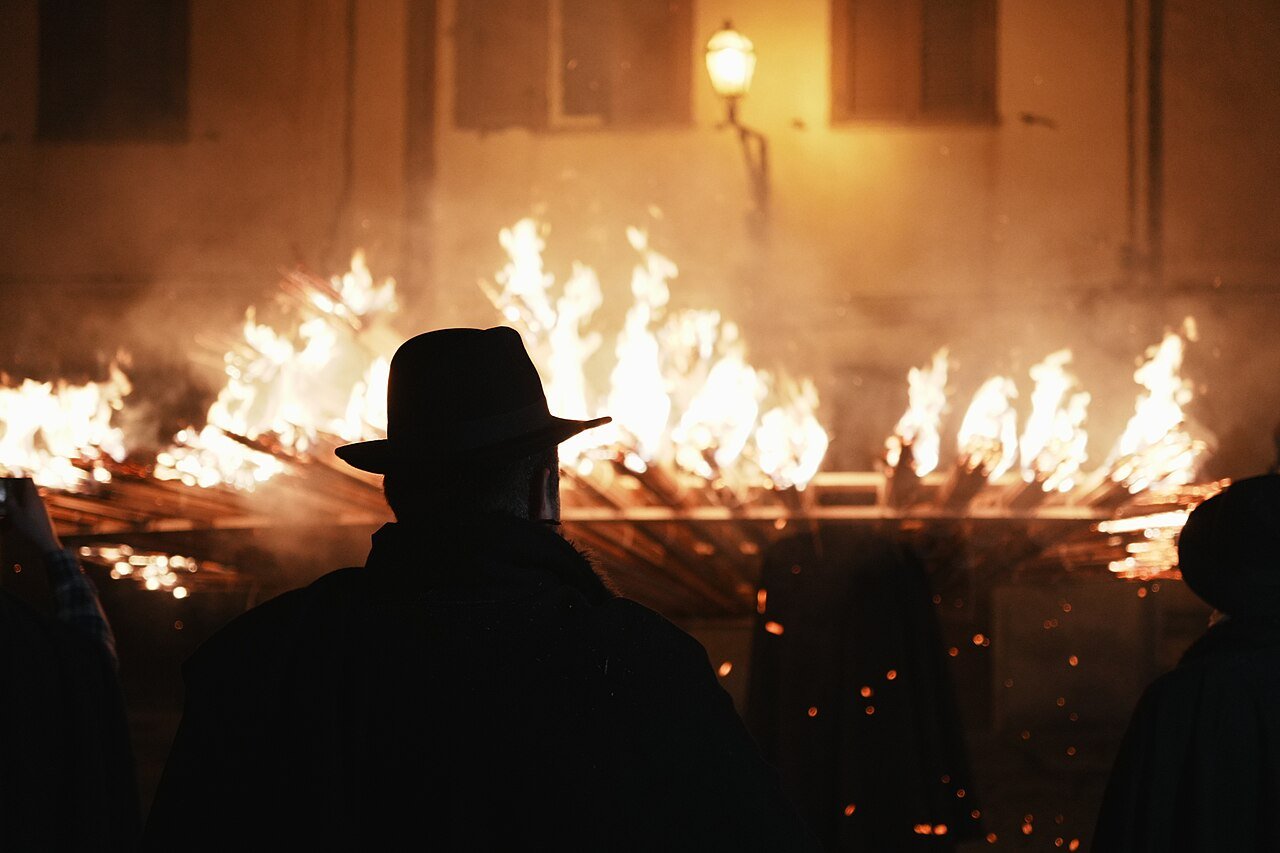
In the mountains of Molise, one of Italy’s least visited regions, the bell-making town of Agnone holds what it calls the largest fire ritual in the world. The ‘ndocce are huge torches made of silver-fir wood, shaped like open fans and carried on the shoulders, some with many flames at once. On the night of the procession, hundreds of them come down the main street together, like a river of fire.
For a long time, the ‘Ndocciata was held only on Christmas Eve, and that remains the true local one: smaller, quieter and lit by around three hundred torches. Since 2000, a second, much larger ‘Ndocciata has been held earlier in December for visitors; since 2022, it has moved to the second Saturday of December.
Weather in Agnone: a cold mountain climate at around 800 metres. December evenings are often near or below freezing, with snow possible.
Getting there: a remote corner of Italy, it is best reached by car, about two hours from Pescara or Naples. Arrive early on procession day.
4. Santa Lucia (Sweden)
13 December · across Sweden
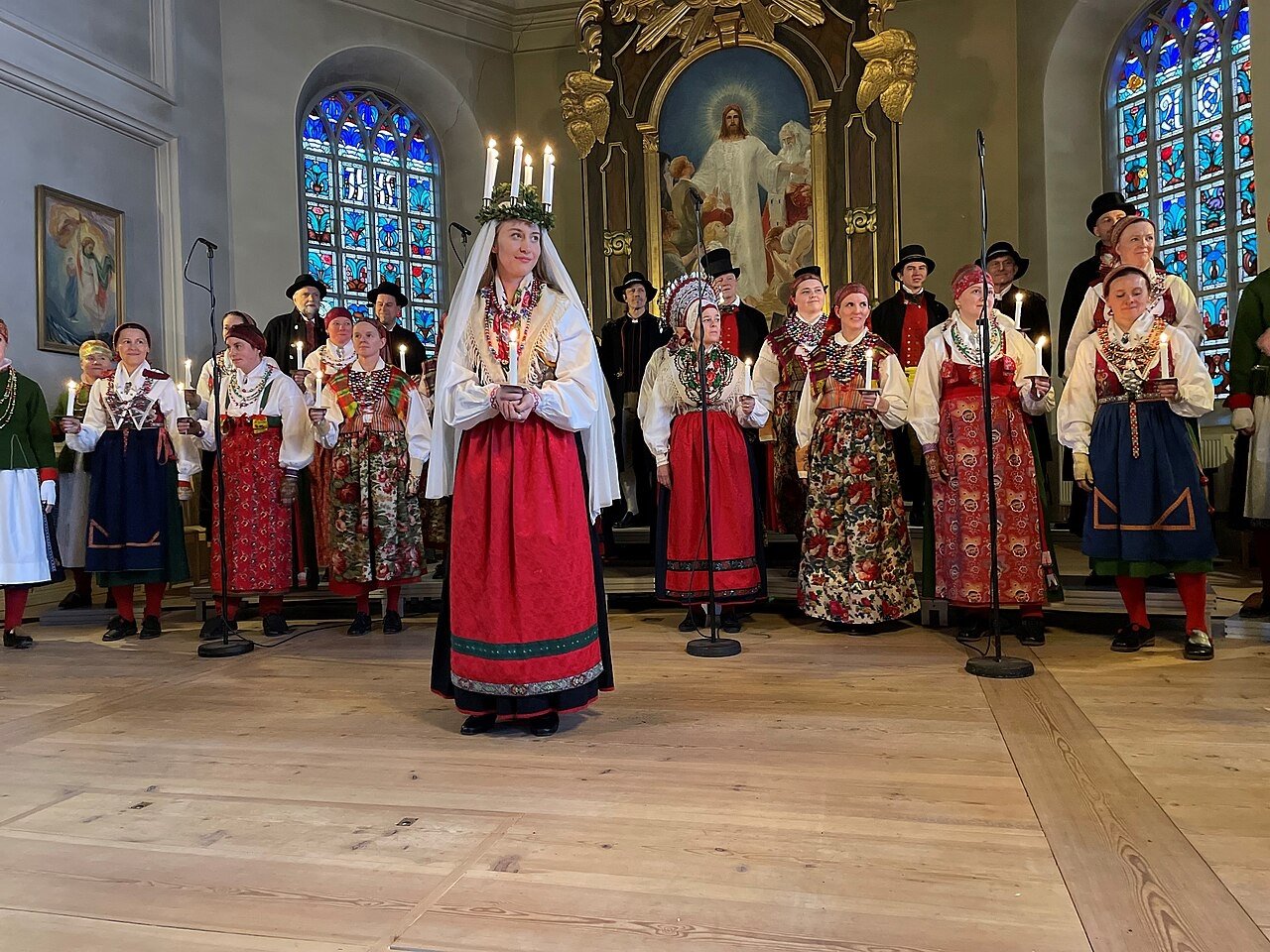
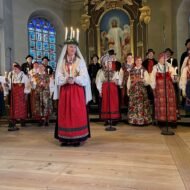
The other famous one. On St Lucia’s Day, in the darkest weeks of the Nordic winter, processions of singers in white gowns with candles walk into churches, schools and halls, led by a “Lucia” wearing a crown of candles. The carols, the saffron buns (lussekatter) and the candlelight in the dark make it one of the most beautiful December traditions in Europe.
The simplest way to see it is to attend a Lucia concert in a church. They are held all over Sweden, in the early morning or evening of 13 December, and many need tickets in advance.
→ Read more: A Norse Yule
Weather in Sweden: cold and dark. In Stockholm, December days are around freezing, with only about six hours of daylight; further north, much less.
Getting there: any Swedish city works, in Stockholm, churches across the old town hold Lucia concerts.
5. Wren Day, Dingle (Ireland)
26 December · 52.14° N, 10.27° W · County Kerry
On St Stephen’s Day, Ireland once sent its “wren boys” out from house to house, in disguise and with music, collecting money “to bury the wren”. The old song goes: “The wren, the wren, the king of all birds, St Stephen’s Day was caught in the furze.” (The real bird is no longer hunted.)
In most of Ireland, the custom faded in the 20th century. In Dingle, it never did. On Wran’s Day, groups from different parts of the town parade the streets in straw hats and colourful costumes, with drums, fifes and whistles, and collect money for local charities. It is loud, cheerful and completely local.
Weather in Dingle: mild, wet and windy on the Atlantic coast, usually well above freezing. Bring a waterproof.
Getting there: about 45 minutes by car from Tralee, or around 1.5 hours from Killarney.
6. Fiesta Mayor de Verdiales, Málaga (Spain)
28 December · 36.76° N, 4.46° W · Puerto de la Torre, Málaga
The verdiales are among the oldest folk music of Andalusia: a fast, hypnotic music of violins, guitars, tambourines and cymbals, played by groups called pandas from the hills around Málaga, led by dancers in hats covered with flowers, mirrors and ribbons.
Since 1962, every 28 December, the Day of the Holy Innocents, the pandas gather in the Puerto de la Torre district of Málaga for the Fiesta Mayor de Verdiales, from midday until evening. It is free and has been declared a Festival of National Tourist Interest. It is also a good way to see a side of the Costa del Sol that most visitors never do.
Weather in Málaga: the mildest on this list. December days are often sunny and pleasantly mild, cooling at night.
Getting there: the Parque Andrés Jiménez Díaz in Puerto de la Torre is in the north of Málaga, a short bus or taxi ride from the centre.
7. Bear Dance, Comănești (Romania)
30 December · 46.42° N, 26.44° E · Trotuș Valley, Bacău County
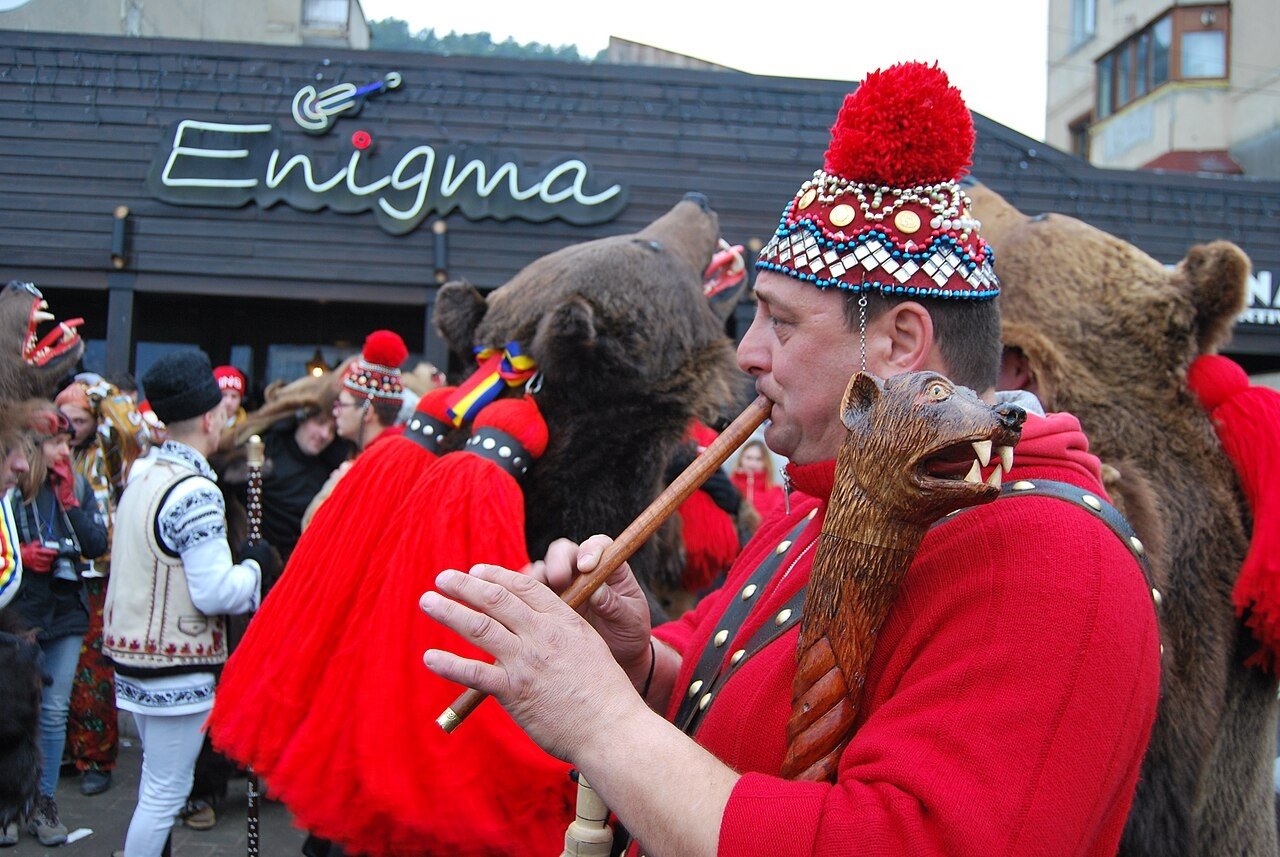
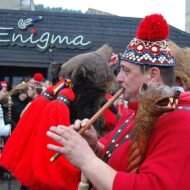
In the hills of eastern Romania, between Christmas and New Year, people of all ages dress in real bear skins, some weighing up to 50 kilograms, and dance through the streets to drums and whistles. The bears growl, stamp, “die” and come back to life: a ritual of the old year dying and the new one being born, meant to chase away evil spirits.
The custom is practised across the region, but the town of Comănești is its centre. Groups from the surrounding villages come together there for the Festival of Ancestral Customs and Traditions, usually on 30 December, with a parade through the town and a large show in the central park around midday.
Weather in Comănești: a cold continental climate. Late December is usually below freezing, often with snow.
Getting there: about 300 km north of Bucharest, fly to Bacău and drive about an hour west into the Trotuș valley. Book accommodation early.
8. Silvesterchlausen, Urnäsch (Switzerland)
31 December (and 13 January) · 47.32° N, 9.28° E · Appenzell Ausserrhoden
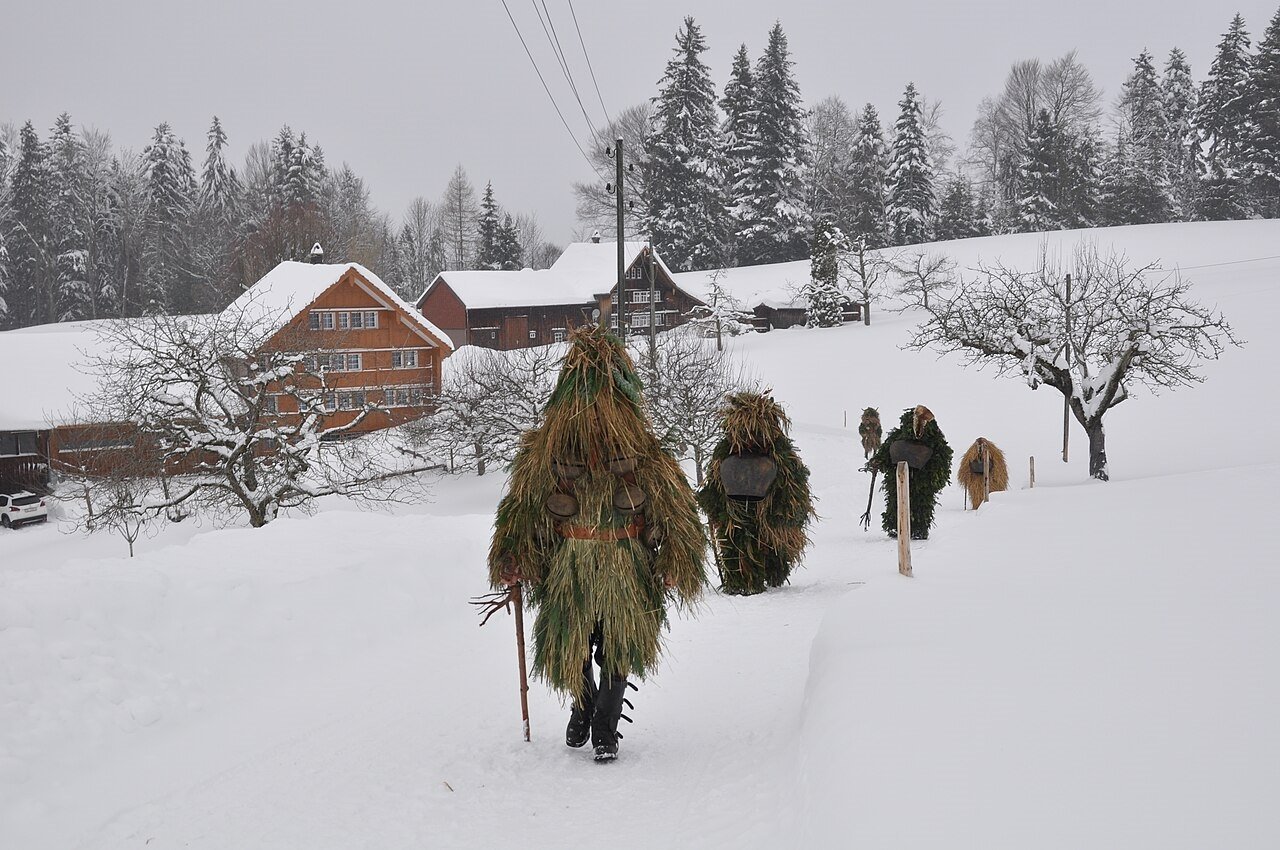
In the hills of Appenzell, the year ends twice. On 31 December, by the modern calendar, and again on 13 January, “Old New Year’s Eve” by the old Julian calendar, groups of masked mummers called Silvesterchläuse walk from farm to farm from before dawn, ringing huge bells and singing a wordless yodel, the Zäuerli.
There are three kinds. The Schöne (“beautiful”) wear velvet costumes and enormous headdresses carved with scenes of village life and covered in glass beads. The Wüeschte (“ugly”) wear masks and costumes made of branches, moss and leaves. The Schö-Wüeschte fall somewhere between. The village of Urnäsch is the best place to see them, and its folk-customs museum explains the tradition.
If either date falls on a Sunday, the mummers go out on the Saturday before. In 2026–27, both dates fall on weekdays.
Weather in Urnäsch: a cold pre-Alpine climate at about 830 metres. Expect frost at dawn and possibly snow.
Getting there: about 1.5 hours by train from Zurich, via Herisau or Gossau.
9. Fireballs, Stonehaven (Scotland)
31 December · 56.96° N, 2.21° W · Aberdeenshire
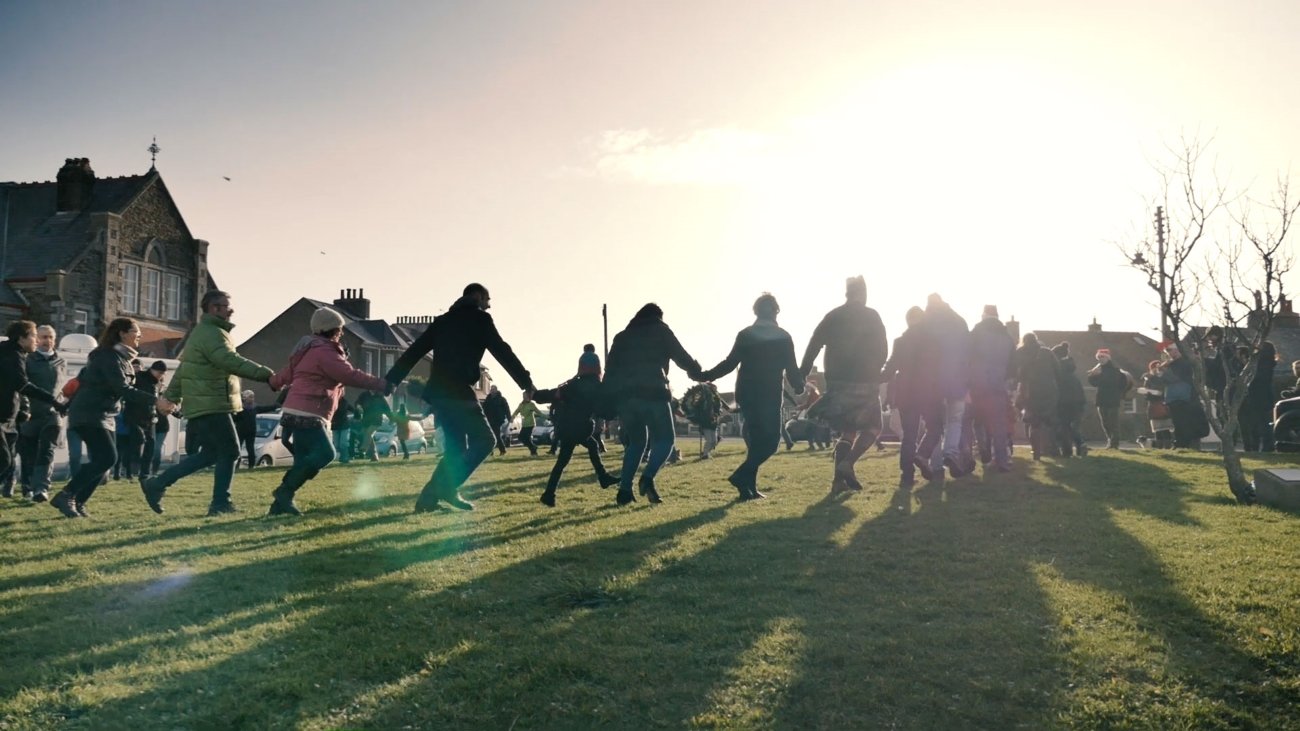
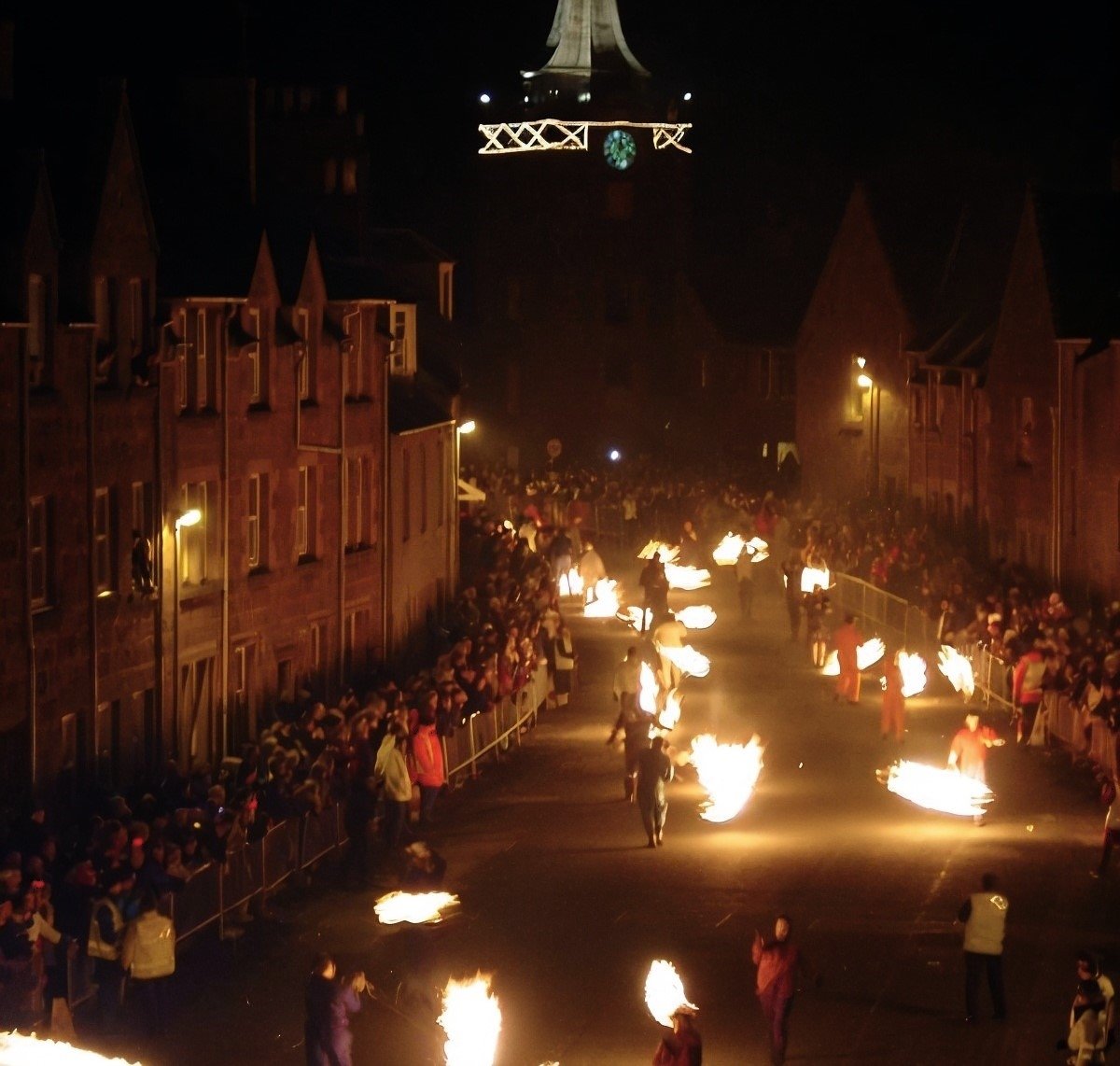
There are bigger Hogmanays (Edinburgh’s street party is famous), but there are few stranger ones. In the harbour town of Stonehaven, just before midnight, pipers lead a procession up the High Street, and as the clock strikes twelve, the fireball swingers light balls of fire in wire cages and swing them around their heads as they walk the street. At the end, the fireballs are thrown into the harbour, followed by fireworks.
It is free, run by volunteers, and very popular: around 10,000 people came to welcome 2026. Arrive from around 22:00 for a good spot; entry gates close at 23:40.
Weather in Stonehaven: cold, windy and often wet on the North Sea coast, usually a few degrees above freezing.
Getting there: about 20 minutes by train south from Aberdeen, book a return or a room in advance, as late-night transport is limited.
Beyond the map
December’s festivals are not about shopping. They are about getting through the longest nights: bells to wake the year, fire to defeat the dark, masks to scare off whatever waits outside. Most of them are made by the people who live there, for themselves, and they still welcome anyone who comes to watch.
Next in the series: January.
Read next: Christmas in the Mountains · A Norse Yule · Advent Beyond Vienna