







TL;DR: The Albula railway line is a UNESCO World Heritage marvel connecting Thusis to St. Moritz through 55 bridges, 39 tunnels, and breathtaking Alpine scenery. Travel costs range from €47-112 depending on class and season, with the iconic Landwasser Viaduct being an absolute must-see.
- Why the Albula Railway Should Be on Your Bucket List
- Route Overview and Key Facts
- Glacier Express vs. Bernina Express: Which to Choose?
- Absolute Must-See Highlights
- Landwasser Viaduct – The Instagram Superstar
- Solis Viaduct – The Height Champion
- Albula Tunnel – The Underground Marathon
- The Spiral Tunnels Near Bergün
- Filisur Village
- St. Moritz
- Best Times to Visit
- Ticket Prices and Booking (2025)
- Transportation and Getting There
- Where to Stay
- Activities Beyond the Train
- Practical Travel Tips
- Accessibility and Inclusivity
- Environmental Impact and Sustainability
- Food and Dining
- Photography and Social Media Tips
- Budget Breakdown (Per Person)
- Seasonal Events and Special Occasions
- Final Thoughts
Why the Albula Railway Should Be on Your Bucket List
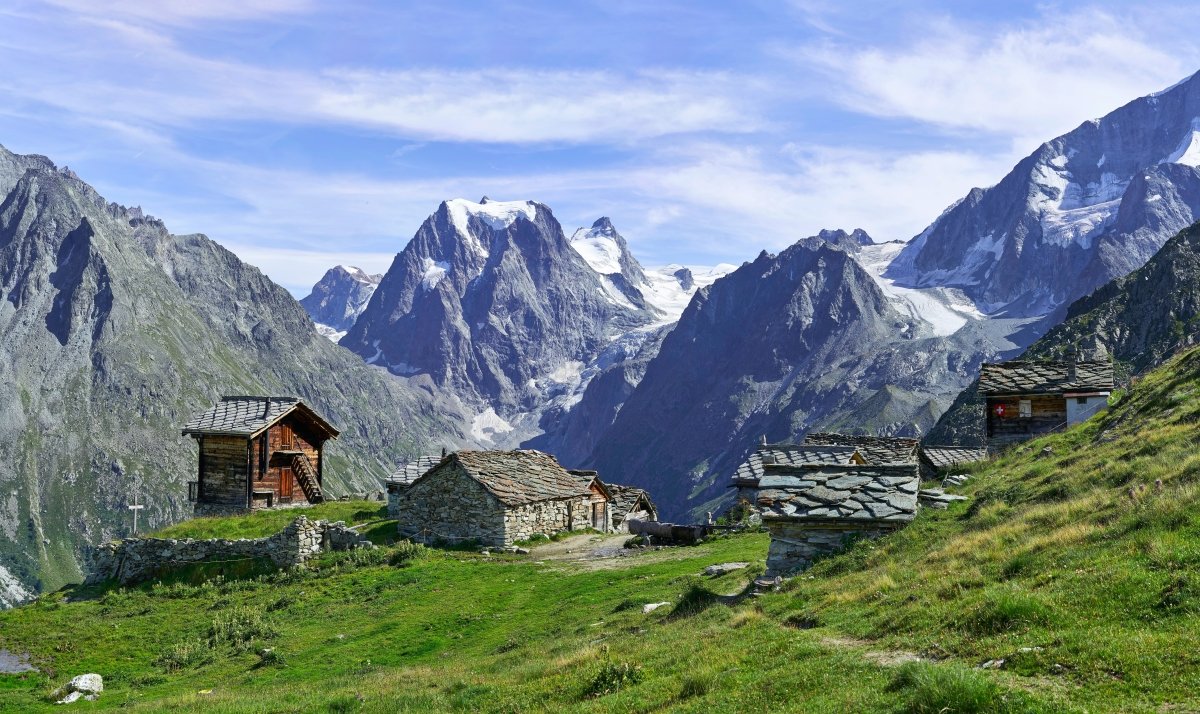
Picture this: you’re gliding through the Swiss Alps on what many consider the world’s most spectacular narrow-gauge railway, crossing viaducts that seem to defy gravity while tunneling through mountains that have stood for millennia. The Albula railway line isn’t just transportation – it’s a masterpiece of engineering wrapped in some of Europe’s most jaw-dropping scenery.
This isn’t your average train ride. We’re talking about a UNESCO World Heritage Site that took five years to build (1898-1903), claimed 16 workers’ lives during construction, and now carries millions of awestruck passengers annually through landscapes that’ll have you questioning if you’ve somehow stumbled into a fairy tale.
Route Overview and Key Facts
The Numbers That Matter:
- Length: 61.67 kilometers (38.32 miles) of pure Alpine magic
- Elevation gain: From 697m in Thusis to 1,774m in St. Moritz
- Engineering marvels: 55 bridges and 39 tunnels
- Travel time: Approximately 2.5 hours (but you’ll wish it lasted forever)
- Gauge: 1-meter narrow gauge (adding to the intimacy of the experience)
Main Route: Thusis → Tiefencastel → Filisur → Bergün → Preda → Samedan → Celerina → St. Moritz
The line forms the northern section of the famous Bernina Express route, connecting seamlessly with the Bernina Pass line for those wanting to continue to Italy.
Glacier Express vs. Bernina Express: Which to Choose?
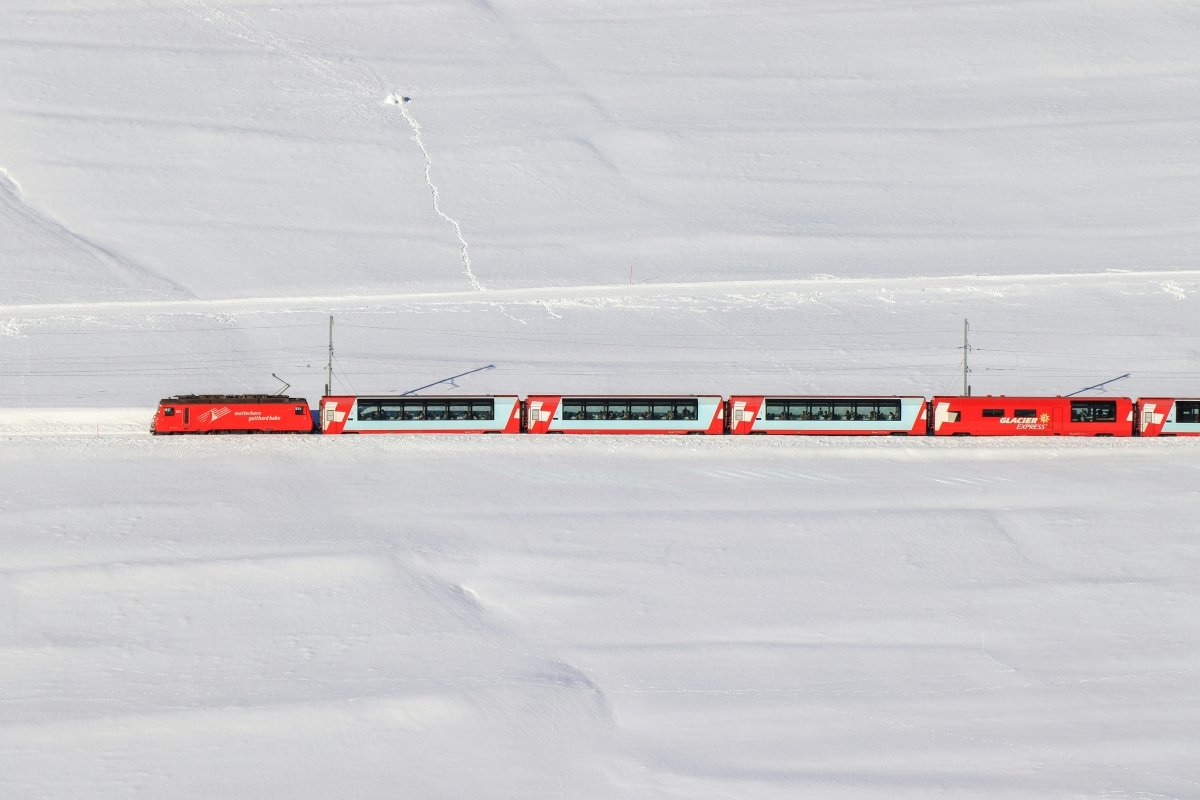
- Nicknamed the “slowest express train in the world” (and that’s a good thing).
- Connects Zermatt to St. Moritz/Davos, passing the Albula Line en route.
- Luxury onboard dining, panoramic windows, and 291 bridges crossed.
Runs between Chur/St. Moritz and Tirano (Italy).
- Famous for its UNESCO heritage status, spiraling viaducts, and glacier-to-palm-tree landscapes.
- More flexible with shorter sections if you don’t want the full-day ride.
- 💡 Tip: You don’t need to pick one—if your schedule (and budget) allow, do both. They’re different flavors of Alpine perfection.
Absolute Must-See Highlights
Landwasser Viaduct – The Instagram Superstar
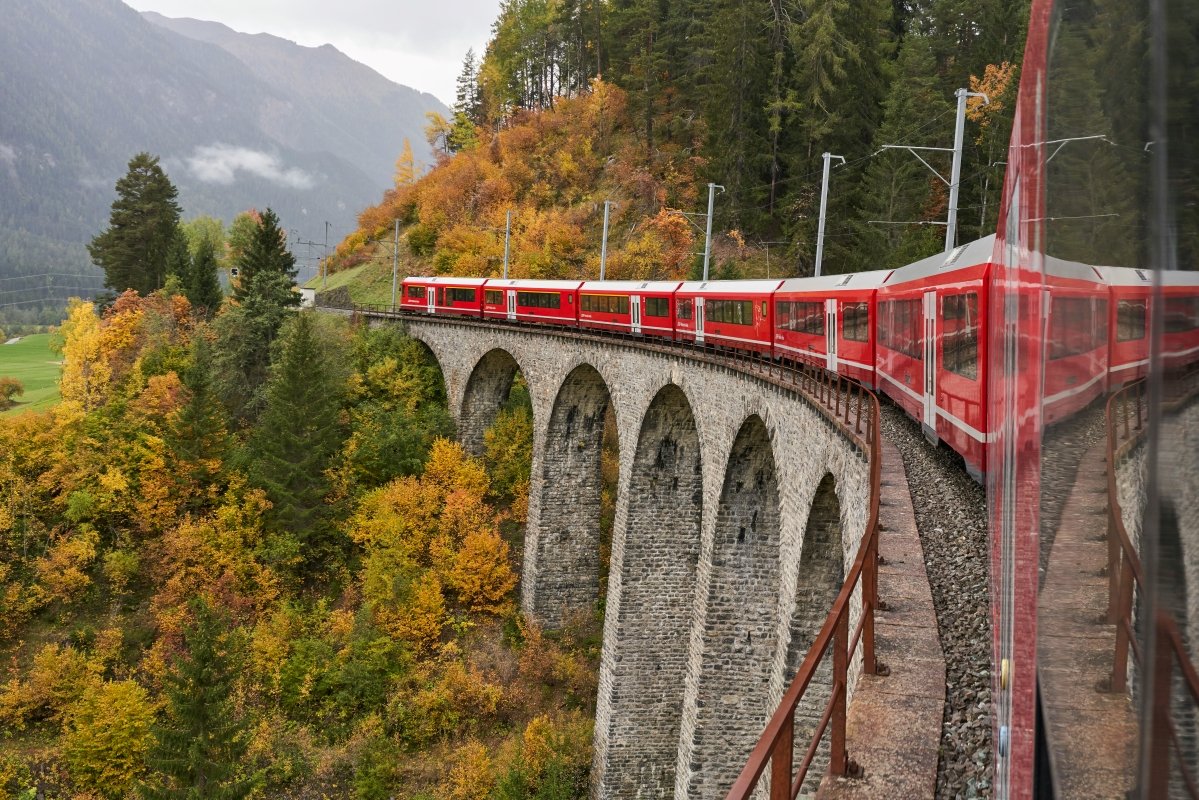
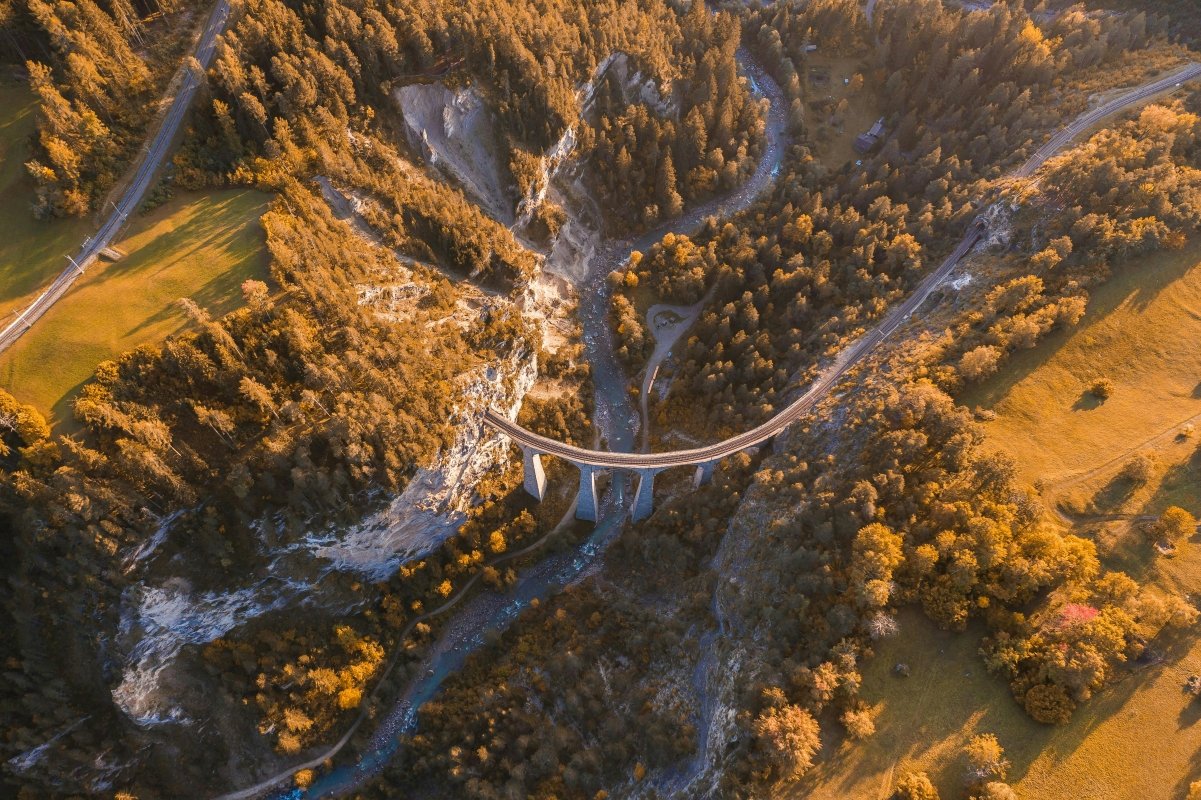
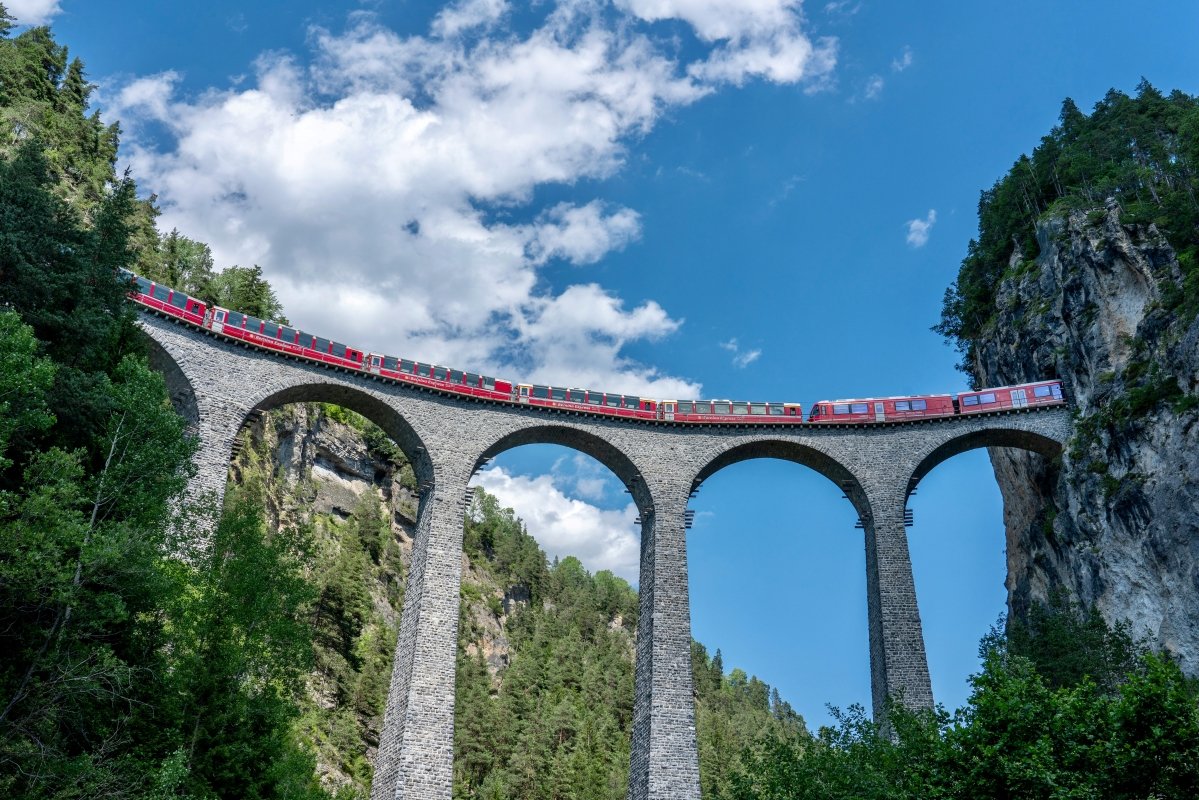
This curved limestone masterpiece near Filisur is probably the most photographed railway bridge in the world, and for good reason. At 65 meters high and 136 meters long, watching a red Rhaetian Railway train emerge from a tunnel onto this graceful curve is pure magic. Pro tip: The best photo spots are accessible via hiking trails from Filisur village. MORE READ..
Solis Viaduct – The Height Champion
At 89 meters high, this is the tallest bridge on the entire Rhaetian Railway network. The views into the Albula Valley below will have you pressing your face against the window like a kid in a candy store.
Albula Tunnel – The Underground Marathon
At 5,866 meters (3.6 miles), this tunnel was an engineering nightmare turned triumph. As you travel through, you’re passing under the watershed between the Rhine and Danube rivers at 1,820 meters above sea level. The breakthrough moment on May 29, 1902, at 3 AM must have been incredible for those exhausted workers.
The Spiral Tunnels Near Bergün
These engineering marvels allow the train to gain significant altitude in minimal space. You’ll actually loop around inside the mountain, emerging higher up the valley – it’s like a real-life roller coaster designed by civil engineers with a sense of humor.
Filisur Village
- Quaint houses, flower-decked balconies, and the perfect spot to photograph the Landwasser Viaduct.
St. Moritz
- Where your scenic train ride can turn into a luxury Alpine getaway. Skiing, spa hotels, Michelin dining—this is where elegance meets altitude.
Best Times to Visit
Spring (April-June): Perfect weather, fewer crowds, and nature awakening from winter slumber. Waterfalls are at their most dramatic from snowmelt.
Summer (July-September): Peak season means crowds but also the fullest experience. All hiking trails are accessible, and the weather is most reliable.
Fall (October-November): Golden larch trees create a painter’s palette of colors. Crisp air offers crystal-clear mountain views.
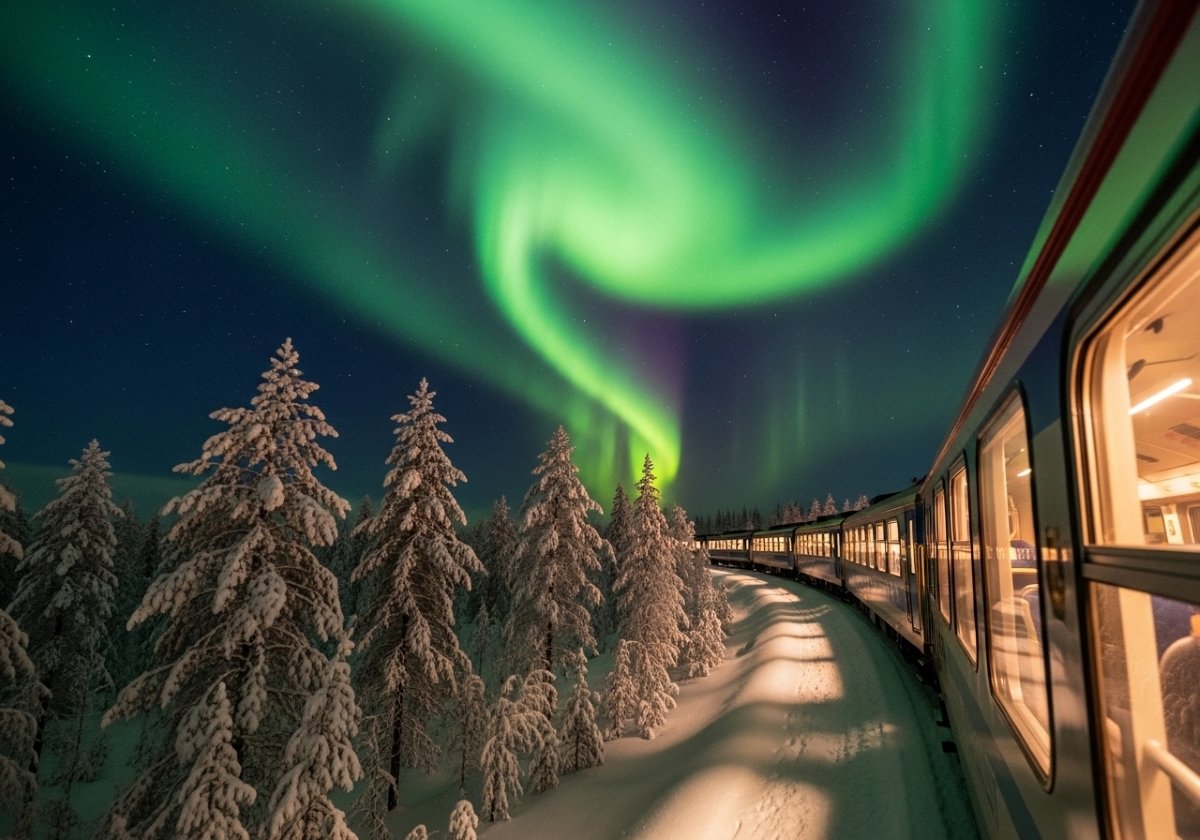
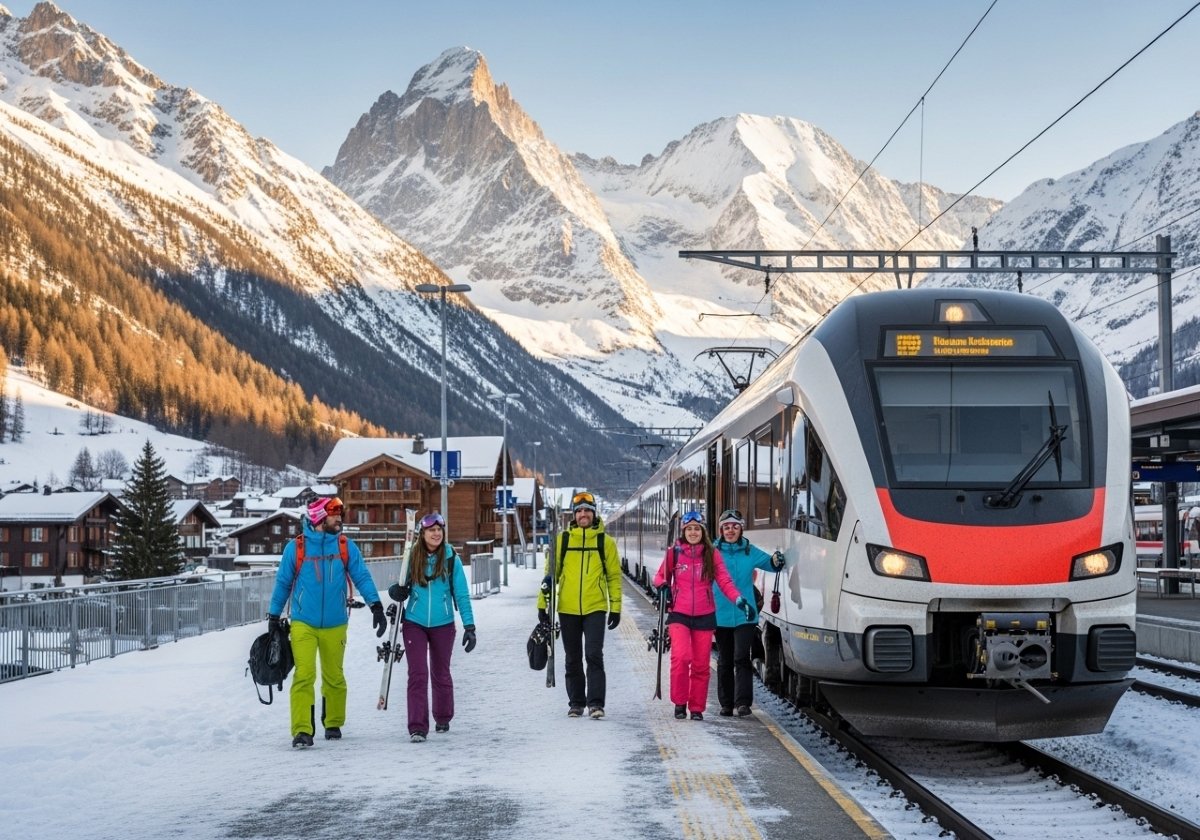
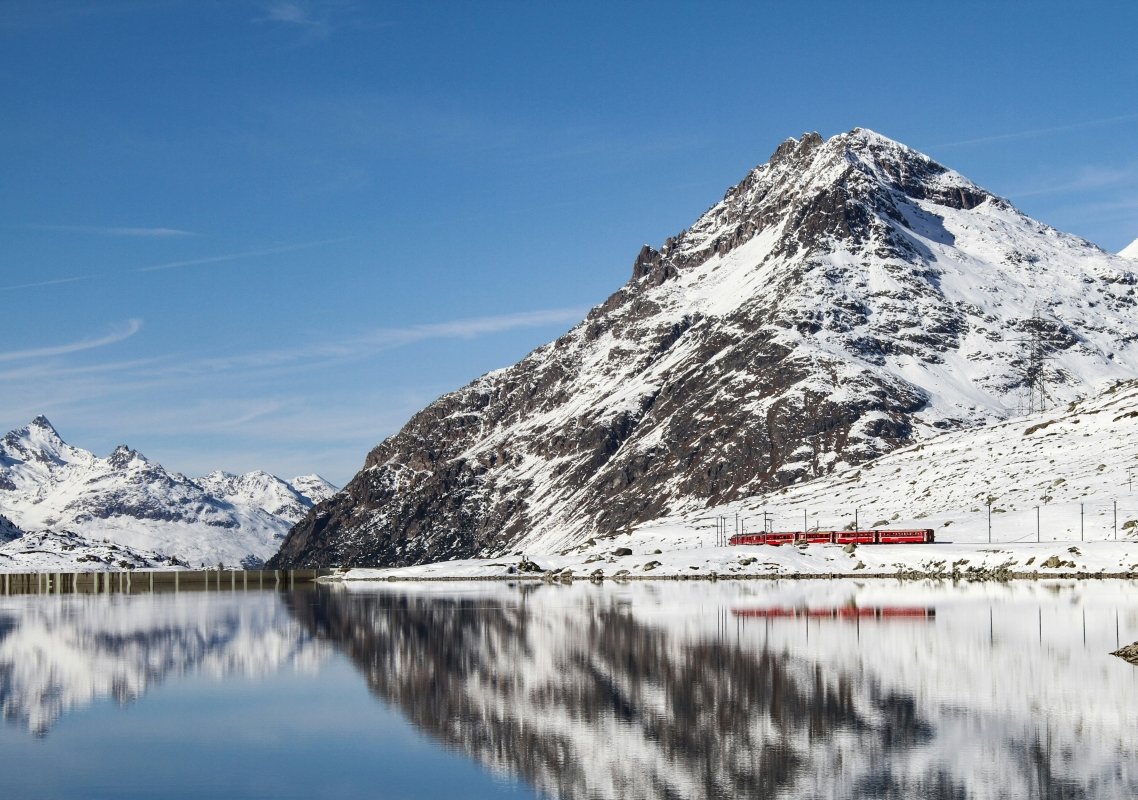
Winter (December-March): A winter wonderland that feels like traveling through a snow globe. The contrast between the warm train interior and snowy landscapes outside is magical.
Ticket Prices and Booking (2025)
Regular Train Services
- Second class: From €47.99 for longer routes
- First class: Approximately 50% more than second class
- Children (6-16): Half price (under 6 travel free)
Bernina Express (Premium Service)
Seat Reservation Fees (Mandatory for panoramic cars):
- Short route (St. Moritz-Tirano): CHF 28 year-round
- Long route (Chur-Tirano):
- Peak season (May 15-Oct 26): CHF 36
- Low season: CHF 32
Money-Saving Tips:
- Use regular regional trains on the same tracks to avoid reservation fees
- Swiss Travel Pass covers the journey (but not reservation fees)
- Book accommodation packages that include rail passes
- Groups of 10+ get 30% discounts
Transportation and Getting There
From Major Cities
Zurich: Direct trains to Chur (1 hour), then connect to Albula line Milan: Regional train to Tirano (3 hours), then board northbound Geneva: Train to Chur via Zurich (3.5 hours total)
Local Connections
The line connects seamlessly with:
- Glacier Express (shares tracks between Chur and St. Moritz)
- Bernina Express (continues to Italy via Bernina Pass)
- Arosa Line (branches off at Chur)
Where to Stay
Luxury Options
St. Moritz: The original Alpine resort playground, where champagne flows like mountain streams and the prices reflect the exclusivity.
Pontresina: Slightly more relaxed than St. Moritz but equally stunning, with excellent hiking access.
Mid-Range Gems
Bergün: Charming village right on the line, perfect for railway enthusiasts. The Railway Museum here is a hidden treasure.
Filisur: Quieter option with easy access to Landwasser Viaduct viewpoints.
Budget-Friendly
Tiefencastel: Small station town with reasonable accommodation and good connections.
Thusis: Gateway town with several affordable hotels and guesthouses.
Activities Beyond the Train
Hiking the Via Albula/Bernina
This 131-kilometer hiking trail follows the railway, allowing you to hop on and off trains as you explore. It’s divided into 10 manageable stages, perfect for multi-day adventures.
Railway Museums
Albula Railway Museum (Bergün): Over 600 exhibits showcasing the line’s incredible history, including one of the last “Crocodile” locomotives.
Tobogganing (Winter)
The 6-kilometer toboggan run from Preda to Bergün is Switzerland’s most popular, and the train journey to the start is half the fun.
Photography Tours
Join guided photography excursions to capture the perfect shot of trains crossing the famous viaducts.
Practical Travel Tips
What to Pack
- Camera: Obviously! Bring extra batteries – the cold drains them quickly
- Layers: Alpine weather changes faster than Swiss train schedules
- Comfortable shoes: For exploring stations and viewpoints
- Snacks: While there are dining options, having provisions ensures you won’t miss scenic sections
Booking Strategies
- Book accommodation early: Popular hotels along the route fill up months in advance
- Reserve panoramic car seats: Even if you have a rail pass, you’ll need reservations for the premium experience
- Check construction schedules: Track maintenance can occasionally reroute services
Language Tips
This multilingual region speaks German, Romansh, and Italian. English is widely understood in tourist areas, but learning basic German greetings goes a long way.
Accessibility and Inclusivity
The Rhaetian Railway works hard to make the Albula line accessible to travelers with mobility challenges. Many stations have been modernized with:
- Wheelchair-accessible platforms
- Adapted restroom facilities
- Staff assistance for boarding (advance notice recommended)
- Audio announcements in multiple languages
For travelers with visual impairments, detailed audio guides are available, and the rhythmic sounds of the narrow-gauge railway create their own memorable soundtrack.
Environmental Impact and Sustainability
Traveling by train is one of the most environmentally friendly ways to explore the Alps. The Rhaetian Railway runs on 100% renewable hydroelectric power, making your journey virtually carbon-neutral. By choosing rail over road transport, you’re actively contributing to preserving these pristine Alpine landscapes for future generations.
Food and Dining
While the regular Albula line trains don’t have dining cars, the stations offer delightful local specialties:
St. Moritz: High-end restaurants serving international cuisine alongside traditional Engadin specialties Bergün: Local inns offering hearty mountain fare like Älplermagronen (Swiss mac and cheese with mountain flavor) Tiefencastel: Traditional Graubünden restaurants serving Pizzoccheri and local Veltliner wine
Photography and Social Media Tips
Best Photo Spots
- Landwasser Viaduct: Multiple viewpoints accessible via hiking trails
- Spiral tunnels: Capture the train emerging at different levels
- Solis Viaduct: Dramatic valley views with train crossing
- Lai da Palpuogna: Voted “most beautiful place in Switzerland” (accessible from Preda)
Social Media Optimization
- Use hashtags: #AlbulaRailway #SwissTrains #UNESCO #SwissAlps #GraubündenTravel
- Tag @rhaetianrailway for potential features
- Golden hour shots (just after sunrise or before sunset) perform best
- Include motion in your shots – the red trains against white snow or green valleys are Instagram gold
Budget Breakdown (Per Person)
Economy Travel
- Train ticket: €50-80
- Accommodation: €60-100/night
- Meals: €30-50/day
- Activities: €20-40/day
- Total daily budget: €160-270
Mid-Range Experience
- Premium train seats: €80-120
- Hotel accommodation: €150-250/night
- Dining: €60-100/day
- Guided tours: €50-100/day
- Total daily budget: €340-570
Luxury Experience
- First-class panoramic cars: €120-200
- Luxury hotels: €300-800/night
- Fine dining: €100-200/day
- Private guides: €200-500/day
- Total daily budget: €720-1,700
Seasonal Events and Special Occasions
Summer Steam Trains
Vintage steam locomotives occasionally operate special services, offering an authentic historical experience complete with the smell of coal smoke and the rhythmic chuff-chuff of steam power.
Christmas Markets
December brings magical Christmas markets to stations along the route, with the smell of Glühwein and roasted chestnuts adding to the winter wonderland atmosphere.
Railway Anniversaries
Special commemorative trains and events mark significant dates in the line’s history, often featuring historical rolling stock and costumed conductors.
Final Thoughts
The Albula railway line isn’t just about getting from Point A to Point B – it’s about the journey itself becoming the destination. Whether you choose the leisurely luxury of the Glacier Express, the Italian adventure of the Bernina Express, or the budget-friendly regular trains that use the same spectacular tracks, this UNESCO World Heritage route delivers an experience that will stay with you long after you’ve returned home.
Every tunnel emergence reveals a new vista, every viaduct crossing offers a fresh perspective, and every station stop provides an opportunity to step into a different world. This is Switzerland at its most spectacular, accessible to travelers of all backgrounds and abilities.
So pack your sense of wonder, charge your camera, and prepare for a journey that represents the very best of human engineering harmoniously integrated with some of the most beautiful landscapes on Earth. The Albula railway line isn’t just a train ride – it’s a moving meditation on what’s possible when vision, determination, and respect for nature come together.
Book your journey today and become part of this continuing story of connection, beauty, and human achievement in the heart of the Swiss Alps.
Safe travels, and may your journey be filled with wonder and unforgettable moments!