








There is a corner of Romania that most international travelers have never considered. It sits in the far east of the country, where the Danube — after crossing nine countries and 2,860 kilometres of European history — finally surrenders to the Black Sea. What it leaves behind is extraordinary: a UNESCO World Heritage wetland the size of a small country, a town reachable only by boat, a beach where wild horses wander at dawn, and a Black Sea coastline that has been a crossroads of Greek, Roman, Ottoman and Romanian civilisation for three thousand years.
This is not the Romania of Transylvania’s Gothic castles or Bucharest’s Art Nouveau boulevards. This is Romania at its most elemental — wild, unhurried, and almost entirely unknown to the traveller who hasn’t specifically sought it out.
This guide covers everything: the Danube Delta from arrival to departure, Sulina and its extraordinary history, the wild beach where horses roam free, the wreck of the Turgut S lying in the shallows, and the Black Sea coast south to Mangalia. Each section links deeper into its own dedicated guide.
Understanding the Geography
The Romanian Black Sea coast runs approximately 245 kilometres from the Ukrainian border in the north to the Bulgarian border in the south. It divides naturally into three distinct zones:
The Danube Delta — the northern third, where the river splits into three channels (Chilia, Sulina and Sfântu Gheorghe) before reaching the sea. A UNESCO World Heritage Site and Biosphere Reserve covering 5,800 square kilometres. No roads. Accessible only by boat.
The Constanța Riviera — the central section, where Romania’s traditional beach resort towns (Mamaia, Eforie Nord, Neptun, Venus, Saturn) run in a chain south of the city. This is where Romanian families have been holidaying since the communist era. Lively, affordable, genuinely warm in summer.
The Southern Coast — from Costinești to Mangalia and the Bulgarian border. More traditional, quieter, historically richer. Mangalia at the far south was the ancient Greek city of Callatis, with an Ottoman mosque still in active use and therapeutic Black Sea mud baths.
The Danube Delta: Europe’s Wild Heart
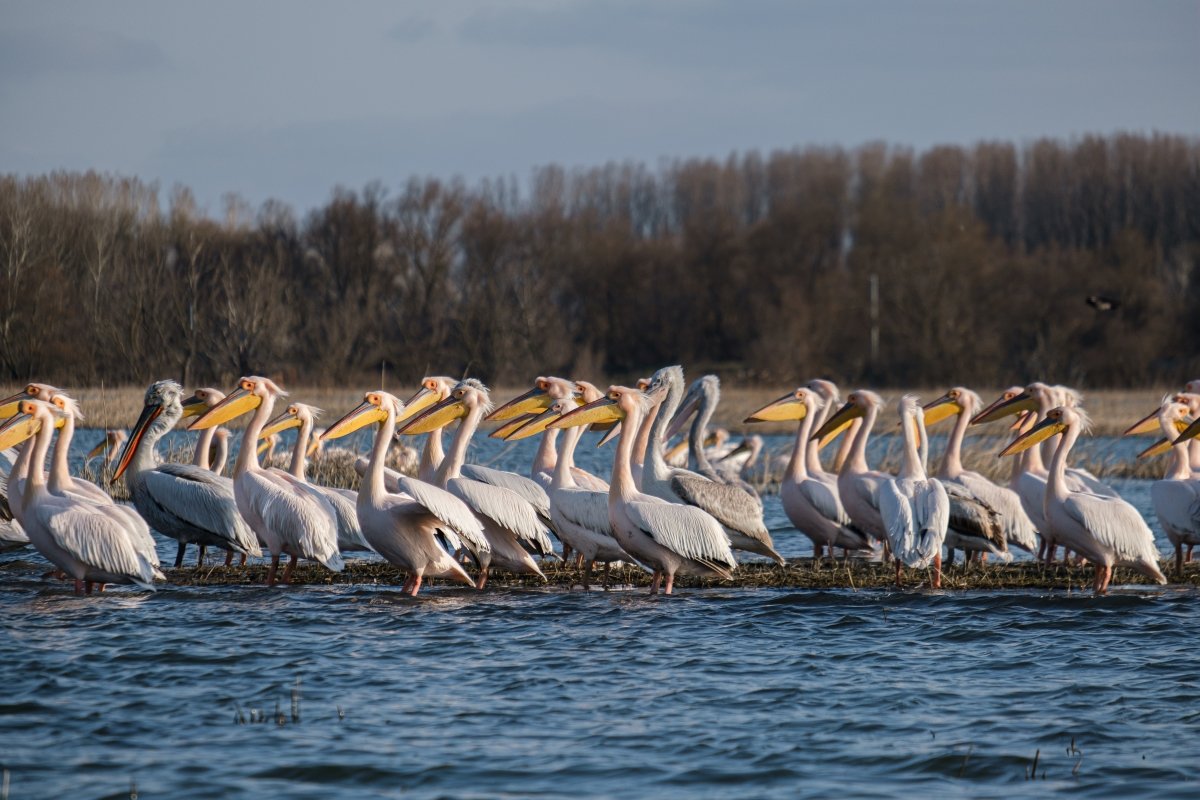
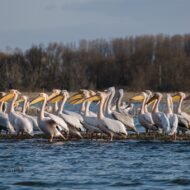
The Danube Delta is the third-largest biodiversity reserve in the world, after the Great Barrier Reef and Ecuador’s Galápagos Islands. It contains over 5,500 species of flora and fauna, 300 bird species, 45 fish species and Europe’s largest white pelican colony. The reed beds alone cover over 1,000 square kilometres — the largest continuous reed bed in the world.
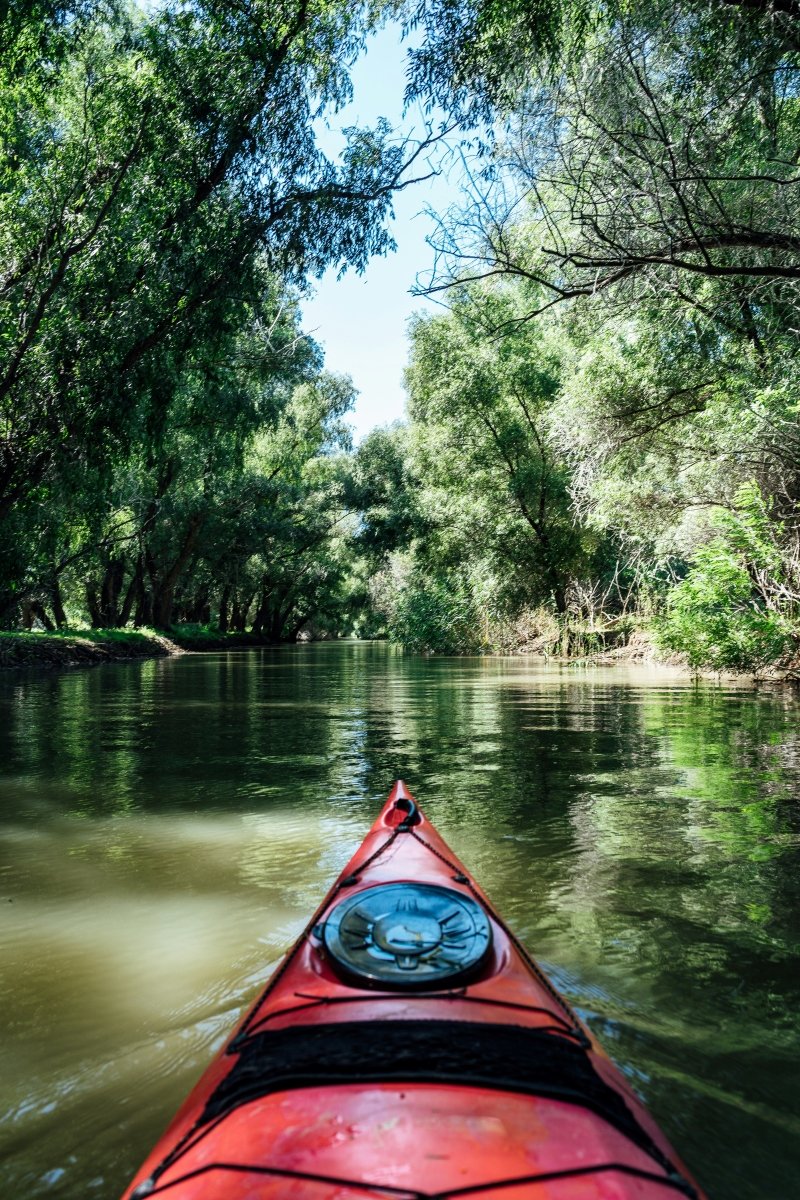
It is also one of the last places in Europe where you can travel for an entire day by boat without seeing a road, a car or a building larger than a fisherman’s cottage.
Read the complete Danube Delta guide →
Getting to the Delta: Tulcea
Your gateway is Tulcea — a small Danubian city 80 kilometres from the sea. Reach it by:
- Bus from Bucharest (4 hours, frequent connections)
- Train from Bucharest or Constanța (slower but scenic)
- Car from Bucharest (4 hours, leave the car in Tulcea — there are no roads inside the Delta)
From Tulcea, all transport into the Delta is by boat.
The Three Arms
The Delta divides into three navigable arms, each with a different character:
The Sulina Arm — the central channel, navigated by the NAVROM state ferry and private speedboats. The most accessible. Leads directly to Sulina town at the mouth of the Danube.
The Sfântu Gheorghe Arm — the southern channel, quieter, wilder, ending at the remote village of Sfântu Gheorghe where wild horses roam free beaches accessible only by boat. The most extraordinary for wildlife.
The Chilia Arm — the northern border with Ukraine, navigated by smaller boats. The most remote. Almost no tourist infrastructure.
What You Will See
White pelicans — Europe’s largest colony at Lake Roșca. Between 2,500 and 5,000 breeding pairs. Seeing 40 pelicans take flight overhead simultaneously is one of Europe’s great wildlife moments.
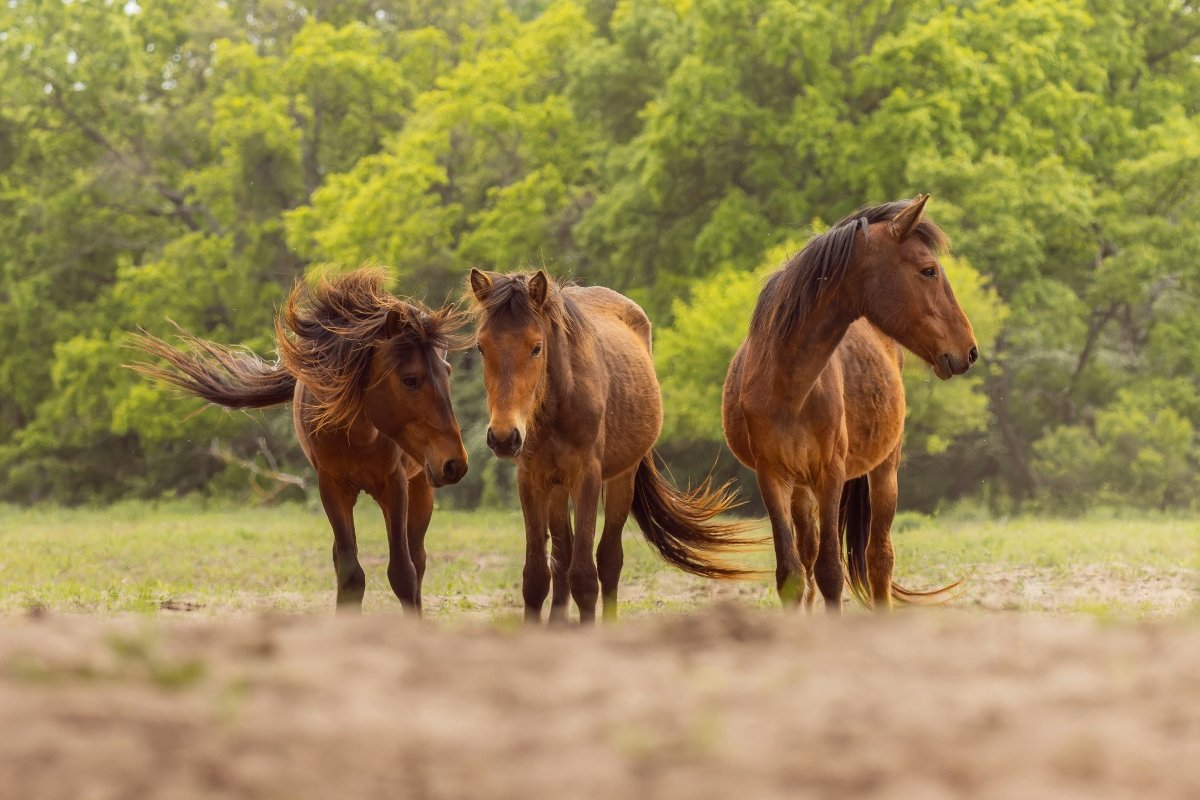
Wild horses — approximately 2,000 semi-wild horses roam the Letea Forest and the beaches of Sfântu Gheorghe. The sight of horses galloping free along a Black Sea beach at dawn is unlike anything else in Europe.
European mink — one of the Delta’s best-kept secrets, the Delta holds one of the largest remaining populations of European mink, one of the continent’s most endangered mammals.
Traditional fishing communities — Mila 23 (a Lipoveni Russian community), Sfântu Gheorghe, Crișan — villages that have been fishing these waters for centuries, still operating largely as they always have.
Best Time to Visit
April–June — the best. Pelicans arrive, horses are visible, mosquitoes are not yet dominant, accommodation is available and prices are lower than peak season.
July–August — peak season. Warm, busy, expensive. Mosquitoes are significant — bring serious repellent.
September–October — the hidden gem season. Temperatures still above 20°C, autumn light on the reed beds is extraordinary, prices drop 30%, crowds thin dramatically.
Sulina: The Town at the Edge of the World
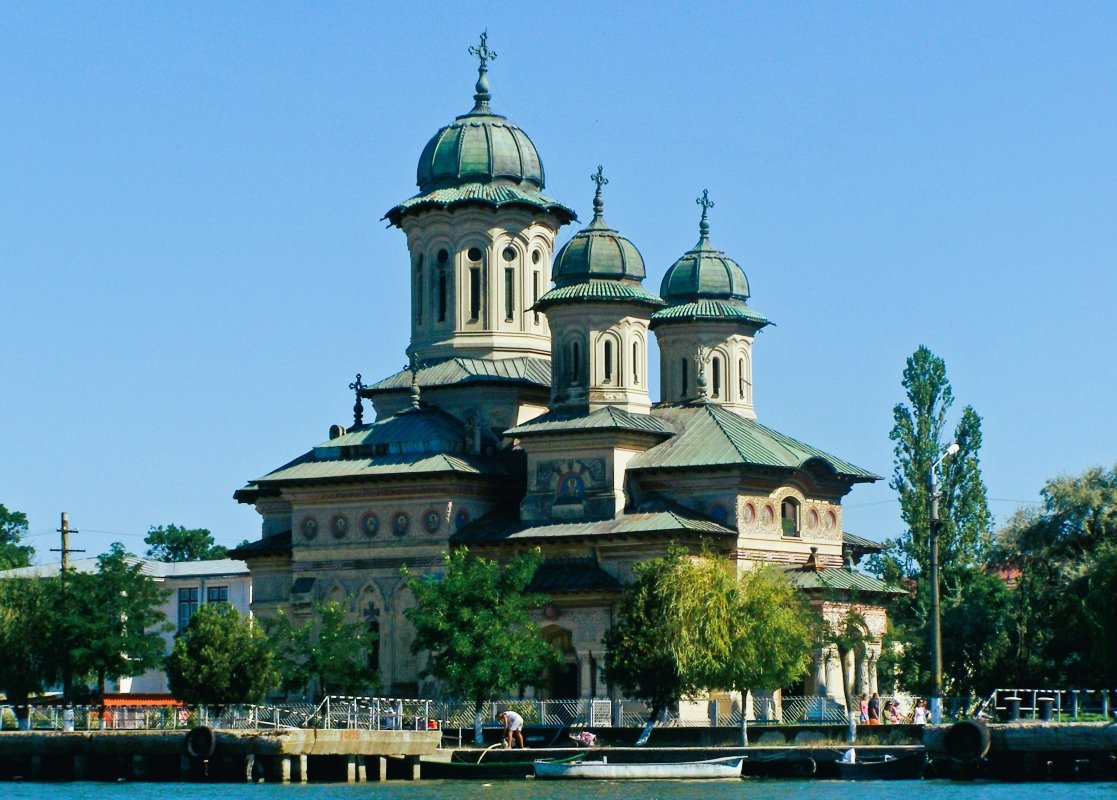
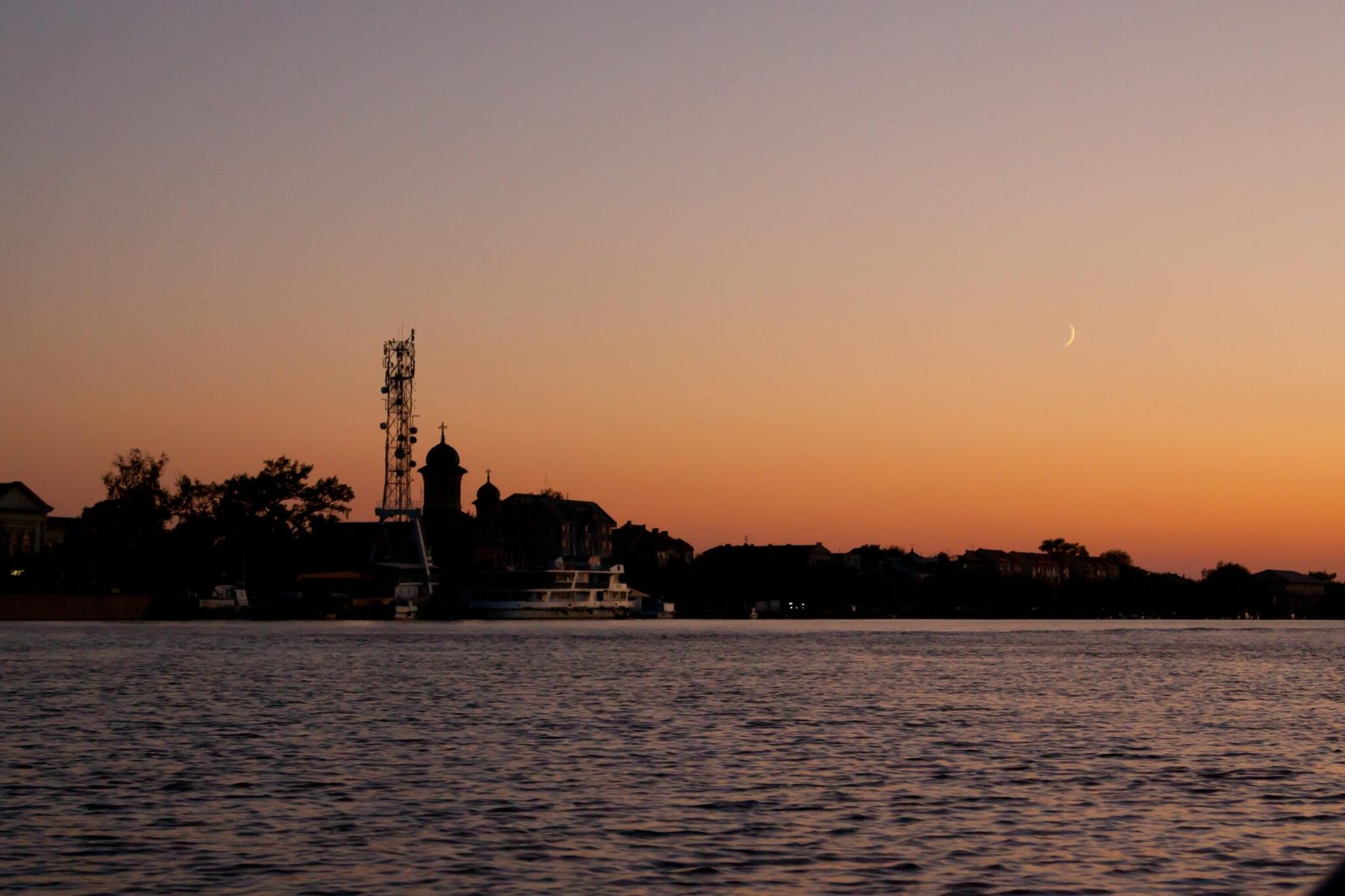
Sulina is Romania’s easternmost town and one of its most extraordinary. There are no roads that lead here. Your only option is the boat — either the four-hour NAVROM state ferry from Tulcea, or the 90-minute private speedboat. The journey is part of the experience.
Read the complete Sulina guide →
Why Sulina Is Unlike Anywhere Else
Sulina was once among the most prosperous cities in Romania. In the second half of the 19th century, when the European Danube Commission was established here to regulate navigation on the lower Danube, Sulina became an extraordinary cosmopolitan outpost — Greeks, Turks, British, French, Italians, Germans, Poles, Jews, Romanians, Bulgarians all living and trading in a town of barely 10,000 people at the edge of Europe.
The Multinational Cemetery is the most extraordinary testament to this history. Divided into Christian, Muslim and Jewish sectors, it contains graves of at least fifteen nationalities — Poles, Turks, Greeks, English, Germans, French, Italians, Romanians and others. One stone marks the grave of the Greek pirate George Kontoguris, who according to local legend buried a treasure somewhere on Sulina beach and left clues encoded in his tombstone.
The European Danube Commission left behind infrastructure that still stands: the lighthouse (visit for 5 lei, climb to the terrace for extraordinary views), the commission buildings along the promenade, the canal infrastructure that straightened the Sulina arm and allowed larger ships to navigate the Delta.
The Sulina Beach
Read the complete Sulina Beach guide →
The beach at Sulina is extraordinary by any standard — fine white sand, clean water as clear as the Adriatic, no concrete hotel strip, no beach vendors with parasols. The middle section has basic facilities: sunbeds, beach bars, a couple of restaurants. The rest is wild.
Wild horses and cattle wander freely along the beach. The shoreline is shallow for 30-40 metres — no sudden drops, safe for children. At night, the bioluminescent plankton illuminates the water — swimming in it is one of Romania’s most memorable experiences. Watch for the moon rising over the Black Sea from the beach.
Getting to the beach from town: walk (25 minutes), boat, or one of Sulina’s few taxis.
The Wreck of the Turgut S
Read the complete Turgut S wreck guide →
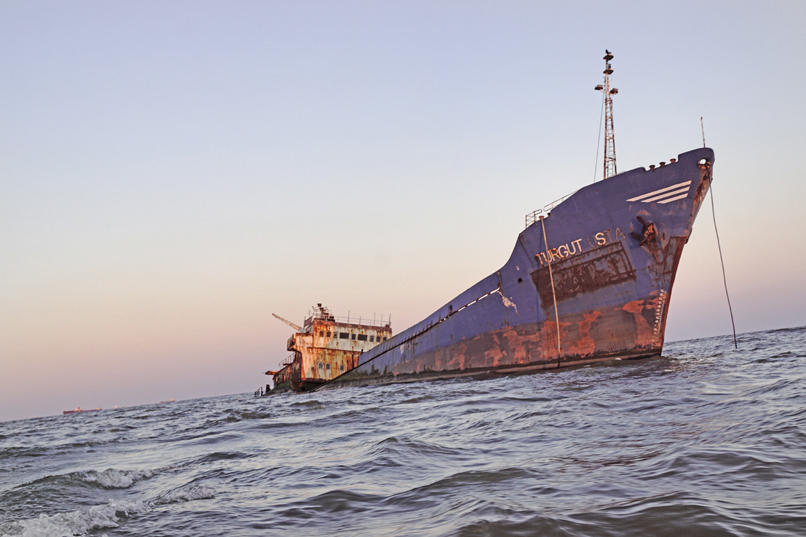
Eight kilometres north of Sulina along the northern dike, the Turgut S lies partially visible above the waterline — a Turkish cargo vessel that ran aground in the Delta and was never refloated. It is one of the most accessible wreck sites on the Black Sea coast, visible from the dike and reachable by boat from Sulina. For divers, it offers an extraordinary accessible dive in shallow, warm Black Sea water.
The Constanța Riviera
South of the Delta, the Romanian coast becomes more accessible — connected to Constanța by road and regular bus services. This is resort Romania: the towns of Mamaia, Eforie Nord, Neptun, Jupiter, Venus, Saturn and Cap Aurora running in a chain along sandy beaches backed by Soviet-era hotel blocks.
Do not let the architecture put you off. The beaches here are genuinely excellent — wide, sandy, warm, with water that stays above 20°C from June through September. The infrastructure is good. The prices are significantly lower than equivalent Mediterranean resorts.
Constanța itself deserves a day: the ancient Roman mosaics in the Archaeological Museum (a mosaic complex from the 4th century AD, one of the largest in Europe), the Casino on the sea wall, the old city’s Ottoman and Greek layers.
Mangalia: Ancient Greece on the Black Sea
Read the complete Mangalia guide →
Mangalia is the southernmost city in Romania and one of its least understood. Most visitors who reach it are Romanian families using the adjacent resorts of Saturn, Venus and Jupiter. Almost no international traveller has ever heard of it.
They are missing something extraordinary.
Callatis — Ancient City Beneath the Modern Town
Mangalia was the Greek city of Callatis, founded in the 6th century BC by colonists from Heraclea Pontica (modern Karadeniz Ereğli in Turkey). It was one of the most significant Black Sea Greek colonies — trading amber from the Baltic, grain from the Pontic steppe, wine and oil from the Aegean. The Romans conquered it in 71 BC; the Byzantines held it; the Ottomans renamed it.
The Callatis Archaeological Museum holds an extraordinary collection of Hellenistic coins, sculptures, ceramics and jewellery recovered from excavations beneath the modern city. The ancient walls are partially visible in the southern part of town. The museum entrance is modest; the collection is not.
The Esmahan Sultan Mosque
One of the oldest mosques in Romania, still in active use, built in the 16th century during the Ottoman period. The mosque is named after Esmahan Sultan, daughter of Sultan Selim II, who reportedly funded its construction. The interior is simple and beautiful. Outside prayer times, visitors are welcome.
The Therapeutic Mud
Mangalia’s sulphurous thermal springs and Black Sea mud have been used medicinally since antiquity. Modern spa facilities along the coast offer therapeutic mud treatments — significantly cheaper than equivalent treatments in Austria, Hungary or the Czech Republic, using mud that has the same sulphurous volcanic origin.
Practical Planning
Getting to the Romanian Black Sea Coast
By air: Bucharest Henri Coandă (OTP) is 230km from Constanța. Constanța’s Mihail Kogălniceanu Airport (CND) is the closer option — budget carriers serve it seasonally from several European cities.
By train: Direct trains from Bucharest to Constanța run several times daily (2.5 hours). From Constanța, local trains reach Mangalia (1 hour).
By car: Bucharest to Constanța on the A2 motorway (2.5 hours). Note: no roads exist inside the Danube Delta — leave the car in Tulcea.
When to Go
| Period | Delta | Black Sea Coast |
|---|---|---|
| April–June | Excellent — wildlife, no crowds | Good — quieter, all open |
| July–August | Good — warm, busy, mosquitoes | Peak season — busy, expensive |
| September–October | Excellent — best light, low crowds | Very good — warm, quieter |
| November–March | Quiet, atmospheric, cold | Mostly closed |
Budget Guide
Danube Delta: €40–60 per day including accommodation, meals and a boat tour.
Black Sea Coast: €35–70 per day depending on whether you use resort hotels or local guesthouses. Mangalia and the southern resorts are significantly cheaper than northern Mamaia.
Why This Coast Matters
This corner of Europe is where things happened before most of Europe knew they were happening. Greek sailors were trading here when Rome was still a village. The Ottoman Empire administered this coast for four centuries. The European Danube Commission met here in the 19th century to regulate navigation on a river that ran through six empires. Soviet-era resorts were built here when the Black Sea was the only sea a Romanian citizen could visit.
All of that history is still here, layered quietly beneath the reed beds and the beach umbrellas and the ancient Greek walls. You just have to come and look.
This is the Romania the brochures don’t show. It is better.
Further reading: Transylvania in Winter: When the Magic is Real · Maramureș: Where Romania’s Past is Still Present · The Balkans: Europe’s Most Surprising Region