

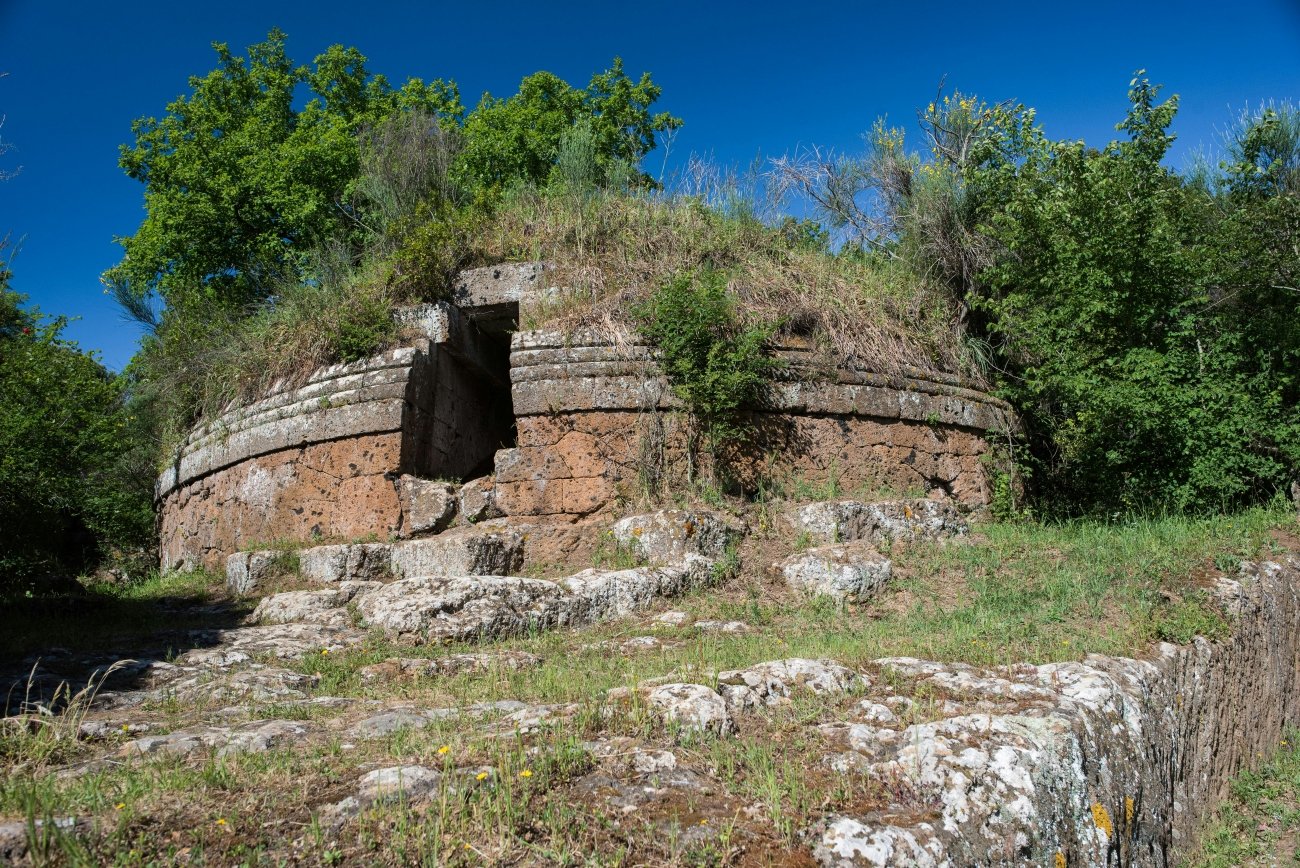
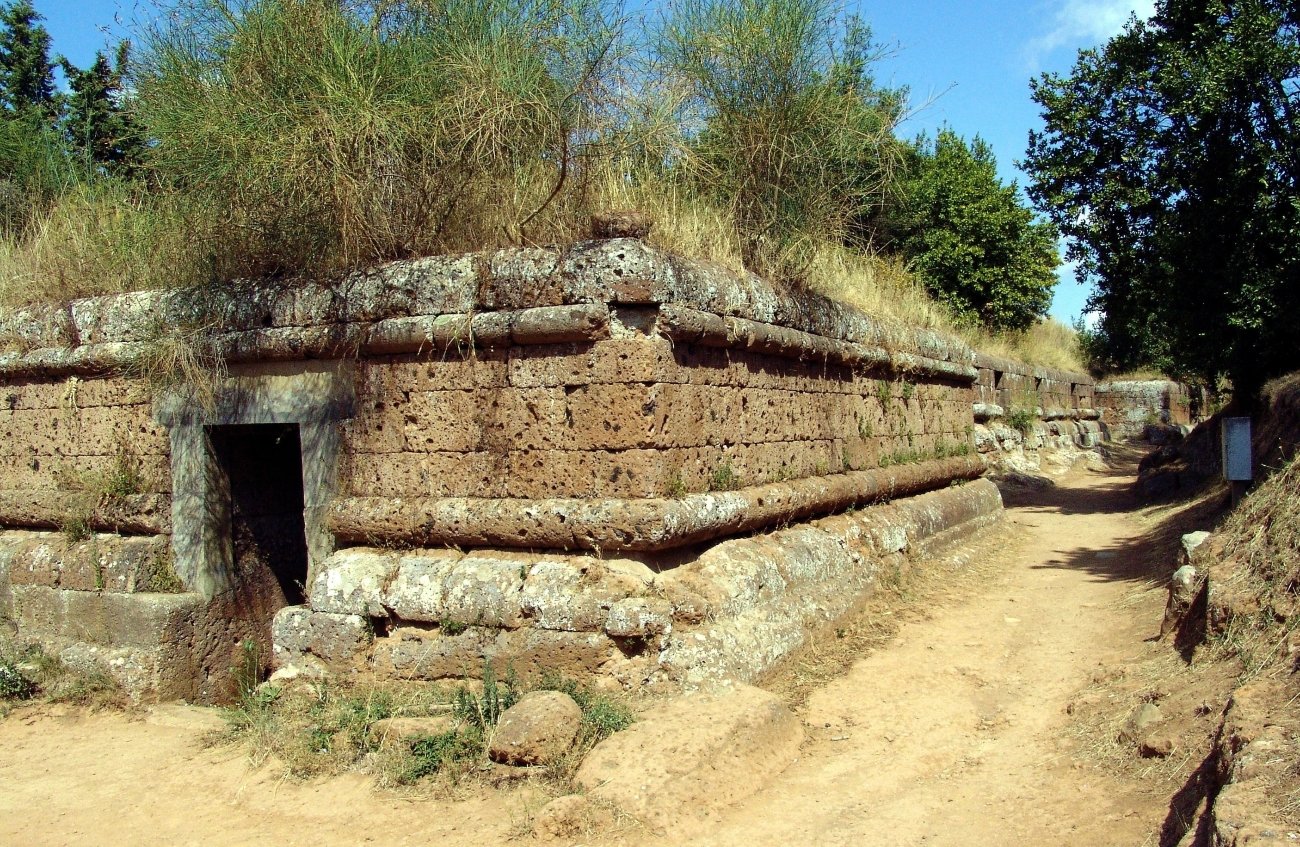
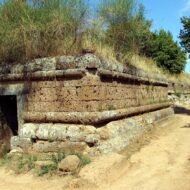
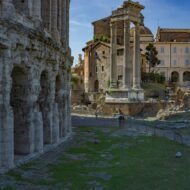
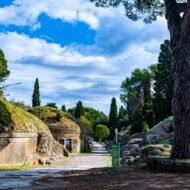
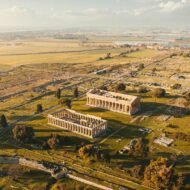
The Colosseum receives approximately 7.5 million visitors per year. The Teatro Marcello — an older amphitheatre, in the same city, fifteen minutes’ walk away — receives a fraction of that number, most of them walking past on the way to somewhere else without registering what they are looking at. The Necropoli della Banditaccia at Cerveteri is a UNESCO World Heritage Site, 45 minutes from Rome by bus, containing over a thousand Etruscan tombs — streets of the dead, each one enterable, each one carved and painted — and it is consistently described by the few visitors who go there as the most quietly extraordinary thing they found in Italy.
This is the consistent pattern of ancient Italy. The famous sites are extraordinary and worth visiting. They are also approximately 1% of what the ancient world built in this peninsula. The other 99% is still there — on a hillside in Campania, in a field outside Rome, in a valley in Sicily — and it is largely empty of tourists, frequently better preserved than the famous version, and in at least one case the most important archaeological discovery in twentieth-century Europe.
None of the five sites in this article requires specialist preparation, expedition-level logistics or tolerance for difficulty. All of them are reachable by a traveller with a standard car or Italy’s regional train network. All of them have entry fees under €15. What they require is the decision to look past the site on the cover of the guidebook — and the specific intelligence to know where you are going and why.
01. Teatro di Marcello, Rome
The amphitheatre that taught the Colosseum how to look
GPS (exterior, Via del Teatro di Marcello): 41.8919°N · 12.4795°E When to go: Year-round · dawn or dusk for photography Entry: Free · exterior only · summer concerts ticketed separately
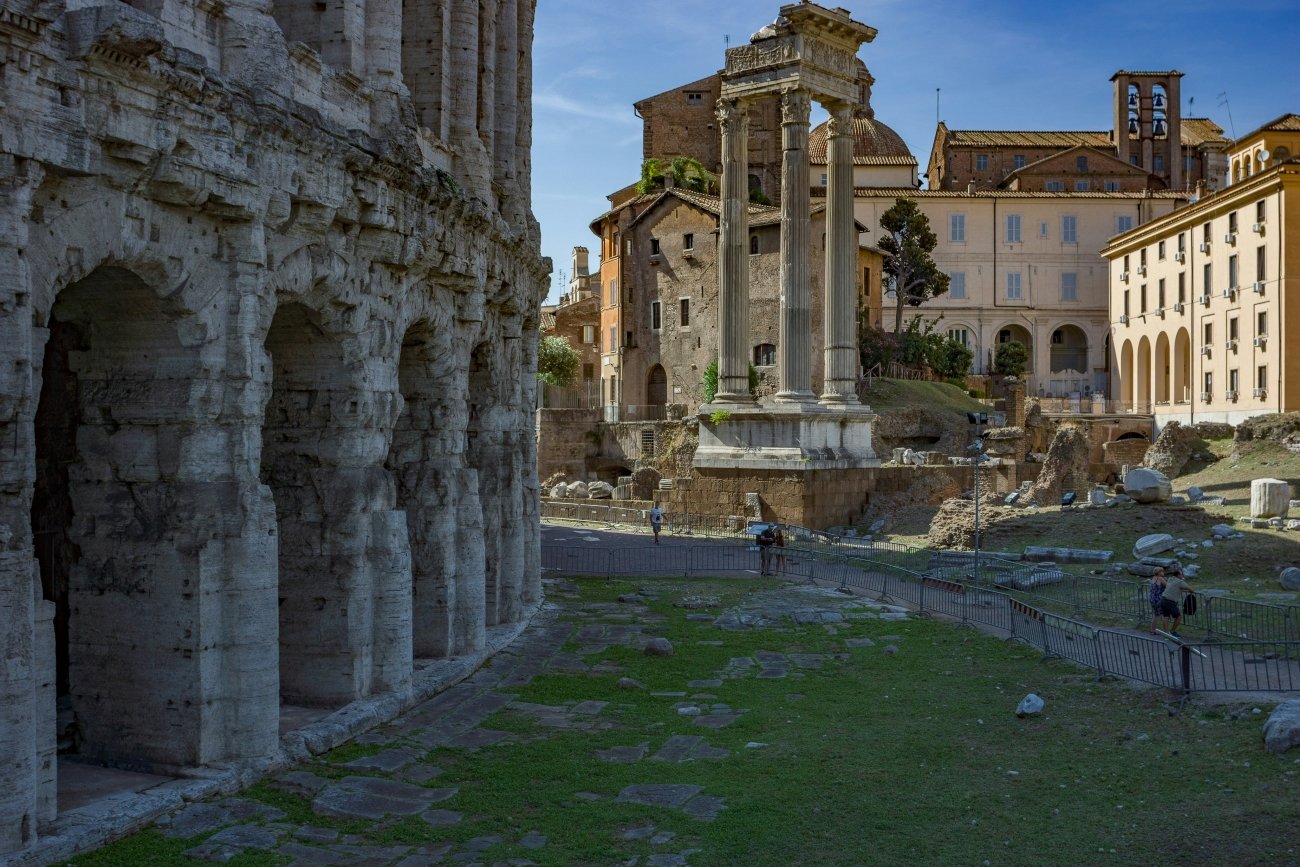
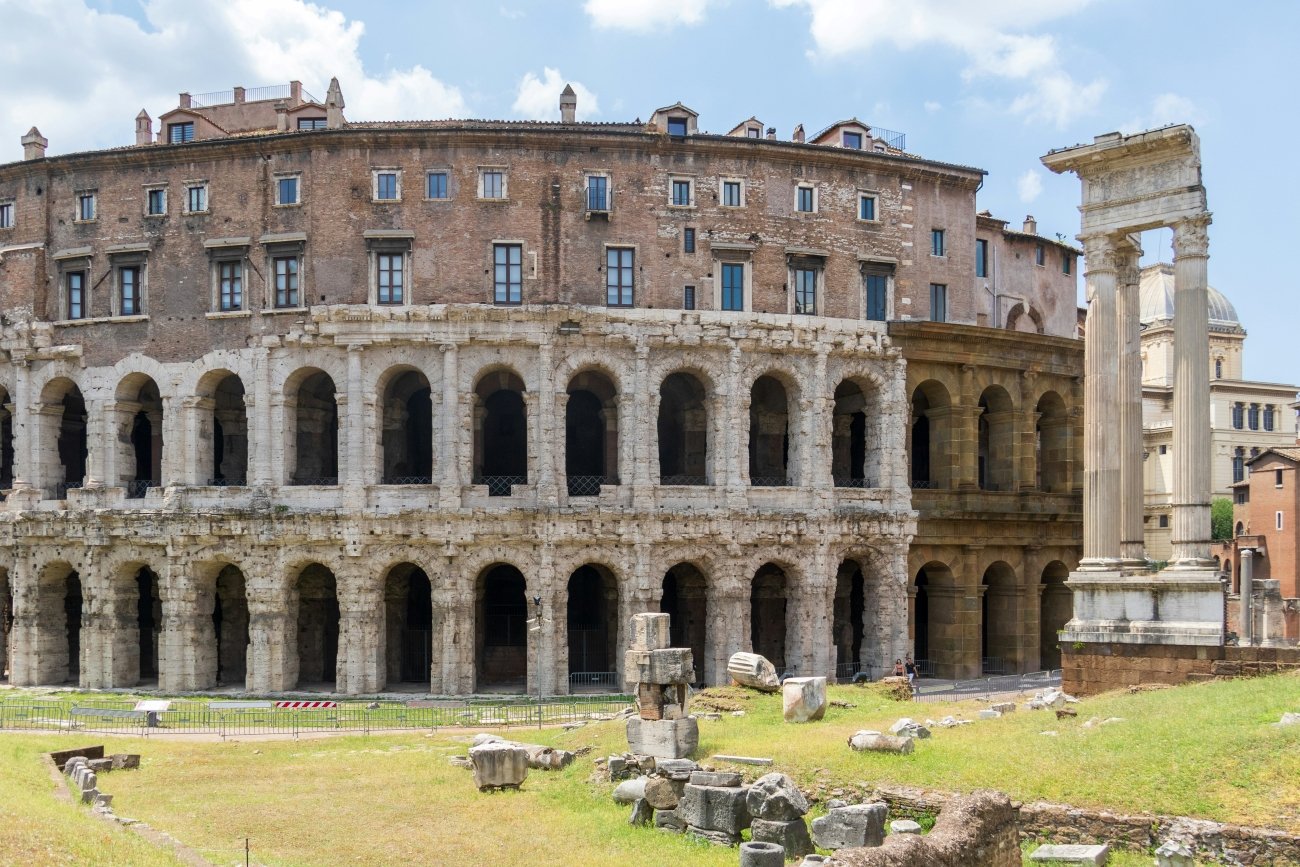
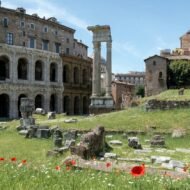
Julius Caesar cleared the site. Augustus completed the building in 13 BC and named it after his nephew Marcellus, who died five years before its inauguration and was the first person interred in the Mausoleum of Augustus. The theatre was so far advanced by 17 BCE that part of the celebration of the ludi saeculares took place within it before its formal completion.
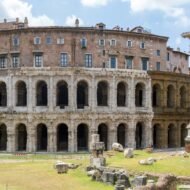
It is also the earliest dateable building in Rome to make use of fired Roman brick, then a new introduction from the Greek world. This is not a footnote. It means that what you are looking at when you stand in front of the Teatro di Marcello is the building where the Romans worked out the structural language that the Colosseum — completed a century later — would deploy at greater scale and to greater fame. The arcade system, the alternating Doric and Ionic orders on the two surviving tiers, the semicircular geometry: all of it was developed here first.
The theatre was 111 metres in diameter and could originally hold 11,000 spectators. The Colosseum holds 50,000. The Teatro di Marcello is the prototype. It did not survive in the form Augustus intended. When the days of bread and circuses gave way to the days of raids and sackings, this structure by the river had obvious strategic importance. It was commandeered by the Fabi family, who built a fortress on top of the arches. Later the building passed through the hands of the Savelli and Orsini families; in the sixteenth century the former theatre was converted into a palazzo by Baldassare Peruzzi. The upper floors are now luxury apartments. People live in a Roman amphitheatre, above the arches that influenced every large building Rome subsequently constructed.
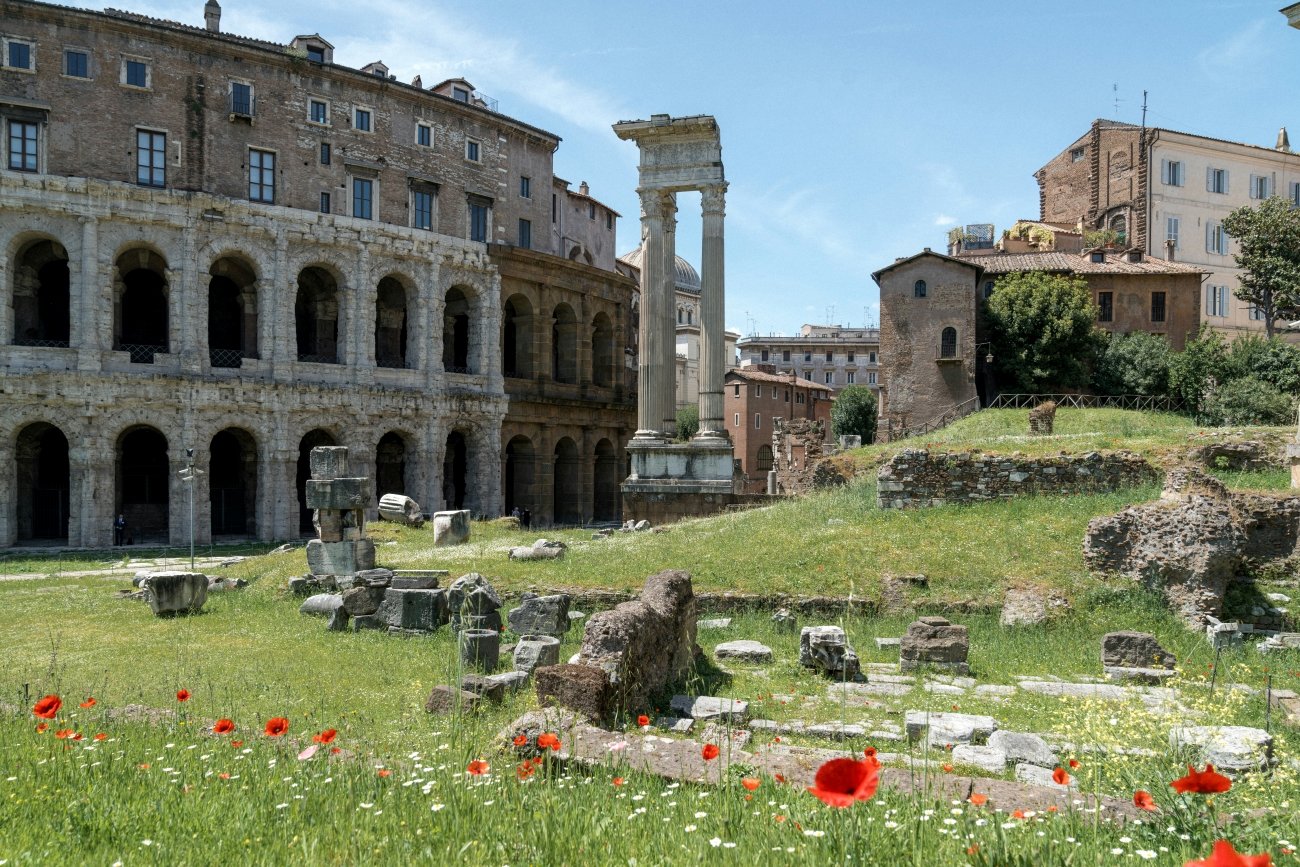
The specific thing that most visitors miss: the three remaining columns of the Temple of Apollo Sosianus, standing immediately to the right of the theatre as you face it. These are Corinthian columns from a temple rebuilt by Gaius Sosius in 34 BC — three standing columns, their capitals intact, from the late Roman Republic, in a small archaeological zone that most of the people walking past do not stop to enter.
What you see here: the predecessor to the Colosseum, still partially standing, with people’s washing hanging in the windows above the ancient arches. The contrast between the imperial stone and the domestic life built into it is the most compact summary of Rome’s two-thousand-year continuity available in the city.
02. Necropoli della Banditaccia, Cerveteri
The city of the dead that explains who Rome erased
GPS (necropolis entrance): 42.0023°N · 12.1023°E When to go: April–October · Tuesday–Sunday 09:00–19:00 Entry: €10 · combined with Cerveteri museum Distance from Rome: 45km · approx 1 hour by car · bus from Corneto Tarquinia station
Before Rome dominated the Italian peninsula, the Etruscans did. They built the cities, the roads, the drainage systems and the cultural infrastructure that Rome would later inherit, improve and take credit for. The Etruscans also built the most extraordinary burial complex in the pre-Roman Mediterranean — and then Rome absorbed them so completely that they disappeared from history, their language largely undeciphered, their culture known primarily from what they buried with their dead.
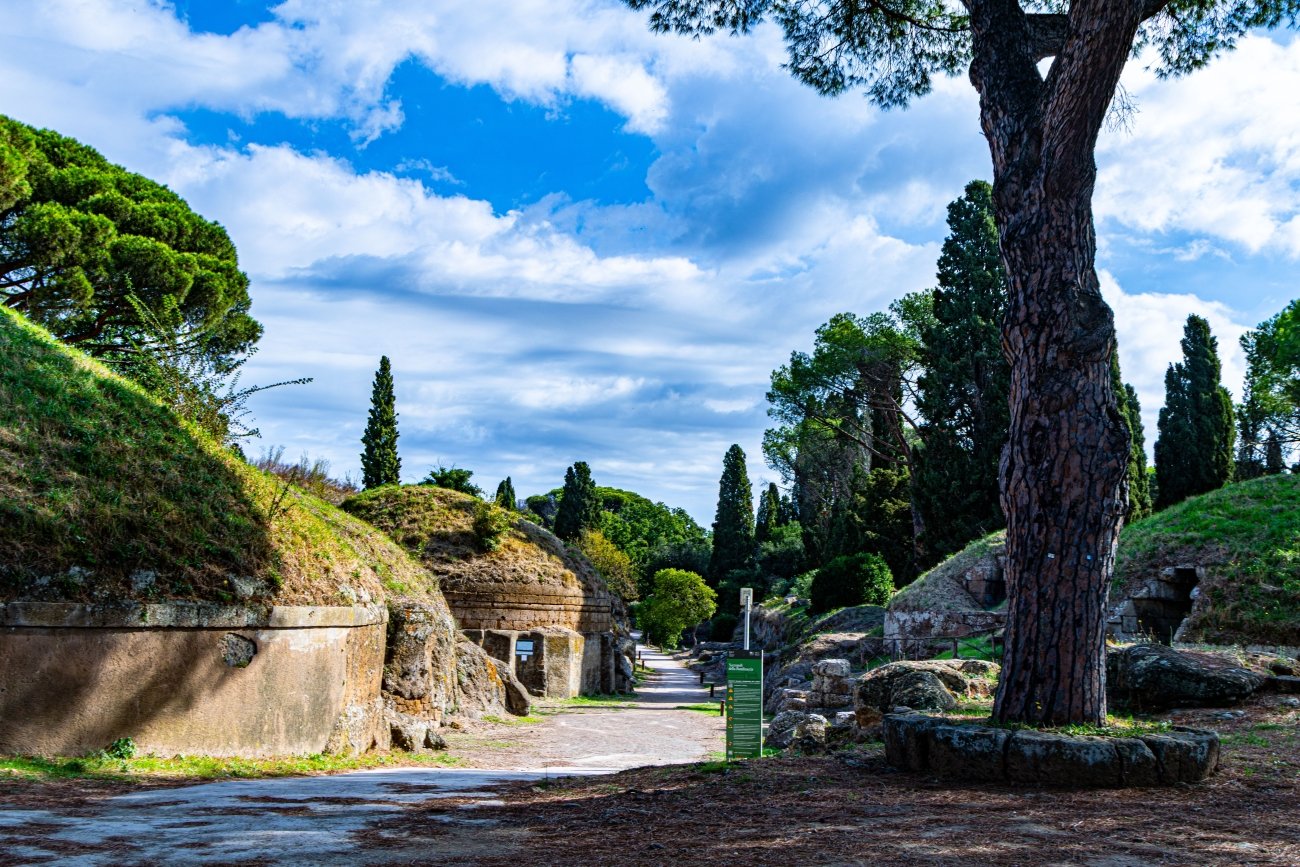
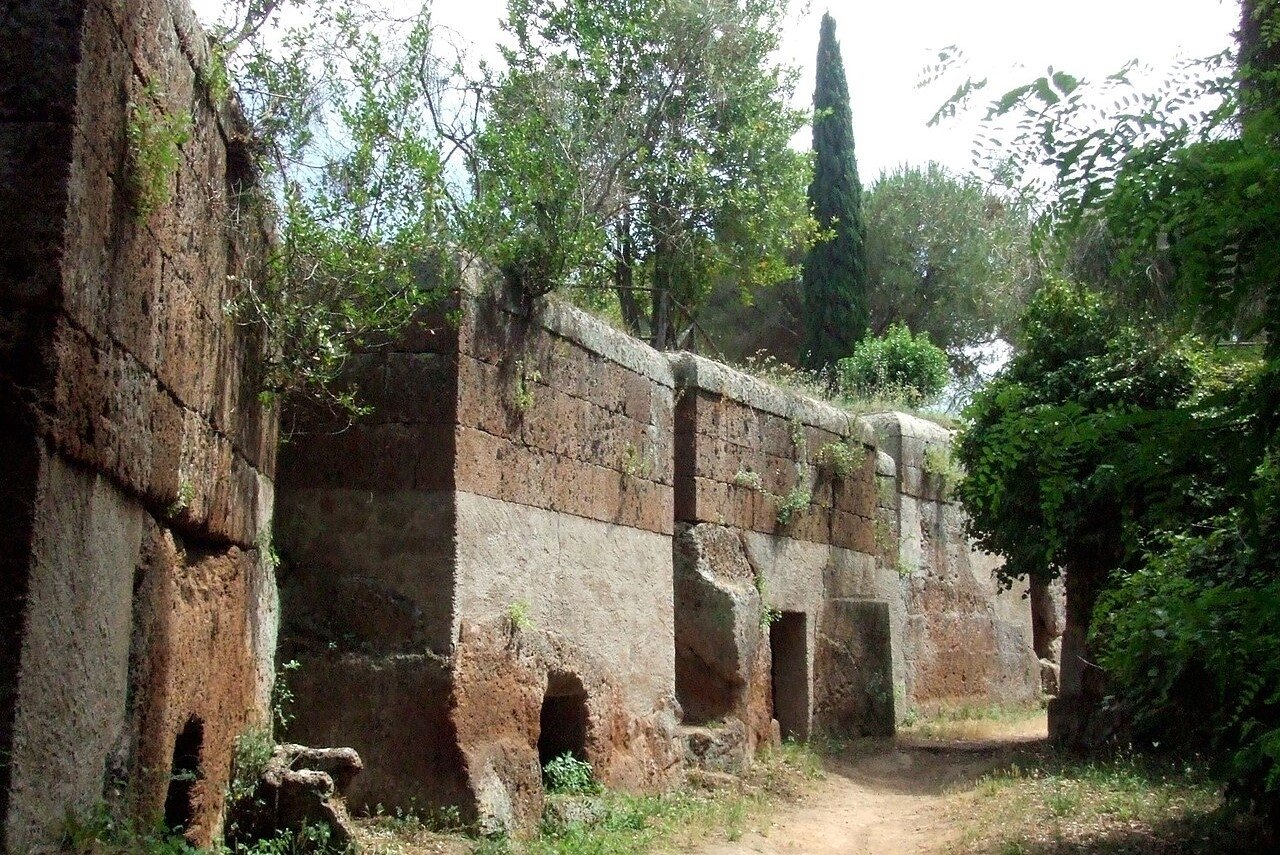
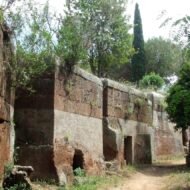
The Necropoli della Banditaccia has been declared a UNESCO World Heritage Site. The tombs date from the 9th century BC and continue through to the 3rd century BC — a span of six centuries of Etruscan burial practice preserved in one continuous site north of Rome. At Cerveteri, the tombs are still covered under mounds overgrown with grass and shrubs. The effect on arrival is of a landscape rather than a site — gentle green hills in a field, each hill a tomb, the paths between them running in straight lines like streets. Which is what they are. The Etruscans built their necropolis as a city, with the same urban logic they applied to the towns of the living.
The interiors are the specific reason to come. The interiors of the tombs replicate those of an Etruscan house. The Tomba dei Rilievi — Tomb of the Reliefs — dating from the 3rd century BC, is by far the most decorative, its walls carved and painted with images of domestic animals and various utensils for everyday use. The carved stone pillows on the burial benches. The hooks for tools and weapons on the painted walls. The impression, walking into an Etruscan tomb at Cerveteri, is of entering someone’s house rather than their grave — which was precisely the intention.
Despite the proximity of Cerveteri to Rome and the importance of the site, the Necropolis is not over-visited and a visit can be a pleasant and unhurried experience. This is the consistent report of every visitor who makes the journey — the site is large, quiet and almost entirely without the infrastructure of mass tourism. You walk the paths between the tombs with a paper map from the visitor centre. You duck into the chambers. You press a button on a small hut to illuminate a painted interior. You are, in most months of the year, largely alone.
What you see here: the civilisation that taught Rome how to build, in the city they built for their dead. The Etruscans left more of themselves underground than they did above it. This is where to find them.
03. Segesta, Sicily
The Greek temple that was never finished and never needed to be
GPS (temple): 37.9389°N · 12.8334°E GPS (theatre above): 37.9412°N · 12.8356°E When to go: Year-round · dawn for the temple · dusk for the theatre Entry: €9 · shuttle bus to the theatre included Distance from Palermo: 70km · approx 1 hour by car
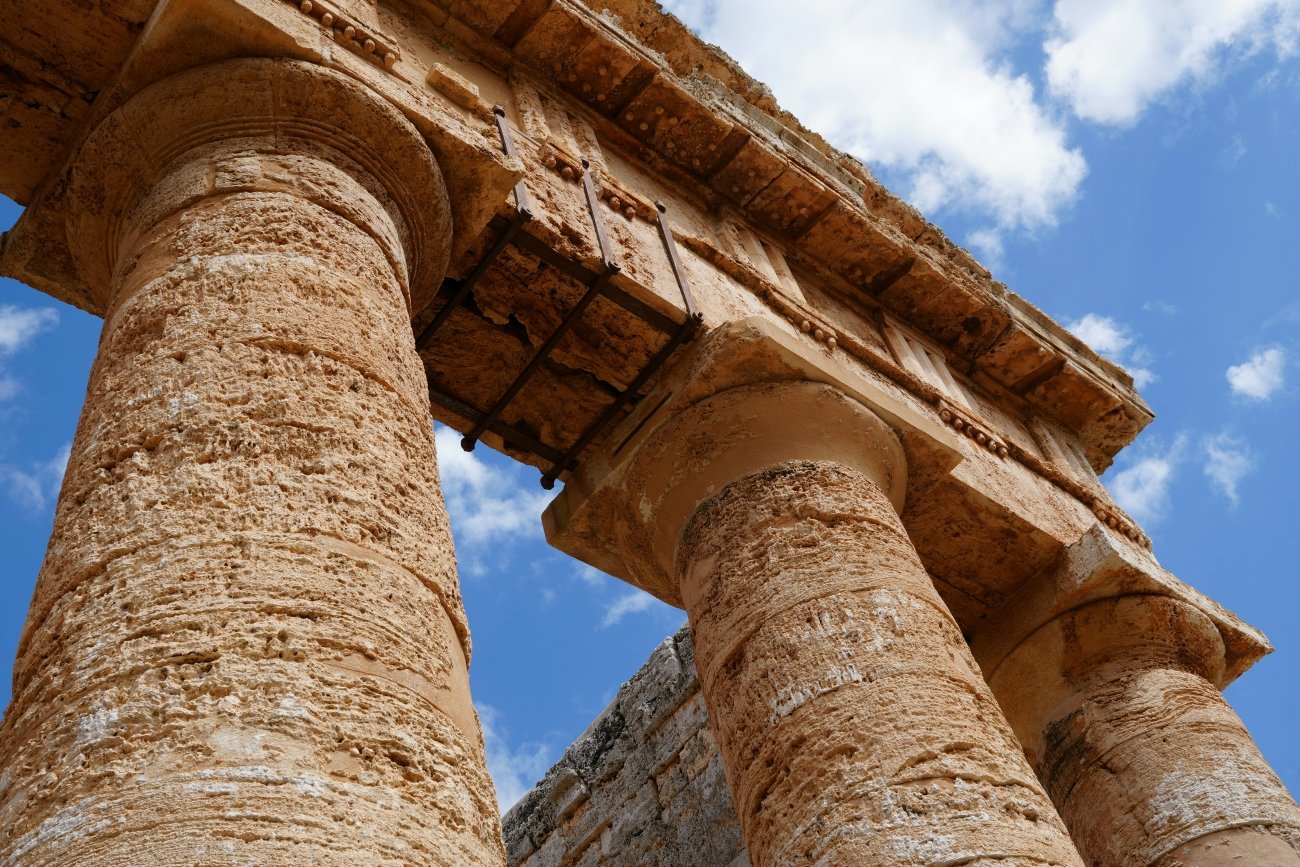
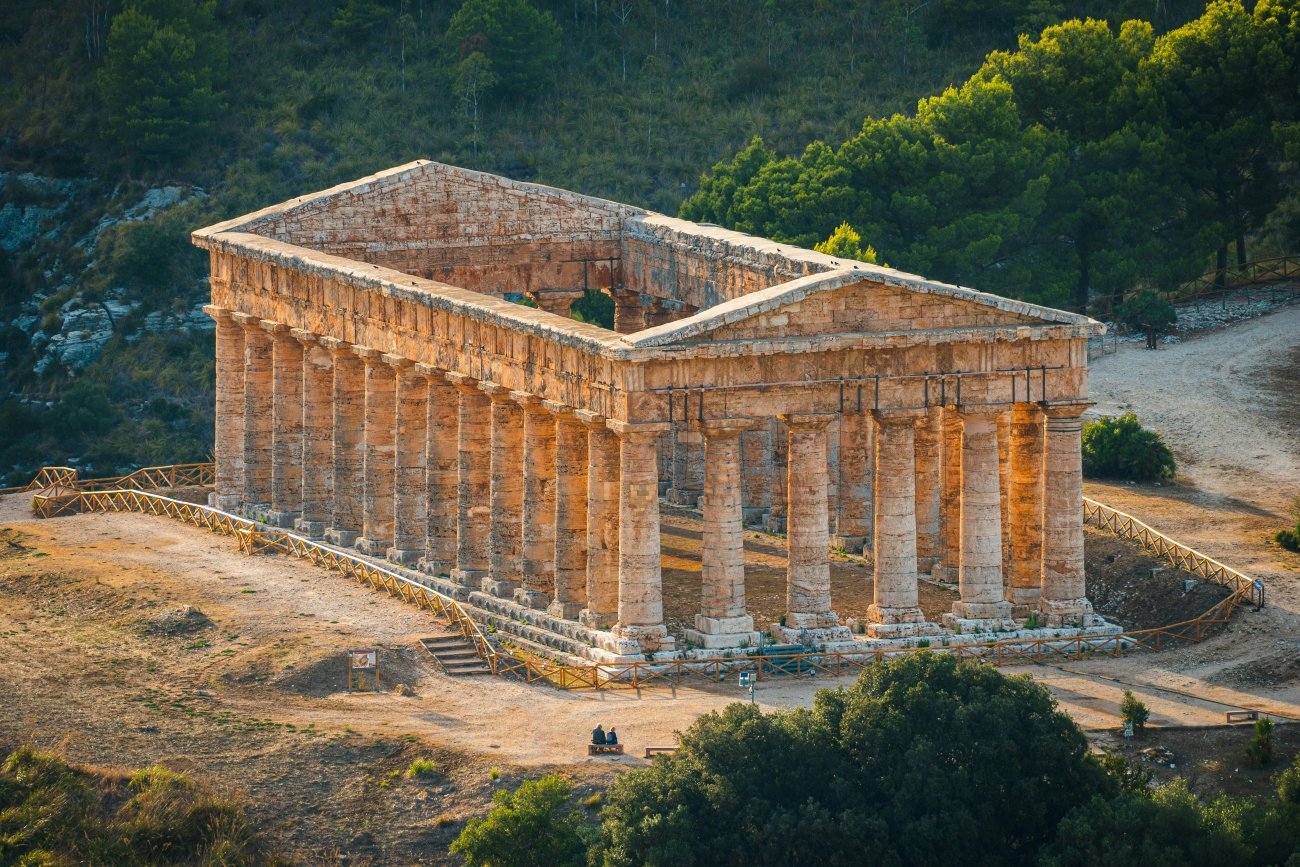
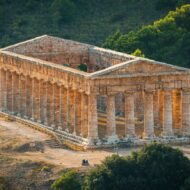
The Temple of Segesta has been standing on its hilltop in northwestern Sicily since approximately 420 BC. It has never been completed. The temple’s innovative design and historical significance make it a standout among ancient sites. What makes it specific is this: it was not built by Greeks. The Elymians — a people of disputed origin, possibly Trojan refugees, possibly indigenous Sicilians — commissioned Greek architects to build a Greek temple for a city that was never entirely Greek. The columns are still standing. The metopes — the sculptural panels that would have filled the frieze above the columns — were never carved. The roof was never added. The floor of the interior was never laid.
The unfinished state is not a deficiency. It is the most instructive thing about the building. You can walk through the colonnade and see how a Greek temple was constructed from the outside in — the column drums stacked and fluted, the jointing precisely cut, the stylobate (the stepped platform) laid flat across the hillside — and understand the sequence of construction in a way that a completed temple does not permit. The Parthenon shows you the finished product. Segesta shows you the process.
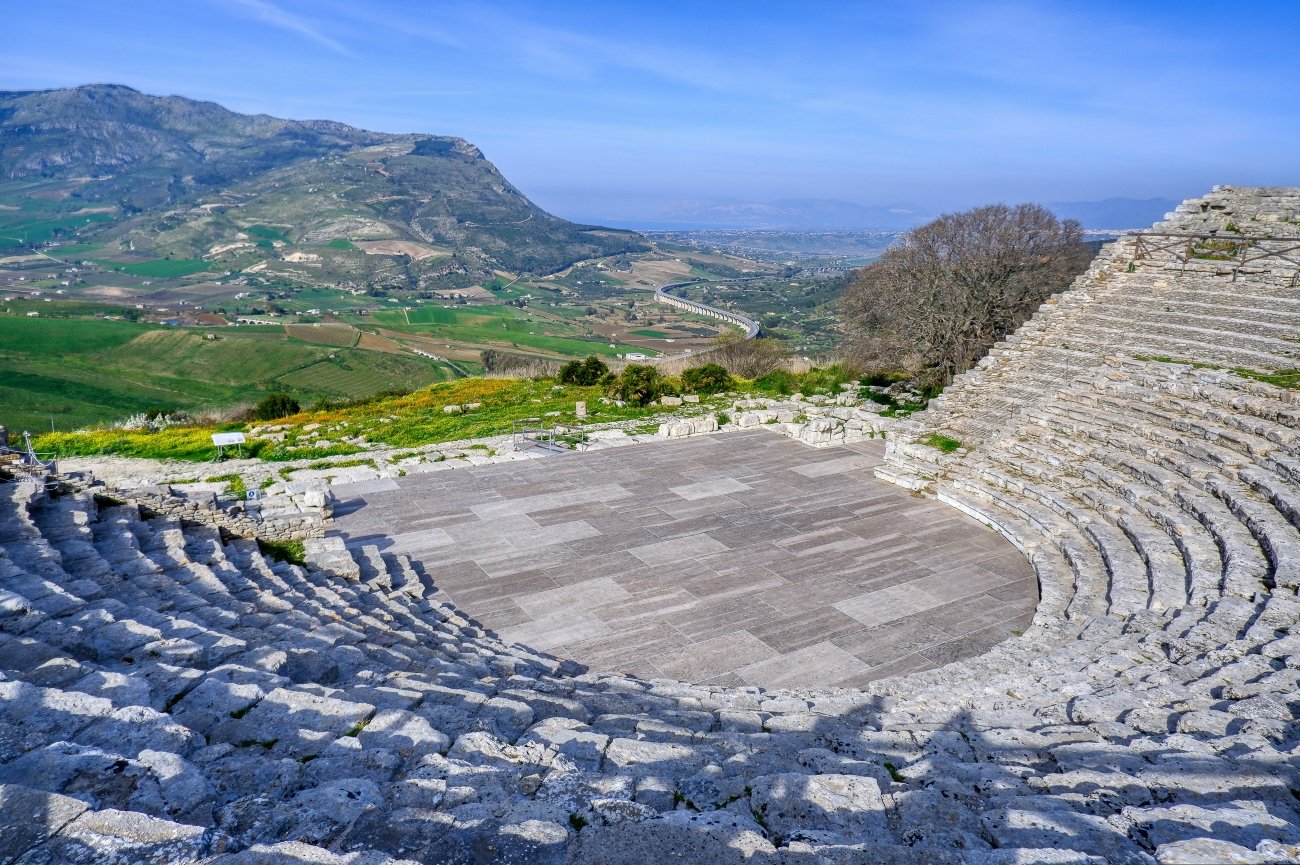
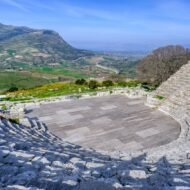
Above the temple, a 20-minute walk up the hill, the theatre faces north across a valley to the Gulf of Castellammare. This is the specific reason to time your visit for late afternoon: the theatre is positioned to catch the last horizontal light from the west across the valley, and the view from the cavea — the seating area — takes in a landscape of Sicilian hills running to the sea that has not significantly changed since the theatre was built. The theatre is intact. The view from it is extraordinary. On a clear day in autumn the sea is visible 30km north.
What you see here: the most isolated major Greek temple in the western Mediterranean, built by people who were not Greek, unfinished for 2,400 years, standing alone on a Sicilian hillside with a theatre above it facing the sea.
Sicily connection: Segesta is 30 minutes from the hilltop village of Erice and 2 hours from the Madonie mountains. If you are making the journey to the Madonie for the Sicily Beyond the Map series — Gangi, Piano Battaglia, Castelbuono — Segesta is the correct first day of that trip, not the last.
04. Paestum, Campania
The Greek temples in Italy that are better preserved than the ones in Greece
GPS (Temple of Hera II, the best preserved): 40.4223°N · 15.0054°E GPS (Paestum Museum — Tomb of the Diver): 40.4198°N · 15.0067°E When to go: April–June · September–October · avoid August Entry: €12 combined ticket · site and museum on same ticket Distance from Naples: 100km · 1h 20m by car · regional train stops at Paestum
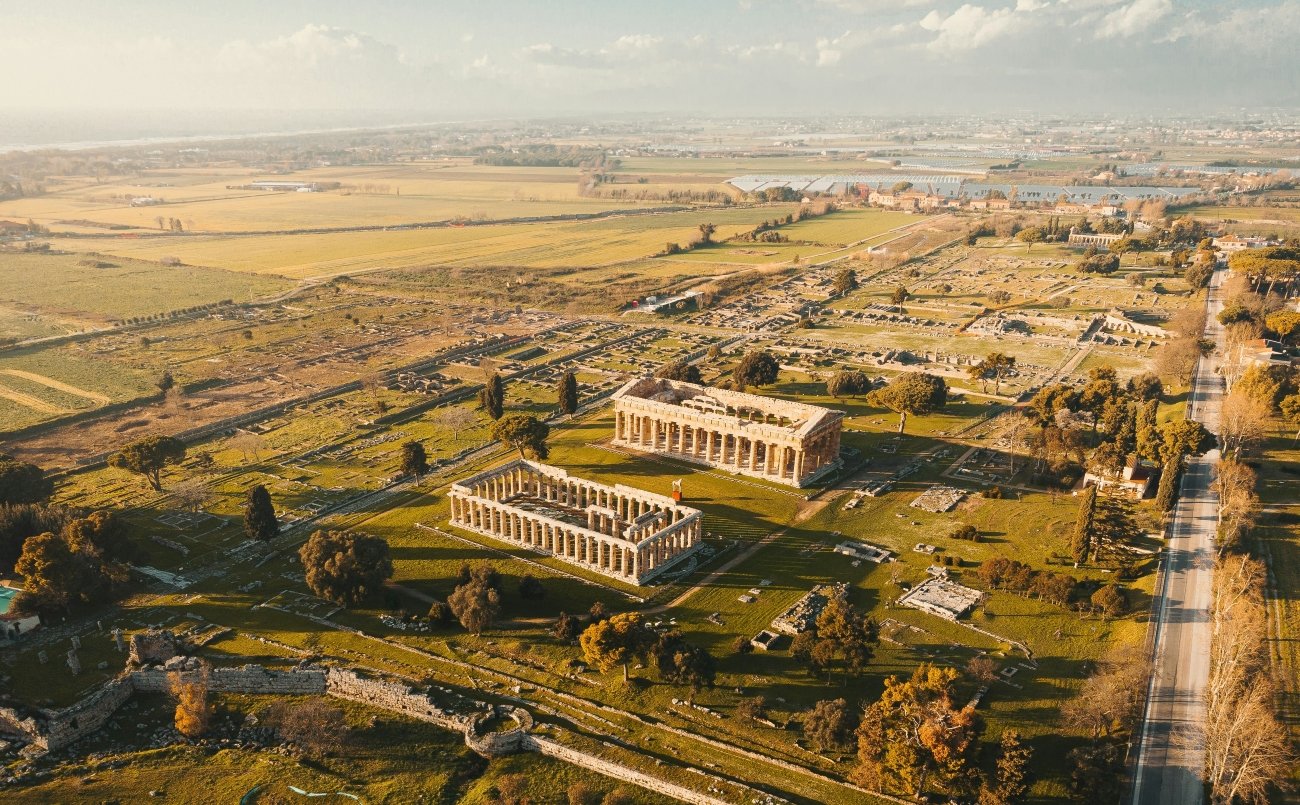
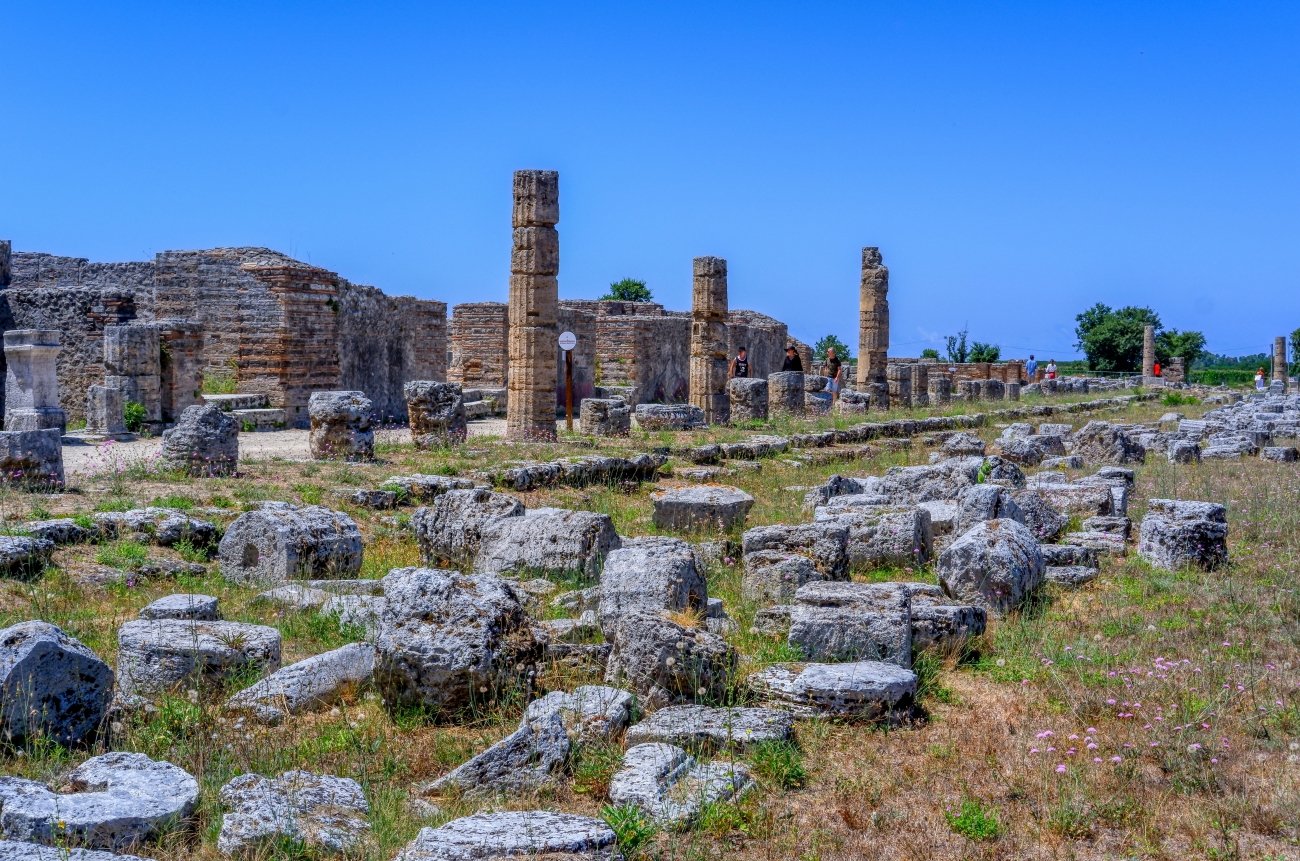
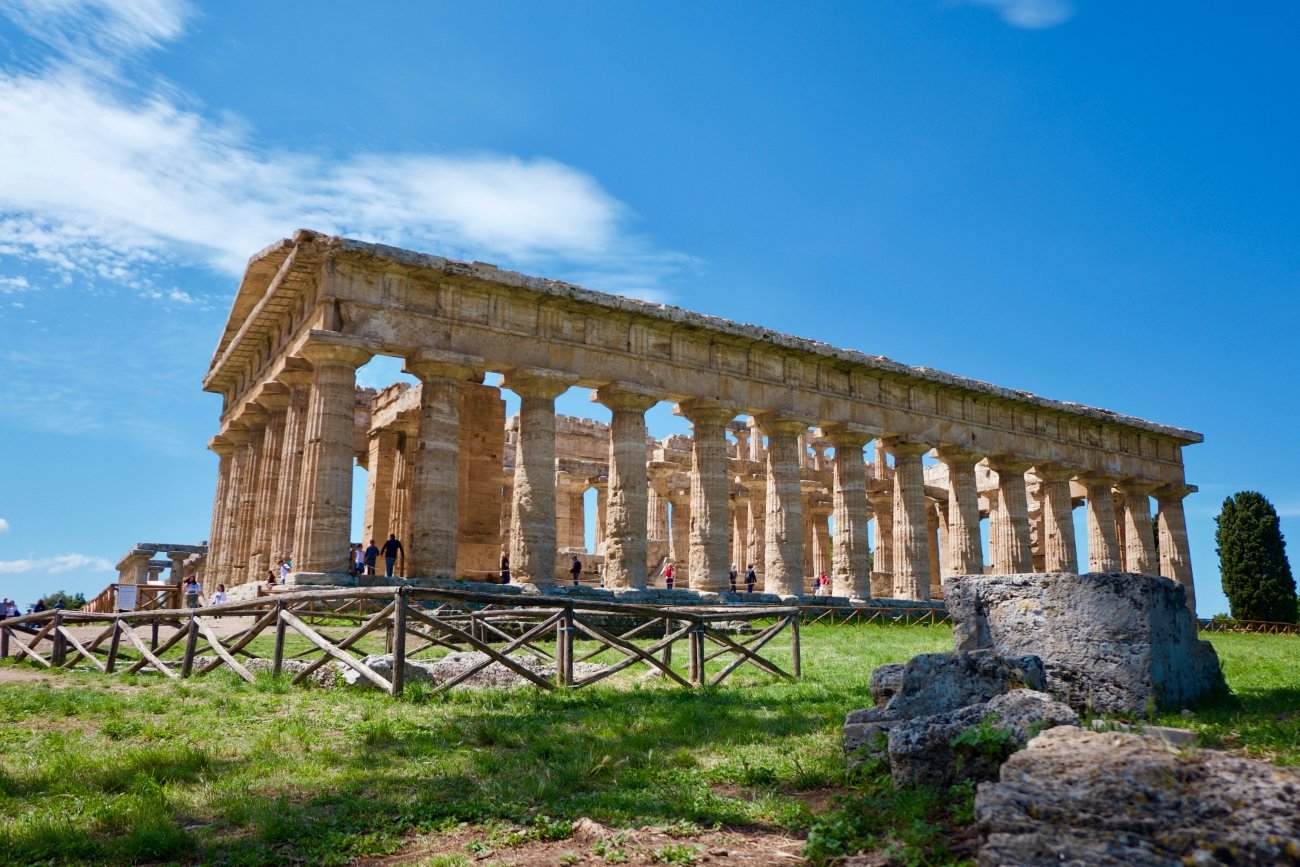
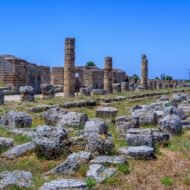
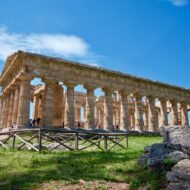
The three Doric temples at Paestum, built between 550 and 450 BC, are the best-preserved Greek temples anywhere outside Greece itself — better preserved than the temples of Athens in some structural respects. This is not a provincial claim. It is the considered assessment of archaeologists who have studied both sites. The reason the temples survived is specific and extraordinary: malaria and pirates drove the 9th-century citizens of Paestum into the hills, leaving the city abandoned and the medieval Christians who later passed through thought the temples were haunted. The superstition preserved what scholarship might not have.
The three temples are called, in the order they are usually visited, the Basilica, the Temple of Neptune and the Temple of Ceres. All three names are nineteenth-century misidentifications. The Basilica is a temple of Hera, the oldest building, from approximately 550 BC. The Temple of Neptune is almost certainly dedicated to Hera or possibly Zeus, built around 450 BC. The Temple of Ceres is a temple of Athena. The wrong names have persisted for two centuries because the early archaeologists who assigned them lacked the inscriptions to correct their guesses, and the wrong names are now too embedded to dislodge.
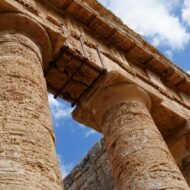
The Temple of Neptune — Hera II — has 36 standing columns with complete entablature sections. Standing inside it — which the site permits, unlike most Greek temples — and looking up at the complete architrave running above the columns is to understand, physically rather than academically, how the Greeks thought about the relationship between the horizontal and the vertical in stone construction. This cannot be experienced at the Parthenon, where visitors do not enter.
The museum contains the reason to allow a full day rather than a half-day at Paestum. The Tomb of the Diver is the only surviving example of Greek figurative painting in the classical tradition on stone — the only work that shows what Greek painting looked like at the period when the greatest Greek painters were working. It is a flat stone slab, painted on the inside — the lid and four walls of a tomb — with symposium scenes on the walls and a single figure diving into water on the lid. The diving figure is interpreted as the soul’s passage from life to death. The painting is from approximately 480 BC. The technical quality — the foreshortening of the diver’s body, the rendering of the water surface — is among the finest surviving Greek figurative painting. Virtually all Greek panel painting has been lost to decomposition. This is what remains.
What you see here: the most complete group of Greek temples anywhere in the world, standing in a field in southern Italy, and in the museum beside them the only surviving Greek figurative painting from the classical period. The entire visit, site and museum, costs €12.
05. Necropoli di Tarquinia, Lazio
The painted rooms of the people Rome forgot
GPS (necropolis, Monterozzi): 42.2512°N · 11.7934°E GPS (Palazzo Vitelleschi museum, Tarquinia): 42.2489°N · 11.7567°E When to go: Tuesday–Sunday · check seasonal hours · winter reduced opening Entry: €8 necropolis · €8 museum · combined €12 Distance from Rome: 100km · 1h 30m by car · regional train to Tarquinia then taxi
The twin UNESCO site to Cerveteri, Tarquinia is the painted version of what Cerveteri did in carved stone. Among the approximately 6,000 chamber tombs on the terraced hillsides east of Tarquinia, roughly 200 have painted interiors. Of these, about 20 selected tombs are open to visitors through modern protective structures. The access is specific and slightly theatrical: you descend through a small hut into the hillside, stand before a glass panel, and press a button to illuminate the interior. Through the glass, in the artificial light, the paintings appear.
They show the Etruscan world as the Etruscans wanted to be remembered in it. Banquets with reclining figures. Musicians with double-flute and lyre. Dancers. Wrestlers. Hunting scenes and fishing scenes and processions of horses. The colours — the Etruscan red, the deep blue of the sea, the yellow of the skin — have survived underground for 2,500 years. The painted chambers reveal how this culture developed before Rome came to power in the region.
The specific tomb that justifies the journey is the Tomba dei Leopardi — the Tomb of the Leopards, from approximately 480-470 BC. Two leopards face each other above the banquet scene on the back wall. Below them, three reclining figures with cups and wreaths, attended by servants and musicians. The painting is not monumental. It is intimate, detailed and specific — portraits of people who expected to be remembered, in a room designed to contain that expectation forever.
The Palazzo Vitelleschi in the old town houses the National Archaeological Museum of Tarquinia, which contains the artefacts removed from the tombs over 150 years of excavation. The winged horses from the Ara della Regina temple — terracotta, 4th century BC, the most famous Etruscan sculpture — are here.
What you see here: the daily life of the Etruscans painted on the walls of their tombs, 2,500 years ago, still in the original colours.
The pattern across all five
The Teatro di Marcello taught the Colosseum its structure and is now apartments. The Necropoli della Banditaccia contains the civilisation that built the foundations Rome walked on, and is 45 minutes from the city by bus. Segesta is a complete Greek temple, unfinished for 2,400 years, built by people who were not Greek. Paestum has the only surviving Greek figurative painting in existence and three temples more complete than anything in Athens, and costs €12 to enter. Tarquinia shows the Etruscan world in its own colours, in the rooms they painted it in.
None of these sites is obscure in the academic sense. All of them are UNESCO World Heritage Sites or contain UNESCO-listed material. What they share is the specific condition of being one step further from the famous landmark than most itineraries extend — and that one step is where the significant archaeology actually is.
What this article gives you
Five sites. Five GPS coordinates. The historical case for each and the specific thing that makes each one worth the journey.
What it does not contain: the secondary GPS positions — the specific viewpoint above the Segesta temple that most photographers never find, the section of the Cerveteri necropolis that the standard visitor route skips, the exact room in the Paestum museum where the Tomb of the Diver is installed and the angle from which it is photographed correctly. The practical depth — which hotels place you correctly for an early morning at Paestum, how to reach Tarquinia without a car, the opening hour that gives you the Segesta temple without other people in the frame. The extended arc: the eleven additional sites in Italy that the Beyond the Map guide covers, including the Etruscan site at Vetulonia, the Roman theatre at Trieste, the Bronze Age village of Barumini in Sardinia and the Greek theatre at Syracuse that is still used for performances every summer.
That is in the guide.
→ The Ancient World Beyond — Beyond the Map Field Guide
The guide that goes past the landmark.
Italy and Greece, covered in depth. Twenty sites across both countries, each with GPS coordinates for primary and secondary positions, access logistics, the best time of day and month to visit, and the honest editorial assessment of what makes each one worth the journey and what the standard coverage misses.
Plus five sites from the extended arc — Croatia, Turkey, Spain — where the Roman and Greek world built things that are better preserved and emptier of tourists than the sites that appear in every guidebook.
20 sites · 2 countries · GPS atlas · access logistics · photography guide · the honest editorial case for each
Coming 2026 · €17 · Join the Hidden Dispatch to be notified at launch →
Or explore the Beyond the Map catalogue — field guides to the places the standard itinerary has not reached.