

A goddess who lives in a mountain cave and brings the storms. Giants who threw boulders from peak to peak. A dragon slain on a mountain top, and a cave where the Inquisition saw witches. The oldest stories of the Basque Country are still tied to real places, and almost nobody outside it knows them.
Basque mythology is not like the Greek or the Norse. There is no great book of the gods, no Edda, no Homer. Most of it survived as stories told in farmhouses, mountain villages and shepherds’ huts, and much of it was only written down in the 20th century, above all by the priest and ethnographer José Miguel de Barandiaran, who spent his life collecting tales across the valleys.
What survives is a world rooted in the landscape. At its centre is Mari, the great goddess, who lives in caves high in the mountains and moves from peak to peak, bringing rain or drought. Around her are the jentilak, giants of the old pagan age; the Basajaun, lord of the forests, the lamiak, water spirits, the sorginak, witches, and the herensuge, the dragon.
This is the second part of our Mythic Europe series: five places in the Basque lands of Spain where these stories still feel close.
| Place | The myth | |
|---|---|---|
| 1 | Anboto, Bizkaia | The home of Mari, the Basque goddess |
| 2 | San Miguel de Aralar, Navarre | The knight in chains and the dragon |
| 3 | Jentilbaratza, Ataun, Gipuzkoa | The jentilak, the giants of the old age |
| 4 | Zugarramurdi, Navarre | The witches’ cave and the akelarre |
| 5 | Sorginetxe, Álava | The “witches’ house”, a dolmen 4,500 years old |
1. Anboto, Bizkaia
43.09° N, 2.60° W · Urkiola Natural Park
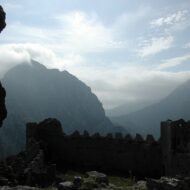
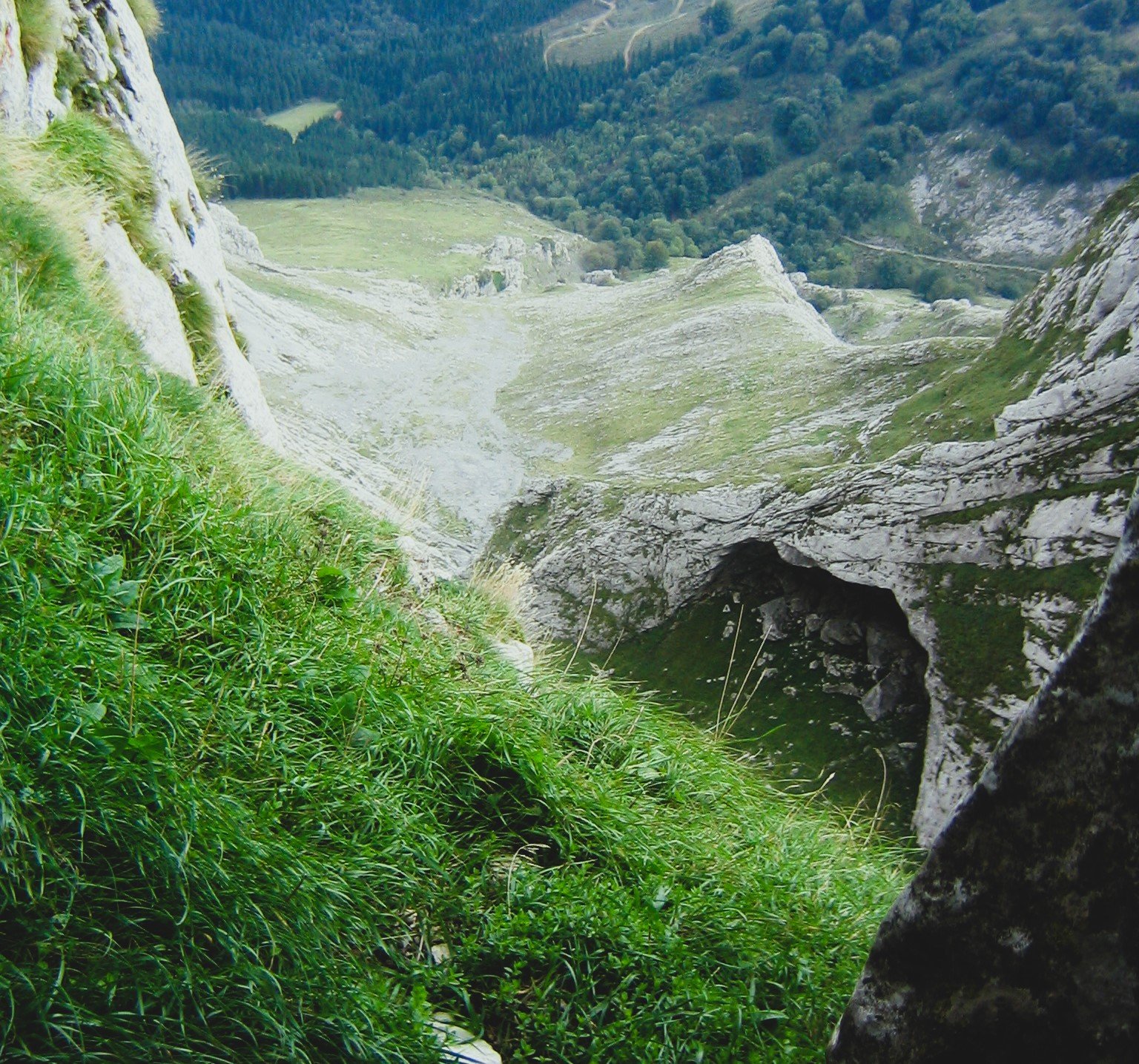
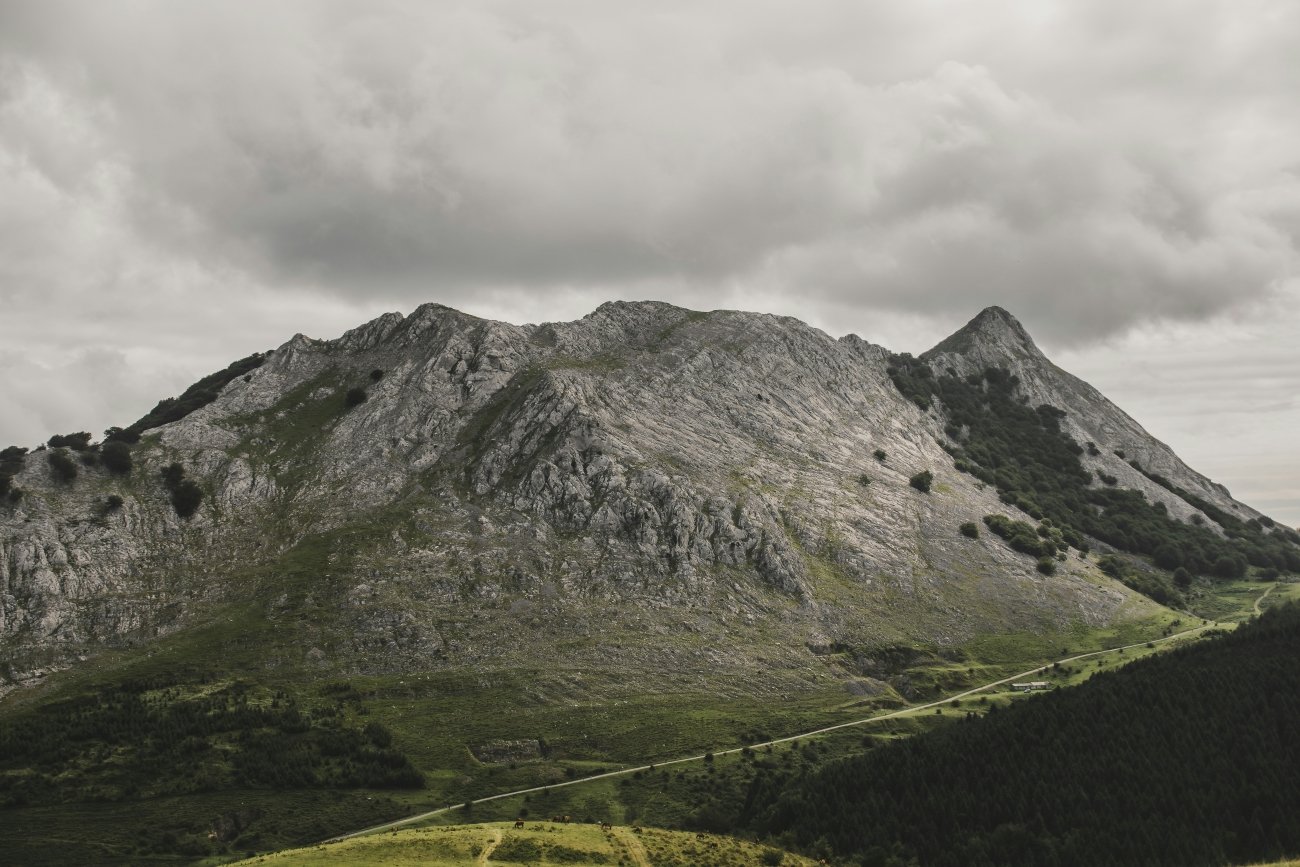
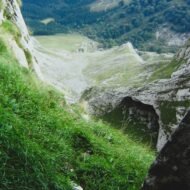
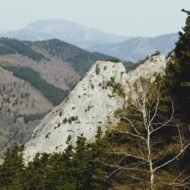
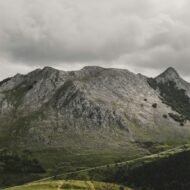
Anboto is the highest mountain of the Urkiola range: a sharp limestone wall that rises above the valley of Durango, often wrapped in cloud. For the Basques, it is not just a mountain. It is the main home of Mari, the most important figure in Basque mythology, often described as a goddess of the earth and the weather.
Legend says she lives in a cave high on the rock face of Anboto, and that she moves between caves on other mountains, bringing the weather with her: when she is at Anboto, it rains. Locals say that when the summit is covered in cloud, Mari is at home. Her partner is Sugaar, a serpent or dragon, and those who visit her must follow her rules: speak to her in the familiar form, never sit down in her presence, and leave the cave walking backwards, without turning their back on her.
Tradition places almost all the figures of Basque mythology in the Urkiola mountains, which makes the park the best place to begin.
In the Field Guide: the paths to Mari’s cave and the summit of Anboto (a serious climb), the Urkiola sanctuary and its legendary stone, and Mari’s other homes, from Aizkorri to Txindoki.
When: May to October. Avoid the summit in cloud, wind or wet weather, the final section is exposed. Weather on Anboto: the green, wet Atlantic climate of Bizkaia. In nearby Bilbao, average highs are about 26°C in July, 25°C in September and 14°C in January, and rain falls in every season. The mountain is much cooler, and cloud can cover the summit at any time. Getting there: the Toki-Alai visitor centre is at the Urkiola pass, above Durango, about 40 minutes by car from Bilbao.
2. San Miguel de Aralar, Navarre
42.95° N, 1.94° W · Sierra de Aralar, 1,355 m
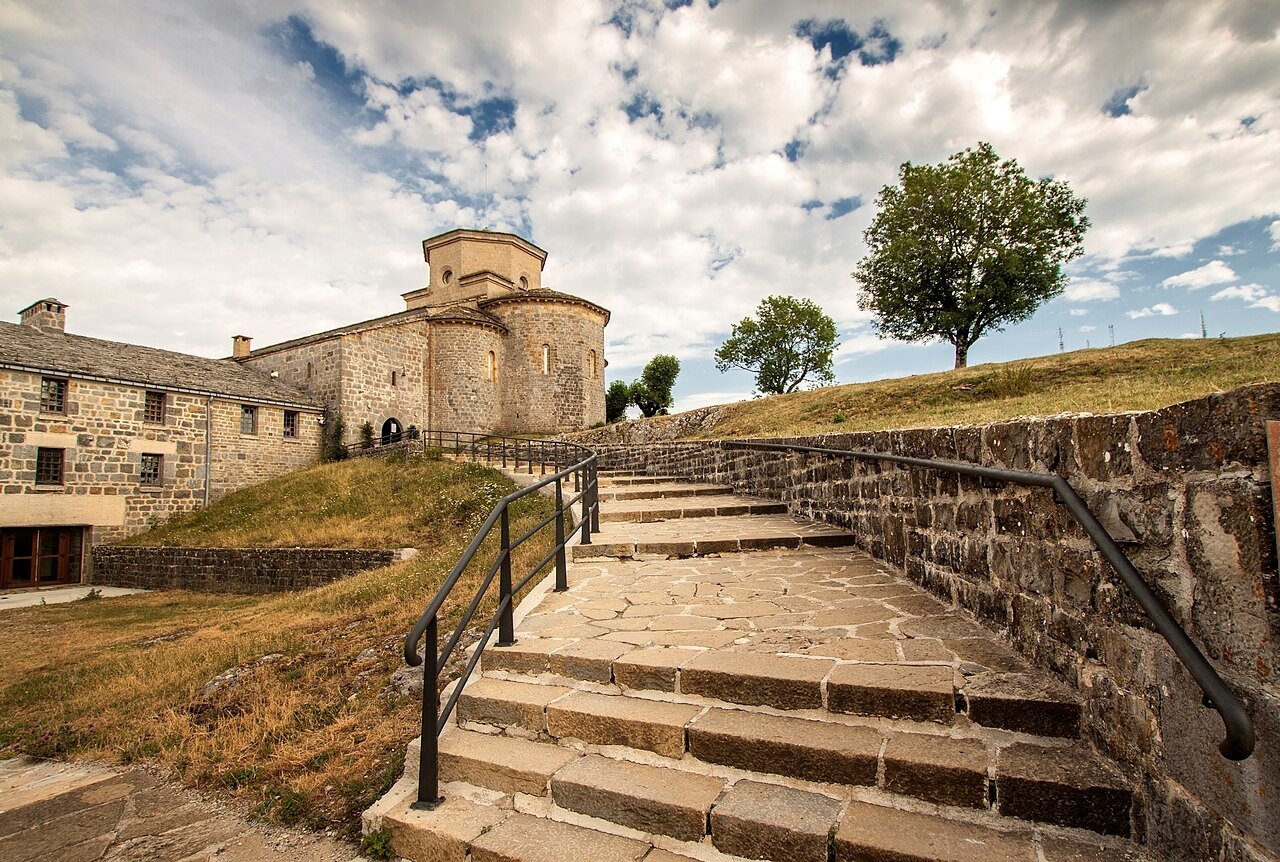
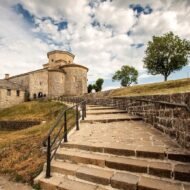
On a high shoulder of the Aralar range, about 50 km from Pamplona, stands the stone sanctuary of San Miguel in Excelsis, one of the oldest and most important sanctuaries in Navarre. Parts of the building date back to the 11th century.
Its story begins with a knight. Teodosio de Goñi, deceived by the devil into believing his wife was unfaithful, killed the two people he found in his bed, only to discover they were his own parents. As penance, the Pope ordered him to wander the mountains of Aralar in chains until they fell off by themselves. Years later, a dragon, the herensuge of Basque legend, came out of a cave to attack him. Teodosio called on Saint Michael, who came down from the sky and killed the dragon, and the chains broke. On that spot, the knight built the sanctuary.
The legend in its present form is probably no older than the 17th–18th centuries, and Teodosio was likely never a real person. But the dragon of the mountain is much older than the Christian story built around it.
Inside the sanctuary is a famous 12th-century Romanesque altarpiece, stolen in 1979 and returned after restoration in 1991.
In the Field Guide: the sanctuary and its altarpiece, the walk across the Aralar pastures, its dolmens, and the village of Goñi.
When: May to October. The road can be closed by snow in winter. Weather at San Miguel de Aralar: a mountain climate at 1,355 m: cool summer days, often with fog rising from the valleys, and cold, snowy winters. It is much cooler than Pamplona below. Getting there: about 17 km by mountain road from Lekunberri, on the Pamplona–San Sebastián motorway, or about 11 km from Uharte Arakil, around 1 hour by car from Pamplona.
3. Jentilbaratza, Ataun, Gipuzkoa
43.00° N, 2.17° W (approx.) · Ataun, at the foot of the Aralar range
The village of Ataun is the homeland of Basque mythology in more than one way. It is the birthplace of José Miguel de Barandiaran, who collected hundreds of the old tales, and it is the setting of one of the most beautiful of them: the end of the jentilak.
The jentilak were giants of the pagan age: so strong that they could throw huge stones from mountain to mountain, and so skilled that they knew the secrets of farming and mill-building. In the story told in Ataun in 1917, the giants were living in a cave when a strange star appeared in the sky. The oldest of them understood: “Kixmi has been born, now we are lost.” Kixmi was their name for Christ. Their time was over. Some threw themselves from the rocks, most disappeared under the earth. Only one remained among people: Olentzero, who still comes down from the mountains to bring presents to Basque children at Christmas.
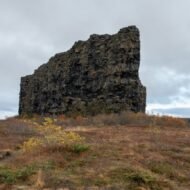
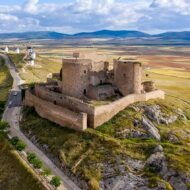
Above Ataun rises Jentilbaratza, a rocky summit with the remains of a medieval castle, once on the frontier between Navarre and Castile. Barandiaran studied it in 1916. Local legend says the giants built the castle, and that their graves lie beneath its walls.
In the Field Guide: the Barandiaran Museum in Ataun, the climb to Jentilbaratza, and the dolmens of Aralar, once believed to be giants’ graves.
When: May to October. The final part of the climb is steep and should be avoided when wet. Weather at Ataun: a wet and green Atlantic valley climate, between the coast and the mountains. Summers are mild, with highs mostly in the low to mid 20s °C, winters are cool and damp, with snow on the Aralar heights. Getting there: Ataun is about 50 minutes by car from San Sebastián. The Barandiaran Museum is in a restored 17th-century mill, the Larruntza mill. The climb to Jentilbaratza starts in the San Martín district and takes about an hour.
4. Zugarramurdi, Navarre
43.27° N, 1.54° W · Baztan, on the French border
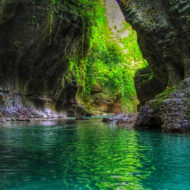
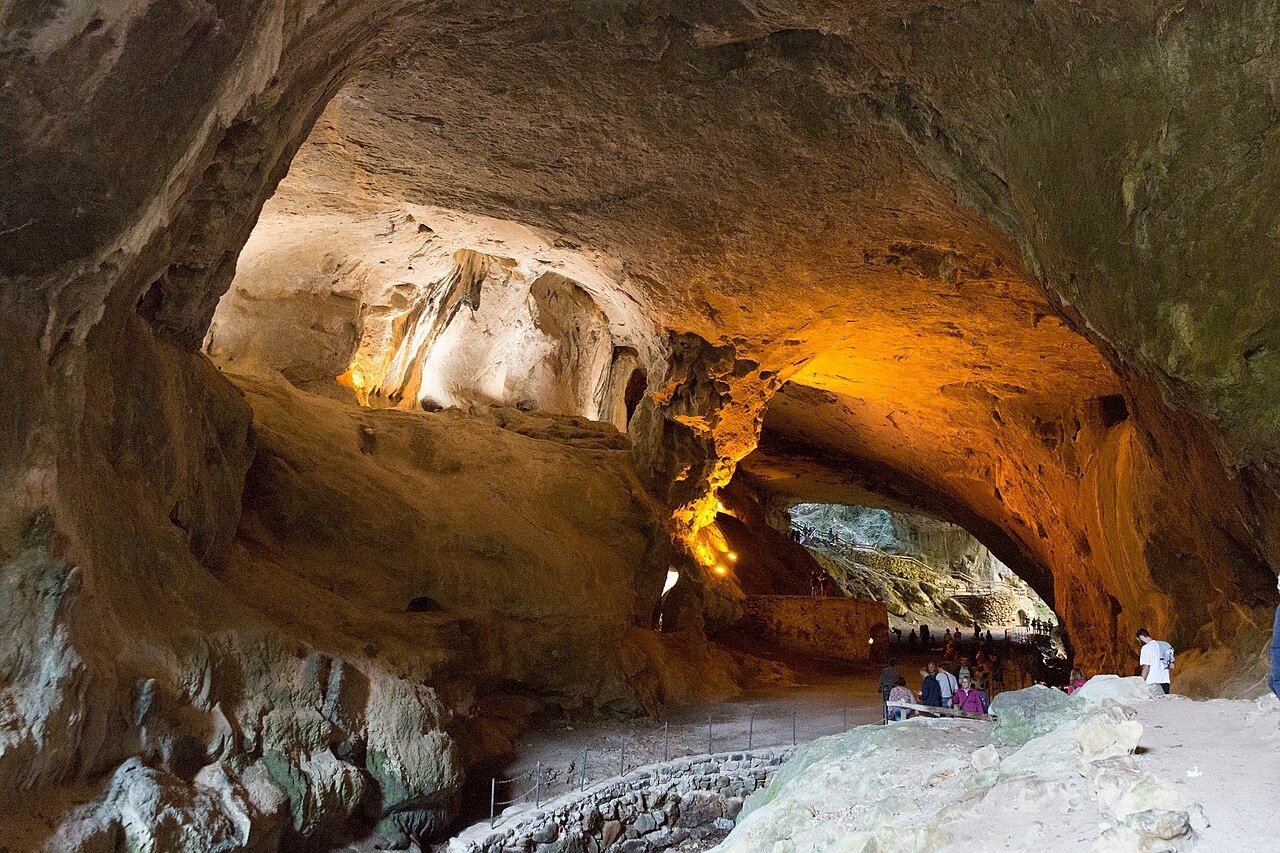
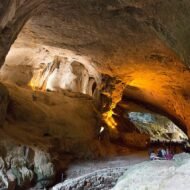
Zugarramurdi is a tiny village of about 200 people in the green hills of northern Navarre, right on the border with France. Below it is a great natural cave, about 120 metres long and up to 12 metres high, carved by a stream with an unforgettable name: Infernuko erreka, “the stream of Hell”.
In the early 17th century, people said that the witches met here. The meadow beside the cave was called Akelarre, “the meadow of the billy goat”, the devil’s form at their gatherings, and the name became the Spanish word for a witches’ sabbath: aquelarre. In 1609, the Spanish Inquisition opened its trials in Logroño. On 1 November 1610, six people were burned at the stake and five more were burned in effigy, having died in prison.
But the story has a surprising ending. The inquisitor Alonso de Salazar Frías travelled through the area in 1611, examined hundreds of confessions and concluded that he had found no real evidence of witchcraft. Most of the accused later withdrew their confessions, saying they had been tortured. In 1614, the Inquisition dismissed the remaining cases.
Today, the village has a Witches’ Museum, and every summer solstice, fires are lit again in the cave.
In the Field Guide: the cave walk, the Witches’ Museum, the nearby caves of Sare across the border, and the witch trials on the French side, in Labourd.
When: spring to autumn. Midsummer brings the solstice celebration, weekdays outside summer are much quieter. Weather at Zugarramurdi: a mild, very green Atlantic climate. On the nearby coast at San Sebastián, average highs are about 22°C in July, 21°C in September and 11°C in January. Rain falls in every season. Getting there: about 1 hour by car from San Sebastián, and around 1 hour 30 minutes from Pamplona. The caves are open from Tuesday to Sunday; check hours before visiting.
5. Sorginetxe, Álava
42.83° N, 2.38° W · Arrizala, near Agurain/Salvatierra
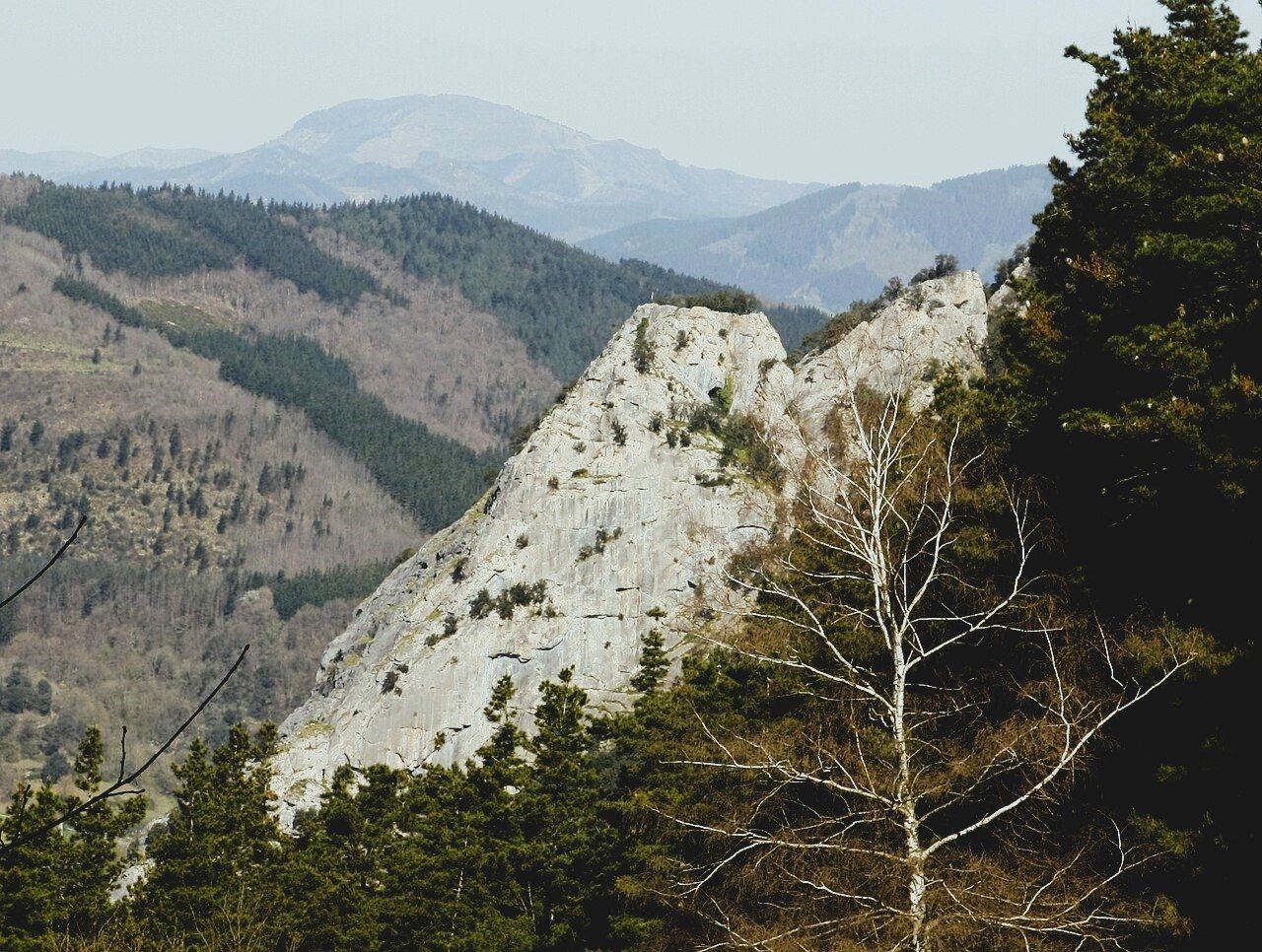
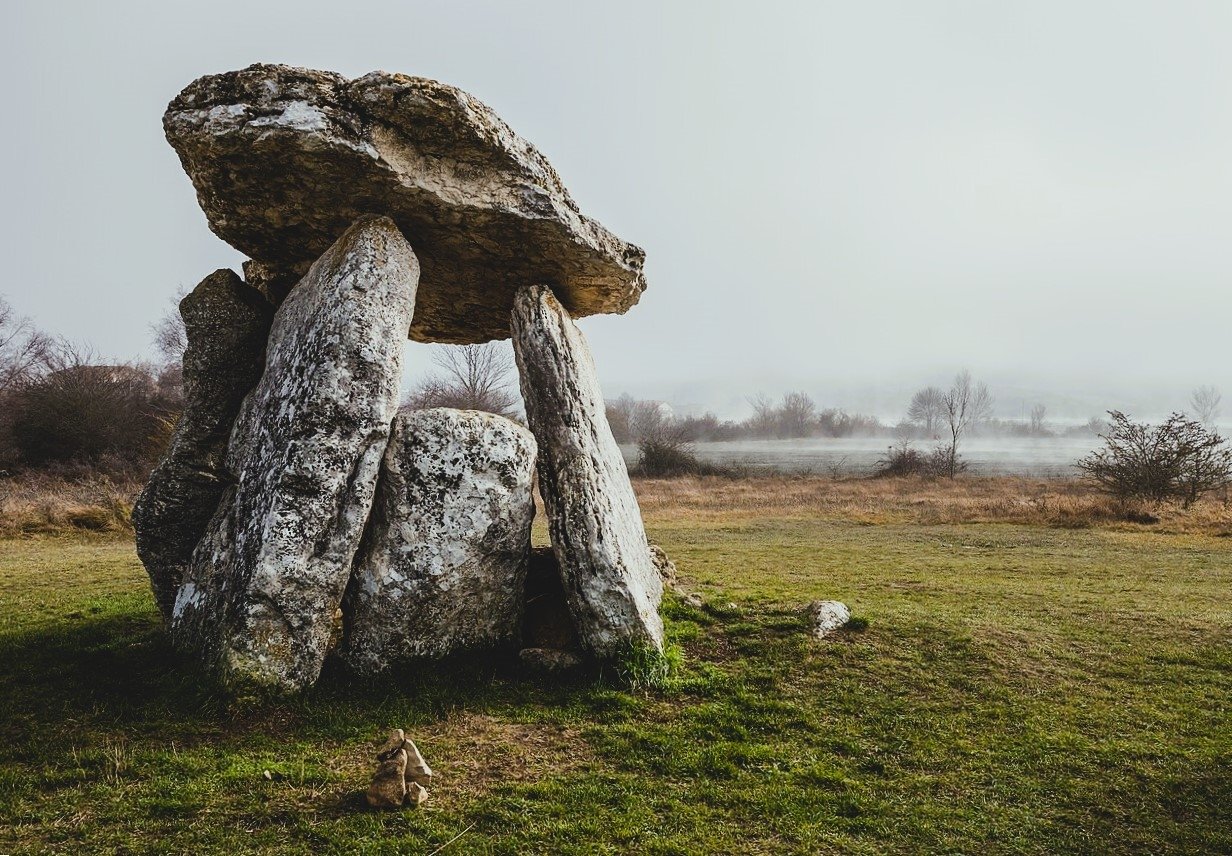
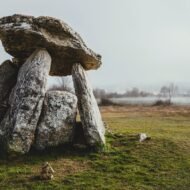
In the flat farmland east of Vitoria-Gasteiz, on the edge of the small village of Arrizala, stands one of the best-preserved dolmens of the Basque Country. Sorginetxe was built around 2500 BC: a chamber of six limestone slabs, with a seventh slab laid on top as a roof, about 2.3 metres high.
Its name means “the witches’ house”. Legend says the witches built it in a single night, carrying the stones down from the Entzia mountains on their spinning distaffs. Another tale says that they lived at a nearby spring and came to the dolmen to comb their hair.
When it was partly excavated in 1890, human remains and a flint arrowhead were found inside. In 1913, the province of Álava bought the site to protect it.
In the Field Guide: the dolmens of the Agurain plain, the medieval town of Salvatierra, and the “Witch’s Hut” dolmen in the Rioja Alavesa.
When: all year, it stands in the open, by a road. Weather at Sorginetxe: a drier, more continental climate than the coast. In nearby Vitoria-Gasteiz, average highs are about 27°C in July, 24°C in September and 10°C in January, with cold nights and frost in winter. Getting there: about 25 minutes by car east of Vitoria-Gasteiz, near Agurain/Salvatierra.
Beyond the map
Basque mythology was never written down by poets or priests of the old faith. It survived in the mountains, in the names of places and in the stories of the people who lived beneath them. Clouds on Anboto still mean that Mari is home, the giants of Ataun still sleep beneath their castle, and every winter Olentzero still comes down from the hills. Unlike many of Europe’s myths, these were not rediscovered in old books. They were never really lost.
Mythic Europe — a Beyond the Map Field Guide
[Mythic Europe — The Beyond the Map Field Guide]
The Basque chapter of our guide to the places where Europe’s myths were born includes:
- The five sites in detail, with walks, access notes and the best times to go
- Mari’s other homes: Aizkorri, Txindoki, Gorbeia and more
- The French Basque Country: the caves of Sare and Isturitz, the mountain of La Rhune and the witch trials of Labourd
- The Basajaun and the lamiak: the forests, springs and bridges linked to them
- The Barandiaran Museum and how to read the old tales
- Olentzero and the midwinter traditions of the Basque Country
- Offline maps and GPS points for every site
→ [Get the Field Guide]
Coming next in Mythic Europe: the Greek gods.
Read next: Where the Norse Gods Lived · Europe’s Landscapes of Legend · Europe’s Last Pagan Landscapes II
Explore more: Trails · Europe’s Most Beautiful, Beyond the Map