

There are places in Europe that require no journey to reach — they exist in the imagination fully formed before you arrive. And then there are places that exist in a category beyond that: places that require a specific, deliberate act of will to get to, that are not on the way to anything else, and that reveal themselves slowly to the traveller who has made the effort.
Fair Isle is in the second category.
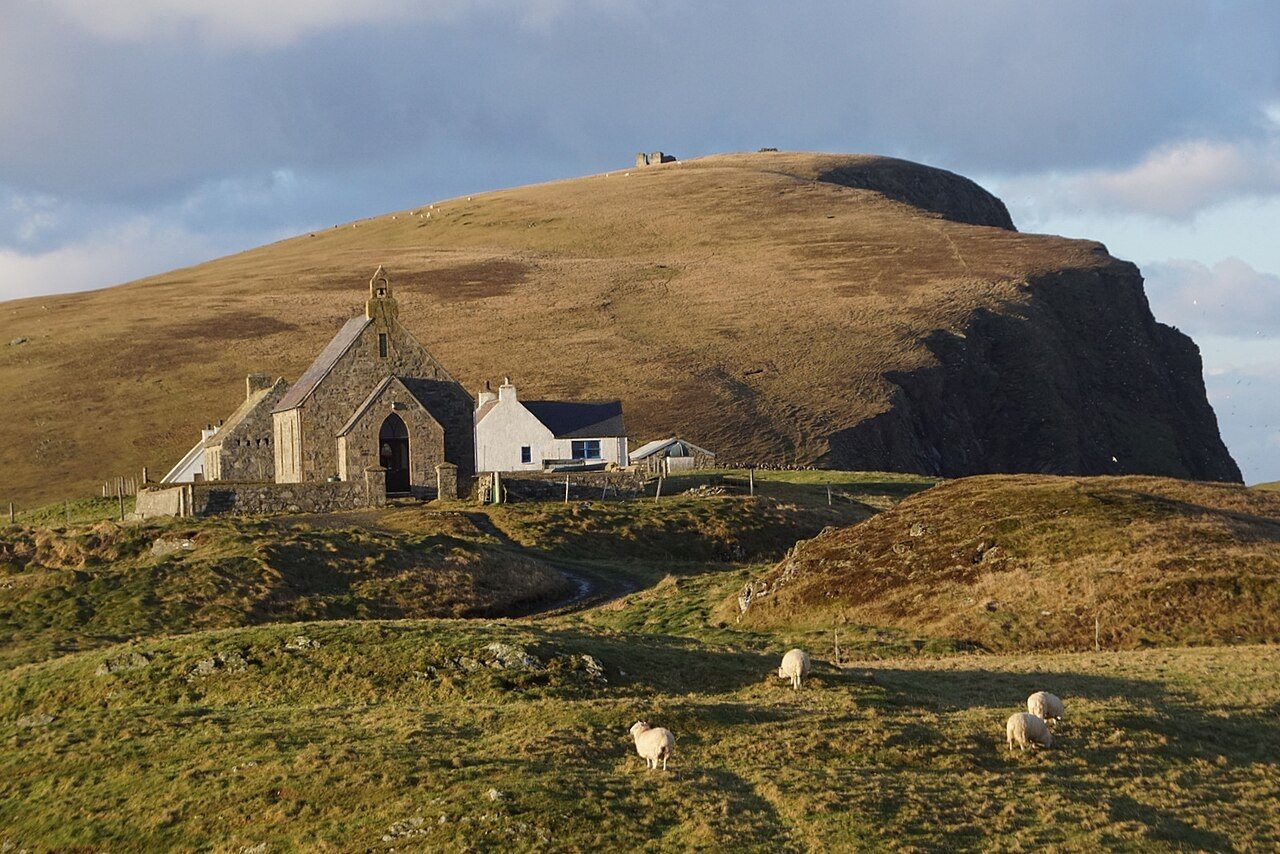
It sits in the North Atlantic between Orkney and Shetland, roughly equidistant from both at approximately 38km north of Orkney and 43km south of Shetland. The island is 5km long and 2.5km wide. The population is approximately 60 permanent residents — the number has remained broadly constant for several decades, stabilised by the specific combination of the National Trust for Scotland’s ownership (since 1954), the Bird Observatory that has given the island an international scientific reputation since 1948, and the community’s own determination to remain. There are no pubs. There are no restaurants outside the Observatory. There are two churches, a primary school, and a community hall. There are approximately 1,200 sheep and, in the right season, 20,000 puffins.
The island is the most remote inhabited island in the United Kingdom.
How to get there
GPS (North Haven, ferry arrival): 59.5356°N · 1.6289°W GPS (Grutness Pier, Shetland — ferry departure): 59.8712°N · 1.2834°W
Fair Isle can be reached by ferry or plane, and both must be pre-booked.
The ferry is the Good Shepherd IV — 12 passengers, no cars, 2.5 hours across open North Atlantic water. It operates three times weekly in summer and once weekly in winter, between Fair Isle’s North Haven and Grutness at the south of Shetland. The ferry timetable is subject to weather conditions in a way that no mainland ferry timetable is. The North Atlantic in October does not operate on schedules. Transport links can be challenging, especially in late October when the ferry only makes a weekly journey, and the weekday air service can be curtailed by crosswinds on the runway.
The plane — a light aircraft operated by Airtask from Tingwall Airport, Shetland — takes 25 minutes and runs three times weekly, with an additional weekly service from Sumburgh between April and October. The crosswind limitation on the island’s grass airstrip is the specific constraint: the strip is exposed, short, and closed when the wind comes from the wrong direction. This is not an inconvenience peculiar to Fair Isle. It is the specific character of the place.
A new £5.6m ferry is due in October 2026 to make access to the island easier and quicker.
The practical approach for a first visit: fly to Sumburgh from Edinburgh or Aberdeen, take the Shetland connection to Tingwall, and fly the light aircraft to Fair Isle. Book the Bird Observatory accommodation and confirm that the ferry or flight is weather-confirmed before departing for Grutness or Tingwall. Build one additional day into any itinerary for weather delays in either direction. This is not pessimism. It is the operational reality of an island in the North Atlantic in autumn.
The birds
Fair Isle’s position places it in one of the most important seabird migration corridors in Europe, where Arctic and Atlantic flyways intersect to produce a diversity and density of bird life that has made the island a pilgrimage site for ornithologists since the early twentieth century.
391 bird species have been recorded on the island. Fair Isle holds 35 ‘firsts for Britain.’ The number requires context: the entire British list is approximately 620 species. Fair Isle, an island of 5km by 2.5km in the North Atlantic, has produced 35 species seen in Britain for the first time. This is the consequence of position — the island intercepts birds that have overshot their migration routes from Siberia, from the steppes of Central Asia, from North America, and that have nowhere else to land in the open ocean between their origin and their destination.
Autumn here is synonymous with discovery when rare eastern vagrants and even transatlantic strays can appear at any moment. With over 380 species recorded, Fair Isle’s reputation for rarities is unrivalled. September and October bring the chance of Lanceolated Warbler, Pechora Pipit, Pallas’s Grasshopper Warbler, White’s Thrush or even Siberian Rubythroat, while American passerines — from Magnolia Warbler to Song Sparrow — have also graced the island.
Easterly winds bring in thousands of thrushes from Scandinavia. A sustained easterly in October is the specific condition that fills the island with migrants — the birds riding the wind that would otherwise blow them out over the Atlantic, landing on the first piece of ground they reach. That ground is Fair Isle. The density of migrants on the right October morning — the bushes moving with birds that weren’t there the day before, the sky full of species that should be 3,000 miles east — is the experience that has brought ornithologists to this island for over 75 years.
From April to June and August to October, the wardening team completes a full daily census of the migrants passing through Fair Isle. Visitors are encouraged to contribute to the record of migration by submitting their own sightings at the evening Log, held every evening in the Observatory lounge.
The Log is the specific social institution of the Bird Observatory: every evening, the day’s sightings are recorded, compared and discussed. The birders who have spent the day covering different parts of the island pool their records. The rarest bird of the day is noted, the context is discussed, the implications are considered. For a travelling birder, participating in the Log on a Fair Isle October evening — with a list of the day’s species on the table, the sound of the Atlantic outside, and the possibility that tomorrow’s easterly will bring something that nobody on the island has ever seen — is the specific reason to make the journey.
The island is also home to an endemic subspecies of Eurasian Wren — the Fair Isle Wren, Troglodytes troglodytes fridariensis — found nowhere else on earth. It is slightly larger than the mainland subspecies, the adaptation of an island population that has been isolated for long enough to diverge. You will hear it in the stone walls before you see it.
The knitwear
The knitwear tradition of Fair Isle is one of the great folk art traditions of the North Atlantic. The pattern system — a specific geometry of coloured bands in a construction that each island knitter interprets differently — is one of the most recognised textile traditions in the world and simultaneously one of the most consistently misrepresented. The pattern that appears on mass-market sweaters described as Fair Isle has generally been produced in the Scottish Borders, or in Bangladesh, or on an industrial loom that cannot replicate the specific tension of the hand-knitted original.
The genuine article is made on the island, by the island’s knitters, using a two-colour stranded method that limits any one colour to a maximum of five consecutive stitches. The construction is the constraint and the constraint is the character. Fair Isle was the first island to be granted Fair Trade status, in 2004. Purchasing from island knitters directly — through the community cooperative or from individual makers — is both the correct way to acquire the knitwear and the most direct contribution to the economy that keeps the island inhabited.
The Observatory
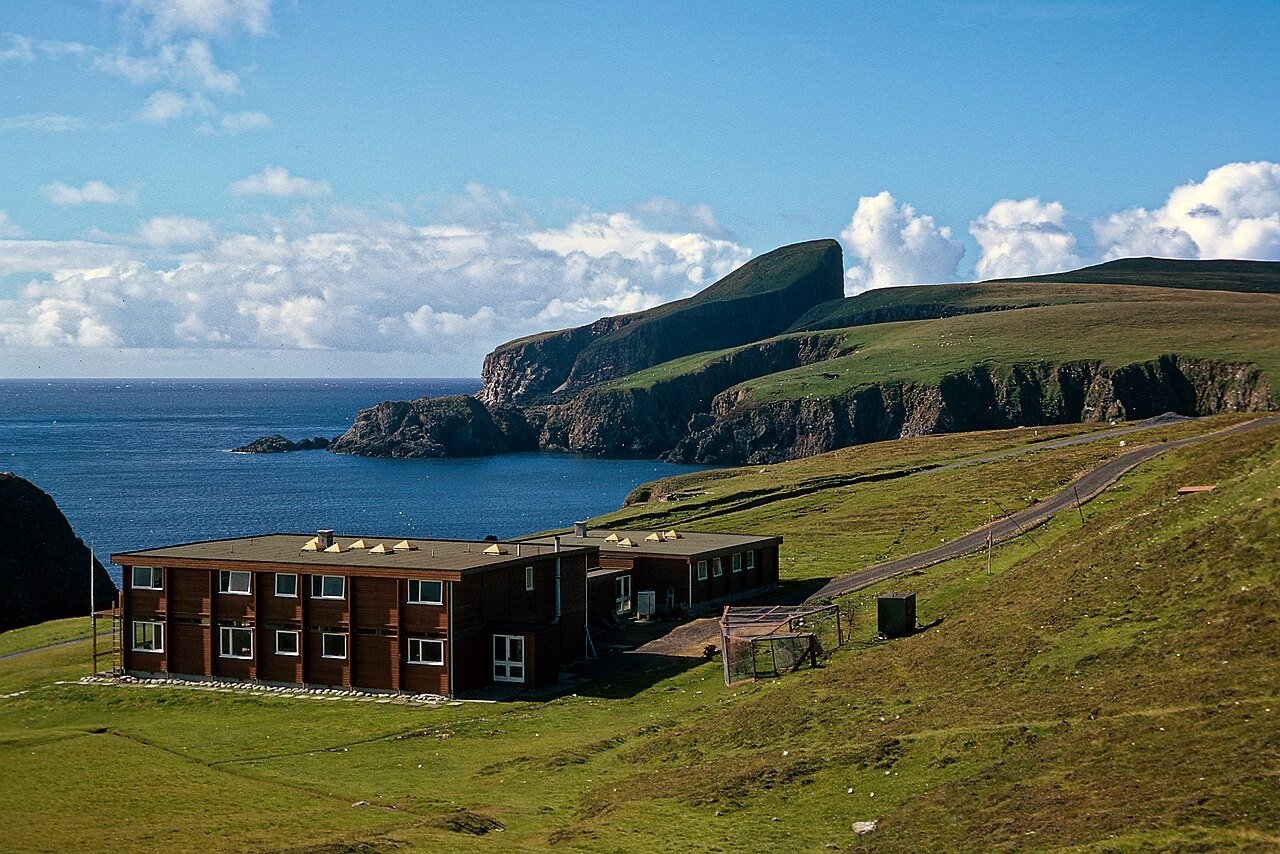
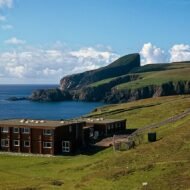
The Fair Isle Bird Observatory has been the island’s scientific and social centre since 1948. The original huts, converted from naval accommodation after the Second World War, served until a fire in 2019 destroyed the building. The observatory has since been rebuilt — a new building and accommodation block established in recent years, now at the centre of the community’s strong social scene.
The Observatory offers accommodation on a full-board basis — meals, bar, the daily Log, ranger-led walks and access to the Heligoland traps used for catching and ringing migrants. For a non-birder visiting Fair Isle for the first time, staying at the Observatory is the correct approach: it provides the social infrastructure for an island that has no pubs or restaurants, the practical logistics for a small community, and the access to the scientific context that makes the island’s bird life comprehensible rather than merely spectacular.
Booking is essential well in advance of any autumn visit. The Observatory has limited capacity and September–October is its peak season.
The landscape and the lighthouses
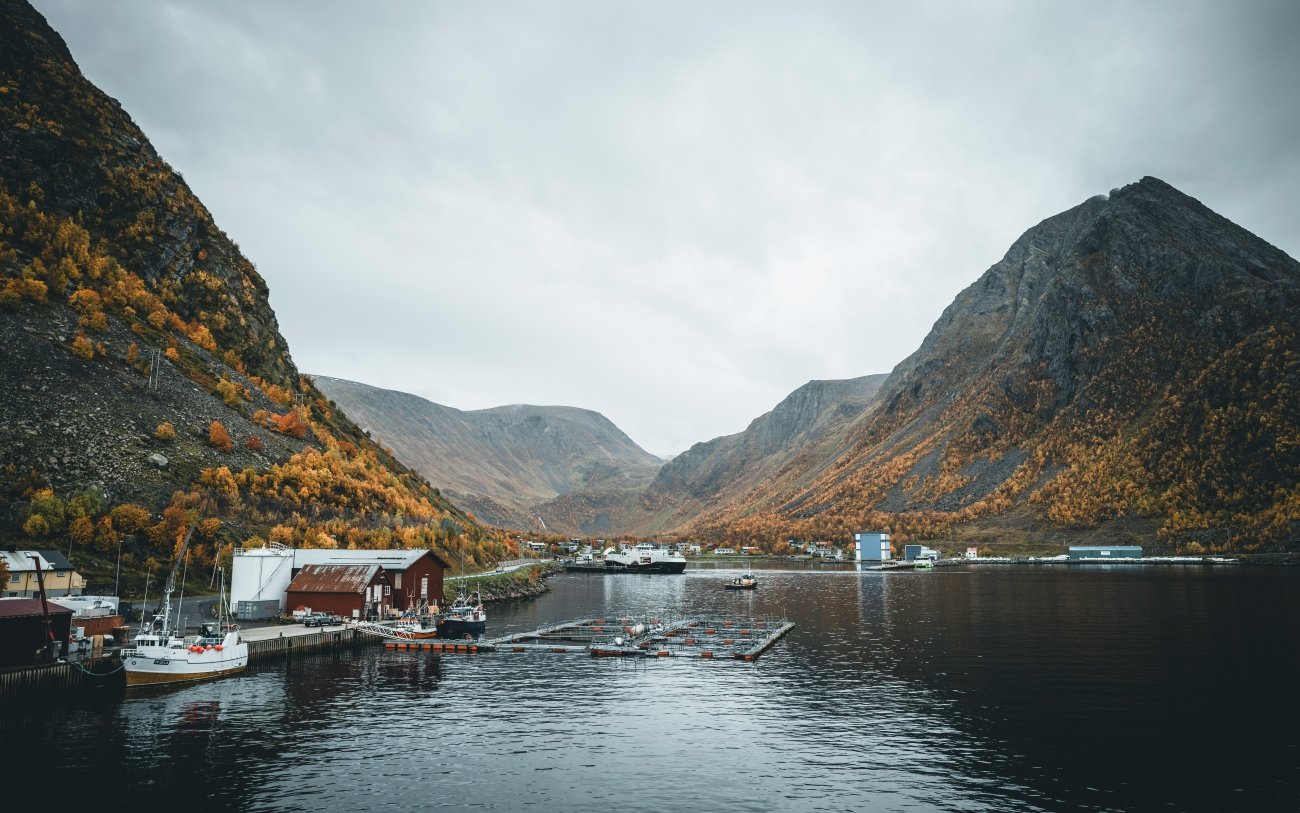
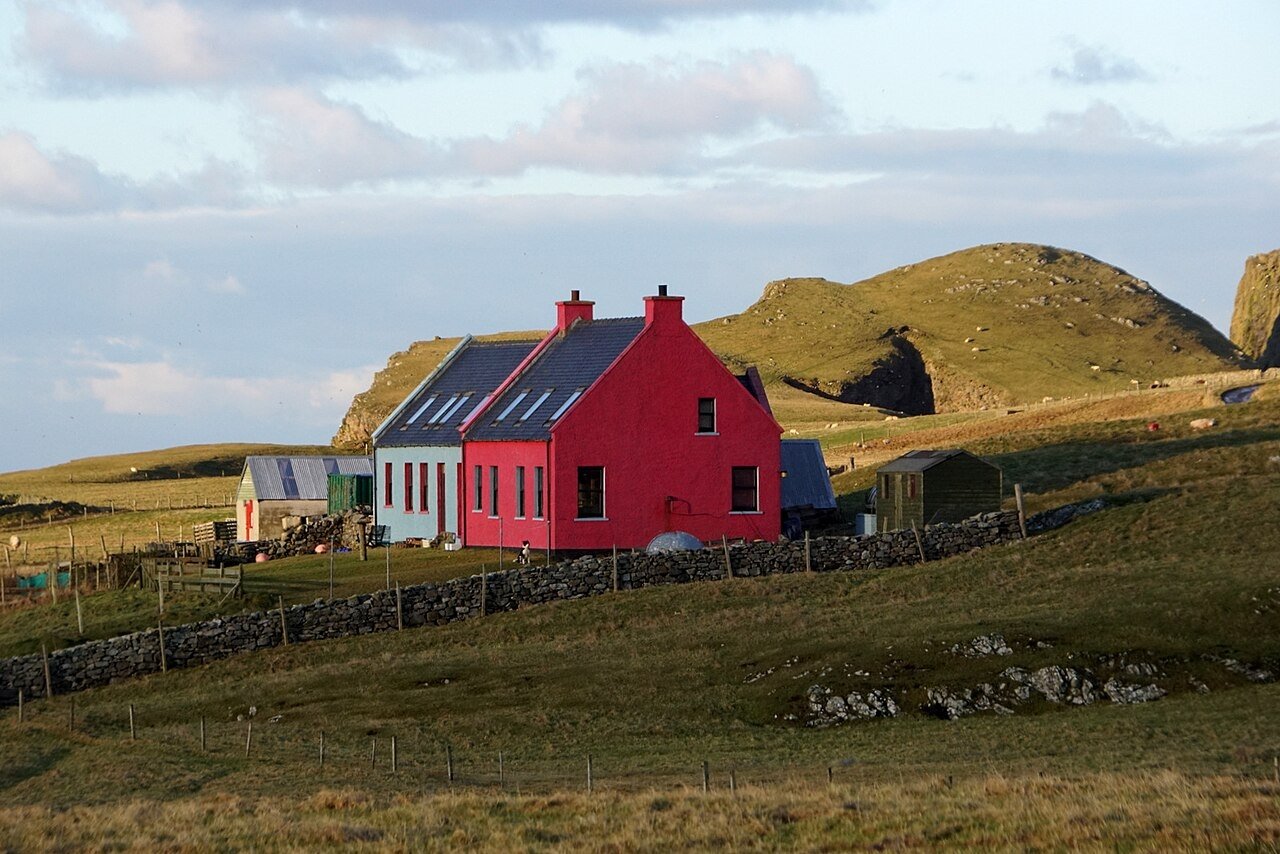
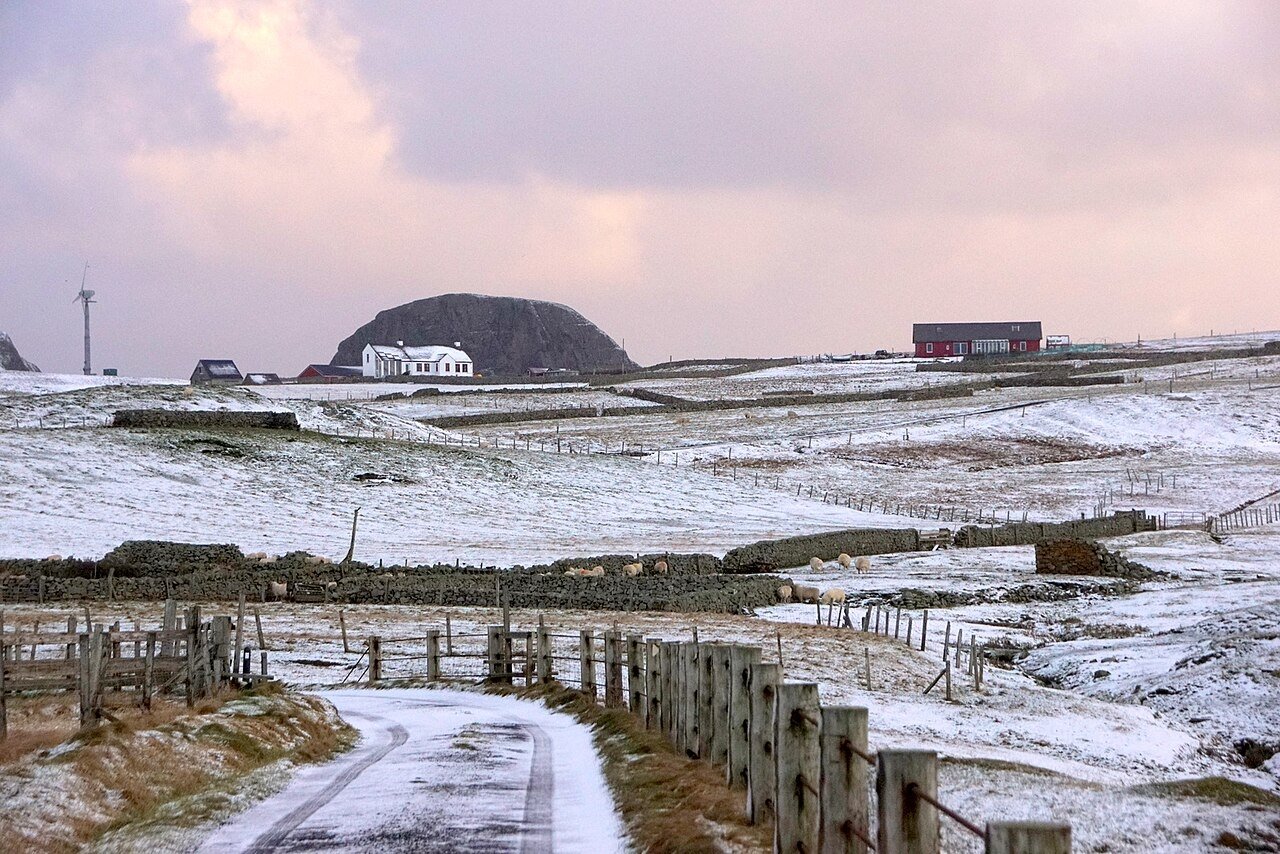
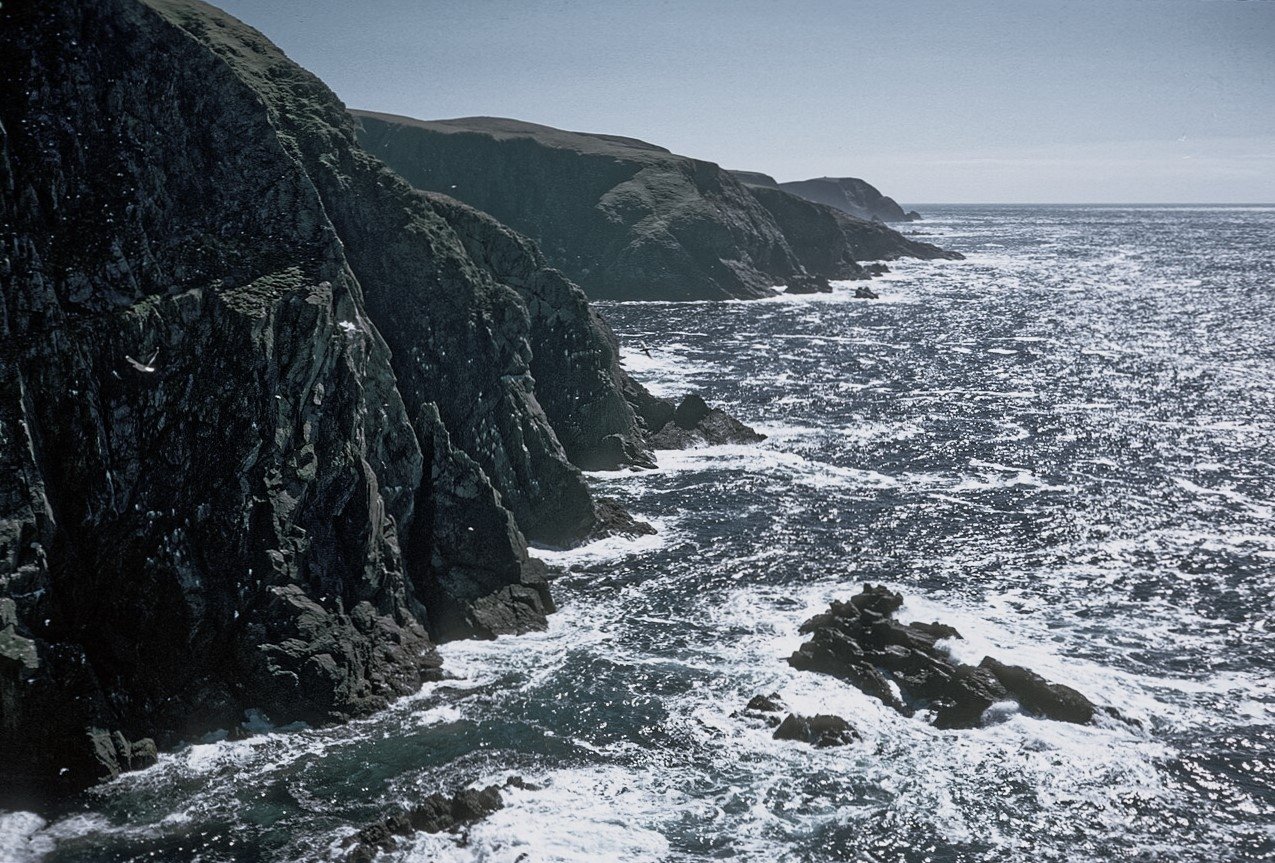
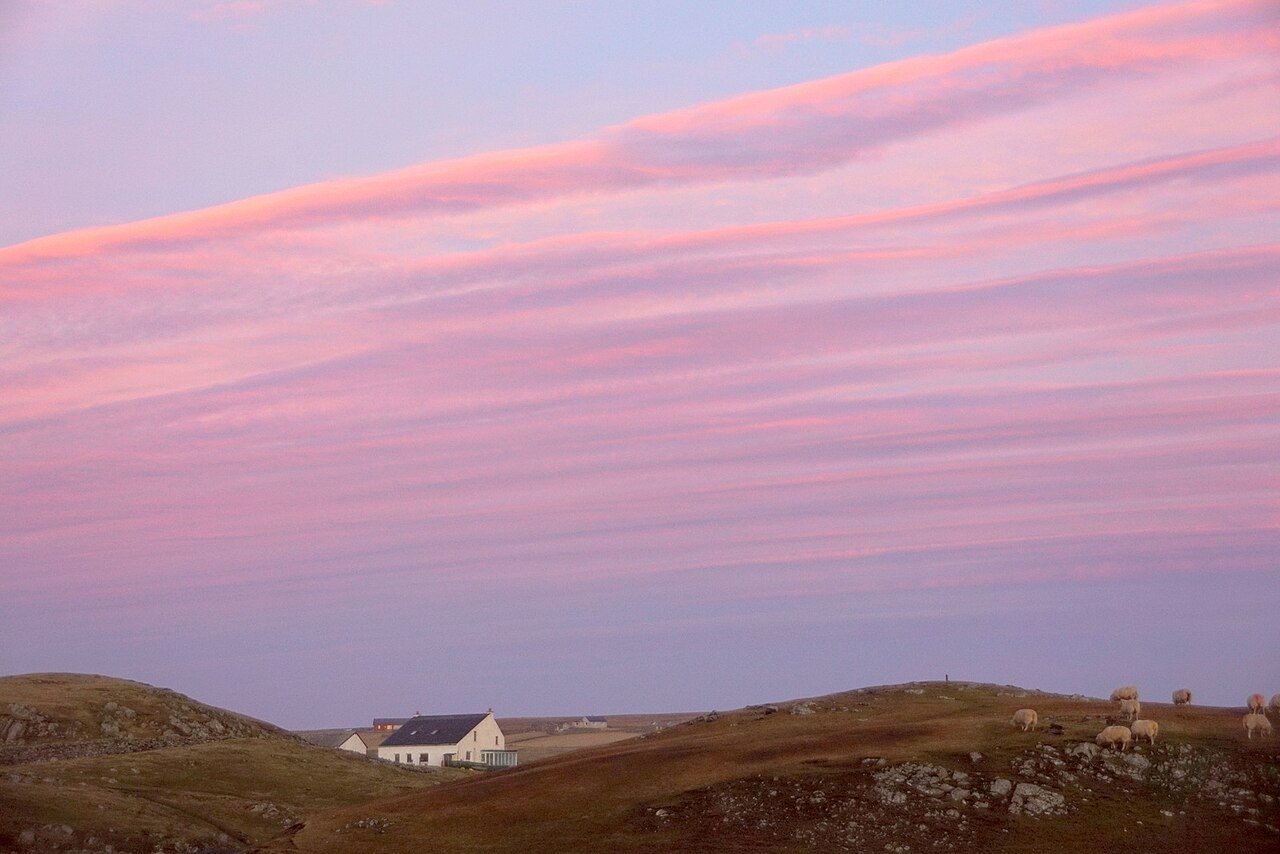
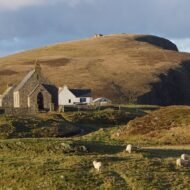
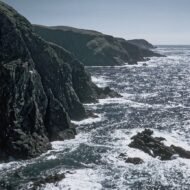
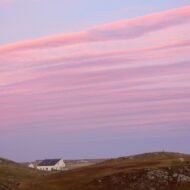
The landscape of Fair Isle is stark and beautiful in the manner of all exposed North Atlantic islands. The cliffs of the west coast rise to over 200 metres. The interior is open heathland — heather, grass, the stone walls that the island’s agricultural tradition has maintained for centuries. The two lighthouses — North Lighthouse and South Lighthouse — sit at opposite ends of the island and were both automated by 1998, when the South Lighthouse became the last manned lighthouse in Scotland. Its foghorn, also Scotland’s last, was dismantled in 2005. Tours of the lighthouses can be arranged through the Fair Isle Lighthouse Society.
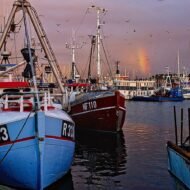
The North Haven — the island’s main harbour — is where the Good Shepherd arrives and where visiting yachts tie up: it is the second busiest harbour in Shetland for visiting yachts. The south end of the island, around the airstrip and the settlement, is the more fertile agricultural land. The north end — cliffs, exposed heath, the North Lighthouse — is the landscape at its most specific to this latitude.
The island’s seas were designated a Marine Protected Area in 2016 — the only MPA in Scotland designated specifically as a Demonstration and Research MPA. Orca and minke whale are spotted regularly from the ferry crossing.
When to go
The Observatory operates from April to October. Within that window, two specific migration seasons define the island’s character: spring (April–June) and autumn (August–October). Autumn is the more unpredictable and the more dramatic of the two — the autumn migration brings the eastern vagrants and the transatlantic rarities that have made Fair Isle’s reputation among birders worldwide.
Every fall of common migrants carries the potential for a true rarity, and it is this constant sense of anticipation that makes autumn on Fair Isle so thrilling.
October is the last full month of the Observatory season and the month when the migration is most likely to produce the genuinely unexpected. The risk is the weather. The October North Atlantic is not the October Mediterranean. Come prepared for conditions that close the airstrip and keep the Good Shepherd in harbour, and build the schedule to accommodate them.
The honest logistics
GETTING TO FAIR ISLE:
By air (recommended for first visit):
  Fly to Sumburgh Airport, Shetland
  (from Edinburgh: 1h 20m · from Aberdeen: 55 min)
  Airtask light aircraft: Tingwall → Fair Isle
  25 minutes · 3 flights weekly · pre-book essential
  Sumburgh → Fair Isle: weekly service Apr–Oct

By ferry:
  Good Shepherd IV · 12 passengers · no cars
  Grutness Pier, Sumburgh → North Haven, Fair Isle
  Approx 2.5 hours
  3× weekly in summer · 1× weekly in winter
  Weather-dependent · pre-book at
  shetland.gov.uk/ferries

ACCOMMODATION:
  Fair Isle Bird Observatory (full board · Apr–Oct)
  Book well in advance for Sep–Oct season
  fairislebirdobs.co.uk

  Springfield self-catering cottage:
  Contact Steven Wilson · norseman817@gmail.com

WHAT TO BRING:
  Waterproofs · layers for Atlantic conditions
  Binoculars (essential) · field guide to
  Western Palearctic birds
  Cash (no ATM on the island)
  Flexibility: weather delays are not exceptional,
  they are part of the Fair Isle experience

BEST MONTHS: September–October (autumn migration)
             April–June (spring migration)
             Summer: seabirds, puffins, knitwear
             Winter: inaccessible without planning
Fair Isle is part of the Hebrides to Shetland archipelago coverage on The Wanders — the northern Scottish island arc from the Outer Hebrides through Orkney to the outermost inhabited point of the British Isles.
→ From The Wanders Beyond the Map series:
Autumn Photography in Europe — The Beyond the Map Premium Guide 100 confirmed photography locations across 20 European countries. 175 GPS coordinates. The specific light windows, technical starting points and hidden positions. Fair Isle in October — the light quality at 59°N, the cliff photography, the migration as a subject — is documented in full.
Hidden Europe — The Beyond the Map Map 250 lesser-known locations across Europe — the places that the standard itinerary has not reached. Fair Isle is on the map. So are the other islands of the northern arc.
Europe in Autumn — The Beyond the Map Guide The complete seasonal guide to European autumn — the editorial intelligence for the continent in October, country by country and island by island.