

Madonie Mountains · Province of Palermo · 1,011m · I Borghi più belli d’Italia · Borgo dei Borghi 2014
- What Gangi is
- The church and what is underneath it
- Palazzo Bongiorno and its Masonic frescoes
- The Sagra della Spiga
- The Madonie Park and what surrounds Gangi
- GPS (Gangi main piazza): 37.7989°N · 14.2045°E GPS (Ventimiglia Castle): 37.8012°N · 14.2067°E GPS (Sperlinga, 20km west): 37.7734°N · 14.3534°E
- The series — Sicily Beyond the Map
- Practical information
There is a specific category of Sicilian inland village that the coastal itinerary misses entirely. The island that most visitors experience — Palermo, Taormina, the Valley of the Temples, the baroque southeast — is real and worth the journey. But it is the coastline of Sicily. The interior is something different: older, higher, quieter, and in possession of a specific quality of light and silence that the coast has traded away in exchange for its August visitors.
Gangi is the first in a series of articles about the interior of Sicily — specifically the Madonie mountain range and the villages, plateaus and landscapes that the island’s coastal reputation has kept largely to itself. The others are coming: Piano Battaglia and its improbable ski resort, Sperlinga carved into living rock, Castelbuono and the last manna harvest in Europe, the twin Petralias on their shared ridge, the full Madonie circuit. This article is where the series begins because Gangi is where the Madonie announces itself most completely — the village that won Italy’s most beautiful village competition and that most visitors to Sicily have never heard of.
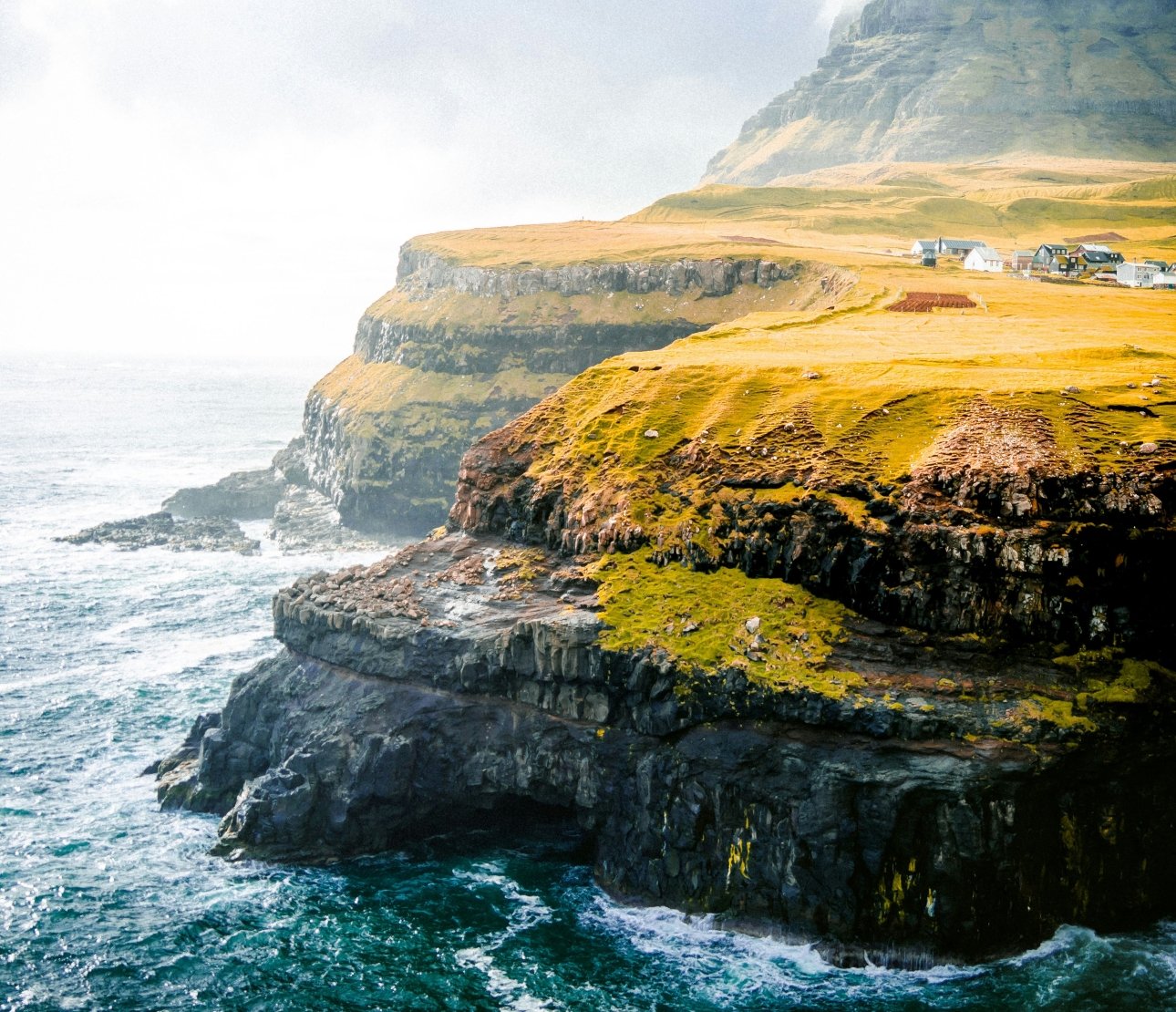
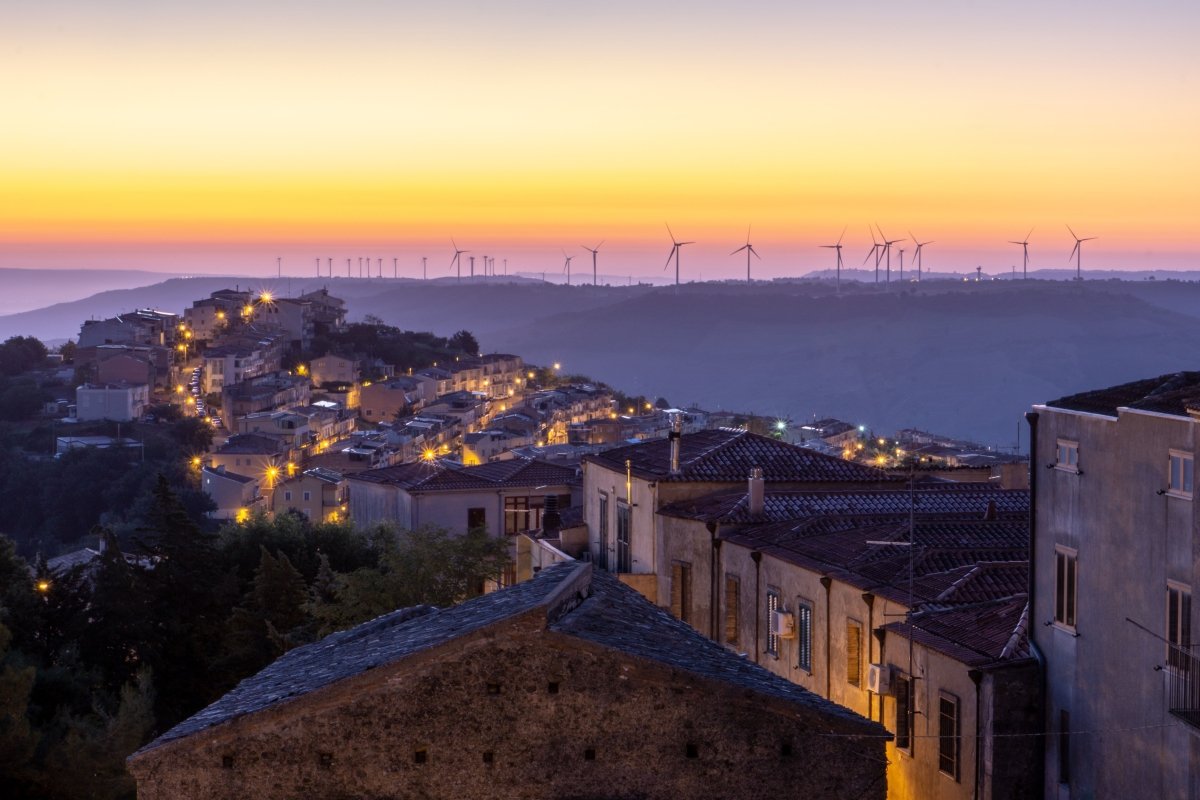
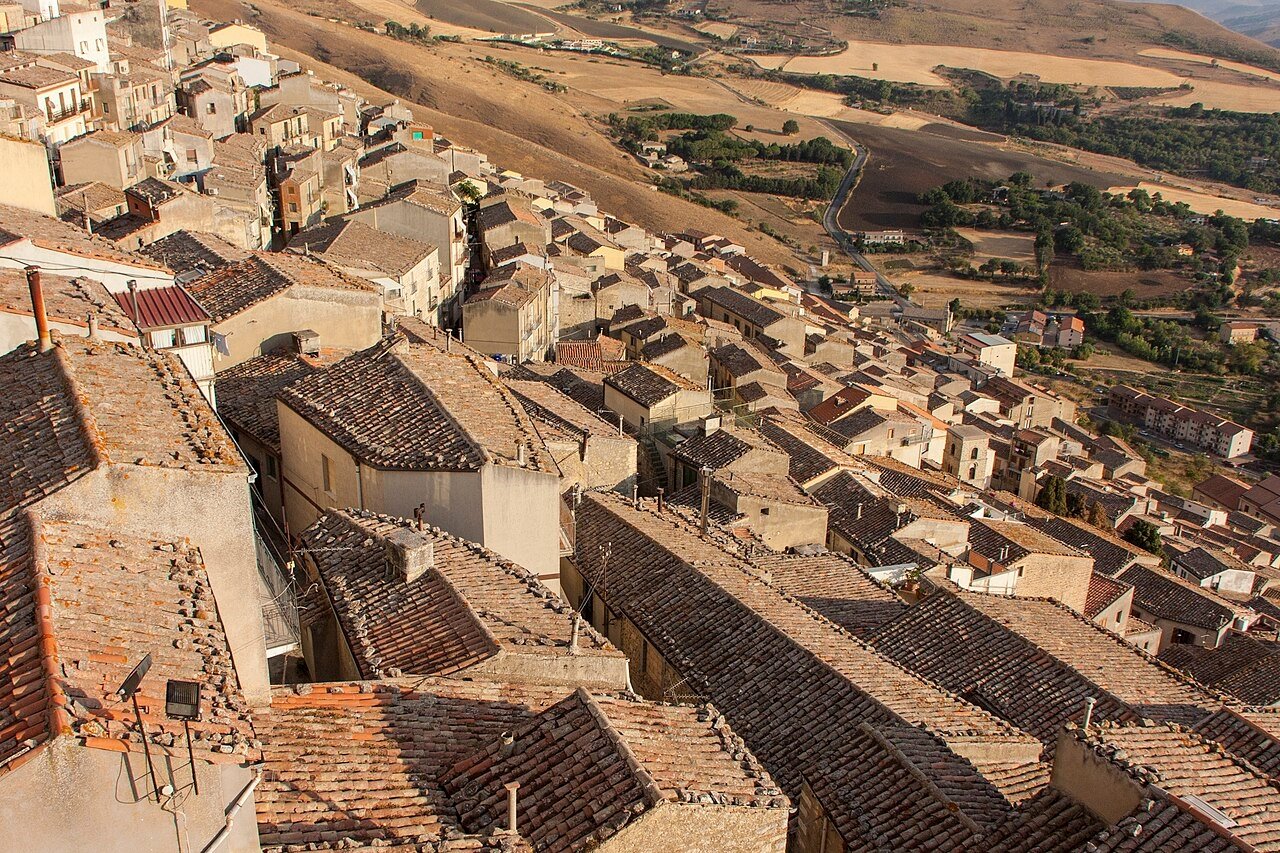
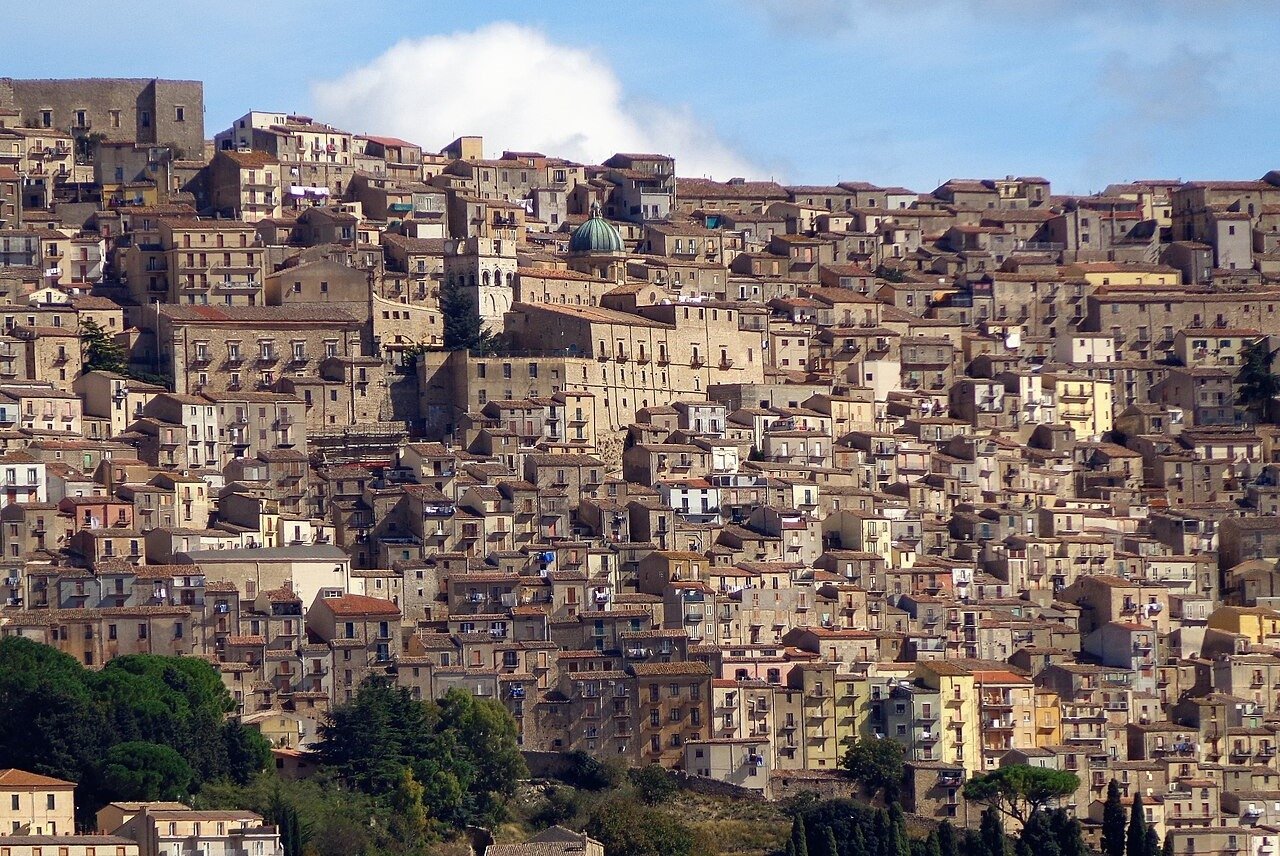
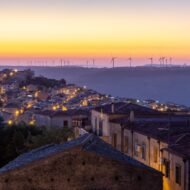
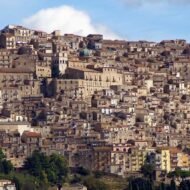
Gangi sits at 1,011 metres in the Madonie mountains, two hours from Palermo and roughly equidistant from nothing in particular. The road to it climbs through oak forest and past the limestone ridges that characterise the Madonie Regional Natural Park. The village appears from a distance as a dense mass of honey-coloured stone houses climbing a single ridge — the kind of silhouette that makes photographers stop before they have found a place to pull over.
It is one of Sicily’s most charming and picturesque villages, voted Italy’s most beautiful village. In 2014 it won the national Borgo dei Borghi competition — Italy’s most beautiful village from among all candidates — on national television. The Sicilians who watched it win were not surprised. The rest of Italy was.
What Gangi is
The village has legendary origins, founded in 1200 BC by the Cretans who arrived in Sicily in search of Daedalus, following Minos, taking the name Engyum — from which Gangi derives. The archaeology is less dramatic than the legend: what is confirmed is that the site has been continuously inhabited since antiquity, and that the visible fabric of the town today reflects the Norman, Swabian and Aragonese layers that arrived in sequence after the Arab period and before the Spanish one.
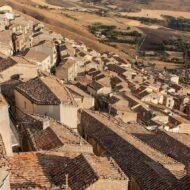
Every corner tells centuries of Norman, Swabian and Aragonese history. The specific character of Gangi’s street plan — the narrow lanes, the sudden staircases, the buildings that press against each other at the top of the ridge — reflects a medieval logic of defence and density that the postwar expansion of most Sicilian towns dissolved. Here it remains intact, which is why the state designated the historic centre a monument and why the designation has worked: there is nothing to expand into on a ridge at 1,011 metres.
The population is approximately 6,100. It has been declining for decades, as every Sicilian interior village’s population has been declining — the movement to Palermo, to northern Italy, to Germany and Switzerland that emptied the interior in the 1960s and 1970s and has continued since. In 2014 the same mayor who entered Gangi in the Borgo dei Borghi competition launched the one-euro house scheme: abandoned houses given away or sold for a nominal price to attract new residents and reverse the depopulation. It generated the predictable international press cycle. Some buyers came. The village is still declining, more slowly.
The church and what is underneath it
The Chiesa Madre di San Nicolò di Bari stands on the main piazza. It is the architectural centrepiece of the village and it contains two things worth travelling a significant distance to see.
The first is the Giudizio Universale — the Last Judgement — painted by Giuseppe Salerno in the early 17th century. Salerno was a local artist known as lo Zoppo di Gangi (the lame man of Gangi), and his Last Judgement is considered second only to the Last Judgement of the Sistine Chapel in Rome. The comparison is in scale and ambition rather than fame: this is a monumental fresco in a mountain village of 6,000 people, executed with the full theological programme of the Counter-Reformation and with a specificity of human expression that rewards close examination. Most visitors to Gangi walk past the church door without entering.
The second is underground. The Museum features the Crypt of the Priests — A Fossa di Parrini in Sicilian — located in the basement of the San Nicolò church, where approximately one hundred mummified bodies of clergymen stand in individual niches with their death masks. The priests were active in Gangi between approximately 1725 and 1872. The mummification process used a colatoio — a drying room where the bodies were positioned for natural desiccation before being treated with wax and dressed for permanent display. Each niche carries a short poem recording the priest’s work on earth.
The crypt is accessible for €2 via a narrow stone staircase in the side nave. A guide, speaking in Sicilian, explains the process and the individuals. Whether you understand the explanation or not, the room is extraordinary in the specific way that few places manage: genuinely strange, without any attempt to manage or soften the strangeness.
The crypt was visited on 22 April 1932 by the Dutch artist M.C. Escher, who was travelling through Sicily with his friend the painter Giuseppe Haas-Triverio. In the square in front of the church, a couple of street urchins asked them if they would like to see some dead priests. Escher took some photographs and created a lithograph as soon as he got back home. The work — Mummified Priests in Gangi, Sicily, 1932 — is held in the National Gallery of Art in Washington. Escher’s photo album from the trip survives, with a note recording approximately 100 mummified priests. He visited them on 12 May 1932. The lithograph was completed in June.
The Escher connection is not a footnote. It is the kind of thing that happens when an extraordinary place meets an extraordinary person who was paying attention. The crypt produced one of the artist’s documented moments of genuine surprise, and the lithograph is the record of it.
Palazzo Bongiorno and its Masonic frescoes
Palazzo Bongiorno is one of the most valuable examples of 18th-century architecture in Gangi. It was built in the 1700s for the Baron Francesco Benedetto Bongiorno and housed the Accademia degli Industriosi — a Masonic academy that promoted Jansenist and Enlightenment ideas in an island that the Spanish Inquisition had only recently departed.
The frescoes in the palace’s reception rooms carry Masonic symbols and philosophical allegories — making the palace a dimora filosofale, a philosophical dwelling rich in coded messages. The combination of Baroque architecture and clandestine intellectual content is unusual enough to be worth noting: this is not a palace decorated for display but one that recorded a specific ideological programme in paint, in a village in the Sicilian mountains, at a time when such ideas carried real risk.
The palace is used today for cultural events and is open to visitors. The frescoes are in a good state of preservation.
The Sagra della Spiga
Every August, Gangi hosts the Sagra della Spiga — the Festival of the Wheat Ear. It has become an unmissable appointment for the entire province. The festival celebrates the grain harvest that defined the Madonie economy for centuries — Sicily was the granary of Rome and remained a wheat-producing territory until the economic transformations of the 20th century. The Sagra involves a procession, a historical reenactment of the harvest, food stalls and the specific atmosphere of a Sicilian village festival that has not been designed for external consumption.
The date shifts annually — typically the second or third Sunday of August. Confirm the year’s date at the Gangi municipality website before travelling for it.
The Madonie Park and what surrounds Gangi
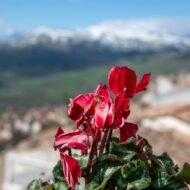
The Madonie Regional Natural Park covers over 40,000 hectares between Palermo and Cefalù and contains some of the highest mountains in Sicily, with approximately 1,500 species and subspecies of plants — around 60% of all those found in Sicily. It is one of the most biodiverse protected areas in the Mediterranean, and the least visited park of its scale in Italy.
Gangi sits within the park and is one of its principal entry points from the east. The trails from the village connect to beech and oak forests at altitude, with views on clear days across the Madonie ridgeline to the Tyrrhenian Sea in one direction and the profile of Etna in another — the volcano visible 100km away, its summit above the haze of the island’s centre.
The park contains fourteen other municipalities besides Gangi. Each has its own character and its own reason to go:
Sperlinga — 20 minutes west — is a village literally carved into living rock. Fifty cave dwellings cut directly into the cliff face, a castle built into the stone above them, and a single Latin inscription on the castle wall that records the only town in Sicily that refused to join the 1282 uprising against French rule: quod Siculis placuit sola Sperlinga negavit — what pleased the Sicilians, Sperlinga alone refused. The two villages make a natural same-day circuit: Gangi in the morning, Sperlinga in the afternoon.
Piano Battaglia — 30 minutes northwest — is the only ski resort in western Sicily, sitting at 1,570 metres in a karst plateau at the foot of Pizzo Carbonara, the second-highest mountain in Sicily at 1,979 metres. In summer it becomes the departure point for the best high-altitude walks in the Madonie. In winter it is where Sicilians go skiing while the coast bakes.
Petralia Soprana and Petralia Sottana — 12km south — are twin villages on the same ridge, 2km apart, both on the Borghi più belli d’Italia list. Petralia Soprana won the Borgo dei Borghi national competition before Gangi did — the two villages share a distinction that no other pair of Sicilian villages can claim.
Castelbuono — 40 minutes north toward Cefalù — produces manna: the crystallised sap of the ash tree, harvested by hand every August. This is one of only two places on earth where manna is still commercially harvested. The November mushroom festival draws the entire province.
Geraci Siculo — 15 minutes north — sits on a ridge shaped exactly like a horse’s back. The Ventimiglia dynasty, who built the castle here and the one in Castelbuono, ran the Madonie as a feudal territory for three centuries. On a clear day the Aeolian Islands are visible from the ridge.
Each of these has its own article in this series. The Madonie overview — the complete circuit, the GPS database, the full guide to the park — is the series anchor that connects them all.
GPS (Gangi main piazza): 37.7989°N · 14.2045°E GPS (Ventimiglia Castle): 37.8012°N · 14.2067°E GPS (Sperlinga, 20km west): 37.7734°N · 14.3534°E
The series — Sicily Beyond the Map
Gangi is the first article in a series covering the interior of Sicily that the standard itinerary misses. The articles that follow cover Piano Battaglia, Sperlinga, Castelbuono, the Petralias, Geraci Siculo and the complete Madonie driving circuit. Each one links back to the others and forward to the Beyond the Map Sicily guide — the first dedicated field guide to interior Sicily in the Beyond the Map series.
The guide covers the entire Madonie park in depth: all 15 municipalities, the GPS atlas, the four driving routes, the food chapter (manna · ricotta · funghi · the sfuagghio of Polizzi Generosa), the photography positions and the honest editorial assessment of which villages are worth the detour and which are not.
Coming 2026 · €19 · Join the Hidden Dispatch for the launch notification.
Practical information
GETTING THERE:
From Palermo:  120km · approx 2h by car
               No direct public transport
               Hire car recommended
From Catania:  160km · approx 2h 15m by car
From Enna:     60km · approx 1h by car
               Enna is the most practical base
               for exploring the Madonie interior

NEAREST AIRPORTS:
Palermo Falcone-Borsellino (PMO) · 124km
Catania Fontanarossa (CTA) · approx 160km

VISITING THE CRYPT:
Church of San Nicolò di Bari · Piazza del Popolo
Entry: €2 · guided (in Sicilian/Italian)
Open most days — confirm locally on arrival
Allow: 45 minutes minimum

VISITING PALAZZO BONGIORNO:
Via Bongiorno · check opening hours locally
Used for events — may have restricted access
Phone the Comune di Gangi to confirm

SAGRA DELLA SPIGA:
Typically second or third Sunday of August
Check: comune.gangi.pa.it for annual date

ACCOMMODATION:
Limited in Gangi itself — several B&Bs
and agriturismo within the Madonie park
Petralia Soprana (12km) has more options
Cefalù (60km) is the most practical
coastal base for day trips inland

WEATHER:
Summer: 25–30°C · significantly cooler than coast
Winter: cold · snow possible above 1,000m
Best months: May–June · September–October
Gangi is not a difficult village to visit. It is two hours from Palermo on a road that is entirely straightforward. What it requires is the decision to go inland — to trade the sea for the mountain, the espresso at a harbour bar for the espresso in a piazza where the barman and the two men at the table are having a conversation in Sicilian that has been running since before you arrived.
The crypt is underneath the church. The Escher lithograph is in Washington. The Masonic frescoes are in the palace on the main street. The Last Judgement is on the wall of the church, by a painter from this village, made in the 17th century, and most visitors to Sicily have never heard of it.
That is the accurate description of what Gangi is.