



TL;DR: The Baltic Forest Trail is a 2,141km epic adventure across Lithuania, Latvia, and Estonia. Skip the crowded Alpine trails and discover pristine forests, medieval towns, and authentic cultural experiences. Perfect for anyone seeking Europe’s longest meditation in nature.
- Why the Baltic Forest Trail Should Be Your Next Adventure
- What Makes This Trail Special
- Planning Your Baltic Forest Adventure
- Best Sections for Different Travelers
- For Beginners: Estonian Sections
- For Adventure Seekers: Challenging Sections
- Cultural Heritage Highlights
- Essential Practical Information
- Safety and Important Updates
- Getting There and Transportation
- Cultural Experiences Along the Way
- Why Choose the Baltic Forest Trail
Why the Baltic Forest Trail Should Be Your Next Adventure
Forget the overcrowded peaks of the Alps – the Baltic Forest Trail offers something totally different. This isn’t about conquering summits; it’s about immersing yourself in endless forests, discovering hidden medieval gems, and experiencing the raw beauty of Northern Europe at a slower pace.
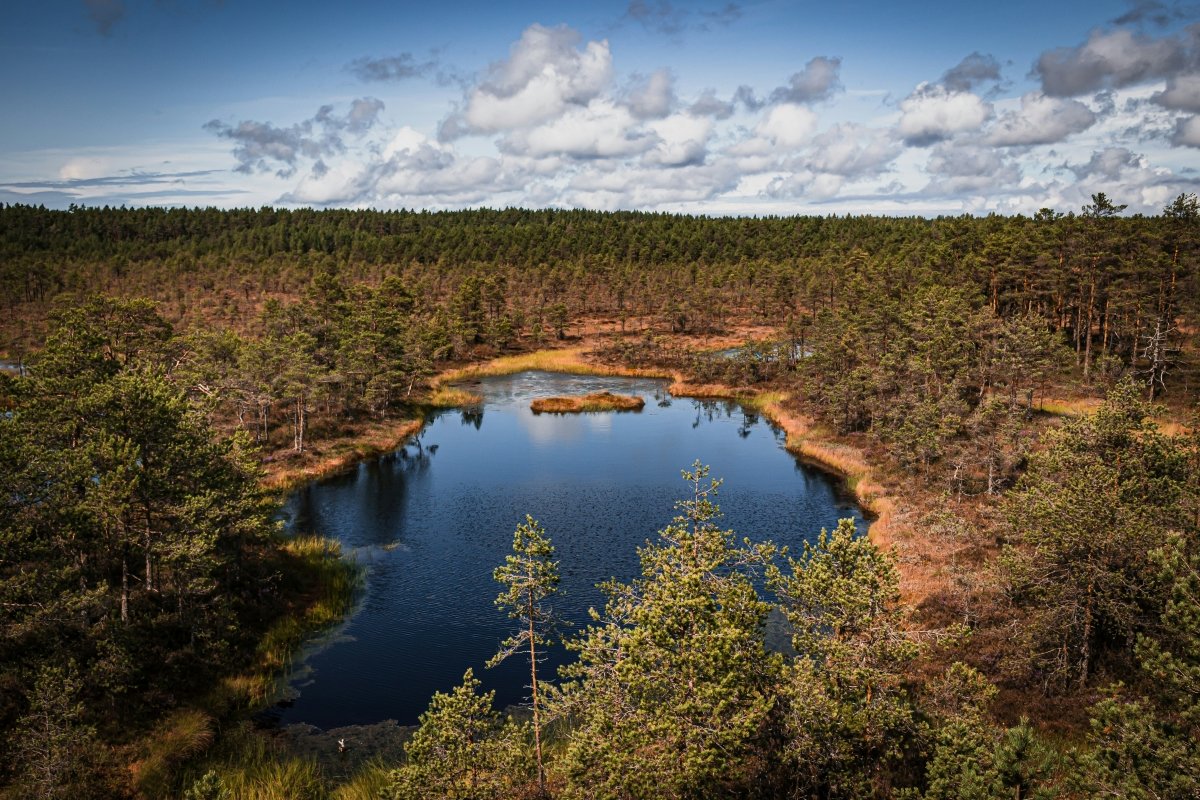
The ~ 2140 km long Forest Trail hiking route is a chance to escape the rat race and discover a place of peace and quiet. Here you can spend some time alone, breathe in the fresh forest air, lie down on the sun kissed moss carpet, allowing your mind to be still.
What Makes This Trail Special
The Baltic Forest Trail (known locally as Miško takas in Lithuania, Mežtaka in Latvia, and Metsa matkarada in Estonia) is part of the European E11 long-distance hiking route. The route starts from the Polish – Lithuanian border near the town of Lazdijai, leads through Latvia, turning into Riga, and finishes in Tallinn, Estonia.
Here’s what makes it incredible:
- 751km in Lithuania through Dzūkija and Žemaitija National Parks
- 625km in Latvia including Ķemeri and Gauja National Parks
- 720km in Estonia featuring Lahemaa and Alustaguse National Parks
- UNESCO World Heritage cities: Both Riga and Tallinn old towns
- Diverse terrain: From primeval bogs to sandy beaches to ancient forests
The most important sight on this route is the Suur Munamägi Hill – 318 m above sea level. The highest point of the Baltics with its observation tower provides its visitors with a splendid 50 km range view of the Estonian nature.
Planning Your Baltic Forest Adventure
Trail Difficulty and Duration
Don’t let the “forest” name fool you – much of the Baltic Trails consists of gravel and asphalt roads open to (minimal) traffic, plus sidewalks in urban areas. While the Coastal Route does indeed follow the coast, the Forest Route does not run through forests in its entirety, with most of it cutting through open countryside.
Time needed:
- Full trail: 100-114 days
- The route is divided into ~ 20 km long one-day or two-day sections with accommodation and transport options.
- Popular approach: Pick individual sections for weekend trips
Difficulty level: Estonia is a haven for beginner and intermediate hikers. With a low difficulty score of 43.2/100, it provides gentle paths through scenic nature reserves. Latvia and Lithuania offer similar accessibility.
When to Go
Best seasons:
- Summer (June-August): Warmest weather, all services open, but busiest
- Spring (April-May): Nature awakening, fewer crowds, unpredictable weather
- Autumn (September-October): Stunning colors, mushroom and berry season
- Winter: Possible but challenging; many services closed
The trail is accessible in all seasons, though some accommodations and services may not be available in the off-season.
Best Sections for Different Travelers
For Beginners: Estonian Sections
The trail is divided into 50 one-day sections, each approximately 20 km long and marked with signposts. The trail sections have different difficulty levels so everyone can choose the most suitable one for themselves!
Must-try beginner sections:
- Lahemaa National Park: The diversity of nature in Lahemaa National Park – the oldest national park in the Baltic states. Lahemaa – means “the land of bays” in Estonian.
- Hara and Viru Nature Trail: Routes such as the Hara and Viru Nature Trail are ideal for short, peaceful walks.
For Adventure Seekers: Challenging Sections
- North Estonian Klint: This is the most challenging Forest Trail section, especially on the second day. Here, on the coast of the Gulf of Finland, rises the North-Estonian Klint – a steep, rocky and forest-covered cliff
- Devil’s Land (Paganamaa): After Peļļi, it crosses the Latvian/Estonian border and winds along the shores of the lakes Smilšājs, Sūneklis and Ilgājs for 2 km on the Estonian side, known as Paganamaa (translation: Devil’s Land).
Cultural Heritage Highlights
- Historic Riga: UNESCO World Heritage old town
- Medieval Tallinn: Perfectly preserved medieval center
- Traditional fishing villages: Especially around Lake Peipus region
Essential Practical Information
Navigation and Trail Markings
White-blue-white signs indicate the Coastal Route, and white-yellow-white ones indicate the Forest Route. There are specific markers on trees and other objects along the route to help you get your bearings in nature and not lose track of the road.
Navigation tools:
- Download GPX files from baltictrails.eu
- Mobile apps: Wikiloc and Komoot have the complete tracks
- Official trail maps available for each section
Accommodation and Services
Look for the “Hiker-Friendly” label – These companies offer specialized services for hikers, for example: information about the route, drinking water, first-aid kit, charging electronic devices, facilities to wash, clean and dry clothing, footwear and other hiking gear.
Budget tips:
- It is recommended that you take some cash (EUR) with you on the trip, as in some places credit cards are not accepted and ATMs are not available.
- Rural guesthouses typically €20-40/night
- Wild camping allowed in many areas (check local regulations)
What to Pack
Essential gear:
- Closed footwear is best for stony and rocky sections
- Water and wind proof clothing, medical kit, power bank for your phone will be useful.
- Mosquito repellent will come in handy in warm weather.
Special considerations:
- Bog-appropriate footwear for wetland sections
- Tick protection for grassland areas
- Portable charger (limited power outlets on trail)
Safety and Important Updates
2025 Trail Conditions
Important closures to know:
- The Kavastu ferry is not operating in 2025. According to currently available information, it will resume service in the summer of 2026 after maintenance work.
- Changes in the Kaberneeme – Jõelähtme section (section 47). At the moment and indefinitely, the hydroelectric power station dam crossing over the Jägala River is not available, so please use the route alternative.
Wildlife and Safety
There are no plant or animal species which are poisonous or dangerous to humans (including jellyfish) in the Baltic Sea or inland waters. The viper is the only poisonous snake species in the Baltic States. It usually won’t attack unless threatened.
Border considerations:
- You must carry identity documents valid for travel when crossing the border between Lithuania, Latvia and Estonia.
- Some areas near Russian border may have limited mobile coverage
Getting There and Transportation
International Access
Major entry points:
- Fly into Riga, Tallinn, or Vilnius
- The Baltics’ railways system is excellent, and a new rail route launched in early 2025 lets you travel between the three capitals in a single journey (with a train switch in Valga).
Trail access: With public transport very efficient in the Baltic countries, you can easily choose a route that will finish at a bus stop or train station that will get back to your starting point.
Cultural Experiences Along the Way
Traditional Food and Local Life
- Lake Peipus region: Onions, fish, villages that stretch out for several kilometres where the buildings are lined along the main street, ornate Old Believers’ churches, small harbours with fishing boats and wooden houses, each painted in a different colour!
- Traditional Estonian taverns: Especially in historic fishing village of Altja
- Local pottery workshops: Available in various sections
Language and Communication
Language: Estonian/Latvian/Lithuanian. Inhabitants also speak English, German or Russian.
Communication tips:
- Most young people speak English
- Tourist Information Centers available in cities and many rural villages
- Most accommodations and catering facilities offer Wi-Fi.
Why Choose the Baltic Forest Trail
This isn’t just another hiking trail – it’s a journey through living history and pristine nature. The Baltic Coastal Trail, known as “Europe’s longest meditation,” stretches across the shoreline, connecting Estonia to neighboring Baltic nations for a unique, soul-refreshing hiking experience.
Whether you’re tackling the full 2,141km adventure or choosing a weekend section, the Baltic Forest Trail offers something uniquely European: the chance to slow down, disconnect from the digital world, and reconnect with nature and authentic local culture.
Perfect for:
- Long-distance hiking enthusiasts
- History and culture lovers
- Nature photographers
- Anyone seeking solitude and peace
- Hikers wanting to avoid crowded Alpine routes
Getting started: Visit baltictrails.eu for detailed section maps, GPX downloads, and up-to-date trail conditions. Start planning your Baltic forest adventure – Europe’s best-kept hiking secret is waiting for you.
Ready to trade mountain peaks for moss carpets and Alpine crowds for forest solitude? The Baltic Forest Trail might just be the life-changing adventure you’ve been looking for.
[embedpress]https://www.thewanders.eu/wp-content/uploads/2025/08/baltic_forest_hiking_trail_600_x_600_embeddable_html_map.html[/embedpress]