


Some of Europe’s olive trees were already old when the Roman Empire fell. These are five forgotten olive landscapes, where the harvest still follows them.
- 1. The Olive Grove of Amfissa, Greece
- 2. Valdanos and the Old Olive of Bar, Montenegro
- 3. The Olive Gardens of Lun, Croatia
- 4. The Millennial Olives of Territori Sénia, Spain
- 5. Sabina and the Giant of Canneto, Italy
- How to visit olive country
- Frequently asked questions
- Beyond the map
- Carry the season with you: Beyond the Map Field Guides
The olive tree measures time differently. It grows slowly, survives drought, fire and frost, and when its trunk dies it sends up new shoots from the roots. Some trees in Europe have been bearing fruit for more than a thousand years, through empires, plagues and wars, tended by one family after another.
Most travellers see olives from a car window: endless rows across Andalusia or Puglia. But hidden in the Mediterranean are older, stranger olive landscapes. A sacred plain below Delphi, a grove of wild olives at the tip of a Croatian island, a valley of trees older than Christianity on the Montenegrin coast. In winter, when the harvest is under way, these olive valleys of Europe are at their most alive.
These are five lost olive valleys worth the detour:
- a sea of olive trees on a plain once sacred to Apollo
- a grove of 18,000 trees on the Montenegrin coast, near a tree over 2,000 years old
- 80,000 wild olives at the tip of a Croatian island
- the monumental olive trees of the border between Catalonia, Valencia and Aragon
- a giant tree in the hills of Sabina, an hour from Rome
1. The Olive Grove of Amfissa, Greece
38.47° N, 22.41° E · the Crisaean plain, between Amfissa and Itea, Phocis
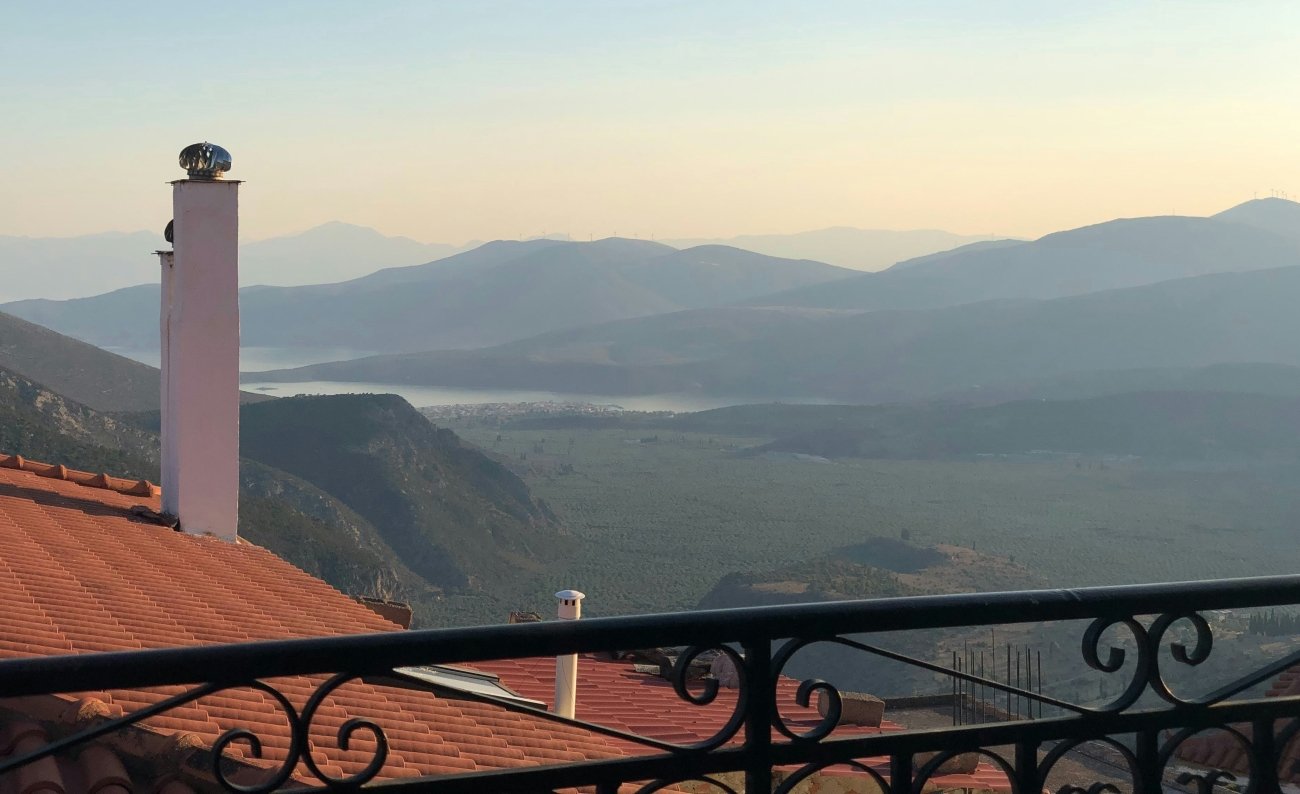
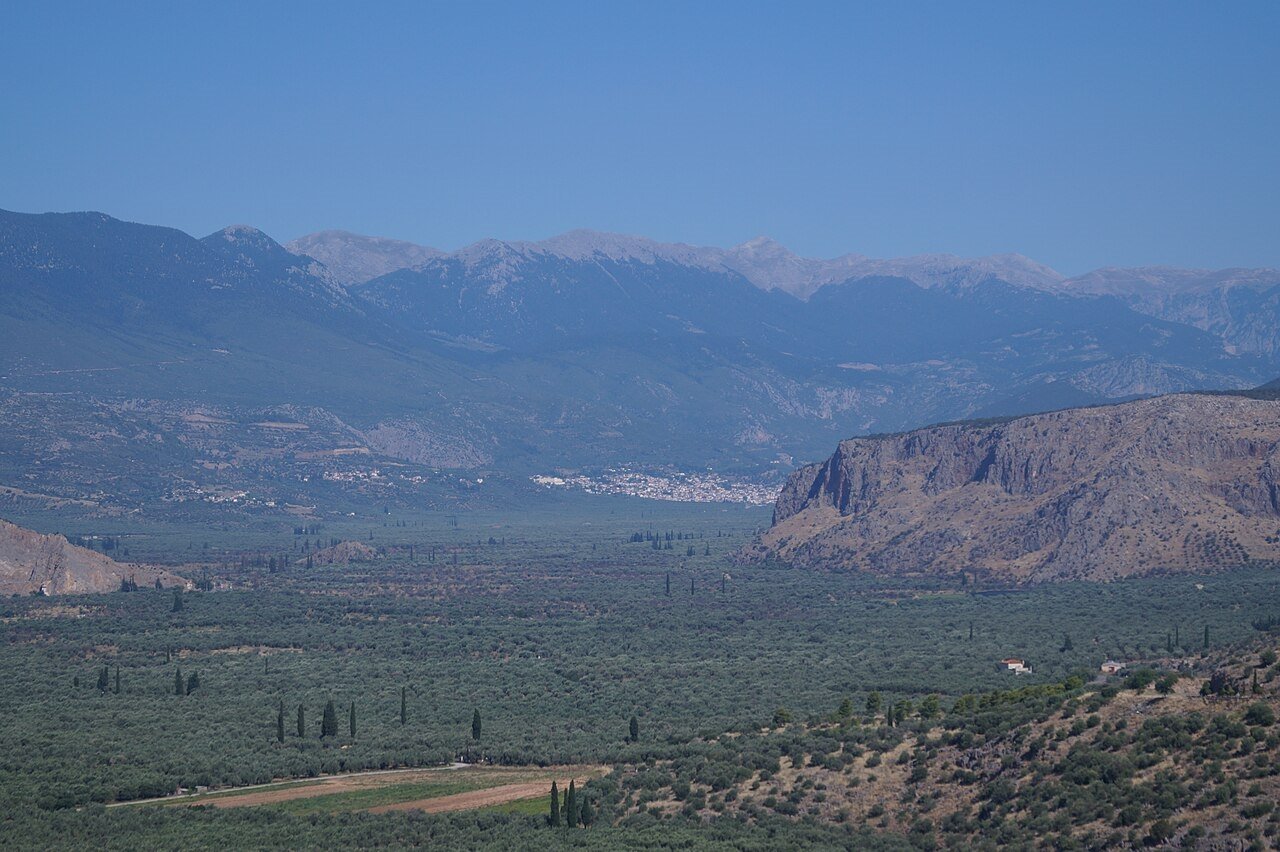
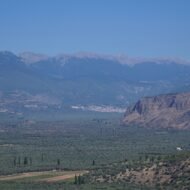
From the ruins of Delphi, high on the slopes of Mount Parnassus, the view falls away to a silver-green sea. It is not water. It is the olive grove of Amfissa: more than a million trees, many of them centuries old, filling the plain all the way to the Gulf of Corinth. It is the largest continuous olive grove in Greece, and it is protected as part of the Natura 2000 network.
This plain has a remarkable history. In antiquity it was declared sacred to Apollo, and the Delphic authorities forbade anyone to farm it. When the people of Amphissa began to cultivate it anyway, in the 4th century BC, the dispute led to war and gave Philip of Macedon his reason to march into central Greece. Today the plain is famous instead for the Konservolia olive of Amfissa, one of Greece’s great table olives. In recent years, a wildfire damaged part of the ancient grove, and replanting is under way.
- Go for: the view from Delphi, walks and drives through the old olive grove, the town of Amfissa with its castle, and table olives and oil bought from local producers.
- When: November to January for the harvest; spring for green fields and wildflowers under the trees.
- Getting there: about 2 hours 30 minutes by car from Athens. Delphi is 20 minutes above the grove; Itea and the coast are at its southern edge.
2. Valdanos and the Old Olive of Bar, Montenegro
41.95° N, 19.15° E · Valdanos, near Ulcinj, southern Montenegro
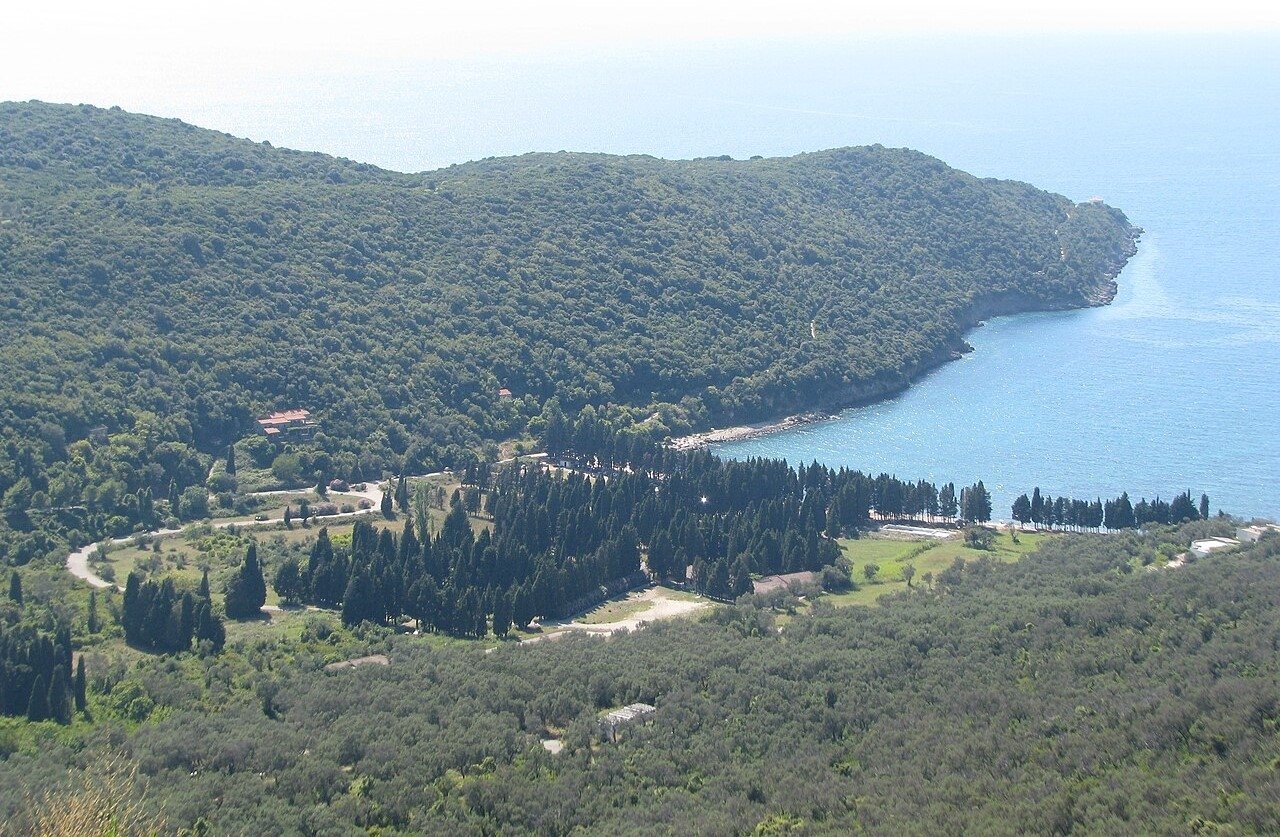
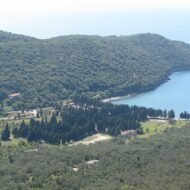
On Montenegro’s southern coast, between Ulcinj and Bar, the olive is part of everyday life. Just west of Ulcinj, the bay of Valdanos is surrounded by one of the country’s largest olive groves, around 18,000 trees spread over more than 40 hectares, running down to a small crescent of pebble beach. For decades the area was a military zone, which is partly why it has stayed so wild.
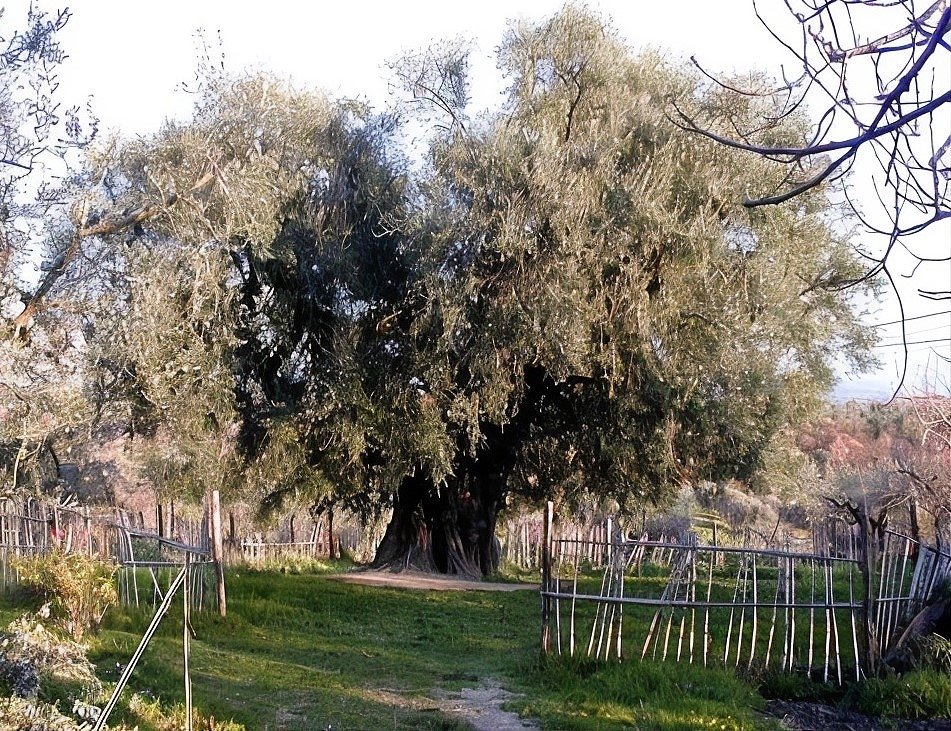
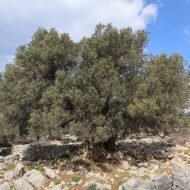
A short drive north, in the village of Mirovica below the ruins of Stari Bar, stands the Stara Maslina, the Old Olive. It is believed to be more than 2,000 years old, one of the oldest olive trees in Europe, and its vast, twisted trunk is now looked after as a monument. In the hills around it, families still harvest olives from trees planted many generations ago, and the oil of Bar and Ulcinj is a source of local pride.
- Go for: the olive groves and bay of Valdanos, the Old Olive of Mirovica, the ruined town of Stari Bar, and the old town of Ulcinj.
- When: November to December for the olive harvest; May, June and September for walking and swimming.
- Getting there: Ulcinj is about 1 hour 30 minutes by car from Podgorica airport. Valdanos is a few minutes west of the town; Bar and Stari Bar are 30 minutes north.
3. The Olive Gardens of Lun, Croatia
44.67° N, 14.73° E · Lun, northern tip of the island of Pag
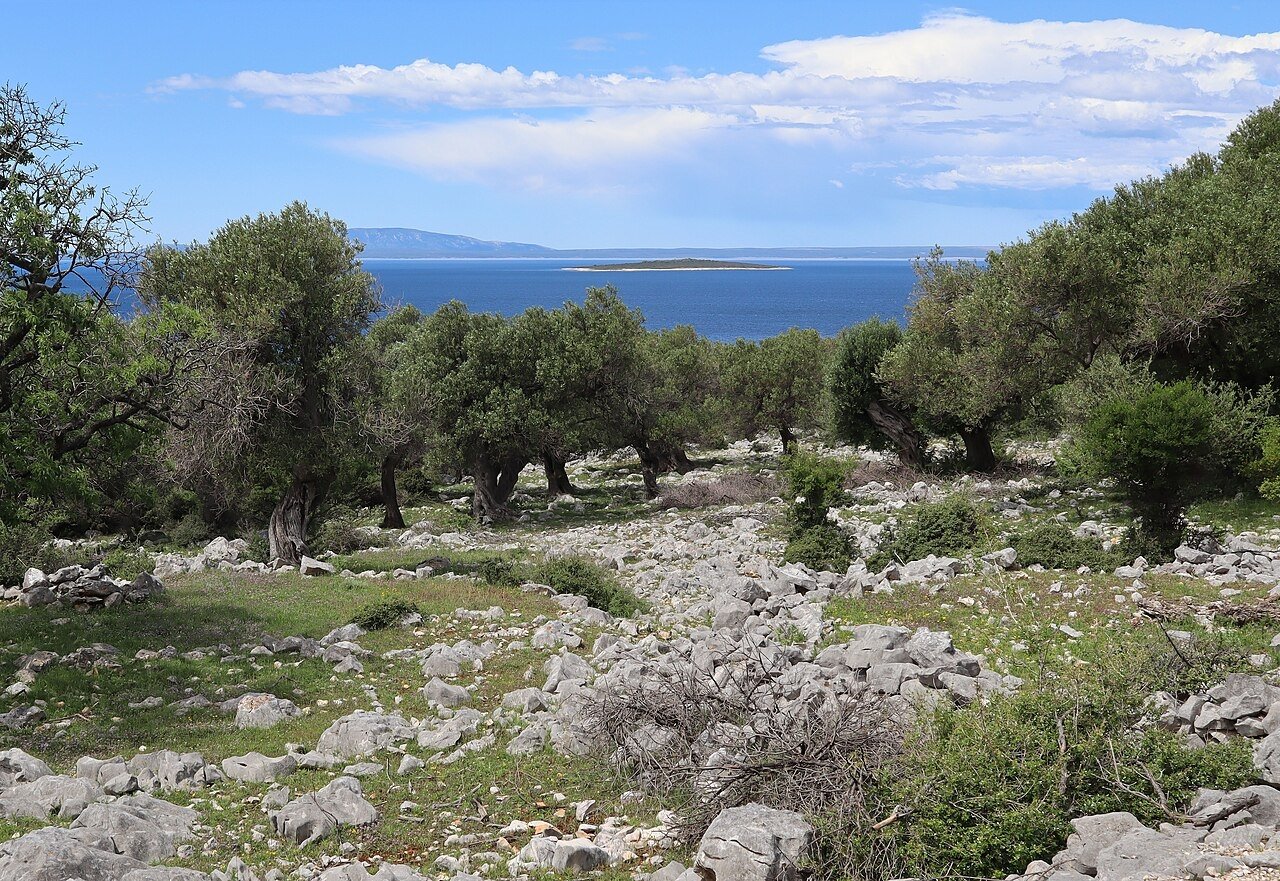
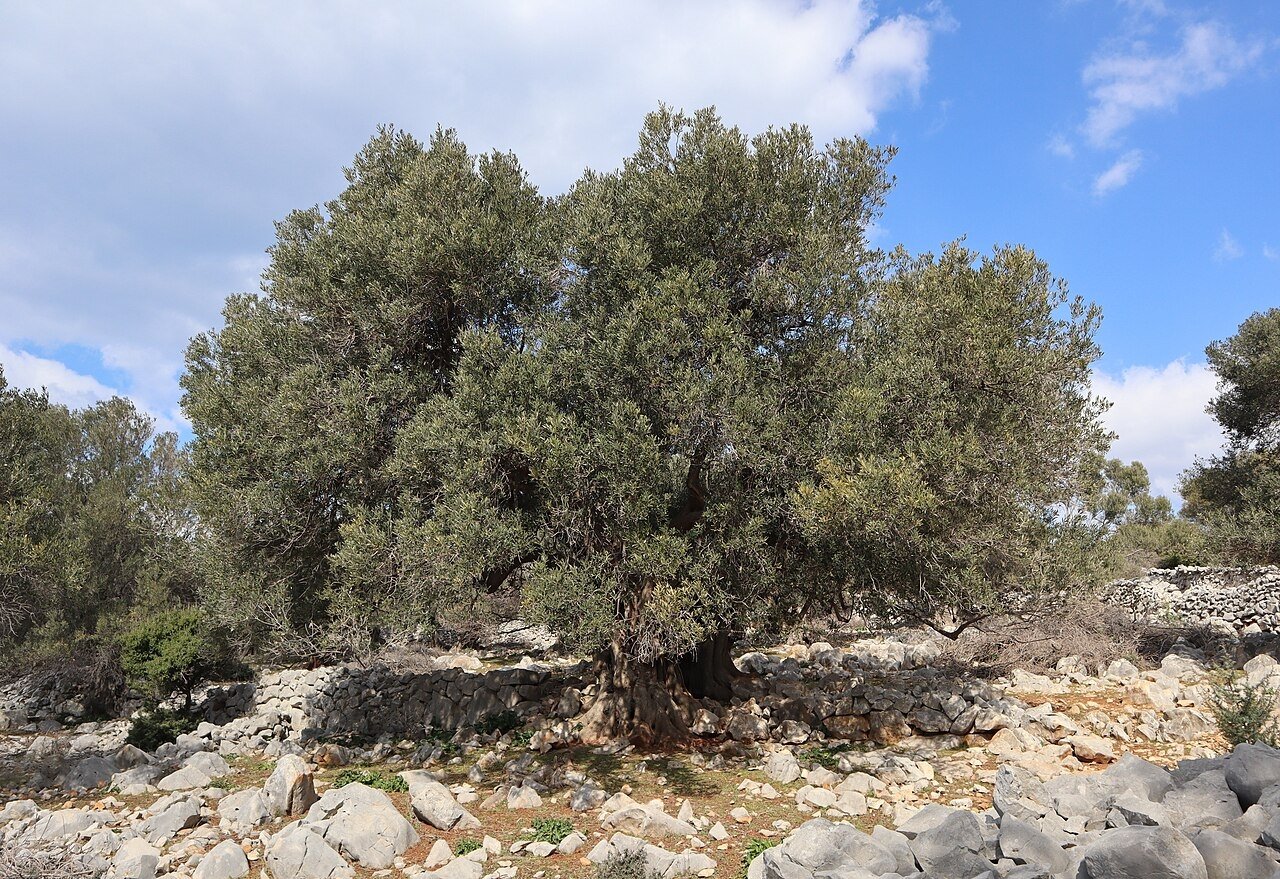
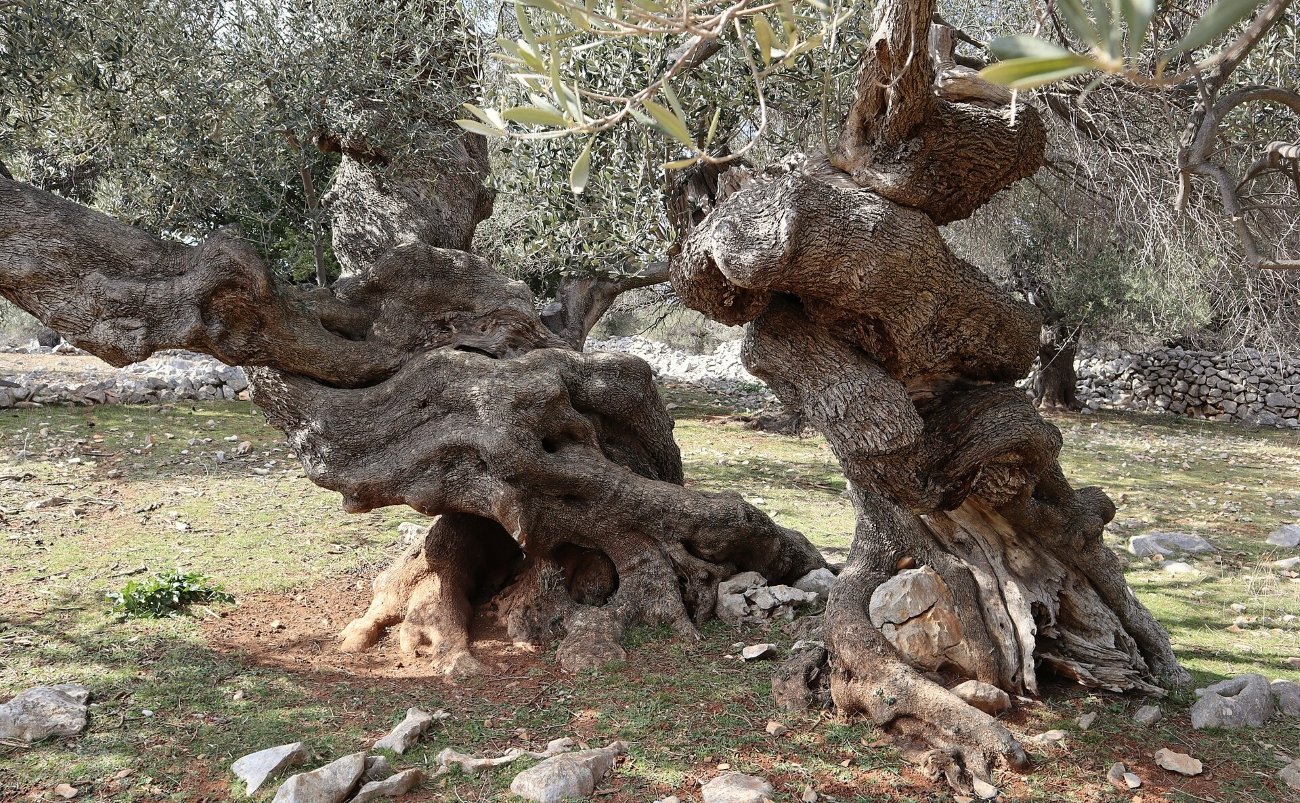
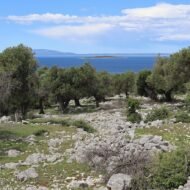
At the far northern end of Pag, one of the barest and most wind-swept islands of the Adriatic, a grey-green forest appears where nothing else seems to grow. These are the olive gardens of Lun: more than 80,000 wild olive trees, growing among the limestone rocks and dry-stone walls. More than a thousand of them are over a thousand years old, and the oldest are thought to be around 2,000 years old.
The trees of Lun are oleasters, wild olives, grafted by hand over the centuries to bear fruit. They need no irrigation and, remarkably, the grove has never burned. Every tree belongs to someone: the gardens are shared among 83 owners, and each tree is marked with its family’s name. The widest tree, considered the queen of the grove, has a trunk around four metres across. The small oil produced here, from trees shaped by salt and the cold bura wind, is among the most prized in Croatia.
- Go for: walking the marked paths among the ancient olives, the oldest trees, Lun’s oil and local cheese, and the stark, lunar landscape of northern Pag.
- When: October to December for the harvest and quiet; spring for wildflowers. Summer is hot and shadeless.
- Getting there: by car ferry from Prizna on the mainland to Žigljen on Pag, then about 30 minutes north by road to Lun; or over the Pag bridge in the south and along the length of the island. In summer, a catamaran also links Lun with Rab.
4. The Millennial Olives of Territori Sénia, Spain
40.60° N, 0.45° E · Ulldecona, where Catalonia, Valencia and Aragon meet
Along the river Sénia, where three Spanish regions meet near the Mediterranean, lies the greatest concentration of monumental olive trees in the world. More than 5,000 trees here have been officially catalogued with trunks over 3.5 metres around, and some are more than a thousand years old. In 2018, the landscape was recognised by the UN’s Food and Agriculture Organization as a Globally Important Agricultural Heritage System.
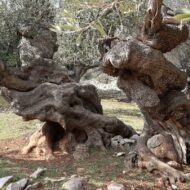
The oldest known tree is the Farga de l’Arión, in the municipality of Ulldecona, which a scientific study dated to around 1,700 years: it was planted while the Roman Empire still ruled Hispania, close to the line of the old Via Augusta. Around it, in the villages of Ulldecona, Alcanar, Godall and La Sénia, the old trees grow in family plots between dry-stone walls, many still harvested every winter. Their twisted, hollow trunks look less like trees than sculptures.
- Go for: the Farga de l’Arión and the other millennial trees of Ulldecona, the olive tree routes between the villages, and the oil of the ancient trees, sold in small bottles.
- When: November to January for the harvest; spring and autumn for walking.
- Getting there: about 2 hours by car from Barcelona or Valencia. Ulldecona is a short drive inland from the coast at Vinaròs.
5. Sabina and the Giant of Canneto, Italy
42.25° N, 12.70° E · Canneto Sabino, Fara in Sabina, Lazio
An hour north-east of Rome, the hills of Sabina are covered in olive groves, among the oldest cultivated landscapes in Italy. Their oil has been prized since antiquity, and it was carried to Rome along the Via Salaria. The region feels far from the capital: quiet hill villages, Benedictine monasteries, and small mills where families bring their olives each winter.
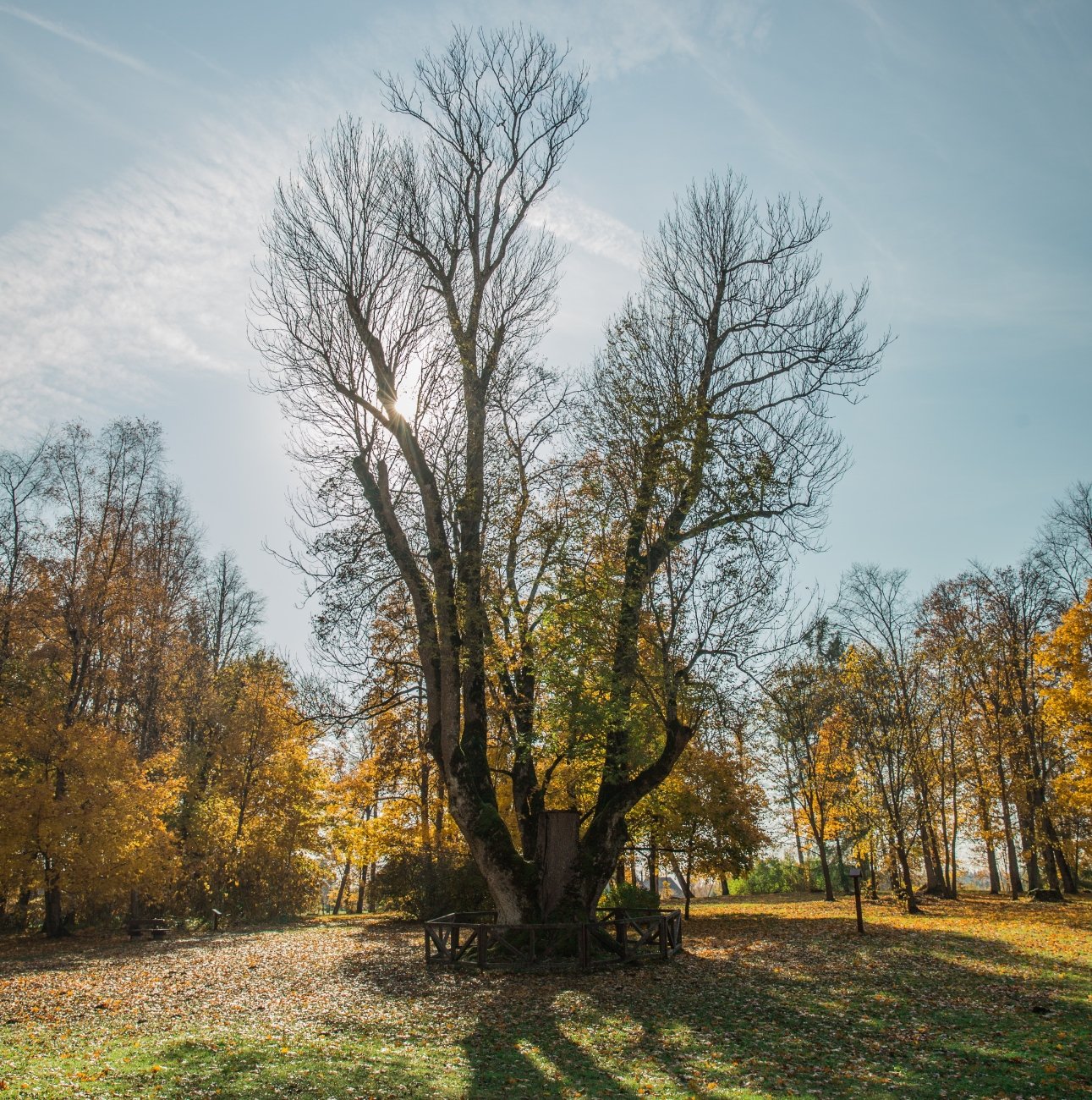
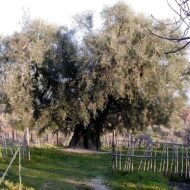
In the hamlet of Canneto stands one of the largest olive trees in Europe. Locals say its roots go back to the time of Numa Pompilius, the legendary second king of Rome; historians think it was more likely planted around a thousand years ago, when the Benedictine monks of the nearby abbey of Farfa reclaimed the land. Either way, it is immense: about 15 metres tall, with a trunk more than 7 metres around and a canopy 30 metres across. A hollow at its base opens into its roots.
- Go for: the giant olive of Canneto, the abbey of Farfa, the hill villages of Sabina, and the new oil from local mills in winter.
- When: November and December for the new oil; spring and autumn for walking.
- Getting there: about 1 hour by car from Rome. Fara in Sabina also has a train station on the line from Rome.
How to visit olive country
Ancient olive trees are monuments, but they are also someone’s livelihood. A few habits help:
- Don’t climb the trees or carve the trunks. Old olives are fragile, and their bark heals slowly.
- Ask before entering a grove. Most olive land is private, even without a fence.
- Never pick olives without permission, especially during the harvest.
- Buy oil from the growers. It is the best way to keep these old groves in use, and therefore alive.
- Join a harvest day. In many regions, families welcome visitors who want to help with the picking.
Frequently asked questions
Where are the oldest olive trees in Europe? Some of the oldest grow in Territori Sénia in Spain, where the Farga de l’Arión has been dated to around 1,700 years; in Lun, on the Croatian island of Pag, with trees thought to be around 2,000 years old; and in Bar, Montenegro, where the Old Olive is believed to be over 2,000 years old. Crete also has very old trees.
How long can an olive tree live? Olive trees can live for well over a thousand years. Even when the original trunk dies, the tree often regrows from its roots.
When is the olive harvest? In most of southern Europe, from late October or November to January, depending on the region and the type of oil or table olive.
Can you visit ancient olive trees? Yes. Many of the trees in this article can be visited on foot, and some regions, such as Territori Sénia and Lun, have marked routes. Always respect private land and stay on the paths.
Beyond the map
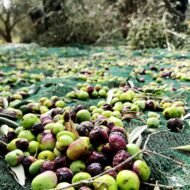
An old olive tree is a living record. It has watched its valley change from one empire to the next, and it will probably outlive everyone who visits it. Stand beside one in winter, when the nets are spread and the olives are falling, and you are standing in a harvest that has barely changed in two thousand years.
Read next: Olive Oil Harvest Festivals of Europe · Lost Chestnut Valleys of Europe
Carry the season with you: Beyond the Map Field Guides
Hidden Europe — The Beyond the Map Map Every olive valley in this article, and hundreds more places, on one map of the Europe most travellers never see.
Overland & Campervan in the Balkans — The Beyond the Map Road Guide Valdanos, Bar and the Montenegrin coast are on the road south through the Balkans. This guide covers the slow roads, campsites and villages along the way.
Explore more: Seasons · Slow Escapes · Hidden Gems