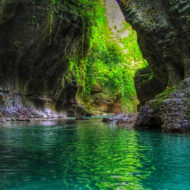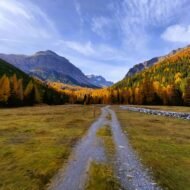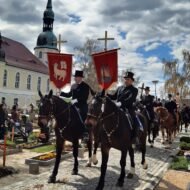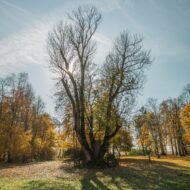


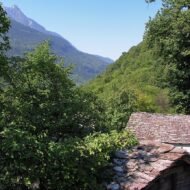
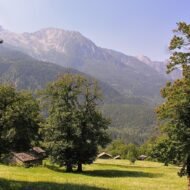
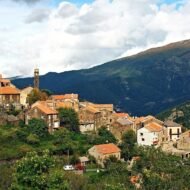
When the leaves turn, these quiet mountain valleys gather the harvest that once kept them alive.
- 1. Castagniccia, Corsica, France
- 2. Val Bregaglia, Switzerland
- 3. Kastanitsa, Mount Parnon, Greece
- 4. El Bierzo, Spain
- 5. Serra da Padrela, Portugal
- Bonus: the quietest chestnut valley
- How to visit chestnut country
- Frequently asked questions
- Beyond the map
- Carry the season with you: Beyond the Map Field Guides
For centuries, the chestnut was the bread of Europe’s mountains. Where wheat would not grow, on steep slopes and in cold, shaded valleys, families in Europe’s chestnut valleys lived on chestnuts: dried, ground into flour, baked into bread and polenta, and stored to last the winter. In Corsica and Italy it was simply called l’albero del pane, the bread tree.
That world has largely gone. Many chestnut groves were abandoned in the twentieth century, as villages emptied and wheat flour became cheap. But in a few valleys, the harvest still matters. From October to November, the woods fill with people gathering nuts, smoke rises from old drying huts, and villages light fires in their squares to roast the first chestnuts of the year.
These are five chestnut valleys where Europe’s autumn still tastes the way it used to:
- a Corsican region named after the chestnut tree
- a Swiss valley of drying huts and stone villages
- a Greek mountain village named after the chestnut
- a Spanish valley of Roman gold mines and magosto fires
- a Portuguese mountain range of “Trás-os-Montes gold”
1. Castagniccia, Corsica, France
42.38° N, 9.37° E · Piedicroce, north-eastern Corsica
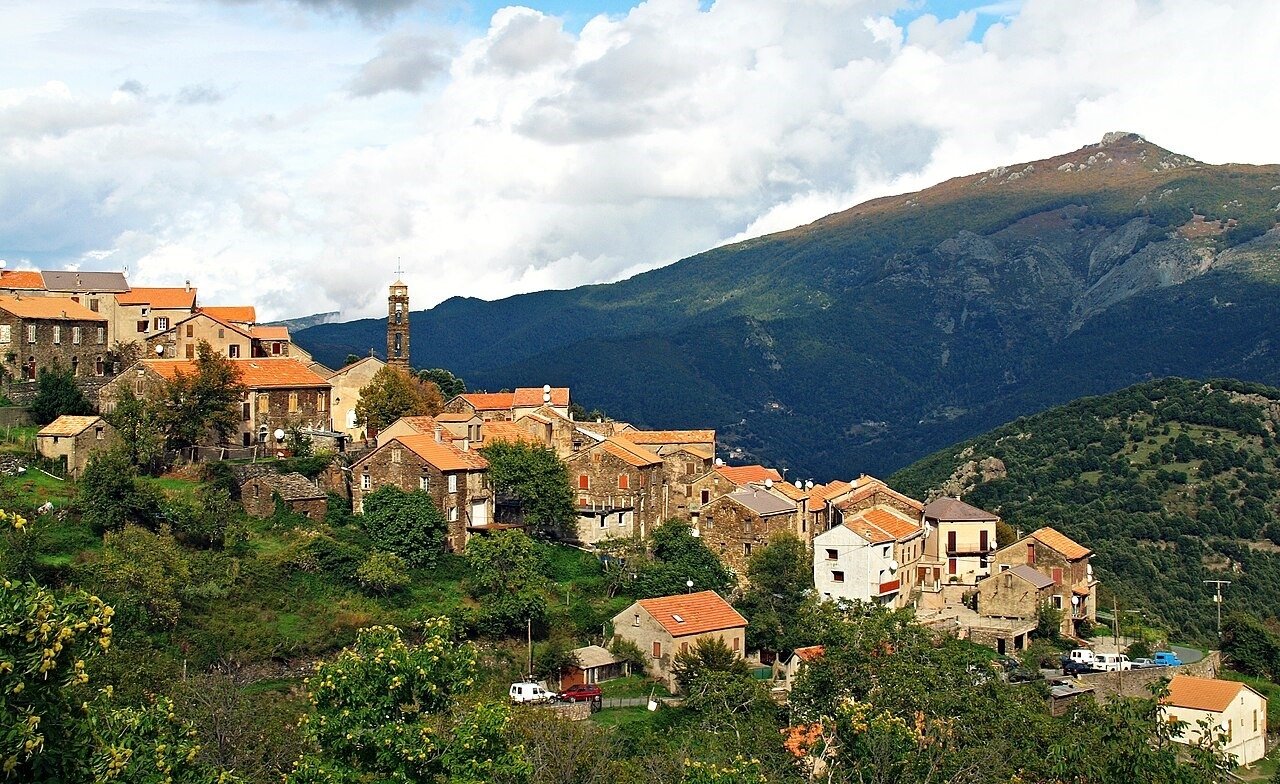
The Castagniccia takes its name from the chestnut, castagna in Corsican, and the tree defines it completely. Under Genoese rule, from the 16th century, landowners were required to plant chestnut trees, and the region became one of the most densely populated parts of the island. Its people lived on chestnut flour, used it to fatten their pigs, and built their villages of grey schist into the steep, forested slopes.
Today the Castagniccia is one of the quietest parts of Corsica, a world away from its beaches. Narrow roads wind between hamlets and Baroque churches with tall bell towers, such as the church of Saint-Jean-Baptiste in La Porta. Morosaglia, the birthplace of the Corsican patriot Pasquale Paoli, is here too. In autumn the woods turn gold and bronze, and the flour is milled again: farina castagnina, Corsica’s chestnut flour, now protected by its own designation of origin, is used for pulenda (chestnut polenta), cakes, beignets and even beer.
- Go for: walking between the villages, Baroque churches, chestnut flour and pulenda, and the quiet of Corsica’s forested interior.
- When: October and November for the harvest and colour. The island’s great chestnut fair, the Fiera di a Castagna, is held in Bocognano, in central Corsica, in early December.
- Getting there: about 1 hour 15 minutes by car from Bastia, which has a port and an airport. A car is essential.
2. Val Bregaglia, Switzerland
46.33° N, 9.52° E · Castasegna, Bregaglia, Graubünden
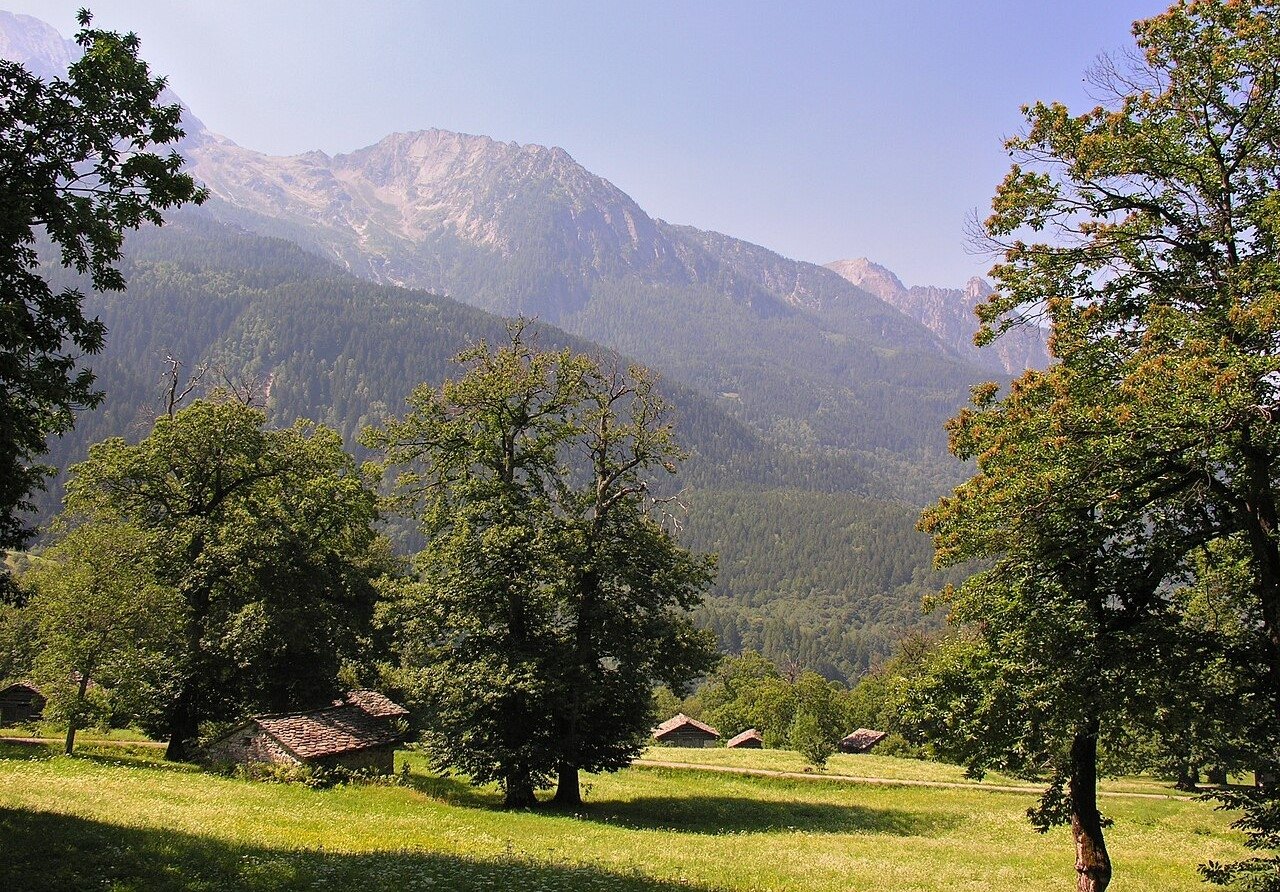
Val Bregaglia runs down from the Maloja Pass, above St. Moritz, to the Italian border at Castasegna. In a few kilometres it drops from Alpine meadows to an almost Mediterranean world, and at its lower end lie some of the most beautiful cultivated chestnut groves in the Alps.
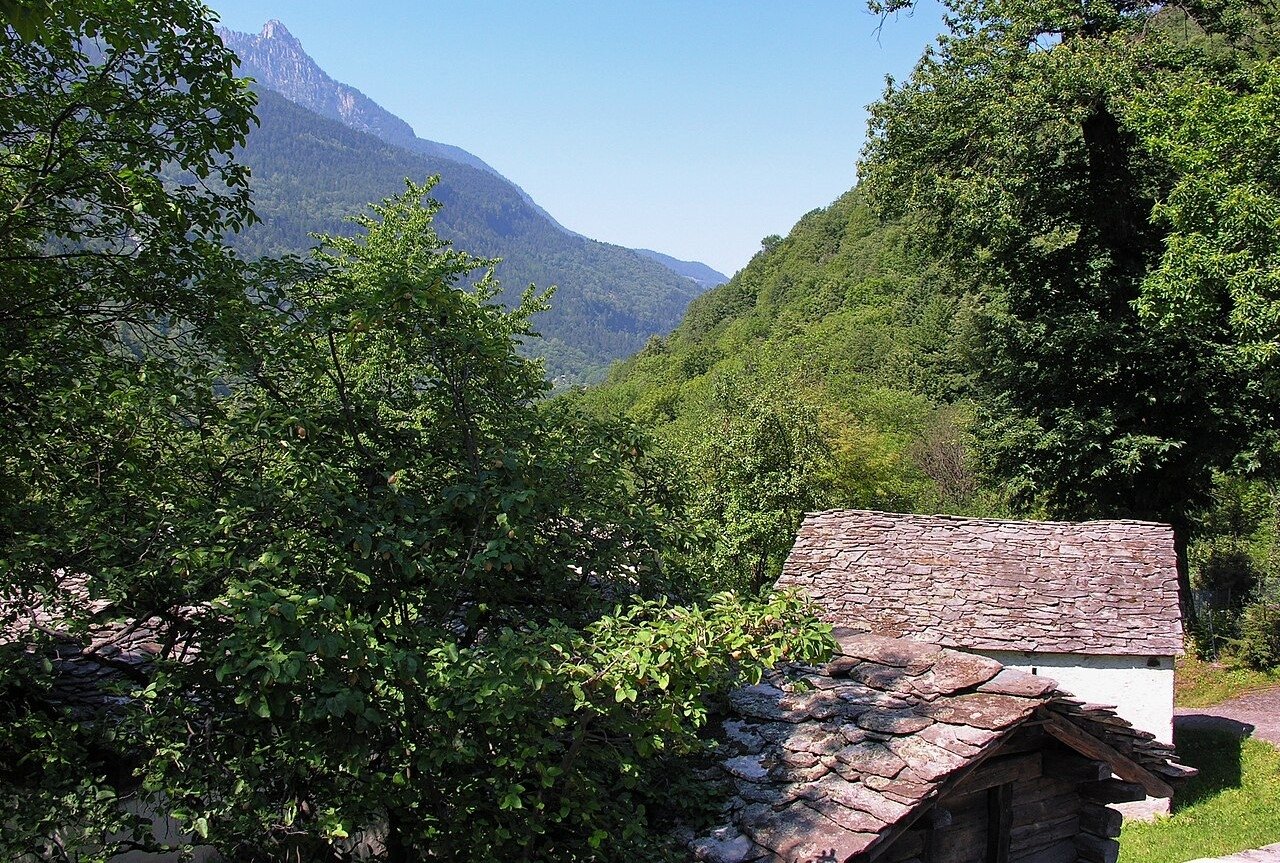
Above Castasegna, the groves of Brentan are still tended as they were for centuries, with old, wide-crowned trees spaced across the grassy slopes. Among them stand the cascine or grà, small stone drying huts. After the harvest, chestnuts were laid on wooden lattices on the upper floor while a slow, smoky fire burned below for weeks, drying them so they would keep all winter. Some huts still work today. A short drive up the valley, the village of Soglio sits on a terrace above it all, with views across to the granite peaks of the Bondasca.
- Go for: the chestnut trail through the Brentan groves, the working drying huts, the village of Soglio, and chestnut cakes, bread and pasta.
- When: late September to late October. The valley’s Festival della Castagna runs for about three weeks, from late September to mid-October, with more than 60 events.
- Getting there: by PostBus from St. Moritz over the Maloja Pass, or from Chiavenna in Italy. Castasegna is about 1 hour from St. Moritz.
3. Kastanitsa, Mount Parnon, Greece
37.26° N, 22.65° E · Kastanitsa, North Kynouria, Arcadia
Kastanitsa takes its name from the chestnut, kastano in Greek, and the trees close around it on every side. The village sits at 840 metres on the slopes of Mount Parnon, in the mountains of the eastern Peloponnese, its stone houses with grey slate roofs stepping down a hillside so well camouflaged by the forest that it is hard to see from a distance. It was first recorded in 1293, and is believed to be even older.
This is Tsakonia, home of Tsakonian, a dialect said to descend from the ancient Doric Greek of Laconia. It survives today in only a handful of villages, Kastanitsa among them. In 1821, the villagers declared their independence from Ottoman rule and joined the Greek War of Independence, and today Kastanitsa is a protected traditional settlement. Around it lie more than 400 hectares of family-owned chestnut groves, where the maronia variety is grown without spraying or fertilisers. The harvest has fallen in recent years, as young people have left and the trees have suffered from disease, which makes the village’s festival matter all the more.
On the last weekend of October, Kastanitsa holds its Chestnut Festival, now in its fifth decade. It began in the 1980s with a few dozen friends and today draws thousands of visitors. Instead of a stage in a square, the festival is a walk: visitors follow the circular Dromos tou Kastanou, the Chestnut Route, through the village lanes, stopping for boiled chestnuts, pork with chestnuts, chickpeas with chestnuts, trachanas soup, mountain tea, wine and tsipouro, with music and dancing along the way.
- Go for: the Chestnut Festival and the Chestnut Route, the stone architecture of a protected village, walks on Mount Parnon, and the Tsakonian villages of North Kynouria.
- When: the last weekend of October for the festival (in 2026, 24–25 October); October and November for the harvest and colour. Two nearby villages hold their own chestnut festivals soon after: Kosmas around 1 November and Ano Doliana in early November.
- Getting there: about 1 hour by car from Tripoli, or about 3 hours from Athens. The village is steep and its lanes are cobbled, so wear good shoes.
4. El Bierzo, Spain
42.46° N, 6.77° W · Las Médulas, province of León
In the far west of Castilla y León, the valley of El Bierzo is a green, sheltered basin surrounded by mountains, with a climate gentler than the high plains around it. It is also one of the great chestnut regions of Spain, and its chestnut, the Castaña del Bierzo, has protected status.
The most striking chestnut groves surround Las Médulas, the largest gold mine of the Roman Empire. The Romans brought down whole mountains with water to extract the gold, leaving a landscape of jagged red peaks and hollows, now a UNESCO World Heritage Site. Today ancient chestnut trees, some with enormous hollow trunks, grow below those red cliffs. Each autumn, villages across El Bierzo hold the magosto: chestnuts roasted over open fires and shared with new wine. Its roots go back to an ancient ritual, when the first chestnuts of the year were offered to the spirits of the forest.
- Go for: Las Médulas and its chestnut groves, the magosto, Villafranca del Bierzo on the Camino de Santiago, and the region’s wines.
- When: the weekend near 1 November for the magosto; October and November for colour.
- Getting there: by train from Madrid or León to Ponferrada, then by car to Las Médulas, about 30 minutes away.
5. Serra da Padrela, Portugal
41.57° N, 7.42° W · Carrazedo de Montenegro, Trás-os-Montes
In the far north-east of Portugal, in the granite highlands of Trás-os-Montes, the Serra da Padrela rises to 1,146 metres between Vila Pouca de Aguiar and Valpaços. Its slopes and plateaus are covered in soutos, chestnut groves, in what is often described as the largest continuous chestnut grove on the Iberian Peninsula. Here the chestnut is not a memory. It is the region’s livelihood, known locally as the “gold of Trás-os-Montes”.
The Castanha da Padrela has protected designation of origin (DOP), and the area produces around 12,000 tonnes a year, much of it exported to France and Spain for marrons glacés. Carrazedo de Montenegro, the self-styled Capital da Castanha, is the heart of the trade. In late October and early November, families work through the groves gathering the fallen nuts, and in mid-November the trees turn deep gold. Then comes the magusto, Portugal’s chestnut feast, celebrated around São Martinho on 11 November with chestnuts roasted over open fires and the year’s new wine.
- Go for: the chestnut harvest, the “Dourados da Padrela” walking routes through the golden groves, the CASTMONTE chestnut fair, the ruined castle of Pena de Aguiar, and the spa towns of Vidago and Pedras Salgadas nearby.
- When: late October to early November for the harvest; around 11 November for the magusto; mid-November for the deepest colour. The CASTMONTE fair in Carrazedo de Montenegro is held each year on the second weekend of November, and ends with a giant chestnut cake shared with visitors.
- Getting there: about 1 hour 30 minutes by car from Porto. The famous EN2, Portugal’s longest road, runs through Vila Pouca de Aguiar on the western edge of the range.
Bonus: the quietest chestnut valley
Dolina kestenova, Fruška Gora, Serbia · 45.18° N, 19.66° E
Not every chestnut valley has a harvest. On the northern slopes of Fruška Gora, above the Danube village of Čerević, a small grove of planted chestnut trees fills a valley beside a stream, with a few tables under the trees. There is no festival and no café, only the sound of water and chestnuts dropping onto the path in late October. Fruška Gora, Serbia’s first national park, is better known for its sixteen Orthodox monasteries; combine the two for a slow autumn day, about 30 minutes from Novi Sad.
How to visit chestnut country
Chestnut groves look wild, but most are still owned and tended. A few habits help:
- Don’t gather chestnuts on private land. Most groves belong to families, even if there’s no fence. Buy them from the growers instead.
- Stay on the paths. Fallen chestnuts are a farmer’s harvest, not a free buffet.
- Go to the village festivals. They are the best way to taste local dishes and support the communities that keep the groves alive.
- Visit midweek. Festival weekends are busy; weekdays in the woods are almost empty.
- Bring sturdy shoes. Chestnut burrs are sharp, and forest paths can be steep and muddy after rain.
Frequently asked questions
When is chestnut season in Europe? From late September to November. The harvest peaks in October, and most chestnut festivals take place between mid-October and early November.
Where are the best chestnut festivals in Europe? Some of the most authentic are the magosto in El Bierzo (Spain) around 1 November, the Festival della Castagna in Val Bregaglia (Switzerland), the Chestnut Festival of Kastanitsa (Greece) on the last weekend of October, the magusto and CASTMONTE fair in Portugal’s Serra da Padrela in November, and the Fiera di a Castagna in Bocognano (Corsica) in early December.
What is a magosto? An autumn chestnut feast in north-western Spain and Portugal. In Spain it is usually held around 1 November; in Portugal, where it is called the magusto, around São Martinho on 11 November. The year’s first chestnuts are roasted over open fires and shared, often with new wine.
What is chestnut flour used for? In the mountains of Corsica and Italy, chestnut flour once replaced wheat. It is used for polenta, breads, cakes, pancakes and pasta, and has a sweet, nutty flavour.
Beyond the map
The chestnut is a tree of patience. It takes decades to bear fruit and can live for centuries, and the valleys that grew it learned to live at the same pace. Walk through a chestnut wood in late October, with burrs cracking underfoot and smoke drifting from a drying hut, and you see a Europe that ran on seasons, not schedules. In these five valleys, it still does.
Read next: Lost Autumn Valleys of Europe (update with the published URL)
Carry the season with you: Beyond the Map Field Guides
Autumn Photography in Europe — The Beyond the Map Premium Guide Golden chestnut woods, smoke from drying huts, the red peaks of Las Médulas in low light. This guide is for the season when Europe’s valleys look their best.
Hidden Europe — The Beyond the Map Map Every coordinate in this article, and many more, on one map of the Europe most travellers never see.
Explore more: Seasons · Slow Escapes · Living Traditions