

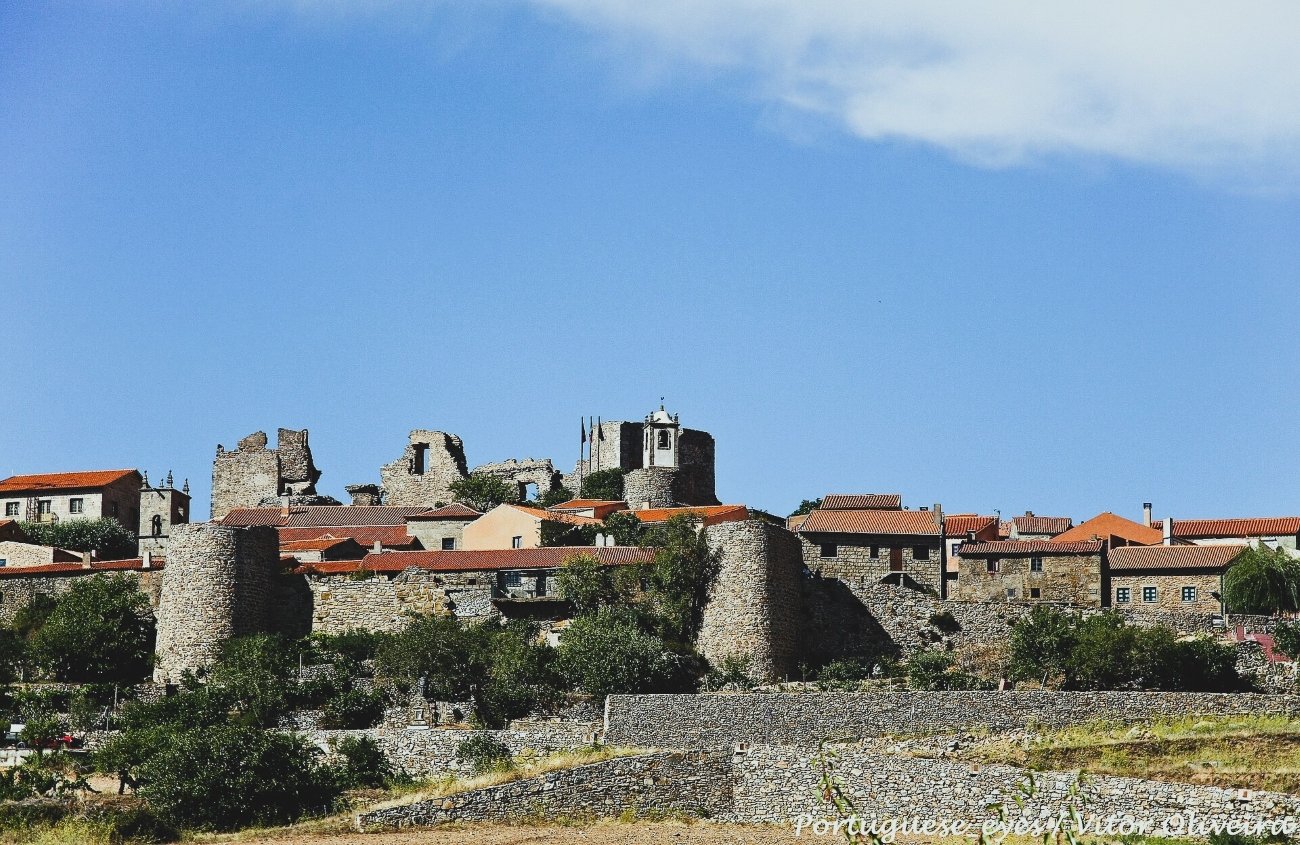
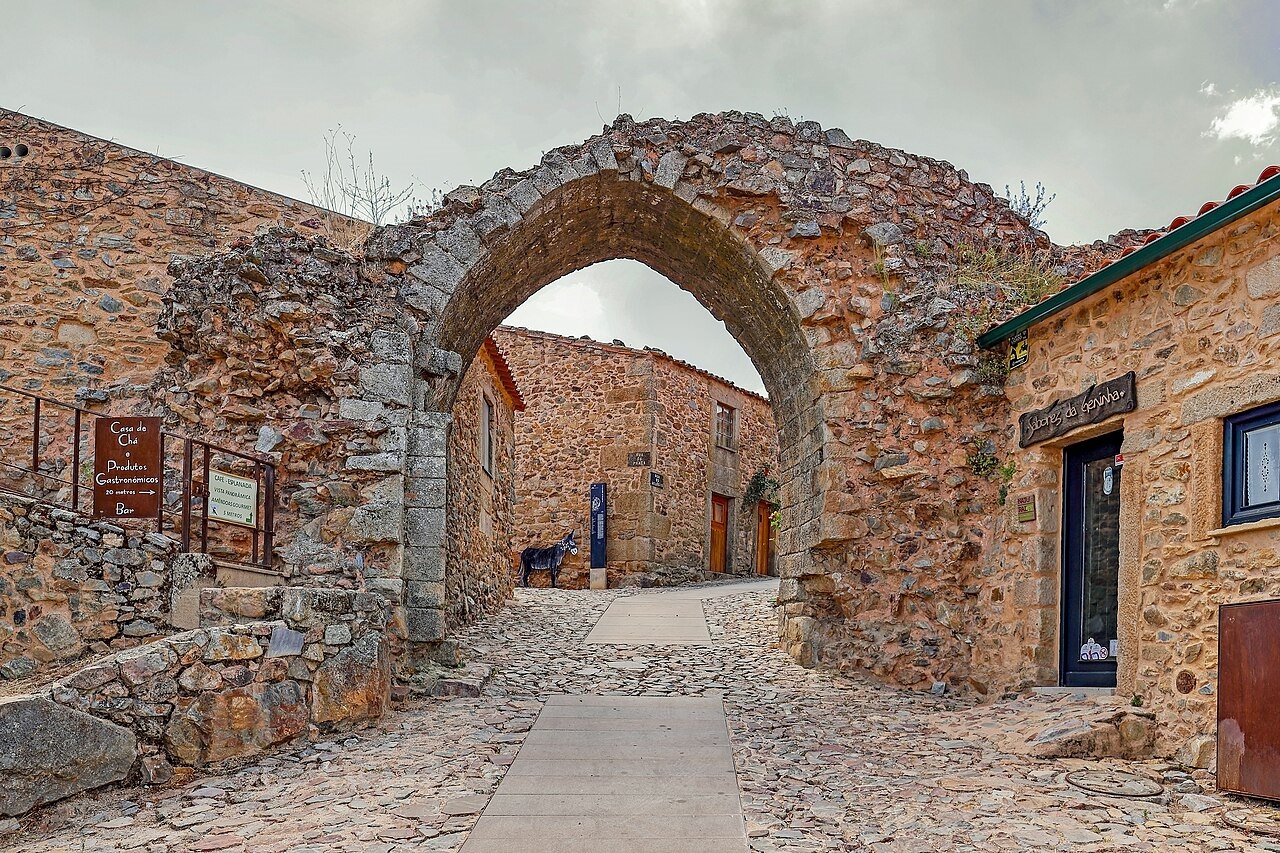
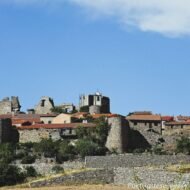
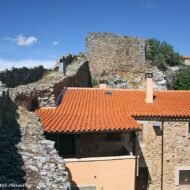
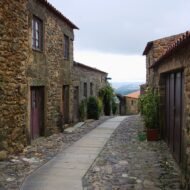
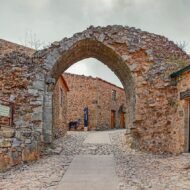
On a hilltop near the Spanish border, inside an oval of medieval walls, stands one of the best-preserved medieval villages in Portugal. It was fought over by two kingdoms for centuries, and very few foreign travellers have heard of it.
In the far east of Portugal, where the Douro and the Águeda rivers mark the border with Spain, the land turns dry and open: rocky hills, olive groves, almond orchards and wide, empty valleys. On a hill above it all, a ring of stone walls encloses a small village of granite houses. This is Castelo Rodrigo, one of the twelve Aldeias Históricas de Portugal, the “Historic Villages of Portugal”.
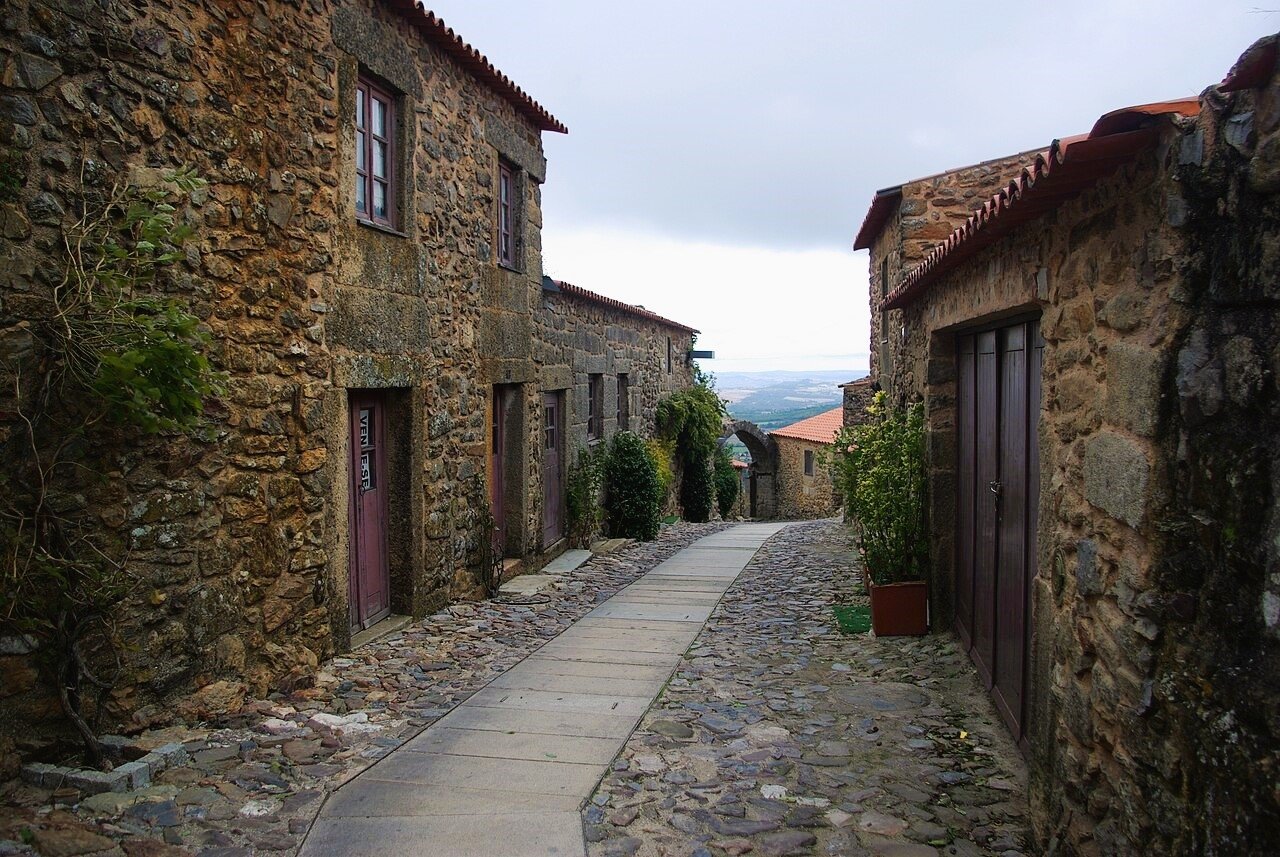
For most of the Middle Ages, it stood on the frontier between Portugal and the Spanish kingdoms of León and Castile. It changed hands, rebelled, was punished, burned a palace and survived a siege. Today it is quiet, almost forgotten, with lanes that seem unchanged for five hundred years.
At a glance
| Where | Figueira de Castelo Rodrigo, Guarda district, Centro region, near the Spanish border |
| What | Walled medieval village, one of the 12 Historic Villages of Portugal |
| Castle | National monument since 1922 |
| Became Portuguese | Treaty of Alcañices, 12 September 1297 |
| Known for | Walls and towers, the ruined Moura palace, the medieval cistern, the upside-down coat of arms, almonds and wine |
| Best time | February–March for almond blossom, spring and autumn for walking |
A frontier village
Castelo Rodrigo was taken from the Moors in the 11th century and belonged at first to the Kingdom of León. King Alfonso IX made it a municipality, and the village and castle are named after Count Rodrigo González de Girón, who was responsible for its defence.
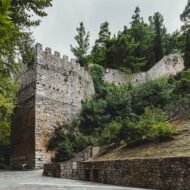
It became Portuguese only in 1297, by the Treaty of Alcañices, signed between King Denis of Portugal and Ferdinand IV of Castile. King Denis rebuilt the fortress and the walls, which once had 13 towers, a layout often compared to the Spanish city of Ávila. Today, the walls still enclose the village in an oval, with four round towers on the west and south sides and three surviving gates: the Gate of the Sun, the Gate of Alverca, and the Gate of Betrayal.
For more than six hundred years, Castelo Rodrigo was the seat of its own municipality. In 1836, the seat moved to the newer town of Figueira de Castelo Rodrigo below, and the old village slowly emptied.
Missing Coordinates Highlights
- Medieval walls and round towers around an oval village
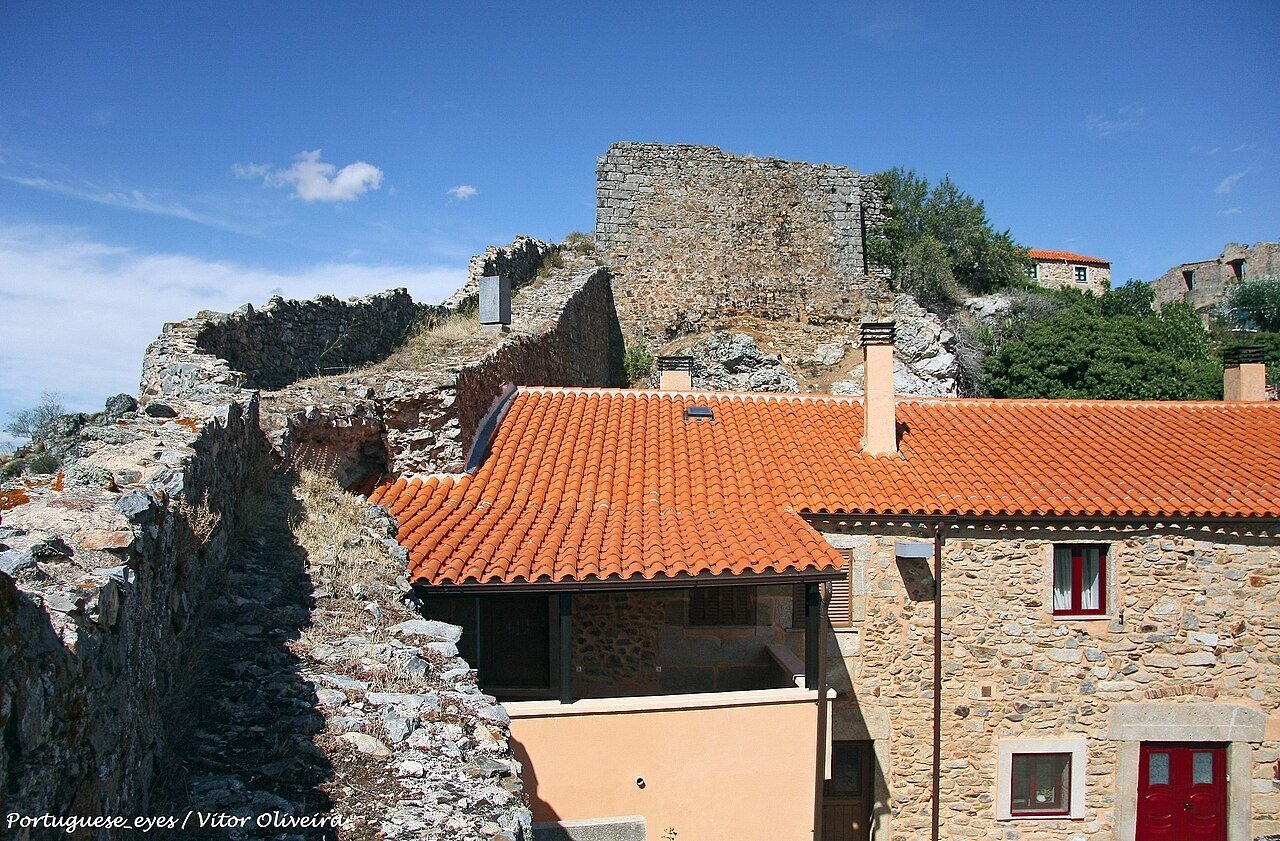
- The ruined palace of Cristóvão de Moura
- The medieval cistern, with a horseshoe-arched doorway
- Granite manor houses, Manueline windows and a 16th-century pillory
- Panoramic views over the dry valleys of the interior and towards Spain
The upside-down coat of arms
Castelo Rodrigo has a punishment carved into its history. During the succession crisis of 1383–85, the village took the side of Castile. When King João I won the throne of Portugal, he punished it: its coat of arms was to show the royal arms upside down, and the village was placed under the authority of nearby Pinhel. The inverted arms became a mark of shame, and later, for the people of Castelo Rodrigo, a mark of pride.
The palace the villagers burned
At the top of the village stand the ruins of a great palace, built on the site of the old citadel by Cristóvão de Moura. He was the son of Castelo Rodrigo’s former mayor, and during the crisis of 1580, when Portugal passed to the Spanish crown, he became one of the closest advisers of King Philip II of Spain. He was made Count of Castelo Rodrigo in 1594, and the first Marquis of Castelo Rodrigo in 1600.
To the villagers, his palace was a symbol of Spanish rule. In 1640, when Portugal won back its independence, they set it on fire, even though Moura had been dead for about thirty years. The ruins were later consolidated and today serve as a stage for cultural events, with one of the best views in the region.
The siege of 1664
Castelo Rodrigo had one more war to fight. In 1664, during the long Portuguese Restoration War, a Spanish army under the Duke of Osuna besieged the village. Its garrison of about 150 men held out until Portuguese reinforcements arrived, and the Spanish were defeated in battle near the monastery of Santa Maria de Aguiar, below the village. Local legend says that the Spanish commanders escaped disguised as friars.
Hidden traces
Walk the lanes slowly. The medieval cistern, about 13 metres deep, has one doorway with a horseshoe arch and another with a pointed arch. The church of Nossa Senhora de Rocamador was founded by Hospitaller friars in the 13th century, on a route to Santiago de Compostela. And on some doorways, inscriptions and cross-shaped marks are thought to identify the homes of cristãos-novos, “New Christians” of Jewish origin who once formed a substantial community here.
Almonds, wine and the land around
The countryside around Castelo Rodrigo is almond country. In February and March, the orchards bloom white and pink across the hills, and the region celebrates the Amendoeira em Flor, the almond blossom season. Local almonds and almond sweets are sold in the village, along with cheeses, cured meats, olive oil and wine from the nearby Douro vineyards, which you can see from the viewpoints north of the village.
Nearby:
- Santa Maria de Aguiar: a Romanesque and Gothic monastery, a national monument, below the village.
- Serra da Marofa: a mountain viewpoint crowned by a statue of Christ, with views over the whole frontier region.
- The Côa Valley: the prehistoric rock art of Vila Nova de Foz Côa, about 42 km away.
When to go
- February and March: for almond blossom.
- April to June: for green hills, wildflowers and walking.
- September and October: for the grape harvest in the Douro and softer light.
- July and August: hot and dry; visit early or late in the day.
Weather in Castelo Rodrigo: a dry inland climate, with hot summers and cold winters. In nearby Figueira de Castelo Rodrigo, average highs are about 30°C in July, 24°C in September and 18°C in October, falling to about 9°C in January, with frosty nights. February is the wettest month, while August is almost completely dry.
Getting there
Castelo Rodrigo is about 3 km from the town of Figueira de Castelo Rodrigo, close to the Spanish border.
- From Porto: about 260 km by car.
- From Lisbon: about 380 km by car.
- From Spain: the village is close to the border with the province of Salamanca, making it an easy stop on a route between Portugal and Spain.
A car is the best way to explore the village, the Douro and the frontier region.
Beyond the map
Castelo Rodrigo is small enough to walk around in an hour, but its story is long. It was Leonese, then Portuguese. It sided with Castile and was punished with an upside-down coat of arms. It burned the palace of a man who served the Spanish king, and it held out against a Spanish siege. Today it simply waits on its hill, above the almond orchards and the dry valleys, for the few travellers who find their way to the far edge of Portugal.
Read next: Hidden Medieval Worlds · The Kingdom of Aragon · Albarracín
Explore more: Europe’s Missing Coordinates · Military Heritage · Terra Incognita