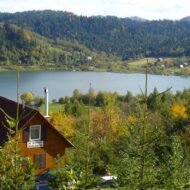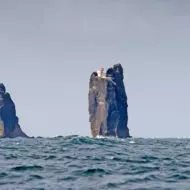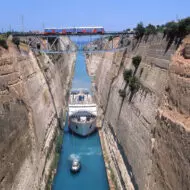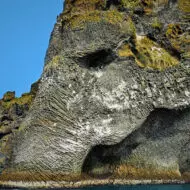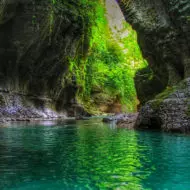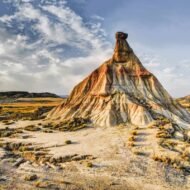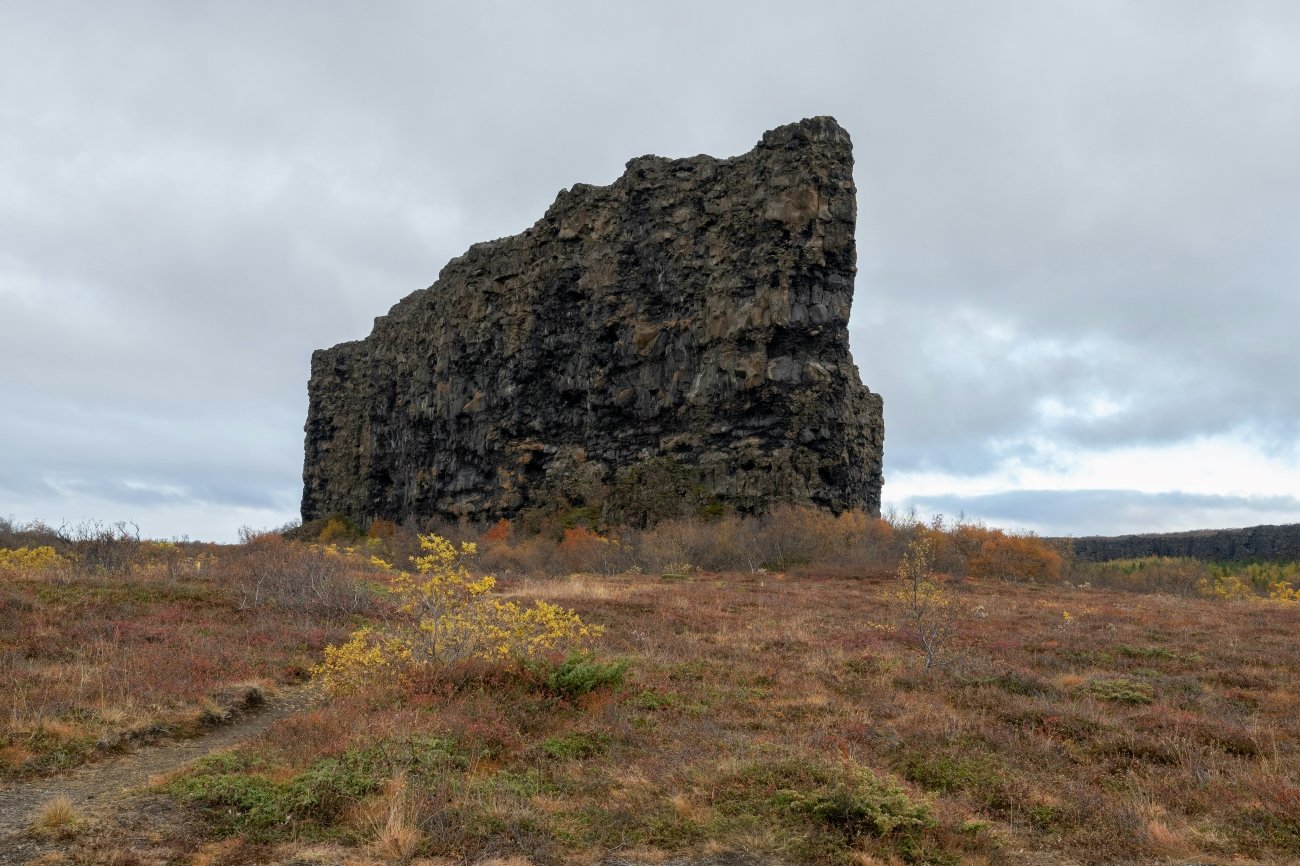


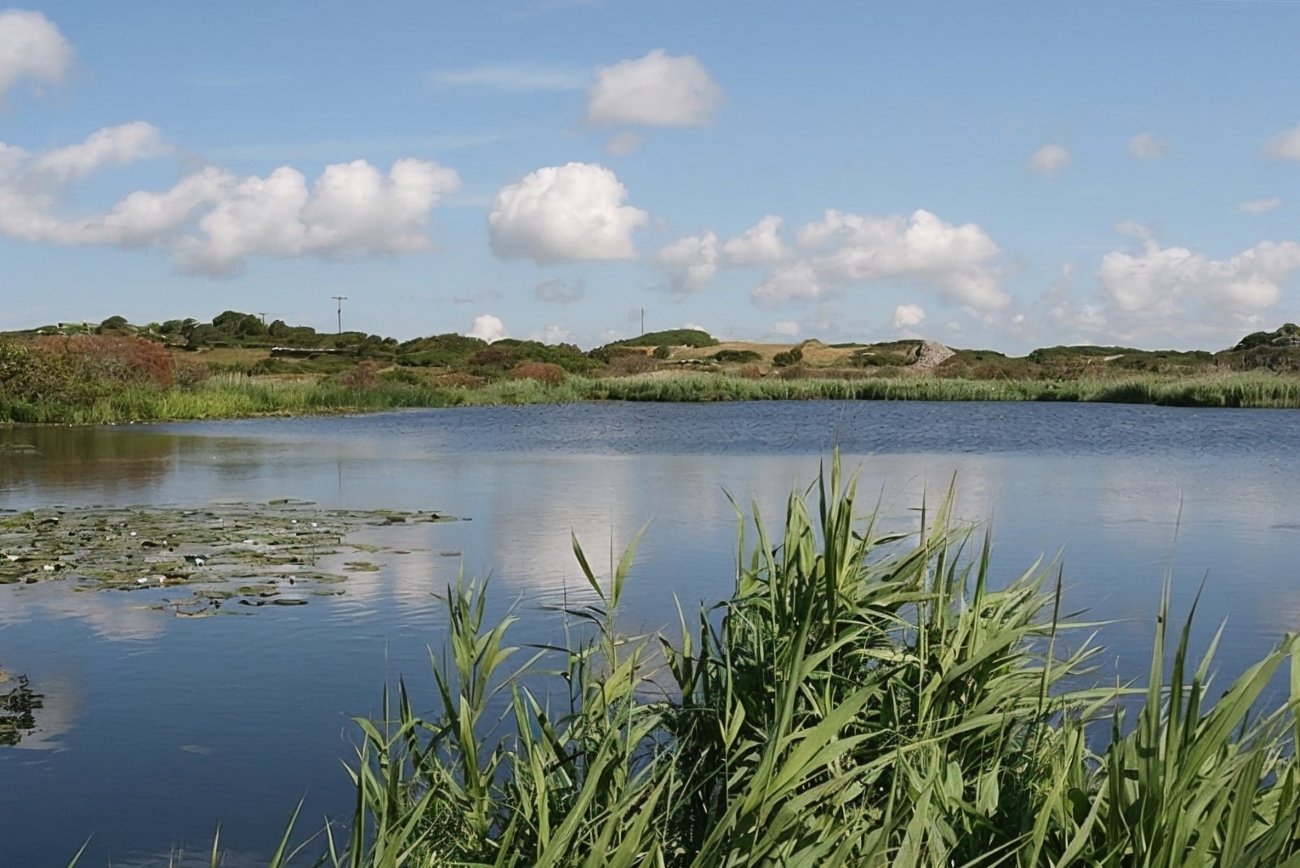
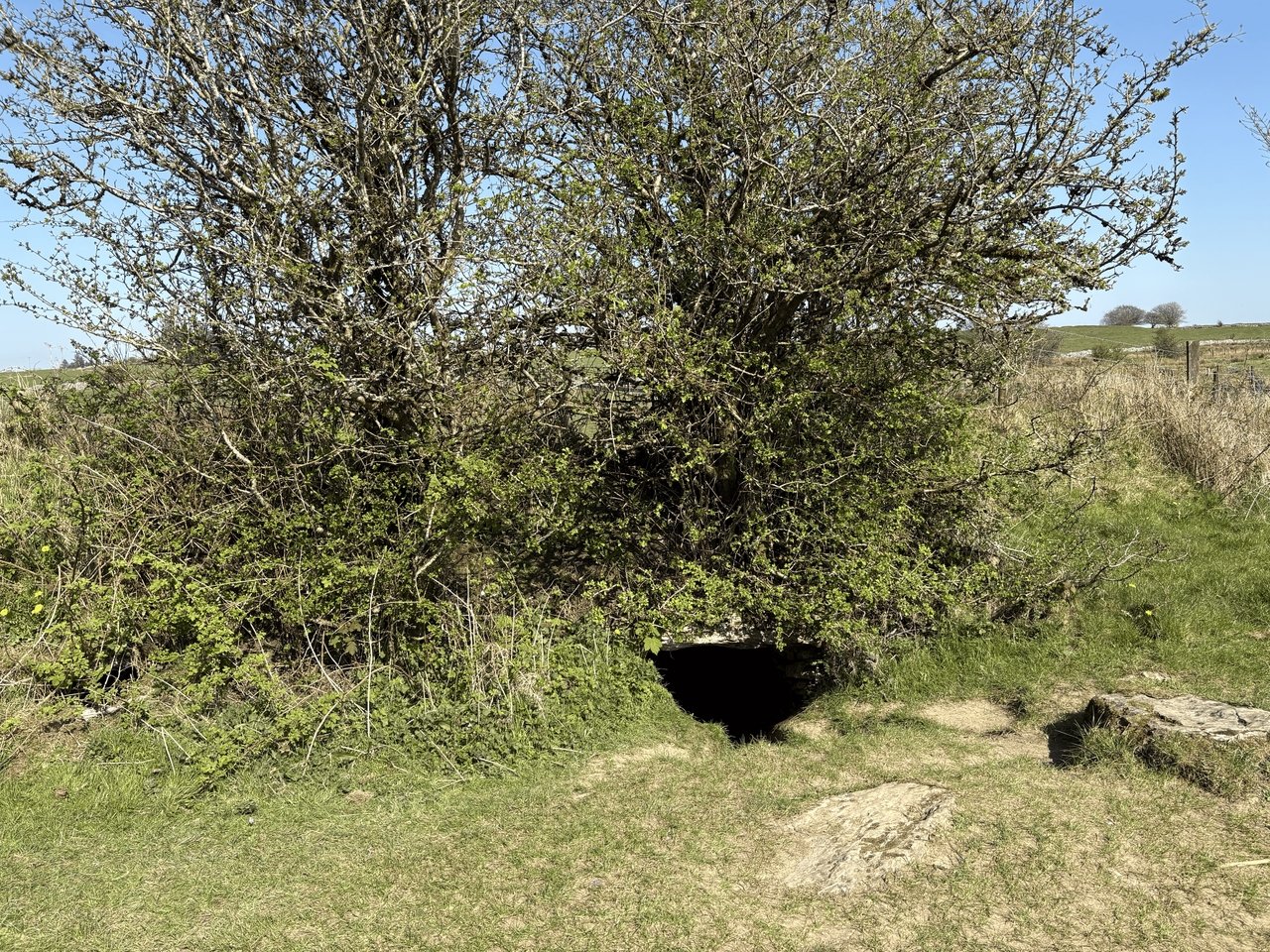
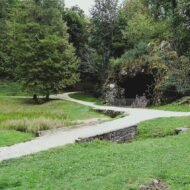
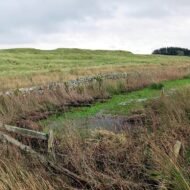
A cave in Ireland where the Otherworld opened every Samhain. A Welsh lake filled with offerings as the Romans came for the druids. A spring on Hadrian’s Wall full of coins for a forgotten goddess, the sacred source of the Seine, and a temple on top of a volcano. The Celtic gods left no scriptures, but they left their places.
The Celts never wrote down their own myths. Their druids taught by memory, and what we know of their gods comes from three very different sources: Greek and Roman writers, who saw them as foreign and often hostile; Roman-era inscriptions, which gave Celtic gods Latin names; and the great medieval tales of Ireland and Wales, written down centuries later by Christian monks.
The result is a puzzle. But in the landscape, the pieces are easier to see. The Celts worshipped at springs, lakes, caves and hilltops, and long after their world ended, people kept coming to the same places.
This is the fourth part of our Mythic Europe series: five places in Ireland, Wales, England and France where the Celtic gods still feel close. For the towns and hillforts of the Celtic world, see our Where the Celts Were.
| Place | The myth | |
|---|---|---|
| 1 | Rathcroghan, Ireland | The Cave of the Cats: the Otherworld, the Morrígan and Samhain |
| 2 | Llyn Cerrig Bach, Wales | A sacred lake of offerings, and the last stand of the druids |
| 3 | Coventina’s Well, England | A forgotten water goddess on Hadrian’s Wall |
| 4 | Sources of the Seine, France | Sequana, the healing goddess who gave the Seine its name |
| 5 | Puy de Dôme, France | The temple of the Celtic Mercury on a volcano |
1. Rathcroghan, Ireland
53.80° N, 8.31° W · Tulsk, County Roscommon
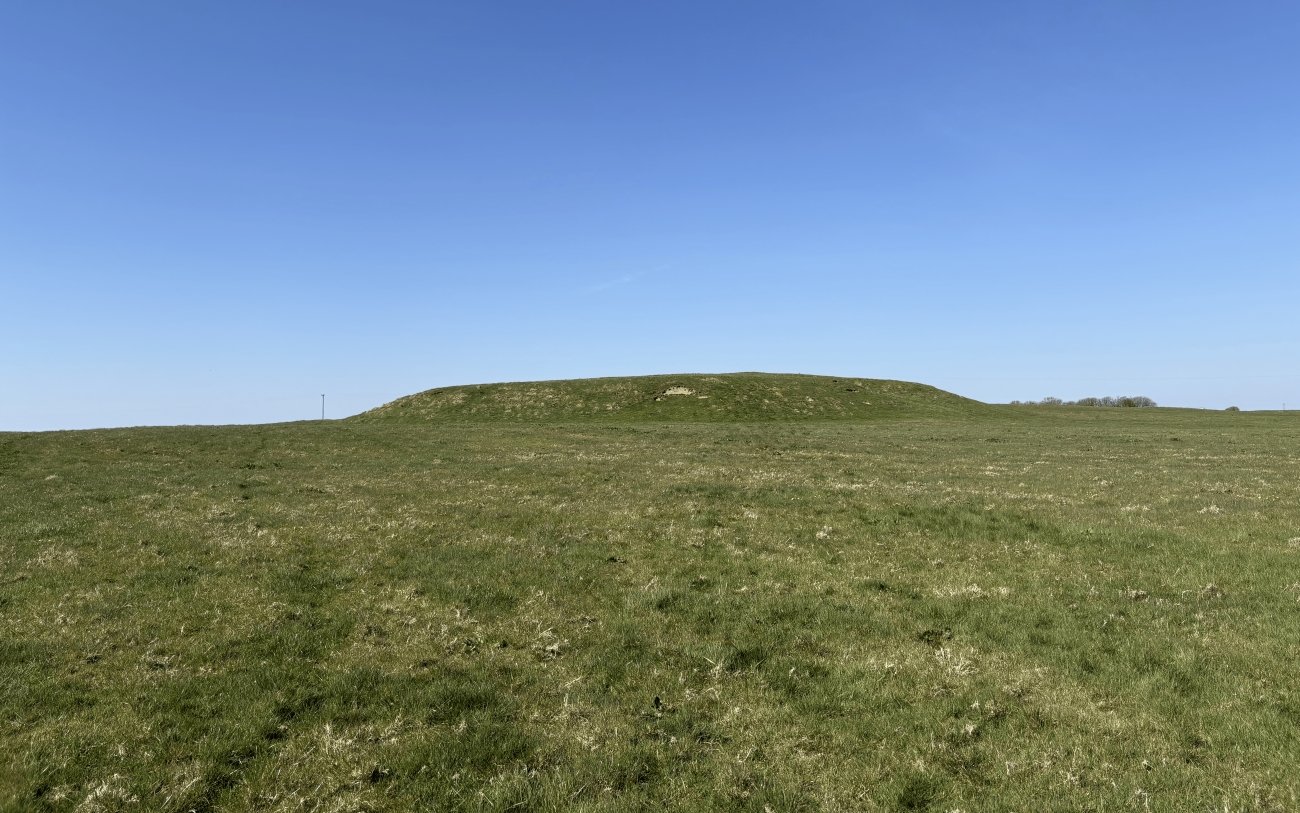
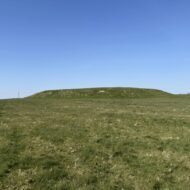
In the quiet green fields of County Roscommon lies Rathcroghan, the ancient royal centre of Connacht: a landscape of burial mounds, ring forts, standing stones and earthworks. In the old Irish tales, this was Cruachan, the seat of Queen Medb, and the place where the great epic of the Táin Bó Cúailnge, the Cattle Raid of Cooley, begins.
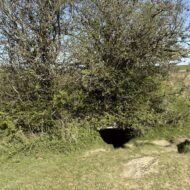
But the most famous place here is underground. Beneath a hawthorn tree in an ordinary field opens a narrow passage into the dark: Oweynagat, Uaimh na gCat, “the Cave of the Cats”. In the medieval tales, it was an entrance to the Otherworld. On the night of Samhain, when the year turned to winter, the cave opened and the Otherworld spilled out. The war goddess the Morrígan emerged from it in a chariot pulled by a one-legged red horse. Christian scribes later called it “Ireland’s Gate to Hell”.
Because the stories are set at Samhain, Rathcroghan is often called the birthplace of Halloween.
In the Field Guide: the guided tour of the Rathcroghan landscape, the cave, the great mound, and the special Samhain tour at the end of October.
When: all year, around Halloween for the Samhain tour, which books out quickly. Weather at Rathcroghan: the mild, damp climate of inland Ireland. Across Ireland, daily mean temperatures are about 6°C in January and 16°C in July; rain is likely in every season, and the cave is muddy. Getting there: the Rathcroghan Visitor Centre is in the village of Tulsk, about 2 hours by car from Dublin. The cave is on private farmland and can only be visited on a guided tour booked through the centre.
2. Llyn Cerrig Bach, Wales
53.25° N, 4.53° W · near Valley, Anglesey
In AD 60, a Roman army crossed the Menai Strait to attack Anglesey, Mona to the Romans, a stronghold of the druids. The historian Tacitus describes the scene: druids raising their hands to the sky and calling down curses, and women in black running through the ranks with torches. The Romans won, and cut down the sacred groves.
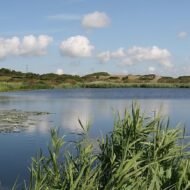
Nearly 1,900 years later, in 1942, workmen digging peat to build the RAF Valley airfield pulled an iron chain from a small lake called Llyn Cerrig Bach. It was the first piece of the largest Iron Age hoard ever found in Wales: about 150 objects of bronze and iron, including weapons, chariot and horse fittings, tools, decorated metalwork and an iron slave chain. They had been thrown into the lake as offerings over centuries, roughly from 300 BC to AD 100, and many seem to have been broken on purpose.
The offerings seem to stop at about the time the Romans arrived. Many archaeologists link the lake to the druids described by Tacitus.
In the Field Guide: the lake, the finds at Oriel Môn in Llangefni and St Fagans near Cardiff, and the prehistoric sites of Anglesey.
When: April to October. Weather at Llyn Cerrig Bach: windy and oceanic. At the nearby RAF Valley station, average temperatures range from about 6°C in February to 16°C in August, rain and sea breezes are frequent. Getting there: the lake is beside RAF Valley, about 15 minutes by car from Holyhead. Oriel Môn in Llangefni shows some of the finds and replicas; most of the hoard is at St Fagans National Museum of History near Cardiff.
3. Coventina’s Well, England
55.03° N, 2.22° W · Carrawburgh, Hadrian’s Wall, Northumberland
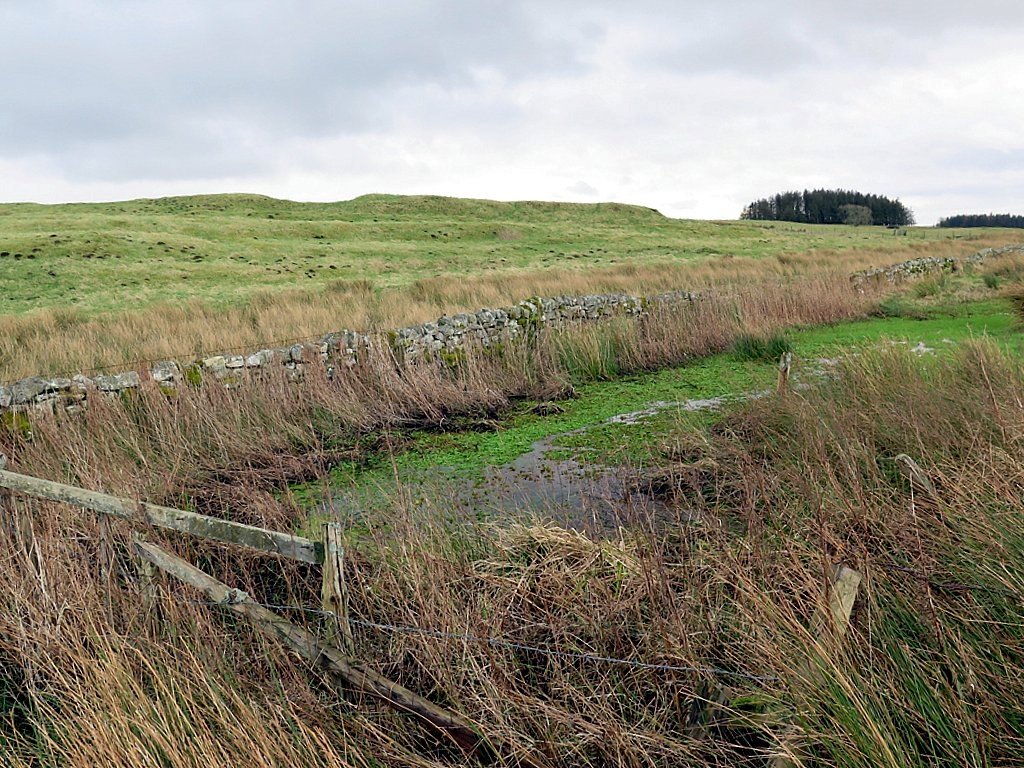
Midway between the famous forts of Housesteads and Chesters, beside the Roman fort of Brocolitia, a boggy field hides a spring that was once a sanctuary. It belonged to Coventina, a Celtic goddess of water, known from almost nowhere else.
When the spring was excavated in 1876, it was found to be packed with offerings: 13,487 coins, from Mark Antony to the late Roman emperors, along with altars, carved stones, incense burners, brooches, a relief of three water nymphs and a human skull. Roman soldiers from across the empire, posted to the edge of the known world, had thrown their coins and prayers into the water of a local goddess.
There is little to see at the well itself today: a marshy patch of ground in a field. But just next to it is the Temple of Mithras, one of the most atmospheric Roman sites in Britain.
In the Field Guide: the Hadrian’s Wall walk from Housesteads to Chesters, the Temple of Mithras, and where to see Coventina’s altars at the Chesters museum.
When: April to October. Weather at Carrawburgh: exposed, cool and windy, high on the Northumberland moors. Summer days are mild, the rest of the year is often grey and wet, and the ground around the well is usually boggy. Getting there: car park on the B6318, the road along Hadrian’s Wall, about 1 hour by car from Newcastle.
4. Sources of the Seine, France
47.49° N, 4.72° E · Source-Seine, Côte-d’Or, Burgundy
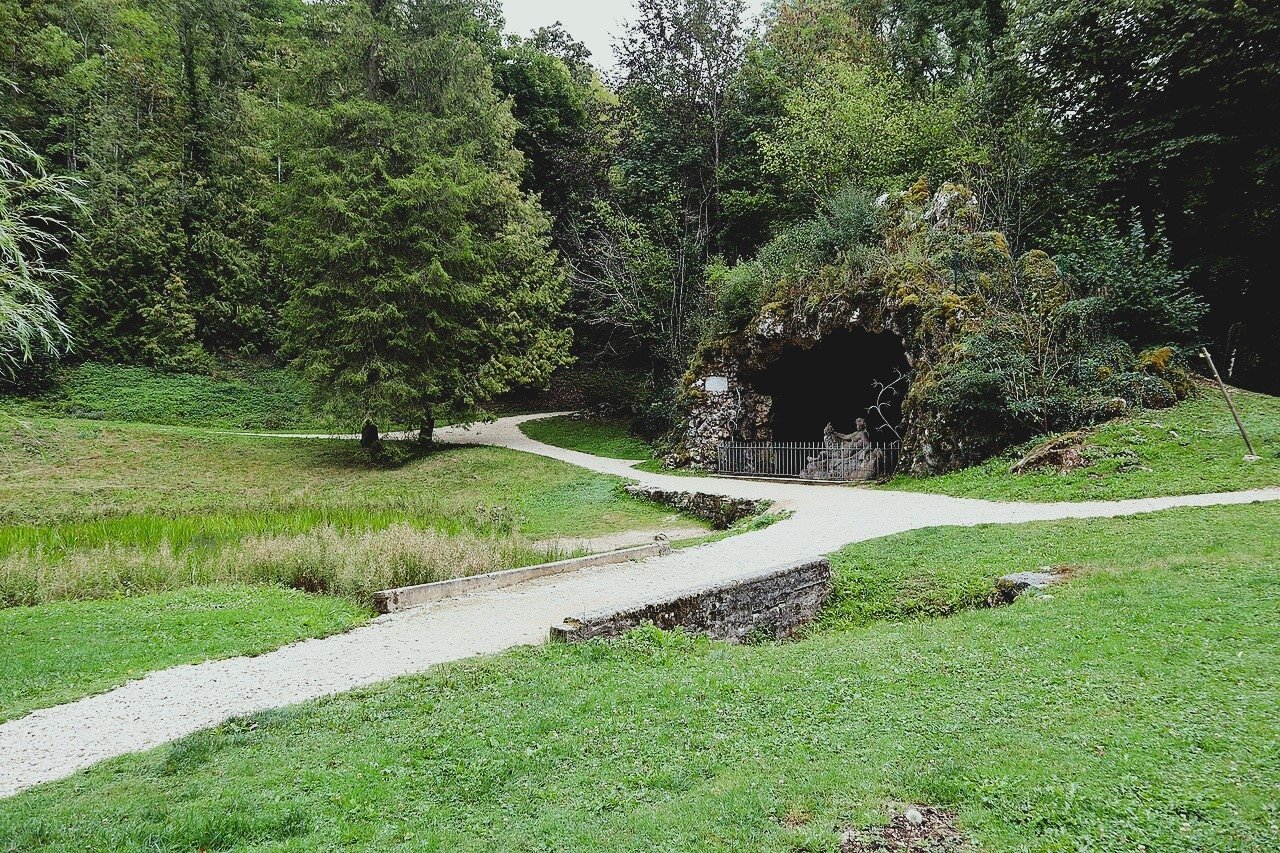
In a wooded valley of Burgundy, about 40 km from Dijon, a modest spring rises into a stone basin. This is the source of the Seine, the river of Paris. Two thousand years ago, it was the sanctuary of Sequana, the goddess of the river and of healing.
Pilgrims came from far away with an illness or injury and left an ex-voto for the goddess: a model of the body part they wanted healed. Excavations from 1836 to 1967 recovered about 1,500 offerings: legs, arms, eyes, heads, internal organs, and whole figures carved from oak. The wooden ones are exceptionally rare, preserved for 2,000 years in the wet ground. A clay pot was found filled with coins and ex-votos, inscribed with the words “Rufus gave this to the goddess Sequana”.
The finest object is a small bronze statue of Sequana, standing in a boat shaped like a duck. The originals are in the Archaeological Museum of Dijon; at the spring, a 19th-century grotto and a statue of a reclining nymph mark the place. A new research programme began excavating the sanctuary again in 2026.
In the Field Guide: the spring and its park, the Sequana collection in Dijon, and the Gallic and Roman sites of northern Burgundy.
When: May to October. Weather at the Sources of the Seine: a cool continental climate on the Burgundy plateau. In Dijon, average highs are about 16°C in April, 27°C in July and 6°C in January; the plateau is a little cooler, and winters are cold. Getting there: about 40 minutes by car north-west of Dijon.
5. Puy de Dôme, France
45.77° N, 2.96° E · Chaîne des Puys, Auvergne, 1,465 m
Puy de Dôme is the highest of the dormant volcanoes that rise above Clermont-Ferrand. For the Arverni, the powerful Gallic people of Auvergne, it was a sacred mountain.
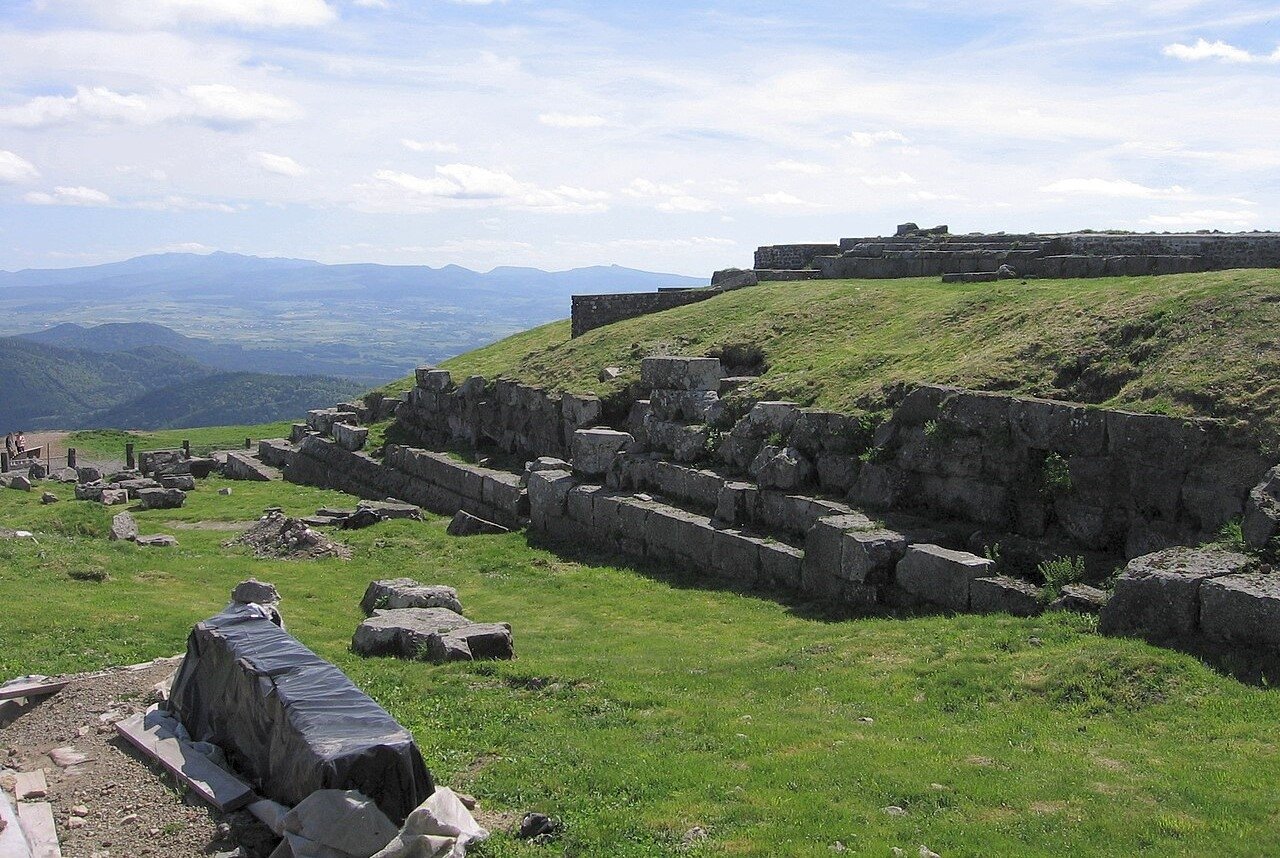
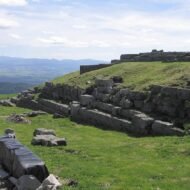
Julius Caesar wrote that the god the Gauls honoured most was the one he called Mercury. On the summit of Puy de Dôme, at about 1,435 metres, the Arverni built a great temple to him: a first temple around AD 50, then, in the 2nd century, a vast sanctuary of volcanic stone and marble, the largest mountain temple in Roman Gaul. An inscription names the god Mercurius Dumias, a local Celtic god dressed in a Roman name.
The ruins were rediscovered in 1873 and have been partly restored. From the summit, the view takes in the whole chain of volcanoes, and on clear days you can see why the Arverni thought the gods lived here.
In the Field Guide: the pilgrims’ path to the summit, the temple, the Chaîne des Puys, and the Arverni of Gergovia, where Vercingetorix defeated Caesar.
When: May to October, winter brings snow and strong winds. Weather on Puy de Dôme: a mountain climate, much cooler and windier than Clermont-Ferrand below, where summer highs are about 25°C. Cloud often covers the summit, and snow is common in winter. Getting there: the Panoramique des Dômes rack railway climbs to the summit in about 15 minutes, from Orcines, about 20 minutes by car from Clermont-Ferrand. Or walk up the old Muleteers’ Path (Chemin des Muletiers), roughly 45 minutes to 2 hours depending on your start.
Beyond the map
The Celtic gods were never written into a holy book. They lived in the water and under the ground: in a spring, a lake, a cave, a mountain top. When their worshippers became Roman, they gave their gods Latin names, and when they became Christian, the old places were turned into wells of saints or gates of Hell. And yet people kept coming. They still do, every Samhain, at a cave in Roscommon.
Mythic Europe — a Beyond the Map Field Guide
[Mythic Europe — The Beyond the Map Field Guide]
The Celtic chapter of our guide to the places where Europe’s myths were born includes:
- The five sites in detail, with tours, access notes and the best times to go
- Ireland’s royal sites: Tara, Uisneach and Emain Macha
- The healing springs of Gaul and Britain, and the goddesses behind them
- Samhain, Beltane and the Celtic year: where they are still celebrated
- How to read the myths: the Irish and Welsh tales, Roman writers and inscriptions
- Offline maps and GPS points for every site
→ [Get the Field Guide]
Coming next in Mythic Europe: the Greek gods.
Read next: Where the Celts Were · Where the Norse Gods Lived · Where Basque Myths Live · Where the Slavic Gods Lived
Explore more: Europe’s Last Pagan Landscapes II · Europe’s Landscapes of Legend