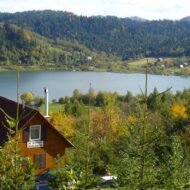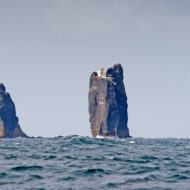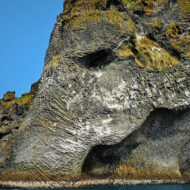


Long before it meant Christmas, Yule was the great midwinter feast of the North: three nights of ale, fire and offerings to the gods. In the lava fields of Iceland, a Swedish town square, a Norwegian hill and a Viking museum in Stockholm, the old Yule is still easy to find.
In Norway, Sweden and Denmark, Christmas is still called jul. In Iceland and the Faroe Islands, it is jól. The word is far older than Christianity.
For the Norse, Yule was a midwinter festival of feasting, drinking and sacrifice, a time to honour the gods and to get through the darkest days of the year. One of Odin’s many names was Jólnir, “the Yule one”. The sagas describe Yule feasts where the first toast went to Odin, for victory and power for the king, and the next to Njörðr and Freyr, for good harvests and peace.
According to the Saga of Haakon the Good, written down by Snorri Sturluson in the 13th century, it was this 10th-century Norwegian king, a Christian raised in England, who brought the two festivals together. He made a law that Yule should begin at the same time as the Christian Christmas, and that every household should brew ale and keep the feast for as long as the ale lasted. Before him, the saga says, Yule began on midwinter night and lasted three nights.
The old feast never quite disappeared. It survives in names, in customs like the Yule goat and the Yule ham (some trace it to the old sacrificial boar), and in places where the dark season still feels older than the calendar.
This is the first part of our Norse Winter series: four places to find the old Yule.
| Place | The Yule tradition | |
|---|---|---|
| 1 | Dimmuborgir, Iceland | The lava “castles” where the 13 Yule Lads live |
| 2 | Gävle, Sweden | The giant straw Yule goat, 60 years old in 2026 |
| 3 | Mære, Norway | A church built over a pagan sanctuary, where farmers held forbidden midwinter feasts |
| 4 | The Viking Museum, Stockholm | Viking Yule, trade and a midwinter blót |
1. Dimmuborgir, Iceland
65.60° N, 16.93° W · Lake Mývatn, North Iceland
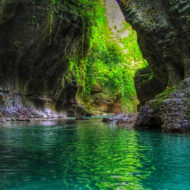
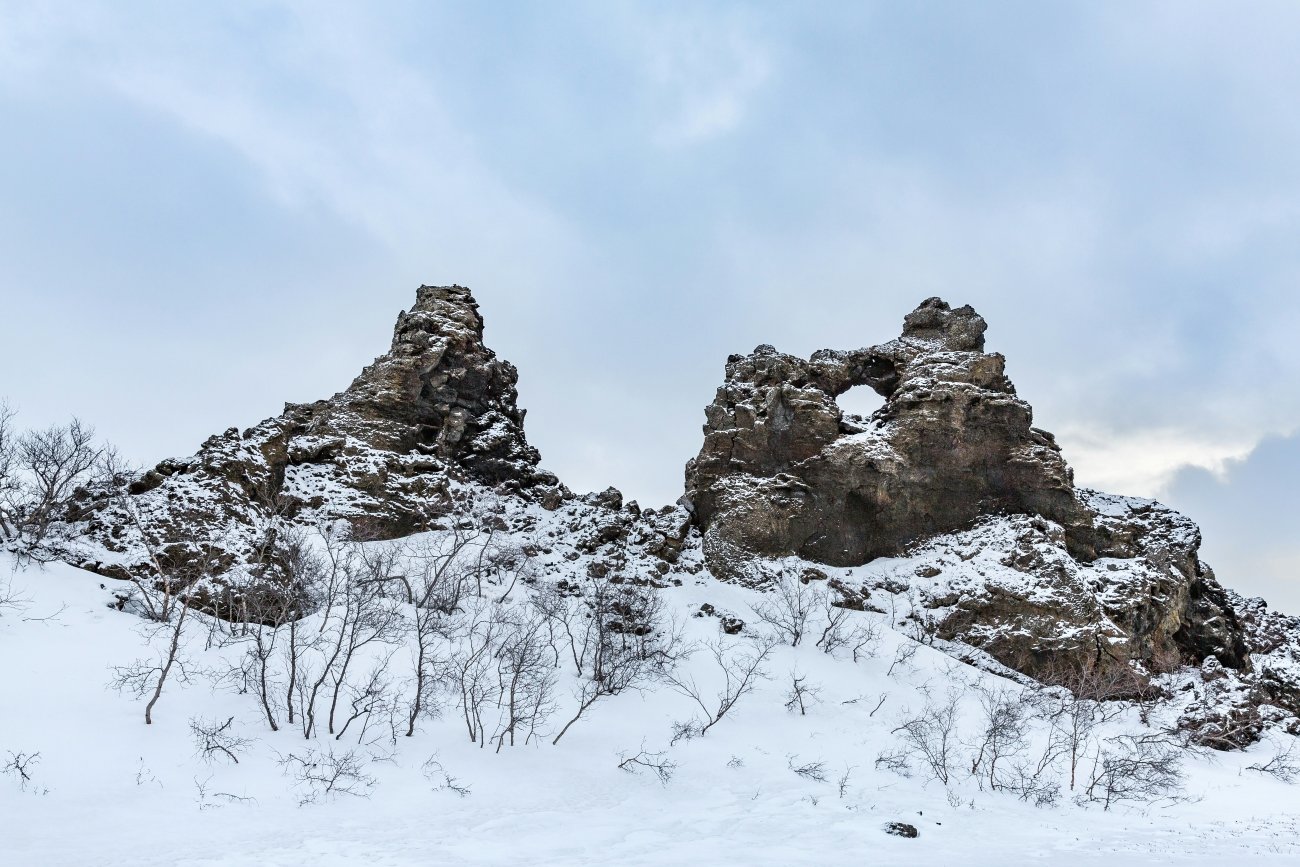
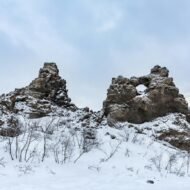
East of Lake Mývatn lies Dimmuborgir, “the dark castles”: a maze of black lava towers, arches and caves up to 20 metres high, left behind by an eruption long ago. In December, it is the home of Iceland’s strangest Christmas family.
Icelandic Christmas does not have one Santa Claus but thirteen Yule Lads (jólasveinar), mischievous troll brothers with names like Spoon-Licker, Door-Slammer and Sausage-Swiper. From 12 December, one comes down from the mountains each night, leaving small gifts in children’s shoes, or a raw potato for those who have been naughty. After Christmas, they leave again one by one, until the last goes home on 6 January.
Their parents are the most frightening figures of Icelandic folklore: the ogress Grýla, who is said to eat naughty children, and her lazy husband Leppalúði, along with their pet, the Yule Cat, which catches anyone who has not received new clothes for Christmas. In Iceland, icicles are even called grýlukerti, “Grýla’s candles”.
Every December, the Yule Lads “receive visitors” at Dimmuborgir, and local tradition has them taking their only bath of the year at the nearby Mývatn Nature Baths.
In the Field Guide: visiting the Yule Lads at Dimmuborgir, the Christmas bath at Mývatn, the northern lights over the lake, and Akureyri at Christmas.
When: December. The Yule Lads’ events at Dimmuborgir run from 1 to 23 December. Weather at Dimmuborgir: Arctic winter. In nearby Akureyri, December highs are around freezing and lows around −5°C, and Mývatn, inland, is usually colder. Daylight lasts only about three to four hours, with the sun rising around 11:00 and setting before 15:00. Roads can close in storms; check road.is before driving. Getting there: about 1 hour by car east of Akureyri, near the Ring Road.
2. Gävle, Sweden
60.67° N, 17.14° E · Gävle, central Sweden
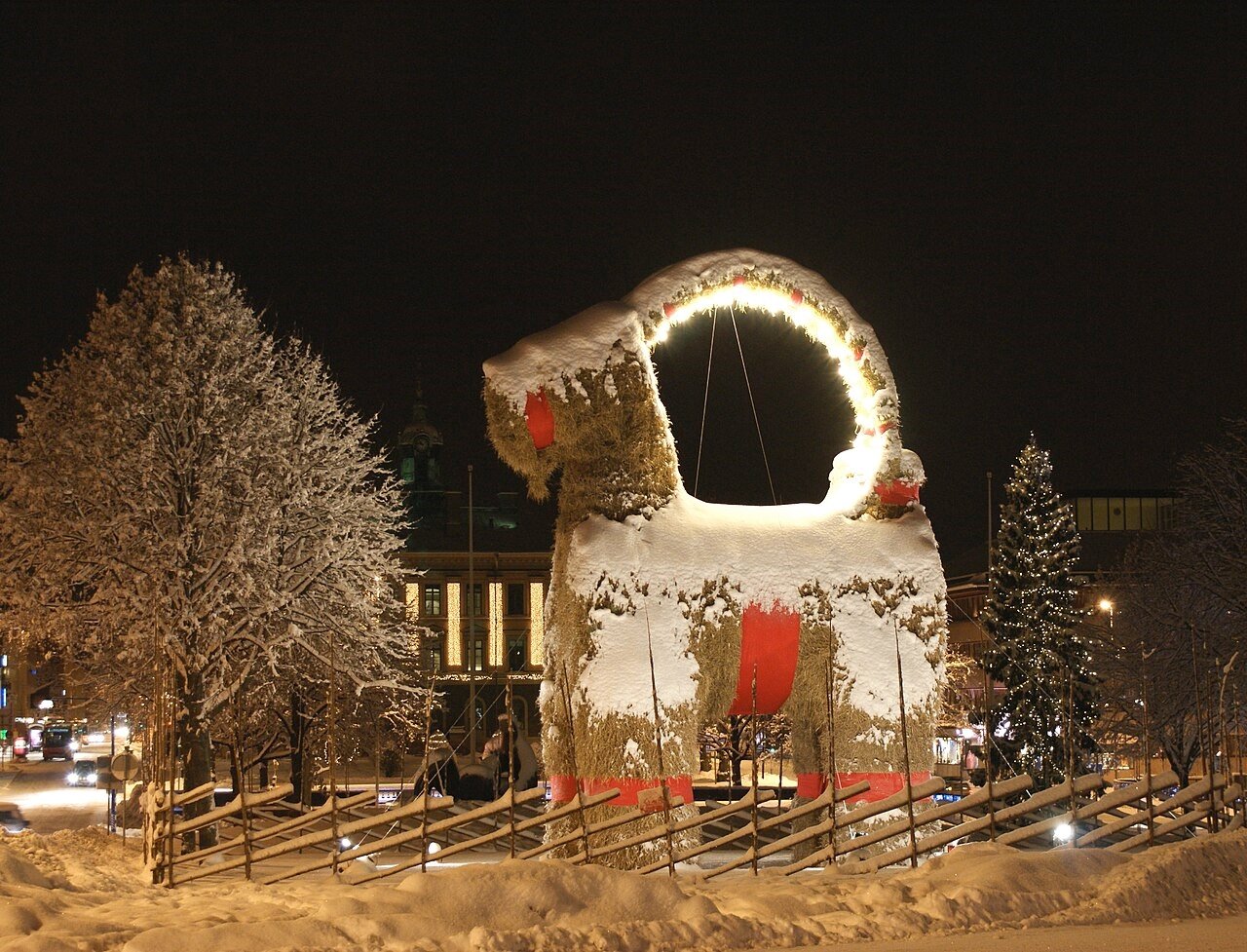
The Yule goat (julbock) is one of the oldest Christmas symbols in Scandinavia: a goat made of straw, placed under the tree, or carried from house to house. Its roots are often linked to pre-Christian Yule customs, and sometimes to Thor’s goats, although the connection is uncertain.
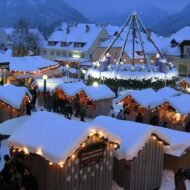
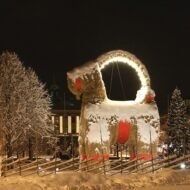
Every year since 1966, the town of Gävle has built a giant one. The Gävlebocken is a straw goat about 13 metres high, raised in the town centre on the first Sunday of Advent. It is also famous for a stranger reason: it has been burned or destroyed dozens of times. The very first one burned on New Year’s Eve 1966. Despite round-the-clock guards, it still often fails to survive the season, and many Swedes follow its fate each December.
In 2026, the goat turns 60, and its inauguration takes place on Sunday 29 November at 16:00 on Stortorget, with free entry.
In the Field Guide: the inauguration day, Gävle’s Christmas markets, and other straw goats and Yule traditions in Sweden.
When: from the first Sunday of Advent (29 November 2026) until the goat is taken down after Christmas, if it survives. Weather in Gävle: cold and dark. In nearby Stockholm, December averages about 2°C by day and −2°C at night, with around six hours of daylight; Gävle, further north, is a little colder and darker. Getting there: about 1 hour 20 minutes by train from Stockholm.
3. Mære, Norway
63.93° N, 11.39° E · Steinkjer, Trøndelag
Trøndelag, around Trondheim, was one of the heartlands of the old faith in Norway, and a centre of resistance to the Christian kings. In the sagas, the farmers of the inner Trondheimsfjord held their great midwinter sacrifices at Mære (Mærin), long after their kings had become Christian.
One saga tells how King Olaf, the future saint, heard that the farmers there were still holding forbidden midwinter sacrificial feasts, and summoned them to explain. Their spokesman had an answer ready: Mære was simply a big farm with large buildings, and people liked to gather there in winter to drink together.
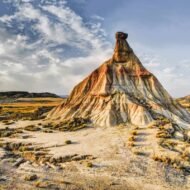
Today, a 12th-century stone church stands on the hill. When its floor was excavated in 1969, archaeologists found the remains of a pagan cult building beneath it, and in and around four close-set post holes, 22 tiny gold foil figures (gullgubber), each showing a man and a woman facing each other. They are often linked to the god Freyr and his bride Gerðr, though not all scholars agree. Look up at the church walls: medieval heads of men, beasts and mythical creatures stare out from under the roof.
In the Field Guide: Mære church, the Viking sites of the Trondheimsfjord, Stiklestad, and Trondheim’s Nidaros Cathedral at Christmas.
When: all year; check the church’s opening times in winter. Weather at Mære: dark and cold, often snowy. In Trondheim, December highs average about 1°C and lows about −4°C, with around five hours of daylight. Getting there: near Steinkjer, about 1 hour 45 minutes by car north of Trondheim.
4. The Viking Museum, Stockholm
59.33° N, 18.10° E · Djurgården, Stockholm
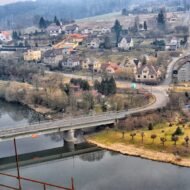
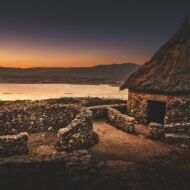
On the island of Djurgården, beside Stockholm’s other great museums, The Viking Museum brings the Viking Age to life. In winter, it turns to the old Yule.
Over the Christmas holidays, it has run a programme on Viking-age Yule and trade, ending with a Midwinter Blót: a themed tour followed by a demonstration, outside the museum, of how a Viking-age blót, a sacrifice to the gods, might have been carried out. Last season, it was held on 3 January.
In the Field Guide: the museum’s winter programme, the Viking Stockholm of Birka and Sigtuna, and winter walks on Djurgården.
When: from about 20 December to early January (dates for 2026–27 to be confirmed). Weather in Stockholm: December averages about 2°C by day and −2°C at night. The sun sets before 15:00 around the solstice, with only about six hours of daylight. Getting there: by tram or ferry to Djurgården from central Stockholm.
The old Yule in words
- Jól / jul: the oldest name for the midwinter feast, still the word for Christmas across the Nordic countries.
- Jólnir: “the Yule one”, one of Odin’s names.
- Hugins jól: “Huginn’s Yule”, a poetic kenning for a battlefield, a feast for Odin’s raven.
- Julbock: the Yule goat.
- Grýlukerti: “Grýla’s candles”, the Icelandic word for icicles.
Beyond the map
Yule was a feast for the darkest days: a time to eat, drink, honour the gods and wait for the sun to return. It has become Christmas, but in the North the darkness is still real, the sun still rises late and sets early, and the old names still stand.
Norse Winter — a Beyond the Map Field Guide
[Norse Winter — The Beyond the Map Field Guide]
Our guide to the old North in its darkest season:
- A midwinter calendar from December to February, with every festival date, updated each year
- Yule, Up Helly Aa and Þorrablót: where to see them, and the myths behind them
- Norse places open in winter, with access notes, opening hours and daylight hours
- Northern lights near Norse sites
- 3–5 day winter routes in Iceland, Shetland and Scandinavia
- Offline maps and GPS points
→ [Get the Field Guide]
Coming next in Norse Winter: Fire in the North, the fire festivals of Shetland.
Read next: Where the Norse Gods Lived · Where the Vikings Were · Salme: Before the Vikings