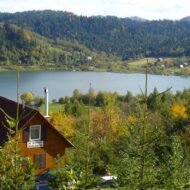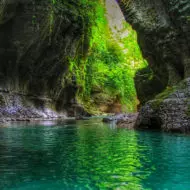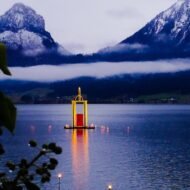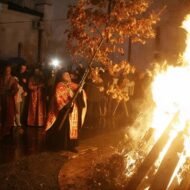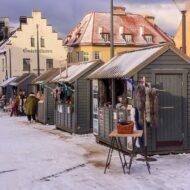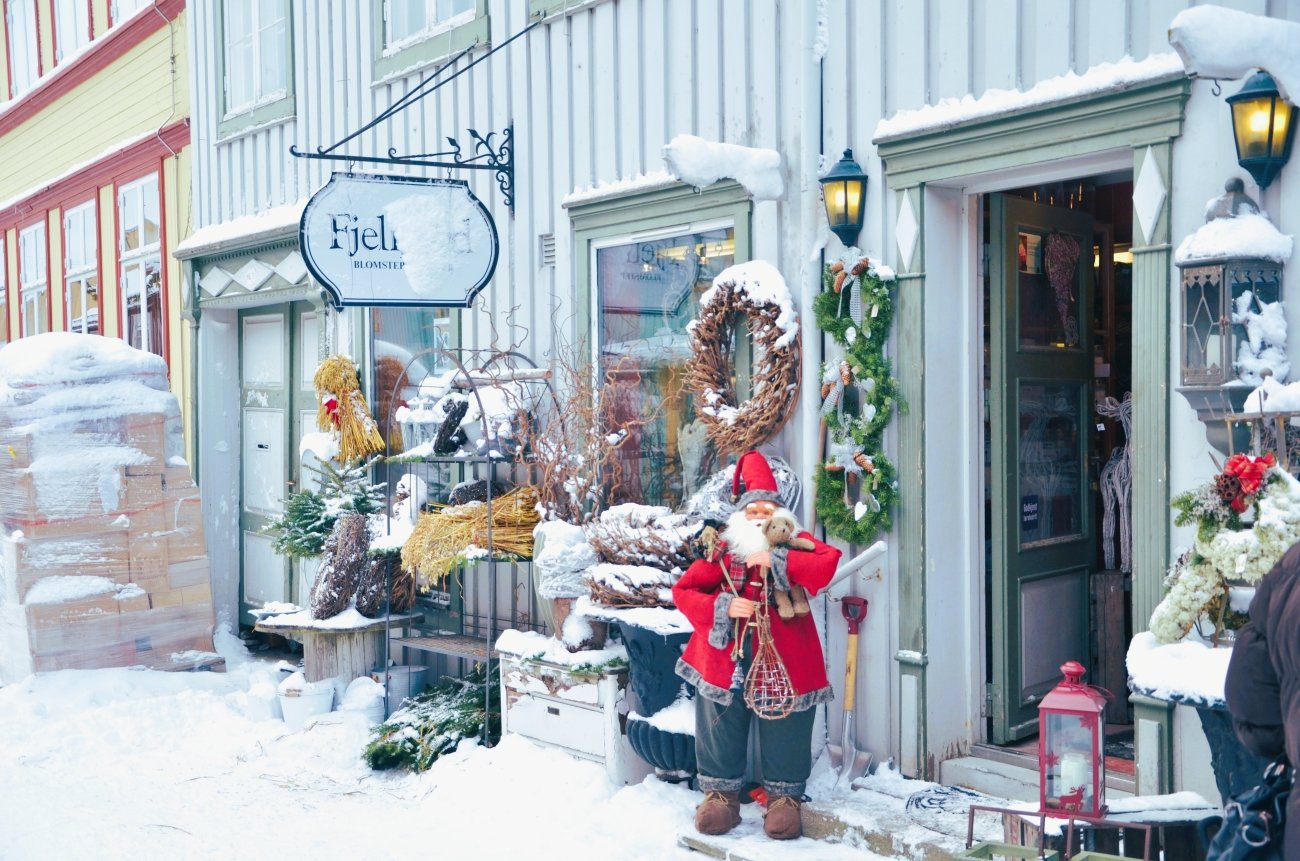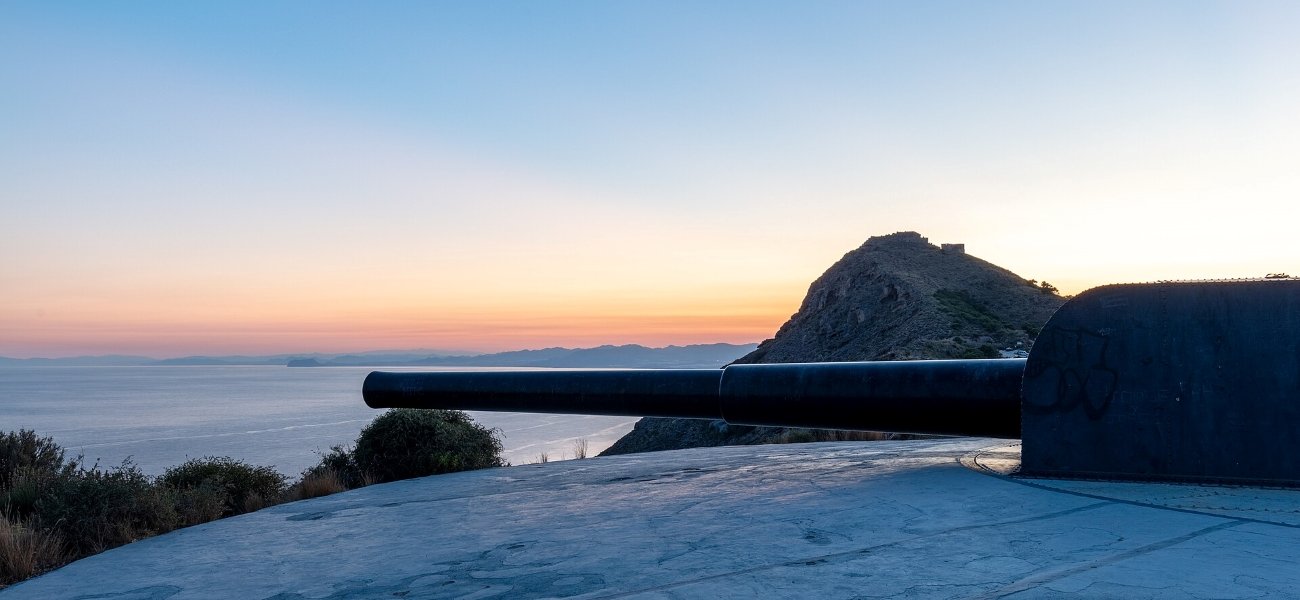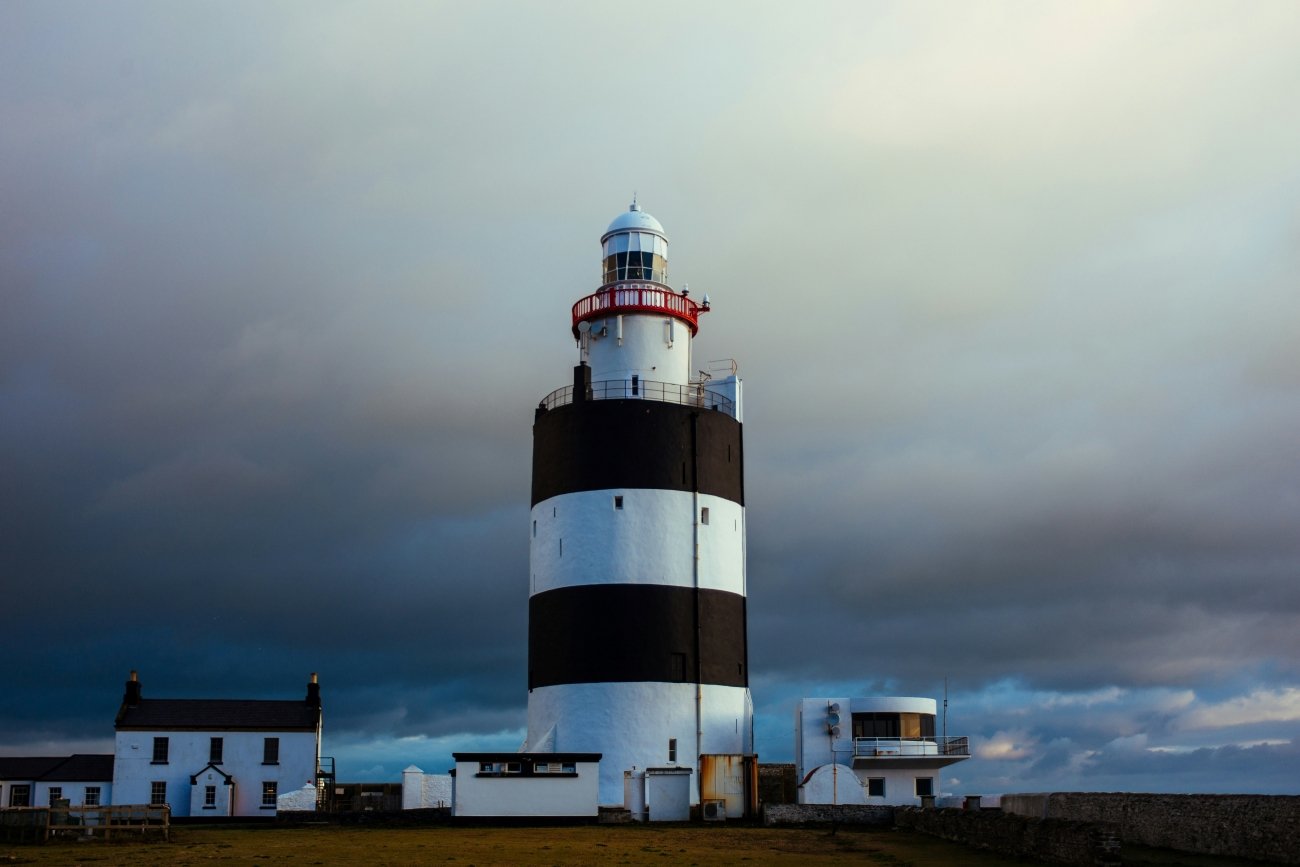


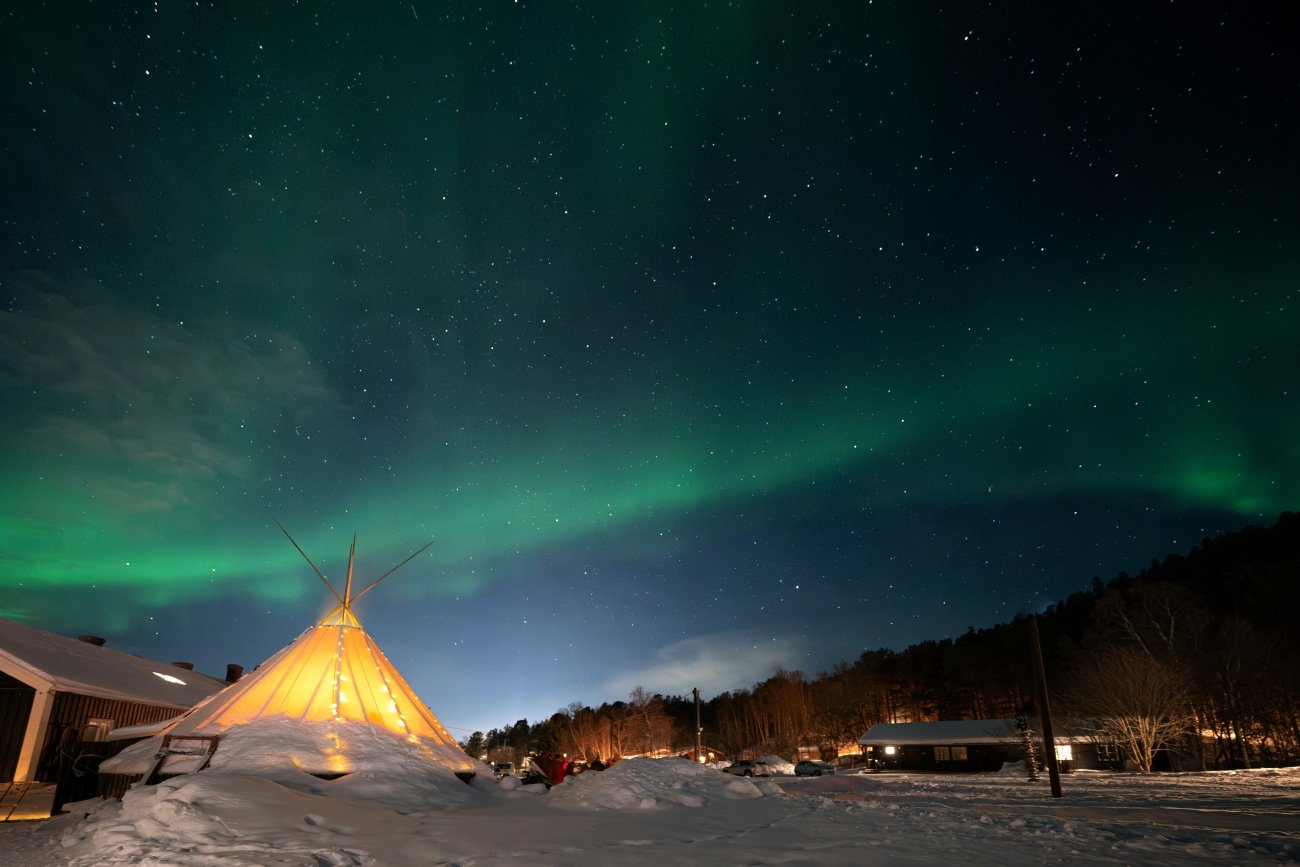
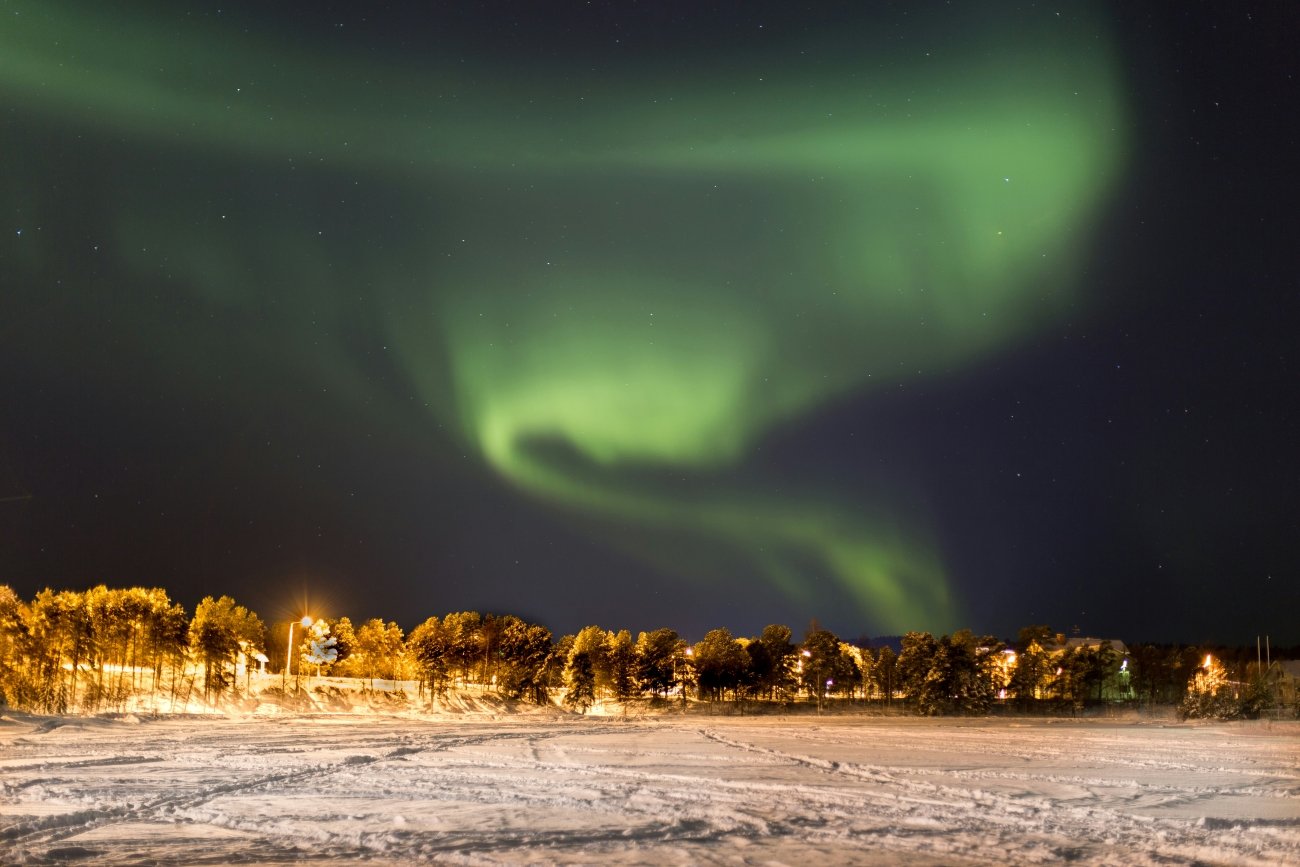
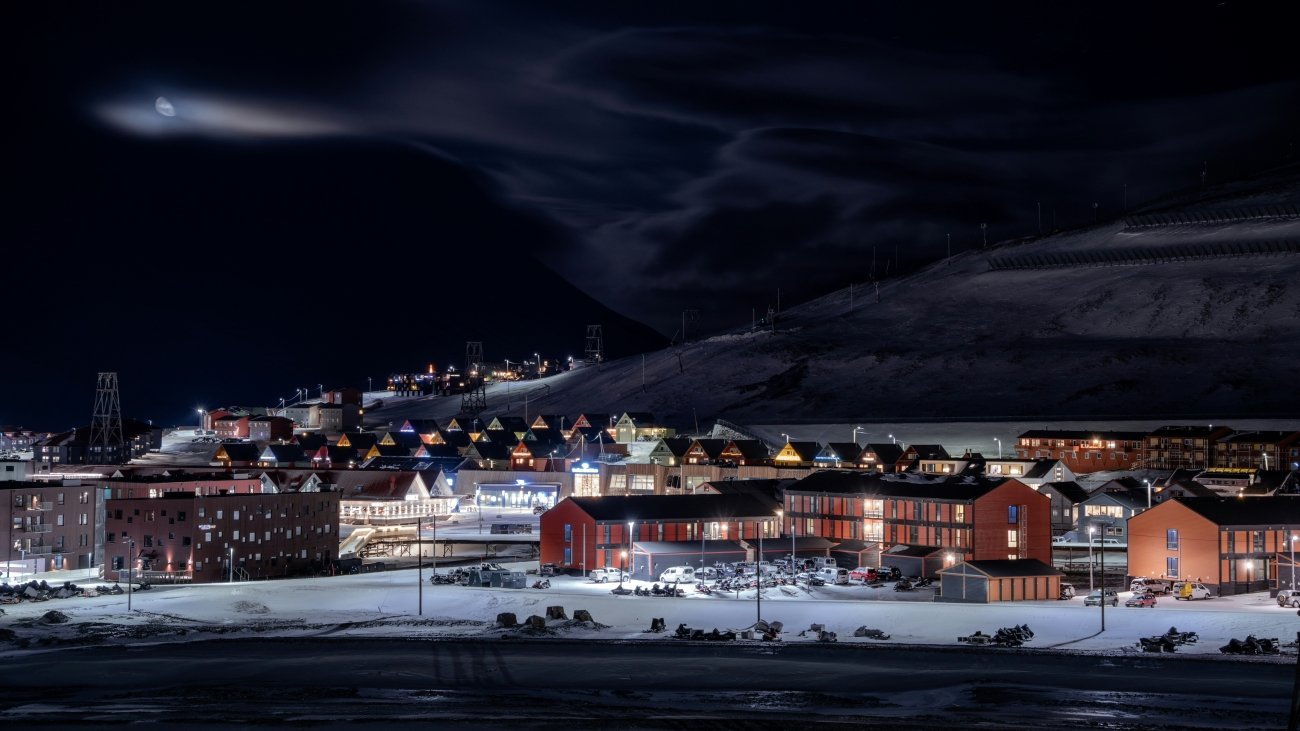
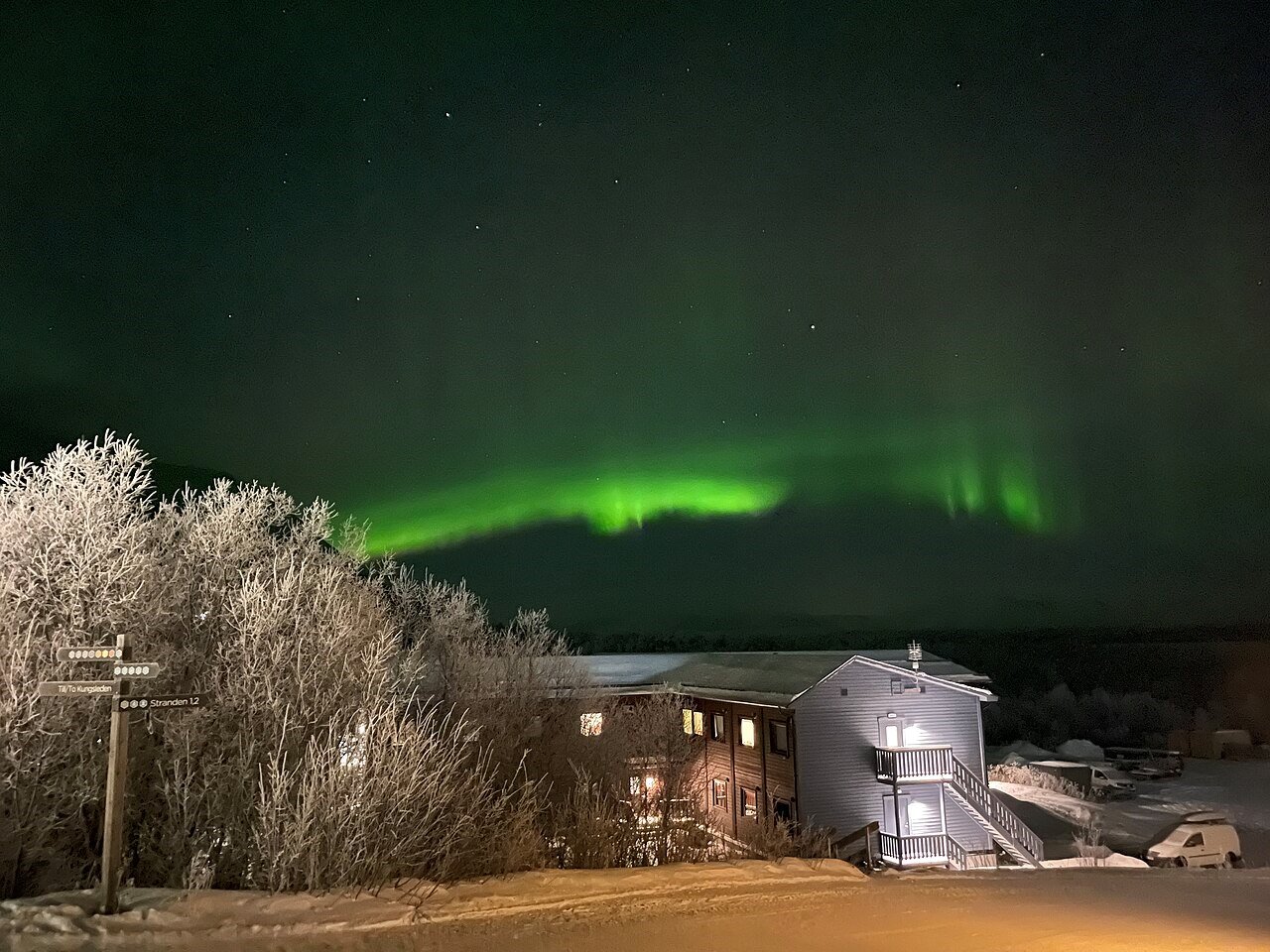
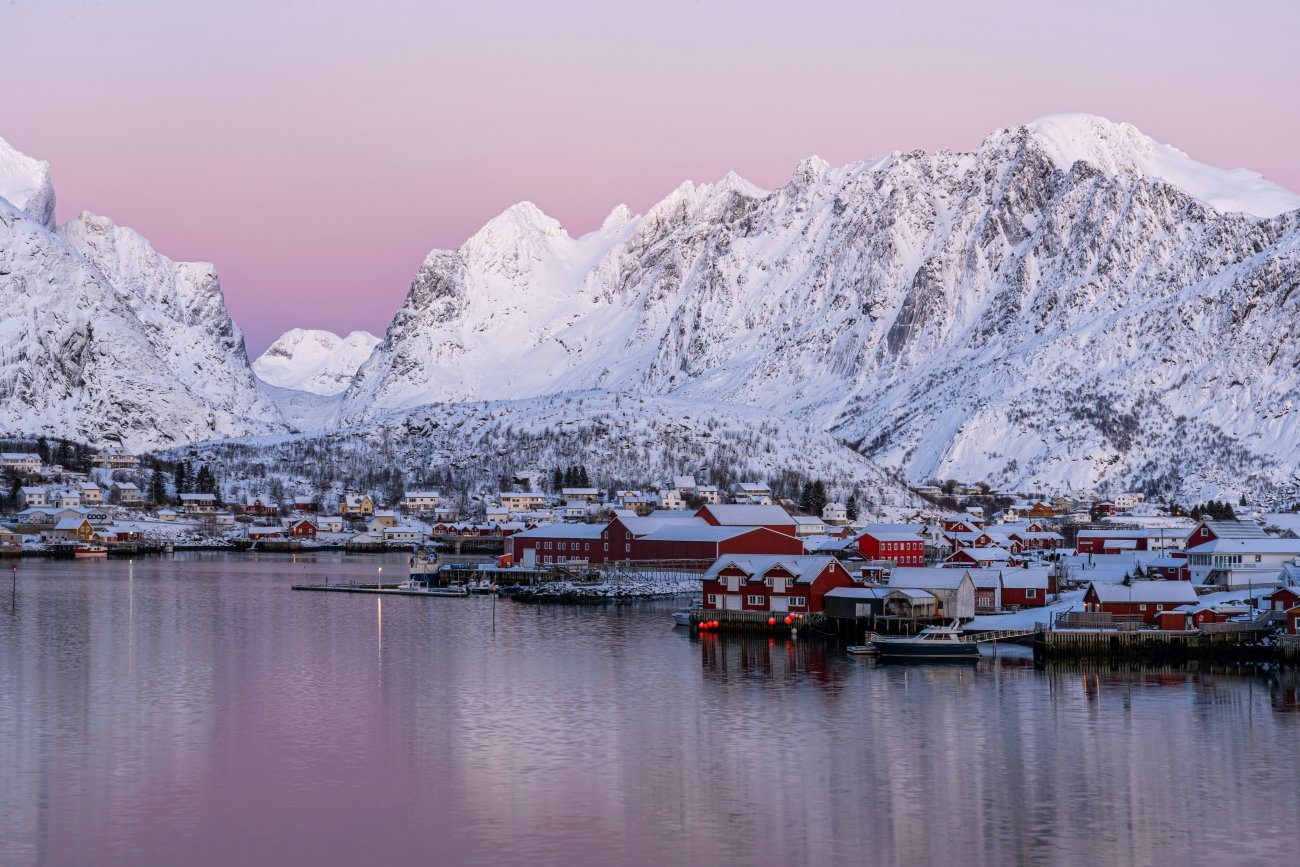
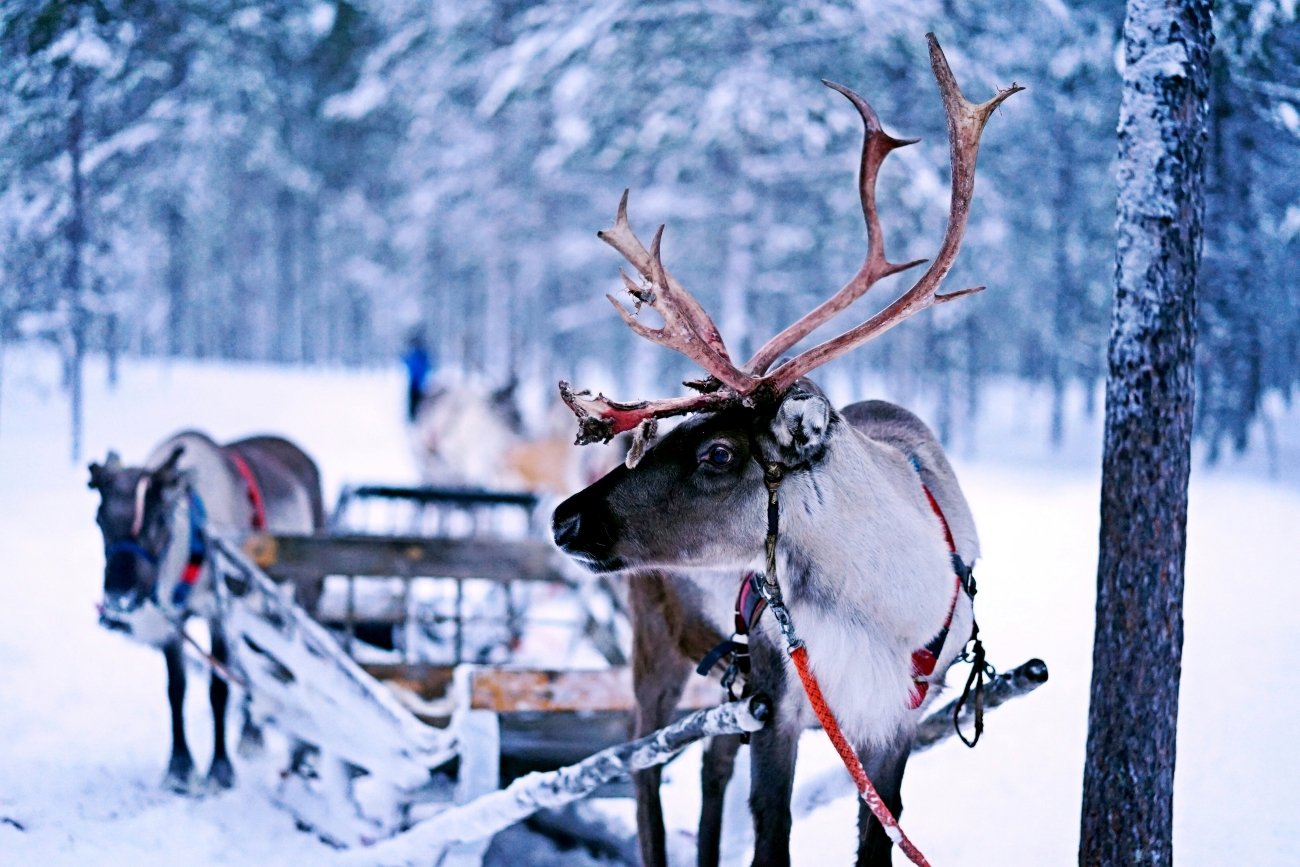
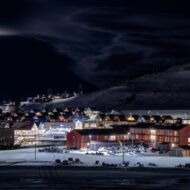
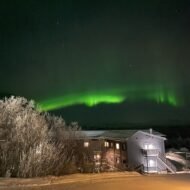
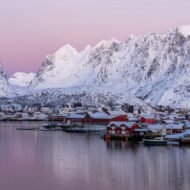
A torchlit walk in the dark to Santa’s letterbox below an old coal mine. A spiral cathedral built for the northern lights. The northern lights over a frozen lake from a mountain station reached by chairlift. Fishing villages lit for Christmas under a sun that never rises. Five Arctic places where Christmas happens in the polar night.
Above the Arctic Circle, December is the month without a sun. For days or weeks around the winter solstice, it does not rise at all. Midday is a blue and pink twilight; the rest is night, snow and, on clear evenings, the northern lights. It is the darkest Christmas in Europe, and for that reason one of the warmest: every window has a candle or a star, and every town has its own way of bringing light into the dark.
Rovaniemi and Santa’s village are the famous Arctic Christmas. These are the quieter ones, with their 2026 dates.
| Place | Country | Latitude | Why go at Christmas | |
|---|---|---|---|---|
| 1 | Abisko | Sweden | 68° N | Polar night, northern lights and an overnight train to get there |
| 2 | Lofoten | Norway | 68° N | Fishing villages lit for Christmas between the mountains and the sea |
| 3 | Inari | Finland | 69° N | The heart of Sámi culture, on a frozen lake in the polar night |
| 4 | Alta | Norway | 70° N | The Northern Lights City, with its spiral Northern Lights Cathedral |
| 5 | Longyearbyen | Svalbard (Norway) | 78° N | The world’s northernmost town, with Santa’s letterbox below a coal mine |
1. Abisko, Sweden
68.35° N, 18.83° E · Swedish Lapland, Norrbotten
Two hundred kilometres north of the Arctic Circle, between the mountains and the long frozen lake of Torneträsk, Abisko is a tiny station village at the edge of Abisko National Park. It is one of the best places in the world to see the northern lights: it sits under the aurora belt, and the mountains around it often keep away the clouds that cover the rest of Lapland. In December, Abisko has polar night: for a few weeks around the solstice, the sun does not rise at all.
The best way to arrive is the slow way. The overnight train from Stockholm to Abisko leaves the capital in the evening and wakes you up in the Arctic, a journey that already feels like part of Christmas.
Once there, take the chairlift up Mount Nuolja to the Aurora Sky Station, about 900 metres up, for a night of watching the sky, or book its Northern Lights dinner. By day, snowshoe into the national park in the blue twilight. On 13 December, as everywhere in Sweden, look for a candlelit Lucia procession.
→ Read more: Abisko: Where Sweden Meets the Arctic · Abisko National Park · Stockholm to Abisko: The Overnight Train to the Arctic Circle
2026 dates: Aurora Sky Station evening visits run through the winter (in 2026–27, from 19 October to 27 March), usually 21:00–01:00. Book ahead for the Christmas weeks.
Weather in Abisko: cold and dry, usually well below freezing in December, sometimes down to −20 °C or lower, Abisko is one of the driest places in Sweden.
Getting there: by overnight train from Stockholm (about 17–18 hours), or fly to Kiruna and take the train or bus about 1.5 hours west.
2. Lofoten, Norway
68.15° N, 14.20° E · Nordland
The Lofoten islands rise straight out of the Norwegian Sea in a wall of sharp peaks, with red and yellow fishermen’s cabins (rorbuer) on stilts along the shore. In December, it is the time of mørketid, the dark time: the sun does not come up, but the sky turns deep blue in the afternoon and orange in the morning, and the northern lights may dance over the mountains.
Lofoten’s Christmas is quiet and very local. In Henningsvær, a fishing village spread across small islands, the Førjulseventyret (pre-Christmas adventure) runs every week from early November until Christmas, with local food, crafts, galleries and cafés. The old fishing village of Nusfjord holds a Christmas market, and Å, at the very end of the road, celebrates an old-fashioned Christmas. In Svolvær and Kabelvåg, the Christmas trees are lit at the end of November.
Note that most shops in Lofoten are closed from 24 to 26 December, which is kept for family.
2026 dates: Henningsvær’s pre-Christmas weekends run until Christmas, tree lightings in Svolvær and Kabelvåg in late November, check visitlofoten.com for the Nusfjord and Å dates.
Weather in Lofoten: surprisingly mild for the Arctic, thanks to the Gulf Stream, December is usually around or just below freezing, but very windy and changeable, with snow, rain and storms.
Getting there: fly to Svolvær or Leknes via Bodø, or take the ferry from Bodø to Moskenes; the Hurtigruten coastal ship also calls at Svolvær and Stamsund.
3. Inari, Finland
68.91° N, 27.03° E · Finnish Lapland
Far north of Rovaniemi, the village of Inari lies on the shore of Lake Inari, Finland’s third-largest lake, dotted with thousands of islands. It is known as the capital of Sámi culture in Finland: the Sámi museum Siida, the Sámi cultural centre and the Sámi Parliament are all here, and signs are in Finnish and Sámi.
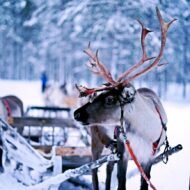
Christmas falls in the middle of kaamos, the Finnish polar night, when for more than a month the sun does not rise above the horizon and the snow glows blue and violet. Visit a Sámi-run reindeer farm, learn about Sámi life at Siida, eat reindeer and fish from the lake, and spend the evenings in a sauna or by a fire, watching for the northern lights. It is a very different Lapland from Santa’s village: quieter, older and rooted in the people who have lived here for thousands of years.
2026 dates: no festival, the polar night runs through December. Book reindeer and aurora trips with local Sámi-run companies.
Weather in Inari: very cold and snowy December is usually well below freezing, often −15 °C or colder, with snow on the ground from November.
Getting there: fly to Ivalo (from Helsinki), about 40 km south of Inari buses and transfers run from the airport.
4. Alta, Norway
69.97° N, 23.27° E · Finnmark
At the head of the Altafjord in Finnmark, Norway’s northernmost county, Alta calls itself the Northern Lights City, and with reason. Modern research into the aurora began here in the 1830s, and Alta’s dry, stable inland winter climate gives it some of the clearest skies in Northern Norway. From the end of November to mid-January, the sun does not rise at all.
Alta’s Christmas centrepiece is the Northern Lights Cathedral (Nordlyskatedralen), the town’s parish church, completed in 2013: a spiral of titanium-clad walls that rises like the aurora itself, with a northern lights exhibition in the basement. Go to a Christmas service or concert there and walk out into the polar night. On the last evening of the year, look up for the lights over the fjord.
Around the town, there is the Arctic winter at its simplest: dog sledding on the plateau, Sámi reindeer herders in the surrounding Finnmark, and the Sorrisniva Igloo Hotel, built anew each winter from snow and ice on the banks of the Alta River, about 20 km from town. Alta’s prehistoric rock carvings, a UNESCO World Heritage Site, lie under the snow in winter, but the museum is open.
2026 dates: polar night from late November to mid-January. Check the cathedral’s Christmas programme on kirken.no/alta, and the Igloo Hotel’s opening date, which depends on the winter (it is usually built in December or January).
Weather in Alta: cold, dry and clear for the Arctic coast, December is usually around −5 to −15 °C, colder inland, with snow on the ground.
Getting there: daily flights from Oslo (about 2 hours) and Tromsø, the Hurtigruten coastal ship also calls at Alta on some routes.
5. Longyearbyen, Svalbard
78.22° N, 15.65° E · Spitsbergen, Svalbard (Norway)
The farthest north of all. Longyearbyen, on the Arctic island of Spitsbergen, is often called the world’s northernmost town: about 2,500 people from more than 30 countries, red and blue wooden houses, and the remains of the coal mines that built it. Here, the dark season runs for almost three months, and the darkest part, the true polar night, lasts from mid-November to the end of January.
Longyearbyen has its own Christmas tradition. On the afternoon of the first Sunday of Advent, the street lights are switched off, and the whole town walks with torches from the community hall, Huset, up to Santa’s letterbox below the old Mine 2, which is lit up again until Christmas. Children post their wish lists to Santa, who, the town says, receives his first letters from here. The town’s Christmas tree is lit the same day, and on Christmas Eve, Svalbard Church holds its Christmas service.
Remember that this is polar bear country. Outside the town, go only with a licensed guide.
2026 dates: torchlight walk and Christmas tree lighting on the first Sunday of Advent, 29 November 2026, polar night until the end of January.
Weather in Longyearbyen: cold, dark and windy, December is usually around −10 to −15 °C, often colder with wind chill.
Getting there: fly from Oslo or Tromsø to Longyearbyen (about 1.5 hours from Tromsø).
Beyond the map
In the Arctic, Christmas is not decoration. It is a way to get through the dark. Every star in a window, every torch carried to Santa’s letterbox in Svalbard, every candle in a Lofoten cabin says the same thing: the light is coming back. And when the northern lights spread across the sky on Christmas night, you understand why people have always believed in miracles up here.
Read next: Abisko: Where Sweden Meets the Arctic · Abisko National Park · Stockholm to Abisko: The Overnight Train to the Arctic Circle · A Norse Yule · Christmas in the Mountains · Christmas in the Forest