

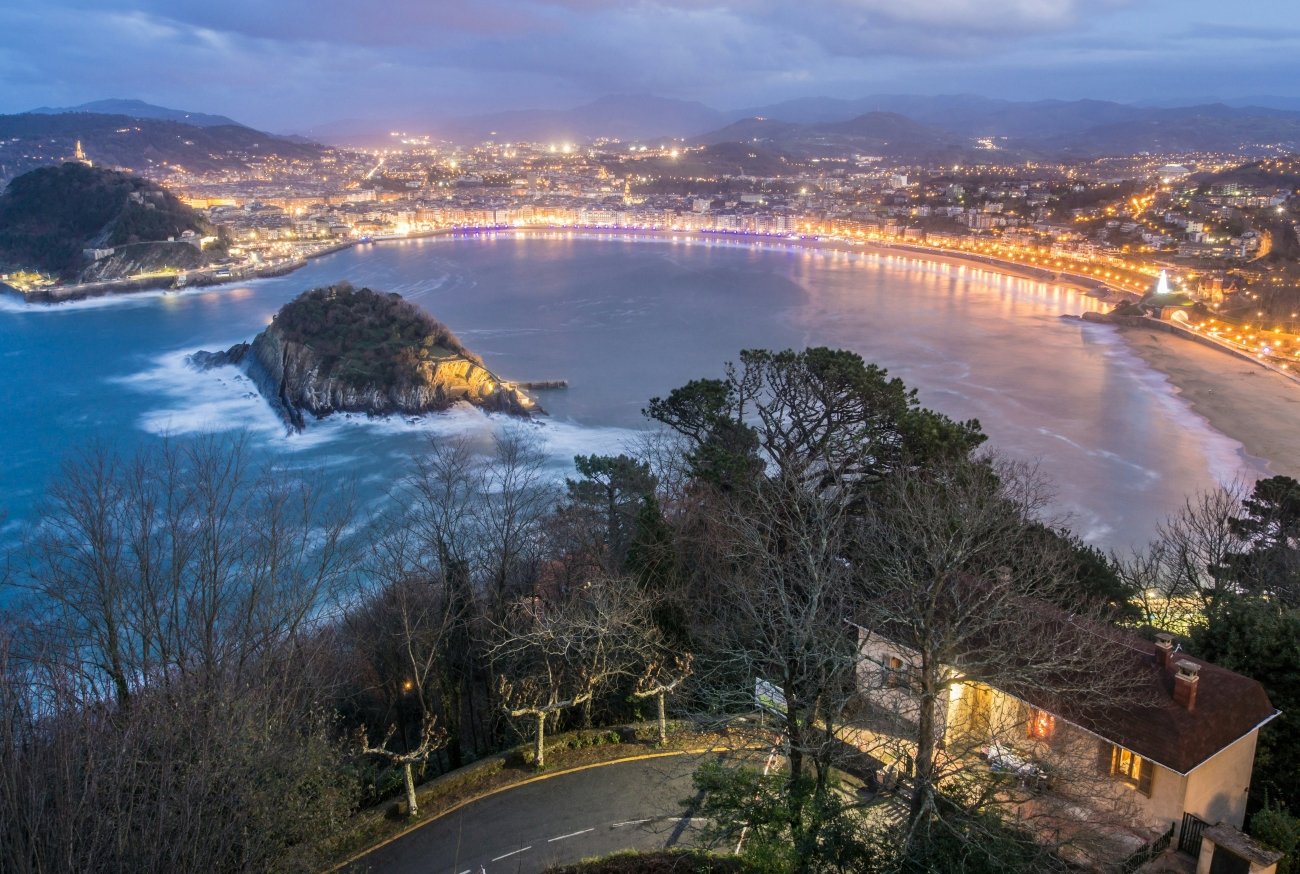
No reindeer, no sleigh. In the Basque Country, Christmas presents are brought by a charcoal burner who comes down from the mountains with soot on his face and a pipe in his mouth. Before him comes a day of sausages, cider and farm stalls, and with him walk witches, lamias and a one-eyed giant. This is Christmas in Euskal Herria.
The Basque Country keeps its own Christmas. Its gift-bringer is not Santa Claus but Olentzero, a rough, kind-hearted charcoal burner from the mountains, born from very old midwinter customs. Its season begins not with Advent markets but with a rural fair, Santo Tomás, when the cities fill with farmers, txistorra sausage and cider. And it carries, half-hidden, the old Basque world of myth and legend that still lives in the hills.
This is the first article in our Christmas in Europe series: one region, one Christmas, told from the inside.
At a glance
| Where | Euskadi (Bizkaia, Gipuzkoa, Álava) and Navarre, Spain |
| Gift-bringer | Olentzero, with Mari Domingi, on the night of 24 December |
| Season opens | Santo Tomás fair, 21 December (22 December in Arrasate) |
| Best cities | Donostia / San Sebastián, Bilbao, Pamplona / Iruña |
| Where it began | The villages of northern Navarre, around Lesaka and Bera |
| Language | Gabonak = Christmas Gabon = Christmas Eve Eguberri on! = Happy Christmas |
| Key dates 2026 | 21 Dec Santo Tomás · 23–24 Dec Olentzero parades · 24 Dec Olentzero’s night · 5 Jan Three Kings |
Santo Tomás: the day the farm comes to town
On 21 December, St Thomas’ Day, the Basque cities turn into a great country market. Farmers come down from the valleys with vegetables, cheese, honey, bread and cakes, and with livestock to show, and the streets fill with the smell of grilled txistorra, a thin, spicy sausage, served in a talo, a flat maize-flour cake cooked on a griddle, with a glass of cider. It is the day that opens Christmas.
- Bilbao: the fair fills the Arenal and the streets around it, from 09:00 to 20:00. In 2025, there were 243 stalls, most of them selling farm produce.
- Donostia / San Sebastián: the Parte Vieja (Old Town) and the city centre become a rural market from 10:00 to 20:00, with well over 150 stalls, about 40 of them selling txistorra. A great sow is traditionally displayed and named each year.
- Arrasate / Mondragón: the fair here is called Santamasak and is held a day later, on 22 December. It is one of the oldest in Gipuzkoa, authorised by the King of Castile in 1351.
Go early, wear something that does not mind the rain, and eat standing up like everyone else.
Olentzero: the charcoal burner who brings the gifts
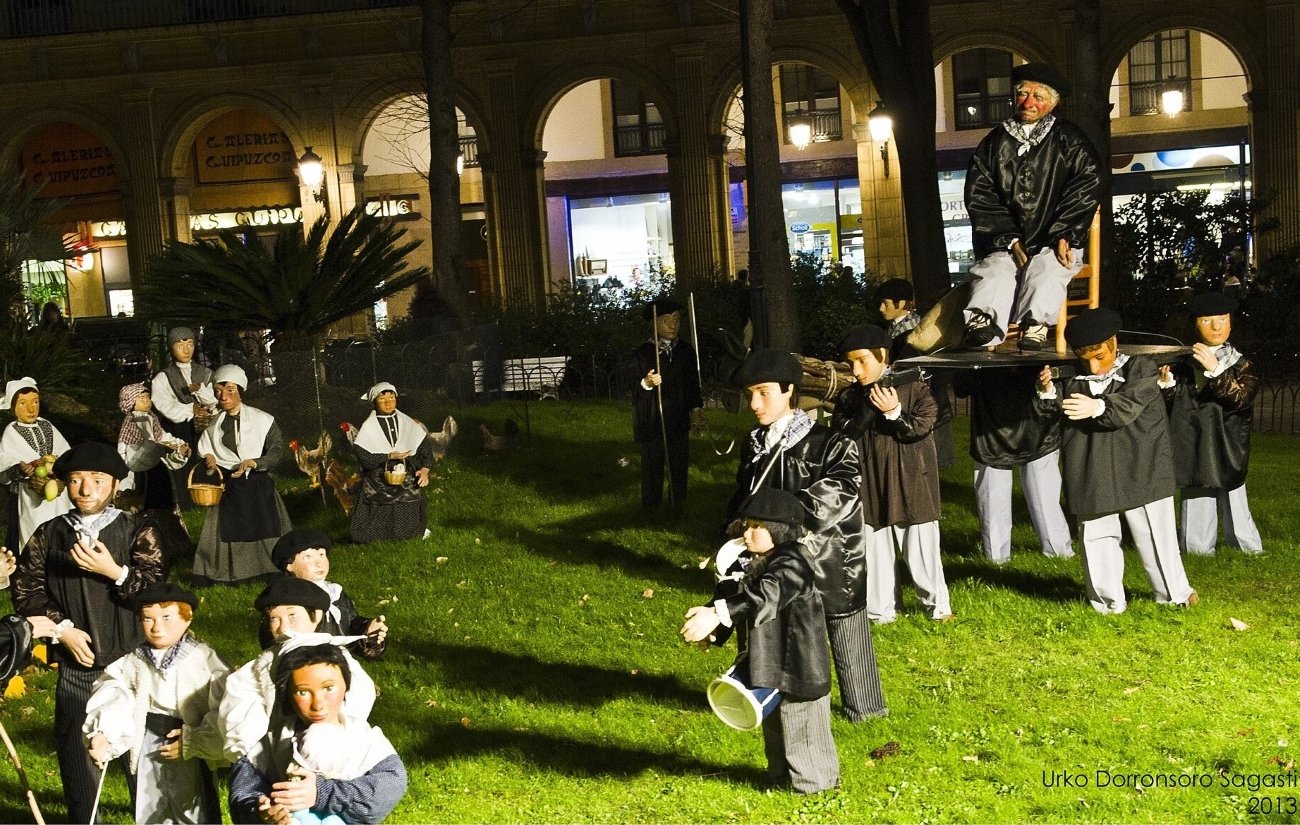
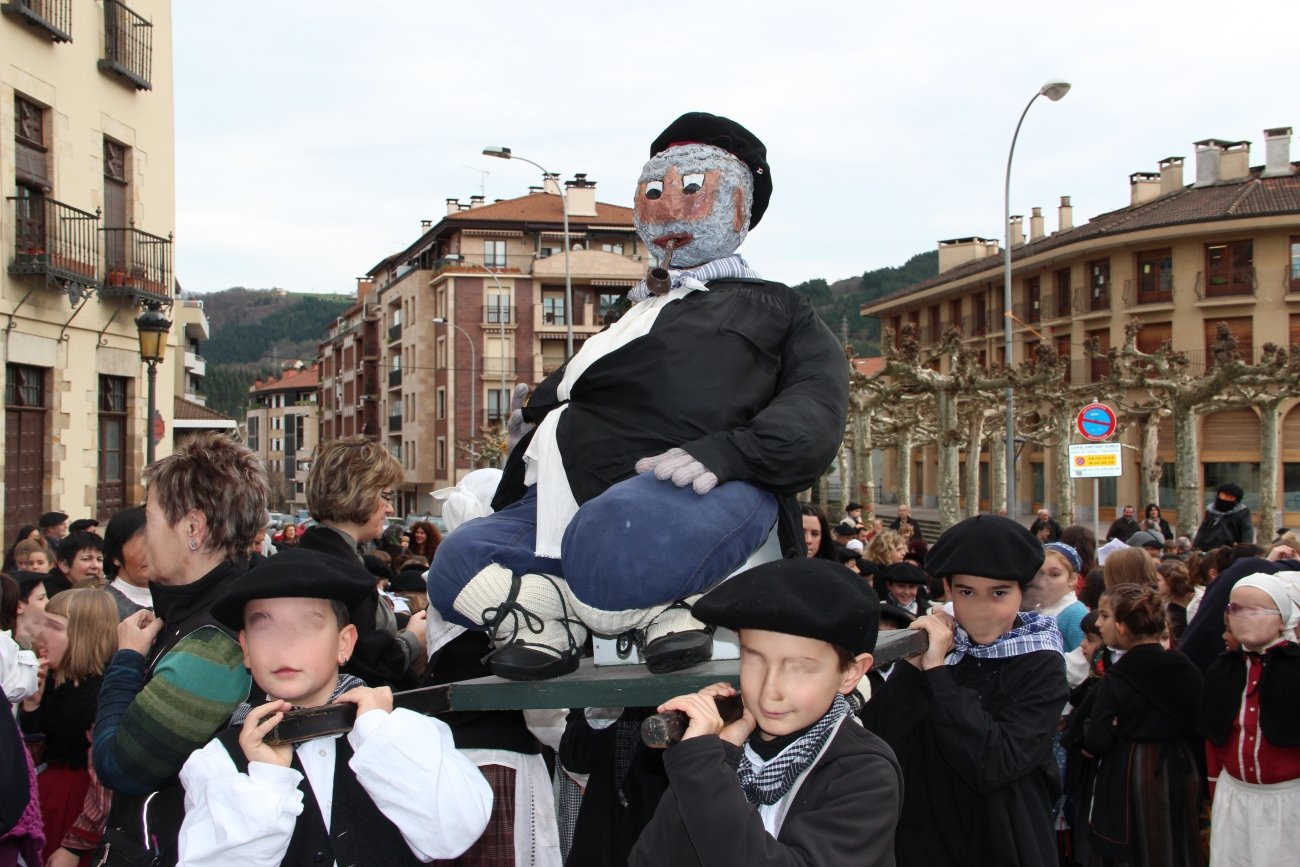
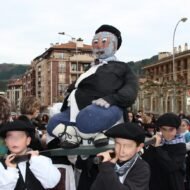
Olentzero is a big, scruffy, good-natured charcoal burner who lives in the mountains. On the night of 24 December, he comes down to the villages and towns to leave presents for children. He is usually shown in a Basque farmer’s beret and smock, with a soot-blackened face, a pipe, and a basket on his back, often with a wineskin and chestnuts.
His roots go back before Christianity, to the fires and festivities of the winter solstice. In some old legends, he is the last of the jentilak, the pagan giants of Basque mythology, the one who announced the birth of Christ to the others and so marked the end of their world. Over the centuries, the church turned him into the messenger of Christmas, and in the 20th century he became the kind, gift-bringing figure Basque children write to today. The most famous Basque Christmas carol is named after him: “Olentzero buru haundia…”
The tradition of carrying a figure of Olentzero through the streets started in the villages of northern Navarre, around Lesaka and Bera, and spread from there across the Basque Country. Since the 1990s, he has been joined by Mari Domingi, a woman in old Basque dress, whose name comes from an old Christmas song. Today, they bring the presents together.
→ Read more: Where Basque Myths Live
Where to see Olentzero
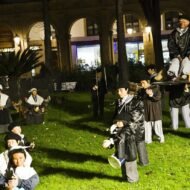
On 23 and 24 December, Olentzero and Mari Domingi arrive in every town and village in a kalejira, a street procession with music, children, txistu pipes and drums. In the bigger cities, they are joined by the Galtzagorris, little red-trousered helpers, and by figures from Basque mythology: the goddess Mari, the Lamia water spirit, the one-eyed giant Tartalo and the witches, the sorginak.
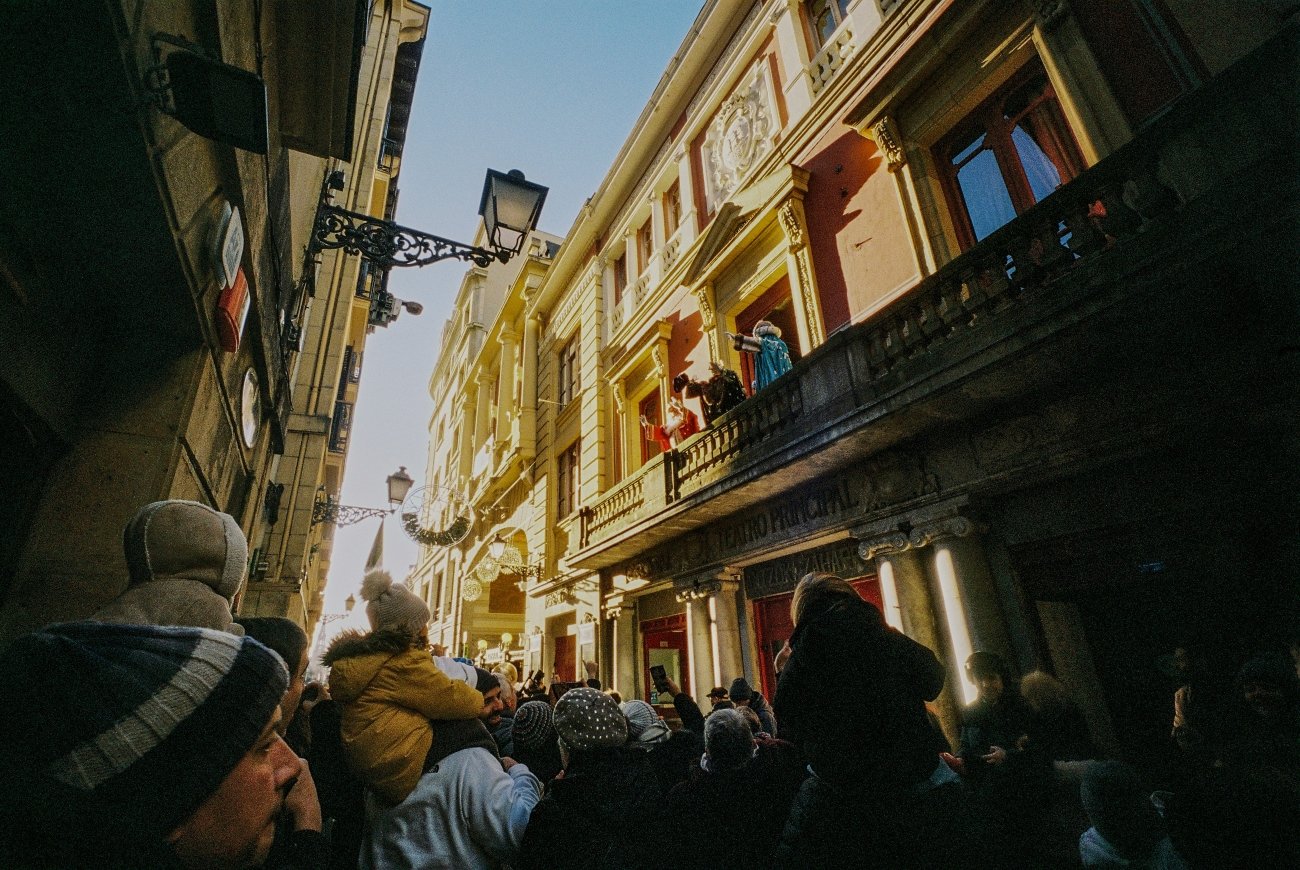
- Bilbao: a procession along the Gran Vía to the Teatro Arriaga on the evening of 23 December (in 2025, from 17:30). On the morning of 24 December, Olentzero and Mari Domingi receive children’s letters at the theatre.
- Donostia / San Sebastián: on 24 December, they arrive in the Plaza de la Constitución (in 2025, at noon) with a long procession of mythological figures.
- Pamplona / Iruña: processions through the Old Town and the neighbourhoods on 24 December, ending in the evening at the Town Hall square.
- Lesaka and Bera: for the older, village version, go to northern Navarre, where it began.
The Christmas table
On Christmas Eve (Gabon), Basque families gather for the most important meal of the year. Fish is traditional: sea bream (besugo), baked, or salt cod, with red cabbage and, in many homes, a starter of seafood. For dessert, Gipuzkoa has a speciality you will find almost nowhere else: intxaursaltsa, a creamy walnut pudding made with milk, sugar and cinnamon. Then turrón, and the singing of carols late into the night. On 25 December, the family meets again for a long lunch.
Then the Three Kings
Like the rest of Spain, the Basque Country also celebrates the Three Kings, with parades on the evening of 5 January and presents on the morning of the 6th. Many Basque children get presents twice: from Olentzero on 24 December, and from the Kings on 6 January.
When to go
21–24 December is the heart of it: Santo Tomás on the 21st (22nd in Arrasate), Olentzero on the 23rd and 24th. Stay through Christmas if you can, and leave after the Three Kings on 6 January if you want the whole season. Book early in Donostia, where hotels fill quickly and prices are high.
Weather in the Basque Country: mild for December, but wet. On the coast at Donostia, expect daytime highs of around 12 °C and lows of around 5 °C, with rain on about 17 days of the month and around 133 mm of rainfall. Inland in Pamplona and Vitoria-Gasteiz, it is colder, with frost on clear nights and sometimes snow on the hills. Bring an umbrella and waterproof shoes.
Getting there: fly to Bilbao, or to San Sebastián (Hondarribia) or Biarritz for Donostia. Bilbao and Donostia are about 1 hour 15 minutes apart by car or bus, and Pamplona about an hour from Donostia. For Lesaka and Bera, drive about 45 minutes from Donostia into the hills of northern Navarre.
Beyond the map
There is no snow, no reindeer and very little glitter in a Basque Christmas. Instead there is a farmer’s market in the rain, sausage in a maize cake, a carol about a man with a big head, and a charcoal burner from the mountains followed through the streets by witches and giants. It is one of the most local Christmases in Europe, and it is still alive because the Basques have never stopped celebrating it for themselves.
Read next: Where Basque Myths Live · December Festivals in Europe · Christmas in the Mountains · An Orthodox Christmas