

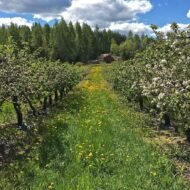
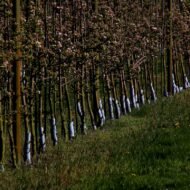
Apple trees below glaciers, cider farms on the edge of a fjord, an island of orchards in the Baltic. Five northern landscapes where fruit grows against the odds.
Fruit should not grow this far north. Yet along the fjords of western Norway, on the sandy coast of southern Sweden and on small islands in the Baltic, Nordic orchards have flourished for centuries. The reasons are local and precise: a fjord that holds the warmth of summer, a sea that delays the blossom until the frosts have passed, long days of northern light that let apples ripen slowly in cool nights.
The result is fruit with a flavour of its own: crisp, aromatic, sharp and sweet at once. Monks brought some of these orchards, farmers kept them alive, and today small cider makers are giving them a new life. These are five lost orchards of the north, from the fjords to the Baltic:
- the fruit villages of Hardanger, below glaciers and waterfalls
- the oldest orchards of the Sognefjord
- Österlen, Sweden’s apple coast
- Fejø, Denmark’s island of apples
- Lohja, Finland’s lakeside fruit town
1. Hardanger, Norway
60.33° N, 6.65° E · Lofthus, Sørfjorden, Vestland
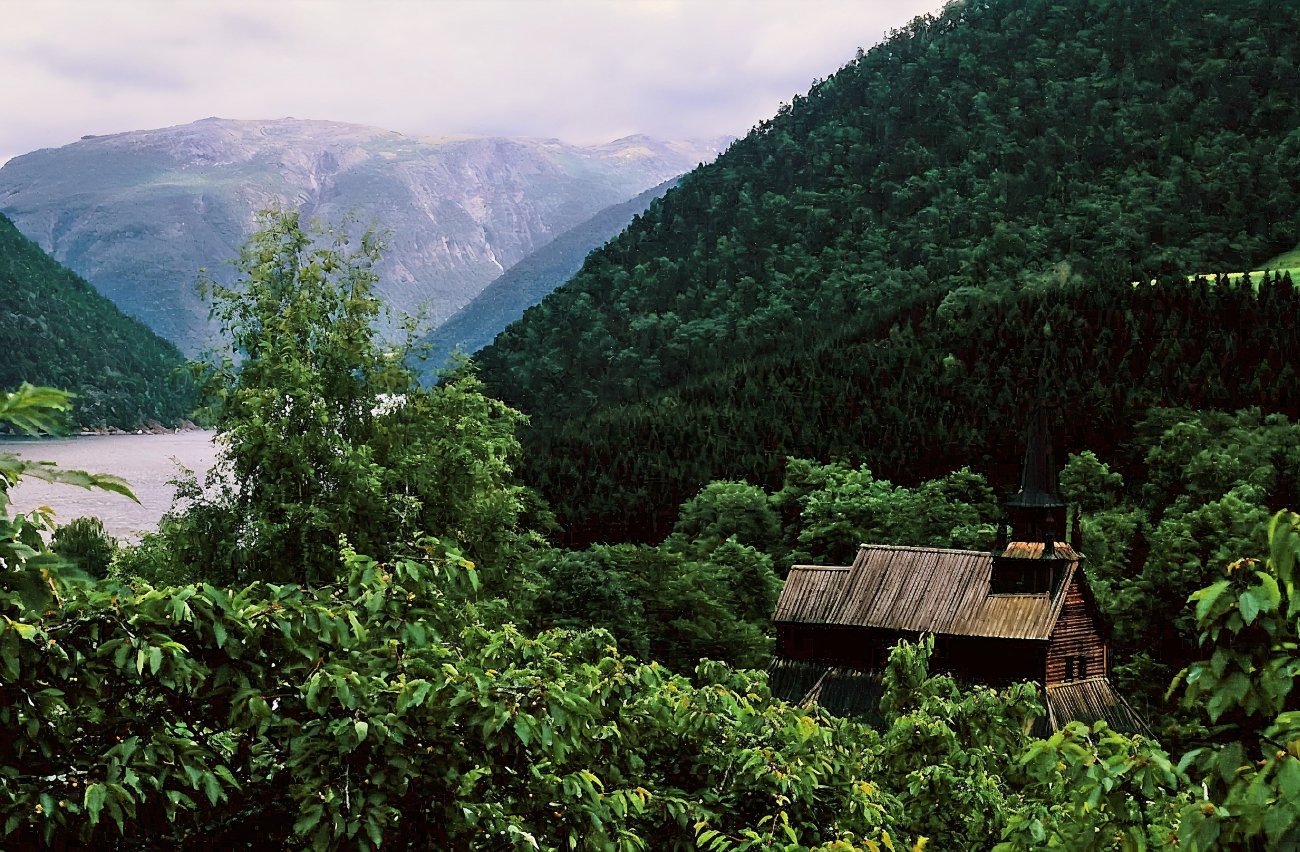
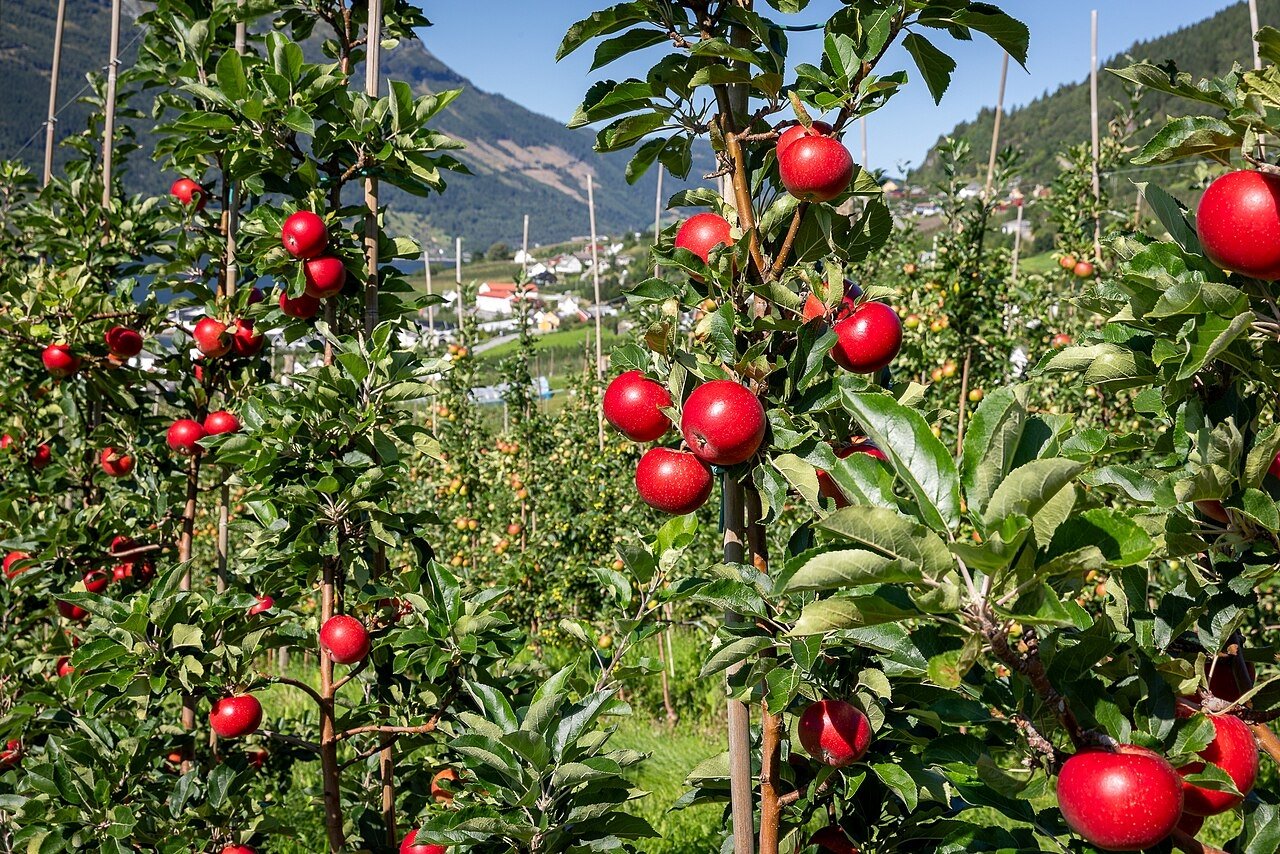
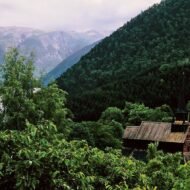
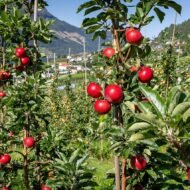
Hardanger is the most famous orchard landscape in Scandinavia, and still one of the most surprising. Along the shores of the Hardangerfjord and its arm, the Sørfjorden, apple, pear, plum and cherry trees grow in narrow strips between the water and steep mountainsides, with the Folgefonna glacier above and waterfalls falling past the farms.
Tradition says that monks, who came to Hardanger in the 13th century, brought the knowledge of fruit growing and cider making. Under the slopes of Ullensvang, the 616 stone “Monks’ Steps” still climb the mountain above the orchards. Today Cider from Hardanger and Apple Juice from Hardanger have protected geographical status, and small family farms produce some of the most interesting ciders in Europe. In May and June, the fjord turns white with blossom; in autumn, the apples are picked by hand.
- Go for: the orchard villages of Lofthus, Ullensvang and Utne, the cider route at Ulvik, farm tastings, the Monks’ Steps, and the blossom in May.
- When: May to early June for the blossom; September and October for the harvest; tastings at many farms through the season.
- Getting there: about 2 hours 30 minutes by car from Bergen. Express buses and boats connect the main fjord villages in summer.
2. The Sognefjord, Norway
61.21° N, 6.53° E · Balestrand, Sognefjord, Vestland
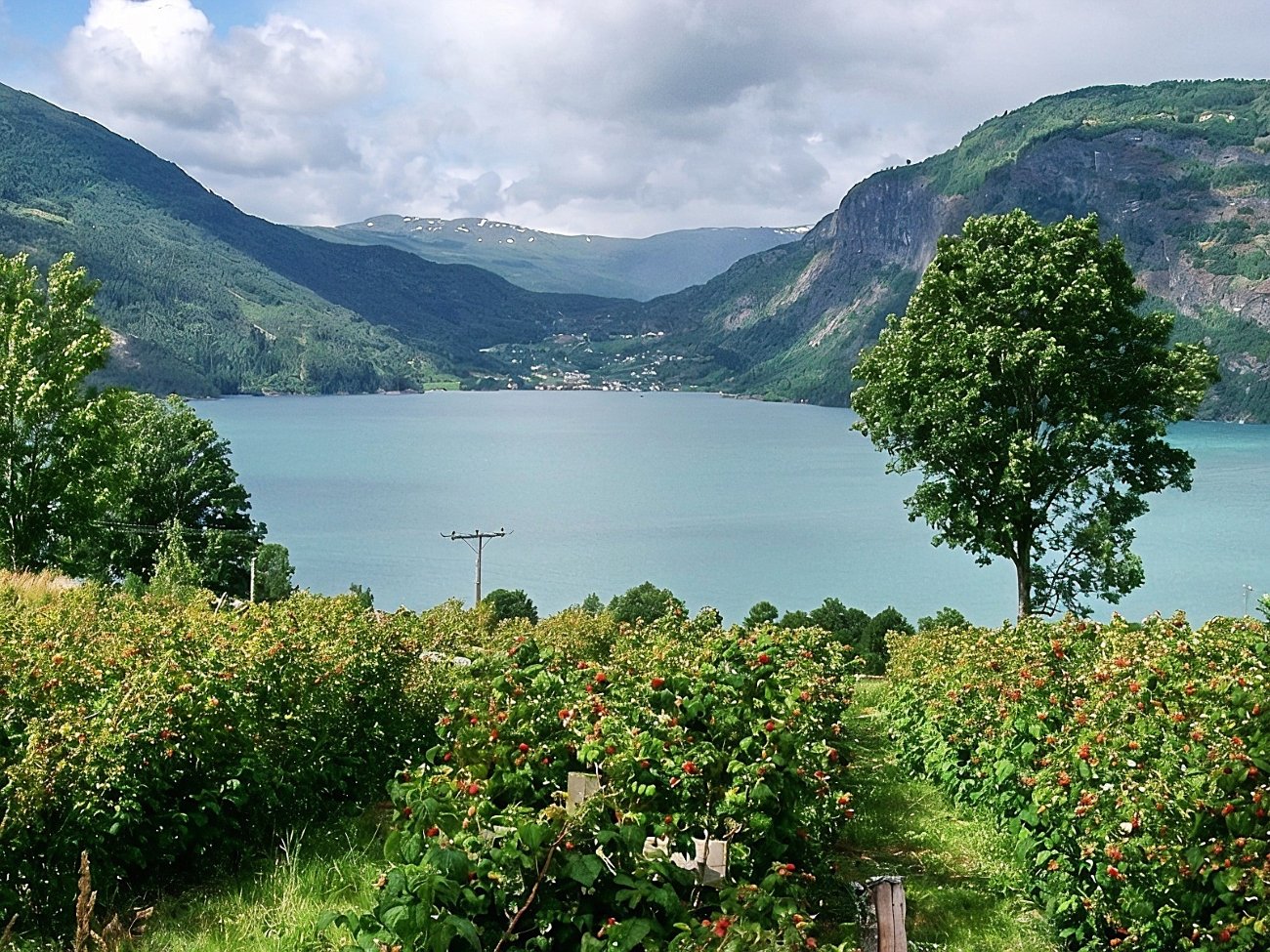
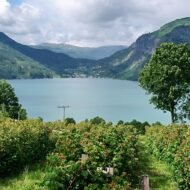
North of Hardanger, Norway’s longest and deepest fjord hides an even older fruit-growing tradition. Fruit has been grown along the Sognefjord since the 12th century, and Sogn is one of Norway’s oldest orchard regions. An orchard in Vik is mentioned in the medieval Sverre’s saga, around the year 1201.
The best place to taste it is Balestrand, a village of old wooden villas on the fjord, where a cider house grows more than a hundred varieties of fruit in an organic orchard. Along the fjord, in Slinde, Kaupanger and Fimreite, small farms produce cider, apple juice and fruit wines, some of them reached by boat in summer.
- Go for: cider tastings in Balestrand, orchard farms along the fjord, the wooden architecture of Balestrand, and boat trips on the Sognefjord.
- When: May for the blossom, August to October for fruit and harvest; summer for the fjord boats.
- Getting there: about 4 hours by car from Bergen, or by express boat along the fjord in around 4 hours.
3. Österlen, Sweden
55.68° N, 14.23° E · Kivik, Österlen, Skåne
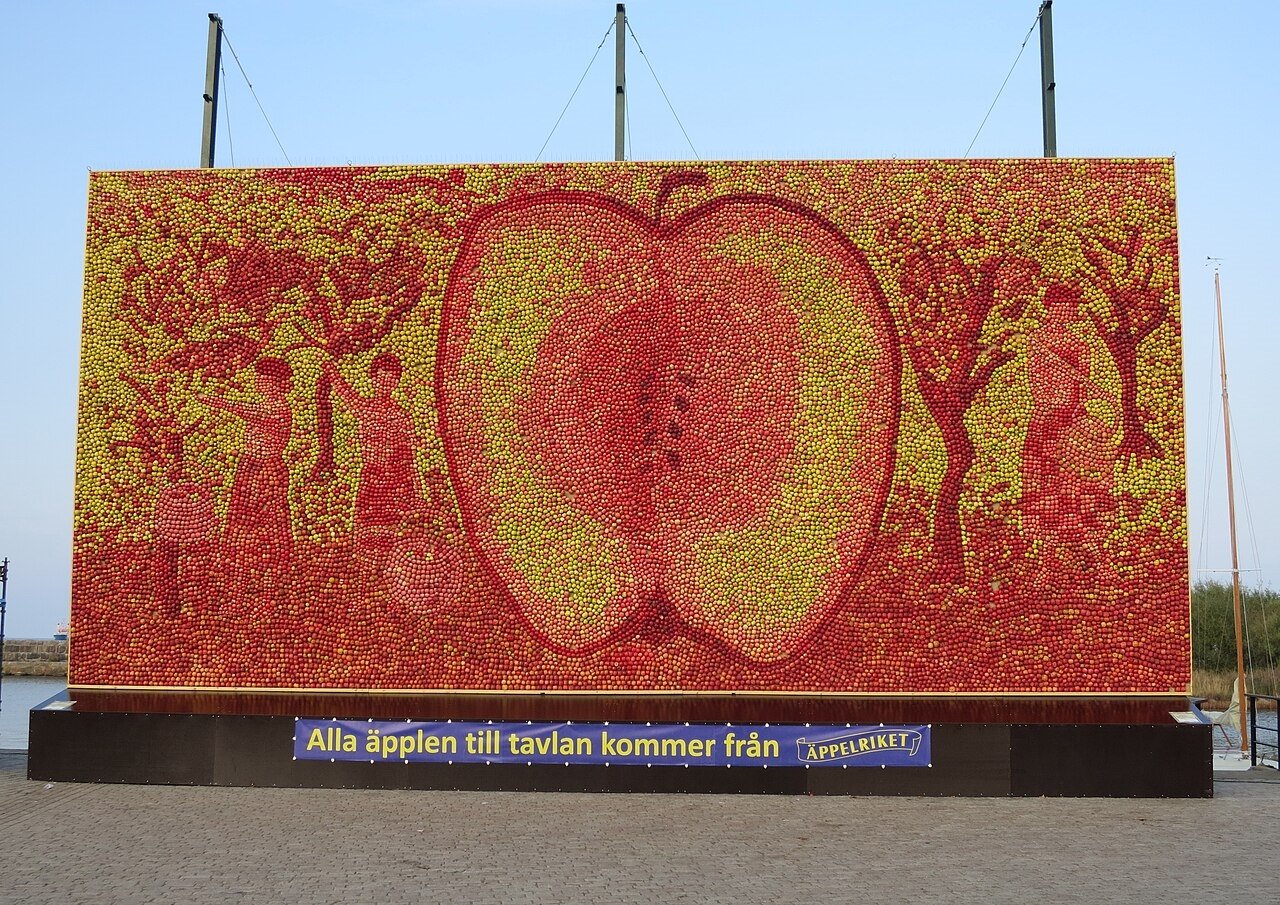
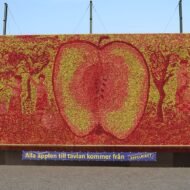
In the south-eastern corner of Sweden, Österlen is a land of rolling fields, white churches and long sandy beaches facing the Baltic. It is also Sweden’s apple coast. Around 90 percent of Sweden’s apples are grown in Skåne, much of them here.
The conditions are just right: lean, sandy soil, a cold sea that delays the blossom until the risk of frost has passed, and warm summers followed by cool autumn nights that let the fruit ripen slowly. In Kivik, a fishing village on the coast, Henric Åkesson planted the first trees in 1888, often described as Sweden’s first commercial orchard. His family’s business, Kiviks Musteri, now grows around 50 apple varieties and works to preserve the old ones.
- Go for: the orchards of Kivik, apple tastings and farm shops, the Bronze Age King’s Grave in Kivik, the stone ship of Ale’s Stones near Kåseberga, and the beaches of Österlen.
- When: May for the blossom, September and October for the apple harvest, when Österlen is at its most beautiful.
- Getting there: about 1 hour 15 minutes by car from Malmö; trains run to Simrishamn, then buses up the coast.
4. Fejø, Denmark
54.95° N, 11.43° E · Fejø, north of Lolland, Smålandsfarvandet
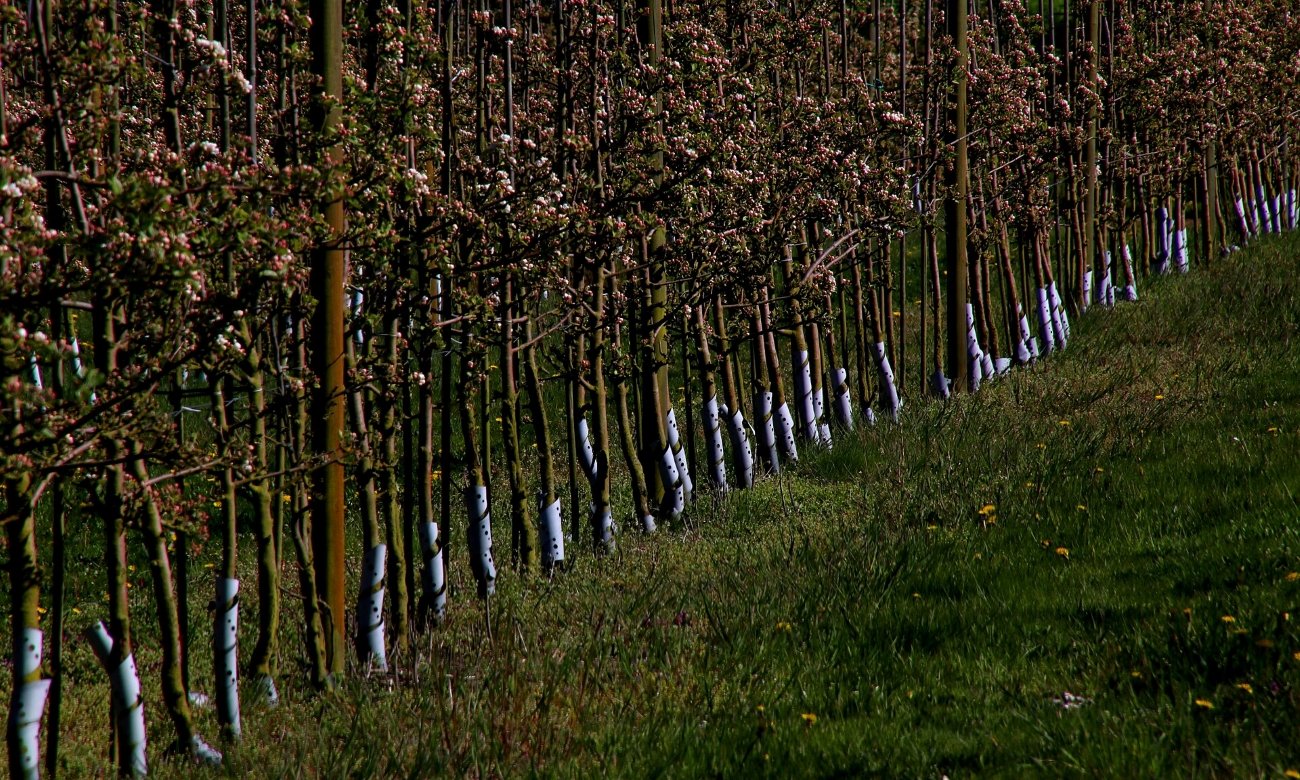
Fejø is a small island, just 16 square kilometres, in the sheltered waters north of Lolland. Around 600 people live here year-round, and the island is known throughout Denmark for one thing: apples. A mild microclimate, with few late frosts and a long growing season, has made it one of the country’s great fruit islands.
The pace is slow. Narrow roads run between orchards, farmhouses and the sea, and in autumn farm stands sell apples, pears and juice by the roadside. It is a perfect place to cycle, and to see the quiet, rural side of Denmark that most visitors never reach.
- Go for: cycling between the orchards, farm stands and fruit plantations, the island’s beaches and harbours, and Danish island life at its quietest.
- When: May for the blossom, August to October for the fruit.
- Getting there: about 1 hour 45 minutes by car from Copenhagen to Kragenæs on Lolland, then a 15-minute ferry, which runs about 20 times a day.
5. Lohja, Finland
60.25° N, 24.07° E · Lohja, Lake Lohjanjärvi, Uusimaa
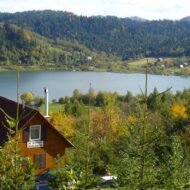
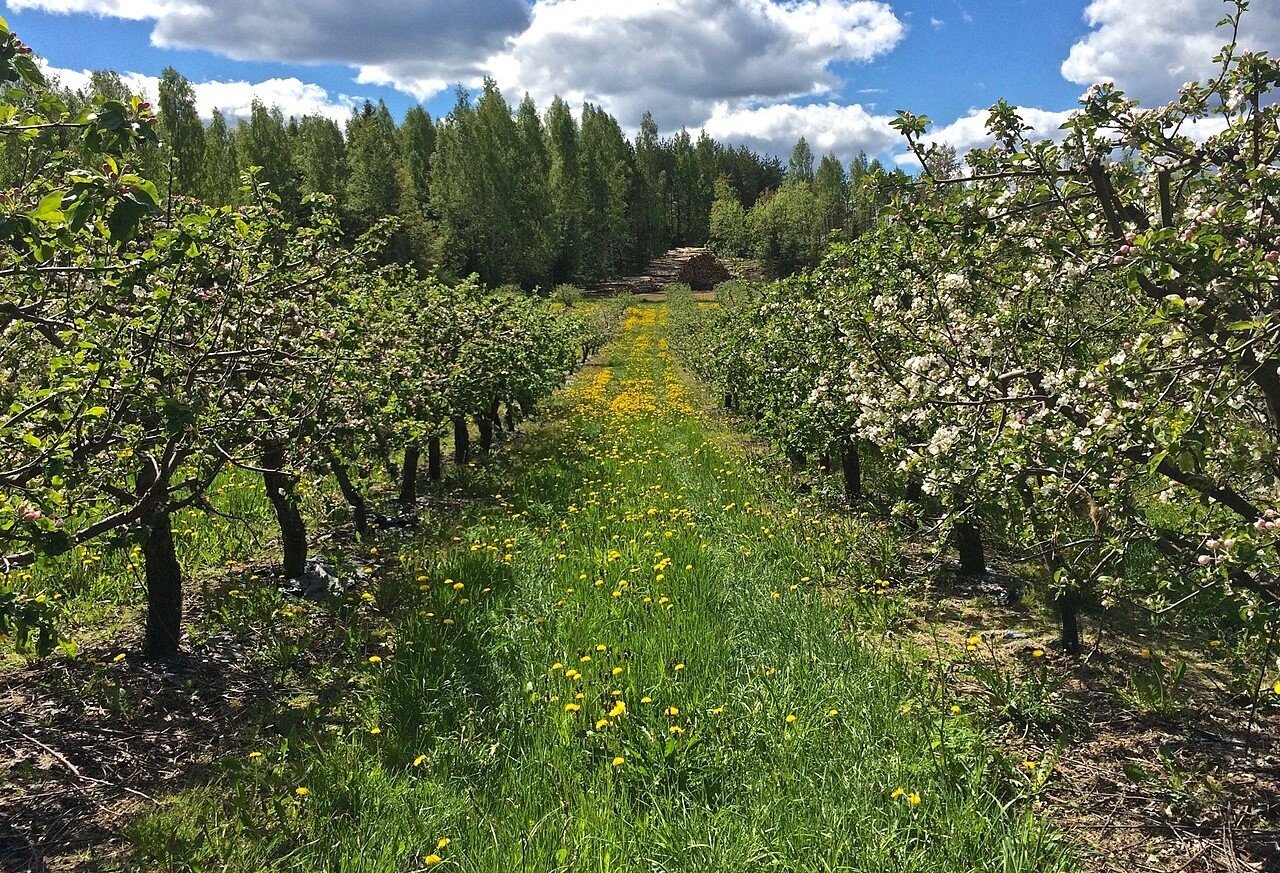
An hour west of Helsinki, the town of Lohja lies on the shores of Lake Lohjanjärvi, one of the largest lakes in southern Finland. Its climate and soil are unusually good for fruit, and apples have long been one of the town’s symbols, alongside the limestone that was quarried here for centuries.
Lohja has a long tradition of horticulture and market gardening, and its orchards around the lake produce some of the best apples in Finland. The town’s 15th-century Gothic church of St. Lawrence is one of the finest medieval churches in the country, and the Tytyri limestone mine museum lies 100 metres underground.
- Go for: the orchards and farm shops around the lake, the medieval church of St. Lawrence, the Tytyri mine museum, and the lakeside landscape.
- When: May for the blossom; September for the harvest and autumn colour.
- Getting there: about 50 kilometres from Helsinki, with frequent buses from the Kamppi terminal.
How to visit northern orchards
- Visit in May or September. Blossom and harvest are the two great seasons; in between, many farms are quiet.
- Book tastings in advance. Many cider farms are small family businesses and open by appointment.
- Buy at the farm gate. Roadside stands and farm shops sell the freshest fruit and juice.
- Respect the trees. Never pick fruit without asking, even if the orchard seems open.
- Mind the alcohol rules. In Norway and Sweden, cider and alcohol sales follow strict local rules; farms can usually sell their own cider on site.
Frequently asked questions
Why can fruit grow so far north? In places like Hardanger and the Sognefjord, the fjords store summer warmth and protect the orchards from frost. On Österlen and Fejø, the sea delays the blossom until the frosts have passed, while long summer days help the fruit ripen.
What is Hardanger cider? Cider made from apples grown in the Hardanger region of western Norway. It has protected geographical status, and is known for its fresh, aromatic flavour.
When is apple blossom season in Norway? In Hardanger and the Sognefjord, the orchards usually blossom from mid-May to early June.
Where are most of Sweden’s apples grown? In Skåne, in southern Sweden, which produces around 90 percent of the country’s apples, especially in Österlen.
Beyond the map
These orchards are small miracles of geography: a fjord, a sea, a lake, and generations of farmers who learned exactly where a tree could survive. Visit in May, when the blossom covers the slopes, or in autumn, when the apples are picked by hand, and taste a north that most travellers never imagine.
Read next: Lost Chestnut Valleys of Europe · Lost Olive Valleys of Europe
Carry the season with you: Beyond the Map Field Guides
Autumn Photography in Europe — The Beyond the Map Premium Guide Orchards along the fjords, apples against the Baltic light, the colours of a northern autumn.
Hidden Europe — The Beyond the Map Map Every orchard in this article, and hundreds more places, on one map of the Europe most travellers never see.
Explore more: Seasons · Slow Escapes · Hidden Gems