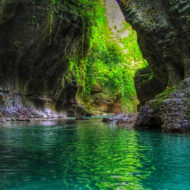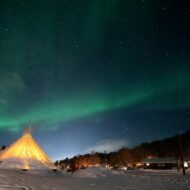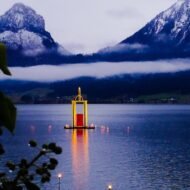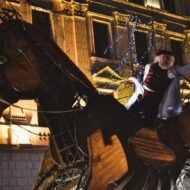


A medieval town in Tyrol lit only by candles, torches and open fires. A great abbey in the Swiss mountains with a Christmas market at its feet. A silver-mining town in Slovakia with its own secret Christmas drink. Ski trails across Belgium’s highest plateau. A forest railway into the beech mountains of northern Hungary. Five more mountain places for a quiet, old-fashioned Christmas.
Our first Christmas in the Mountains took you to Seiffen, Røros, Maramureș, Glurns and the Val d’Aran. Europe’s mountains have many more Christmases to offer, in small towns and villages where Advent is still about light in the dark, music in the streets and a long walk to church through the snow.
Here are five more, from the Alps to the Ardennes and the Carpathian foothills, with their 2026 dates.
| Place | Mountains | Country | Why go at Christmas | |
|---|---|---|---|---|
| 1 | Rattenberg | Tyrolean Alps | Austria | Austria’s smallest town, lit by candles, torches and fire |
| 2 | Einsiedeln | Swiss Prealps | Switzerland | A Christmas market at the foot of a great Baroque abbey |
| 3 | Banská Štiavnica | Štiavnica Mountains | Slovakia | A silver-mining town with a miners’ Christmas fair |
| 4 | High Fens | Ardennes highlands | Belgium | Belgium’s highest plateau, snow trails and nearby Christmas markets |
| 5 | Bükk | Bükk Mountains | Hungary | A forest railway, a Santa train and Eger’s Advent below the castle |
1. Rattenberg, Austria
47.44° N, 11.89° E · Inn Valley, Tyrol
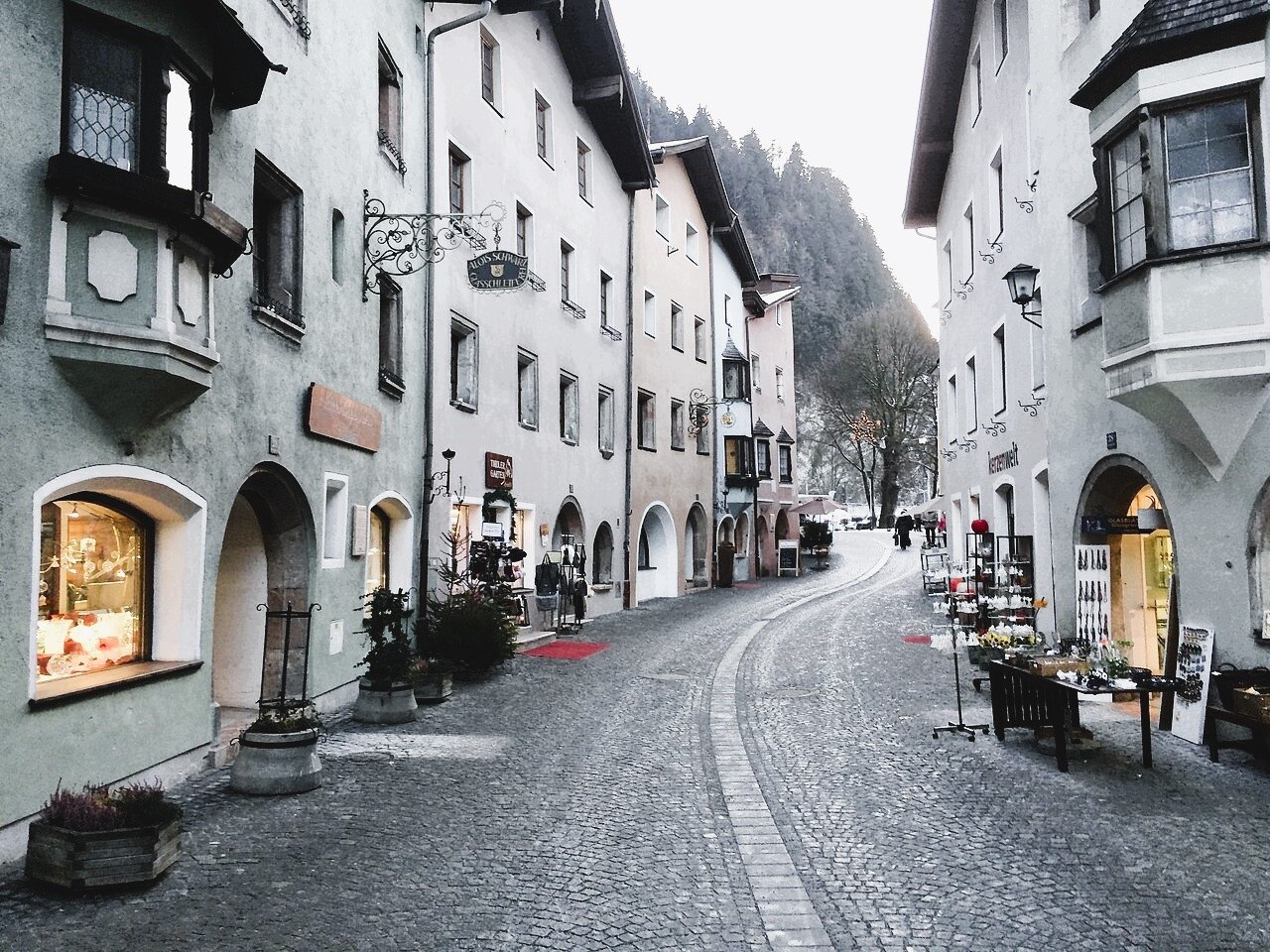
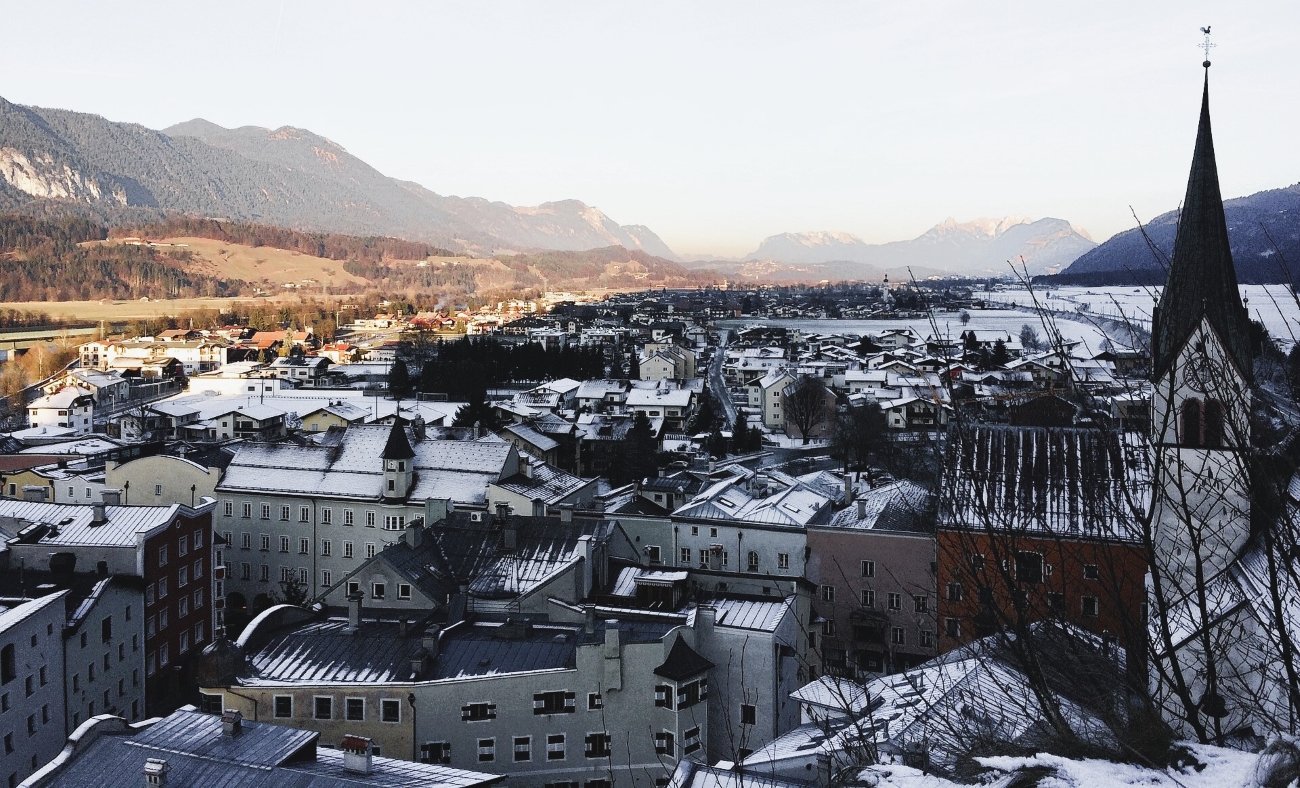
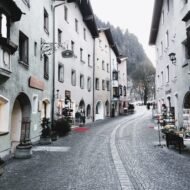
Rattenberg is Austria’s smallest town: a single medieval street of painted houses squeezed between the river Inn and a steep castle hill. In Advent, it does something most Christmas markets don’t. It turns down the electric lights, and the whole town is lit by candles in the windows, torches and open fires.
There are very few market stalls. Instead, the Rattenberger Advent is about stillness: wind players on the corners, Advent music drifting out of the shops, the Anklöpfler (Tyrolean carollers who act out Mary and Joseph’s search for shelter) walking through the town on Sundays, and a glass of the local Advent wine with elderflower, served in the town’s own Advent glass. On Advent Saturdays, a little road train links Rattenberg with the Christmas market in neighbouring Brixlegg.
2026 dates: 20 November – 20 December, Fridays, Saturdays and Sundays. “Silent Advent” on Tuesday 8 December from 15:00, with no stage programme, only carollers and wind players. Free entry.
Weather in Rattenberg: cold and often foggy in the Inn Valley at about 510 metres December days are around freezing, with snow on the mountains above.
Getting there: by train to Brixlegg or Rattenberg-Kramsach, about 40 minutes from Innsbruck, Rattenberg is in the Alpbachtal region.
2. Einsiedeln, Switzerland
47.13° N, 8.75° E · Canton of Schwyz
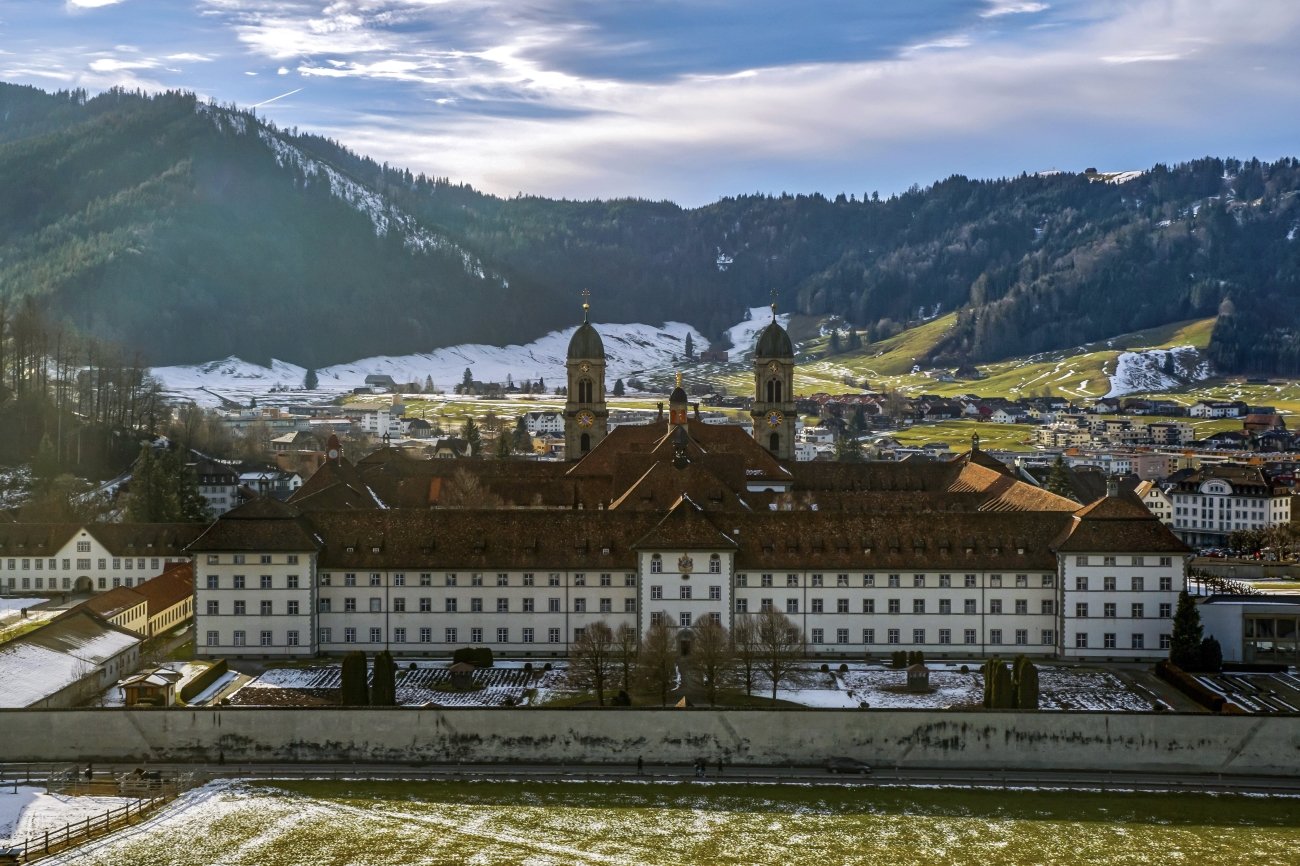
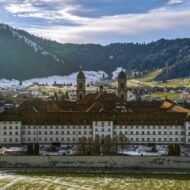
In a high valley south of Lake Zurich, the Benedictine Abbey of Einsiedeln rises over its little town, one of the most important pilgrimage sites in Europe, home of the Black Madonna, and on the old pilgrims’ way to Santiago.
For ten days at the start of Advent, the Einsiedler Weihnachtsmarkt spreads from the great square in front of the abbey all the way down the main street, with more than 145 stalls, the abbey’s twin towers lit above. In town, the Diorama Bethlehem claims to be the world’s largest nativity scene. If you come back for Christmas itself, the abbey celebrates Christmas Eve and Christmas Day with its own orchestra and choir.
2026 dates: Christmas market, 27 November – 6 December (opening day from 17:00 then 11:00–19:30, Fridays and Saturdays until 21:00). Free entry.
Weather in Einsiedeln: cold and snowy at about 880 metres; December days are around or just below freezing.
Getting there: by S-Bahn from Zurich (about 50 minutes) the market starts a few minutes’ walk from the station.
3. Banská Štiavnica, Slovakia
48.46° N, 18.90° E · Štiavnica Mountains, central Slovakia
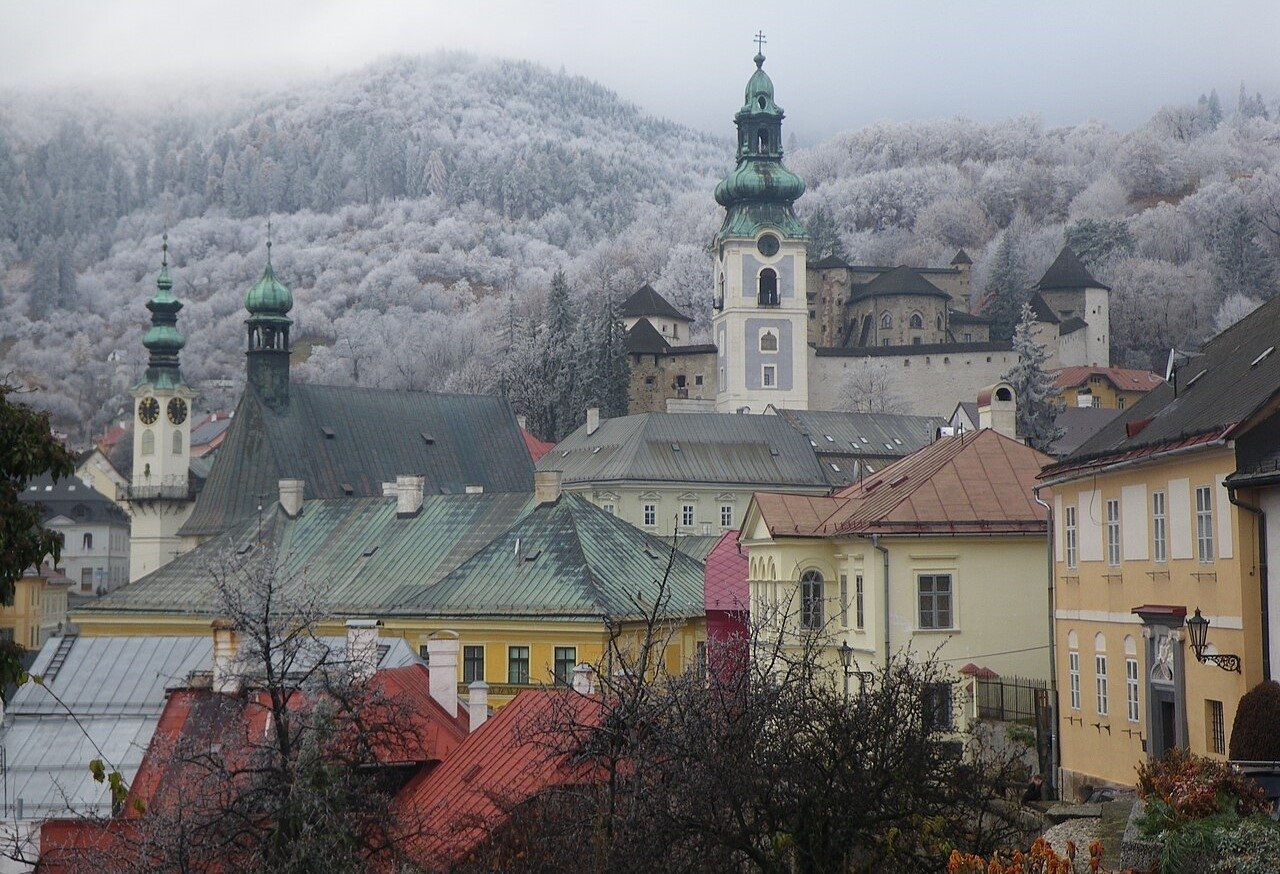
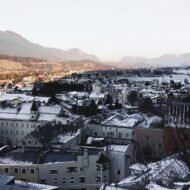
Built in the crater of an ancient volcano, Banská Štiavnica was once one of the richest silver-mining towns in Europe. Its steep lanes, churches, castles and miners’ houses are a UNESCO World Heritage Site, and in winter, the town is, as the local tourism office says, “quiet, romantic and peaceful”, its mountains still almost undiscovered.
Christmas here carries the memory of the miners. In mining families, Christmas was less about presents and more about spiritual and protective customs, meant to keep the men safe underground. Each December, the Štjavnycký vjanočný jarmok (Štiavnica Christmas fair) fills the courtyards of the Kammerhof, the old mining chamber, with crafts, old customs and the smell of sausages, cabbage soup and krampampuľa: a hot drink of rum and wine with Christmas spices, whose recipe, locals say, is a secret.
2026 dates: the Christmas fair usually takes place over two days in mid-December (in 2025, 12–13 December, its 20th edition) check banskastiavnica.sk.
Weather in Banská Štiavnica: a cold mountain climate at about 600 metres December days are around freezing, with frequent snow.
Getting there: about 2.5 hours by car from Bratislava or Budapest trains run via Hronská Dúbrava.
4. The High Fens and the Ardennes Highlands, Belgium
50.50° N, 6.09° E · East Belgium, near the German border
Belgium is not a country people think of as mountainous, but in its far east, the land rises into the High Fens (Hautes Fagnes in French, Hohes Venn in German): a wild, windswept plateau of peat bog, heath and spruce forest. Here is the Signal de Botrange, at 694 metres the highest point in Belgium, and here, in early December, the first snow usually arrives before it reaches anywhere else in the country.
When it snows, the plateau becomes Belgium’s winter playground. Cross-country ski trails start from Botrange, where the nature centre rents out skis and sledges, and wooden boardwalks cross the frozen fens towards the old refuge of Baraque Michel. Come down in the evening to the towns below. Malmedy holds its Christmas market, Les Féeries de l’Hiver, for more than a month, and its Christmas parade on 20 December. Just across the German border, the half-timbered Eifel town of Monschau holds one of the most atmospheric Christmas markets in the region.
Note: a large wildfire burned around 3,000 hectares of the High Fens in August 2026. Check with the Botrange nature centre which trails are open before you go.
2026 dates: Malmedy Christmas market (Les Féeries de l’Hiver), late November to early January; Malmedy Christmas parade, 20 December Monschau Christmas market, Advent weekends (Friday–Sunday), 27 November – 20 December. Cross-country skiing depends on snow check the Ostbelgien snow report.
Weather in the High Fens: the coldest and snowiest part of Belgium, often around or below freezing in December, with fog, wind and sudden snowfalls on the plateau.
Getting there: about 1.5–2 hours by car from Brussels, Malmedy is about 50 minutes from Liège. Buses connect Eupen and Malmedy with Botrange.
5. Bükk Mountains, Hungary
48.07° N, 20.48° E · Northern Hungary, between Eger and Miskolc
In the north of Hungary, the Bükk (the name means “beech”) rises in a limestone plateau that is, on average, the highest in the country, mostly between 700 and 800 metres: beech forest, white rock edges, caves and castle ruins. Most of it is Bükk National Park, one of Hungary’s first national parks, and in winter, under snow and frost, it feels much further from the plains than it is.
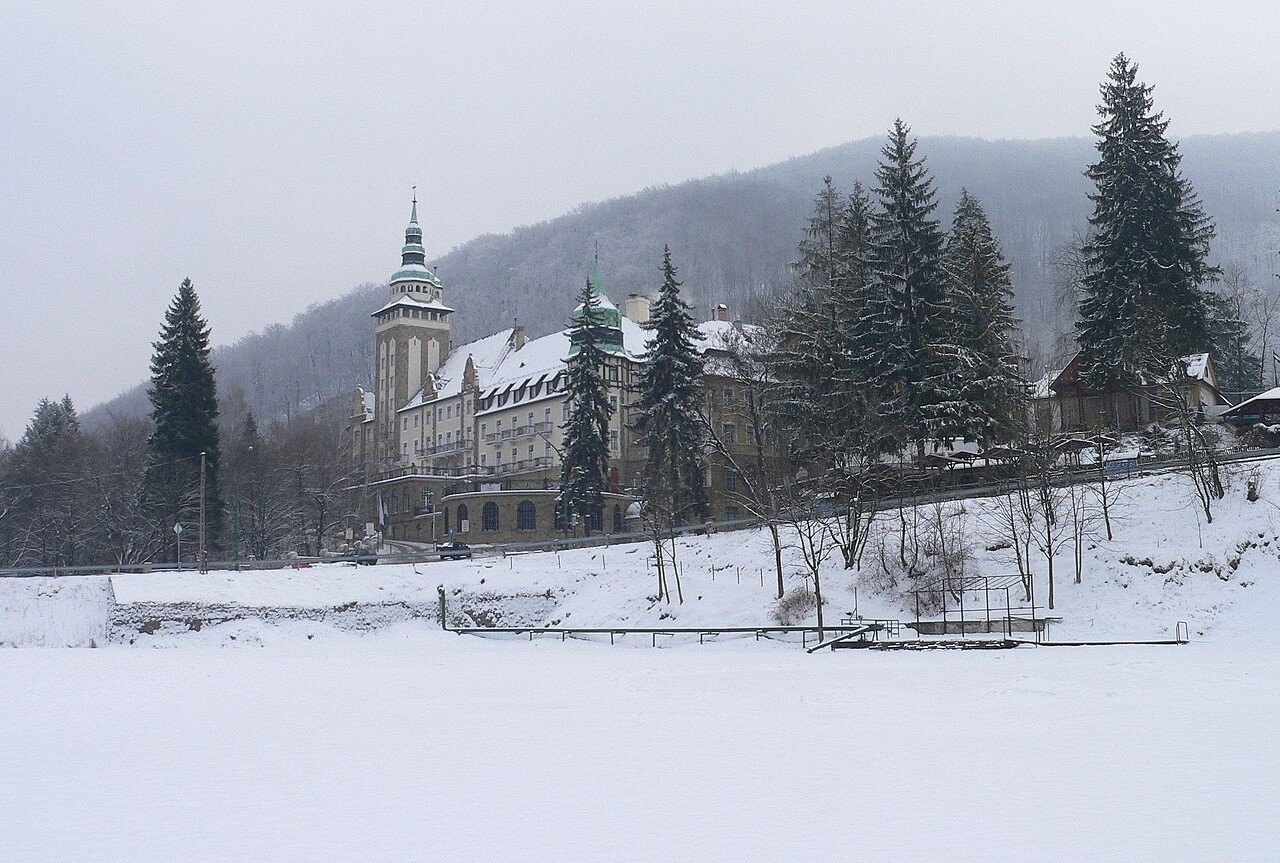
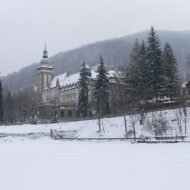
The Bükk’s Christmas is shared between two towns and a forest. To the east, the narrow-gauge Lillafüred forest railway climbs from Miskolc into the mountains, to Lake Hámori, Hungary’s highest waterfall and the turreted Palace Hotel. In late November and early December, a Santa train runs on the Diósgyőr line to a little “fairy-tale kingdom” in Lillafüred. To the south, at the foot of the mountains, the old town of Eger holds its Advent market on Dobó Square, below the castle, with Advent cellar tours in the wine cellars of the Valley of the Beautiful Woman. To the north, Szilvásvárad is the gateway to the Szalajka Valley, with its trout stream, waterfalls and forest railway, beautiful in the snow.
2026 dates: Eger Advent, 27 November – 24 December (Dobó Square, free) Diósgyőr Santa train to Lillafüred, 26 November – 13 December.
Weather in the Bükk: cooler and moister than the Hungarian plains, December is usually around or below freezing, with ice and fog on the plateau. Days are short, with sunset around 16:00.
Getting there: Eger is about 1.5–2 hours from Budapest by train or car Miskolc about 2 hours. In winter, some forest roads and trails can be icy, and some areas close on hunting days.
Beyond the map
These are not places that perform Christmas for visitors. They light their candles, sing their own carols, cook their own Christmas Eve food and walk to their own churches, as they have done for generations. Come quietly, stay a few nights, and you will be welcome to share it.
Read next: Christmas in the Mountains · Christmas by the Lake · Christmas in the Forest · Christmas in the Arctic Circle