

On a quiet island shore in the Baltic, two ships full of fallen warriors lay hidden for thirteen centuries. When they were found, they changed the story of when the Viking Age began.
In 2008, workers digging during roadside earthworks in the village of Salme, on the Estonian island of Saaremaa, struck something unexpected: human bones, iron rivets and the outline of a wooden ship. Two years later, a second, larger ship was found a few dozen metres away. Inside the two vessels lay the remains of at least 41 men, buried with their swords, their dogs and their hunting hawks.
They had died around the middle of the 8th century, decades before 793, when the raid on the monastery of Lindisfarne in England is usually said to mark the start of the Viking Age. The men of Salme were Scandinavians, and they had sailed across the Baltic long before the Vikings, officially, existed.
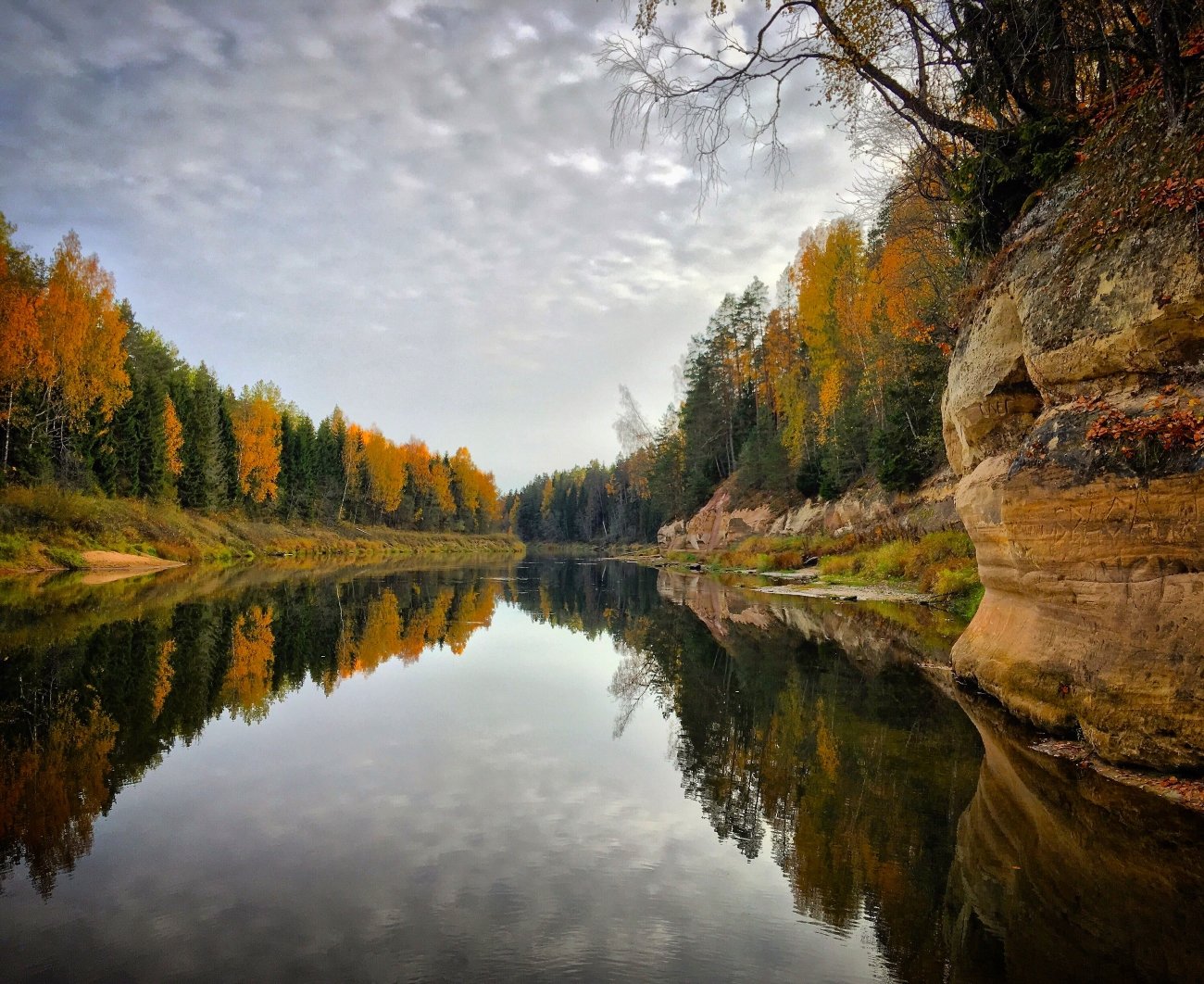
Today, Salme is a small village at the neck of the Sõrve peninsula, with a river, a few farms and a long, empty shore. Most travellers drive straight past. But this is one of the most important archaeological sites in northern Europe, and the island around it is one of the Baltic’s most quietly beautiful places.
At a glance
| Where | Salme, south-west Saaremaa, Estonia, at the base of the Sõrve peninsula |
| The find | Two ship burials, found in 2008 and 2010 |
| Dated | Burials around AD 700–750; ships built around AD 650–700 |
| The dead | At least 41 men, most aged 30–40, killed in battle |
| Where from | Central Sweden, according to isotope analysis of their teeth |
| On site today | Concrete outlines of the ships, an information board, and three wooden warrior statues by the river |
| Nearest town | Kuressaare, about 20 minutes by car |
Two ships on an ancient shore
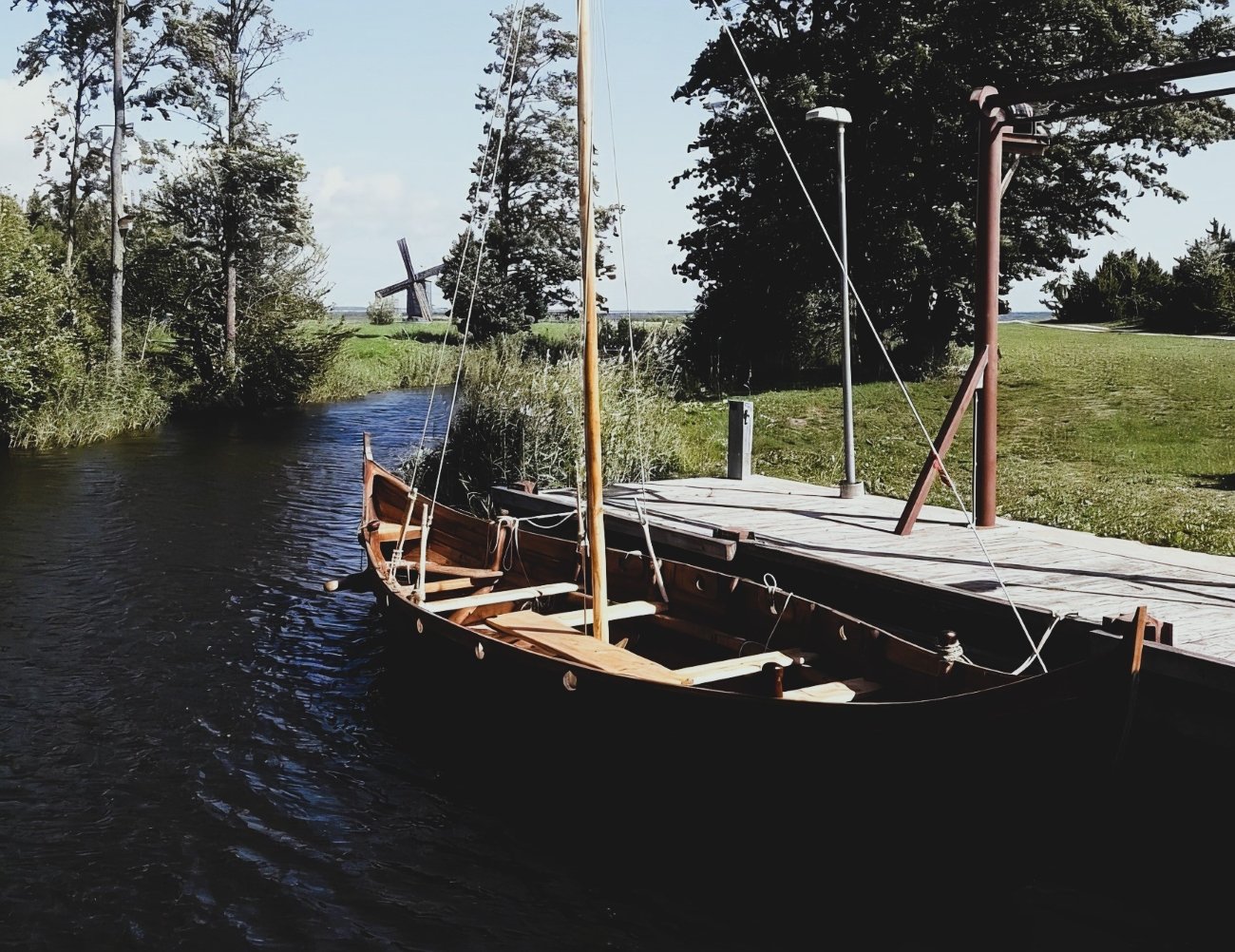
The ships of Salme were built in the Scandinavian way: clinker-built, with overlapping planks fastened by iron rivets. The smaller one was about 11.5 metres long. The larger was more than 17 metres long and 3 metres wide, and the pattern of strong rivets along its hull suggests that it carried a sail. If so, it is the oldest known sailing ship in the Baltic Sea region, and one of the oldest in the Nordic world.
Both ships had been patched and repaired for decades before their last voyage. When they were pulled ashore at Salme, the sea came up much higher than it does today. As the land of Saaremaa slowly rose after the Ice Age, the old coastline moved away. The burial site now lies about 230 metres from the sea, and 4 metres above it.
The warriors of Salme
In the smaller ship lay seven men. In the larger, at least 34 were laid in four careful layers. Most were in their thirties, and most had died violently: the bones carry the marks of blades and arrows. Arrowheads were found lodged in the ships’ sides, among them three-pointed types used to carry fire.
The grave goods tell of people of rank. Archaeologists found more than 40 swords, some with bronze hilts, along with spearheads, shields, knives, an ornamented bone comb and a bear-claw necklace. There were hundreds of gaming pieces carved from whale bone and antler, and six dice. Two dogs had been killed and laid with the dead, and there were the bones of hawks, used for falconry.
Science has added more. Isotopes in the men’s teeth point to central Sweden as their home. DNA showed that four of the warriors were brothers, and that a fifth man was probably a close relative, perhaps their uncle.
A raid, or a mission?
What happened at Salme is still debated. The first explanation was a raid gone wrong: a Scandinavian war party attacked the island, met the ships of its Estonian inhabitants, lost many men to archers, and was forced ashore. The survivors, or perhaps the islanders themselves, buried the dead in their ships.
But the swords with bronze hilts, the hawks and the hunting dogs suggest something else. These were not ordinary raiders. They may have been noblemen on a voyage of diplomacy, travelling to forge an alliance, who were attacked on the way.
There is also an older echo. The Icelandic historian Snorri Sturluson wrote of a Swedish king, Ingvar, who was killed in Estonia while raiding, and a medieval Norwegian chronicle places his death on Saaremaa itself. Whether the warriors of Salme have anything to do with that legend, no one can say. But the story fits the place.
Visiting Salme today
The ships themselves are not on display at the site. After excavation, the finds went to the Saaremaa Museum, and the exhibition Vikings Before Vikings, created by the museum, has since travelled to Tallinn and to Stockholm, where it opened at the Vrak, the Museum of Wrecks, in April 2025.
At Salme, the places where the two ships lay are marked by concrete sculptures shaped like hulls, with an information board telling the story. By the Salme River stand three wooden warrior statues, carved in 2011. It is a modest site, and that is part of its power: a quiet field, a village road, and the knowledge that the first chapter of the Viking story may have been written here.
There are plans for a Saaremaa Viking Centre in Salme village, but they are still at an early stage, with no opening date. For now, Salme remains a place to stop, read and imagine.
The island around it
Salme is a reason to come to Saaremaa, and the island gives you many reasons to stay.
Kuressaare, the island’s only town, is built around a medieval Episcopal Castle, one of the best-preserved in the Baltic, which houses the Saaremaa Museum. Its streets are lined with low wooden and stone houses, and in summer it fills with visitors to its spas.
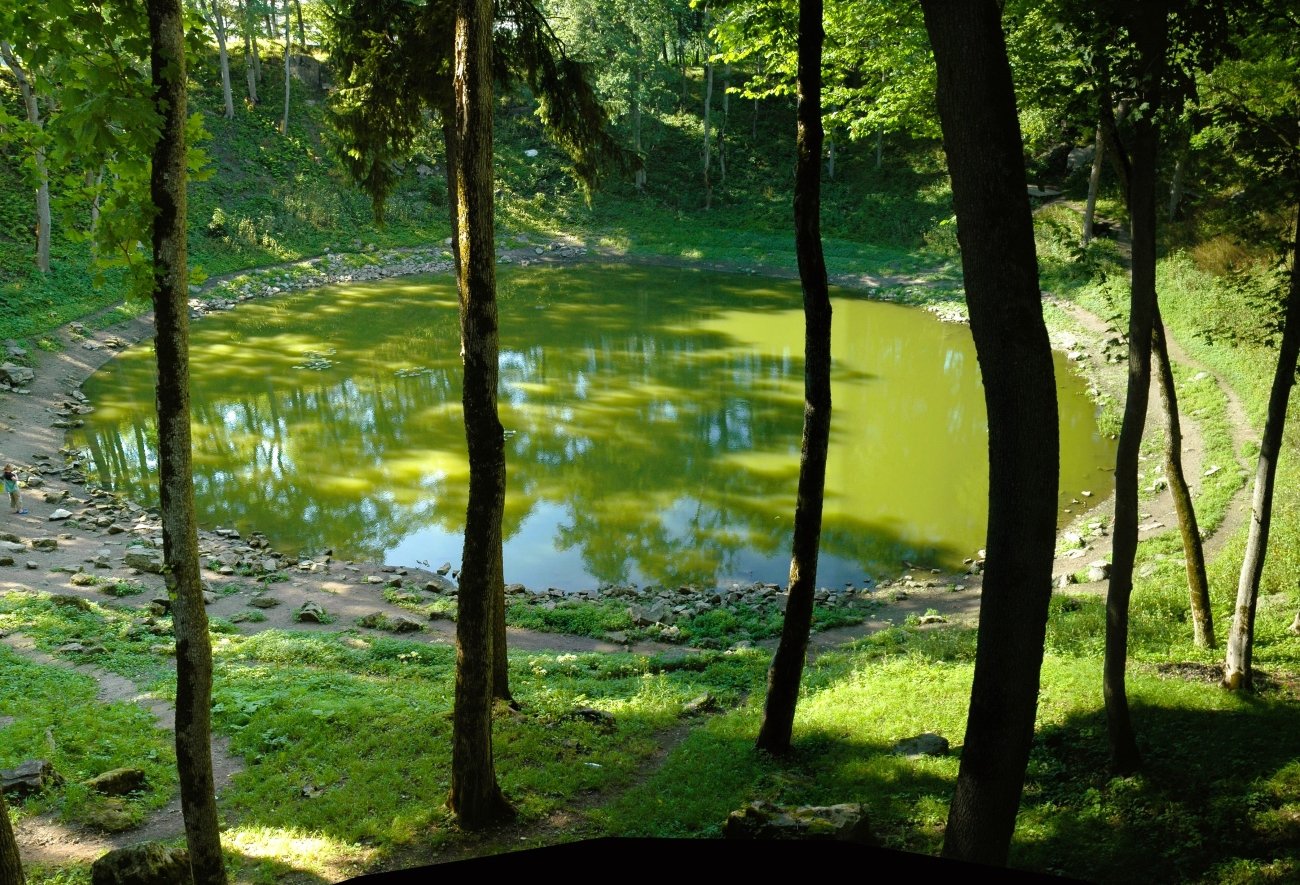
Inland, at Kaali, a meteorite struck the island in prehistoric times and left a field of nine craters. The largest, about 110 metres across and 22 metres deep, holds a round green lake. It was long considered sacred, and some scholars have linked it to ancient myths of fire falling from the sky.
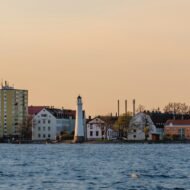
South of Salme, the Sõrve peninsula runs out into the Baltic for about 30 kilometres, a thin, windswept strip of juniper, coastal meadows and old fishing villages, ending at the Sõrve lighthouse. Across the whole island, you will see the low stone walls, thatched farms and wooden windmills that make Saaremaa one of the most traditional landscapes in Estonia.
When to go
- June to August: long light evenings, the island’s busiest season, and the best time for the coast and the Sõrve peninsula.
- May and September: quiet roads, mild days and soft light over the juniper meadows.
- Late autumn and winter: dark and calm, with Kuressaare and its castle to yourself.
Getting there
- By car and ferry: from Tallinn, drive about two hours south-west to Virtsu, then take the ferry to Kuivastu on the island of Muhu, a crossing of under half an hour. A causeway links Muhu with Saaremaa. Ferries run frequently; book ahead in summer.
- By bus: direct buses run from Tallinn to Kuressaare, including the ferry crossing.
- By air: flights connect Tallinn with Kuressaare airport.
- From Kuressaare to Salme: about 20 kilometres, around 20 minutes by car. A car or bicycle is the best way to explore the island.
Beyond the map
Somewhere off the coast of Saaremaa, around the year 750, a battle was fought that no chronicle recorded. The men who died were buried in their own ships, with their swords and their dogs, by a shore that has since moved away. For thirteen centuries, nobody knew they were there.
Stand at Salme today, between the concrete hulls and the wooden warriors, and the Viking Age feels less like a date in a textbook and more like a slow tide of ships across the Baltic, beginning earlier, and further east, than we ever imagined.
Read next: Karlskrona: Sweden’s Baroque Naval City · Where Europe’s Myths Began · Europe’s Last Pagan Landscapes (update with the published URLs)
Carry the journey with you: Beyond the Map Field Guides
Hidden Europe — The Beyond the Map Map Salme, Saaremaa and hundreds of other places, on one map of the Europe most travellers never see.
Explore more: Trails · Terra Incognita · Military Heritage