

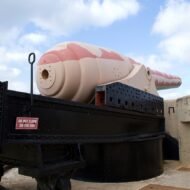
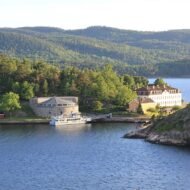
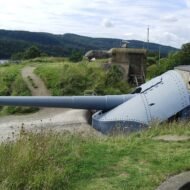
A gun built to fire one-tonne shells from a fairytale castle above the sea. The largest muzzle-loading cannon ever made, still on its mount in Malta. A Norwegian island fort that sank a German cruiser with 40-year-old torpedoes. Five coastal defences you can still walk into.
For centuries, Europe’s coasts were its front line. Wherever a harbour, a naval base or a capital lay close to the sea, someone built guns to defend it: towers, forts, batteries and bunkers, each one bigger and stronger than the last.
Most were never used in battle. Many were abandoned when their guns became obsolete, sometimes within a few years of being finished. But some survive almost intact, high on cliffs, hidden in dunes, or on islands in the middle of fjords, and they are open to anyone who makes the effort to find them.
This article is the starting point of our Coastal Defences of Europe series: five places, each with its own story, from the age of steam to the Second World War.
| Place | Country | Why go | |
|---|---|---|---|
| 1 | Batería de Castillitos | Spain | Two giant 381 mm guns behind a mock-medieval gate |
| 2 | Fort Rinella | Malta | The 100-ton Armstrong gun, one of only two left in the world |
| 3 | Oscarsborg | Norway | The island fortress that sank the cruiser Blücher in 1940 |
| 4 | Raversyde | Belgium | More than 60 bunkers of the Atlantic Wall, and a battery from 1914–18 |
| 5 | Hanstholm | Denmark | Northern Europe’s largest Second World War fortifications |
1. Batería de Castillitos, Spain
37.54° N, 1.12° W · Cabo Tiñoso, Cartagena, Murcia
High on the cliffs of Cabo Tiñoso, west of Cartagena, a road climbs to a building that looks like a castle from a fairytale: towers, battlements and a great arched gate. It is a fake. Behind it lies the Batería de Castillitos, a coastal battery built in the 1930s, as part of a defence plan drawn up in 1926, to protect the naval base of Cartagena.
Its pride was a pair of Vickers 381 mm guns, made in Britain, with barrels about 17 metres long, able to fire shells of almost a tonne about 35 km out to sea. Together with their twins at the Cenizas Battery on the other side of the bay, they could cover the entrance to Cartagena with crossfire.
The battery was taken out of service in 1994, but the two great guns are still there, in their turrets, pointing at the Mediterranean. The site is free and open-air, with tunnels, stairways, magazines and spectacular views.
→ Read more: Batería de Castillitos · Cenizas Battery
In the Field Guide: the El Jorel battery nearby, the Cenizas battery across the bay, and the military trail of Cartagena.
When: October to May, summer is very hot on the exposed headland.
Weather at Castillitos: a dry, sunny Mediterranean climate: mild winters, hot summers and very little rain. The headland is often windy.
Getting there: by car from Cartagena, following signs for Campillo de Adentro and the Cabo Tiñoso lighthouse; the last part is a narrow mountain road.
2. Fort Rinella, Malta
35.90° N, 14.53° E · Kalkara, Grand Harbour
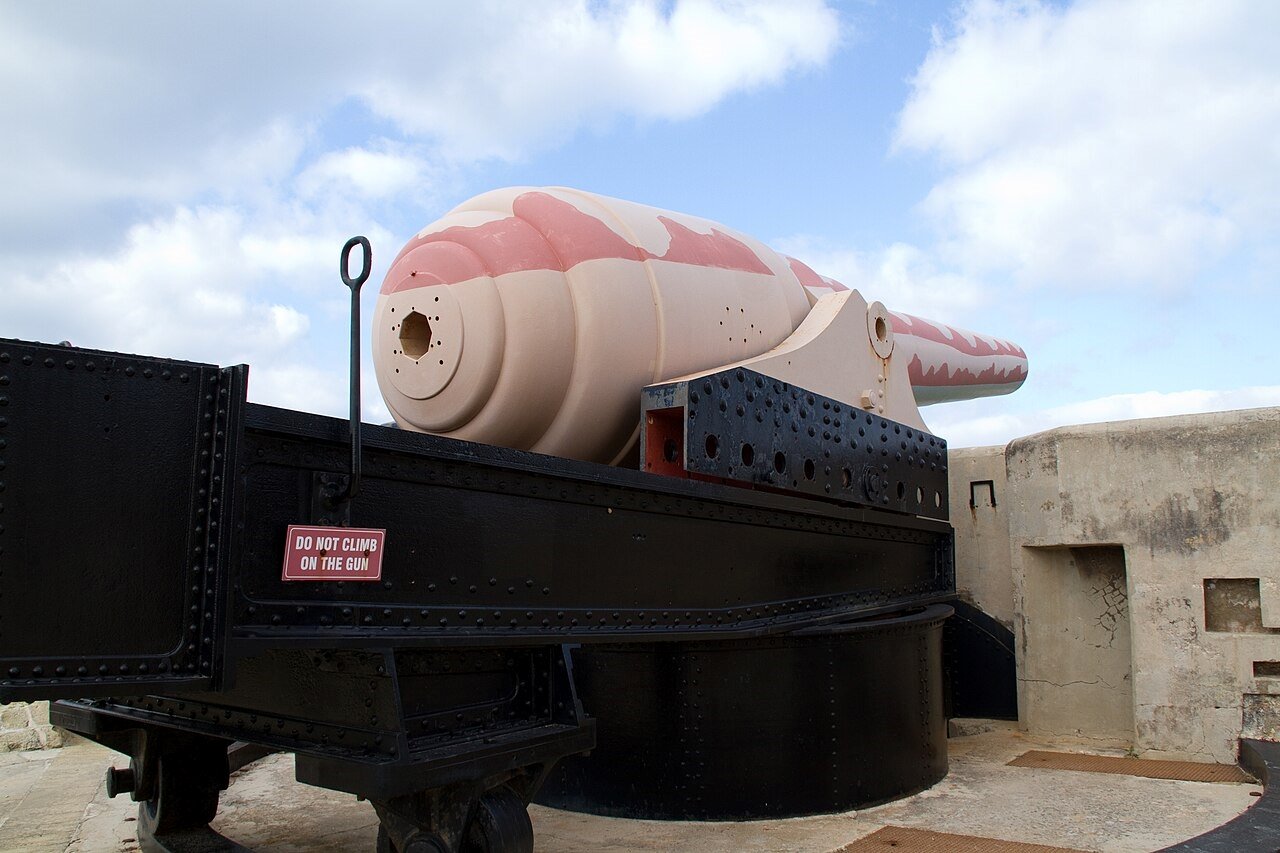
On the coast just east of Malta’s Grand Harbour, a low Victorian fort hides one of the strangest weapons ever made. Fort Rinella was built by the British between 1878 and 1886 around a single gun: the Armstrong 100-ton gun, a rifled muzzle-loader with a 17.72-inch barrel, able to fire a one-tonne shell. It was built to answer the new Italian battleships of the time.
Only four such guns were installed by the British, two in Malta and two in Gibraltar, and only two survive. The one at Rinella still sits on its original mount, inside a fort designed around its hydraulic loading machinery. None of them was ever fired in war.
Today, the fort is run by the heritage foundation Fondazzjoni Wirt Artna, with costumed re-enactments, and the great gun is fired with a blank charge on special occasions.
→ Read more: Fort Rinella
In the Field Guide: visiting days and re-enactments, the forts of the Grand Harbour, and the Three Cities.
When: all year, check opening days, which are limited.
Weather at Fort Rinella: a Mediterranean climate: hot, dry summers and mild, wetter winters. Spring and autumn are the most comfortable months.
Getting there: by bus or car from Valletta, or by ferry to the Three Cities and then a short ride.
3. Oscarsborg, Norway
59.67° N, 10.61° E · Drøbak Sound, Oslofjord
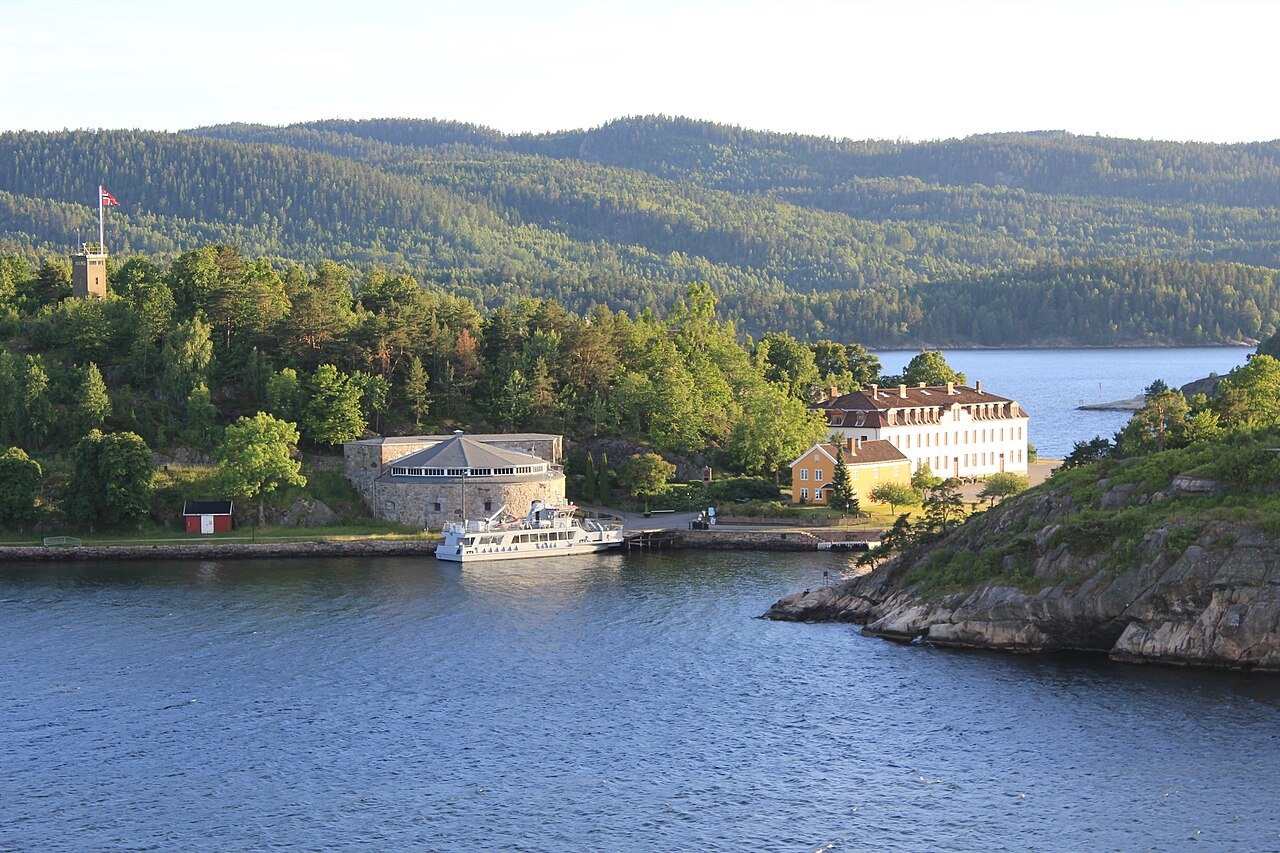
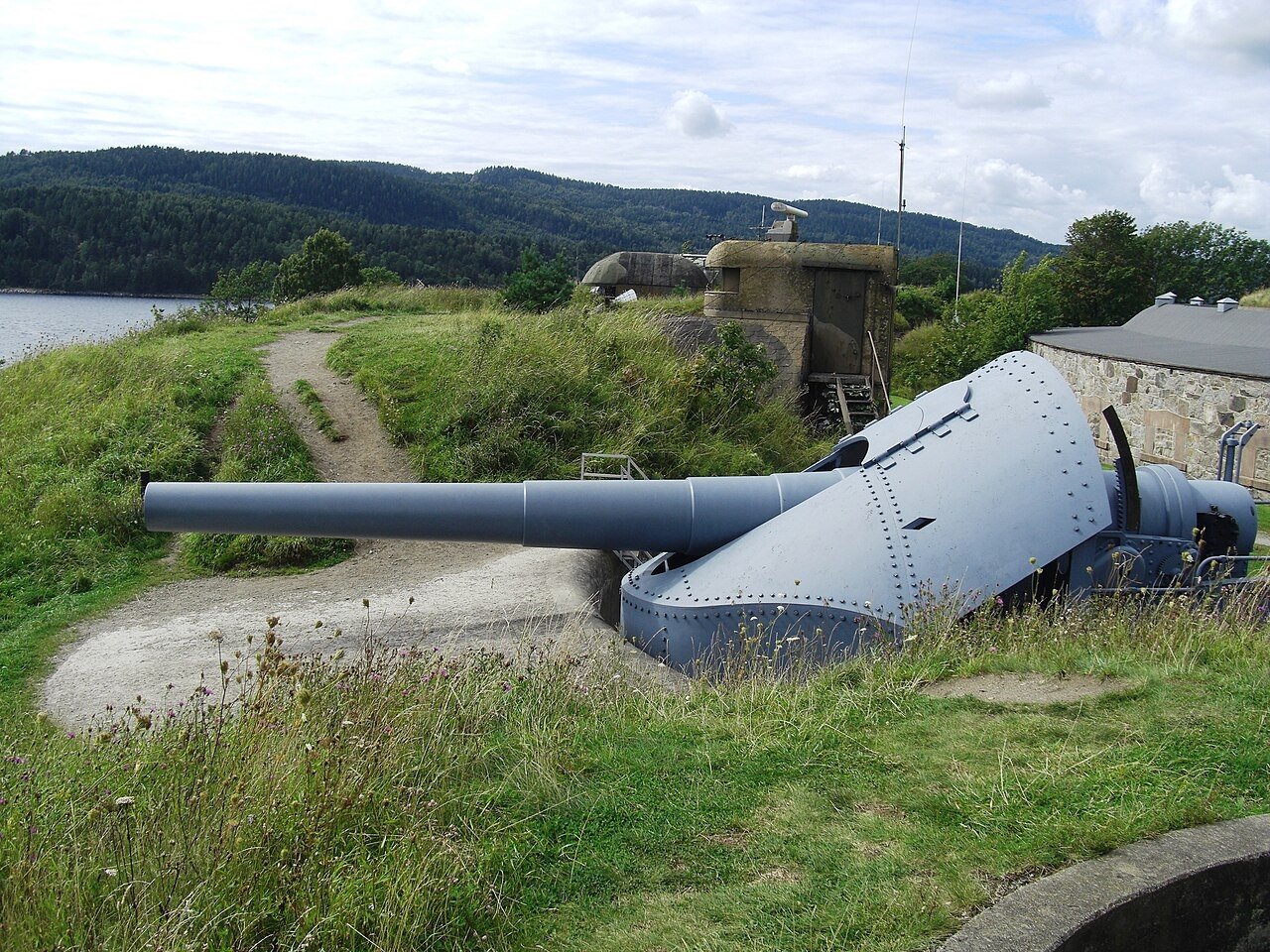
Where the Oslofjord narrows at Drøbak, about 35 km south of Oslo, a fortress sits on two small islands in the middle of the sound. Oscarsborg was built in the mid-19th century to guard the capital, and by 1940 its guns were more than 40 years old, many of them made in Germany.
In the early hours of 9 April 1940, a German invasion fleet sailed up the fjord to capture Oslo. Oscarsborg’s commander, Colonel Birger Eriksen, ordered his guns to open fire on the heavy cruiser Blücher, and a hidden torpedo battery, built in 1898–1901 and unknown to German intelligence, fired its old torpedoes. The Blücher sank. The hours gained allowed the King and the government to escape from Oslo.
The fortress is now a museum, and you can visit the torpedo battery on North Kaholmen.
In the Field Guide: the “1940” tour, the torpedo battery, Drøbak, and the island’s walking trail.
When: May to September for the full ferry service, the island can be reached by boat all year.
Weather at Oscarsborg: a cool Nordic climate: mild summers, cold winters, and often fog on the fjord. Dress for wind on the crossing.
Getting there: a 5-minute ferry from Drøbak. In summer, ferries also run from Aker Brygge in central Oslo.
4. Raversyde, Belgium
51.20° N, 2.85° E · Domein Raversyde, Ostend
In the dunes just west of Ostend, a stretch of coast has been left almost as the German army left it. The Atlantikwall open-air museum at Raversyde preserves more than 60 bunkers, observation posts and gun positions, linked by about 2 km of open and underground corridors: one of the best-preserved sections of the Atlantic Wall anywhere.
It is two front lines in one. The site also holds the Aachen Battery, built by the German army during the First World War to defend Ostend, and described as the only preserved German coastal battery from that war. On the same ground, during the Second World War, came the Saltzwedel-neu battery of the Atlantic Wall.
At the entrance, a 75-metre panorama of more than 80 aerial photographs, taken by the US Air Force on 4 August 1945, shows the entire Belgian coast.
In the Field Guide: the walk through both batteries, the Belgian coast’s war sites, and combining Raversyde with Ostend and Nieuwpoort.
When: the museum is open in the main season, roughly from late March to early November, check dates and hours before visiting.
Weather at Raversyde: a breezy North Sea climate: mild summers, grey and damp winters, and frequent wind on the dunes.
Getting there: a short drive west of Ostend city centre, along the coast road.
5. Hanstholm, Denmark
57.12° N, 8.62° E · Hanstholm, Thy, North Jutland
On the windswept north-west coast of Jutland, facing the Skagerrak, the German navy built Festung Hanstholm, the strongest German fortress in Denmark, with its guns trained over the Skagerrak.
Its main battery had four 38 cm guns, each barrel weighing about 110 tonnes, originally intended for battleships. They were scrapped in 1951–52. But the bunkers remain, among them the museum bunker, built in 1941: about 2,500 m², it housed one of the great guns and about 90 soldiers, and several of its rooms have been restored.
Today, Bunkermuseum Hanstholm, Denmark’s largest bunker museum, presents what it describes as Northern Europe’s largest Second World War fortifications, in an open-air area inside Thy National Park.
In the Field Guide: the museum bunker and open-air area, the other gun bunkers in the dunes, and Thy National Park.
When: spring to autumn; check winter opening.
Weather at Hanstholm: a raw North Sea climate: cool summers, mild but stormy winters, and strong winds all year. The open dunes have no shelter.
Getting there: about 2 hours by car from Aalborg.
Beyond the map
These defences were built for wars that rarely came, and when war did come, it was often from the air or the land. Most of their great guns were scrapped, and their bunkers left to the sand and the sea. The few that survive are some of the most dramatic and least visited places on Europe’s coasts: half ruins, half monuments, looking out to sea.
Coastal Defences of Europe — a Beyond the Map Field Guide
[Coastal Defences of Europe — The Beyond the Map Field Guide]
Our guide to the forts, batteries and bunkers on Europe’s coasts:
- The five places in detail, with opening days, tours and access
- More coastal defences open to the public, from Victorian forts to the Atlantic Wall
- Itineraries: the Atlantic Wall from Belgium to Denmark, and the Mediterranean batteries
- Offline maps and GPS points
→ [Get the Field Guide]
Read next: Batería de Castillitos · Cenizas Battery · Fort Rinella · Europe’s Forgotten Giants · Lighthouses at the Edge of Europe · Europe’s Pirate Hideouts