

Arles was already two thousand years old when Van Gogh arrived in February 1888. The Roman amphitheatre had been standing for eighteen centuries. The extraordinary Roman theatre, the extraordinary Roman necropolis of Les Alyscamps, the extraordinary Roman cryptoporticus beneath the Forum — all of them were already there when the 34-year-old Dutch painter stepped off the train from Paris into the extraordinary Provence light and immediately understood that he had found the place he had been looking for.
He stayed for fourteen extraordinary months. He painted over 200 canvases — the Sunflowers, the Night Café, the Bedroom, the Starry Night over the Rhône, the Langlois Bridge, the extraordinary series of portraits and landscapes that constitute the most concentrated period of artistic production in the history of painting. He cut off his ear. He was committed to the Saint-Paul-de-Mausole asylum in Saint-Rémy. He left Arles in May 1889 and never returned.
The extraordinary thing about Arles is that both stories — the Roman city and the Van Gogh city — are simultaneously true and simultaneously extraordinary, and the city has been absorbing them both for long enough to understand that neither exhausts it.
The Roman city
Arles was founded as a Roman colony in 46 BC by Julius Caesar following the defeat of Marseille, which had backed Pompey in the civil war. Within a century it had become one of the most important cities in the Roman west — a major port on the Rhône, a significant manufacturing centre and the administrative capital of Roman Gaul. The extraordinary concentration of Roman monuments that survives is the physical record of that importance.
The Amphitheatre — Les Arènes
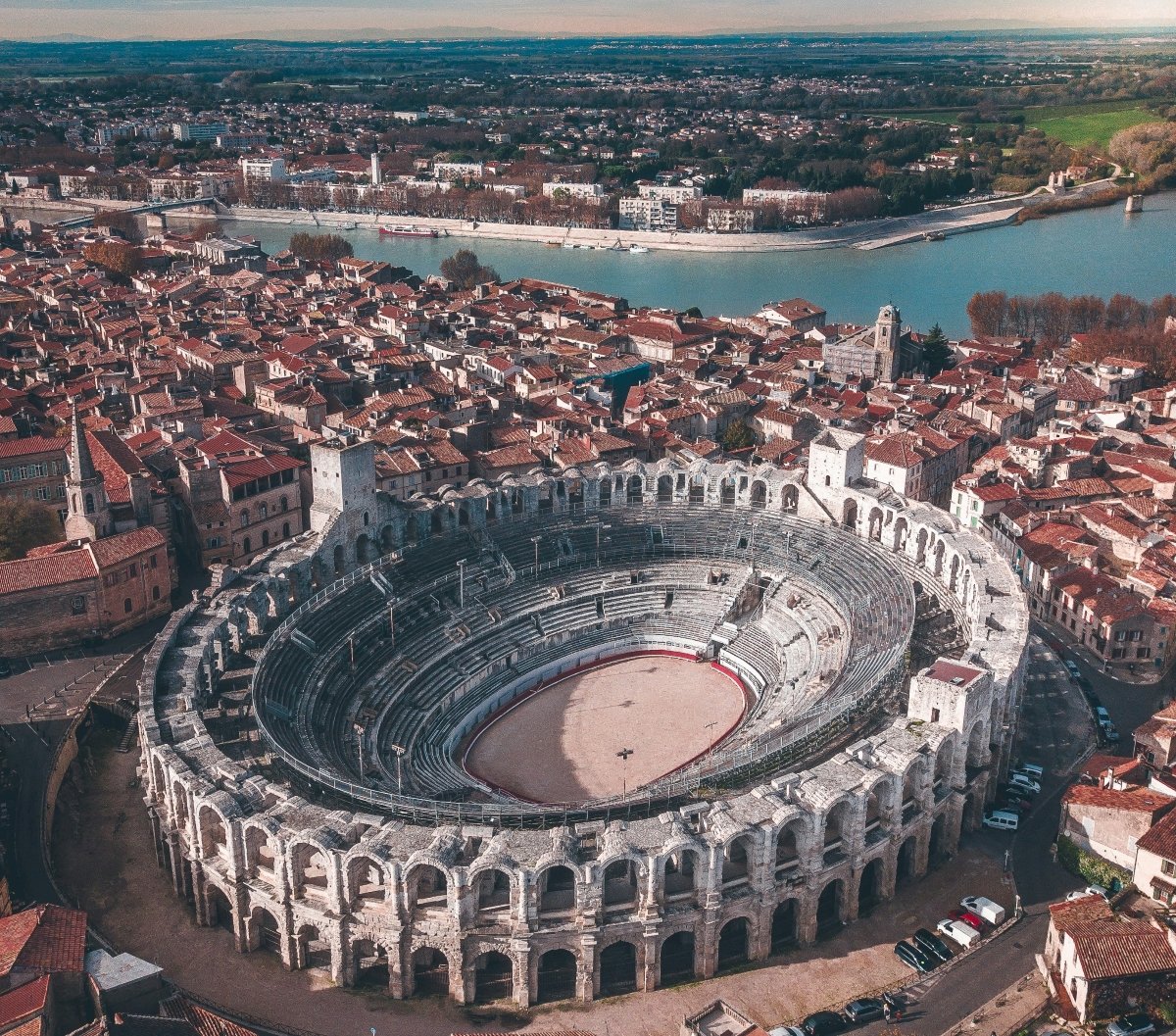
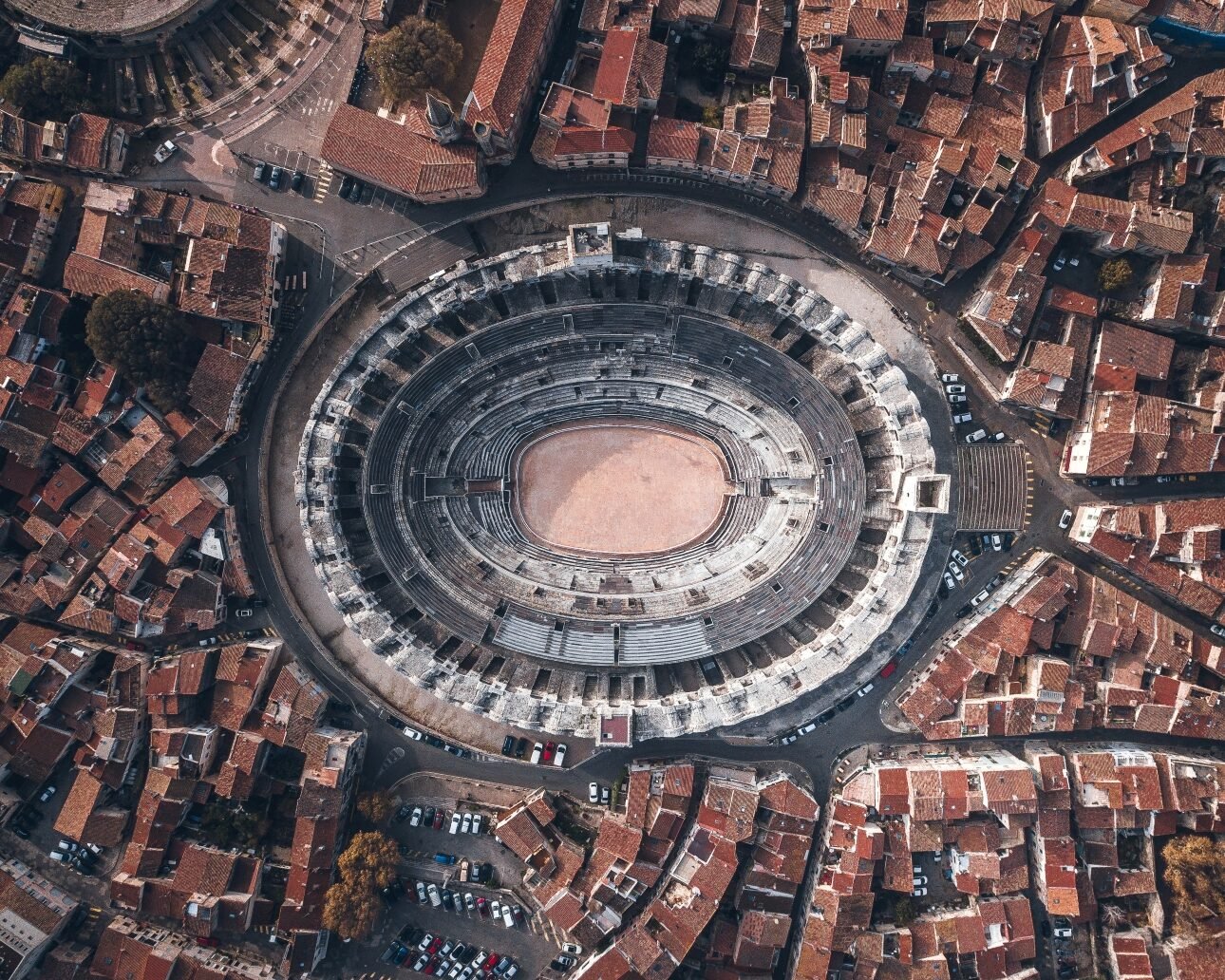
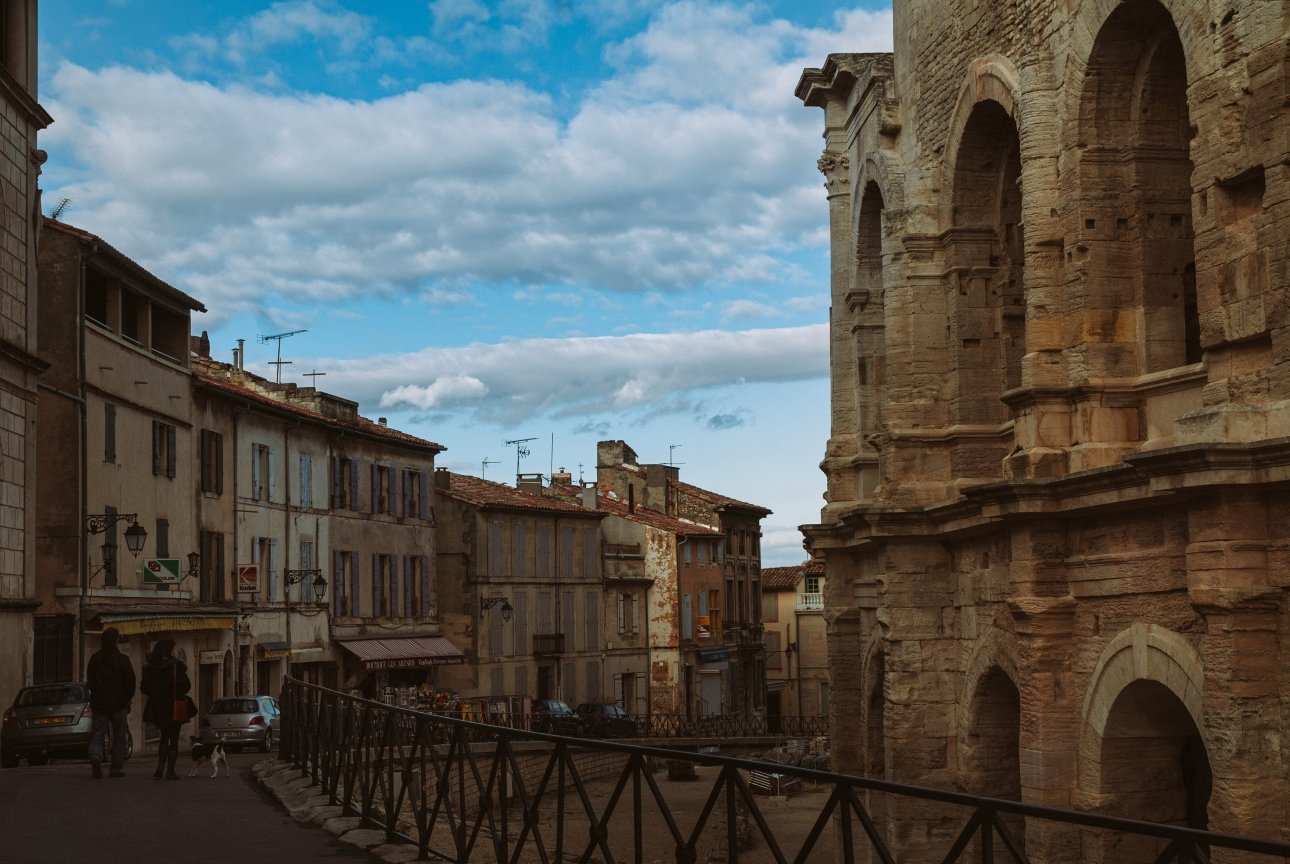
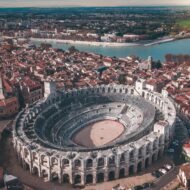
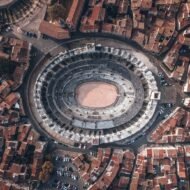
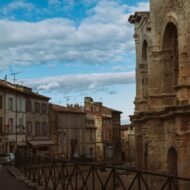
The Roman amphitheatre of Arles — Les Arènes — is the most completely preserved Roman amphitheatre in France and one of the most extraordinary in the western Mediterranean. Built in the 1st century AD, seating 20,000 spectators in two extraordinary arcaded tiers of extraordinary Provençal limestone, it is still used today — not for gladiatorial combat but for the Course Camarguaise, the extraordinary Camargue bullfighting tradition that is the direct successor of the Roman spectacle tradition in one continuous cultural thread across two thousand years.
The extraordinary detail: in the medieval period the amphitheatre was converted into a fortified village — 212 houses and two churches were built inside the arena, the three medieval towers still visible on the exterior were defensive additions of the 12th century, and the extraordinary population of the amphitheatre village was only relocated when the restoration of the Roman monument began in the 19th century. The layers of history compressed into one circular structure make Les Arènes the most editorially layered monument in Arles.
The Roman Theatre
The Théâtre Antique of Arles — built slightly earlier than the amphitheatre, in the reign of Augustus — is less completely preserved but more atmospherically extraordinary: the two surviving columns of the extraordinary stage backdrop rising against the Provence sky, the extraordinary semicircular orchestra, the extraordinary stone seating carved into the hillside. The theatre is used for the extraordinary Festival d’Arles photography festival each July — the most important photography festival in France, founded in 1970, transforming the Roman monuments and the extraordinary streets of the city into exhibition spaces of remarkable scale.
The Cryptoporticus
The underground galleries beneath the Roman Forum — the Cryptoporticus — are the most extraordinary and most overlooked Roman monument in Arles. Built in the 1st century BC as the foundations of the Forum above, the extraordinary horseshoe-shaped gallery of barrel-vaulted underground passage is one of the most completely preserved Roman civic infrastructure elements in France — dark, cool, the extraordinary Roman stonework unchanged, the extraordinary silence of a monument that most visitors to Arles never enter.
Les Alyscamps
The extraordinary Roman necropolis on the eastern edge of the old city — Les Alyscamps, the Elysian Fields — was the most prestigious burial site in Roman Gaul, its extraordinary avenue of stone sarcophagi extending for hundreds of metres along the approach to the ancient city. Van Gogh painted it twice in November 1888 — the extraordinary avenue of poplars above the extraordinary stone coffins in the extraordinary autumn light. The paintings are in collections in Zurich and Washington. The avenue remains.
The Van Gogh city
Van Gogh arrived in Arles on 21 February 1888. He had been in Paris for two years and was exhausted by the city, drawn to Provence by the Japanese print aesthetic he associated with the extraordinary Mediterranean light of the south. He was right about the light. It is genuinely different — lower in winter, more directional, producing the extraordinary colour saturation and extraordinary shadow contrast that appears in the Arles canvases in a way that no northern European light produces.
The Van Gogh Foundation
The Fondation Vincent van Gogh Arles — in the extraordinary Hôtel Léautaud de Donines in the old city — is not a Van Gogh museum in the conventional sense. It holds no original Van Gogh canvases (the paintings are in Amsterdam, Washington, Zurich, Moscow). It is a contemporary art foundation that uses the Van Gogh connection as an editorial framework — commissioning contemporary artists to respond to Van Gogh’s legacy in exhibitions of extraordinary quality. The approach is more intellectually interesting and more editorially distinctive than a simple Van Gogh retrospective would be.
Langlois Bridge: The Arles Drawbridge Van Gogh Painted in 1888 →
The most specific surviving landscape connection to Van Gogh’s Arles period — the extraordinary drawbridge at the canal that he painted in March 1888, now restored as an identical replacement at a nearby location specifically to honour the connection. The most pilgrimage-worthy single site for Van Gogh visitors to Arles.
The Yellow House
The Yellow House — the Maison Jaune where Van Gogh lived and painted in Arles — no longer exists. It was destroyed by Allied bombing in 1944. The extraordinary painting of the Yellow House (now in the Van Gogh Museum in Amsterdam) is the only complete record of the building. The site on the Place Lamartine is marked. The absence is part of the story.
The Museon Arlaten
The Museon Arlaten — the ethnographic museum of Provençal and Camargue culture founded by the poet Frédéric Mistral in 1896 with the prize money from his Nobel Prize for Literature — is the most important single documentation of the living traditional culture of the Camargue and the Provençal delta territory. The extraordinary collections of traditional costume, the extraordinary reconstruction of Provençal domestic interiors, the extraordinary documentation of the Gardian tradition and the extraordinary record of the Camargue living culture before the 20th century transformations make the Museon Arlaten the most important museum in the Camargue cultural territory.
Mistral founded the museum specifically to preserve the Occitan language and culture against the Frenchification of Provence — the museum’s labels were written in Provençal rather than French until the 20th century, an extraordinary act of cultural defiance for a publicly funded institution.
The Rencontres de la Photographie
The Rencontres Internationales de la Photographie d’Arles — the Arles Photography Festival — is the most important photography festival in France and one of the five most important in the world. Founded in 1970 by the photographer Lucien Clergue, the writer Michel Tournier and the historian Jean-Maurice Rouquette, the festival has been held annually each July for over 50 years in the extraordinary spaces of the Roman city — the amphitheatre, the theatre, the churches, the industrial spaces of the railway district. The extraordinary scale of the exhibitions — covering the complete history of photography from the daguerreotype to contemporary digital practice — and the extraordinary quality of the programming make the Rencontres the most editorially significant annual cultural event in southern France.
Practical information
Location:    Gateway city of the Camargue
             90km from Marseille · 30km from Nîmes
             720km from Paris

Getting there:
By TGV:      Paris Gare de Lyon → Arles: 3.5 hours
             Lyon → Arles: 1.5 hours
             Marseille → Arles: 45 minutes

By car:      From Marseille: 1 hour via A54
             From Montpellier: 45 minutes via A9/N113

Within Arles: The old city is walkable on foot
              Car parking at the edge of the old city
              Bicycles available for hire

Best seasons:
April-June   Extraordinary light · Roman monuments
             without summer crowds
July         Rencontres de la Photographie
             Course Camarguaise season opens
September    Extraordinary light · photography
             festival exhibitions continue
Winter       The most atmospheric season for the
             Roman monuments — extraordinary light
             on the stone at low sun angle
Arles is part of The Wanders Camargue regional guide — the complete Beyond the Map editorial series on the extraordinary wild coastal territory of the Rhône delta.