

September is the best month to travel in Europe. This is not a contrarian opinion. It is a conclusion supported by every metric that matters for quality travel — crowd levels, light quality, temperature, food culture, festival calendar and the extraordinary phenomenon of European landscapes changing character in a way that summer never produces.
- The September festival calendar
- Norway’s Fjords in Autumn: When the Birch Turns Gold
- The Carpathians in Autumn: Europe’s Most Underrated Forest
- Vendemmia: Europe’s Most Extraordinary Wine Harvest Festivals
- Medieval Autumn Festivals: Where Europe Resurrects Its Past
- Autumn With Children: Ten European Destinations That Reward It
- Baltic September: When the Entire Forest Becomes a Restaurant
- The early autumn travel logic — three reasons September works
- The autumn travel guide — the complete resource
The summer crowds leave in the last week of August. The school calendars call the families home. The cruise ships reduce their Mediterranean schedules. The Santorini viewpoints empty. The Amalfi Coast becomes navigable again. And across the continent — from the Norwegian fjords to the Carpathian forests to the Baltic coast — September does something that July and August cannot do: it changes the landscape.
The birch forests of Norway turn gold. The vineyards of Burgundy and Tuscany and the Douro Valley fill with the extraordinary activity of harvest. The medieval market squares of central Europe host festivals that have been running for centuries and that most international visitors have never seen. The Baltic forests produce their annual September mushroom harvest in a foraging tradition so deeply embedded in the culture that entire families disappear into the forest every weekend from late August until the first frost.
This is the editorial guide to early autumn in Europe — the season The Wanders covers as a distinct travel register rather than an afterthought to summer.
The September festival calendar
September in Europe: Festivals Worth Planning a Trip Around →
The September festival calendar across Europe is one of the most concentrated and most varied in the annual cycle — harvest festivals, medieval revivals, music festivals at the end of the summer season, wine festivals at the beginning of the vendemmia and the extraordinary cultural events that European cities schedule specifically for September when the summer tourist economy has receded and the cultural economy reasserts itself.
The complete September guide covers the most extraordinary events across the continent — from the extraordinary Diada de Catalunya on September 11th to the extraordinary Oktoberfest (which begins in September) to the extraordinary harvest festivals of the Italian hill towns to the medieval markets of central Europe that appear in the pillar articles below.
Norway’s Fjords in Autumn: When the Birch Turns Gold
Norway · Northern Europe · September–October
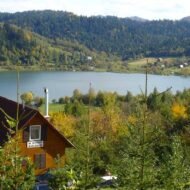
Norway’s fjords in early autumn are the most extraordinary landscape transformation available in European travel. The Norwegian birch forest — covering the fjord hillsides from the waterline to the treeline in a continuous green canopy through summer — begins turning gold in the second week of September, producing an extraordinary contrast of yellow birch against dark fjord water, grey rock and the first snow on the peaks above.
The light in September Norway is different from July Norway — lower, more directional, more golden, producing the extraordinary quality that Norwegian landscape painters have documented for two centuries and that photographers come specifically to find. The fjords are quieter — the summer cruise ships have reduced their schedules, the tourist infrastructure is still fully operational and the hiking trails above the fjords are walked by a fraction of their August numbers.
The extraordinary Flåm Railway — one of the most extraordinary railway journeys in Europe, descending 863 metres through extraordinary mountain scenery in 20 kilometres of track — is at its most photographically extraordinary in September when the birch forest along the route has turned. The extraordinary Nærøyfjord — the narrowest fjord in Norway, UNESCO World Heritage — is at its most dramatic in October when the first snow has reached the peaks above the 1,800-metre walls.
The Carpathians in Autumn: Europe’s Most Underrated Forest
Romania · Slovakia · Poland · September–October
The Carpathian Mountains in autumn contain the most extraordinary and most overlooked autumn forest landscape in Europe — the largest remaining old-growth forest in Europe outside Russia, covering the arc of the Carpathian range across Romania, Slovakia and Poland in a continuous canopy of beech, oak, hornbeam and spruce that turns the full range of the autumn palette between mid-September and mid-October.
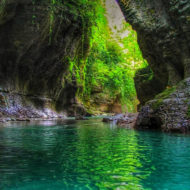
The Carpathian autumn is not merely beautiful. It is extraordinary in its scale and extraordinary in its wildness — brown bears, wolves, lynx and European bison all live in the forest, and the autumn season when the wildlife is most active and most visible before the winter is the most extraordinary wildlife observation window in the Carpathian range. The extraordinary Bicaz Gorge in Romania — a 12km limestone canyon through the eastern Carpathians — is at its most dramatically beautiful in October when the forest on the canyon walls has turned. The extraordinary Tatra National Park in Slovakia — the highest mountain range in the Carpathians — produces an extraordinary autumn landscape of golden dwarf pine and larch above the treeline.
The Carpathians in autumn is the Beyond the Map travel experience for Eastern Europe — an extraordinary natural landscape that receives a fraction of the autumn forest tourism that Switzerland and Bavaria attract despite being significantly larger, significantly wilder and significantly more extraordinary.
Vendemmia: Europe’s Most Extraordinary Wine Harvest Festivals
Italy · France · Portugal · Spain · September–October
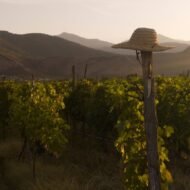
The European wine harvest festival circuit — the vendemmia in Italy, the vendange in France, the vindima in Portugal — is the most extraordinary food and cultural travel experience available in early autumn. The harvest season runs from late August in the warmest southern European wine regions to mid-October in the coolest northern ones, producing a six-week window of extraordinary access to working vineyards, extraordinary harvest festivals and the extraordinary spectacle of an agricultural tradition practiced with living continuity across centuries.
The most extraordinary harvest festivals: the extraordinary Fête des Vendanges de Montmartre in Paris (the last remaining vineyard in central Paris, harvested each October in an extraordinary community festival that fills the streets of Montmartre), the extraordinary Merano Wine Festival in South Tyrol (November — the most prestigious wine festival in the Italian Alpine territory), the extraordinary Grape Harvest Festival in Funchal, Madeira (September — the most atmospheric island wine festival in the Atlantic) and the extraordinary Douro Valley harvest in Portugal (September-October — the most dramatically beautiful wine landscape in Europe when the terraced vineyards above the river turn gold simultaneously).
Medieval Autumn Festivals: Where Europe Resurrects Its Past
Central Europe · September–October
Medieval European autumn festivals are the most extraordinary cultural travel experience in early autumn — genuine reconstructions of medieval market, tournament and festival practice in the extraordinary architectural settings of the walled cities and castle towns of central Europe. September is the primary medieval festival month across the continent — the harvest calendar that determined medieval festival timing still shapes the September festival calendar today.
The most extraordinary medieval festivals: the extraordinary Brno Historical Festival in the Czech Republic (the largest medieval festival in central Europe — 3,000 participants in period costume, jousting, extraordinary craft markets in the extraordinary Spilberk Castle grounds), the extraordinary Medieval Market of Óbidos in Portugal (the most atmospheric medieval festival in the Iberian Peninsula — held in the extraordinary completely walled medieval village, the entire town in medieval character for the festival weeks), the extraordinary Festival Médiéval de Carcassonne in France (the most dramatically positioned medieval festival in Europe — inside the extraordinary walled city of Carcassonne, one of the most completely preserved medieval fortified cities in the world).
Autumn With Children: Ten European Destinations That Reward It
Pan-European · September–October
Autumn travel in Europe with children is the most underrated travel register in the continent. September in Europe with children is not a compromise on summer — it is a completely different and often superior travel experience. The crowds that make summer family travel in the most visited destinations exhausting have gone. The temperatures are warm but not extreme. The cultural calendar — museums, festivals, outdoor events — is at its most active. And the extraordinary autumn landscapes of Norway, the Carpathians and the Baltic give children an experience of European nature that the beach-and-pool summer register cannot provide.
The ten destinations that specifically reward autumn family travel: the extraordinary Plitvice Lakes in Croatia (the UNESCO terraced waterfall lake system is most dramatically beautiful in October when the surrounding forest has turned and the crowds of summer have receded), the extraordinary Hallstatt in Austria (the most photographed village in the Alpine world is genuinely accessible in September when the summer day-tripper pressure has gone), the extraordinary Bruges in Belgium (the medieval canal city is most atmospheric in autumn when the low light and canal reflections produce the extraordinary Flemish landscape painting register that summer never achieves).
Baltic September: When the Entire Forest Becomes a Restaurant
Estonia · Latvia · Lithuania · Finland · Sweden · September
The Baltic September mushroom hunting tradition is the most extraordinary food culture event in northern Europe — a foraging practice so deeply embedded in Baltic and Scandinavian culture that it functions as a social institution, a family tradition and a genuine food source simultaneously. In Estonia, Latvia, Lithuania, Finland and Sweden, the first weekend of good mushroom weather in September produces a mass movement of the population into the forest — families, colleagues, entire communities — with baskets and knives, returning in the afternoon with extraordinary quantities of ceps, chanterelles, honey mushrooms and birch boletes.
The mushroom hunting tradition is not a tourist activity. It is a living cultural practice that predates any written record and that connects modern Baltic and Nordic society to an ancient relationship with the forest that urbanisation has not broken. Understanding it as a travel experience requires understanding it on its own terms — not as a guided foraging walk but as an invitation to participate in the most ordinary and most extraordinary thing that Baltic families do in September.
The extraordinary September forest along the Baltic coast — the pine and birch forests of the Estonian islands, the extraordinary forest paths of the Latvian coast, the extraordinary Lithuanian forest above the Curonian Spit — is at its most beautiful and its most actively used in September. The mushroom harvest gives travel in this territory a specific cultural dimension that summer travel cannot provide.
The early autumn travel logic — three reasons September works
The crowd mathematics:
European summer tourism concentrates in July and August with extraordinary intensity. The Amalfi Coast, Santorini, Dubrovnik, Barcelona and Venice — all extraordinary destinations — are significantly degraded in July by the volume of simultaneous visitors. September removes between 40% and 60% of those visitors while maintaining virtually all of the destination’s extraordinary qualities. The price of accommodation falls. The restaurant tables are available without reservation. The viewpoints are walkable without queuing.
The light:
September light in Europe is measurably different from July light — lower angle, warmer colour temperature, longer golden hour, more atmospheric haze. Landscape photographers specifically target September and October in Norway, the Scottish Highlands and the Alpine foothills because the light quality produces results that summer cannot. For any travel itinerary where the experience of landscape is a primary motivation, September is technically superior to summer.
The cultural calendar:
September is the beginning of the European cultural calendar — museums re-hang their major exhibitions, concert halls begin their autumn seasons, festivals that have been running for centuries reach their annual peak. The cultural richness of September in any major European city is significantly higher than in August when much of the cultural infrastructure is in summer recess.
The autumn travel guide — the complete resource
September in Europe: Festivals Worth Planning a Trip Around →
The complete September festival guide — harvest, medieval, music and cultural events across the continent, with the specific dates and locations that make September planning possible rather than speculative.
Early autumn is one of The Wanders’ most consistently documented travel seasons — the season when extraordinary European landscapes reach their most extraordinary versions and when the travel experience is most completely available without the summer infrastructure pressure.