

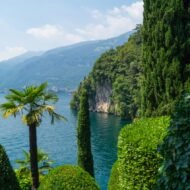
There is a scene in Casino Royale — the 2006 Bond film, the Daniel Craig version — where Bond recovers from poisoning in a white lakeside hospital of extraordinary beauty, the lake visible through open windows, mountains beyond. The hospital is Villa del Balbianello. The lake is Como. The mountains are the Alps above Menaggio on the opposite shore.
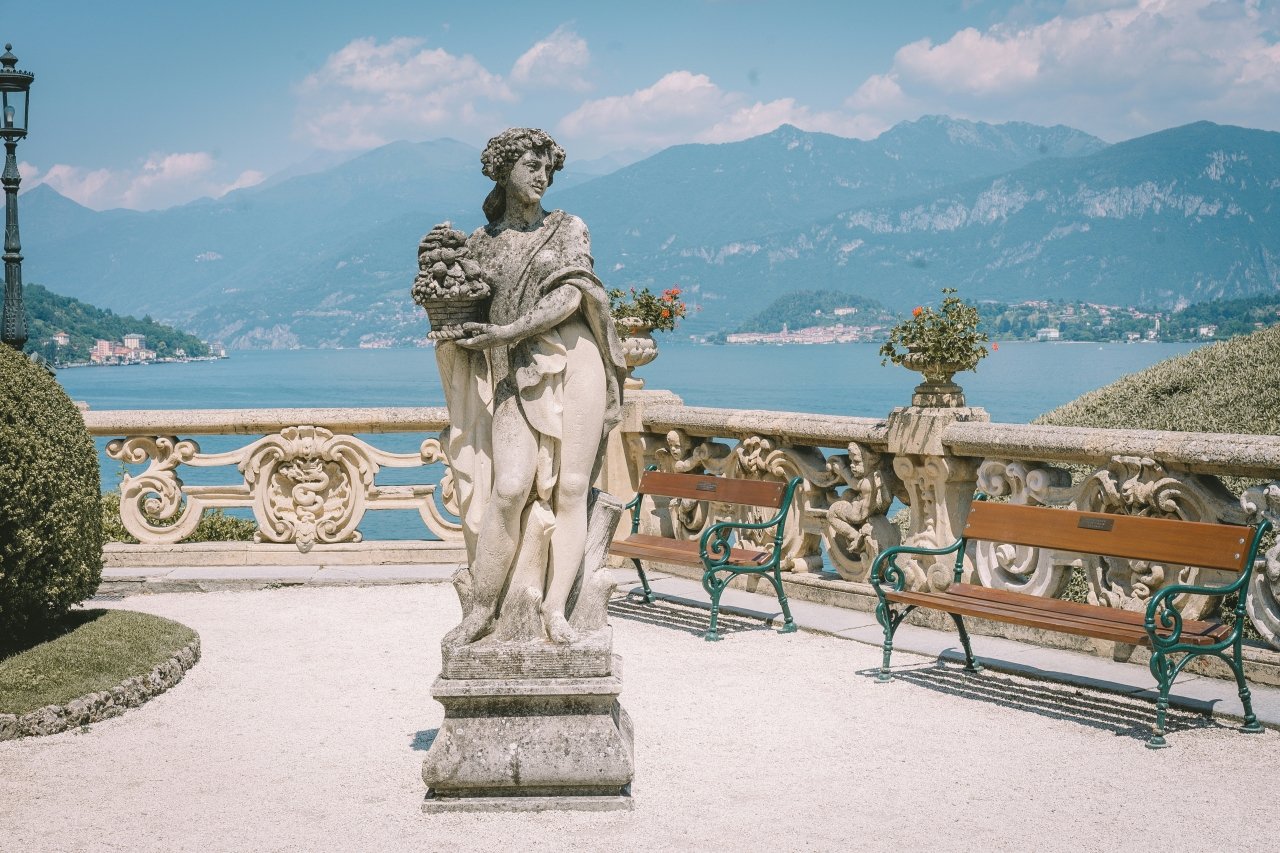
Four years earlier, in Star Wars Episode II: Attack of the Clones, Anakin Skywalker and Padmé Amidala were married on a lakeside terrace of extraordinary geometry — a loggia of pale stone above a wooded promontory, the lake on three sides, the view extending across the central lake toward Bellagio. The terrace is Villa del Balbianello. The same villa. The same lake. The same view.
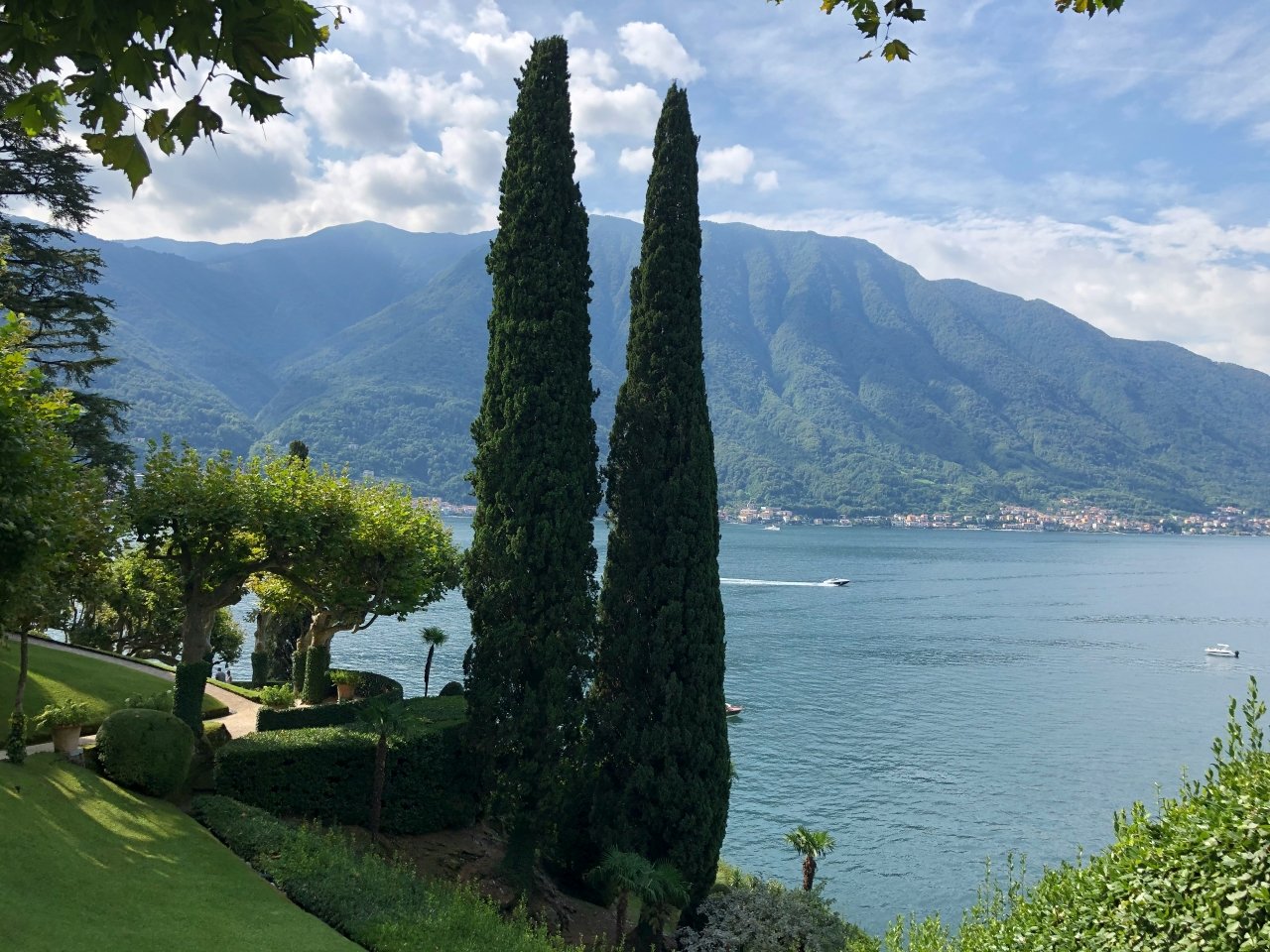
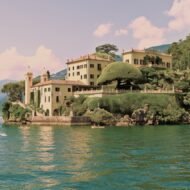
Cinema keeps finding Villa del Balbianello because the villa is exactly what filmmakers need when they need a place that looks more beautiful than anything a production designer could invent. It sits on the extreme tip of the Dosso di Lavedo — a narrow wooded promontory projecting into the central lake from the western shore near Lenno — with water on three sides, a loggia of extraordinary proportion at the promontory’s tip and terraced gardens descending to the lake on both flanks. There is no comparable building position on Lake Como. There may be no comparable building position on any lake in Italy.
The history
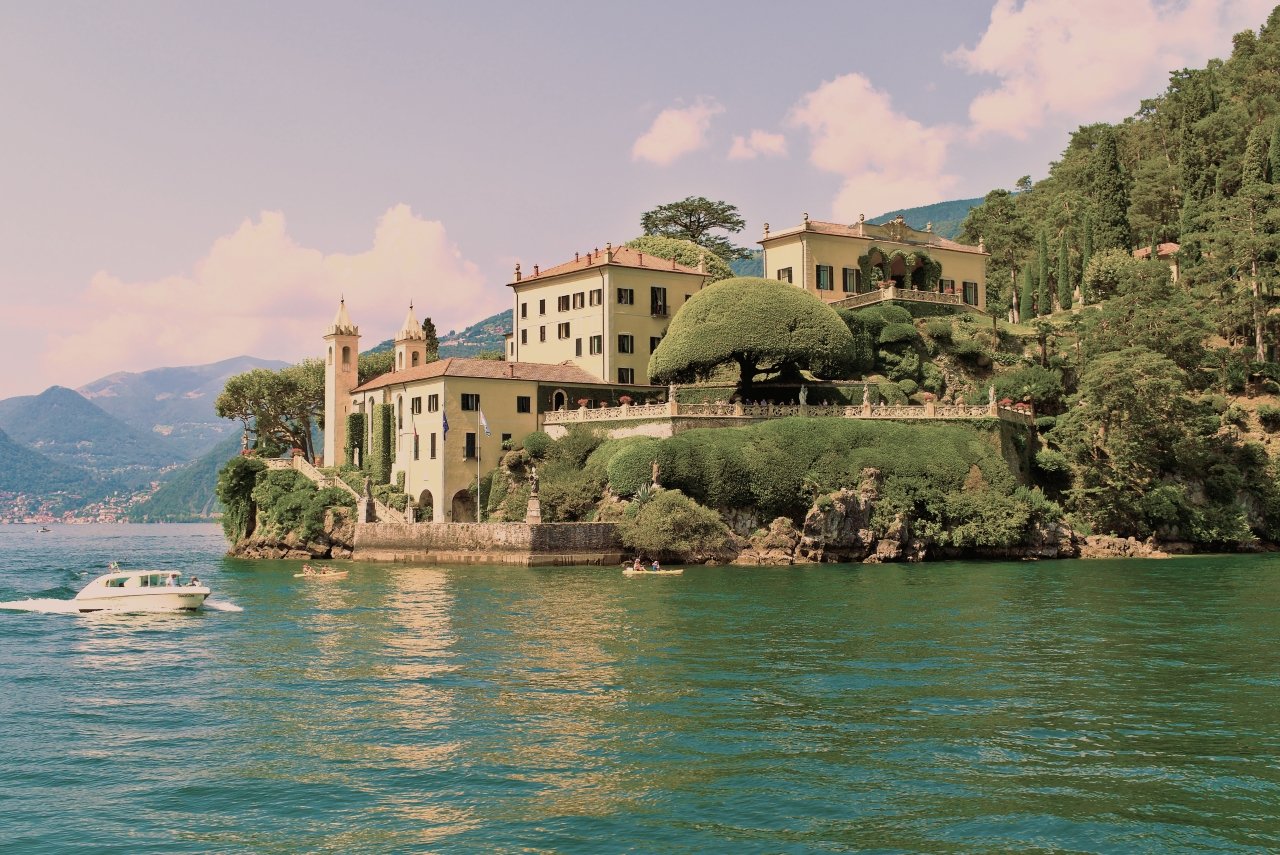
Villa del Balbianello was built in 1787 by Cardinal Angelo Maria Durini — a Milanese cardinal of extraordinary literary and aesthetic ambition who purchased the promontory and its existing Franciscan chapel to create a lakeside retreat of complete seclusion. The cardinal transformed the chapel’s two bell towers into the distinctive twin-towered loggia that defines the villa’s silhouette from the water — the extraordinary view from the loggia terrace across the central lake toward Bellagio and the Swiss Alps beyond was Durini’s primary architectural intention. The garden, the loggia and the extraordinary promontory position were the point. The villa itself — a relatively modest three-storey building connecting the two towers — was secondary.
The villa passed through several owners across the 19th century before its most significant modern owner — Guido Monzino — purchased it in 1974. Monzino was one of the most extraordinary figures in 20th century Italian exploration: the leader of the first Italian expedition to summit Everest in 1973, a collector of extraordinary scope whose expeditionary equipment, Arctic sledges, navigational instruments and ethnographic objects filled the villa’s interior with one of the most extraordinary private collections in northern Italy. Monzino died in 1988 and donated Villa del Balbianello in its entirety to the FAI — the Fondo Ambiente Italiano, Italy’s National Trust — with the condition that the villa, its contents and its garden be maintained exactly as he left them.
The FAI has maintained this condition with extraordinary fidelity. The interior of Villa del Balbianello is Monzino’s interior — his expeditionary equipment still on the walls, his navigation charts still on the tables, his collection exactly as he arranged it. The garden is the cardinal’s garden — the same terraced structure, the same cypress and wisteria, the same view from the loggia that Durini designed in 1787.
The garden
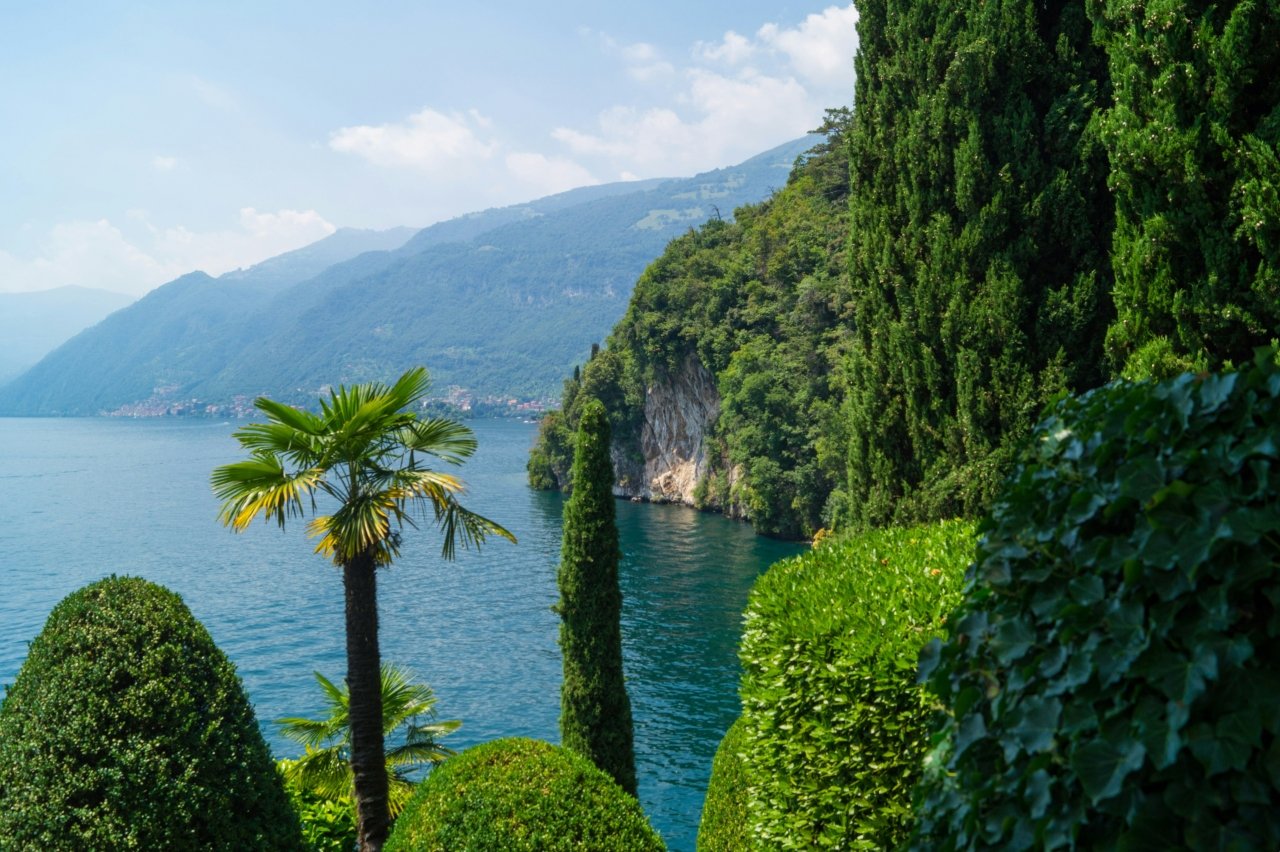
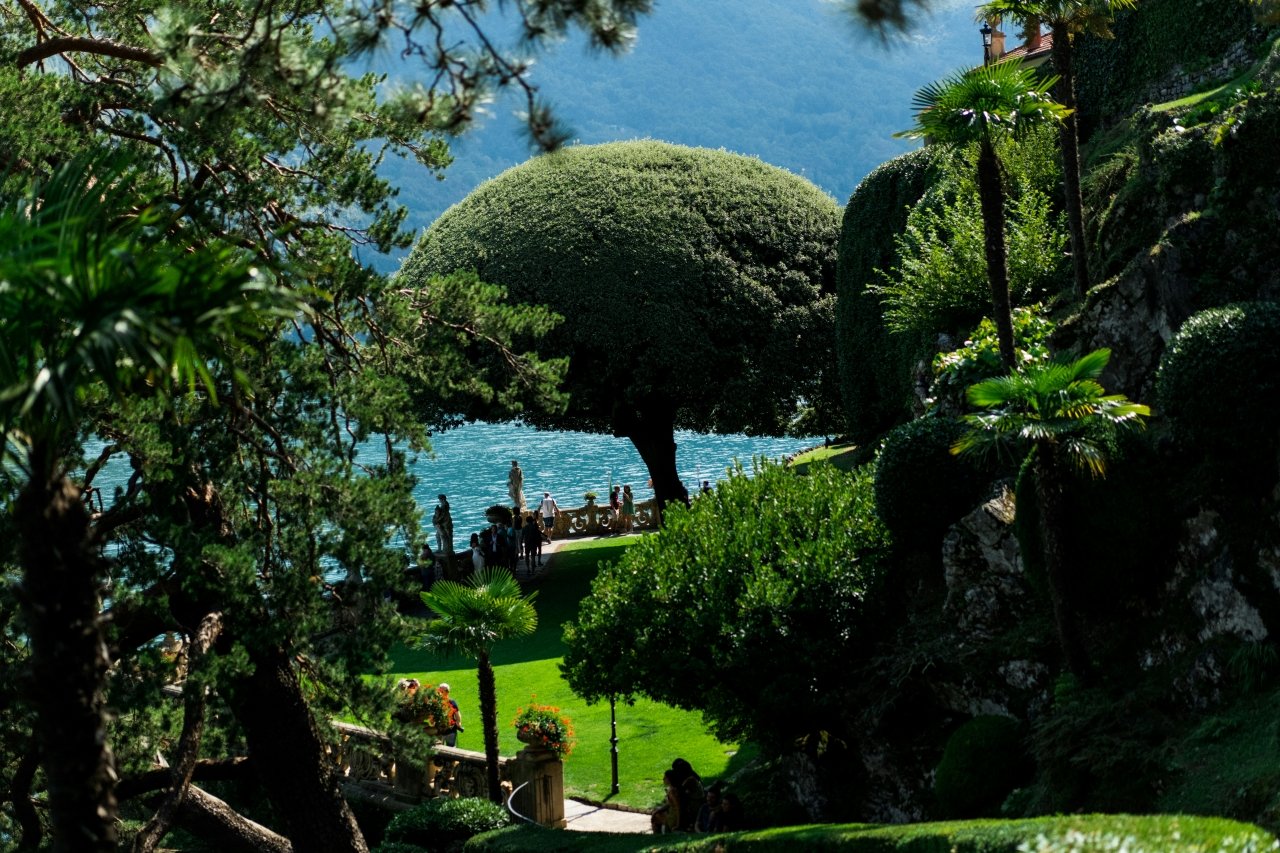
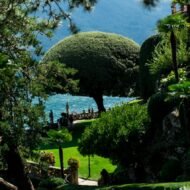
The terraced garden of Villa del Balbianello is the most extraordinary intimate garden on Lake Como — not the most expansive (Villa Carlotta at Tremezzo is larger), not the most famous (Villa d’Este at Cernobbio is more celebrated), but the most perfectly proportioned for its position. The garden descends from the villa on both flanks of the promontory in a series of terraces of extraordinary geometry — clipped box hedges, magnolias, wisteria trained over stone balustrades, camellias on the northern slope — all organised to frame the lake views from every level simultaneously.
The loggia at the promontory tip is the culmination — a covered terrace of extraordinary proportion between the two towers, open to the lake on three sides, with views extending north to Gravedona, east to Varenna on the opposite shore and south toward Bellagio and the lake’s confluence point. In the morning before the tour boats arrive — the first water taxi from Lenno docks at 10am — the loggia is completely quiet. The lake is still. The Alps beyond Menaggio are reflected in the water.
It is the most beautiful single terrace on Lake Como. The films found it because there was nothing else to find.
Guido Monzino’s interior
The interior of Villa del Balbianello is not a period room restoration. It is a man’s house, preserved exactly as he lived in it.
Monzino’s expeditionary equipment covers the walls of the main rooms — the ice axes, the rope coils, the high-altitude clothing from the 1973 Everest expedition hanging in the same positions they occupied during his lifetime. His navigational instruments are in their cases on the shelves. His collection of pre-Columbian art — extraordinary objects from Mesoamerican and Andean cultures assembled over decades of exploration — occupies the display cabinets he designed for them. The bookcases contain his library. The dining table is set as he set it.
The effect is one of the most extraordinary domestic interiors available to visitors in northern Italy — not a museum recreation of how someone might have lived but the actual house of an extraordinary person who happened to leave it intact. FAI guides walk visitors through the interior on timed entry — the spaces are small and the collection dense enough that unrestricted access would be unmanageable.
Arriving at Villa del Balbianello
By boat — the only practical approach
Villa del Balbianello is accessible by water taxi from the Lenno ferry landing — a 5-minute crossing to the villa’s private dock on the northern side of the promontory. Water taxis operate from the Lenno waterfront when the villa is open — the boatmen know the villa’s timetable and will not cross when it is closed. The FAI entrance fee does not include the water taxi — pay the boatman separately on the dock.
The boat approach is the correct approach. Arriving at Villa del Balbianello from the water — the promontory emerging from the lake, the twin towers above the wooded slope, the garden terraces visible on both flanks — is the experience the Cardinal designed the villa to produce from the lake. The films shot it from the water because there was no other way to capture the complete composition.
By foot — the steep alternative
A marked path climbs from the Lenno waterfront through the woods to the villa’s garden entrance — approximately 20 minutes on a steep path of extraordinary character through old growth lakeside forest. The path is the historic access route used before the water taxi service existed. It is significantly more demanding than the boat crossing but arrives at the garden from above — a different and equally extraordinary first view of the promontory and the lake below.
Opening hours and booking
Villa del Balbianello is a FAI property with restricted opening hours — closed Mondays and Wednesdays throughout the season. Gardens open Tuesday, Thursday and Friday from approximately 10am. Full villa access including the interior is available on weekends and selected weekdays — check the FAI website (fondoambiente.it) for current season hours before planning the visit. Timed entry for the interior requires advance booking in peak season — July and August visits sell out.
Villa del Balbianello · Via Comoedia 5 · Lenno
FAI — Fondo Ambiente Italiano
Open: Tuesday, Thursday, Friday, Saturday, Sunday
Closed: Monday and Wednesday
Booking: fondoambiente.it
Water taxi from Lenno waterfront: approximately €5-8 return
The filming context — what the films found here
Casino Royale used the villa as a private clinic — the long corridor interiors, the white room where Bond recovers, the lakeside terrace where Vesper Lynd walks. The production design team added almost nothing to what they found — the extraordinary quality of the existing spaces made additional dressing unnecessary.
Star Wars used the loggia terrace for the Anakin-Padmé wedding scene — the extraordinary geometry of the covered terrace between the twin towers, open to a lake that read on screen as an alien world ocean, requiring only the addition of the ceremony principals. The lake, the mountains and the terrace did everything else.
Both productions found Villa del Balbianello because it is one of the few real places in Europe that exceeds what imagination can design. The lake on three sides, the loggia above the water, the garden descending to the boat dock — these are not film set elements. They are the result of a cardinal in 1787 choosing the most extraordinary promontory on Lake Como and building a loggia to maximise the view from its tip.
The films simply pointed their cameras at what was already there.
The Lake Como cluster
Villa del Balbianello sits on the western shore of the central lake — the same ferry route that connects Lenno, Tremezzo, Cadenabbia and Menaggio in the most extraordinary single stretch of lakefront on Como. The Navigazione Lago di Como slow ferry stops at Lenno on the complete lake circuit — the same service that connects Varenna on the opposite eastern shore.
The complete Lake Como ferry logistics — including the Lenno stop, the water taxi timing for Villa del Balbianello and the best ferry combinations for visiting both the western shore villas and the eastern shore villages in a single day — are covered in the Lake Como Ferry Guide.
[Download the Lake Como Ferry Guide — €9 →]
Villa del Balbianello is part of The Wanders Lake Como Beyond the Map guide — the villages, villas and ferry routes that the standard Lake Como itinerary misses. Varenna on the opposite eastern shore and Nesso with its Roman gorge bridge complete the eastern shore cluster.