

Many of the things that make Christmas feel like Christmas began in a particular place. The nativity scene, the carol everyone knows, the letter to the Christ Child, the Yule log: each of them started somewhere small. Mostly those places are high up, in villages and small towns where winter arrives early and stays.
Here are five of them, from the hills of Lazio to the Serbian highlands. They are a nativity village in the Dolomites, the riverside town where Silent Night was first sung, the Czech mountain town where children write to Ježíšek, and a wooden village in Serbia where Christmas comes on 7 January.
| # | Place | Country | Christmas story | Key 2026 dates |
|---|---|---|---|---|
| 1 | Greccio | Italy (Lazio) | The first nativity scene, 1223 | Nativity market 28 Nov 2026 – 6 Jan 2027 |
| 2 | Tesero | Italy (Trentino) | A village of about 100 nativity scenes | From the Immaculate Conception (8 Dec) to Epiphany (6 Jan) |
| 3 | Oberndorf bei Salzburg | Austria | Silent Night, first sung in 1818 | Commemoration 24 Dec, 17:00 |
| 4 | Boží Dar | Czechia | Ježíšek’s post office | Christmas postmark, early to 23 December |
| 5 | Mokra Gora & Drvengrad | Serbia | Badnjak and Orthodox Christmas | Christmas Eve 6 Jan, Christmas 7 Jan 2027 |
1. Greccio, Italy: where the nativity scene began
Greccio sits on a wooded slope above the Rieti valley in northern Lazio, an area the Franciscans call the Valle Santa (Holy Valley). At Christmas 1223, Saint Francis of Assisi staged the first nativity scene here, in a cave near the village, with a manger, an ox and a donkey. Every nativity scene in Europe traces back to that night, which is why Greccio calls itself the “Italian Bethlehem”.
The Franciscan sanctuary is still there, built into the rock above the valley. The villagers re-enact Francis’s Christmas as a presepe vivente (living nativity scene). The village also has the Museo Internazionale del Presepe (International Nativity Scene Museum), and a Christmas market of nativity crafts on the main square.
2026 dates:
- Nativity craft market: the 28th Mostra Mercato dell’Artigianato e dell’Oggettistica per il Presepio opened on 28 November 2026 and runs until 6 January 2027.
- Living nativity: the 2026–27 dates had not been published in early November. Last year, the first performance was at 22:40 on Christmas Eve, followed by early-evening performances (17:40) between 26 December and 6 January. Check the Pro Loco or the Comune di Greccio before travelling.
Weather in Greccio in December: typically 8–11 °C by day and 1–3 °C at night. It’s damp and often misty in the valley, with a chance of snow on the hills above.
Getting there: Greccio is about 15 km from Rieti. From Rome, it’s roughly an hour and a half by car, or take a Cotral bus to Rieti and a local bus or taxi from there.
2. Tesero, Italy: a village that becomes a nativity scene
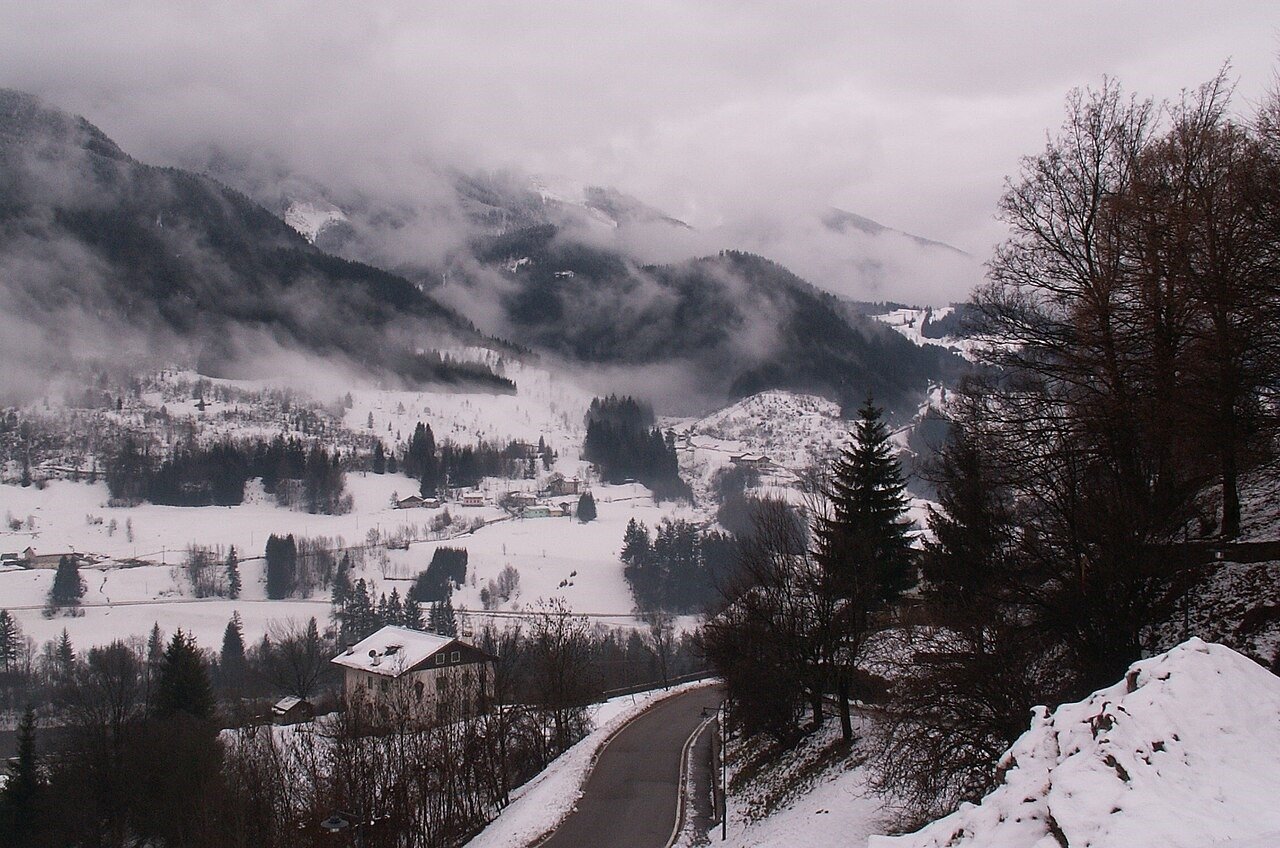
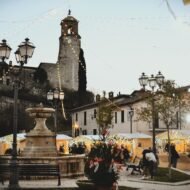
Tesero is a village in the Val di Fiemme, in the Trentino Dolomites, about 1,000 m up. Its houses are packed close together, joined by arches, covered passages and small courtyards. Each Advent, the village fills those spaces with nativity scenes.
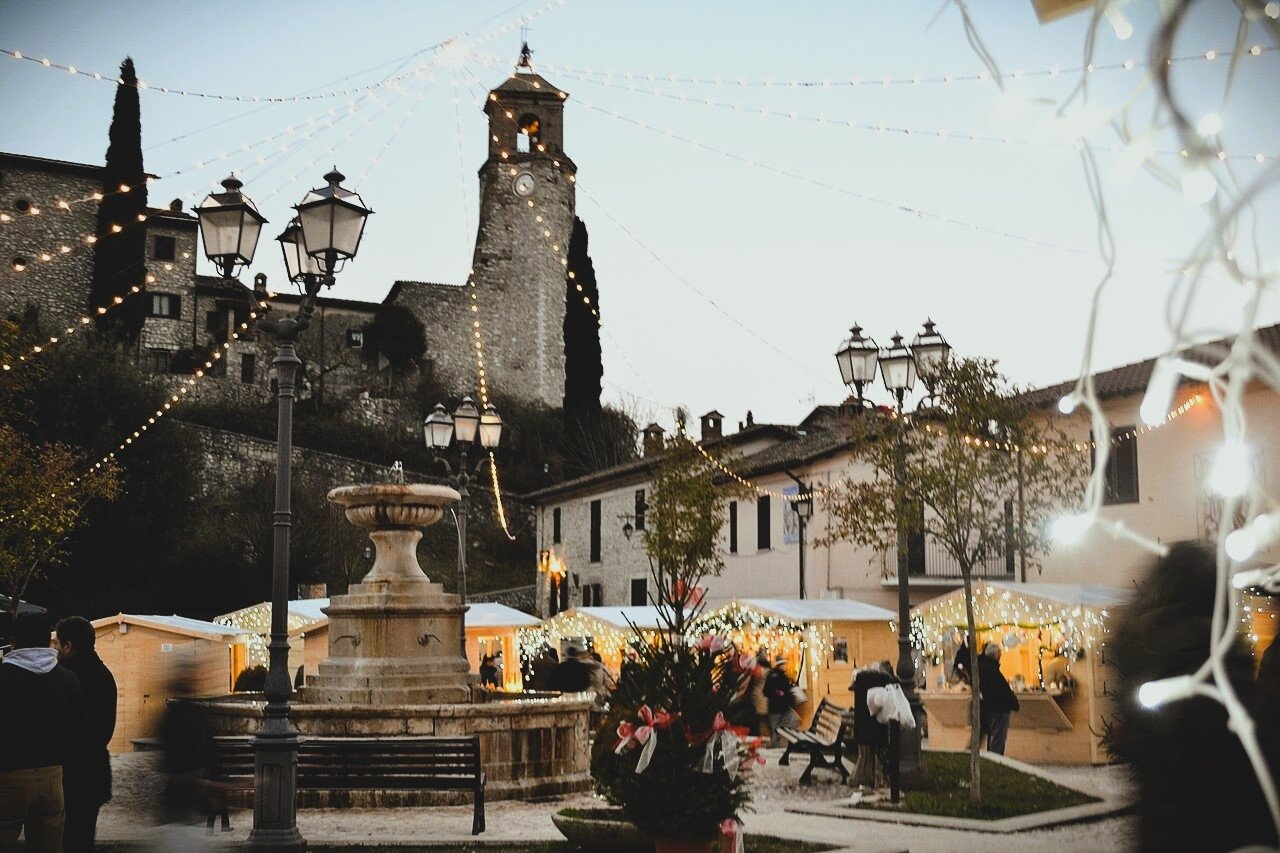
The event is called Tesero e i suoi presepi (Tesero and its nativity scenes). About a hundred handmade nativity scenes appear in courtyards, windows, stables and cellars, lit from late afternoon until 23:00. A life-size scene stands in the main square. The tradition goes back more than sixty years, and the life-size scene was first set up in one of the village courtyards in the early 1990s. It’s run by a local association of nativity makers, the Associazione Amici del Presepio “Felix Deflorian”. There are also demonstrations of old crafts, concerts in the lanes and exhibitions.
2026 dates: the event traditionally runs from the Immaculate Conception (8 December) to Epiphany (6 January). Last year, the programme events were held on Advent weekends and daily from 25 December to 6 January, from 14:30 to 19:30. The 2026–27 programme should be published on the Visit Fiemme website.
Weather in Tesero in December: typically 2–5 °C by day and −5 to −8 °C at night, with snow likely. The scenes are outdoors, so wear proper winter boots.
Getting there: take a train to Ora/Auer (on the Verona–Bolzano line) or to Trento, then a bus into the Val di Fiemme. Cavalese and Predazzo, the valley’s other villages, are a few minutes away.
3. Oberndorf bei Salzburg, Austria: Silent Night
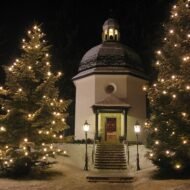
Oberndorf isn’t in the mountains. It’s a small river town on the Salzach, north of Salzburg, with the Alps on the horizon. It’s included because of what happened here on 24 December 1818. In the church of St. Nikola, the assistant priest Joseph Mohr and the schoolteacher and organist Franz Xaver Gruber sang a new carol for the first time: Stille Nacht! Heilige Nacht! (Silent Night). The congregation included the boatmen of the Salzach, who had lived through years of war and poverty. Mohr played the guitar.
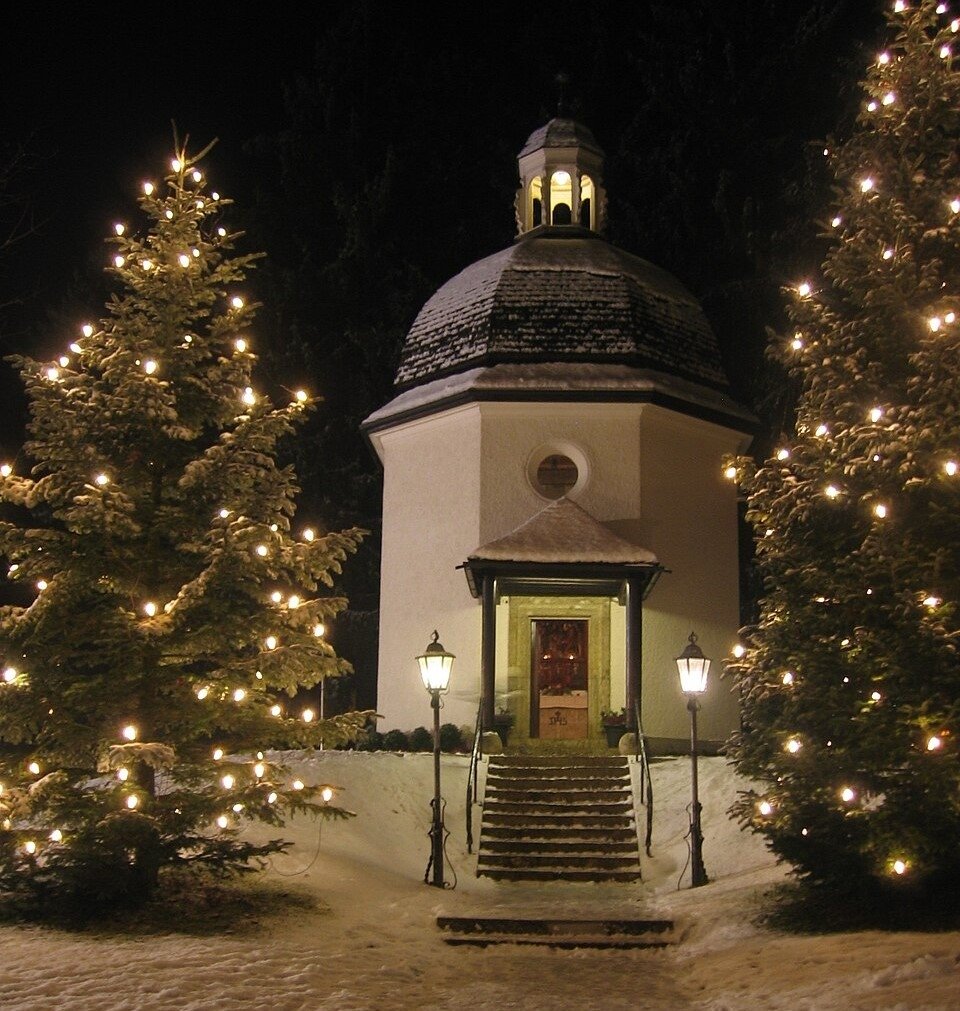
The old church is gone. In its place stands the small Silent Night Chapel, consecrated in 1937. Next to it, the old parish house, where Mohr lived from 1817 to 1819, is now the Silent Night Museum. A footbridge crosses the river to Laufen, in Germany.
2026 dates:
- Commemoration: on Christmas Eve, 24 December 2026, at 17:00, the traditional Silent Night ceremony is held outside the chapel. The carol is sung in several languages.
- Museum and chapel: open all year. Check the opening hours for the holidays.
Weather in Oberndorf in December: typically 2–4 °C by day and −2 to −4 °C at night. The river valley is often foggy, and snow is possible.
Getting there: the Salzburger Lokalbahn local railway runs from Salzburg main station to Oberndorf. It’s an easy half-day trip from the city.
4. Boží Dar, Czechia: Ježíšek’s post office
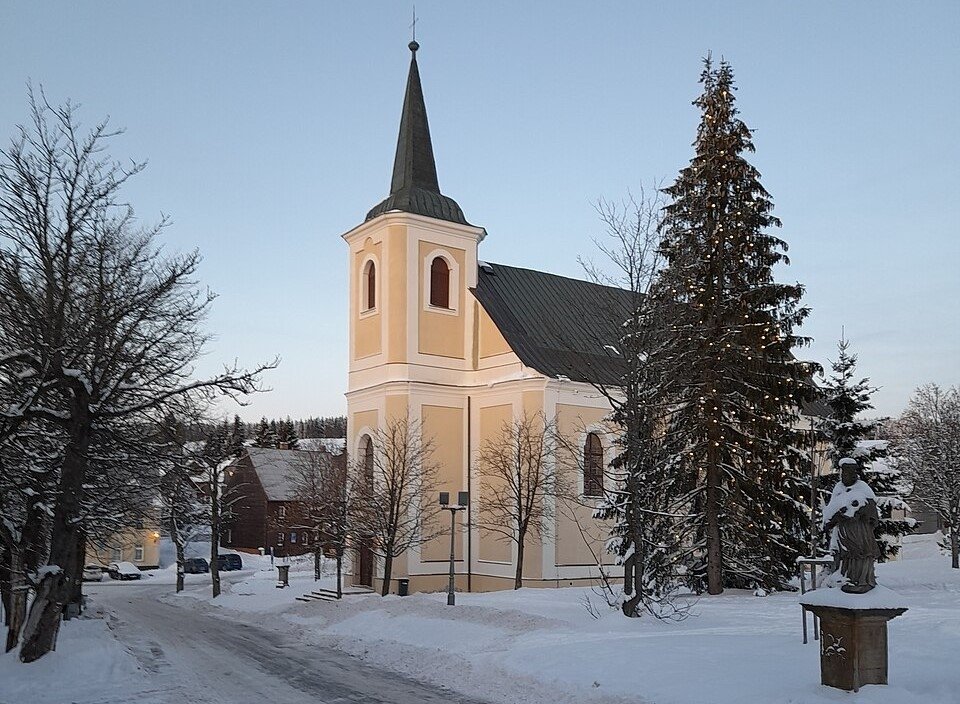
Boží Dar (“God’s Gift”) stands at about 1,000 m in the Ore Mountains, right on the German border. It’s often called the highest town in Central Europe. In Czechia, presents are brought not by Father Christmas but by Ježíšek, the Christ Child, and Boží Dar is where he gets his post.
Since 1994, the town has used a special Christmas postmark, and its design changes every year. Cards and letters sent through Boží Dar are stamped with it and sent on to their addresses. In a typical year the post office stamps more than 300 kg of Christmas post, much of it from collectors. In the village, children follow Ježíškova cesta (the Christ Child’s Path), a trail through the woods with tasks to complete. There are two loops, and it can be done on cross-country skis in winter.
2026 dates: in past years, the Christmas postmark has been used from 1 to 23 December. To use it, drop your card in Ježíšek’s postbox at the Boží Dar information centre, or post it in an envelope to Vánoční pošta, Boží Dar 1, 362 62 Boží Dar, Czech Republic.
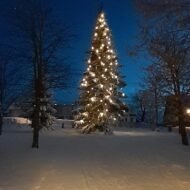
Weather in Boží Dar in December: typically around −1 to 1 °C by day and −5 to −7 °C at night. Snow is likely, and the plateau can be windy. It’s the coldest stop on this list, along with Tesero.
Getting there: Boží Dar is about 20 km north of Karlovy Vary by road. It’s next to Oberwiesenthal and the Fichtelberg, across the border in Germany. From Seiffen, in the same mountains, it’s under two hours by car.
5. Mokra Gora & Drvengrad, Serbia: Christmas on 7 January
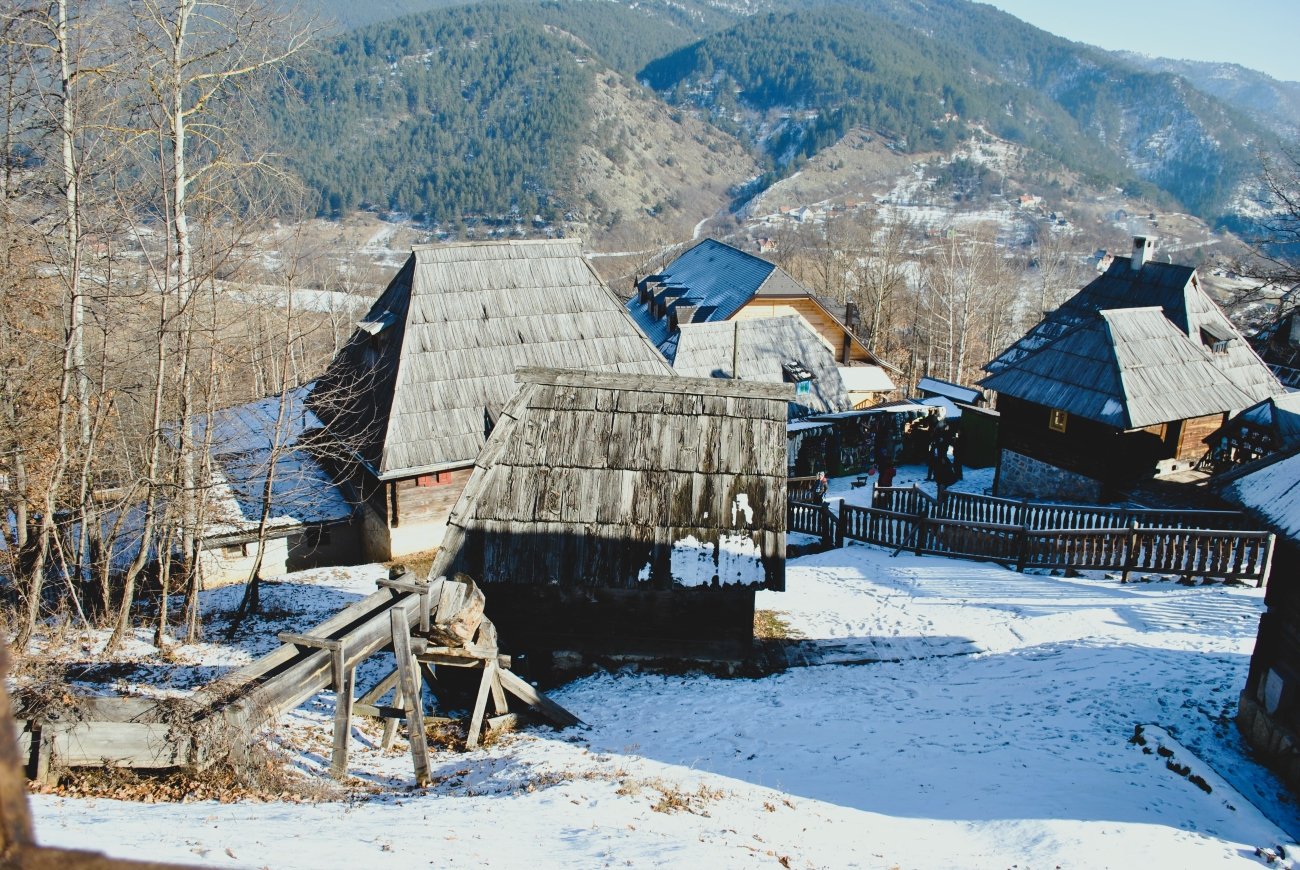
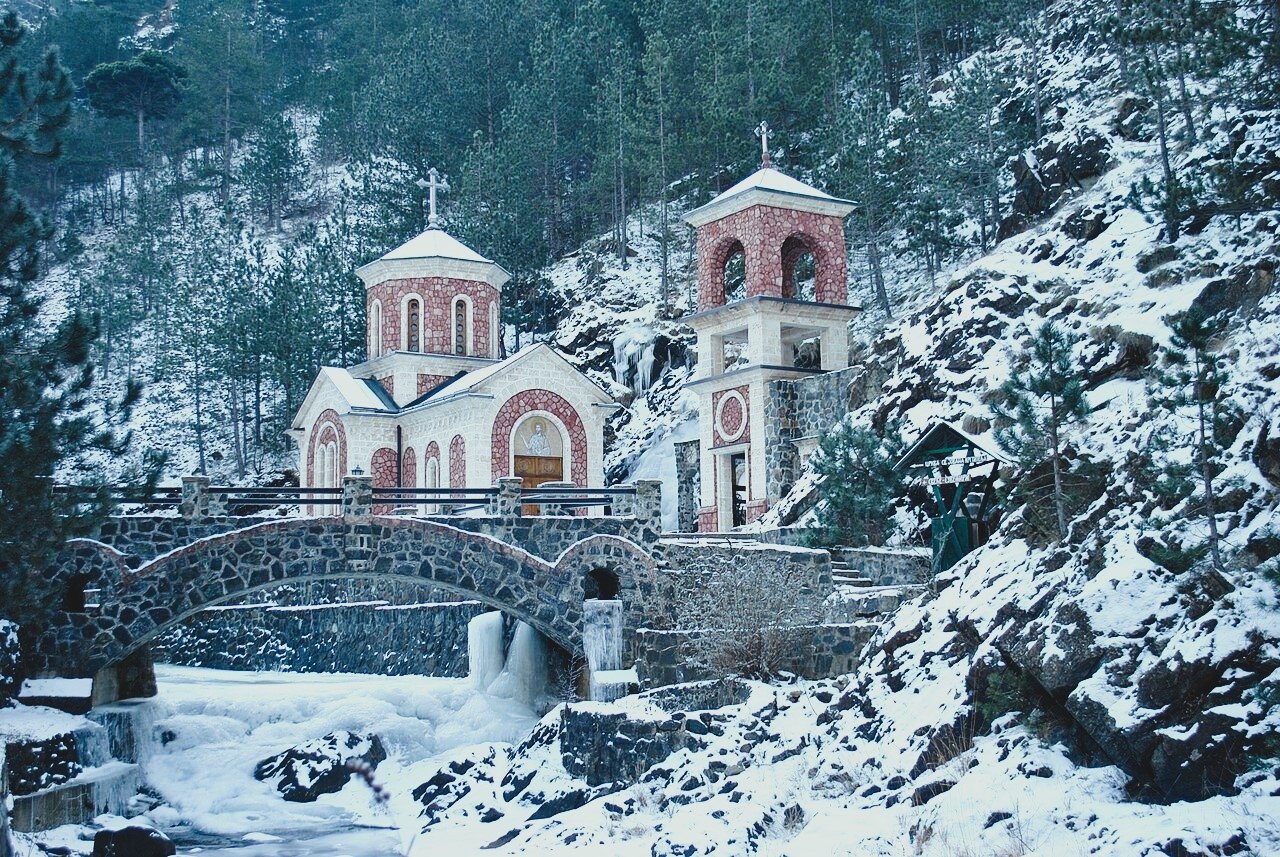
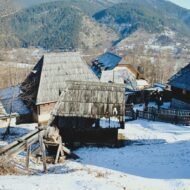
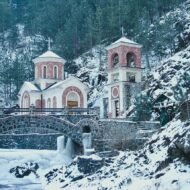
Mokra Gora lies in the highlands of western Serbia, between the Tara and Zlatibor mountains, close to the Bosnian border. On Mećavnik hill above the village stands Drvengrad (“Wooden Town”), a village of log houses with a small wooden Orthodox church at the end of its main street. Director Emir Kusturica built it for his 2004 film Life Is a Miracle. Mokra Gora was later named one of UN Tourism’s “Best Tourism Villages”.
Serbian Christmas follows the Orthodox calendar: Christmas Eve, Badnje veče, is on 6 January, and Christmas Day on 7 January. On the morning of Christmas Eve, a young oak branch, the badnjak, is cut and brought home. In the evening it’s carried into the house with straw, and the straw is spread on the floor. Children search the straw for hidden presents. Since the early 1990s, the Serbian Orthodox Church and local communities have also held public badnjak bonfires outside churches on Christmas Eve.
Later in January, Drvengrad hosts the Kustendorf film and music festival, which Kusturica founded in 2008. The Old Village open-air museum in Sirogojno, on Zlatibor, makes a good side trip.
Dates: Christmas Eve is on 6 January 2027 and Christmas Day on 7 January 2027. Kustendorf is usually held in January; in 2025 it ran from 22 to 25 January. Check the 2027 dates.
Weather in Mokra Gora in January: typically 0–4 °C by day and −6 to −8 °C at night. Snow is common, and mountain roads can be icy.
Getting there: take a train or bus from Belgrade to Užice, then a local bus or taxi to Mokra Gora. By car, it’s around four hours from Belgrade. Zlatibor is about 40 minutes away.
Beyond the map
- Plan in date order: Greccio and Tesero in December, Oberndorf on 24 December, then Serbia in early January. Their Christmas seasons hardly overlap.
- Send a card from Boží Dar. It’s the one Christmas tradition here you can join from home, by post.
- Combine trips:
- Greccio with Rieti and the other Franciscan sanctuaries of the Valle Santa.
- Tesero with the Val di Fiemme ski areas.
- Oberndorf with Salzburg’s Advent markets.
- Boží Dar with Seiffen.
- Mokra Gora with Zlatibor and Sirogojno.
- Respect the services. Greccio’s living nativity and the Serbian Christmas Eve are religious events first. Arrive early, dress warmly, and keep cameras discreet.
Read next
- Christmas in the Mountains (Seiffen, Ore Mountains)
- Orthodox Christmas in Europe
- Christmas Markets Beyond the Map
- The Old Ways of Christmas: Unusual Christmas Traditions in Europe