

A mountain of witches crowned by a pagan wall. A four-faced god pulled from a Ukrainian river. A god of hospitality on a Czech ridge, a temple of oak by a German lake, and a three-headed mountain that became a nation’s symbol. The Slavic gods left no great books, but they left their mark on the land.
Of all Europe’s old religions, the Slavic one is perhaps the most mysterious. Its people wrote nothing down about their gods before Christianity arrived, between the 9th and 12th centuries. What we know comes from a few Christian chroniclers, who saw the old faith as something to destroy, from archaeology, and from the folklore of villages from the Baltic to the Balkans.
The names survive: Perun, the thunder god; Veles, lord of cattle and the underworld; Svarog and Svetovid; the many-headed gods of the Baltic coast. So do the places: hills where fires burned, temples by lakes, carved stone idols, and mountains whose names still sound like the old gods.
This is the third part of our Mythic Europe series: five places across Poland, the Czech Republic, Germany and Slovenia where the Slavic gods still feel close. Two of the most famous, Cape Arkona on Rügen and Mount Ślęża in Silesia, are already in our Europe’s Last Pagan Landscapes II.
| Place | The myth | |
|---|---|---|
| 1 | Łysa Góra, Poland | The Bald Mountain: a pagan wall, and the witches’ sabbath |
| 2 | Kraków, Poland | The four-faced Zbruch idol, a mysterious mound and a dragon |
| 3 | Radhošť, Czech Republic | Radegast, god of hospitality, on the Beskydy ridge |
| 4 | Groß Raden, Germany | A Slavic temple of oak by a lake |
| 5 | Triglav, Slovenia | The three-headed mountain and the golden-horned chamois |
1. Łysa Góra, Poland
50.86° N, 21.05° E · Świętokrzyski National Park, 595 m
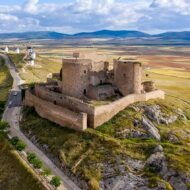
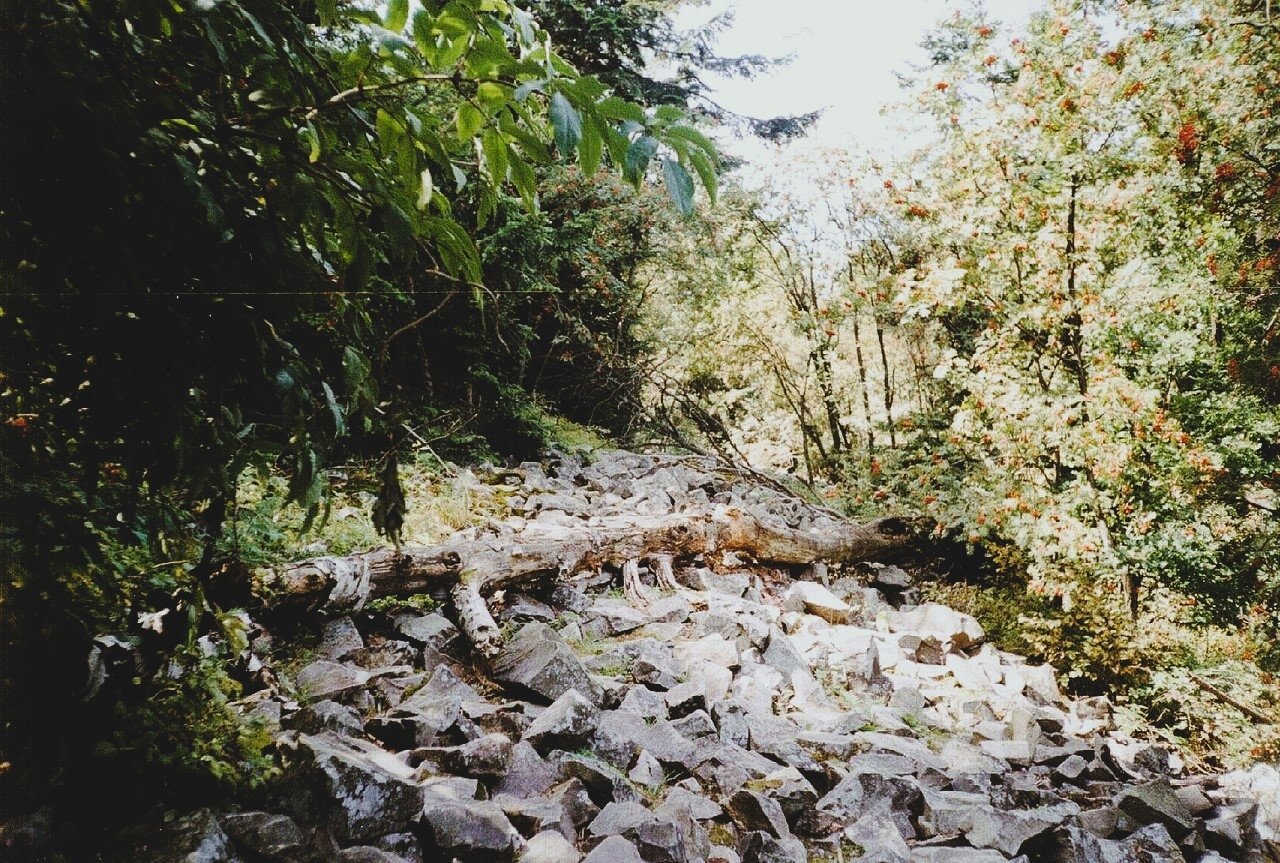
In the old, worn-down Świętokrzyskie Mountains of central Poland rises Łysa Góra, the “Bald Mountain”. It is only 595 metres high, but it has been a holy mountain for more than a thousand years.
Around its summit runs a stone wall about 1.5 km long and up to 2 metres high, built of local quartzite between the 8th and 10th centuries. It was not a fortress. Archaeologists believe it enclosed a pagan sacred site, where fires were lit to the old gods. The medieval chronicler Jan Długosz wrote of a temple of three gods on the mountain.
When Poland became Christian, the Church claimed the summit. A Benedictine monastery was built there, traditionally in 1006, and it became famous for its relic of the Holy Cross, which gave the mountain its other name, Święty Krzyż. But the old stories never left. For centuries, people said that on certain nights, witches flew to the Bald Mountain for their sabbath. A flying witch is still the region’s symbol.
In the Field Guide: the walk along the pagan wall, the great stone field (gołoborze) below the summit, the monastery museum, and the witches’ trail of the Świętokrzyskie Mountains.
When: May to October, the beech forests are best in autumn. Weather on Łysa Góra: a central European climate, with warm summers and cold winters. Days are usually in the low to mid 20s °C in summer and around freezing in winter, when snow is common on the summit. Getting there: the classic route climbs from the village of Nowa Słupia through the forest, about 1 hour on foot. Kielce is about 40 minutes by car.
2. Kraków, Poland
50.06° N, 19.94° E · Archaeological Museum, ul. Senacka 3
Kraków is better known for its kings and churches, but it holds one of the very few surviving images of a Slavic god. In the Archaeological Museum stands the Zbruch idol: a four-sided limestone pillar about 2.5 metres tall, dated to around the 9th–10th century. It was found in 1848, when a drought lowered the Zbruch River, in today’s western Ukraine.
At the top, four faces under a single tall hat look out in four directions. Below them, the carvings form three tiers: gods above, people holding hands in the middle, and a kneeling figure holding up the world from below. It is often linked to Svetovid, the four-faced god of the Baltic Slavs, and read as a picture of the whole universe: heaven, earth and the underworld. Its meaning is still debated, and a few scholars even question its age.
Kraków’s other myths are close by. Under Wawel Hill is the Dragon’s Den, home of the Wawel dragon, first described by the chronicler Wincenty Kadłubek in the early 13th century. Across the river, the Krakus Mound, 16 metres high, is said to be the grave of the city’s legendary founder, King Krak. When it was excavated in the 1930s, no grave was found, only a wooden structure at its core and finds from the 8th to 10th centuries. Its true purpose is still a mystery.
In the Field Guide: the idol and the museum, the Krakus and Wanda mounds and the sunrise between them, the Dragon’s Den, and Kraków’s spring festival on the mound.
When: all year, May to September for the mounds and walks. Weather in Kraków: average highs are about 20°C in May, 25°C in July, 20°C in September and 14°C in October; winters are cold, around 2°C by day and below freezing at night. Getting there: the museum is in the Old Town, below Wawel. The Krakus Mound is in Podgórze, about 3 km south of the centre.
3. Radhošť, Czech Republic
49.49° N, 18.22° E · Beskydy Mountains, Moravia, 1,129 m
Radhošť is a mountain of the Moravian-Silesian Beskydy, in the far east of the Czech Republic. Its name has long been linked to Radegast, a Slavic god of hospitality, abundance and war, and local legend says that the old Slavs came here to honour him, until the missionaries Cyril and Methodius came to Moravia in the 9th century and destroyed his idol. The god, the story says, retreated with his treasure into tunnels and caves under the mountain.
The god came back in 1931. On the ridge between Pustevny and the summit stands a powerful statue of Radegast, by the Czech-American sculptor Albín Polášek, a native of the town below. Its unveiling was the stuff of legend: the cart carrying it got stuck on the road in a storm, and was pulled free the next day by six horses. The original statue is now kept in the town hall of Frenštát pod Radhoštěm; a granite copy stands on the mountain.
In the Field Guide: the ridge walk from Pustevny to the summit, the wooden folk architecture of Pustevny, and the legends of the Beskydy.
When: May to October for walking, winter for snow. Weather on Radhošť: a cool mountain climate. Summer days are mild and often misty, and winters are snowy, with snow often lasting into spring. Getting there: a chairlift runs from Trojanovice to Pustevny, from where a marked path follows the ridge to the statue and the summit. Frenštát pod Radhoštěm is about 1 hour by car from Ostrava.
4. Groß Raden, Germany
53.73° N, 11.89° E · near Sternberg, Mecklenburg
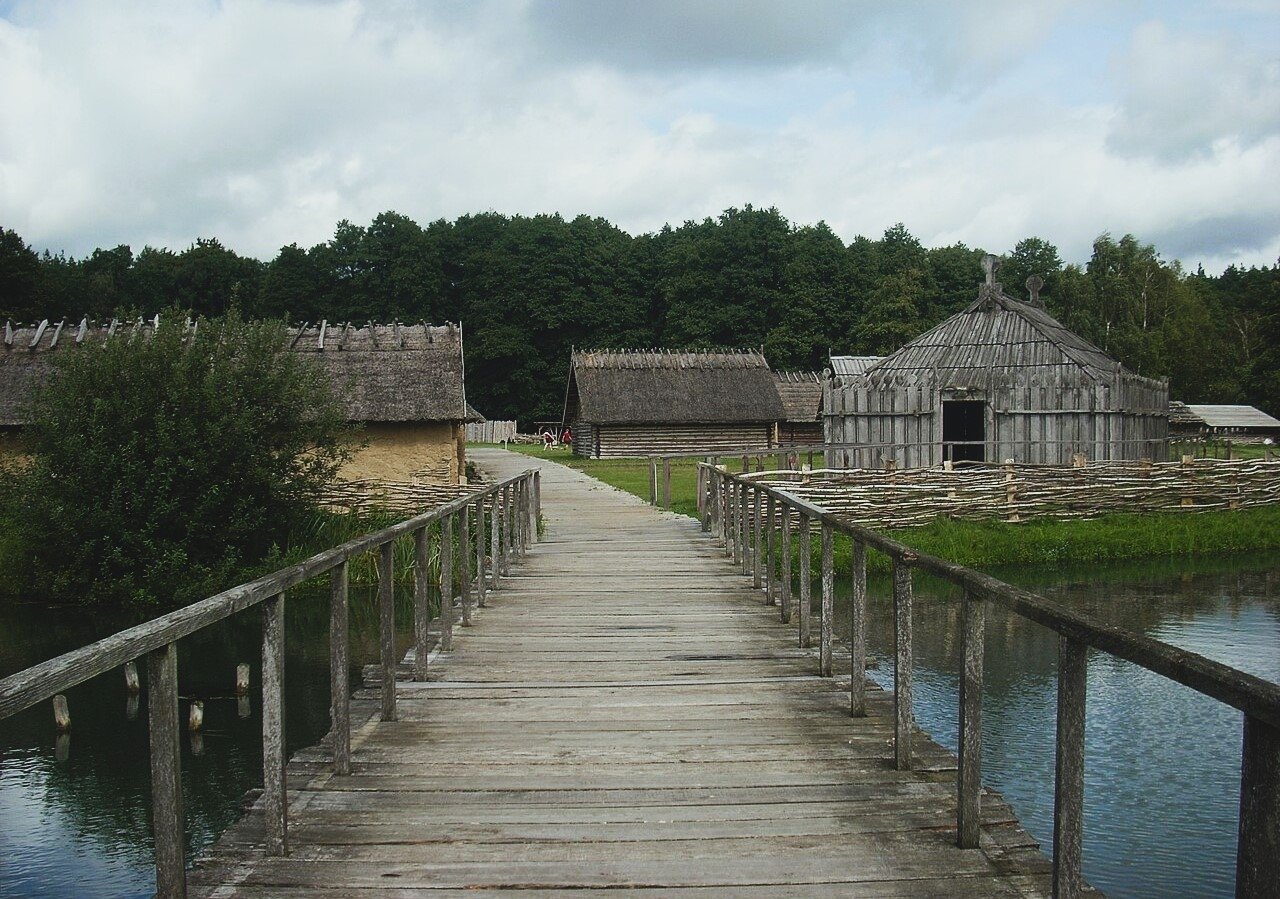
A thousand years ago, northern Germany east of the Elbe was a Slavic land. In Mecklenburg lived the Warnow tribe, and at Groß Raden, beside a lake, they built a settlement with a temple.
Excavations from 1973 to 1980 found the remains of a 9th–10th century village and a large building of broad oak planks, about 7 by 11 metres. Traces of offerings and so-called “head planks” suggest it was a sanctuary. Around 900, fire destroyed the palisade, the gate and the temple. A new circular fortress was then built on an island in the lake, connected by a bridge. The settlement was abandoned at the end of the 10th century.
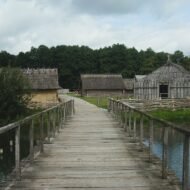
Today, the Archaeological Open-Air Museum has rebuilt the village, the temple, the wooden bridge and the great ring rampart, about 50 metres across, with its tunnel gate. It is one of the best places in Europe to imagine how a Slavic temple once looked.
In the Field Guide: the open-air museum, the lost temple of Rethra and the god Radegast, and the Slavic heritage of Mecklenburg and Pomerania.
When: spring to autumn, check the museum’s season before going. Weather at Groß Raden: the mild, breezy climate of the German Baltic lowlands. In nearby Rostock, average highs are about 16°C in May, 22°C in July, 18°C in September and 4°C in January. Getting there: just north of Sternberg; about 40 minutes by car from Schwerin and 1 hour from Rostock.
5. Triglav, Slovenia
46.38° N, 13.84° E · Triglav National Park, 2,864 m
Triglav is the highest mountain in Slovenia and the heart of the Julian Alps. Its name means “three heads”, the same as the three-headed god Triglav, worshipped by the Slavs of the Baltic coast. Most scholars think the mountain was named simply for its shape, three summits seen from the valleys, rather than after the god. But for Slovenes, the mountain has its own mythology.
The best-known legend is that of Zlatorog, the white chamois with golden horns, who lived high on the mountain among the alpine gardens of the White Ladies. A hunter, hoping to win the treasure he guarded, shot him. From the chamois’s blood grew the Triglav rose, and by eating it, he was healed. Furious, he destroyed the gardens, and the hunter fell to his death.
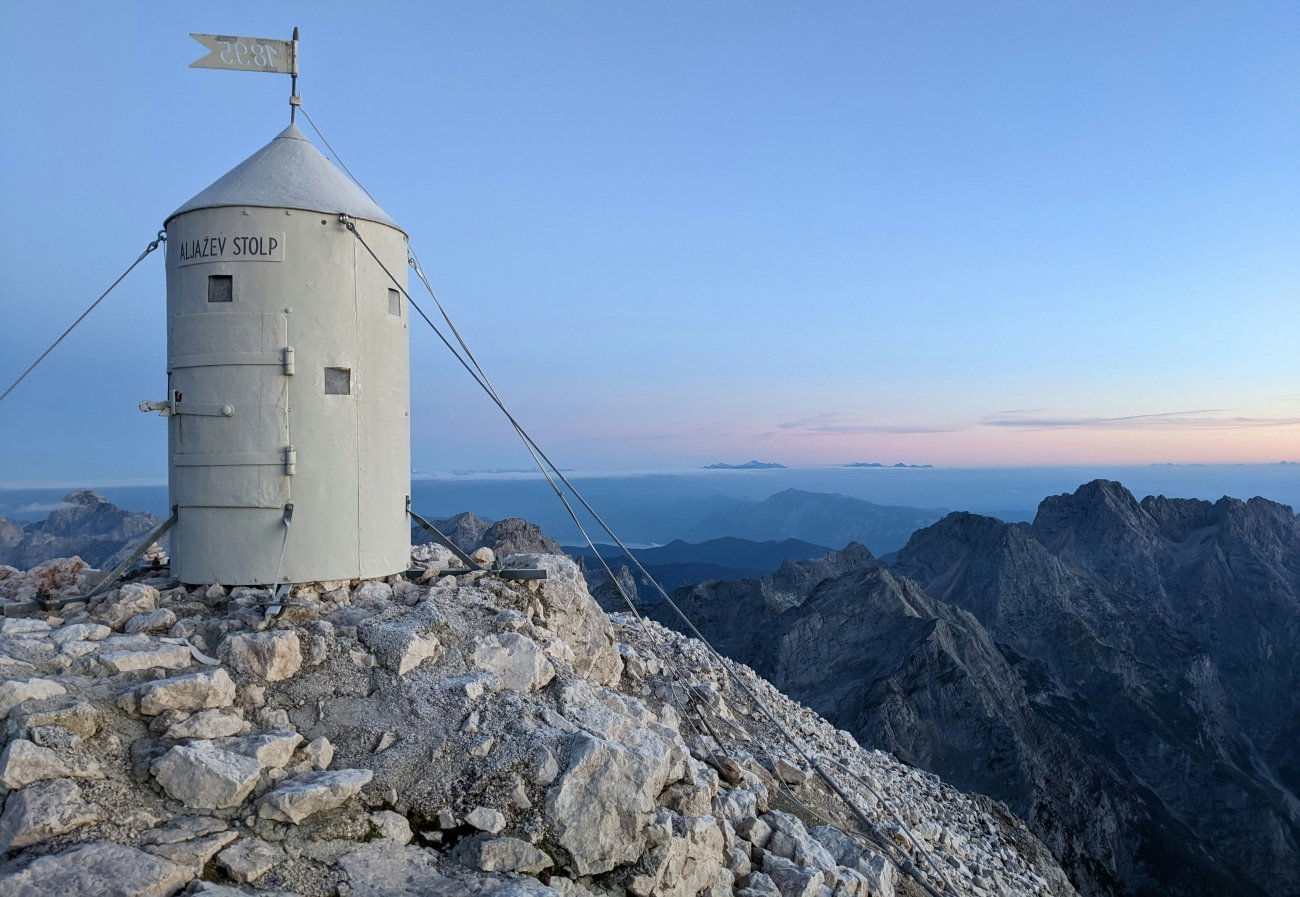
Triglav is also a national symbol: its outline appears on Slovenia’s coat of arms and flag. On the summit stands the Aljaž Tower, a small metal shelter put up in 1895 by the priest Jakob Aljaž, who bought the top of the mountain for one florin.
In the Field Guide: the classic routes to the summit, Lake Bohinj and the Zlatorog story, the Trenta valley, and easier viewpoints for those who don’t climb.
When: July to September for the summit, snow lingers on the high trails into early summer. Weather on Triglav: cold even in summer. At the Kredarica hut, at about 2,500 m, average highs are only about 10°C in July and August and around -4°C in January. Summer storms are frequent; start early. Getting there: the summit is a serious two-day climb, with a protected route on the final ridge; inexperienced walkers should go with a mountain guide. Lake Bohinj and Kranjska Gora are the main bases, about 1 hour by car from Ljubljana.
Beyond the map
The Slavic gods were destroyed more completely than almost any others. Their temples were burned, their idols thrown into rivers, their names written down only by their enemies. And yet they are not gone. A wall still runs around the Bald Mountain, a four-faced god still looks out over a museum hall in Kraków, Radegast still stands on his ridge, and a three-headed mountain still flies on a nation’s flag.
Mythic Europe — a Beyond the Map Field Guide
[Mythic Europe — The Beyond the Map Field Guide]
The Slavic chapter of our guide to the places where Europe’s myths were born includes:
- The five sites in detail, with walks, access notes and the best times to go
- Arkona and Ślęża, the great sanctuaries of Rügen and Silesia
- The Baltic Slavs: Wolin, Szczecin and the lost temple of Rethra
- Kupala Night and the midsummer traditions that still survive
- Perun, Veles and the many-headed gods: who they were and how we know them
- Offline maps and GPS points for every site
→ [Get the Field Guide]
Coming next in Mythic Europe: the Greek gods.
Read next: Where the Norse Gods Lived · Where Basque Myths Live · Europe’s Last Pagan Landscapes II · Baltic Pagan Sacred Sites
Explore more: Where the Vikings Were · Europe’s Landscapes of Legend