

Giant glowing mitres and a thousand cowbells chasing St Nicholas through a Swiss town. Four hundred miners marching by lamplight through a toy-makers’ village. A man in a sheepskin and a star on a pole knocking at the door on Christmas Eve. Fur-clad figures rattling chains through an Alpine village on Christmas Day. Masked young men running wild through a Portuguese village after midnight Mass. Five Christmas traditions that are much older than Christmas.
Long before Santa Claus, Christmas in rural Europe was loud, dark and full of masks. It fell at midwinter, the most dangerous time of the year, when the old year had to be chased out and the new one welcomed in. Villages did it with noise, fire, bells and disguise: young men dressed as beasts, saints and devils went from house to house, scaring children, blessing farms and collecting food and drink.
The Church gave these customs new meanings, and in most places they disappeared in the 20th century. In a few, they never did. Here are five, in calendar order, with their 2026 dates.
| Date (2026) | Tradition | Place | Country |
|---|---|---|---|
| 5 Dec | Klausjagen: the chase of St Nicholas | Küssnacht am Rigi | Switzerland |
| 12 Dec | The Great Miners’ Parade | Seiffen, Ore Mountains | Germany |
| 24 Dec | Carolers with the Gwiazdor (the star man) | Pałuki, Greater Poland | Poland |
| 25 Dec & 1 Jan | Pelzmartiga: the fur-clad figures | Kandersteg, Bernese Oberland | Switzerland |
| 25–26 Dec | The Christmas caretos of the Festa dos Rapazes | Varge, Trás-os-Montes | Portugal |
1. Klausjagen, Küssnacht am Rigi (Switzerland)
5 December · 47.08° N, 8.44° E · Lake Lucerne, canton of Schwyz
On the eve of St Nicholas’ Day, the lakeside town of Küssnacht am Rigi switches off its street lights, and one of the oldest and most impressive St Nicholas customs in Europe begins.
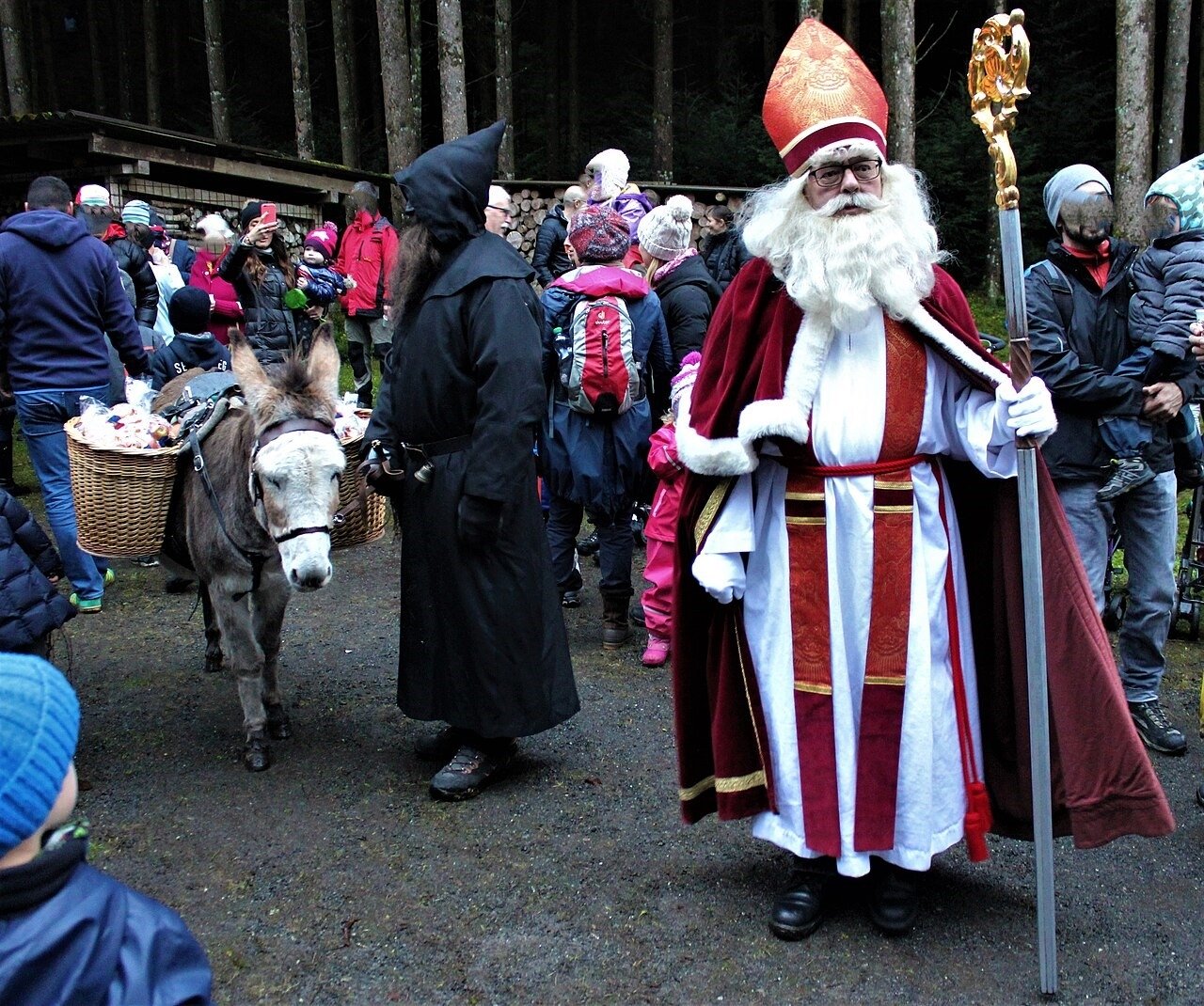
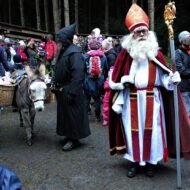
The Klausjagen, “the chase of St Nicholas”, is thought to go back to pagan midwinter noise-making, later tamed by the Church into a St Nicholas procession. First come the whip-crackers, cracking long whips in the dark. Then more than 200 Iffelen: huge lanterns shaped like bishops’ mitres, some over 2.5 metres tall, cut into patterns and lit from inside like stained glass, carried on the heads of their bearers. Then St Nicholas himself, with his dark companions, the Schmutzli, and torchbearers. Last come about a thousand Trichler, men swinging enormous cowbells, and horn players sounding a strange, repeated three-note call. Up to 30,000 people line the dark streets to watch.
→ Read more: December Festivals in Europe
2026 date: Saturday 5 December, from 20:15; children’s procession in the afternoon. Free.
Weather in Küssnacht: cold and damp by the lake, usually just above freezing in the evening. Dress warmly: you will stand for a long time.
Getting there: about 20 minutes by train from Lucerne.
2. The Great Miners’ Parade, Seiffen (Germany)
12 December · 50.65° N, 13.45° E · Erzgebirge (Ore Mountains), Saxony
In the Ore Mountains, Christmas grew out of mining. For centuries, the men of these hills worked underground in the silver and tin mines and rarely saw daylight in winter. Their longing for light shaped the region’s Christmas: the candle arches (Schwibbögen) in every window, the wooden miners and angels holding candles, and the miners’ parades (Bergparaden) of Advent.
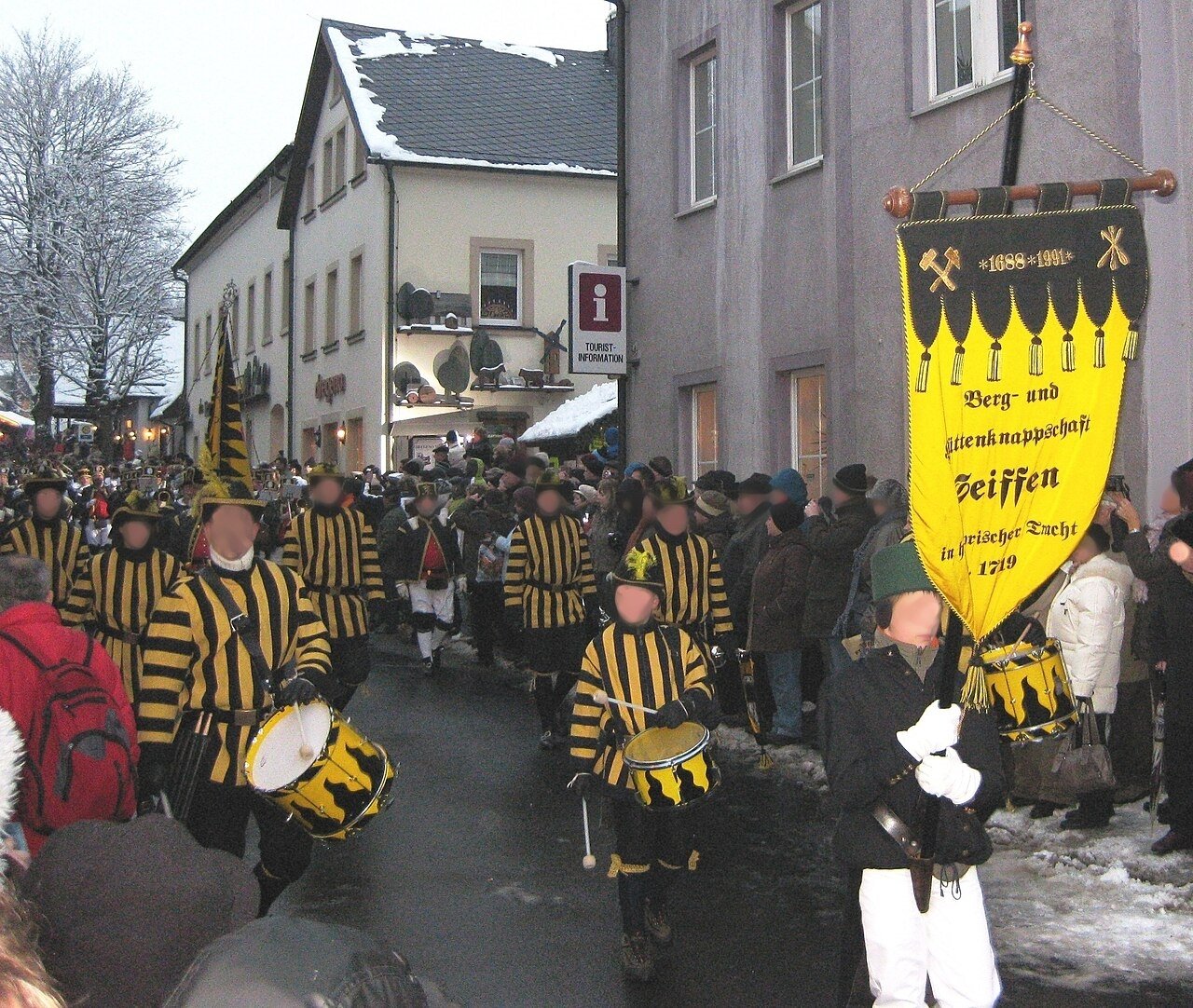
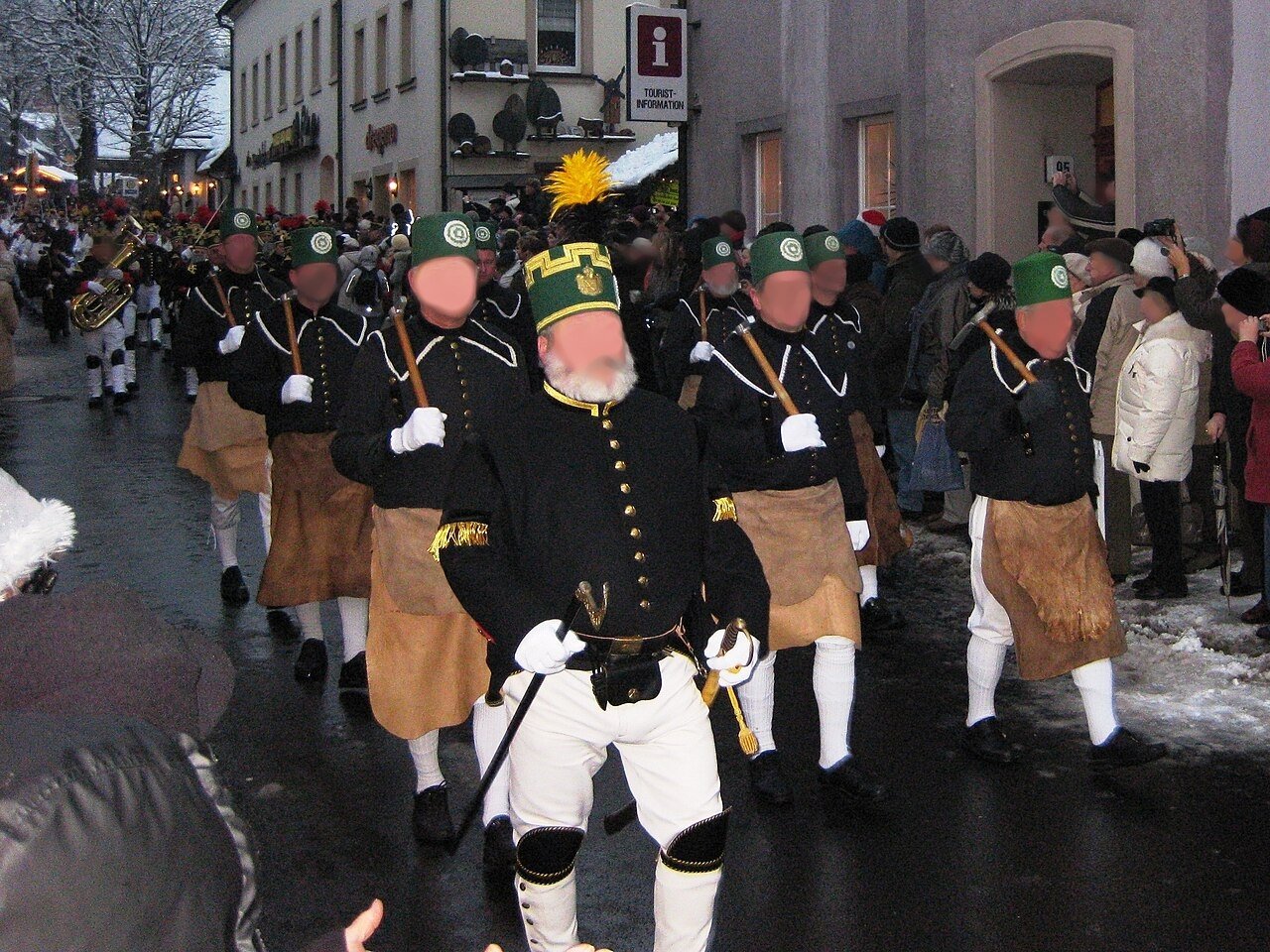
When the mines declined, the miners turned to wood-carving, and the village of Seiffen became the toy-making capital of Germany. On the second Saturday of Advent, more than 400 people in full miners’ uniform, members of the miners’ guild of Seiffen and neighbouring guilds, together with a children’s group dressed as “living toys”, march through the village to music, in the Great Miners’ Parade. It is the heart of the Seiffener Weihnacht, when the whole village becomes a Christmas market.
→ Read more: Christmas in the Mountains
2026 date: Great Miners’ Parade, Saturday 12 December, from 15:30. Seiffener Weihnacht, 27 November – 22 December. Free.
Weather in Seiffen: cold mountain winter at about 600 metres days usually close to freezing, with snow common.
Getting there: about an hour by car from Dresden or Chemnitz.
3. The Gwiazdor and the Carolers, Pałuki (Poland)
24 December · 52.85° N, 17.72° E · Pałuki, between Greater Poland and Kuyavia
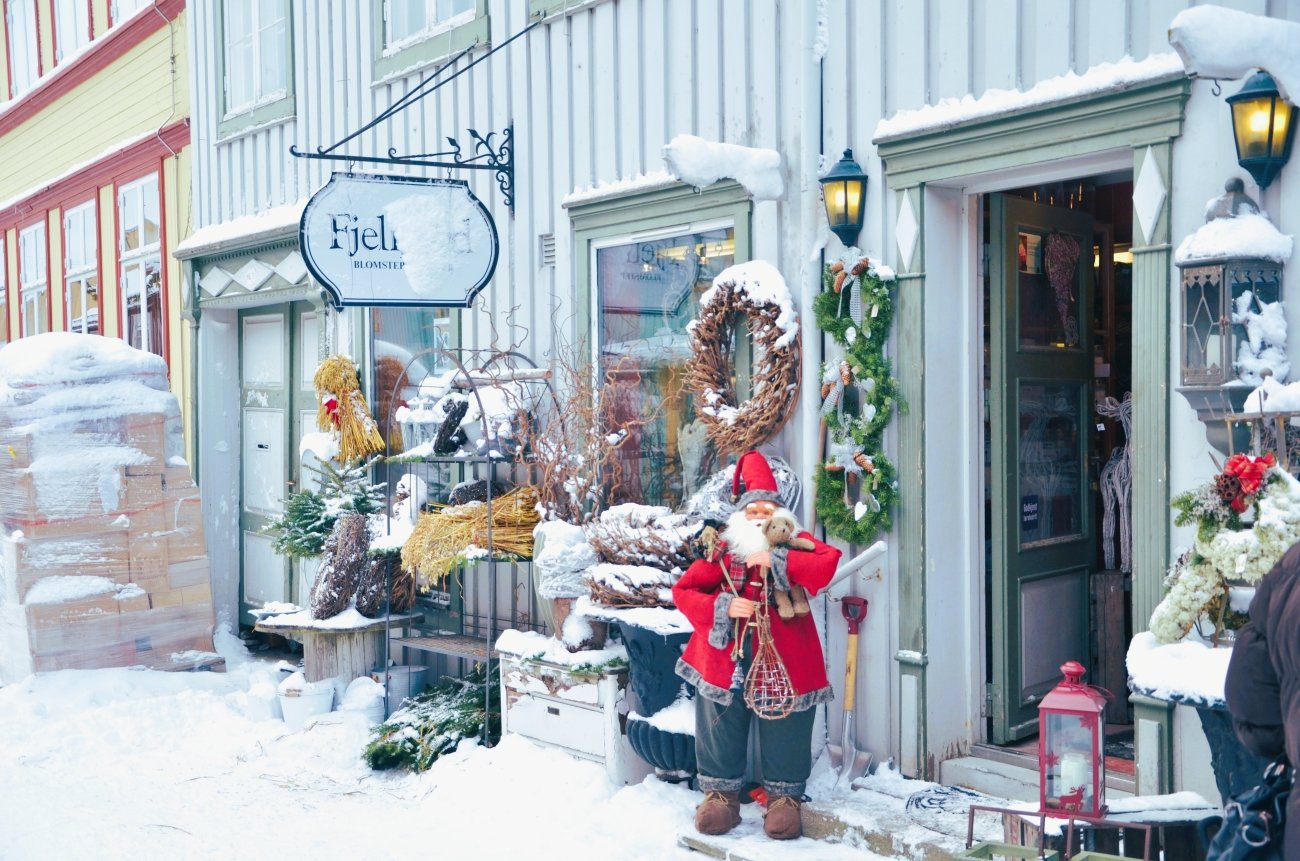
In most of Poland, the Christmas gift-bringer is St Nicholas. In the north-west, in Greater Poland, Kuyavia, Pomerania and Kashubia, it was traditionally the Gwiazdor, the “star man”: not a jolly figure in red, but a masked man in a sheepskin coat turned inside out, or a straw cloak, tied with rope, with a bell and a birch rod.
In the Pałuki region, around the lake town of Żnin, carolers with the Gwiazdor went round the villages from Christmas Eve. They came in sheepskins, with masked or soot-blackened faces, carrying a star on a pole, often with St Joseph and other figures. The Gwiazdor questioned the children on their prayers, threatened them with his rod and then handed out sweets. The carolers were welcomed everywhere, because people believed they drove away evil and brought good luck, and were rewarded with szczodraki, special bread rolls baked for them. In Kashubia, a similar group of young bachelors, the gwiżdże, still goes from house to house on Christmas Eve in some villages.
This is a home tradition, not a public show: today it lives on in a few villages and in folk groups, and is best seen at Christmas events in regional museums. Ask locally.
→ Read more: An Orthodox Christmas (more winter masks and carolers in eastern Europe)
2026 date: Christmas Eve, 24 December; carolling continues through the Christmas season.
Weather in Pałuki: a cold, damp lowland winter December is usually around freezing, often grey, with snow possible.
Getting there: Żnin is about 45 minutes by car from Bydgoszcz, or about 1.5 hours from Poznań.
4. Pelzmartiga, Kandersteg (Switzerland)
25 December and 1 January · 46.49° N, 7.67° E · Bernese Oberland
In the high mountain village of Kandersteg, at the foot of the Bernese Alps, Christmas Day has a very different face. From midday until late in the evening, on 25 December and again on New Year’s Day, the Pelzmartiga roam the village: figures wrapped in furs, some in bear skins, with masks, rattling chains and bells, mixing with the crowds and frightening passers-by.
The custom is believed to be an old pagan ritual to drive away evil spirits at the turn of the year. Its costumes are worn only once a year, as tradition demands, and some say it came over the mountains from the Valais. Over time, other figures joined the wild ones, such as a well-dressed “gentleman” (Herri), and until the middle of the 20th century, the Christ Child walked with them too. Elsewhere in the Bernese Oberland, the noise continues: in Meiringen, the Übersitz brings bell-ringers and drummers onto the streets at the very end of the year.
2026 dates: 25 December 2026 and 1 January 2027, from 12:00 until late evening. Free.
Weather in Kandersteg: a cold Alpine climate at about 1,175 metres December is usually well below freezing, with snow on the ground.
Getting there: about 1 hour by train from Bern, via Spiez, on the Lötschberg line.
5. The Christmas Caretos, Varge (Portugal)
25–26 December · 41.85° N, 6.71° W · Bragança, Trás-os-Montes
Portugal’s masked caretos are famous from the Carnival of Podence, recognised by UNESCO in 2019. But in the villages around Bragança, in the far north-east, the caretos come out at Christmas too, in the Festa dos Rapazes, the “Festival of the Young Men”, held in different villages between 24 December and 6 January and linked to the winter solstice.
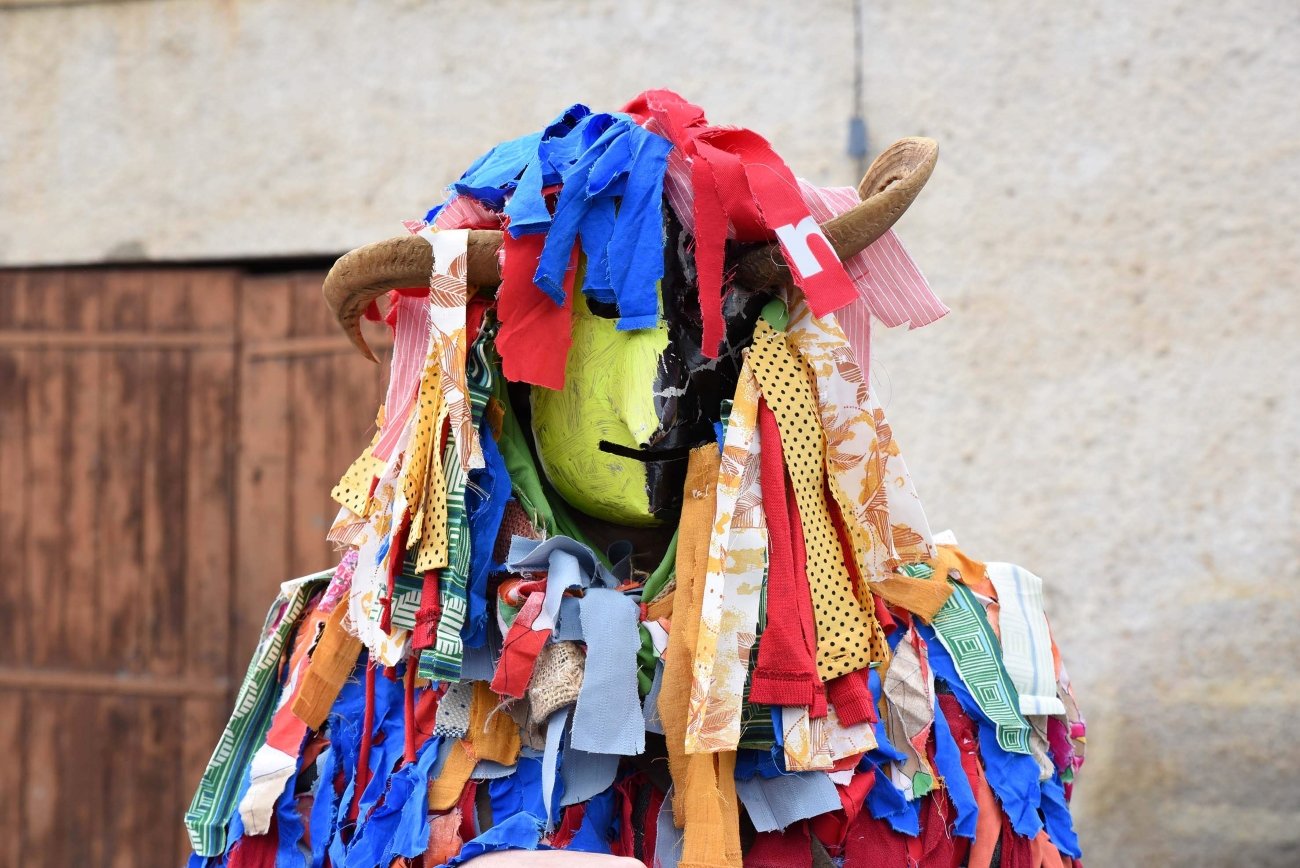
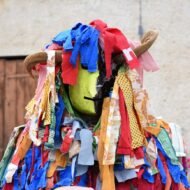
In Varge, it is simply called the Christmas Festival. The village’s unmarried young men prepare everything. At the midnight Mass, they sit in a place of honour near the altar, are the first to kiss the figure of the Christ Child, and leave early to put on their costumes. On Christmas Day, after Mass, the caretos burst into the streets in fringed costumes of coloured wool and painted masks, jumping, shouting and laughing to the sound of rattles, bagpipes and drums, throwing hay and spring water at the crowds and chasing the women, a gesture linked to fertility and the land. They go from house to house collecting food and contributions, and in the loas, the villagers’ behaviour over the past year is mocked in verse. At the end, the young men compete in tests of strength to choose next year’s organisers.
2026 dates: Christmas Eve Mass, 24 December; caretos on 25 December (with festivities continuing on 26 December). Other villages nearby hold their own Festas dos Rapazes until 6 January, such as Aveleda, Baçal and Rio de Onor, and Ousilhão on St Stephen’s Day.
Weather in Trás-os-Montes: cold for Portugal December days are often around 5–10 °C, with frost at night and sometimes snow in the hills.
Getting there: Bragança is about 2.5–3 hours by car from Porto Varge is a short drive from the city. Accommodation in the village is very limited; stay in Bragança.
Beyond the map
These five traditions are not performances put on for visitors. They belong to the people who keep them, and they survive because each generation decides to carry them on: the young men of Varge, the lantern-makers of Küssnacht, the miners’ guilds of the Ore Mountains. Watch from the side, be ready for noise, a little fear and perhaps some hay in your hair, and you will see Christmas as Europe once knew it.
Read next: December Festivals in Europe · Christmas in the Basque Country · An Orthodox Christmas · Christmas in the Mountains