

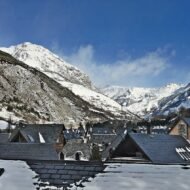
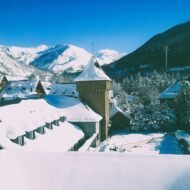
A stone village where two mountain rivers meet, on the Atlantic side of the Pyrenees: Romanesque churches, a hot spring, a family house linked to the founding of California, and a path that climbs to the lakes of Aigüestortes.
High in the Catalan Pyrenees, the Val d’Aran is a world of its own. It is the only part of Catalonia on the northern side of the mountains, and its rivers flow not to the Mediterranean but to the Atlantic: the Garonne rises here and runs through France to Bordeaux. Its people speak Aranese, a form of Occitan, which is an official language alongside Catalan and Spanish. Until the Vielha tunnel opened in 1948, the valley had no direct winter road to the rest of Spain.
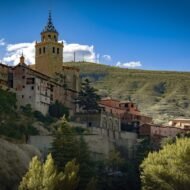
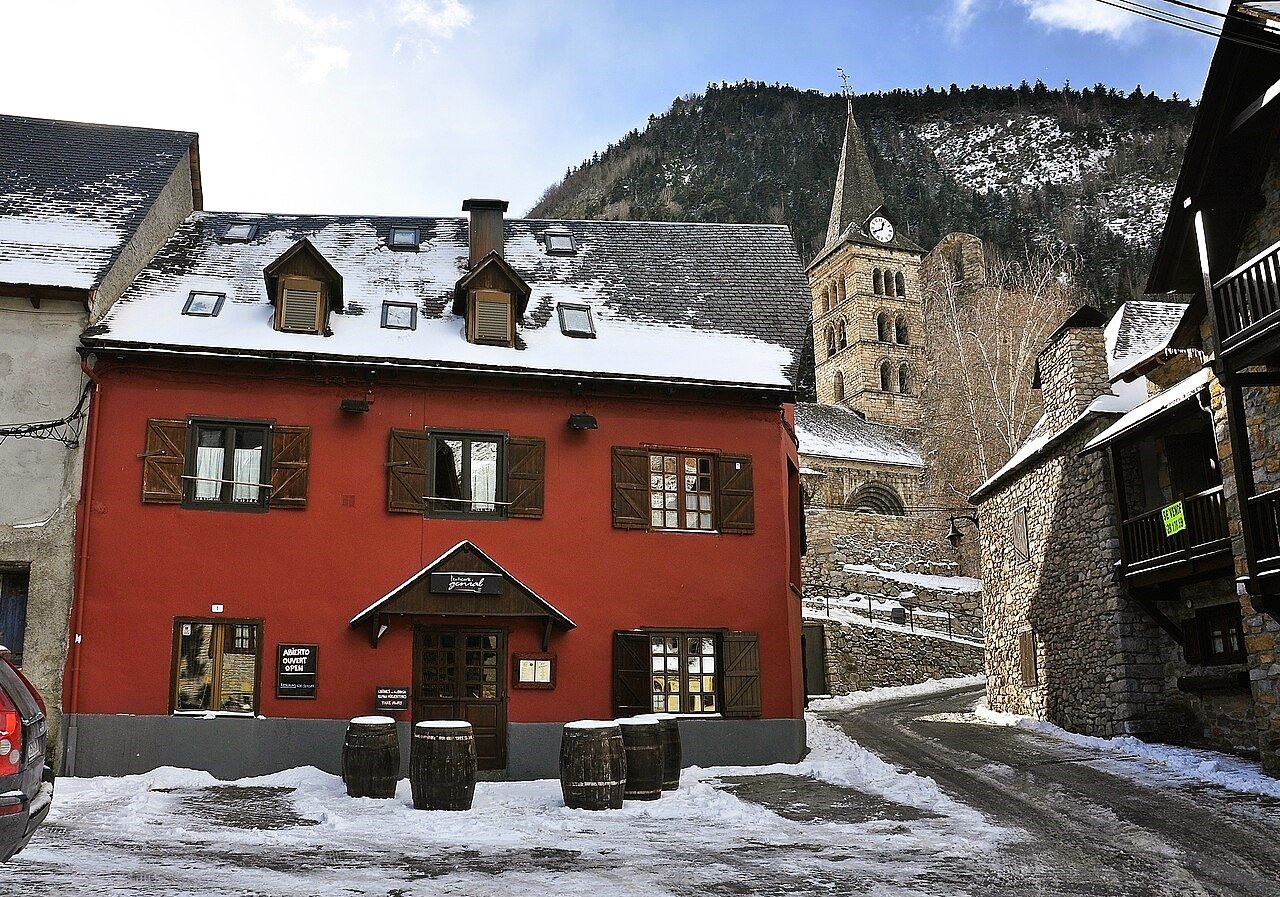
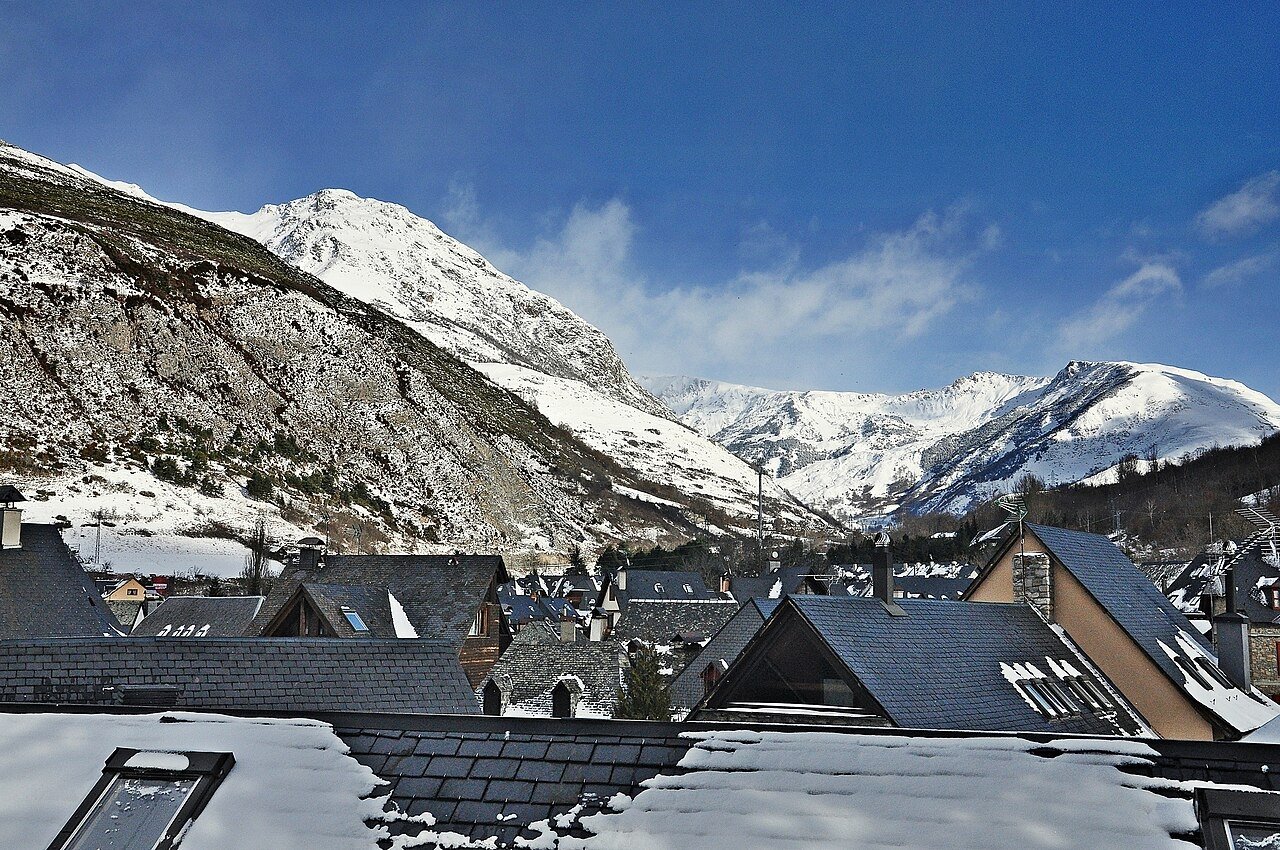
In the upper part of the valley, at 1,143 metres, the village of Arties sits where the Valarties river meets the Garonne. It is small, with about 550 inhabitants, and built of stone and slate: narrow lanes, colourful façades, a 13th-century bridge and two old churches. Only seven kilometres from the ski slopes of Baqueira-Beret, it still feels like a mountain village rather than a resort.
At a glance
| Where | Upper Val d’Aran (Naut Aran), Lleida province, Catalonia, Spain |
| Altitude | About 1,143 m |
| Population | About 550 |
| Language | Aranese (Occitan), Catalan and Spanish |
| Known for | Romanesque church of Santa Maria, hot springs, Portolà house, hiking to Restanca and Montardo |
| Nearby | Vielha (7 km), Baqueira-Beret (7 km) |
| Recognition | One of “Los Pueblos Más Bonitos de España” since 2023 |
Two churches and a bridge
The heart of Arties is the church of Santa Maria, considered one of the jewels of Aranese Romanesque art of the 11th and 12th centuries. It has three naves and two bell towers, one Romanesque and the other built in the transition to Gothic in the 13th–14th centuries. Inside are a Gothic altarpiece from the 15th century and wall paintings of the Last Judgement, whose crowded, strange figures are sometimes compared to the work of Hieronymus Bosch. The church is protected as a Cultural Asset of National Interest.
A few steps away stands the Gothic church of Sant Joan, from the late 13th or early 14th century, with an octagonal bell tower. It is no longer used for worship and now hosts temporary exhibitions. Over the river, a medieval bridge from the 13th century still carries a path across the river.
The Portolà house and California
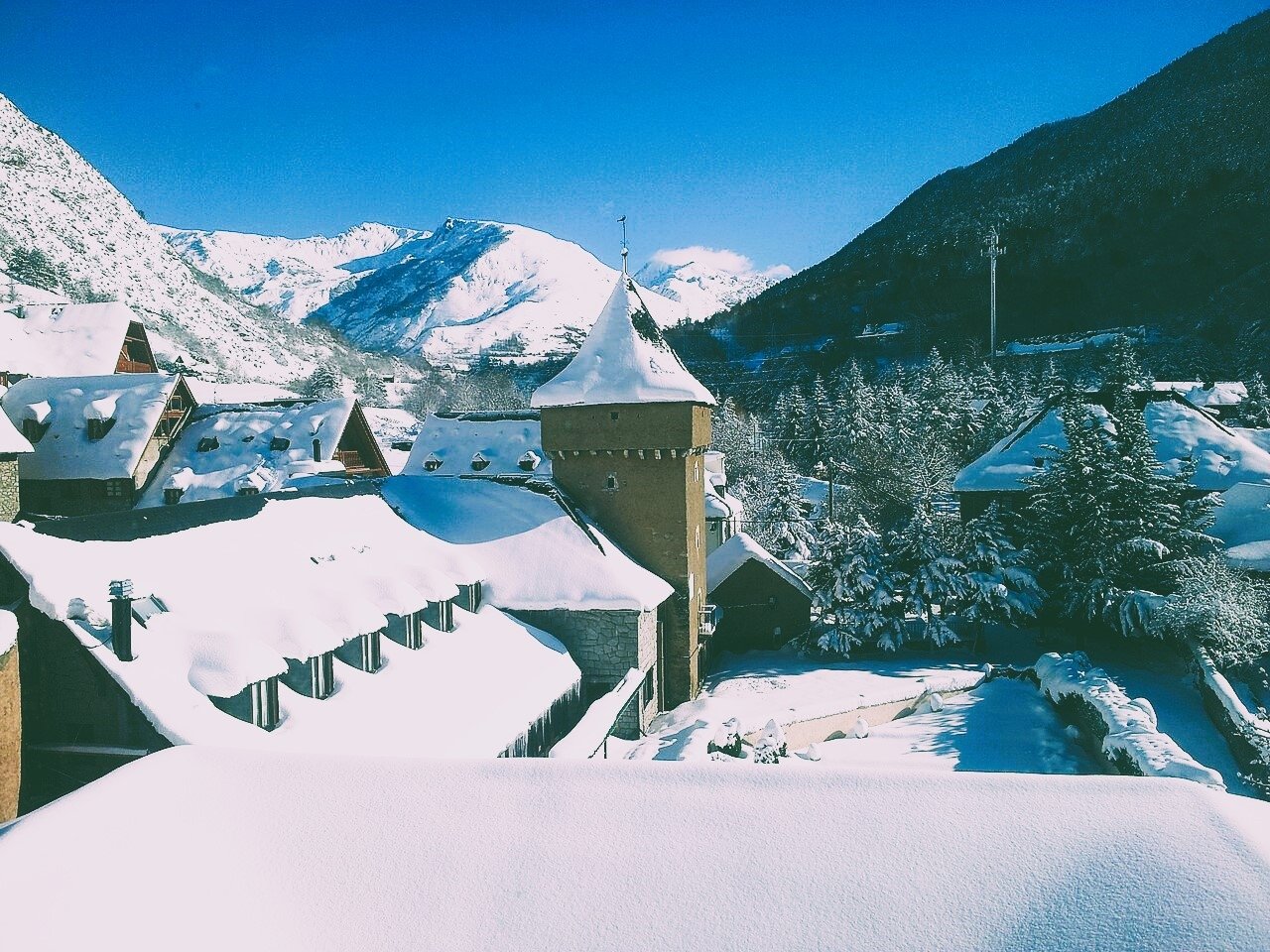
Among the stone houses of Arties, two date from the 16th century: Çò de Paulet and the Portolà house, which still keeps a square defensive tower. This was the ancestral home of the Portolà family. Its most famous member, Gaspar de Portolà, born in 1716, became a Spanish soldier and governor, and led the expedition that reached Alta California in 1769. The family house is now part of the Parador of Arties, which bears his name.
It is a strange thought, standing in a quiet Pyrenean lane: the name of this family travelled from the Val d’Aran to the coast of California, where it still appears on maps today.
The hot springs
Arties has been known for its water for a long time. The Banhs d’Arties are fed by a sulphurous spring at about 39°C, with two outdoor pools. After a day of hiking or skiing, sitting in warm water while snow lies on the peaks around you is one of the simple pleasures of the valley.
Into the mountains: Valarties, Restanca and Montardo
South of the village, the Valarties valley climbs towards some of the finest high mountain scenery in the Pyrenees. A track and then a path lead up to the lake and refuge of Restanca, at about 2,010 metres, surrounded by granite peaks and smaller lakes. From there, experienced hikers continue to the summit of Montardo (2,833 m), described as one of the easiest climbs in the area. From the top, you look north over the Val d’Aran and south into the Aigüestortes i Estany de Sant Maurici National Park, with the 3,000-metre ridges of Besiberri and the Maladeta massif on the horizon.
The Restanca refuge is open from mid-June to late September, and on weekends and some spring months for ski touring. Booking is required.
Seasons and traditions
Winter: Baqueira-Beret, one of Spain’s best-known ski resorts, is about seven kilometres away. Arties is a quieter base, with the hot springs and village restaurants after the slopes.
Summer: hiking, lakes and mountain huts, with long, cool evenings.
23 June: on the eve of St John, the village celebrates the Hèsta deth Tarò, its midsummer fire festival.
Food: try the olla aranesa, the hearty Aranese stew of the valley.
When to go
- June to September: for hiking, the Restanca refuge and Montardo.
- December to April: for snow, skiing at Baqueira-Beret and the hot springs.
- Late September and October: for autumn colour and quiet lanes.
- 23 June: for the Hèsta deth Tarò.
Weather in Arties: a mountain climate with Atlantic influence, cooler and wetter than the Mediterranean side of the Pyrenees. In the Vielha area, average highs are about 24°C in July and August, 22°C in September and 18°C in October, while winter days are cold, around 9°C in January, with frequent snow and freezing nights. Rain and snow are spread through the year, and the weather in the high mountains can change quickly.
Getting there
- From Vielha: about 7 km, roughly 10 minutes by car.
- From Toulouse: around two and a half hours by car, following the Garonne south into the valley.
- From Barcelona or Lleida: through the Vielha tunnel; allow around four hours from Barcelona.
- By bus: regional buses connect the Val d’Aran with Lleida and Barcelona.
The road from Arties into the Valarties is paved only for the first stretch; the upper track is suited to 4×4 vehicles or walking.
Beyond the map
Arties is the kind of place you pass on the way to somewhere else: the ski slopes, the national park, the border with France. But stop, and the valley opens up. Two rivers meet below a Romanesque church painted with the Last Judgement. Warm water rises from the ground. A family house holds a link to California, and a path climbs from the village to a lake at 2,000 metres. On the Atlantic side of the Pyrenees, in a valley with its own language, Arties is a small world worth slowing down for.
Part of: [Val d’Aran / Pyrenees pillar] (pillar link to add)
Read next: The Kingdom of Aragon · Peaks Beyond the Crowds · Hidden Medieval Worlds
Explore more: Wild Europe ·