

The Camargue is not the France that most visitors come to find. It is not the Provence of lavender fields and hilltop villages, not the Côte d’Azur of extraordinary harbours and extraordinary hotels, not the France of châteaux and wine routes and extraordinary cuisine in extraordinary restaurants. It is something older, wilder and more extraordinary than any of those things — a river delta of 1,000 square kilometres where the Rhône divides before reaching the Mediterranean, creating the largest river delta wetland in western Europe, a territory of salt marshes, rice paddies, lagoons, sand dunes and the open Mediterranean sea.
- The geography
- The living culture
- The wildlife
- The towns and villages
- Saintes-Maries-de-la-Mer
- Aigues-Mortes — the medieval walled city
- Arles — the Roman gateway
- Le Grau-du-Roi — the fishing harbour
- Les Baux-de-Provence — the Alpilles gateway
- The landscape experience
- The salt fields — Salins du Midi
- How to reach the Camargue
- The Camargue collection in The Wanders
- The Beyond the Map Field Guide
- Also in the Beyond the Map Regional Series
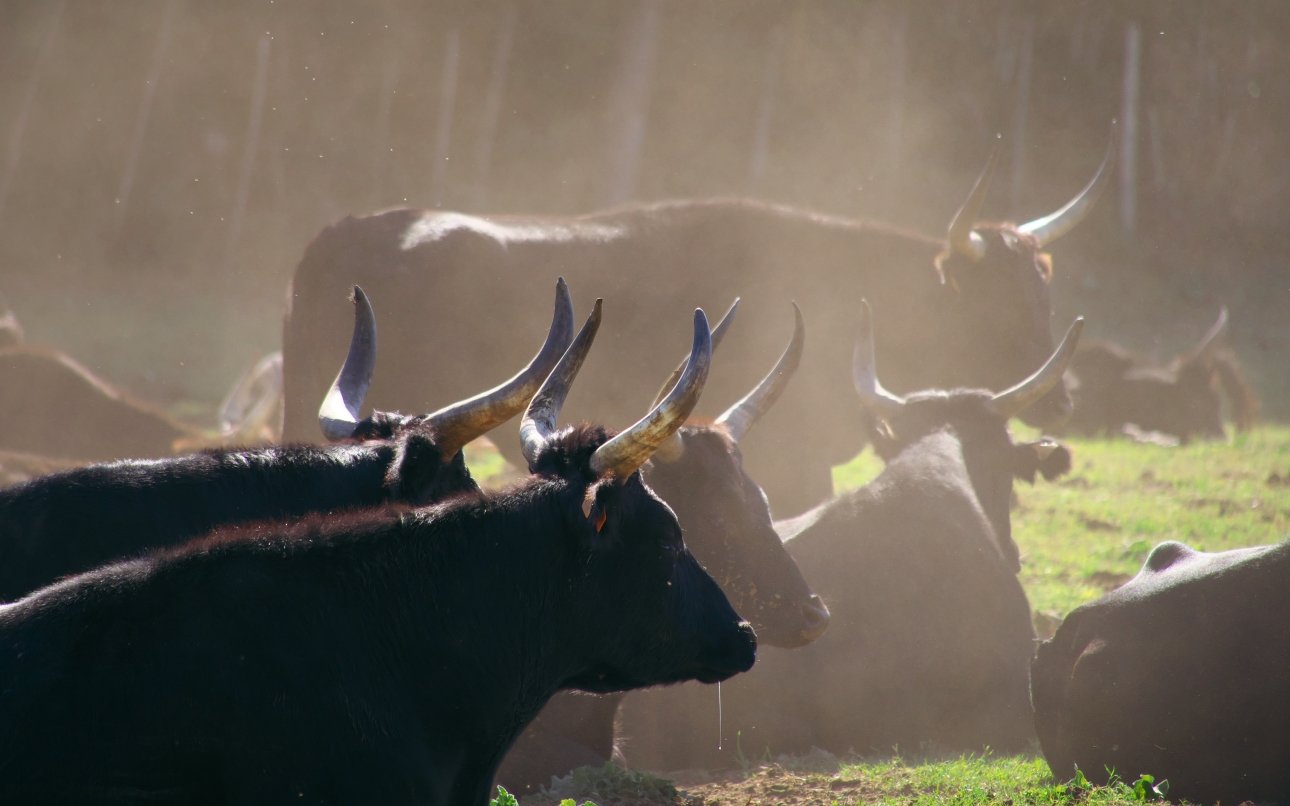
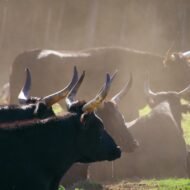
The Camargue is the last genuinely wild coastal territory in France. Its wildness is not manufactured for tourism. It is the consequence of geography — a flat, wet, salt-saturated landscape that resisted agriculture, resisted development and resisted the urbanisation that transformed the Languedoc and Provence coastlines on either side. What survived is extraordinary: the semi-wild white horses that have lived here since prehistoric times, the black bulls managed by the last mounted herdsmen in France, the greater flamingo colonies that turn the lagoons pink in spring, the extraordinary birdlife of the étangs and the extraordinary culture of the Gardians — the Camargue cowboys whose way of life has been continuous for centuries and whose contemporary existence is as extraordinary as their historical one.
The geography
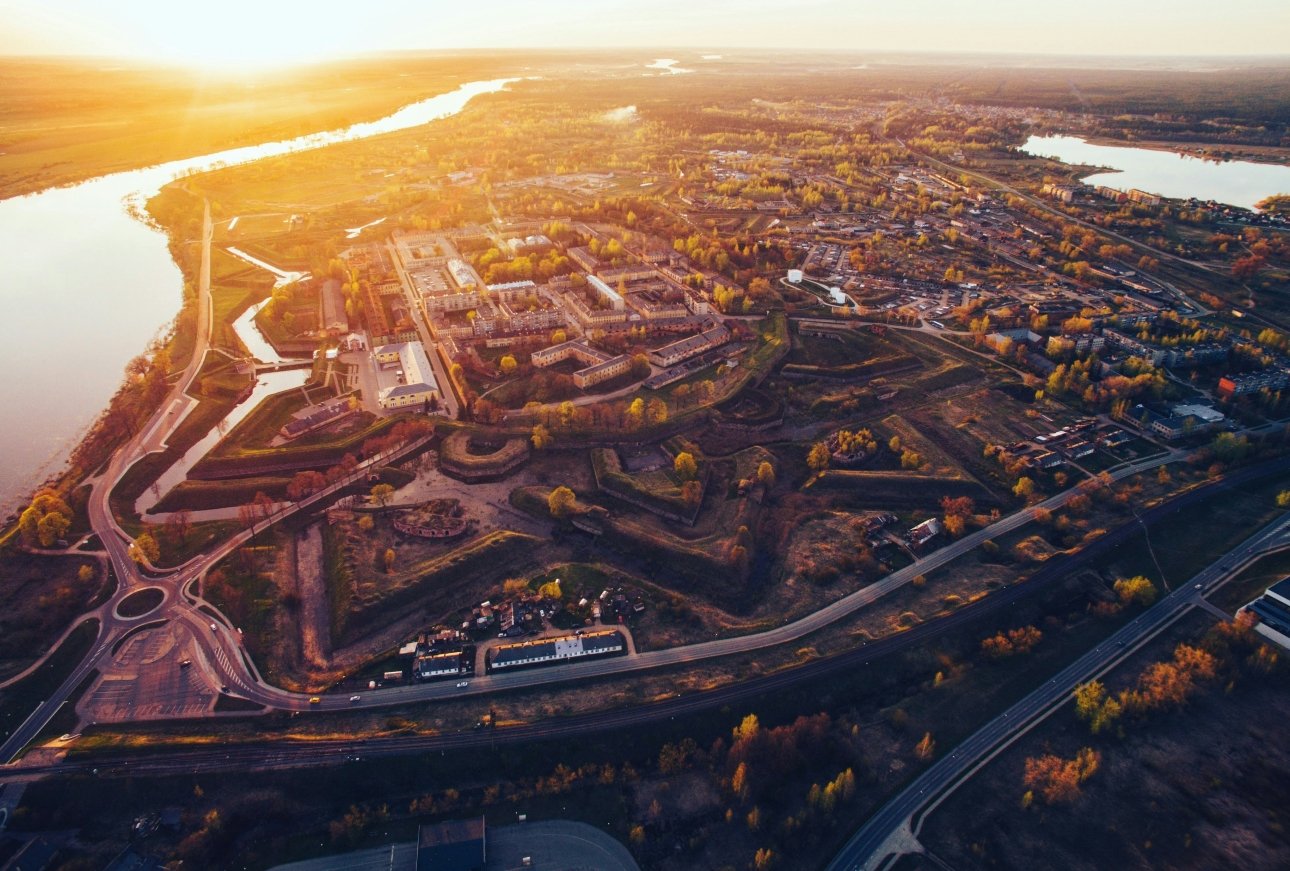
The Camargue occupies the Rhône delta between Arles in the north and the Mediterranean coast in the south — a triangular territory of approximately 1,000 square kilometres bounded by the Grand Rhône to the east, the Petit Rhône to the west and the Mediterranean shoreline to the south. The territory divides into three distinct zones of completely different ecological character.
The upper Camargue — the rice paddies and the traditional agricultural landscape north of the étangs — is the most intensively managed section, producing the extraordinary Riz de Camargue (the only rice with a French Protected Designation of Origin) in paddy fields that are simultaneously agricultural and ecological — the rice paddies providing essential habitat for migratory waterbirds during the flooding season.
The central Camargue — the extraordinary Étang de Vaccarès and the surrounding lagoon system — is the heart of the Camargue Regional Nature Park, the most important wetland reserve in France. The Étang de Vaccarès covers 6,500 hectares of extraordinary shallow brackish water, the most important flamingo breeding site in Europe and the most important waterbird concentration in the western Mediterranean.
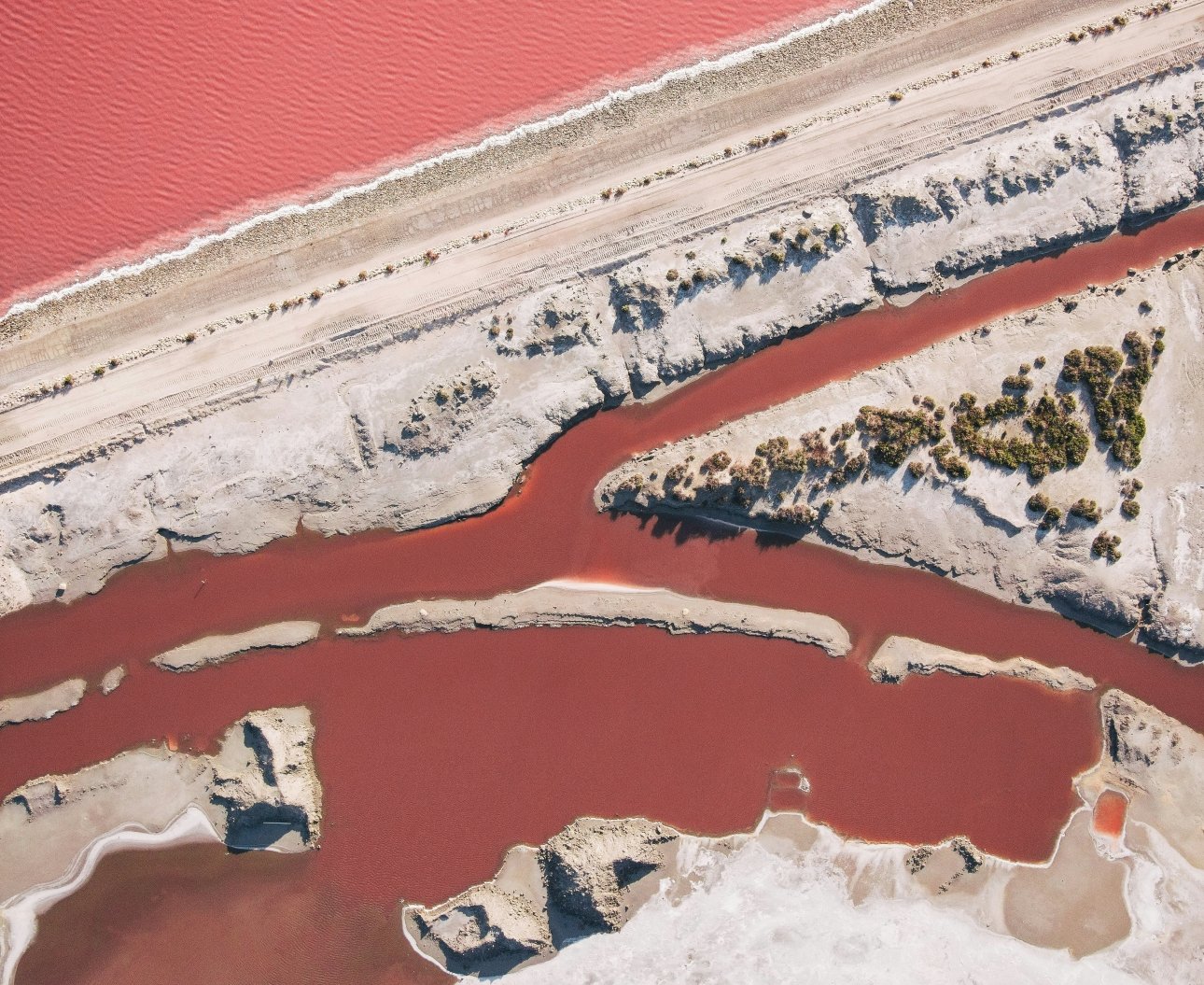
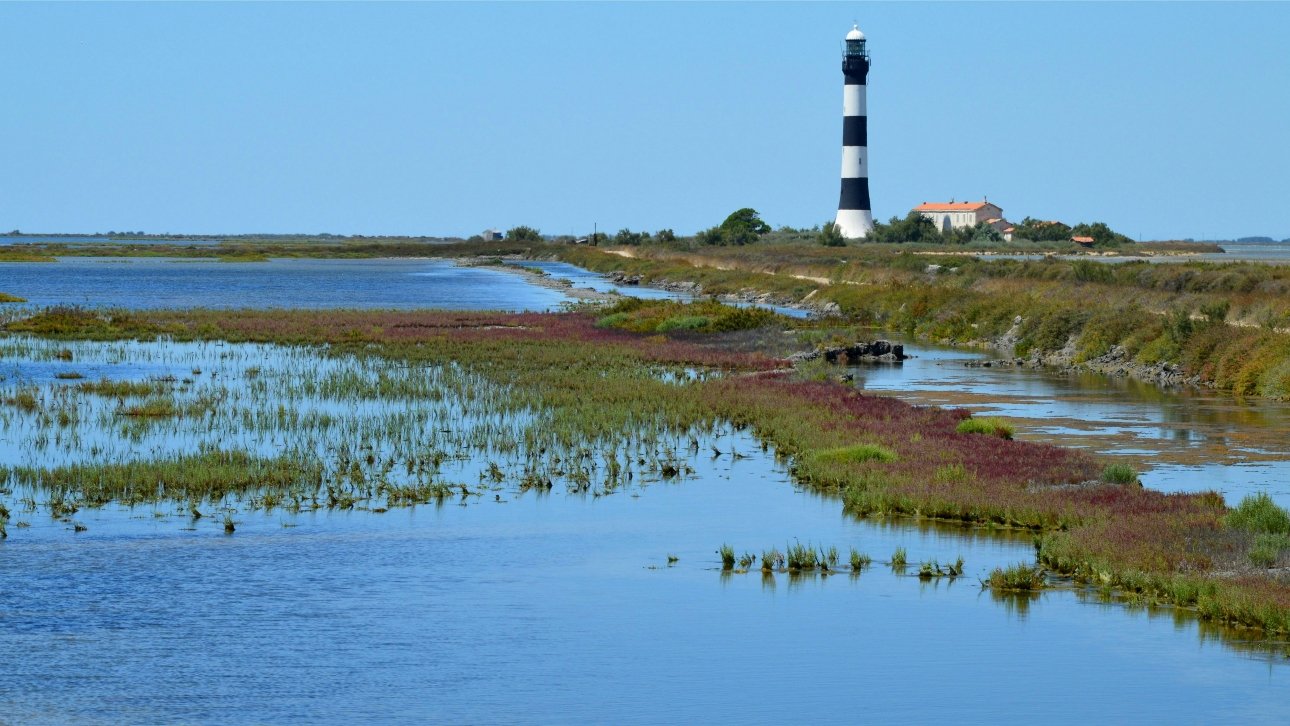
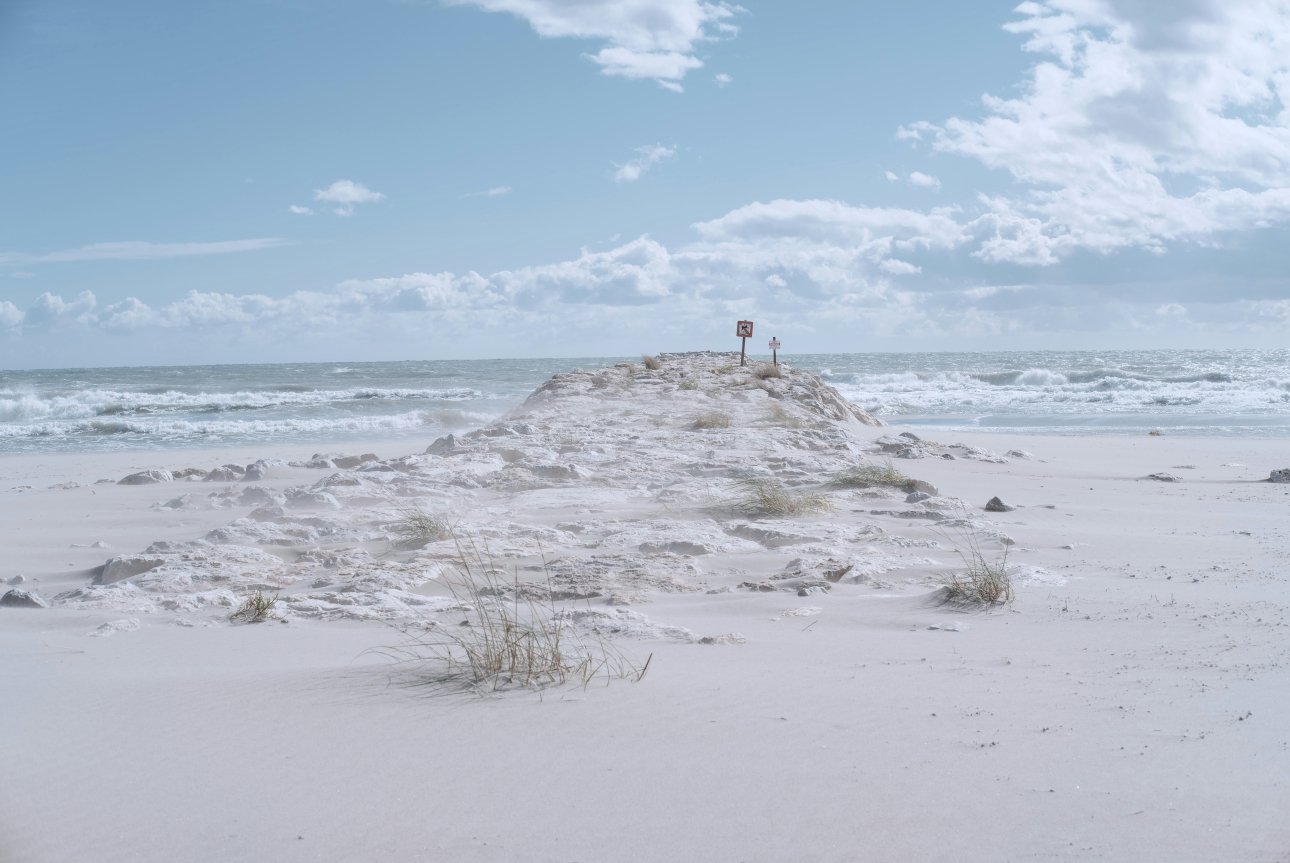
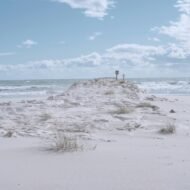
The southern Camargue — the extraordinary dune systems, the salt flats of the Salins du Midi, the extraordinary beach of the Plage de Beauduc and the extraordinary coastal lagoons of the Mediterranean shore — is the most dramatically beautiful and the most completely wild section of the territory. The Salins du Midi salt production operation — one of the most important salt works in France, producing 400,000 tonnes of salt per year from the extraordinary evaporation ponds — creates an extraordinary industrial and ecological landscape simultaneously: the salt pans are the most important habitat for the Camargue flamingo outside the breeding season.
The living culture
The Gardian — France’s forgotten cowboy
The Gardian: France’s Forgotten Cowboy of the Camargue Marshes →
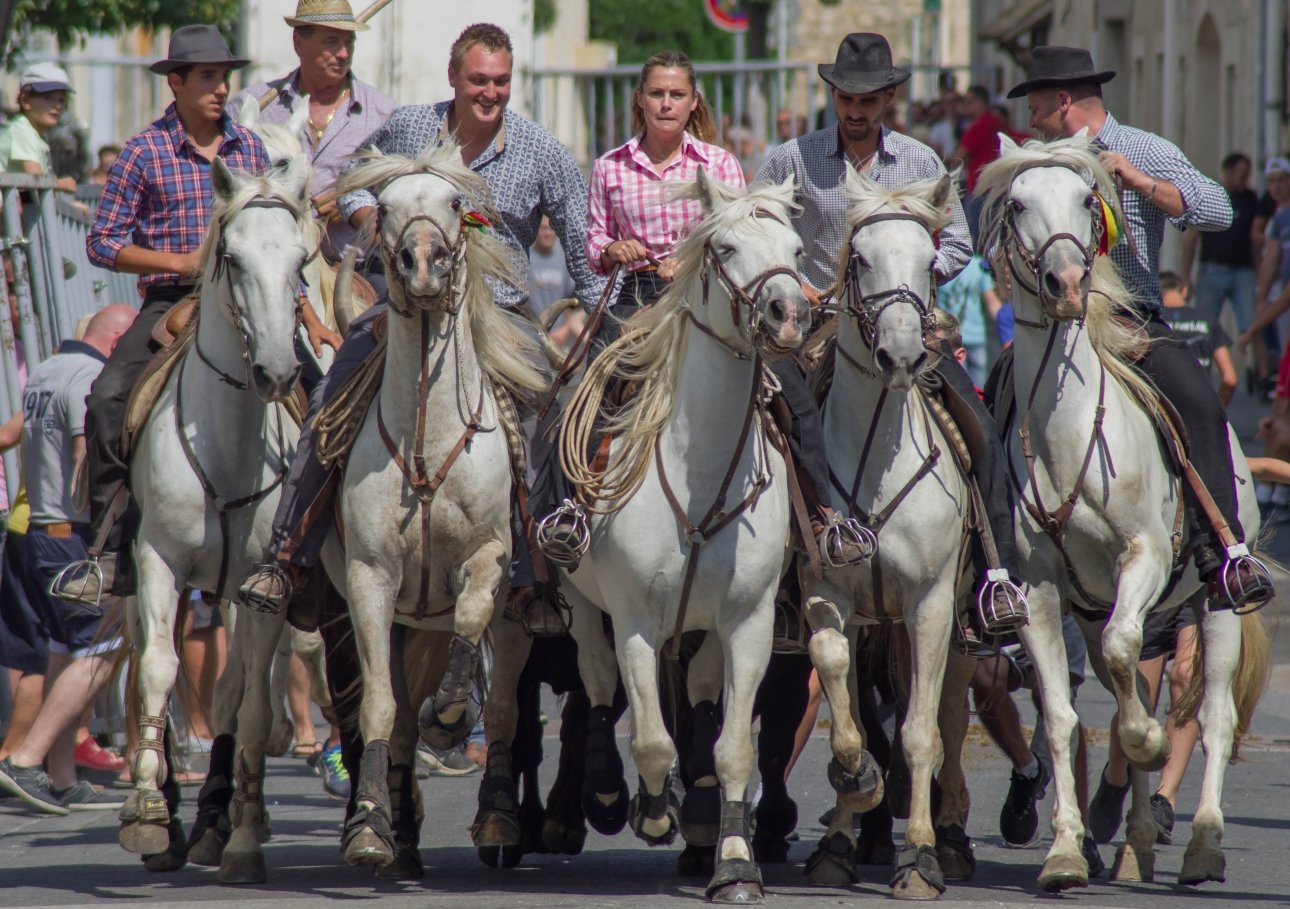
The Gardian is the traditional horseman of the Camargue — a mounted herdsman managing the semi-wild Camargue horses and the black Camargue bulls across the extraordinary marshland territory of the Rhône delta. The tradition is as old as the permanent settlement of the Camargue — the Gardians appear in documents from the 15th century, managing the same livestock on the same marshland using the same equipment and the same horse breed that their successors use today.
The Gardian works on horseback — only the Camargue horse has the specific qualities required for the marshland terrain. The extraordinary agility, the extraordinary stamina on poor vegetation and the extraordinary instinctive knowledge of the marsh surface that will support a horse and rider and the surface that will not are qualities that no imported breed has replicated in this specific landscape. The Gardian and the Camargue horse are not separable as cultural entities. The tradition requires both simultaneously.
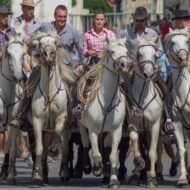
The Confrérie des Gardians — the Brotherhood of the Gardians, founded in 1512 — maintains the tradition with extraordinary continuity. The Fête des Gardians in Saintes-Maries-de-la-Mer each May is the most extraordinary annual celebration of the living Gardian culture — hundreds of Gardians on white horses escorting the statue of the Black Sarah through the extraordinary town in a procession of extraordinary visual drama.
The Camargue Horse — Europe’s most ancient breed
The Camargue Horse: Europe’s Most Ancient Wild Horse Breed →
The Camargue horse has lived in this delta continuously since prehistoric times — bones of horses identical in morphology to the modern breed have been identified in caves of the region from the Pleistocene. The breed is stocky, grey-white — born dark grey and lightening to white over the first four years of life — extraordinarily hardy and capable of surviving on the tough marsh vegetation that no domesticated breed can sustain. The semi-wild herds — manades — are managed by the Gardians in the traditional system of extensive marshland grazing that has been continuous for centuries.
The Camargue horse is not a riding horse in the conventional sense. It is an ecosystem participant — a large grazing animal whose management of the marsh vegetation is as important to the ecological character of the Camargue as the flamingo colonies or the reed beds. The extraordinary visual quality of the white herds moving through the extraordinary landscape of the salt marsh at dusk — the pink water of the étangs, the extraordinary flat horizon, the extraordinary Mediterranean light — is one of the most dramatic wildlife spectacles in France.
The wildlife
Flamingos — the defining image
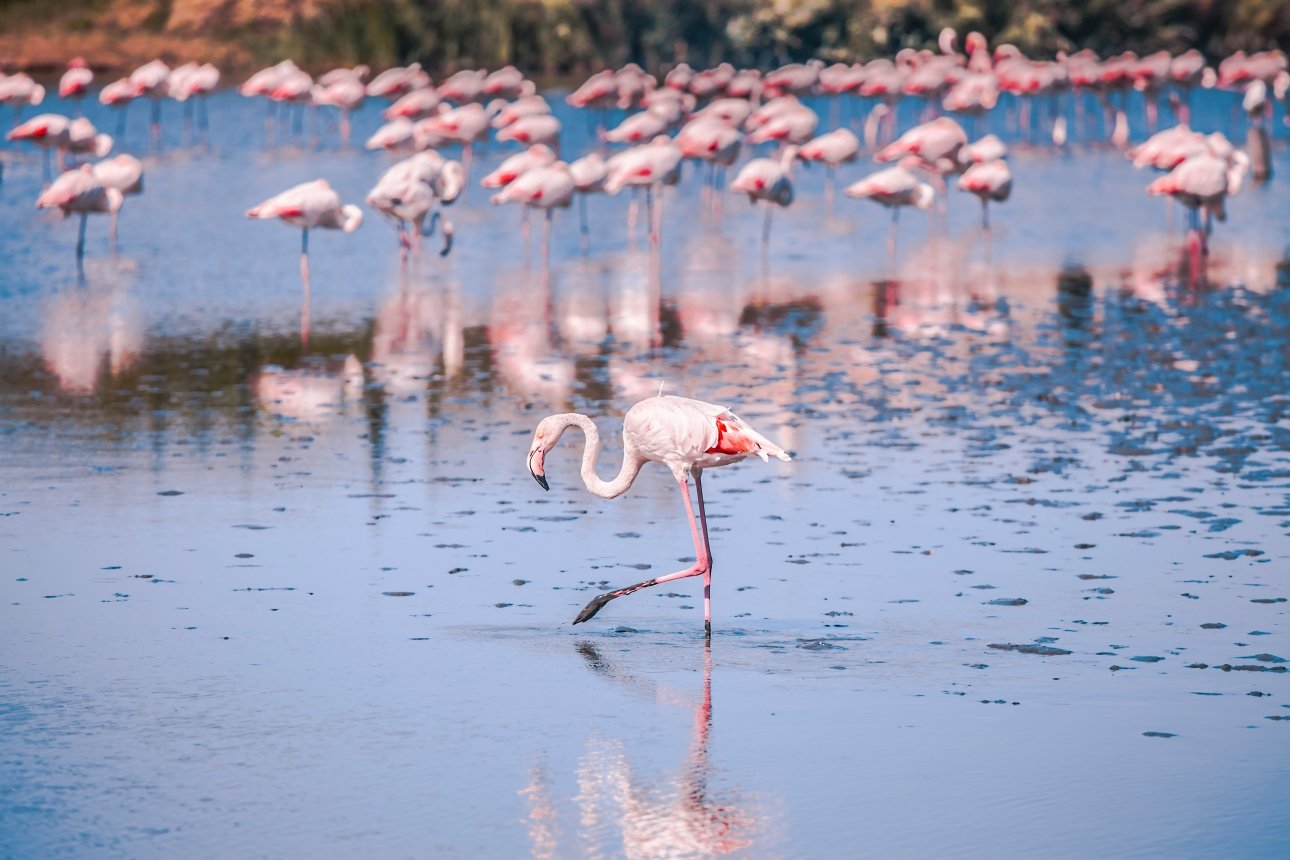
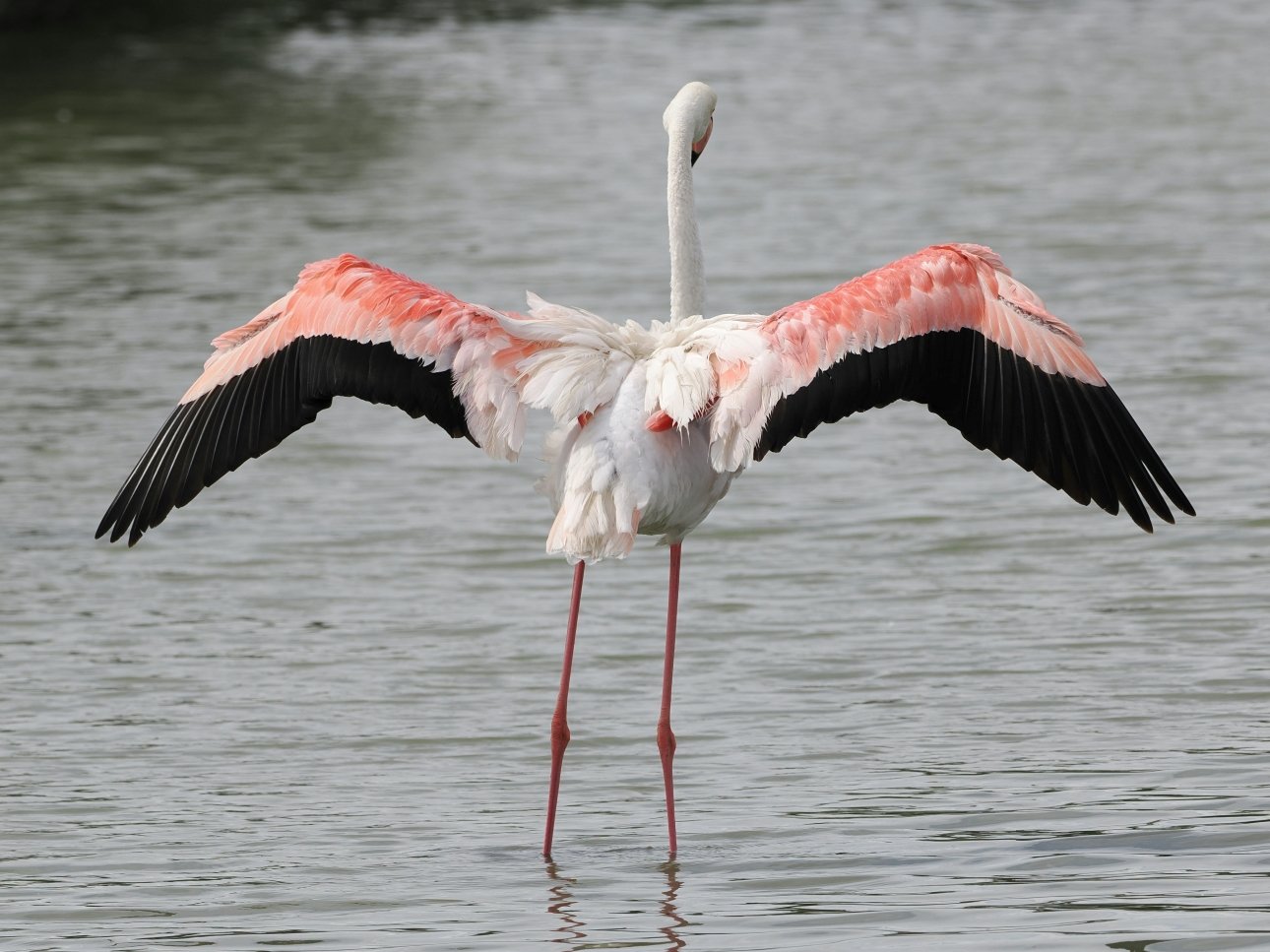
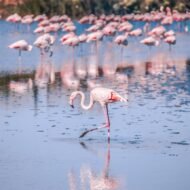
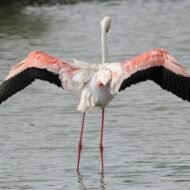
The greater flamingo — Phoenicopterus roseus — breeds in the Camargue in extraordinary numbers. The Étang de Fangassier in the central Camargue is the most important flamingo breeding site in Europe — 10,000-15,000 pairs nesting annually on a single extraordinary salt island in the middle of the lagoon, inaccessible to predators and human disturbance. The Camargue flamingo population — approximately 50,000 birds — is the largest in Europe and represents the most successful flamingo conservation story on the continent.
The flamingo season in the Camargue runs from February when the birds return to the breeding site through October when the non-breeding flocks move south to the Spanish and North African wintering grounds. The most extraordinary concentration is visible between April and July — the breeding season — when the pink flocks on the salt pans and the étangs create one of the most extraordinary wildlife spectacles in the western Mediterranean.
Best flamingo viewpoints:
Pont de Gau Ornithological Park   →  the most accessible viewpoint
                                      extraordinary year-round
                                      5km north of Saintes-Maries

Salin de Giraud observation tower  →  extraordinary views across
                                      the salt production pans
                                      where non-breeding flocks
                                      concentrate in autumn

Étang de Vaccarès shore path       →  the most wild and most
                                      atmospheric approach
                                      extraordinary for photographers
                                      early morning light
The extraordinary birdlife
The Camargue is the most important bird migration stopover in the western Mediterranean — 400 species recorded, the highest concentration of bird diversity in France. Beyond the flamingos: the extraordinary black-winged stilt colonies in the rice paddies, the extraordinary purple heron rookeries in the reed beds, the extraordinary bee-eater colonies in the sand banks of the Petit Rhône, the extraordinary little egret flocks on the étang margins and the extraordinary osprey passage in autumn. The Camargue is the most important birding destination in France and one of the five most important in Europe.
The towns and villages
Saintes-Maries-de-la-Mer
Saintes-Maries-de-la-Mer: The Camargue Town That Belongs to Everyone →
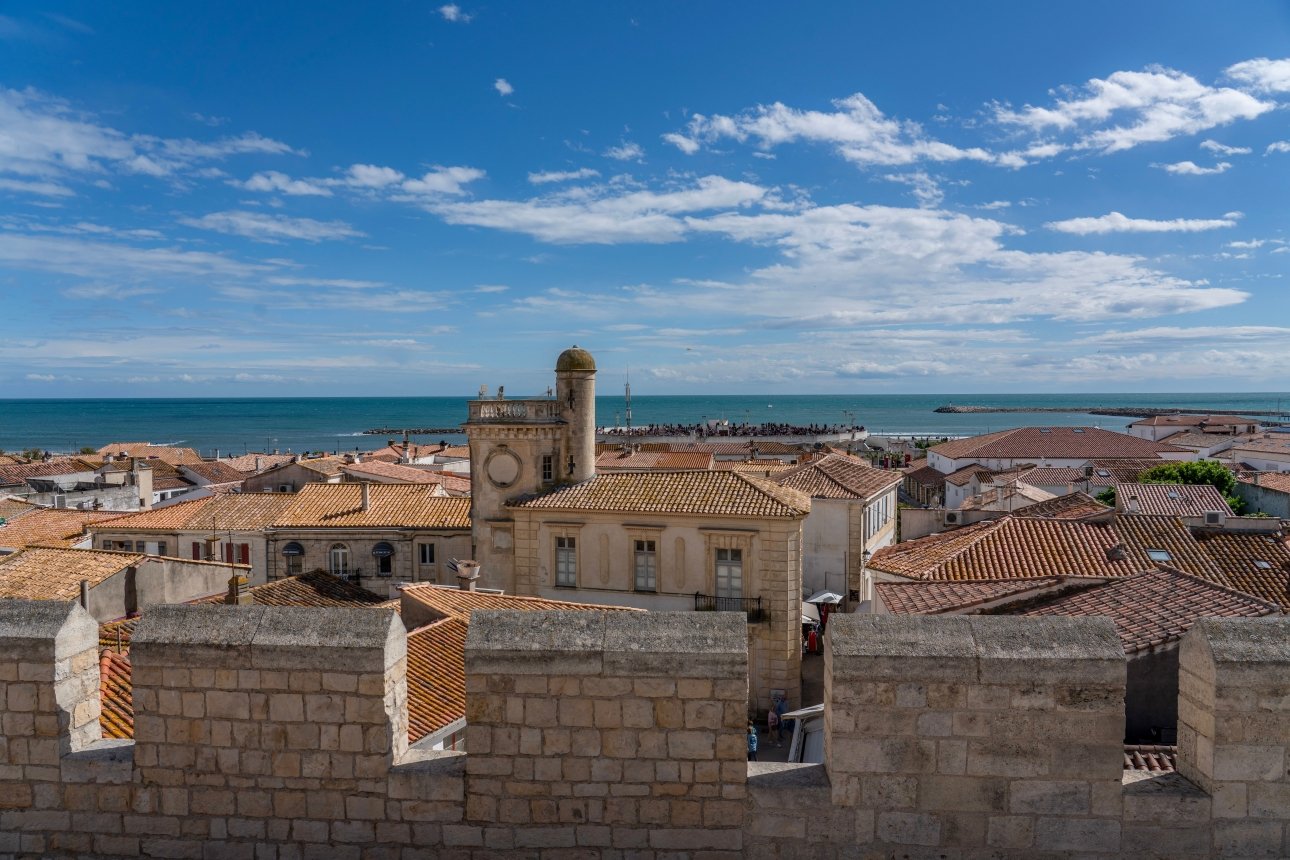
The most extraordinary small town in the Camargue — a fortified church town on the Mediterranean coast that is simultaneously a Christian pilgrimage site, the spiritual capital of the Roma people of Europe and the ceremonial centre of the Gardian cowboy tradition. The extraordinary Romanesque fortress church of Notre-Dame-de-la-Mer. The extraordinary crypt of the Black Sarah. The extraordinary Roma pilgrimage of 24-25 May when tens of thousands of Roma from across Europe arrive to carry the statue of the Black Sarah to the sea. The extraordinary Fête des Gardians on 1 May when hundreds of horsemen on white Camargue horses fill the streets in the most dramatic display of the living Gardian culture. The extraordinary beach extending kilometres in both directions. The Course Camarguaise arena where the Camargue bull tradition is celebrated throughout the summer season.
Aigues-Mortes — the medieval walled city
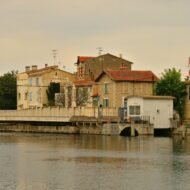
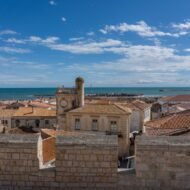
Aigues-Mortes — Dead Waters — is the most extraordinary medieval walled city on the Camargue edge, built by Louis IX of France in the 13th century as the departure point for the Seventh Crusade. The extraordinary complete circuit of medieval towers and walls enclosing a complete medieval grid town of extraordinary regularity — built from scratch on marshy ground as the most ambitious single urban planning exercise of 13th century France. The Tour de Constance — the most extraordinary single tower, used as a prison for Protestant women after the revocation of the Edict of Nantes in 1685 — contains the most extraordinary stone spiral staircase in the medieval south of France.
Arles — the Roman gateway
Arles: The Roman City That Van Gogh Made His Own →
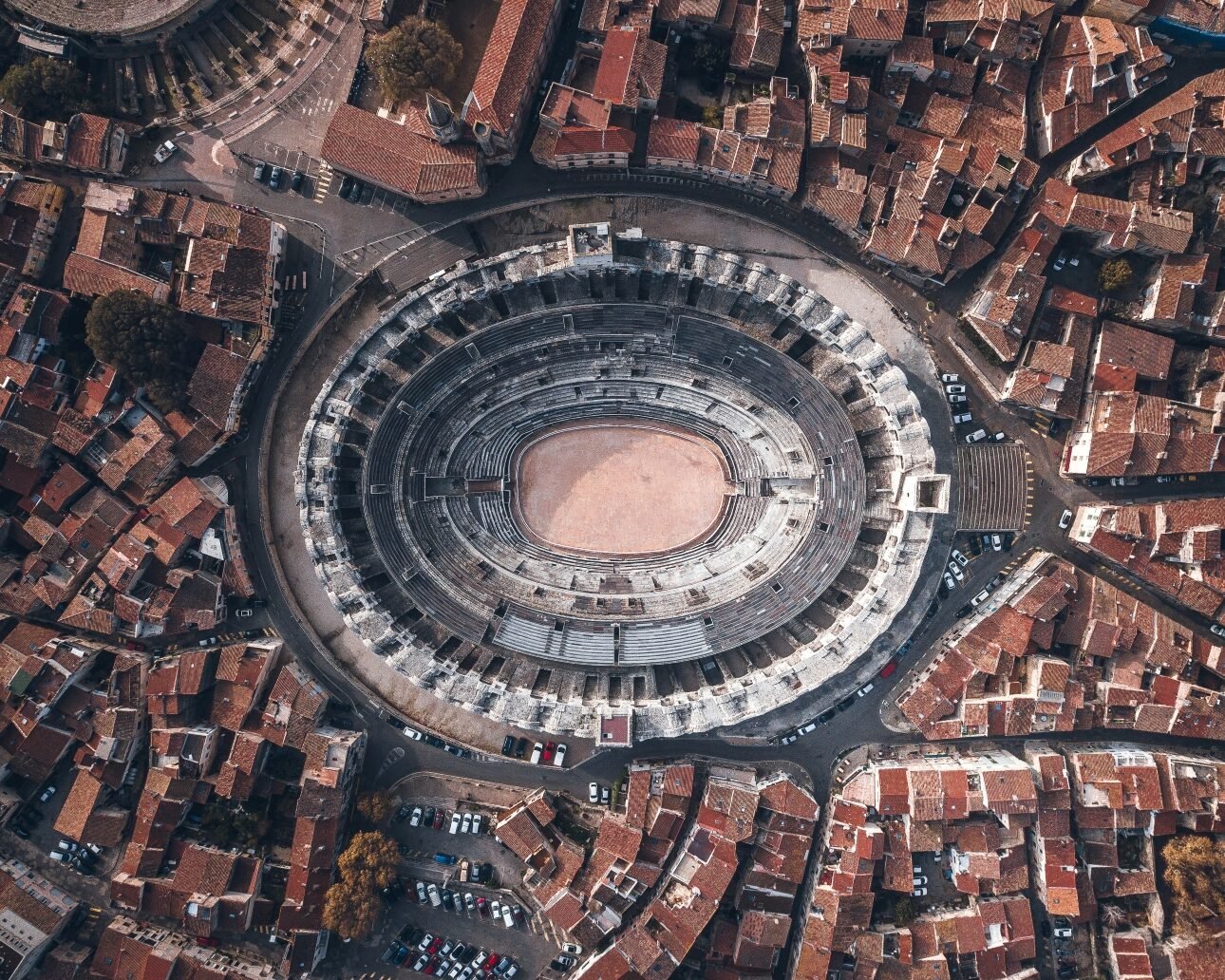
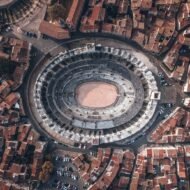
Arles is the Roman city at the head of the delta — the extraordinary city where the Rhône divides before entering the Camargue marshland. The extraordinary Roman amphitheatre of Arles — one of the most completely preserved in the western Mediterranean, still used for the Course Camarguaise bullfighting tradition that connects Roman spectacle to the Gardian culture in one continuous cultural thread. The extraordinary Museon Arlaten — the most important ethnographic museum of Provençal and Camargue culture. The extraordinary Van Gogh trail through the city where he painted over 200 canvases in fourteen extraordinary months of 1888-1889. The Rencontres de la Photographie every July — the most important photography festival in France.
Langlois Bridge: The Arles Drawbridge Van Gogh Painted in 1888 →
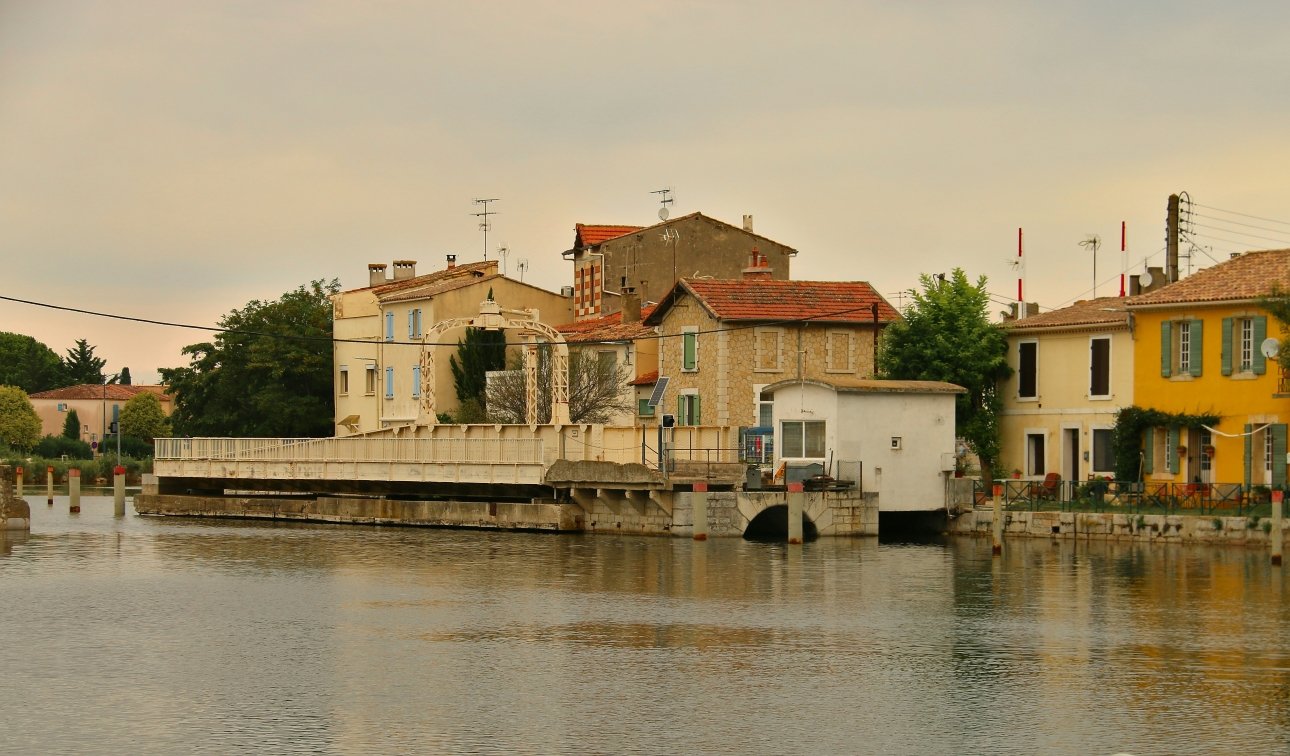
The most specific single landscape connection between Van Gogh’s Arles period and the surviving physical territory — the extraordinary drawbridge at the Arles canal that Van Gogh painted in March 1888 in one of his most immediately recognisable Arles canvases: the extraordinary Provence light, the extraordinary blue sky, the women washing laundry at the canal bank below the raised bridge. The original bridge was destroyed but an identical replacement was installed at a nearby canal location specifically to honour the Van Gogh connection. The most pilgrimage-worthy single site for Van Gogh visitors to Arles and the most completely accurate surviving physical echo of his Arles period canvases.
Le Grau-du-Roi — the fishing harbour
Le Grau-du-Roi: Where the Camargue Meets the Mediterranean →
The most important working fishing harbour on the Camargue Mediterranean coast — the point where the extraordinary flat inland wetland landscape of the Camargue reaches the sea in a small harbour town of extraordinary coloured fishing boats, extraordinary fish market and the extraordinary combination of authentic working fishing culture alongside Port Camargue — one of the largest pleasure marinas in Europe. Le Grau-du-Roi is the closest settlement to Aigues-Mortes on the coast — connected by road through the extraordinary flat coastal landscape of the Camargue edge — and the most complete expression of the working maritime culture that the extraordinary natural landscape of the Camargue produced and sustained.
Les Baux-de-Provence — the Alpilles gateway
Les Baux: The Provençal Village Above the Valley of Hell →
Les Baux-de-Provence sits on a rocky spur of the Alpilles range north of the Camargue — technically outside the delta territory but inseparable from the broader Arles-Camargue cultural landscape. The extraordinary ruined castle on the summit ridge, the extraordinary medieval and Renaissance village below it and the extraordinary Val d’Enfer — the Valley of Hell, the extraordinary rocky chaos of limestone formations below the village that gave the settlement its dramatic character and its extraordinary atmosphere — make Les Baux one of the most completely extraordinary small settlements in Provence.
The extraordinary Carrières de Lumières — the famous immersive art installation in the ancient bauxite quarry below the village — is the most visited single cultural attraction in the Alpilles region. The mineral bauxite was named after Les Baux, where it was first identified in 1821 — the village has given its name to the most commercially significant mineral discovery in Provence and to a cultural attraction that draws hundreds of thousands of visitors annually to a village of 400 permanent inhabitants.
The landscape experience
The Camargue by horse
The most completely immersive Camargue experience — riding with the Gardians through the salt marsh, the rice paddies and the extraordinary dune landscape on a Camargue horse in the extraordinary Mediterranean light. Manade riding experiences — half-day and full-day rides through the traditional Gardian territory — are available from several manades around Saintes-Maries-de-la-Mer. The most authentic are the working manades that offer riding as a secondary activity rather than as the primary commercial operation.
The Camargue by bicycle
The extraordinary flat terrain of the Camargue makes it the most complete cycling territory in southern France — the extraordinary marked cycle routes connecting Saintes-Maries to Aigues-Mortes, the étang shore paths and the extraordinary dune coast route along the Mediterranean can be combined into circuits of extraordinary variety within a completely car-free experience of the landscape.
The Camargue at dawn
The extraordinary light quality of the Camargue at dawn — when the pink water of the flamingo étangs, the white horse herds on the marsh and the extraordinary flat Mediterranean horizon align in the first light — is the most extraordinary single photographic opportunity in the south of France. The observation points around the Étang de Vaccarès at sunrise in April and May, when the flamingo breeding flocks are at maximum concentration and the light is at its most extraordinary quality, produce images of remarkable emotional power.
The salt fields — Salins du Midi
The salt production landscape of the southern Camargue is the most extraordinary industrial and ecological landscape in France — the Salins du Midi operation covering over 10,000 hectares of extraordinary evaporation ponds between Aigues-Mortes and the Mediterranean coast, producing 400,000 tonnes of sea salt per year from the extraordinary combination of the Camargue climate (300 days of sunshine, the extraordinary Mistral wind, minimal rainfall) and the extraordinary flat terrain that allows seawater to flow through a sequence of evaporation ponds of increasing salinity.
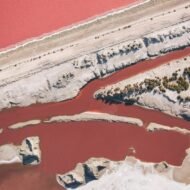
The extraordinary visual quality of the salt pans changes through the season — pale grey in winter, extraordinary pink in summer when the halophilic algae and the brine shrimp that feed the flamingos give the concentrated pans their extraordinary rose colour, brilliant white at harvest time when the salt crystals form on the surface of the most concentrated final ponds. The salt harvest — the extraordinary mechanical harvest of the Salins du Midi and the extraordinary hand harvest of the fleur de sel skimmed from the surface of the pans before the main harvest — runs between August and October, the most visually extraordinary period in the salt field calendar.
The ecological dimension is inseparable from the industrial one. The salt pans are the most important non-breeding habitat for the Camargue flamingo population — the extraordinary concentration of brine shrimp in the increasingly saline evaporation ponds provides the most nutritionally rich feeding ground available in the Camargue outside the breeding season. The flamingo flocks that give the southern Camargue its most extraordinary visual character are there because of the salt production, not despite it.
Visiting the salt fields:
Salins du Midi visitor centre, Aigues-Mortes
Guided tours of the salt production process
Flamingo observation from the tour route
Fleur de sel available for purchase at the visitor shop
April-September: full tour programme
October-March: limited season
How to reach the Camargue
By train:   Arles — direct TGV from Paris (3.5 hours)
            · Lyon (1.5 hours) · Marseille (45 minutes)
            Best entry point for the entire Camargue
            territory. Car hire at Arles station.

By car:     From Marseille: 1 hour via A54
            From Montpellier: 45 minutes via A9/N113
            From Paris: 7 hours — fly to Marseille
            or Montpellier

By local:   Arles to Saintes-Maries: bus line 20
            (1 hour · twice daily · limited service)
            A car is strongly recommended within
            the Camargue territory itself

Best season:
April-June  Flamingo breeding · wildflower salt marsh
            · extraordinary light · Fête des Gardians (May)
September   Extraordinary bird migration · autumn light
            · flamingo non-breeding flocks on salt pans
            · cooler temperatures
July-August Extraordinary beach · full flamingo presence
            · Gardian activities · heat warning
The Camargue collection in The Wanders
| Subject | Character | Article |
|---|---|---|
| Camargue Horse | Europe’s most ancient wild horse breed | Published |
| The Gardian | France’s forgotten cowboy · living tradition | Published |
| Langlois Bridge · Arles | Van Gogh drawbridge · 1888 · Arles trail | Published |
| Le Grau-du-Roi | Camargue fishing harbour · Mediterranean gateway | Published |
| Les Baux-de-Provence | Val d’Enfer · bauxite origin · Carrières de Lumières | Published |
| Saintes-Maries-de-la-Mer | Fortified church · Roma pilgrimage · Gardian festival | Published |
| Arles | Van Gogh · Roman amphitheatre · Photography Festival | Published |
| Aigues-Mortes | Medieval walled city · Tour de Constance · Crusades | Commissioning |
| Salt fields guide | Salins du Midi · flamingo habitat · fleur de sel | Commissioning |
| Rice paddies of the Camargue | Riz de Camargue PDO · agricultural landscape | Commissioning |
The Beyond the Map Field Guide
The Camargue: The Complete Beyond the Map Guide — €14
The wild horses, the Gardian cowboys, the flamingo colonies, the medieval walled city, the Roma pilgrimage and the extraordinary flat landscape of the Rhône delta. The complete editorial guide to the most extraordinary wild coastal territory in France.
Beyond the Map Regional Series →
Also in the Beyond the Map Regional Series
Transylvania: The Region That Dracula Overshadowed → Istria: Three Countries, One Venetian Coast → Bohemia: The Kingdom at the Heart of Europe →
The Camargue is part of The Wanders Beyond the Map Regional Series — extraordinary European regions documented beyond the nation state boundaries that contain them.