

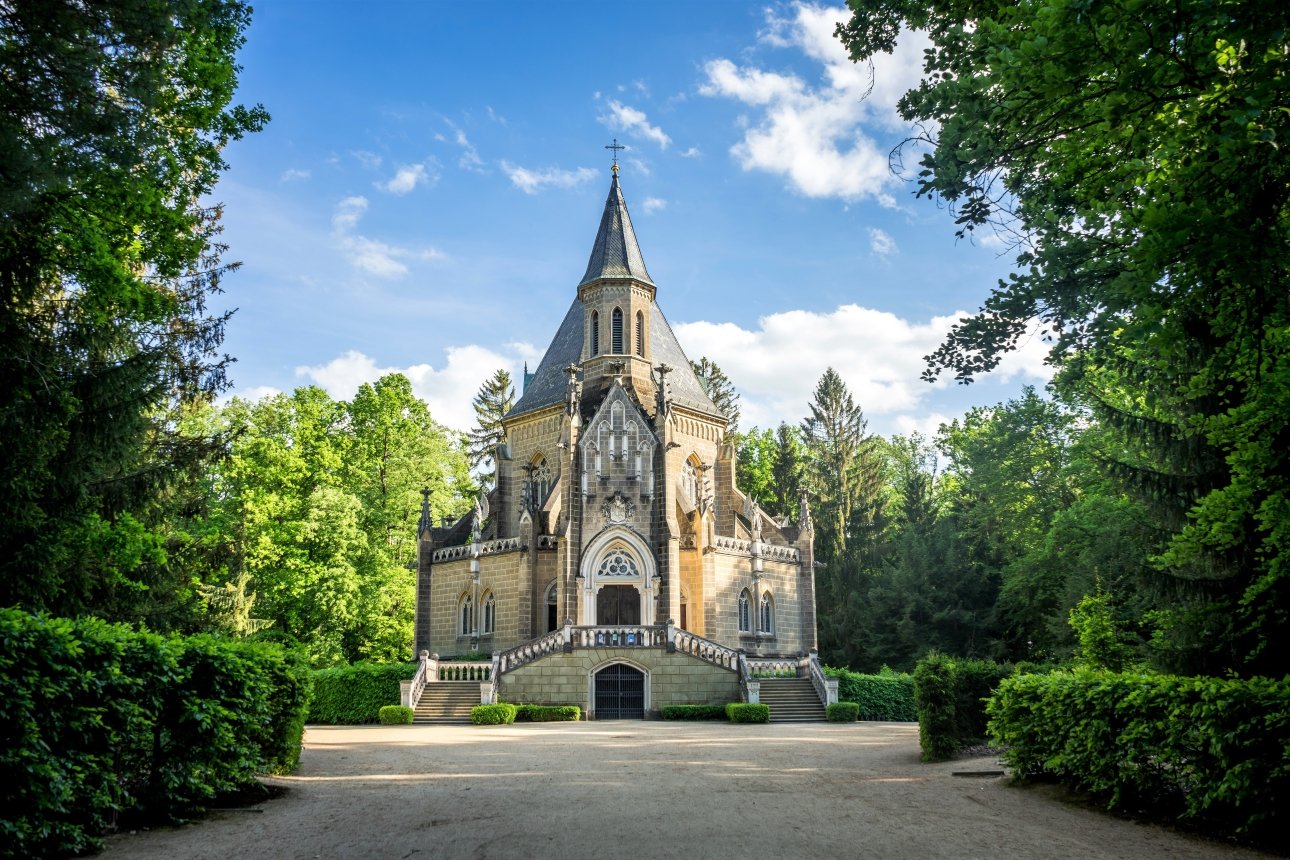
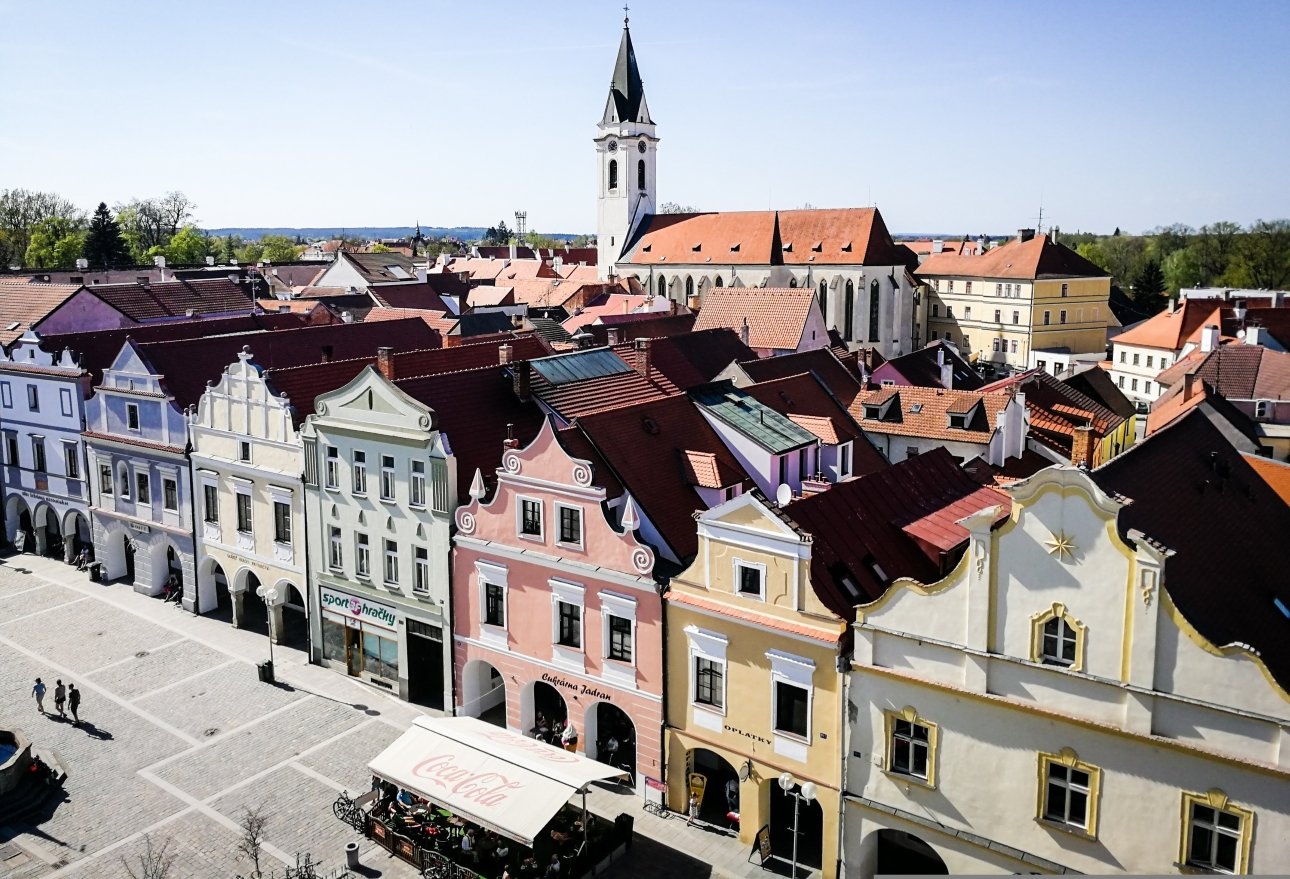
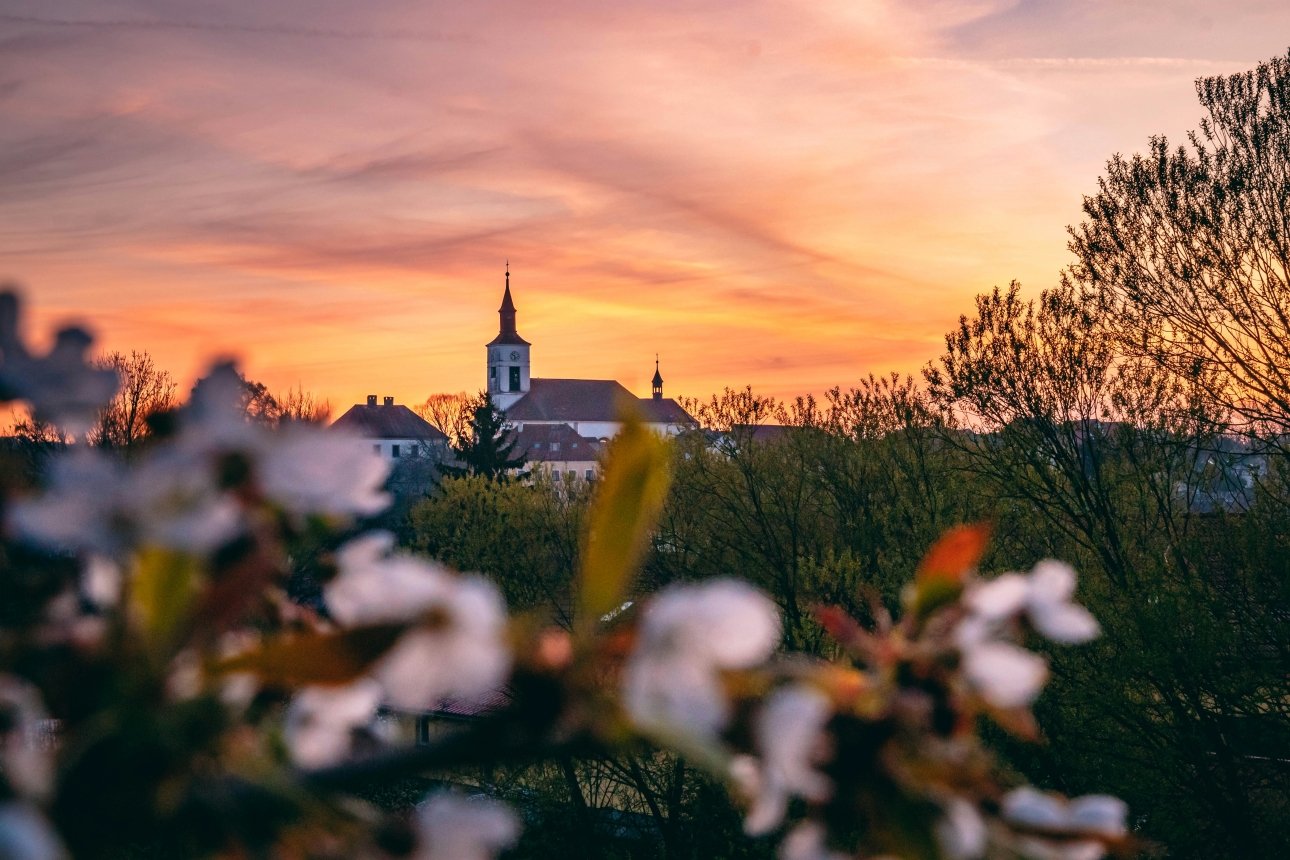
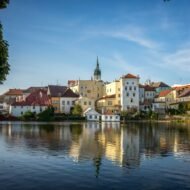
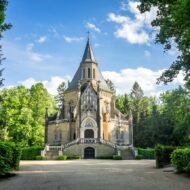
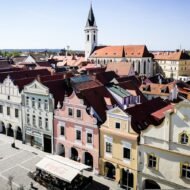
Bohemia is not a country. It has not been a sovereign state since 1620, when the Battle of White Mountain ended the Bohemian Revolt and incorporated the kingdom into the Habsburg Empire for the next three centuries. Before that it was the most important kingdom in the Holy Roman Empire — the territory whose ruler held the first vote in imperial elections, whose capital Prague was briefly the centre of European cultural and political life under Charles IV in the 14th century, and whose religious rebellion produced Jan Hus, the first Protestant martyr, whose execution in 1415 set in motion the chain of events that ended in the Reformation.
- The five sub-regions
- Central Bohemia — the castle country around Prague
- Northern Bohemia — the sandstone landscape
- Eastern Bohemia — the mountain border
- Southern Bohemia — the castle country of the Vltava
- Western Bohemia — the spa triangle
- The cross-border dimension
- How to reach Bohemia
- The Bohemia collection in The Wanders
- The Beyond the Map Field Guide
- Also in the Beyond the Map Regional Series
The historical weight of this is still visible in the landscape. The extraordinary concentration of castles — Bohemia has more castles and chateaux per square kilometre than any territory of comparable size in Europe — is the physical record of a kingdom that was fought over, won, lost and rebuilt repeatedly by the Přemyslid dynasty, the Luxembourgs, the Habsburgs and the Schwarzenbergs. The extraordinary spa towns of western Bohemia — where Goethe, Kafka, Freud, Mahler and King Edward VII all took the waters — are the record of the late Habsburg period when Bohemia was the cultural and intellectual heartland of central Europe.
Today Bohemia forms the western and central two-thirds of the Czech Republic — five distinct sub-regions of completely different character, from the sandstone rock landscape of the north to the forested mountains of the south, from the Gothic castle ruins near Prague to the extraordinary Renaissance chateaux of the Vltava and Ohře valleys.
The five sub-regions
Central Bohemia — the castle country around Prague
Central Bohemia is the most castle-dense territory in the Czech Republic — the ring of Gothic and Renaissance fortifications that protected and governed the approaches to Prague for seven centuries, now one of the most extraordinary day-trip landscapes in central Europe.
Okoř: The Most Atmospheric Castle Ruin Near Prague →
The most atmospherically extraordinary castle ruin in Central Bohemia — a Gothic fortress 15km northwest of Prague above a river valley of extraordinary character, close enough to the capital to reach by public transport and remote enough in character to feel completely separated from it. The Okoř ruin is the castle that most Prague visitors never reach and that most Czech day-trippers regard as one of the most rewarding short excursions in the region.
Karlštejn Castle — 30km southwest of Prague, the most visited castle in the Czech Republic after Prague Castle, built in 1348 by Emperor Charles IV as the treasury of the Holy Roman Empire’s imperial jewels and the extraordinary collection of sacred relics that Charles assembled during his reign. The extraordinary Chapel of the Holy Cross — covered in 127 panel paintings by Master Theodoric, one of the most extraordinary concentrations of 14th century Gothic painting in central Europe — is the most important single interior in Bohemia outside Prague.
Kutná Hora — 70km east of Prague, the most extraordinary medieval town in Bohemia outside Prague itself.
Kutná Hora: Bohemia’s Most Extraordinary Medieval Town →
The medieval silver mining capital of Bohemia — at its peak in the 14th century the most important silver mine in Europe, producing the Prague Groschen that was the most widely circulated currency in medieval central Europe. The extraordinary Cathedral of St Barbara — begun in 1388 and still unfinished at the Hussite Wars, its extraordinary triple-tent roof and extraordinary flying buttresses creating the most ambitious Gothic church exterior in Bohemia outside Prague. The extraordinary Sedlec Ossuary — the bone church, where the bones of 40,000-70,000 people are arranged into extraordinary decorative formations including a bone chandelier containing every bone in the human body — is the most visited single monument in Kutná Hora and one of the most extraordinary examples of sacred macabre art in Europe. UNESCO World Heritage since 1995.
Northern Bohemia — the sandstone landscape
Northern Bohemia contains the most extraordinary natural landscape in the Czech Republic — the extraordinary sandstone formations of the Elbe River valley where the rock has been eroded over millions of years into towers, arches, gorges and rock towns of remarkable geological drama.
Bohemian Switzerland: Europe’s Largest Natural Sandstone Arch →
The Bohemian Switzerland National Park — shared with the adjacent Saxon Switzerland National Park across the German border — protects the most extraordinary sandstone landscape in central Europe. The Pravčická brána — the Prebischtor — is the defining monument: the largest natural sandstone rock arch in Europe, with a span of 26.5 metres, a clear height of 16 metres and an arch thickness of 3 metres, rising above the extraordinary forested gorge of the Kamenice River in a formation of extraordinary geological improbability. The park crosses the Czech-German border — the Saxon Switzerland section on the German side contains the extraordinary Bastei rock formations above the Elbe that Caspar David Friedrich painted in the early 19th century in some of the defining images of Romantic landscape painting.
Bohemian Paradise: Where Medieval Castles Crown Sandstone Spires →
90km northeast of Prague — the protected landscape area of Český Ráj, the Bohemian Paradise, combines the most extraordinary sandstone rock formations in central Bohemia with the most extraordinary concentration of medieval castle ruins in the Czech Republic. The extraordinary rock spires of Hruboskalsko and Prachovské skály — sandstone towers of extraordinary height above the surrounding forest — are crowned in several cases by the ruins of medieval castles built specifically for their defensive position on the rock. The combination of geological drama and medieval heritage is completely unique in central Europe.
Adršpach Rocks: Where Bohemia’s Sandstone Becomes a City →
The most visited rock formation in the Czech Republic — and the most extraordinary. The Adršpach-Teplice Rocks in northeastern Bohemia, on the Polish border in the Broumov Highlands, are a sandstone landscape of extraordinary scale and extraordinary character — towers, corridors, gates and chambers of pale sandstone rising to 70 metres above the forest floor, through which paths wind in routes of extraordinary geological intimacy. The scale distinguishes Adršpach from the Bohemian Paradise formations to the southwest — where Bohemian Paradise offers rock spires above a forested plateau, Adršpach delivers a complete rock labyrinth at ground level, the sandstone walls close on both sides, the sky visible only as a strip above. The most completely immersive rock landscape in the Czech Republic and the most dramatic single natural walking experience in Bohemia. The adjacent Teplice Rocks — connected to the Adršpach formation by a marked path — extend the extraordinary landscape into a second rock town of comparable drama and significantly fewer visitors.
Děčín: The Bohemian City Where the Elbe Enters the Gorge →
Děčín sits at the most extraordinary geographical junction in northern Bohemia — the point where the Elbe River leaves the Bohemian plateau and enters the sandstone gorge that carries it north through the extraordinary landscape of Bohemian and Saxon Switzerland toward Germany and eventually the North Sea. The extraordinary Děčín Castle complex — one of the most dramatically positioned castle rocks in Bohemia, rising above the bend in the Elbe where the river turns into the gorge — contains the extraordinary Rose Garden on its southern terrace, one of the most beautifully positioned formal gardens in the Czech Republic, with extraordinary views down the Elbe valley toward the sandstone cliffs of the national park. The city is the northern gateway to the Bohemian Switzerland National Park and the most overlooked city in the northern Bohemian sandstone territory.
Česká Kamenice: The Hidden Town Inside Bohemian Switzerland →
Česká Kamenice sits in the valley of the Kamenice River — the same river that flows through the extraordinary gorge of the Bohemian Switzerland National Park — in the extraordinary sandstone landscape between Děčín and the national park boundary. The small historic town centre, the extraordinary surrounding sandstone formations and the proximity to the extraordinary Panská skála — the remarkable hexagonal basalt column formation near Kamenický Šenov whose geological character is comparable to the Giant’s Causeway in Northern Ireland — give Česká Kamenice an extraordinary combination of sandstone and volcanic geology within a single valley landscape. The most complete base for exploring the Bohemian Switzerland landscape beyond the Pravčická brána — quieter than Hřensko, smaller than Děčín and more completely embedded in the extraordinary northern Bohemian sandstone territory than either.
Kamenice Gorge: The Canyon Crossed by Chain-Pulled Boats →
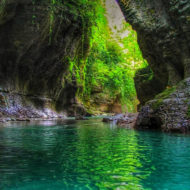
The Kamenice River — the same river that flows through Česká Kamenice and gives the national park its name — has carved an extraordinary gorge through the Bohemian Switzerland sandstone that is navigated in wooden boats through two separate canyon sections: the Edmund Gorge and the Wild Gorge. The sandstone walls rise 50-60 metres above the river surface. In the narrowest sections the canyon closes to such extraordinary tightness that the wooden boats cannot be rowed or punted — they are pulled through by chains fixed to the sandstone walls. The chain-pulling is not a tourist gimmick. It is the only physically possible navigation method in a canyon of this extraordinary narrowness. The Kamenice Gorge is the most dramatically intimate natural experience in the Bohemian Switzerland National Park — more confined, more extraordinary and more completely unlike anything else in central Europe than the Pravčická brána above. The two experiences — the arch and the gorge — are not alternatives. They are the complete Bohemian Switzerland experience.
Eastern Bohemia — the mountain border
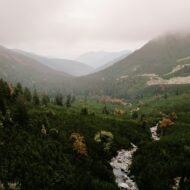
Eastern Bohemia rises to the Krkonoše — the Giant Mountains — on the Polish border, containing the highest summit in the Czech Republic and one of the oldest national parks in central Europe.
Sněžka — at 1,603 metres the highest peak in the Czech Republic, divided between Czech and Polish territory at the summit, accessible by cable car from Pec pod Sněžkou on the Czech side. The extraordinary summit post office — a circular modernist building of extraordinary audacity at 1,600 metres — handles post from both countries simultaneously and is one of the most extraordinary pieces of Cold War modernist architecture in the Czech mountains.
Litomyšl — the extraordinary Renaissance chateau of Litomyšl in eastern Bohemia, UNESCO World Heritage since 1999, the birthplace of the composer Bedřich Smetana whose extraordinary opera cycle Má vlast (My Homeland) is the most complete musical description of Bohemian landscape and mythology in existence. The chateau arcade — the most extraordinary Renaissance arcade in Bohemia — and the extraordinary sgraffito decoration of the external walls make Litomyšl one of the most completely realised Renaissance aristocratic buildings in central Europe.
Southern Bohemia — the castle country of the Vltava
Southern Bohemia contains the most extraordinary concentration of Renaissance and Baroque chateaux in the Czech Republic — the Vltava River valley from Český Krumlov north to České Budějovice producing a sequence of extraordinary aristocratic buildings in a landscape of extraordinary calm.
Hluboka: The South Bohemian Castle Modelled on Windsor →
The most extraordinary neo-Gothic castle in the Czech Republic — rebuilt in the 19th century by the Schwarzenberg family, one of the most powerful aristocratic dynasties in the Habsburg Empire, in deliberate imitation of Windsor Castle. The extraordinary white towers, the extraordinary wooded parkland and the extraordinary position above the Vltava valley create a castle of remarkable visual impact. The Schwarzenberg riding school below the castle contains the most important collection of South Bohemian Baroque art in existence — assembled by the family over three centuries and now open as a gallery of extraordinary quality.
Červená Lhota: The Red Castle That Floats on a Bohemian Pond →
One of the most extraordinarily photogenic small castles in the Czech Republic — a Renaissance chateau of the 16th century built on a rock islet in a pond near Jindřichův Hradec in southern Bohemia, its red-painted walls reflected in the surrounding water in an image of extraordinary visual completeness. The red colour — applied during a 17th century restoration — gives the castle its popular name and its extraordinary visual identity: a red Renaissance building reflected in still water, surrounded by forest, accessible by a single stone bridge. The most completely picturesque castle composition in Bohemia.
Zvíkov: The King of Bohemian Castles Above Two Rivers →
The most historically significant Gothic castle in South Bohemia — built in the 13th century on a promontory above the confluence of the Vltava and Otava rivers, known since the medieval period as the King of Bohemian Castles for the extraordinary quality of its construction and the extraordinary completeness of its surviving Gothic interior. The extraordinary Markomanka Tower, the extraordinary Knights’ Hall and the extraordinary Gothic chapel of St Wenceslas — all substantially intact since the 13th century — make Zvíkov the most important surviving Gothic castle interior in Bohemia.
Český Krumlov — the most completely preserved medieval and Renaissance town in South Bohemia and the second most visited tourist destination in the Czech Republic after Prague. The extraordinary castle complex — the second largest castle complex in the Czech Republic, built on a rock spur above a horseshoe bend of the Vltava River — dominates the extraordinary old town below in a composition of extraordinary visual completeness. UNESCO World Heritage since 1992.
Western Bohemia — the spa triangle
Western Bohemia is the most internationally famous of the five sub-regions — the extraordinary spa triangle of Karlovy Vary, Mariánské Lázně and Františkovy Lázně drawing visitors from across Europe and beyond since the late 18th century.
Loket: The Medieval Town That Goethe Visited Three Times →
The most extraordinary small medieval town in western Bohemia — a settlement of remarkable completeness on a horseshoe bend of the Ohře River, the Gothic castle above, the medieval town below, the river on three sides in a natural defensive position of extraordinary visual drama. Johann Wolfgang von Goethe visited Loket three times during his extended stays at Karlovy Vary — the short journey from the spa town to the medieval river town was the walking excursion he returned to most consistently. The most beautiful small town in western Bohemia and the most overlooked given its proximity to the internationally famous spa towns.
Mariánské Lázně: The Spa Town Where Goethe Fell in Love at 74 →
The most extraordinary surviving spa town in western Bohemia — the extraordinary cast-iron colonnade, the 53 accessible mineral springs of extraordinary carbon dioxide and iron content and the most extraordinary parade of famous visitors of any European spa town. Goethe fell in love here at 74 — his final great passion, the 17-year-old Ulrike von Levetzow, whom he met at the spa in 1821, proposed to in 1823 and lost, producing the extraordinary Marienbad Elegy that is the most emotionally complete poem of his late career. Kafka wrote here. Mark Twain took the waters. Freud treated patients. King Edward VII made it his preferred continental spa. Chopin, Wagner, Mahler and Johann Strauss all visited. The extraordinary late 19th century architecture of the spa town — the villas, the colonnades, the extraordinary hotel facades — is the most complete surviving example of the Central European spa town aesthetic and the most concentrated single biographical landscape in Bohemia. Every building has a famous name attached. Every spring has a cure attributed to it.
Karlovy Vary — the most internationally famous Bohemian spa town, known internationally by its German name Carlsbad — the extraordinary hot springs (the Vřídlo reaches 73°C and shoots 12 metres into the air), the extraordinary Mill Colonnade, the extraordinary spa wafer and the extraordinary Becherovka herbal liqueur produced here since 1807.
The cross-border dimension
Bohemia crosses its modern borders more significantly than any other Czech territory. The Bohemian Switzerland National Park is shared with Germany — the Saxon Switzerland section on the German side is part of the same geological and cultural unit. The Ore Mountains — Krušné hory in Czech, Erzgebirge in German — run along the German-Czech border for 130km, a mining landscape shared between two countries that produced the same extraordinary silver and tin mining culture on both sides of the ridge. The extraordinary spa towns of western Bohemia — Mariánské Lázně, Karlovy Vary — attracted a predominantly German-speaking clientele for two centuries before 1945, and the extraordinary late 19th century architecture they left behind is as much a product of German Jugendstil culture as of Czech building tradition.
The Bohemian Regional Series article that follows this one — Saxony — covers the German continuation of the Bohemian Switzerland and Ore Mountain landscapes from the other side of the border.
How to reach Bohemia
By air:    Prague Václav Havel Airport
           The most connected airport in central Europe
           Direct connections from all major European cities
           Best entry point for all five sub-regions

By train:  Prague to Česke Budějovice — 2.5 hours
           Prague to Karlovy Vary — 2.5 hours
           Prague to Kutná Hora — 1 hour
           Prague to Český Krumlov — 3 hours (change at
           České Budějovice)

By car:    Recommended for the castle circuit and the
           southern Bohemia chateau route
           Prague to Červená Lhota — 1.5 hours
           Prague to Zvíkov — 1.5 hours
           Prague to Hluboka — 2 hours

Best season:
May-June   Wildflower season · extraordinary light
July-Aug   Hiking in Bohemian Switzerland and Krkonoše
Sep-Oct    Autumn colour · castle season · spa season
Dec-Feb    Christmas markets in Prague · spa season
The Bohemia collection in The Wanders
| Destination | Region | Character | Article |
|---|---|---|---|
| Kutná Hora | Central | Silver mining · bone church · UNESCO | Published |
| Okoř Castle | Central | Gothic ruin · near Prague | Published |
| Bohemian Switzerland | Northern | Sandstone arch · national park · cross-border | Published |
| Bohemian Paradise | Northern | Rock spires · castle ruins · walking | Published |
| Hluboka Castle | Southern | Neo-Gothic · Windsor model · Schwarzenberg | Published |
| Červená Lhota | Southern | Red Renaissance chateau · pond reflection | Published |
| Zvíkov Castle | Southern | Gothic · king of castles · two rivers | Published |
| Loket | Western | Medieval · Goethe · river bend | Published |
| Karlštejn Castle | Central | Holy Roman Empire treasury · Charles IV | Commissioning |
| Český Krumlov | Southern | UNESCO · Vltava · most visited | Commissioning |
| Mariánské Lázně | Western | Spa town · colonnade · Goethe · famous visitors | Published |
| Adršpach Rocks | Northern | Rock town · sandstone labyrinth · most visited | Published |
| Děčín | Northern | Elbe gateway · castle above gorge · cross-border | Published |
| Česká Kamenice | Northern | Sandstone valley · basalt columns · hidden base | Published |
| Kamenice Gorge | Northern | Canyon · chain-pulled boats · Bohemian Switzerland | Published |
| Litomyšl Chateau | Eastern | UNESCO · Renaissance · Smetana birthplace | Commissioning |
| Házmburk | Central | Gothic castle ruin · Litomyšl valley | Commissioning |
The Beyond the Map Field Guide
Bohemia: The Complete Beyond the Map Guide — €14
Five sub-regions, eight published articles, the most castle-dense territory in central Europe and the extraordinary spa triangle of western Bohemia. The complete editorial guide to the historical kingdom at the heart of Europe.
Beyond the Map Regional Series →
Also in the Beyond the Map Regional Series
Transylvania: The Region That Dracula Overshadowed →
Istria: Three Countries, One Venetian Coast →
Bohemia is part of The Wanders Beyond the Map Regional Series — extraordinary European regions documented beyond the nation state boundaries that contain them.